
REVIEW · ARUSHA, TANZANIA
NGO Lifted Strong – Traditional Tanzanian Cooking Class
Food can open a community door. In Arusha, Lifted Strong’s traditional Tanzanian cooking class brings you into a small, friendly setting where local women teach you to prepare dishes and name ingredients in Swahili. I like the direct connection with LISCO’s work, and I like that your $50 fee supports women facing poverty, poor health, HIV, and domestic violence. The main consideration is that this is more like cooking together than a formal chef-led lesson.
The class lasts about three hours, begins at 2 p.m., and ends back at the meeting point. I also like the flexibility: you can meet at the center or arrange pickup, and the team has worked with visitors to adjust the time when possible. Since the class has a maximum of 10 people, book ahead, especially since it is commonly reserved about 17 days before the date.
Key points to know before you book
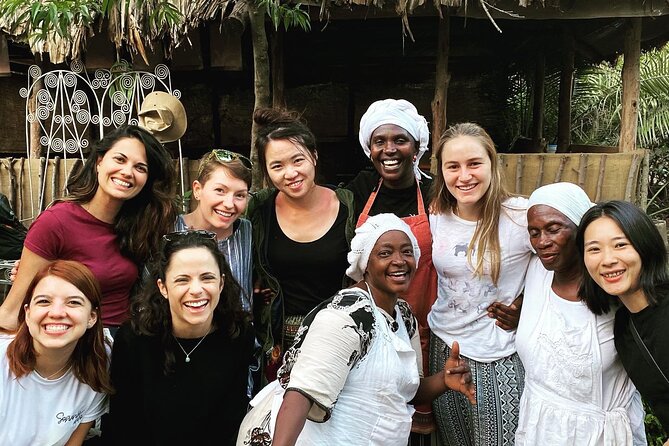
- Cook with local women: The Mama’s guide you through preparation, techniques, and the Swahili names for ingredients.
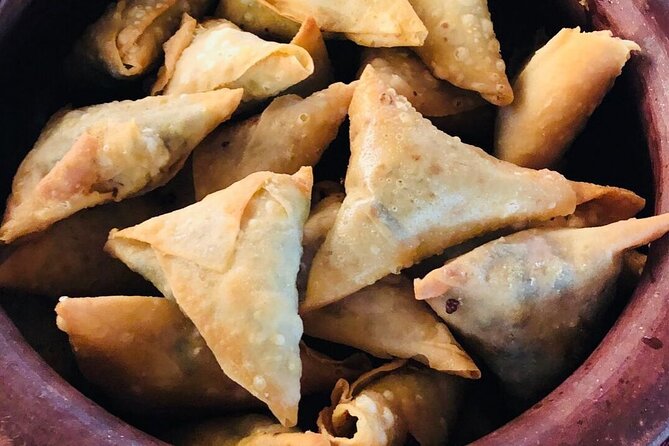
- Expect hands-on dishes: Past menus have included samosas, soup, ugali with vegetables, rice, and cooked banana.
- Your payment supports LISCO: The class helps Lifted Strong Community Organization support women and girls facing serious hardships.
- Plan for a three-hour afternoon: The activity starts at 2 p.m. and leaves the rest of your day free.
- Small groups make conversation easier: No more than 10 people can join, which suits families, couples, and school groups.
- Dietary needs can be discussed: Vegetarian and vegan meals are available if you tell the organizers in advance.
Meeting the women behind Lifted Strong
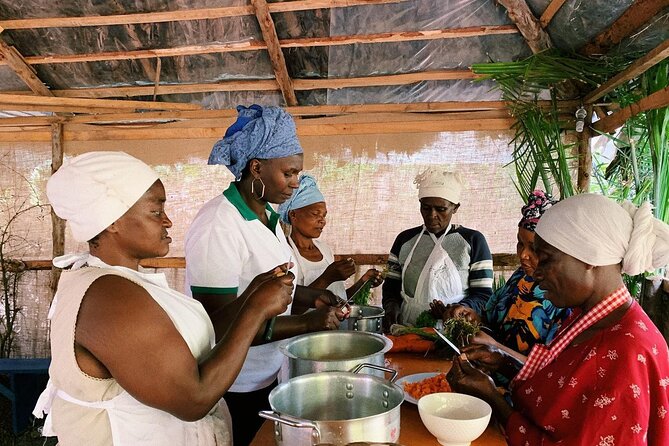
The heart of this experience is not the recipe card. It is the people you meet.
Lifted Strong Community Organization, known as LISCO, works to support women dealing with difficult conditions, including HIV, domestic violence, poverty, and poor health. The cooking class gives you a practical way to support that work while spending time with the women involved in the organization.
Joyce is the main contact named in the experience details and has helped coordinate menus and timing. You may meet Joyce along with several Mama’s and girls connected with the program. The welcome appears to be one of the strongest parts of the afternoon. The women are described as warm, encouraging, and happy to spend time with visitors.
That personal contact matters. A standard cooking class can teach you how to make food. This one also gives you a clearer view of the work needed to help women build more stable lives. You are not simply buying lunch and a lesson. You are paying for an activity that links food, language, and community support.
Still, keep your expectations grounded. This is not presented as a polished culinary school with a professional kitchen, formal lecture, or restaurant-style service. The appeal is the shared work. You should arrive ready to chop, fold, stir, ask questions, and learn at the pace of the group.
A few more cooking classes around Tanzania worth a look
- Zanzibar Cooking Class & Spice Tour
★ 4.5 · 77 reviews - Zanzibar: Spice Farm Tour with Traditional Cooking Lesson
★ 4.8 · 77 reviews - Arusha: Traditional Tanzania Cooking Class & Food Market Tour
★ 5.0 · 34 reviews
What happens during the three-hour class
The activity starts at 2 p.m. at MJHR+GF in Arusha, Tanzania. You can meet the group there, or arrange pickup if that option suits your plans. Since the exact pickup details are not provided, confirm the arrangement before the day of the class.
The class begins with an introduction to LISCO and the women’s work. This gives the afternoon a purpose beyond cooking. You learn why the organization supports women and girls, then move into the food preparation.
You will help prepare produce and learn the Swahili names for the ingredients you use. That language element is a small but useful touch. Even a few food words can help you connect the dish with local daily life, rather than treating it as something prepared only for visitors.
The cooking itself is hands-on. You may help make samosas, soup, ugali with vegetables, rice, or cooked banana. The exact menu can be discussed with the team, and one participant was contacted before the class to decide what to prepare. That is useful if you have a favorite dish, a food allergy, or a vegetarian or vegan diet.
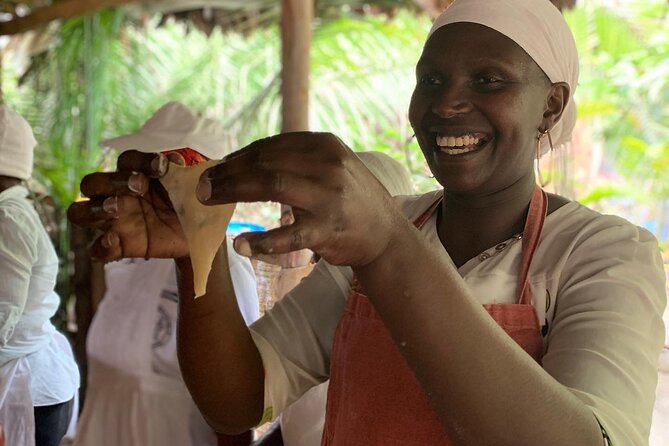
Samosas are a particularly good choice for a short class because they involve several stages. You can see how the filling is prepared, how the pastry is handled, and how the finished pieces come together. A school group specifically used the class to learn samosas, and the women were praised for encouraging the children throughout the activity.
Ugali gives you a different look at Tanzanian food. It is a filling staple, often served with vegetables or other accompaniments. Making it alongside rice and cooked banana can help you compare textures and understand how a meal comes together from simple local ingredients.
Do not expect every minute to follow a strict timetable. The class may feel relaxed and social, with conversation happening as the food is prepared. That is a plus if you want contact with local people. It may feel less satisfying if you want exact measurements, advanced cooking skills, or a tightly managed demonstration.
The food: simple dishes, useful lessons
The food is one of the clearest reasons to book this activity. The dishes mentioned include samosas, soup, ugali with vegetables, rice, and cooked banana. That gives you a good spread of textures and cooking styles without turning the afternoon into an overly ambitious feast.
Samosas offer the most technical task. You will learn the folding and preparation method rather than simply watching someone else do it. The activity works well for pairs, families, and school groups because several people can take part at once.
Soup is a good way to learn how vegetables and seasonings are combined. The details of the recipe are not specified, so you should ask what will be prepared on your date. The same applies to ugali, rice, and cooked banana. Menus can vary, and the team may shape the lesson around your interests and dietary needs.
One practical surprise is that you might make more food than you can eat during the meal. One group was allowed to take some home after preparing a generous amount. Do not assume this is guaranteed every time, but it suggests the cooking is not limited to tiny tasting portions.
Vegetarians and vegans can take part. Tell LISCO in advance so the menu can be planned properly. The organizers have also adjusted cooking for allergies, based on the experience of a previous visitor. You should still state your needs clearly at booking and repeat them in your message to Joyce or the team.
The food may not look like a carefully plated restaurant meal. That is not the point. You are learning how everyday dishes are prepared and then sitting down to enjoy what the group made together. For many people, that shared meal will be more memorable than a polished menu.
Learning a little Swahili along the way
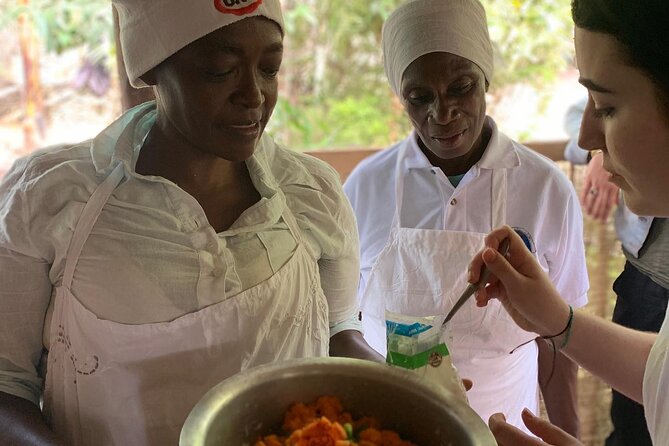
The language part is modest, but it adds real value. As you prepare ingredients, you learn their Swahili names. This connects the words to something you can see, touch, and taste.
You will not leave fluent in Swahili, and the class is not advertised as a language course. Still, learning food vocabulary gives you an easy way to practice. You can use the words later in markets, restaurants, or conversations about meals.
The language lesson also helps you pay closer attention to the ingredients. Instead of hearing a list of unfamiliar names, you associate each word with a specific vegetable, grain, fruit, or spice. That makes the information easier to remember.
If you want more language practice, ask the Mama’s to repeat words and help you say them. The small group size should make this easier than it would be in a large class. A maximum of 10 people leaves room for questions, although the amount of individual attention will depend on the group.
Same place, a different thing to cook:
- Zanzibar: Spice Farm Tour with Traditional Cooking Class
★ 4.6 · 16 reviews - Cooking and Sewing & Jewelry Workshops in Arusha
★ 5.0 · 14 reviews - A private half day spice farm with a cooking lesson
★ 5.0 · 13 reviews - Arusha: Traditional Tanzania Cooking class& Food Market Tour
★ 4.9 · 12 reviews
Why the $50 price can be good value
At $50 per person, this is not the cheapest way to eat in Arusha. You could certainly find a less expensive meal. The value comes from the combination of food, instruction, cultural exchange, and community support.
Your payment helps LISCO pursue its work with women facing serious hardship. That gives the price a purpose beyond the three-hour activity. You are also getting a meal and a hands-on class, rather than only a talk or a short demonstration.
The price makes the most sense if you want an activity with a social purpose. It is especially suitable for couples, families, school groups, and visitors who want to connect with the local community before or after a safari. If your only goal is to master Tanzanian recipes at the lowest possible cost, you may find better options elsewhere.
Group size improves the value. With no more than 10 people, the class should feel more personal than a large commercial food tour. You can speak with the women, share tasks, and ask about the ingredients. The tradeoff is that the session may be informal rather than carefully timed.
The experience is also short enough to fit around other plans. Starting at 2 p.m. and lasting about three hours means your morning is free, and you can still plan an evening meal or other activity. If you are in Arusha for a tight schedule, that half-day format is useful.
Getting there and planning your afternoon
The listed meeting point is MJHR+GF in Arusha. The activity ends at the same place. You can either meet at the center or arrange pickup, but confirm the exact plan before setting out.
One practical note: the center may require a walk from the main street. A previous participant found the walk manageable, though it was a little farther than expected. Use a map, allow extra time, and avoid arriving at 2 p.m. with only a few minutes to spare.
The activity is near public transportation, which gives you another option for reaching the center. Since transportation details are not specified, ask the operator which route or pickup point works best for your location in Arusha.
Mobile tickets are accepted, and confirmation is provided when you book. Free cancellation is available if you cancel at least 24 hours before the local start time. Changes or cancellations inside that window are not accepted for a refund, and the class requires a minimum number of participants. If that minimum is not reached, you will be offered another date or experience, or a full refund.
Because the class is often booked about 17 days ahead, do not leave it until the last day if this is important to your schedule. A small class can fill quickly.
Who will enjoy this class most
This experience suits you if you want food to be a doorway into local community life. It is a good match for people who prefer conversation and participation over sightseeing from a distance.
Families can enjoy it because the cooking has several tasks and the women are described as welcoming toward children. School groups also fit well, especially if the goal is to combine food, language, and social learning.
Couples and solo visitors may find the small group size comfortable. You have a natural way to meet people without needing to force conversation. The shared work does some of the social work for you.
Vegetarians and vegans should feel comfortable booking, as long as they give advance notice. The same advice applies to allergies. Menu planning is possible, but it should be handled before you arrive.
You may want to skip it if you want a polished cooking school, advanced culinary instruction, or a guaranteed fixed menu. The class is informal and community-based. That is its strength, but it also means the pace and menu may be less predictable.
What I would ask before the cooking begins
A short message before the class can make the afternoon better. Ask which dishes are planned, especially if you have a food restriction or a particular interest in Tanzanian cooking.
Confirm your meeting or pickup point, since pickup is an arrangement rather than an automatic detail. Also ask how much walking is involved if you plan to reach the center from the main street.
If you care about learning recipes at home, ask whether measurements or written instructions are available. The class clearly teaches techniques and ingredient names, but written recipe details are not specified.
Finally, tell the team what kind of experience you want. If you are most interested in samosas, ugali, Swahili food words, or the organization’s work, sharing that in advance may help shape the session.
Should you book Lifted Strong’s cooking class?
I would book this if you want a warm, useful afternoon that supports women while giving you a taste of Tanzanian home cooking. The strongest reasons are the welcoming local team, hands-on dishes, small group size, flexible menu, and direct link to LISCO’s work.
I would not book it expecting a formal culinary course. Think of it as cooking alongside the Mama’s, sharing food, learning a few Swahili words, and hearing about a community organization working through hard circumstances.
At $50, the class offers good value when the social purpose matters to you. Come ready to participate, allow time to find the center, and tell the organizers about dietary needs in advance. If that sounds like your kind of Arusha afternoon, this is an easy experience to recommend.
FAQ
Where does the cooking class start?
The listed starting point is MJHR+GF in Arusha, Tanzania.
What time does the class begin?
The class starts at 2 p.m.
How long does the experience last?
The cooking class lasts approximately three hours.
Where does the activity finish?
The activity ends back at the meeting point.
How many people can join?
The maximum group size is 10 travelers.
Can I arrange pickup?
Yes. You can meet at the center or arrange pickup with the operator.
Can vegetarians and vegans join?
Yes. Vegetarian and vegan options are available if you inform the organizers in advance.
What is the cancellation policy?
You can cancel for a full refund up to 24 hours before the local start time. Cancellations or changes made less than 24 hours before the experience are not refunded or accepted.
Just added around Tanzania
- Cooking and Sewing & Jewelry Workshops in Arusha★ 5.0 · 14 reviews
- Local Tanzanian Food Cooking Class by Kingstone Asilia (Arusha)★ 5.0 · 2 reviews
- Arusha: Traditional Tanzania Cooking Class & Food Market Tour★ 5.0 · 34 reviews
- Cooking Class Tour, Stone Town Tour, Horseback Riding★ 5.0 · 2 reviews
- Dar es Salaam: Taste of Tanzania Cooking Class and Food Tour★ 3.6 · 2 reviews
- Arusha: Local Tanzanian Cooking Class by Kingstone Asilia★ 5.0 · 3 reviews
- Arusha: Traditional Tanzania Cooking class& Food Market Tour★ 4.9 · 12 reviews
- Zanzibar Cooking Class & Spice Tour★ 4.5 · 77 reviews
Cooking Classes, compared.

Half-Day Thai Cooking Class at Organic Farm in Chiang Mai
Read our review →

3 in 1 Cooking Class near Navona: Fettuccine, Ravioli & Tiramisu
Read our review →
Pasta & Tiramisu Cooking Class with Unlimited Wine
Read our review →
Hanoi Cooking Class: Culture, Local Market & Meaning CSR Impact
Read our review →
5 Traditional Dishes Hanoi Cooking Class with Market Trip
Read our review →
Cooking Class and Lunch at a Tuscan Farmhouse with Local Market Tour from Florence
Read our review →
Cooking Class, Market & Thai Herbs Garden Tour
Read our review →Lists this class appears in