
REVIEW · NEW ORLEANS, USA
New Orleans Hands-On Cooking Class with Meal
Come hungry, leave with Louisiana skills. This three-hour New Orleans cooking class turns dinner into the main event, with a chef guiding you through dishes such as gumbo, jambalaya, shrimp and grits, bananas Foster, and pralines. I especially like the hands-on format and the small maximum of 10 people, which gives you a real part in chopping, seasoning, and cooking instead of simply watching a demonstration. The meal, wine, local beer, recipes, and apron are also included.
I also like the cultural side. Chefs explain how Louisiana cooking grew from several food traditions, and the class connects technique with local stories. Chef Eric, Chef Austin, Chef Cindy, Chef Ricardo, Chef Vivian, Chef G, and others have all received praise for their humor, patience, and clear instruction. The main drawback is practical: you spend much of the session standing, and the $162 price is a serious outlay for a meal you prepare yourself.
Key Points
- Five cooktops and a 10-person maximum keep the class active and personal, although solo participants may share a station.
- Three courses are prepared in stages, with cooking followed by eating before the next course begins.
- Menus feature Louisiana standards, including gumbo, yam-crab bisque, BBQ shrimp and grits, jambalaya, bananas Foster, and pralines.
- Drinks are part of the meal, with red and white wine, Abita Amber beer, iced tea, lemonade, and coffee.
- The take-home package has real value, including recipes, a New Orleans School of Cooking apron valued at $18.99, and the chance to earn a diploma by submitting photos of dishes made at home.
- The class begins in the French Quarter at 524 St Louis Street and ends at the same place, making it easy to fit into a day in central New Orleans.
Cooking Louisiana Food at Five Shared Cooktops
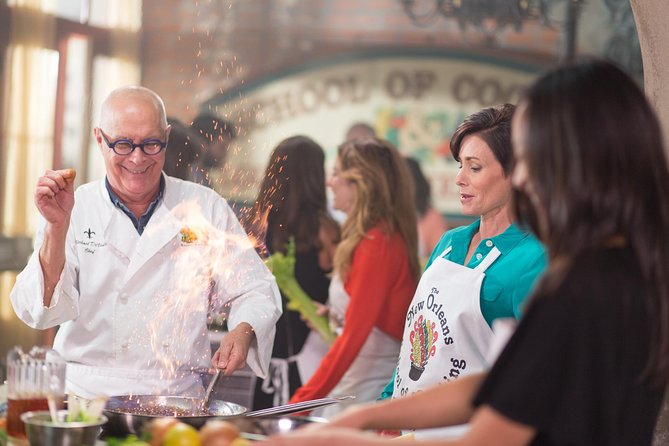
The class meets at the New Orleans School of Cooking, at 524 St Louis Street in the French Quarter. That location matters. You are not traveling across the city for a cooking lesson, and the class can fit neatly into a morning or afternoon spent around the French Quarter.
The format is intentionally small. Up to 10 people use five cooktops, so you normally work with one other person or in a small group. If you arrive alone, you may be paired with another participant. That arrangement is worth knowing before you book, especially if you expect private instruction or want your own stove.
This is not a sit-back demonstration. You cut, season, stir, and help prepare a full Louisiana meal. The chef and assistant move through the room, offering help when a sauce needs attention or a technique is new to you. Several participants have singled out the hands-on setup as more useful than simply watching someone else cook.
The class is offered in English, and the minimum age is 18. Casual clothing is fine, but wear something you can comfortably stand and cook in for several hours. One practical point comes through clearly: you may be on your feet for a long stretch, so comfortable shoes are a good idea.
A few more cooking classes around the USA worth a look
- New Orleans Demonstration Cooking Class with Meal
★ 5.0 · 3,000 reviews - Undiscovered Charleston: Half Day Food, Wine & History Tour with Cooking Class
★ 5.0 · 948 reviews - New Orleans: Cajun and Creole Cooking Class
★ 4.9 · 730 reviews
The Three-Course Rhythm Keeps the Class Moving
A clever part of the class is its pacing. You generally prepare one course, sit down and eat it, then return to the cooktops for the next course. That rhythm prevents the session from becoming three straight hours of kitchen work.
The starter may be yam-crab bisque or gumbo. Both choices offer a useful introduction to Louisiana cooking. Gumbo gives you a chance to see how seasoning, stock, and the base of the dish work together. The bisque provides a different lesson in texture and seafood flavor.
The main course may be BBQ shrimp and grits or jambalaya. Shrimp and grits lets you work with a familiar pairing through a Louisiana lens, while jambalaya brings rice, seasoning, and several ingredients together in one pot. The class is not simply about following a recipe. It shows how these dishes get their character from technique and balance.
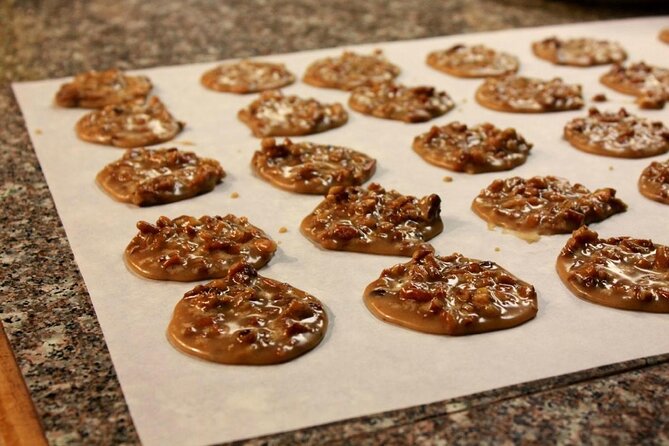
Dessert may be bananas Foster or pralines. Bananas Foster is especially entertaining because the preparation has a bit of theatrical flair, while pralines show a sweeter side of New Orleans food. One participant described making the roux and bananas Foster as a highlight, which gives you a good idea of the class’s range: you learn both patient cooking and dramatic finishing touches.
Because the exact menu can vary, check the available selection when booking if a particular dish is important to you. The supplied menu lists alternatives rather than promising every item in one session.
A Chef-Led Lesson With Plenty of Personality
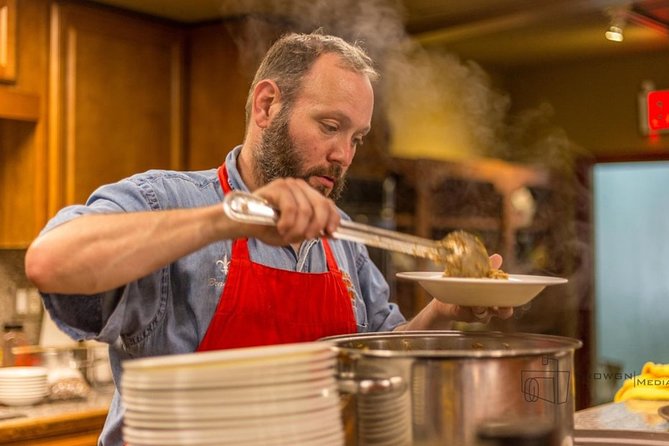
The chef is central to the experience. The cooking school uses professionally trained instructors, and the strongest praise focuses on their teaching style as much as on the food.
Chef Eric is described as friendly, funny, and clear, with enough patience to help when a step becomes tricky. Chef Austin is praised for practical tips, humor, and an easy manner that makes the class feel like dinner with a welcoming host. Chef Cindy has been noted for explaining each stage and adding historical context. Chef Ricardo combines information with plenty of personality, while Chef Vivian has used music, dancing, and humor to keep the room lively.
The teaching style may differ from one session to another because several chefs lead the classes. That is part of the charm, but it also means your experience can have a slightly different tone depending on the instructor.
I would book this for the food and the human interaction, not for a quiet, formal culinary lecture. The class is meant to be social. You will work beside other people, share the finished meal, and learn through conversation as well as instruction.
The Food Is the Point, Not Just a Souvenir
You get to eat the meal you helped create, and the portions are substantial enough that you should not plan a full lunch immediately beforehand. One useful tip is to arrive hungry. The class includes a starter, main course, dessert, and drinks, so this is closer to a full meal than a small tasting.
The cooking school includes red and white wine, Abita Amber beer, iced tea, lemonade, and coffee. Alcoholic and non-alcoholic choices mean you do not have to drink to take part in the social side of the meal.
The food is likely to be the strongest reason to book. The menu sticks to well-known Louisiana dishes, and the instruction focuses on making them approachable for home cooks. Several participants who did not consider themselves serious cooks said the recipes were easy enough to repeat at home.
That point matters. A cooking class can be entertaining but still leave you unsure what to do in your own kitchen. Here, you receive copies of the class recipes, and the dishes are taught in a way designed for recreation at home. You can also submit photos of meals made from the recipes to receive a diploma, adding a playful follow-up after your New Orleans visit.
Same place, a different thing to cook:
- Hands-on Cajun Roux Cooking Class in New Orleans
★ 5.0 · 356 reviews - Hands-On Hawaiian Imu Cooking and Cultural Dining Experience
★ 5.0 · 95 reviews - Hands-on Cooking Class in Charleston
★ 5.0 · 83 reviews - Farm to Table Cooking Class at Kulaniapia Falls
★ 4.5 · 36 reviews
New Orleans Food Comes With Context
This class is about more than gumbo and grits. The chefs explain how different cultures shaped Louisiana cooking, and the food becomes a way to understand the region.
You might hear about the background of the dishes, the use of local ingredients, and the techniques that give Louisiana food its distinctive character. The historical material is woven into the cooking rather than delivered as a separate lecture, so it tends to feel useful rather than academic.
That combination was praised repeatedly: cooking, local culture, and history all appear in the same lesson. If you want a deeper sense of why New Orleans food tastes the way it does, this is more rewarding than simply ordering the finished dishes in a restaurant.
Still, keep your expectations sensible. This is a three-hour introduction, not a professional culinary course or a full survey of Louisiana foodways. You learn a selection of recipes and techniques, with enough cultural context to give them meaning.
Is $162 a Fair Price?
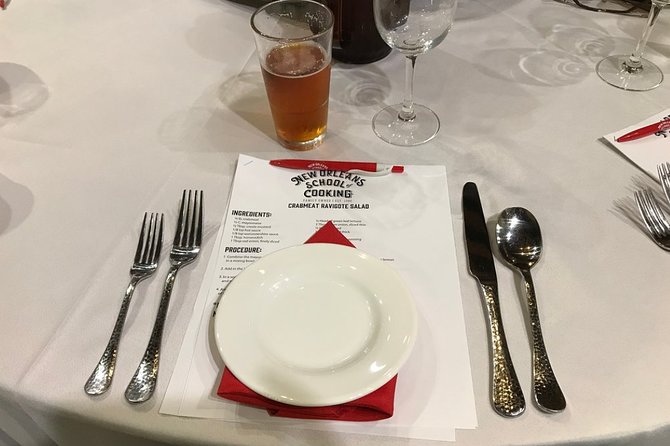
At $162 per person, this is not a budget meal. You are paying for instruction, a full three-course meal, beer and wine, non-alcoholic drinks, recipes, an apron, and the use of a small teaching kitchen.
The value improves if you would otherwise book a food tour, a restaurant dinner, and a souvenir separately. The apron alone has a stated value of $18.99, and the recipes continue to be useful after you return home. The class also gives you three hours of structured activity in a central French Quarter location.
The price is harder to justify if you mainly want a cheap dinner or already cook Louisiana food with confidence. You are paying for the social setting, the chef’s guidance, and the experience of making the meal, not just for the ingredients.
The class is booked an average of 37 days ahead, so popular dates may fill early. That lead time also suggests you should reserve before building your New Orleans schedule around it. Confirmation is provided when you book, though the school can cancel if the minimum number of participants is not reached. In that case, you are offered another option or a full refund.
Who Will Enjoy This Class Most?
I would recommend it most strongly to couples looking for a shared date activity, friends who enjoy food, and families with adults who want something more active than a restaurant meal. It also suits solo visitors because the small-group setting makes it easy to work alongside someone else.
You do not need advanced cooking skills. The chefs explain the process, and help is available when a step feels unfamiliar. The class is also a good choice for people who enjoy learning through doing rather than taking notes during a demonstration.
It may not suit you if you dislike group activities, have difficulty standing for extended periods, or want a private class. It is also less appealing if you have a long list of strict dietary needs. Specific dietary requirements should be provided when booking, and special requests related to restrictions carry a $10 fee payable on site.
The minimum age is 18, so families with younger children need to choose another food activity. Casual dress is fine, but you should dress for cooking and standing.
Fitting the Class Into a New Orleans Day
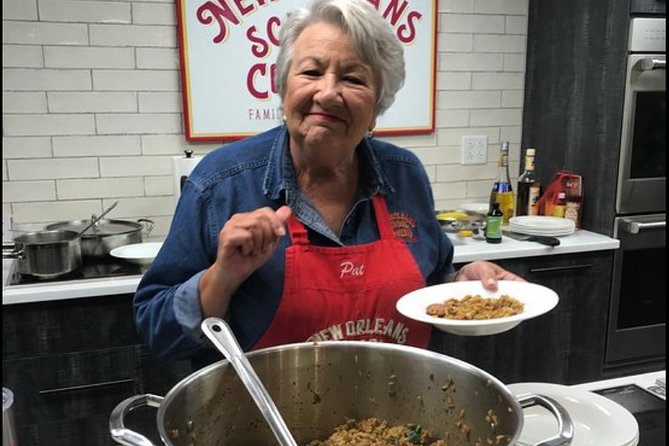
The meeting point at 524 St Louis Street is convenient for a day in the French Quarter. Since the activity ends back at the same location, you do not need to arrange a separate ride from an outlying kitchen or worry about finding your way to a second stop.
The listed itinerary includes the New Orleans School of Cooking and the French Quarter. In practical terms, the class itself is the main activity, while the surrounding neighborhood supplies the setting. You can pair it with nearby sightseeing before or after, but do not schedule another fixed activity too tightly against it. The cooking, eating, and group format can take the full three hours.
I would place this class early in a New Orleans stay if you can. The recipes may help you recognize dishes on later menus, and the lesson gives you a useful introduction to local food before you spend more meals in restaurants.
Book at least a day ahead if your plans change. You receive a full refund when you cancel at least 24 hours before the start time. Cancellations or changes within 24 hours are not refunded or accepted.
Should You Book the New Orleans Cooking Class?
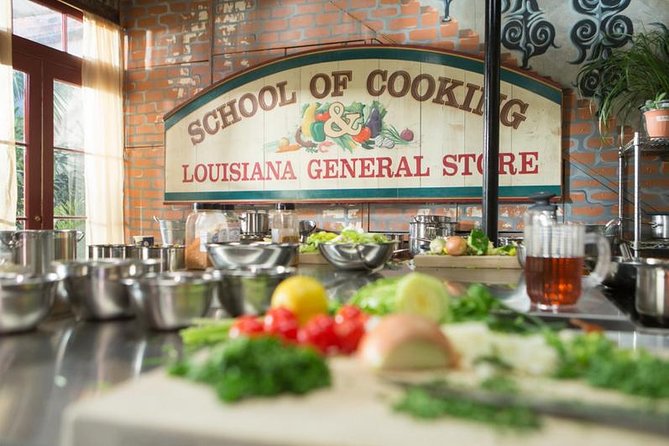
Book it if you want to cook, eat, and learn in the same afternoon. The strongest reasons are the small group, active kitchen work, generous meal, drinks, and chefs who bring humor and local context to the lesson.
I would skip it if you want a low-cost meal, a private cooking lesson, or a quick demonstration with no standing. At $162, the experience earns its price through the instruction and the take-home value, not through dinner alone.
For most food-focused visitors, this is a worthwhile one-time New Orleans activity. You leave with recipes, an apron, a better sense of Louisiana cooking, and a meal you helped make from the first cut to the final bite.
FAQ
Where does the cooking class begin?
The class begins at the New Orleans School of Cooking, located at 524 St Louis Street, New Orleans, Louisiana 70130.
Where does the activity end?
The activity ends back at the meeting point at the New Orleans School of Cooking.
How long does the cooking class last?
The class lasts approximately three hours.
How many people can join the class?
The class has a maximum of 10 participants and uses five cooktops. Solo participants may be paired with another person.
What food might I prepare?
The sample menu includes yam-crab bisque or gumbo, BBQ shrimp and grits or jambalaya, and bananas Foster or pralines.
Are drinks included?
Yes. Included drinks are red and white wine, Abita Amber beer, iced tea, lemonade, and coffee.
What do I take home?
You take home copies of the class recipes and a New Orleans School of Cooking white apron. The apron has a stated value of $18.99. You can also receive a diploma by submitting photos of recipes you make at home.
Is there a minimum age?
Yes. The minimum age is 18.
What happens if I need to cancel?
You receive a full refund if you cancel at least 24 hours before the experience start time. Cancellations and changes made less than 24 hours before the start time are not accepted and are not refunded.
Just added around the USA
- Hands-on Cooking Class in Charleston★ 5.0 · 83 reviews
- Sushi Making Cooking Class at a Local Brewery in Charlotte★ 5.0 · 2 reviews
- Authentic Asian Cooking Class in NYC (Includes 4-Course Meal)★ 5.0 · 8 reviews
- Hands-On Hawaiian Imu Cooking and Cultural Dining Experience★ 5.0 · 95 reviews
- Farm to Table Cooking Class at Kulaniapia Falls★ 4.5 · 36 reviews
- Baumkuchen Campfire Baking Class★ 5.0 · 3 reviews
- French Cooking Class in Baltimore (Includes 3-Course Meal)★ 5.0 · 2 reviews
- Private Atlanta Cooking Class with a Fun Local Chef Naina★ 5.0 · 2 reviews
Cooking Classes, compared.
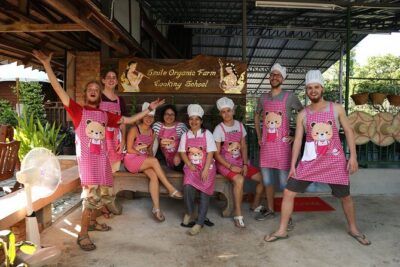
Half-Day Thai Cooking Class at Organic Farm in Chiang Mai
Read our review →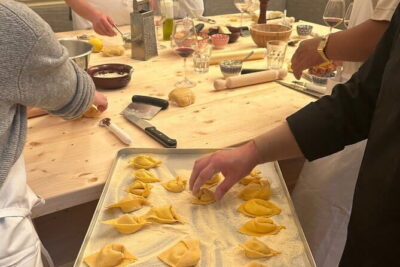
3 in 1 Cooking Class near Navona: Fettuccine, Ravioli & Tiramisu
Read our review →
Pasta & Tiramisu Cooking Class with Unlimited Wine
Read our review →
Hanoi Cooking Class: Culture, Local Market & Meaning CSR Impact
Read our review →
5 Traditional Dishes Hanoi Cooking Class with Market Trip
Read our review →
Cooking Class and Lunch at a Tuscan Farmhouse with Local Market Tour from Florence
Read our review →
Cooking Class, Market & Thai Herbs Garden Tour
Read our review →Lists this class appears in