
REVIEW · NEW ORLEANS, USA
Hands-on Cajun Roux Cooking Class in New Orleans
Roux is where New Orleans gets serious. At the Mardi Gras School of Cooking, you spend about three hours learning the working methods behind gumbo and shrimp étouffée, not just watching a chef stir a pot. The class covers the Cajun Holy Trinity, dark and light roux, plating, and bananas Foster, with a shared meal at the end.
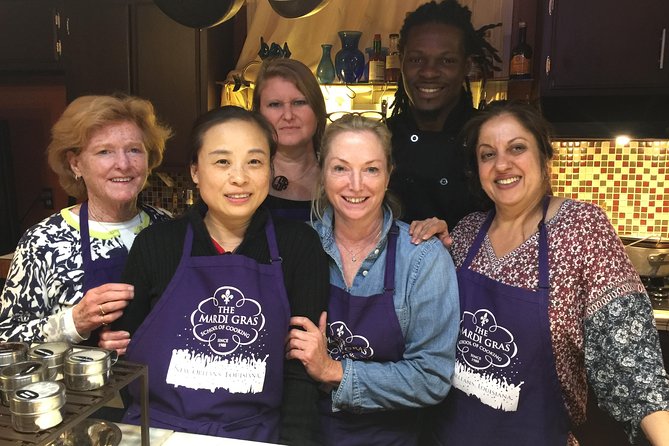
I like the hands-on format, since you chop, prep, stir, and build the dishes yourself. I also like the small maximum of 10 people, which gives the chef room to answer questions and keep everyone involved. The main drawback is the $163.85 price, which is a lot for a meal, especially if you are traveling on a tight budget.
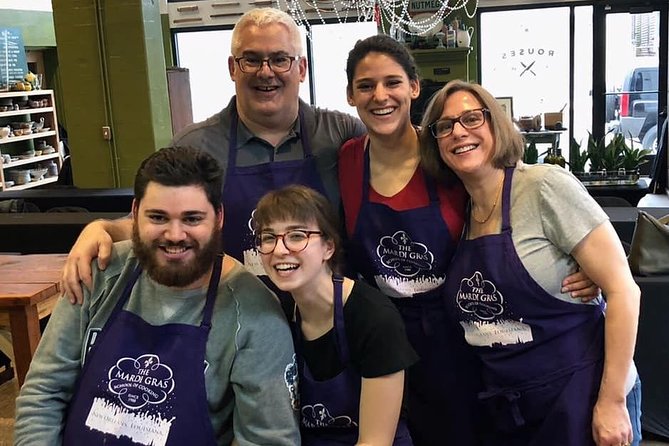
The setting is clean and modern, according to multiple visitors, and the instructors bring plenty of personality. Chef Raymond is often praised for stories and humor, while Chefs Mark, Jason, Connor, Cam, Erika, and Randy have each earned warm comments for clear teaching and patient guidance. The class is especially well suited to families, couples, and groups of friends who want to do something together rather than simply sit down at another restaurant.
Key points at a glance
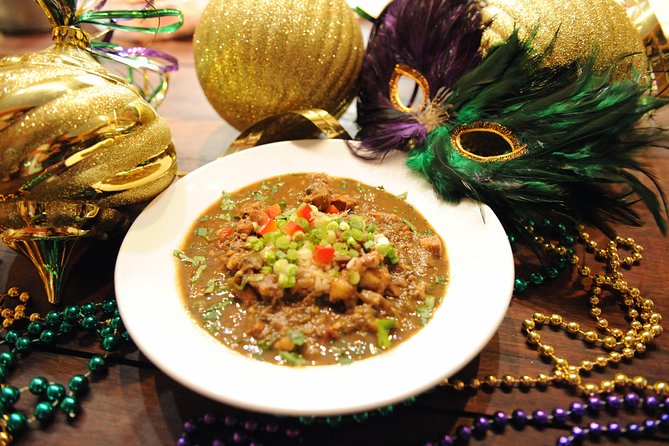
- You make three New Orleans favorites: chicken and andouille sausage gumbo, shrimp étouffée, and bananas Foster.
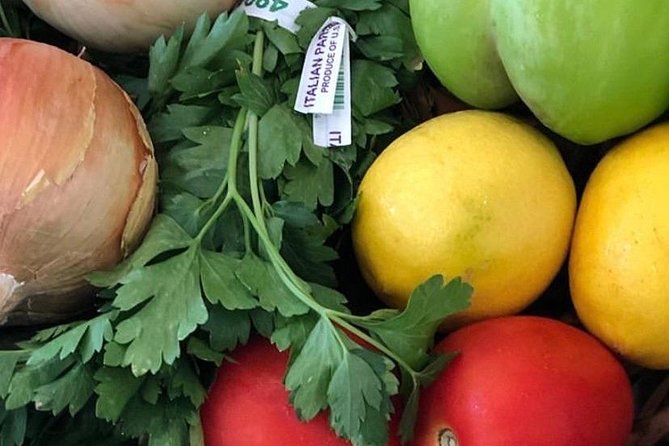
- The Cajun Holy Trinity comes first: onions, bell peppers, and celery form the base for the cooking lesson.
- Roux gets proper attention: you work with both a dark roux for gumbo and a light roux for étouffée.
- Wine or soda is included: you can sip a drink while chopping, stirring, and waiting for the food.
- The class is genuinely interactive: the format gives participants cooking jobs instead of keeping everyone at a distance.
- You eat what you prepare: the activity ends with a sit-down meal back at 519 Wilkinson Street.
Why the roux lesson matters in New Orleans
Many cooking classes give you a recipe, a few facts, and a plate of food. This one focuses on technique, especially the roux. That matters because roux is not a decorative step in Cajun cooking. It gives gumbo and étouffée much of their color, body, and flavor.
You begin with the Cajun Holy Trinity, the familiar combination of onion, bell pepper, and celery. The cutting and prep may sound simple, but it teaches you how the flavor base is built before the main ingredients go into the pot. It also gives everyone something useful to do at the start, rather than leaving you waiting for the chef to finish a demonstration.
The class then moves into mise en place, the useful kitchen habit of having everything chopped, measured, and ready before the heat rises. I like this part because it gives you a practical skill you can carry home. Cajun cooking can look complicated when you see several pots and ingredients at once. Organized prep makes it far less intimidating.
A few more cooking classes around the USA worth a look
- New Orleans Demonstration Cooking Class with Meal
★ 5.0 · 3,000 reviews - New Orleans Hands-On Cooking Class with Meal
★ 5.0 · 1,183 reviews - Undiscovered Charleston: Half Day Food, Wine & History Tour with Cooking Class
★ 5.0 · 948 reviews
Starting with gumbo and a dark roux
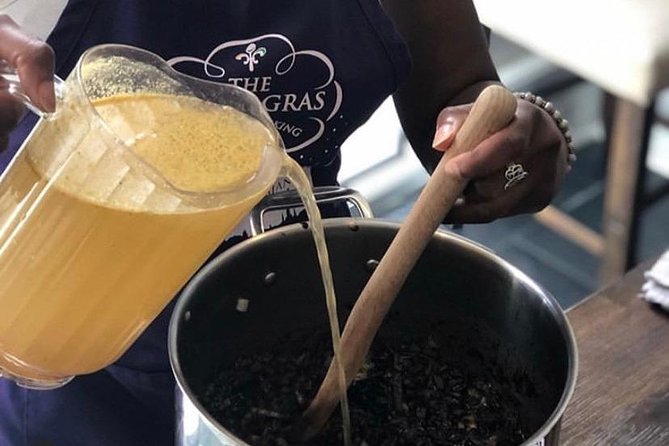
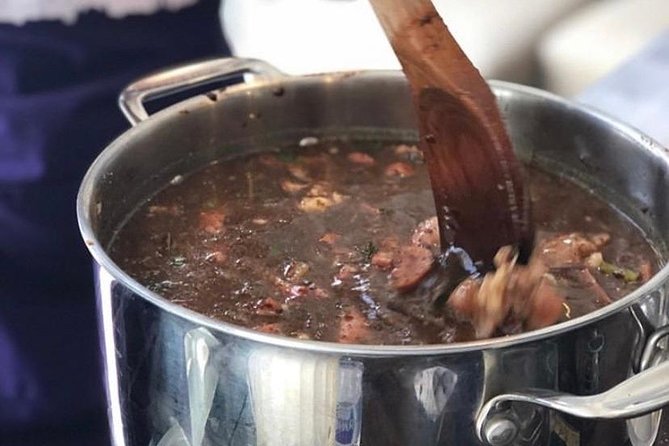
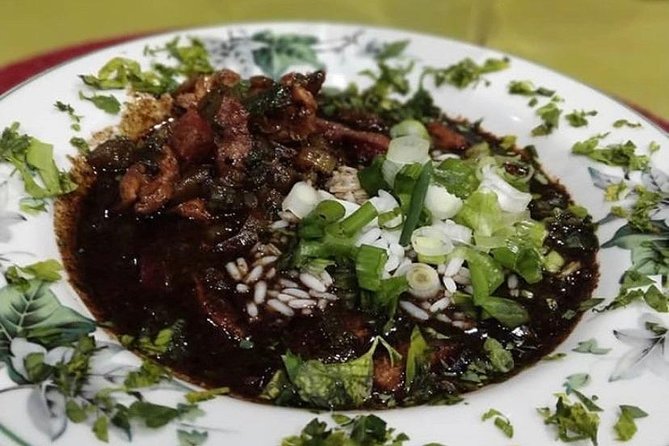
The first major cooking task is the dark roux for the chicken and andouille sausage gumbo. This is the point where the lesson becomes more than a standard recipe demonstration. A dark roux requires attention, and the chef explains how to approach it so you can build flavor without losing control of the mixture.
You should expect to take part in the preparation rather than stand behind a counter and watch. Past participants have described chopping, stirring, and handling individual tasks, with enough work for everyone in the group. That is important if you are booking this because you want to learn, not just eat.
The gumbo is also a good dish for a group class because it develops while the instruction continues. Once the base is prepared, the class can move forward while the flavors come together. By the time you sit down, you have a better sense of how a pot of gumbo gets its character.
The menu uses chicken and andouille sausage. If you are specifically seeking seafood gumbo, this is not the dish being taught. Shrimp appears later in the étouffée, so the overall meal still gives you two different Cajun flavor profiles.
A lighter roux for shrimp étouffée
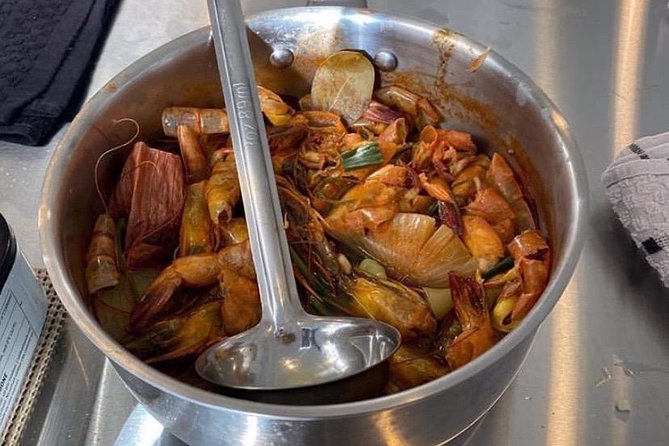
After the gumbo, you work on a light roux for shrimp étouffée. Placing the two roux techniques in the same class is one of the strongest parts of the schedule. You get to compare the darker, deeper base used for gumbo with the lighter preparation used for the shrimp dish.
The change helps show that Cajun cooking is not one fixed formula. Color and cooking time affect the result, and the chef explains how those choices shape the final dish. Instructors have also been praised for sharing small kitchen tips that apply to everyday cooking, not only Louisiana recipes.
Shrimp étouffée makes a good second course because it differs from the gumbo without feeling unrelated. You are still working with Cajun foundations, but the dish has its own texture and flavor. Participants have described the finished food as flavorful and substantial, with enough for the group to sit down and eat together afterward.
This is also where the class can be useful for home cooks who already enjoy cooking. Several people with kitchen experience have appreciated learning the roux process and picking up new ways to build flavor. You do not need to be an expert, though. The instruction is designed to be approachable, and the chefs are repeatedly praised for patience with beginners.
Wine, soda, and a shared table
Once the Holy Trinity has been chopped, the class takes a break for a first glass of wine. Wine is included, and soda pop is available as an alternative. This keeps the activity social without making alcohol the center of the event.
You are not simply handed a meal at the end. After the cooking is complete, the dishes are properly plated and the group sits down to enjoy the food prepared during the class. That shared meal gives the afternoon or evening a satisfying shape: learn, cook, eat.
The social side works particularly well for groups of friends. A party of eight can have enough people for lively conversation while still remaining within the stated maximum of 10. Smaller groups may get more individual attention, and some past classes have had only four participants.
Families can also fit comfortably into the format. Children and teenagers have been included successfully, with one 12-year-old enjoying the class and two 17-year-olds becoming excited about trying the recipes at home. The cooking tasks, rather than a long lecture, help younger participants stay involved.
Same place, a different thing to cook:
- New Orleans: Cajun and Creole Cooking Class
★ 4.9 · 730 reviews - Hands-On Hawaiian Imu Cooking and Cultural Dining Experience
★ 5.0 · 95 reviews - Hands-on Cooking Class in Charleston
★ 5.0 · 83 reviews - Farm to Table Cooking Class at Kulaniapia Falls
★ 4.5 · 36 reviews
Finishing with bananas Foster
The final part of the class is bananas Foster. The chef teaches a foolproof method intended to be manageable at home and impressive when served to friends or family.
This is a smart finish to the menu. After two savory dishes and several stages of prep, dessert gives the class a clear ending. It also adds a touch of New Orleans restaurant theater without requiring a separate dessert stop.
The dessert has drawn some of the strongest praise, with people describing it as a highlight of the meal. Since the class includes instruction, not just a prepared sweet, you leave with another technique to try in your own kitchen. The menu identifies bananas Foster as dessert, and the class description says you learn how to make it yourself.
The chefs bring different personalities
The chef assigned to your class may vary. That makes it hard to promise one particular teaching style, but the range of names attached to the classes gives you a useful sense of the staff.
Chef Raymond is often described as funny, patient, and generous with personal stories about cooking and life in New Orleans. He has also been credited with cooking for the Super Bowl and winning cooking competitions. Chef Mark is praised for clear explanations, humor, and stories that make the small class feel personal.
Chef Jason receives strong marks for his Cajun roux instruction and friendly manner. Chef Connor is described as patient and professional, with enough care to serve dinner and offer food to take home in one class. Chef Cam is noted for explaining both cooking technique and Cajun and Creole culture.
Chef Erika and Chef Randy have also received positive comments for preparation and teaching. The important point is that the experience does not depend only on a printed recipe. The instructor’s personality shapes the class, and the available feedback points to a staff that treats teaching as part of the meal.
What the small group size changes
The maximum of 10 people is a real advantage. It gives you a better chance to handle ingredients, ask questions, and receive corrections while you are working. In a large demonstration, the chef might prepare everything while you watch. Here, the stated format is built around participation.
A very small class can also feel more relaxed. You may meet people from different places, but the cooking gives the group an easy common task. That can be more natural than forced introductions or a formal group activity.
There is one tradeoff. The experience is group-based, not a private lesson. You will share the workspace and some tasks with other people, and the pace is set for the whole class. If you want every step to be performed alone or need a fully customized menu, this may not be the right format.
For most people, though, shared work is part of the appeal. Cooking a pot of gumbo together creates a sense of occasion that you do not get from merely ordering one in the French Quarter.
Is $163.85 a fair price?
At $163.85 per person, this is not a cheap way to eat in New Orleans. You could find gumbo and étouffée for far less at a casual restaurant. The value comes from the instruction, the included drinks, the meal, and the chance to repeat the techniques at home.
You are paying for about three hours of structured activity. That is useful if you want an evening plan that combines food, conversation, and a practical skill. The meal includes a starter, main course, and dessert, so you are not paying for a class and then needing to find dinner immediately afterward.
The price makes the most sense for people who enjoy cooking classes, groups celebrating a birthday, families looking for a shared activity, or visitors who want more contact with local food traditions. It is less attractive if your main aim is simply to sample Cajun food at the lowest possible cost.
One detail adds value for some participants: the recipes and techniques are meant to be taken home. The strongest benefit is not just that you eat gumbo once. You learn how to work with roux and flavor bases so you can try the dishes again for your own family and friends.
Location, timing, and practical planning
The class begins and ends at 519 Wilkinson Street in New Orleans. It is near public transportation, and the activity returns to the same meeting point, so you do not need to arrange a second pickup location.
Plan on roughly three hours. That is long enough for a full lesson and meal, so avoid scheduling another activity too tightly afterward. Cooking has a way of taking the time it takes, especially when a group is learning several techniques.
Confirmation is provided when you book. The experience is offered in English, and mobile tickets are accepted. Group discounts are available, which may improve the value if you are booking for several people.
This class is often booked around 26 days ahead. That does not guarantee every date will sell out, but it is a sensible reason to reserve early if you are visiting during a busy period or need a particular day.
Free cancellation is available up to 24 hours before the start time for a full refund. Changes or cancellations made inside that 24-hour window are not accepted for a refund, and the cutoff follows local New Orleans time.
Who will enjoy this class most?
I would choose this for you if food is part of the reason you visit New Orleans, especially if you want to understand how dishes are made rather than only taste them.
It fits especially well for:
- Couples who want a shared activity with a complete meal
- Families with older children or teenagers who enjoy practical activities
- Friends looking for a social group event
- Home cooks curious about roux and Cajun technique
- Birthday groups and other small celebrations
- First-time visitors who want food instruction with local stories
You do not need advanced cooking skills. The class has been enjoyed by beginners, young participants, and people who already cook often. The chef-led format gives you guidance at each stage.
I would think twice if you dislike group activities, have a very limited budget, or want a private menu built around dietary needs. The supplied information does not list substitutions or special dietary arrangements, so ask before booking if that matters to you.
Should you book the Cajun Roux Cooking Class?
Yes, if you want an active food experience and can accept the price. The strongest reason to book is the balance of technique and pleasure: you learn the Holy Trinity, work with two roux styles, prepare gumbo and étouffée, make bananas Foster, and then eat the results.
The class has earned a 5.0 rating from 356 reviews and is recommended by 99 percent of participants, which supports its strong reputation. More useful than the numbers is the repeated praise for hands-on work, patient chefs, clean facilities, and food good enough to become a trip highlight.
I would book it for a couple, family, or group of friends who want to spend three hours doing something together. If you only want a quick taste of local cuisine, choose a restaurant instead. If you want to return home able to make a proper roux and tell your friends you learned it in New Orleans, this class earns its place on your schedule.
FAQ
How long does the Cajun Roux Cooking Class last?
The class lasts approximately three hours, including the cooking instruction, drinks, dessert lesson, and shared meal.
What dishes will I prepare?
The menu includes chicken and andouille sausage gumbo, shrimp étouffée, and bananas Foster for dessert.
Is wine included in the class?
Yes. Wine is included, and soda pop is available as an alternative.
Where does the class begin and end?
The class starts at 519 Wilkinson Street, New Orleans, Louisiana 70130. It ends back at the same meeting point.
How many people can join the class?
The activity has a maximum of 10 participants. Some sessions may be smaller, depending on the booking.
Can I cancel for a full refund?
Yes. You can cancel at least 24 hours before the local start time for a full refund. Cancellations or changes made less than 24 hours before the start time are not accepted for a refund.
Just added around the USA
- Hands-on Cooking Class in Charleston★ 5.0 · 83 reviews
- Sushi Making Cooking Class at a Local Brewery in Charlotte★ 5.0 · 2 reviews
- Authentic Asian Cooking Class in NYC (Includes 4-Course Meal)★ 5.0 · 8 reviews
- Hands-On Hawaiian Imu Cooking and Cultural Dining Experience★ 5.0 · 95 reviews
- Farm to Table Cooking Class at Kulaniapia Falls★ 4.5 · 36 reviews
- Baumkuchen Campfire Baking Class★ 5.0 · 3 reviews
- French Cooking Class in Baltimore (Includes 3-Course Meal)★ 5.0 · 2 reviews
- Private Atlanta Cooking Class with a Fun Local Chef Naina★ 5.0 · 2 reviews
Cooking Classes, compared.
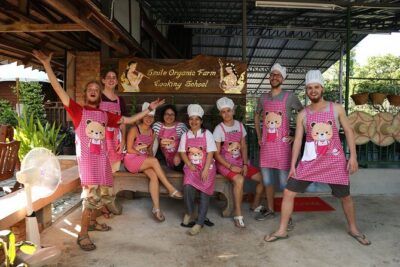
Half-Day Thai Cooking Class at Organic Farm in Chiang Mai
Read our review →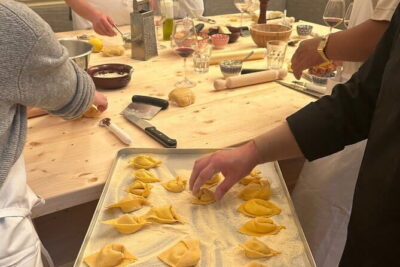
3 in 1 Cooking Class near Navona: Fettuccine, Ravioli & Tiramisu
Read our review →
Pasta & Tiramisu Cooking Class with Unlimited Wine
Read our review →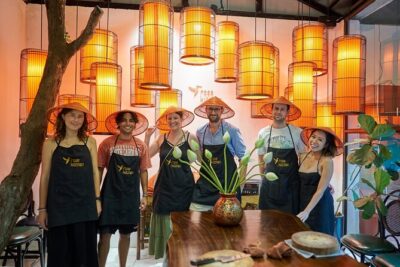
Hanoi Cooking Class: Culture, Local Market & Meaning CSR Impact
Read our review →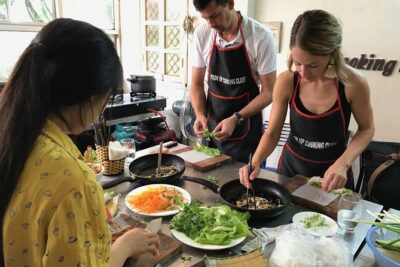
5 Traditional Dishes Hanoi Cooking Class with Market Trip
Read our review →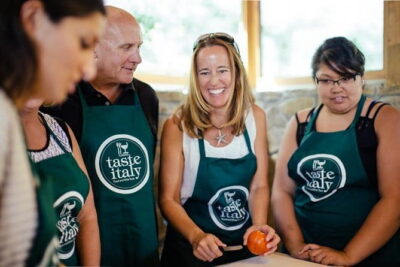
Cooking Class and Lunch at a Tuscan Farmhouse with Local Market Tour from Florence
Read our review →
Cooking Class, Market & Thai Herbs Garden Tour
Read our review →Lists this class appears in