
REVIEW · BALTIMORE, USA
French Cooking Class in Baltimore (Includes 3-Course Meal)
French cooking starts with onions. This Baltimore class turns them into a proper French onion soup, then builds a full three-course meal around classic methods. I like the small class size, capped at 12, and the chance to choose between coq au vin or beef Bourguignon. The BYOB setup also keeps the evening relaxed.
I also like that the lesson teaches useful kitchen skills, not just a string of recipes. You’ll work with braising, sauce reduction, and pastry. The main consideration is timing: this is a 4:00 pm class lasting about two and a half hours, so it takes up most of your evening and may not suit a tight Baltimore schedule.
Key points to know before booking
- Three classic French courses: Make French onion soup, choose a red-wine braise, and finish with tarte Tatin or coconut macaroons.
- A genuine hands-on format: The class is designed for active cooking, with guidance on braising, reduction, caramelizing, and pastry work.
- Small group setting: A maximum of 12 people allows for more personal help than a large demonstration.
- Choose your main dish: Pick coq au vin with chicken or beef Bourguignon, depending on your taste.
- Bring your own bottle: Wine and beer are welcome, making BYOB an easy way to match the meal.
- Dietary requests are possible: Tell the host in advance, and the kitchen will try to adapt the menu.
Cooking French classics at 711 South Central Avenue
The class begins at 4:00 pm at 711 S Central Ave in Baltimore. You return to the same place at the end, so there is no second meeting point to figure out after dinner. That simple arrangement matters when you are carrying a bottle, arriving with a small group, or planning another activity before or after the class.
The setting is a welcoming Baltimore kitchen with French flair. The supplied details do not describe the exact room, parking situation, or public transportation options, so I would check those before you leave. Confirmation arrives when you book, and service animals are allowed.
The group can include no more than 12 people. That is small enough for a more personal lesson without making the event feel like a private cooking appointment. You should have a better chance to ask questions, watch a technique closely, and get help with a tricky step than you would in a large cooking demonstration.
The class is offered in English. You do not need to arrive with professional kitchen skills. The menu is ambitious, but the lesson is built around clear French methods that you can use again at home.
A few more cooking classes around the USA worth a look
- New Orleans Demonstration Cooking Class with Meal
★ 5.0 · 3,000 reviews - New Orleans Hands-On Cooking Class with Meal
★ 5.0 · 1,183 reviews - Undiscovered Charleston: Half Day Food, Wine & History Tour with Cooking Class
★ 5.0 · 948 reviews
French onion soup teaches patience before dinner
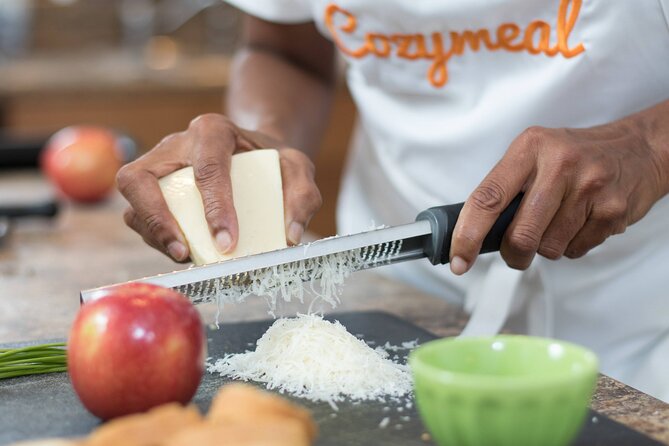
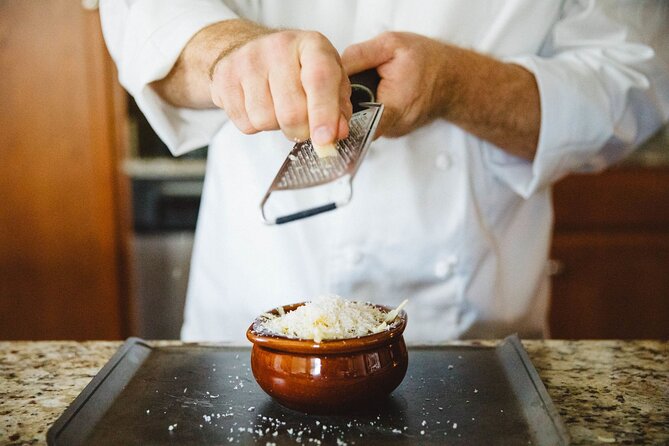
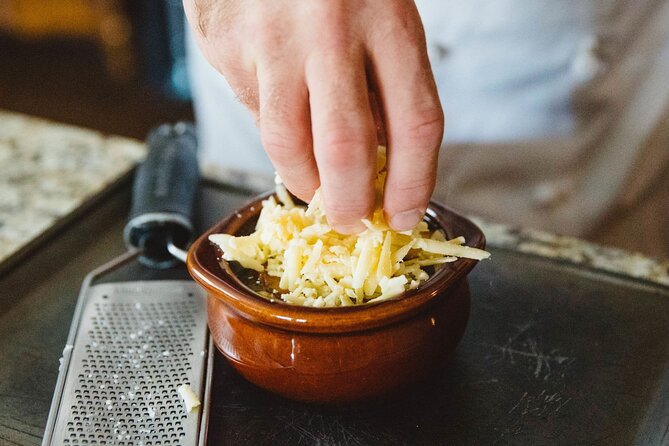
The first course is French onion soup, a dish that looks simple but rewards careful work. You’ll caramelize onions, build a full broth, top it with Gruyère cheese, and finish it with toasted croûtons.
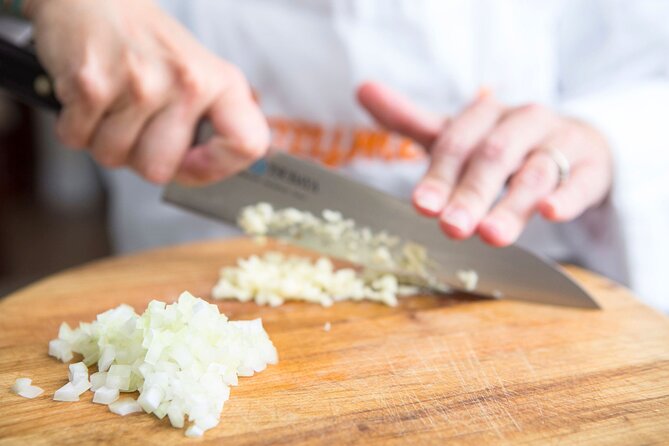
The key lesson is the onion. Slow caramelization develops the sweet, savory flavor that gives the soup its character. This is useful home-cooking knowledge because the same idea applies to sauces, gravies, and other dishes where a few basic ingredients need time to develop.
You’ll also see how the topping changes the dish. Gruyère brings a nutty, savory note, while the croûtons add crunch against the soft onions and broth. The soup is not merely a starter placed in front of you. It is a compact lesson in building contrast through texture and temperature.
I like this opening course because it gives you a task you can repeat without special equipment. You are not learning a restaurant trick that depends on a professional kitchen. You are learning how to make a familiar soup taste more polished.
The one drawback is that caramelizing onions takes attention. If you expect to rush through the first part and start eating right away, French onion soup may test your patience. That is part of the point, though. French cooking often asks you to give ordinary ingredients enough time.
Picking between coq au vin and beef Bourguignon
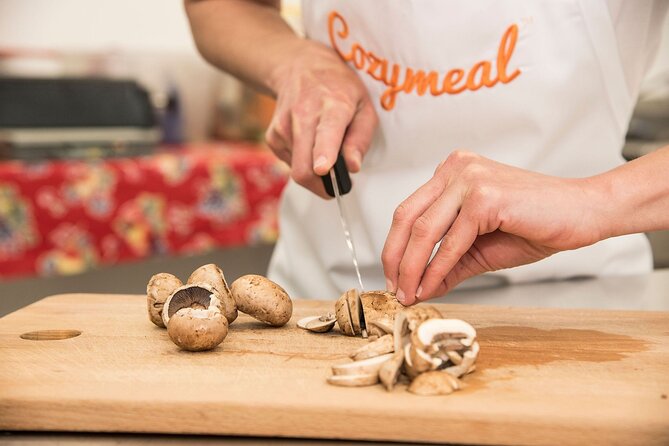
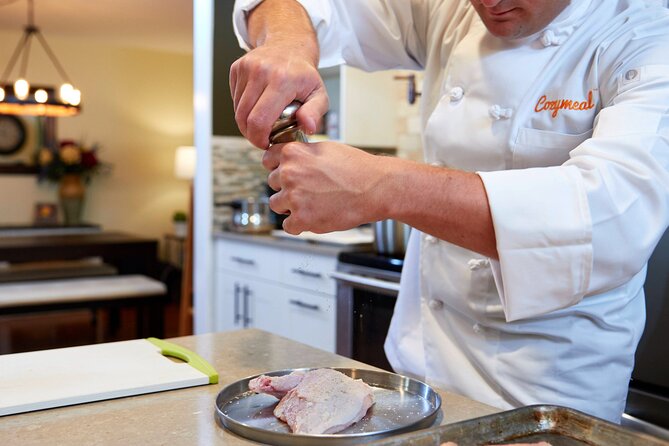
The main course gives you a choice between two French braises. Coq au vin uses chicken cooked with red wine, mushrooms, and herbs. Beef Bourguignon uses beef simmered slowly with vegetables and wine.
Both dishes teach the same broad family of skills: browning, braising, and building flavor in stages. You’ll learn how liquid, heat, vegetables, herbs, and time work together to turn a firm cut or simple chicken pieces into a tender main course.
Coq au vin is the lighter choice of the two, at least in the sense that chicken generally feels less heavy than beef. Its mushrooms and herbs should appeal to anyone who likes a savory sauce without choosing the most substantial option.
Beef Bourguignon is the classic comfort-food route. Beef, vegetables, and red wine create a fuller dish, and the slow cooking method shows why braising is such a useful technique. The menu description does not state how the choice is made or if every participant prepares the same main course, so you should confirm that point when booking if it matters to your group.
The class is especially useful here because braising is easy to understand but hard to perfect without guidance. You need to know how to build flavor before adding liquid, how much the sauce should reduce, and when the meat is ready. The chef’s instruction can help you avoid a thin sauce or tough result.
Chef T received especially warm praise for making the meal feel manageable. His tips reportedly helped people feel more confident preparing the soup, beef Bourguignon, and tarte Tatin. That is the kind of instruction I value most: practical advice that stays useful after the class ends.
Sauce reduction is the quiet star of the class
French food often gets treated as fussy, but the main lesson here is control. Sauce reduction is a good example. You start with a liquid that may taste thin, then allow it to reduce until the flavor becomes more concentrated.
That technique can improve weeknight cooking as much as special-occasion meals. It teaches you not to add too much seasoning too early and not to panic when a sauce looks unfinished. You learn to watch, taste, and adjust.
The class also covers braising, which gives you a reliable method for cooking meat slowly in a flavorful liquid. It is a forgiving technique once you understand the basics. You can use the same approach with different cuts and ingredients, though the exact menu here centers on chicken or beef, vegetables, herbs, and wine.
I would book this experience for someone who wants to become more confident in the kitchen, not just someone looking for dinner. You will eat the result, but the real value is leaving with a clearer sense of how French dishes are constructed.
Same place, a different thing to cook:
- New Orleans: Cajun and Creole Cooking Class
★ 4.9 · 730 reviews - Hands-on Cajun Roux Cooking Class in New Orleans
★ 5.0 · 356 reviews - Hands-On Hawaiian Imu Cooking and Cultural Dining Experience
★ 5.0 · 95 reviews - Hands-on Cooking Class in Charleston
★ 5.0 · 83 reviews
Dessert brings pastry skills to the table
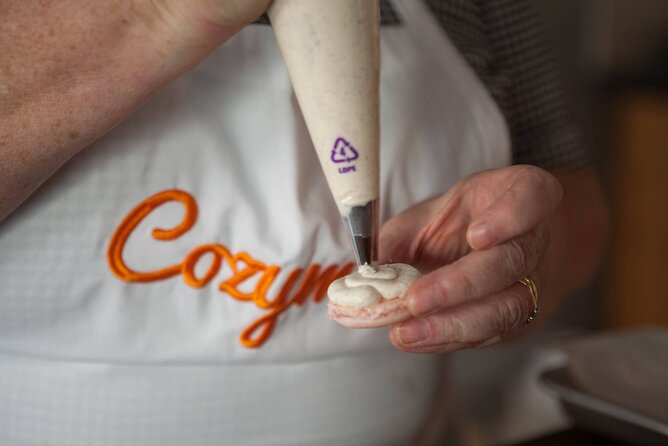
For dessert, you choose between apple tarte Tatin and coconut macaroons. These are very different endings, which is useful if your group has mixed tastes.
Tarte Tatin is the more technical option. Apples are caramelized and baked under puff pastry, then turned out as a rustic tart. It combines fruit, sugar, pastry, and careful timing. The finished dessert should have a soft, caramelized apple layer with crisp pastry beneath it.
The turning step is where the drama lives. A tart that looks fine in the pan must still be released and presented properly. That makes tarte Tatin a good lesson in pastry confidence, though it may feel less forgiving than the soup.
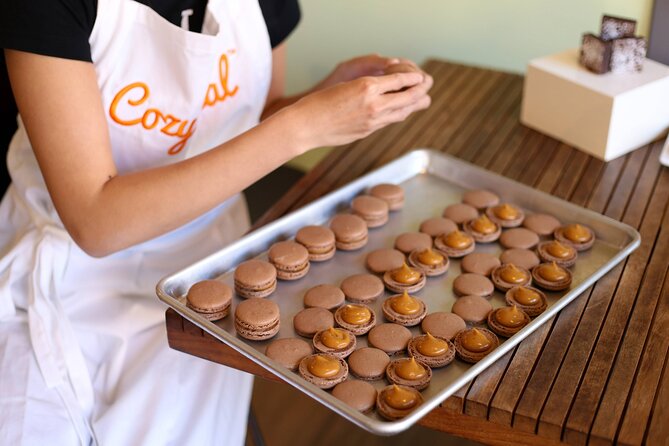
Coconut macaroons are the simpler choice in concept. They are light, chewy, and focused on texture rather than pastry handling. If you prefer a less involved dessert or want a smaller finish after a substantial main course, macaroons may be the better pick.
The menu information does not explain how dessert choices are organized, so ask ahead if everyone must prepare the same dessert or if you can select individually. That detail could matter if your group has different skill levels or dietary needs.
A BYOB evening with room for conversation
Wine and beer are welcome, so you can bring your own bottle to enjoy during the class. This adds flexibility and may help you pair a drink with the red-wine main course, though the experience does not state that pairings are formally taught.
BYOB also changes the mood. You are not only watching a chef work. You are cooking, eating, and sharing the process in a small kitchen. For a date, birthday, or food-focused evening with friends, that social side may be as important as the recipes.
Still, bring only what is permitted and practical. The supplied details confirm wine and beer, but they do not specify glassware, refrigeration, or corkage arrangements. If you have a particular bottle in mind, ask before arriving.
The 4:00 pm start gives the class an early evening shape. At about two and a half hours, it should finish around 6:30 pm if the schedule runs as expected. That timing works well for a relaxed dinner, but it may conflict with a show, reservation, or evening event immediately afterward.
Who will get the most from this Baltimore cooking class?
I would recommend this class to several types of people:
- Home cooks who want better technique: The focus on caramelization, braising, reduction, and pastry gives you skills beyond one meal.
- Couples and friends seeking an activity: You cook together instead of simply sitting across a restaurant table.
- French food fans: The menu covers three recognizable classics and keeps the flavors traditional.
- Visitors looking for something different in Baltimore: The class offers a food-centered activity rather than another standard sightseeing stop.
- Small groups with dietary needs: The host asks you to share restrictions in advance and will try to adapt the meal.
It may be less suitable if you want a quick demonstration, a large professional kitchen, or a completely scheduled sightseeing day. The experience is centered on cooking and eating, not on seeing Baltimore landmarks.
You should also be comfortable with a menu that includes wine in the cooking and red-wine braises. The host can try to accommodate dietary needs, but the available information does not promise every substitution. Share restrictions before the class rather than hoping they can be handled at the door.
What the experience is worth
No price is provided here, so I cannot judge the exact dollar value. I can still explain what you are paying for. The package includes a full three-course meal, instruction, hands-on kitchen time, a small group capped at 12, and the chance to repeat the recipes at home.
That is stronger value than a standard dinner if you care about learning. A restaurant gives you a finished French meal. This class gives you the meal plus a working understanding of how the soup, braise, sauce, and dessert come together.
The value depends on participation. If you want someone else to cook while you watch, you may not get as much from the format. If you enjoy asking questions and practicing techniques, the small group should make the fee easier to justify.
The most praised qualities are the food, the chef’s guidance, and the confidence people gain from making dishes they once thought were beyond their skill. That is a useful measure of value. You are not only buying an evening out. You are buying a set of methods you can use again.
Booking details and cancellation flexibility
You receive confirmation at booking. Free cancellation is available if you cancel at least 24 hours before the 4:00 pm start time. Cancel within 24 hours, and the payment is not refunded. Changes inside that window are also not accepted.
The class requires a minimum number of participants. If that minimum is not reached and the experience is canceled, you will be offered another date or experience, or receive a full refund.
Because dietary adjustments are considered in advance, provide that information as early as possible. The same applies if your group needs to know how the main course or dessert choices are arranged.
FAQ
Where does the French cooking class begin?
The class begins at 711 S Central Ave, Baltimore, MD 21202, USA.
What time does the class start?
The start time is 4:00 pm.
How long does the experience last?
The cooking class lasts approximately 2 hours and 30 minutes.
Where does the experience end?
The class ends back at the starting meeting point.
What food will I prepare?
You will prepare French onion soup, a choice of coq au vin or beef Bourguignon, and a choice of tarte Tatin or coconut macaroons.
Can I bring my own alcohol?
Yes. The experience is BYOB, and wine and beer are welcome.
Can dietary restrictions be accommodated?
The class is designed to accommodate a variety of dietary needs. You should provide your requirements in advance so the host can try to tailor the meal.
What is the cancellation policy?
You can receive a full refund if you cancel at least 24 hours before the start time. Cancellations or changes made less than 24 hours before the class are not refunded or accepted.
Should you book this French cooking class?
Book it if you want an active evening built around classic French food and useful kitchen skills. The strongest reasons are the small group, the choice of main course and dessert, the BYOB format, and Chef T’s practical guidance with dishes such as French onion soup, beef Bourguignon, and tarte Tatin.
Skip it if your schedule cannot spare an early evening or if you prefer a passive meal with no kitchen work. For everyone else, this is a smart Baltimore pick: you leave with dinner in you, French techniques in your hands, and recipes worth trying again at home.
Just added around the USA
- Hands-on Cooking Class in Charleston★ 5.0 · 83 reviews
- Sushi Making Cooking Class at a Local Brewery in Charlotte★ 5.0 · 2 reviews
- Authentic Asian Cooking Class in NYC (Includes 4-Course Meal)★ 5.0 · 8 reviews
- Hands-On Hawaiian Imu Cooking and Cultural Dining Experience★ 5.0 · 95 reviews
- Farm to Table Cooking Class at Kulaniapia Falls★ 4.5 · 36 reviews
- Baumkuchen Campfire Baking Class★ 5.0 · 3 reviews
- Private Atlanta Cooking Class with a Fun Local Chef Naina★ 5.0 · 2 reviews
- Thai Cooking Class in Fullerton, California★ 5.0 · 3 reviews
Cooking Classes, compared.

Half-Day Thai Cooking Class at Organic Farm in Chiang Mai
Read our review →

3 in 1 Cooking Class near Navona: Fettuccine, Ravioli & Tiramisu
Read our review →
Pasta & Tiramisu Cooking Class with Unlimited Wine
Read our review →
Hanoi Cooking Class: Culture, Local Market & Meaning CSR Impact
Read our review →
5 Traditional Dishes Hanoi Cooking Class with Market Trip
Read our review →
Cooking Class and Lunch at a Tuscan Farmhouse with Local Market Tour from Florence
Read our review →
Cooking Class, Market & Thai Herbs Garden Tour
Read our review →Lists this class appears in