
REVIEW · SEMINYAK, INDONESIA
Balinese Cooking Class in Seminyak
Come hungry, leave with recipes. This three-hour Balinese cooking class at The Amala in Seminyak gives you a practical way to understand Bali through its food. I especially like the optional morning visit to Jimbaran fish market, where Chef Putu can show you how to choose fresh fish, and the chance to cook a full three-course meal rather than simply watch a demonstration. The calm villa setting, personal attention, certificate, and take-home apron are nice touches.
The main consideration is that the class appears to involve a fair amount of chopping and preparation, so it may feel less like a chef school and more like a guided kitchen workshop. One person also found the finished food had cooled before it was served. The market visit costs extra for a solo booking and is available only with the morning session.
Key points at a glance
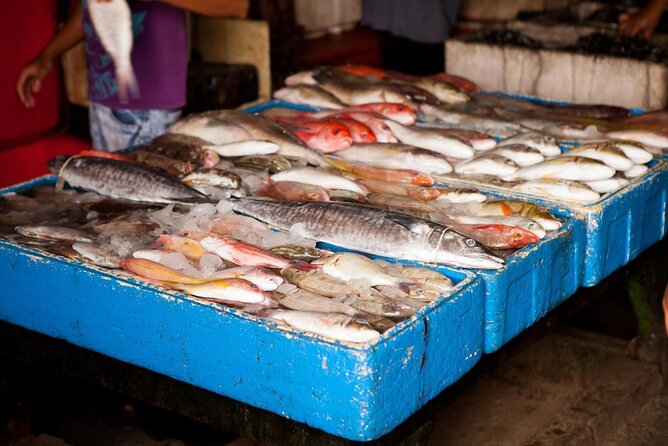
- Jimbaran market at 9:30 a.m.: Add a morning visit to see fish and produce being selected with the chef.
- Three Balinese menus: Choose from meat and fish dishes, seafood soup and chicken satay, or a vegetarian menu.
- Cooking at The Amala: The class takes place in a peaceful Seminyak setting, with lunch or dinner served afterward.
- Small group format: The class accepts a maximum of 10 people, with a minimum booking of two.
- Useful keepsakes: You take home your apron and receive a personalized completion certificate.
- Hotel transfer included: Round-trip private transport is included within the Seminyak area.
The Amala setting in Seminyak
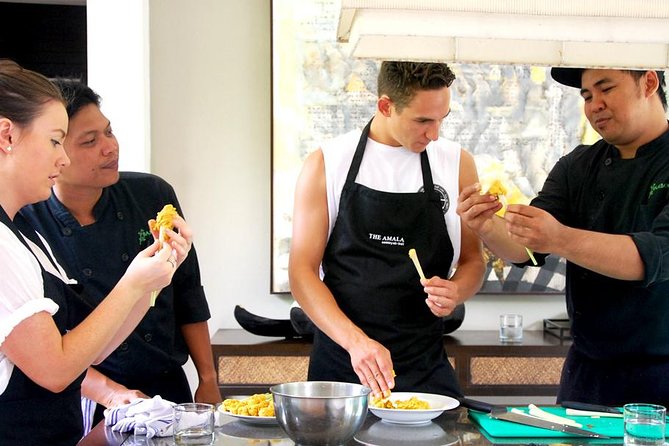
The class begins at The Amala, a boutique retreat at Jl. Kunti I No. 108 in Seminyak. This is not a busy restaurant kitchen or a large tourist classroom. The setting is described as calm and attractive, with outdoor dining prepared for the meal at the end.
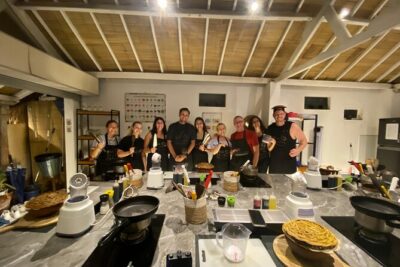
That setting matters. Cooking lessons can feel cramped when too many people crowd around one counter. Here, the maximum group size is 10, and several people have taken the class in groups of around six. That is small enough for the chef and staff to help with knife work, seasoning, and cooking technique.
Your transport is included if you are staying within Seminyak. The activity starts and finishes at The Amala, so pickup details should be confirmed when you book. If you are staying farther away, do not assume the Seminyak transfer applies. A booking from Nusa Dua involved an additional 250,000 rupiah transport charge, which was not made clear until close to the tour date. That is a useful warning: ask about transfer costs before paying if your hotel is outside the stated area.
The minimum age is 12, and at least two people are required for the regular booking. A solo visitor may still be able to join the market visit, but an extra charge of Rp100,000 net applies for that option.
More Balinese Cooking Classes in Indonesia:
- Ubud: Balinese Cooking Class at an Organic Farm
★ 5.0 · 1,786 reviews - Ubud Cooking Class Bali with Balinese Chef
★ 5.0 · 1,609 reviews - PRIVATE Authentic Balinese Cooking Class in Ubud at Putu’s Home
★ 5.0 · 644 reviews
The Jimbaran market add-on
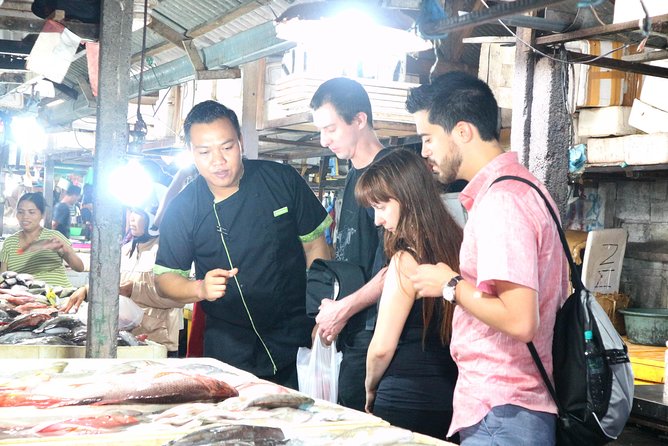
The market visit begins at 9:30 a.m. and is available with the morning class only. The chef accompanies you to the Jimbaran fresh fish market, then helps select ingredients and spices for the meal.
This is the most distinctive part of the experience. You do not simply arrive at a prepared cooking station and start slicing. You get a look at where some of the food begins, including fish, herbs, vegetables, and other produce. Chef guidance is especially useful here because selecting fresh fish can be difficult when you do not know what to look for. One specific tip shared from the experience was to check the redness of a red snapper’s eyes.
Some market visits also include a nearby fruit and vegetable market. The point is not only shopping. It is learning what local ingredients look like before they are cleaned, portioned, and placed on a restaurant plate.
The market option also gives the class a stronger connection to everyday Balinese cooking. You see the raw materials, ask about unfamiliar spices, and then use those ingredients later. If you enjoy food markets, choose the morning upgrade. It adds context that the cooking session alone cannot provide.
There are practical limits. The market tour requires at least two people per booking, and a solo participant pays the extra charge noted above. It is also not part of the afternoon class, so the 4 p.m. option is better for you if you want a later start and do not care about the market.
Morning and afternoon timing
The morning cooking class begins at 11 a.m. after the market visit, if you choose that add-on. Preparation starts at approximately 11:30 a.m., and the meal is ready around 1 p.m.
The afternoon schedule starts at 4 p.m., with preparation at about 4:30 p.m. You finish and eat around 6 p.m. The class itself lasts about three hours, though the morning market visit adds time before the kitchen session.
The choice comes down to the shape of your day. The morning option works well if you want to make the class a main activity and have the rest of the afternoon free. The afternoon option fits a slower day in Seminyak and ends with dinner.
The shared-menu format is important. Everyone in your booking chooses the same menu, so discuss your preference before reserving. You cannot expect one person to prepare Menu 1 while another cooks the vegetarian menu during the same class.
What you actually cook
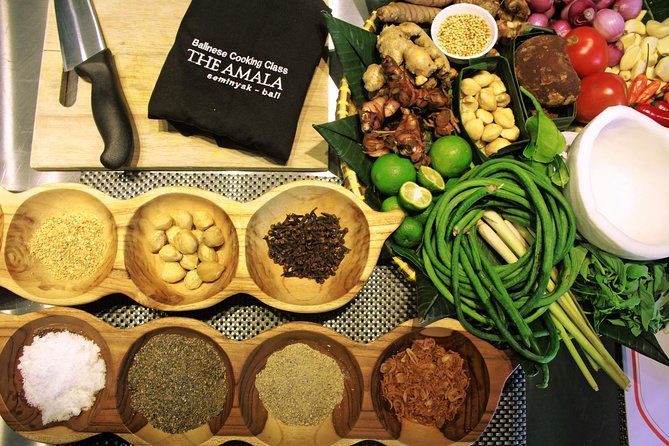
You choose one of three menus. Each includes three dishes, giving you a full meal rather than a single recipe.
Menu 1 includes:
- Lawar salad with green beans, fresh coconut, and chicken
- Tum ikan, steamed fish cooked in a banana leaf
- Dadar gulung, a coconut pancake with palm sugar and coconut
This menu gives you a broad look at Balinese cooking. You work with fresh vegetables, coconut, fish, banana leaf, and palm sugar. The banana-leaf preparation is also a useful introduction to a familiar local cooking method.
Menu 2 includes:
- Jukut gedang mekuah, young papaya soup with seafood
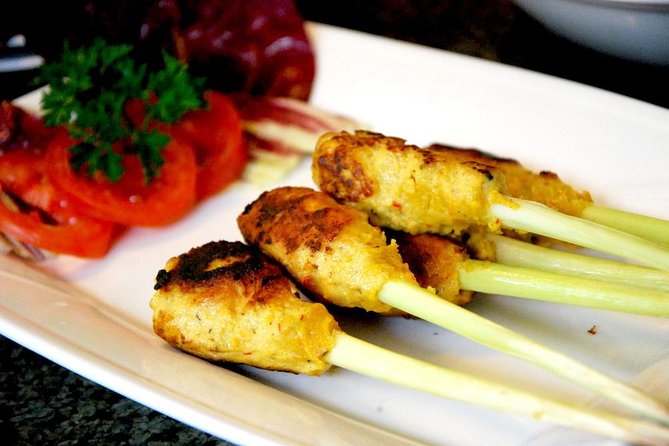
- Sate lilit ayam, chicken satay shaped around a lemongrass stick, served with steamed rice
- Godoh biu, Balinese fried banana
This is a good choice if you want recognizable comfort food with a distinctly Balinese twist. The chicken satay is not simply placed on a bamboo skewer. It is wrapped around lemongrass, which brings aroma into the dish as it cooks. The meal ends with fried banana, so it has a clear sweet finish.
The vegetarian menu includes:
- Gado-gado, vegetable salad with peanut dressing
- Pepes tahu, steamed bean curd in a banana leaf
- Bubur injin, Balinese black rice pudding
This is more than a token vegetarian plate. You still prepare three separate dishes and work with several important Balinese techniques, including banana-leaf steaming and a traditional rice dessert. If you do not eat meat or fish, this menu lets you take part fully without needing substitutions.
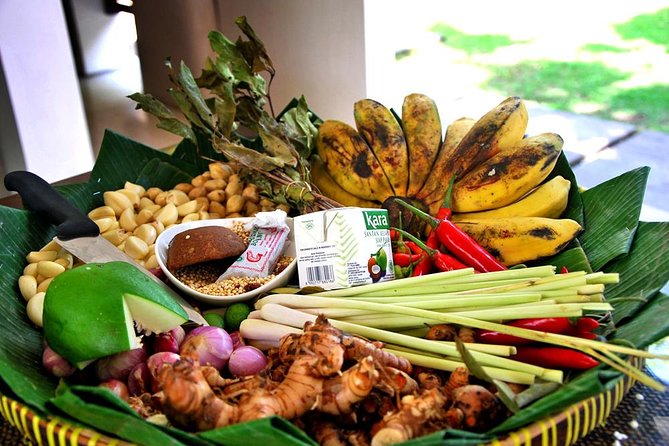
The menu descriptions use ingredients such as coconut, seafood, fish, chicken, peanut dressing, palm sugar, and black rice. The chef also explains alternatives for ingredients that may be hard to find at home, which makes the class more useful after your Bali trip.
A few more cooking classes around Indonesia worth a look
- From Ubud: Authentic Cooking Class in a Local Village
★ 4.9 · 1,325 reviews - Ubud: Cooking Class with Transfers and Optional Market Visit
★ 4.9 · 824 reviews - Balinese Ubud cooking school (9 Dish Cooking and Market Tour)
★ 5.0 · 540 reviews - Ubud: Balinese Cooking Class and Market Tour
★ 4.8 · 531 reviews
How hands-on is the cooking?
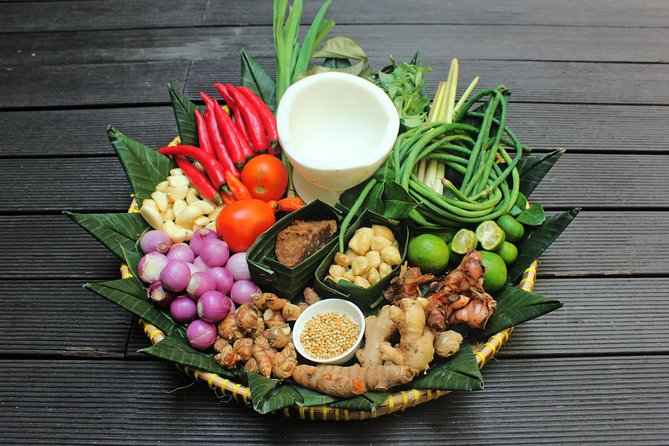
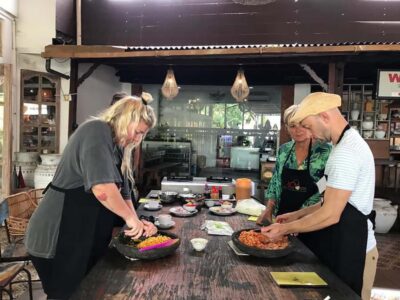
You receive an introduction to the ingredients and equipment, then prepare the dishes under the chef’s supervision. The staff involve participants in cutting ingredients and cooking each part of the meal. You also receive recipes to follow during the class, which helps you keep track of the steps.
The strongest part of the instruction is the explanation of the base seasoning. In Balinese cooking, the spice mixture matters as much as the main ingredient. The chef shows how the basic mixture is prepared and explains why each spice is used. That gives you a better chance of reproducing the dishes at home instead of returning with only a pleasant memory.
Chef Putu receives repeated praise for clear instruction, friendly conversation, and patient help. Chef Evi and Manik are also mentioned as making the class easy to follow and enjoyable. The experience seems friendly rather than formal, so you can ask questions without feeling you are interrupting a lecture.
Still, keep your expectations realistic. This is a short class. You will not spend hours learning every stage of Balinese cuisine, and one participant felt much of the activity consisted of chopping ingredients. That may disappoint you if you want advanced knife skills or a serious professional cooking course. If you want to get involved, take every chance to prepare, stir, season, and assemble rather than standing back.
Eating the meal you prepared
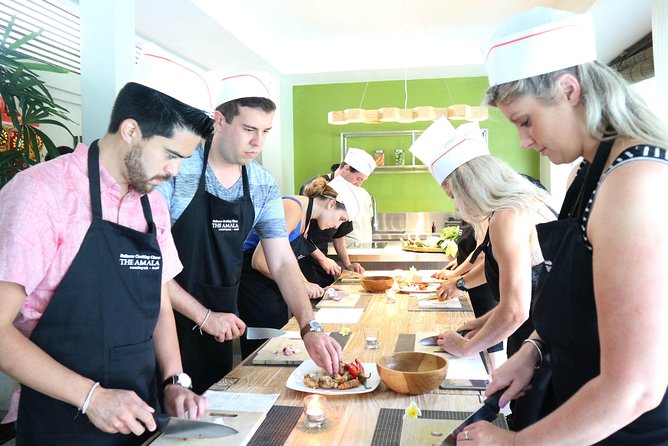
The class finishes with lunch or dinner made from your own work. That is one of the best reasons to choose a cooking class over a standard food tour. You understand the ingredients more clearly because you have handled them, seasoned them, and watched them cook.
The staff prepare an attractive dining area, often outside, and the food is served after the final preparation. Several dishes were described as delicious, plentiful, and satisfying. Menu 2 in particular seems generous, with enough food to leave you full.
There is one small service issue to keep in mind. One person found the food had become cold by the time they ate. This may not happen every time, but the class has several dishes to finish, and timing can be difficult when everyone is taking part. If hot food matters to you, ask the chef when each dish should be served and whether some items can be brought to the table immediately.
The meal also helps you judge whether you could make the dishes at home. The recipes are simple enough to follow, and the chef offers suggestions for replacing harder-to-find ingredients. That practical advice may be more valuable than a souvenir photograph.
What you take home
The class includes a certificate from the chef and lets you keep the apron. The certificate is personalized, and the apron is a useful souvenir rather than another decorative trinket that will sit in a drawer.
You also leave with recipes and a better sense of how to build Balinese flavor. Several people appreciated learning techniques that could be shared with family and friends at home. That gives the experience lasting value, especially if you enjoy cooking and plan to try the dishes again.
The apron is also helpful during the class. You are working with spices, coconut, sauces, and frying ingredients, so wearing one makes sense. Just do not confuse the certificate with a formal culinary qualification. It is a pleasant record of completing the experience.
Is $66.67 a fair price?
At $66.67 per person, this is not the cheapest meal you will eat in Bali. You are paying for instruction, ingredients, a three-course lunch or dinner, and private round-trip transfer within Seminyak. The market visit is an optional extra, and transport beyond Seminyak may cost more.
I think the price is reasonable if you value participation. You are not simply paying for a meal. You receive several hours of instruction, a small group setting, a chef-led food market visit if you choose the morning option, and take-home items.
The value is weaker if you mainly want to eat Balinese food. Local restaurants will usually give you a cheaper meal, and a cooking demonstration without much hands-on work could feel expensive at this price. The class makes the most sense for you if you enjoy learning by doing and want recipes you can use later.
The 10-person maximum helps support the price. A large group would make the cooking less personal, but a small class gives you more chances to ask questions and take part.
Who should book this class?
I would recommend it to couples, friends, families with older children, and solo food lovers who can meet the minimum booking rules. The minimum age of 12 makes it suitable for teenagers who enjoy cooking, though younger children cannot join.
Choose it if you want:
- A structured activity in Seminyak
- A meal that you help prepare
- Guidance from a local chef
- A morning market visit
- Vegetarian cooking options
- Recipes and practical ingredient advice
- A calm setting instead of a crowded classroom
It may not suit you if you dislike chopping, want a very advanced culinary lesson, or prefer to spend the morning sleeping late. The market add-on also does not fit an afternoon schedule.
Booking advice and cancellation details
The morning session is the better choice if the Jimbaran market matters to you. Confirm that the market visit is included in your booking, especially if it is the main reason you chose the class. Also confirm pickup costs if you are staying outside Seminyak.
Free cancellation is available up to 24 hours before the start time. Changes or cancellations made inside that period are not accepted for a refund. Poor weather may lead to a new date or a full refund, since the activity requires suitable conditions.
Should you book the Balinese cooking class?
Book it if you want to understand Balinese food by preparing it yourself. The best version of the experience is the morning class with the Jimbaran market visit, followed by Menu 1, Menu 2, or the vegetarian menu at The Amala. Chef Putu and the support team add warmth, and the apron, certificate, and recipes give you something useful to take home.
Skip it if your main goal is a cheap meal or a high-level professional cooking lesson. For most food-focused visitors staying in Seminyak, though, the class offers a pleasant balance of local ingredients, practical instruction, a good meal, and a look at how that meal begins at the market.
FAQ
Where does the Balinese cooking class take place?
The class takes place at The Amala, at Jl. Kunti I No. 108 in Seminyak, Bali. The activity ends back at the same meeting point.
How long does the cooking class last?
The cooking experience lasts approximately three hours. The optional morning market visit begins at 9:30 a.m. and adds time before the class.
What time does the morning class begin?
The morning class begins at 11 a.m., with food preparation starting around 11:30 a.m. If you choose the market visit, you meet the chef at 9:30 a.m.
What time does the afternoon class begin?
The afternoon class begins at 4 p.m., with preparation starting around 4:30 p.m. The meal is expected to be ready around 6 p.m.
Is hotel pickup included?
Round-trip private transfer is included for hotels within the Seminyak area. Transfers from other areas may involve an additional charge.
Can one person book the market visit?
The market tour requires a minimum of two people per booking. A solo participant may pay an additional Rp100,000 net for the market visit.
What cooking menus are available?
You can choose Menu 1, Menu 2, or the vegetarian menu. Everyone in the same booking selects the same menu.
Is there a vegetarian option?
Yes. The vegetarian menu includes gado-gado, pepes tahu, and bubur injin.
What is the minimum age?
The minimum age for the activity is 12 years.
What do I receive after the class?
You receive a certificate from the chef and can keep the class apron. Recipes and cooking guidance are also provided during the experience.
Just added around Indonesia
- Pure Bali Village Experience, Cooking & Jamu Class+VIP Transfer★ 5.0 · 16 reviews
- Spice Garden, Jamu & Cooking Class in Bali Village★ 5.0 · 5 reviews
- The Authentic Balinese Cooking Experience★ 5.0 · 4 reviews
- Seminyak : cooking class traditional food bali★ 5.0 · 5 reviews
- Seminyak: Vegetarian Cooking Class★ 5.0 · 3 reviews
- Quad ride, waterfalls & aunthentic cooking class in munduk★ 4.9 · 53 reviews
- Pure Bali Village Experience Cooking & Jamu Class, Transfer★ 4.8 · 5 reviews
- Ubud: Organic Farm Harvest, Bali Cooking Class by Pemulan★ 4.8 · 12 reviews
Balinese & Indonesian Cooking Classes, compared.
PRIVATE Authentic Balinese Cooking Class in Ubud at Putu’s Home
Read our review →
Balinese Ubud cooking school (9 Dish Cooking and Market Tour)
Read our review →
Learn to cook Indonesian food at Gili Cooking Classes Trawangan
Read our review →Lists this class appears in