REVIEW · UBUD, INDONESIA
Balinese Cooking class with traditional morning market visit
Start with the market, then cook what you find. This six-hour Ubud experience links a local morning market with a hands-on Balinese cooking class in the village of Laplapan. I like the small maximum group of eight and the chance to learn from local cooks such as Wayan and Putu, rather than simply watching a demonstration. I also like that the day includes making a canang, a traditional Balinese offering, before everyone sits down to eat the food they prepared.
The main consideration is the early start and the six-hour commitment. The market visit is an important part of the day, but it is brief compared with the cooking session, so this is best for you if food, local customs, and practical participation matter more than ticking off several Ubud sights.
What makes this Ubud class worth your morning
- Morning market first: See and taste local fruits, herbs, vegetables, spices, and other ingredients before cooking with them.
- A real cultural lesson: Make a canang offering and learn why these small woven baskets are part of daily Balinese life.
- Small group format: The maximum is eight people, allowing more time for questions and hands-on work.
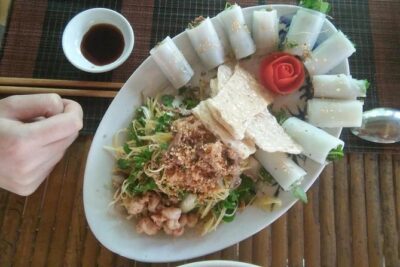
- A full meal at the end: Prepare starters, main dishes, and dessert, then eat the finished food at a sit-down meal.
- Hotel pickup included: Air-conditioned transport takes you from your hotel to the market and cooking venue.
- Strong track record: The class has a 5.0 rating from 161 reviews, with 99 percent recommending it.
From hotel pickup to the morning market
The day begins with pickup at your hotel in an air-conditioned vehicle. That simple detail matters in Bali, where roads can be busy and the heat can arrive early. You do not need to arrange separate transport to a market outside central Ubud, and the driver may add useful context along the way. One particularly praised driver, Awan, explained sights passed on the road to the market.
Pickup is offered from hotels in Ubud and has also worked for people staying farther away, including Sanur. Still, longer transfers can eat into your morning, so check the pickup area and start time before booking. The tour lasts about six hours, and the morning schedule is part of its appeal.
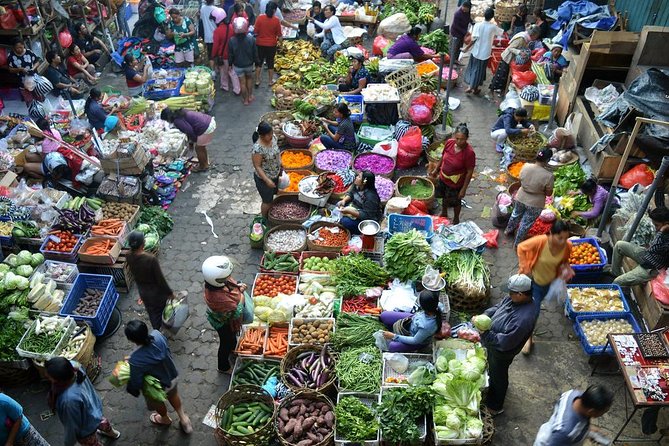
At the local market, your guide introduces the ingredients used in Balinese kitchens. Expect to see fresh vegetables, herbs, meat, spices, fruit, and sweets. You may have the chance to smell or taste unfamiliar produce, and the guide can explain which items are local and which arrive from elsewhere.
This is not simply a shopping stop. It gives you a useful frame for the class. Instead of meeting a bowl of chopped ingredients with no context, you have already seen the raw materials in their everyday setting. You can ask what an ingredient is, how it is used, and why it matters in Balinese cooking.
The market visit is described as brief, so do not expect a long food tour or a full morning spent browsing every stall. I see that as a fair trade. The market sets up the cooking lesson, while most of your practical time is saved for the kitchen.
More Cooking Classes with a Market Tour in Indonesia
- Ubud: Cooking Class with Transfers and Optional Market Visit
★ 4.9 · 824 reviews - Balinese Ubud cooking school (9 Dish Cooking and Market Tour)
★ 5.0 · 540 reviews - Ubud: Balinese Cooking Class and Market Tour
★ 4.8 · 531 reviews
Learning about canang and Balinese daily life
After the market, the group continues to Laplapan, a traditional village near Ubud. You receive a welcome from local hosts before the cooking begins. The setting is described as a clean cooking space surrounded by attractive village scenery, with a warm drink and snack offered on arrival.
One of the most meaningful parts of the day is learning to make a canang. This small offering basket is made from woven palm leaves and decorated with flowers and other items. The class teaches you how to assemble it and explains the role of offerings in Balinese life.
This is a useful addition because it keeps the class from being only about recipes. Food and religious practice sit close together in daily Bali, and the canang lesson gives you a respectful introduction to that connection. You are not just chopping vegetables for lunch. You are learning about a custom you will see outside homes, shops, and temples during your stay.
The activity also gives children and first-time craft makers something concrete to do. Reports of the class describe children between six and nine enjoying the session, and families taking part together. You should still consider your own child’s patience with a six-hour morning, but the mix of market, craft, cooking, and eating gives the day several changes of pace.
Cooking several Balinese dishes by hand
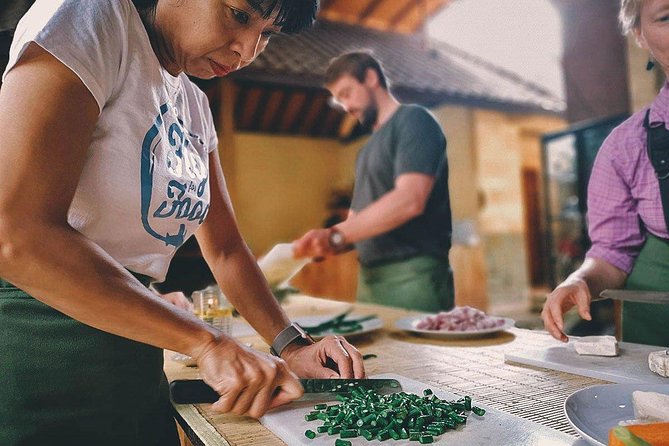
The central part of the day is a practical cooking lesson with a local chef. Wayan is praised for being patient, funny, and clear, while Putu is described as friendly, warm, and especially good with questions and children. The teaching style appears relaxed, with help available as you prepare each dish.
You can expect to work on starters, main courses, and an authentic dessert. The exact menu may vary, but the class has included as many as nine dishes and, in another description, a five-course set. That is a substantial amount of food for one morning.
The class combines preparation with some advance work by the staff. That is a good choice. If every ingredient had to be washed, peeled, chopped, and cooked from scratch by the group, the session could become slow and tiring. Pre-prepared elements keep the pace moving while still giving you plenty to do.
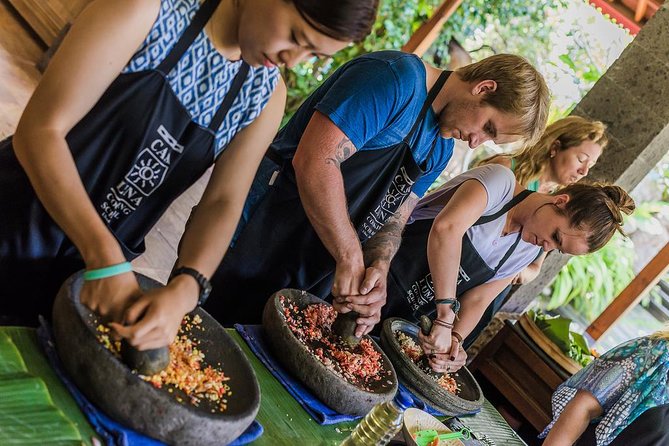
The hands-on tasks are the real value here. You learn how ingredients are prepared, how local flavors are combined, and how traditional cooking methods work. You can ask why a certain spice is used or how a dish might be adapted at home. The instructors provide guidance without turning the class into a performance where you merely watch.
The small group limit helps. With no more than eight people, you have a better chance of handling the food yourself and getting individual help. A solo participant may find the format especially pleasant because it offers a natural way to meet other people while working on a shared meal.
Some sessions have been even smaller. One person ended up with a private lesson and prepared every dish with the instructor. You should not book expecting a private class, but a small group gives you a reasonable chance of receiving personal attention.
How much food will you actually cook?
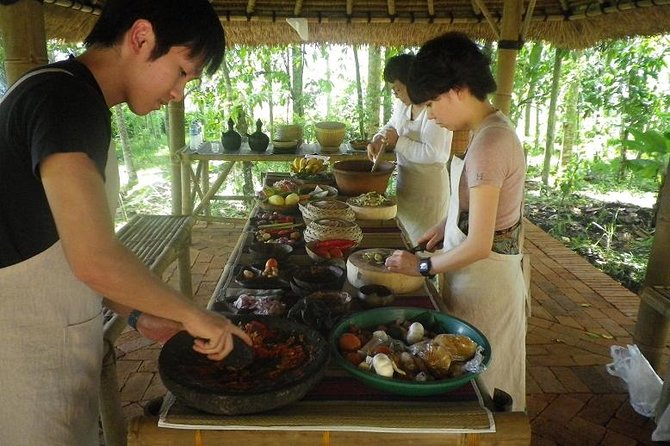
The answer appears to be: plenty. Descriptions include several dishes, a full five-course meal, and up to nine preparations. You should arrive ready for a generous lunch rather than a token tasting.
The final meal is served at a table after the cooking is complete. This is one of the strongest parts of the format. You get to see the finished dishes together, taste what you made, and share the meal with the rest of the group.
That final pause also helps you understand the recipes as a complete Balinese meal rather than isolated cooking exercises. You can compare flavors, notice how the dishes work together, and ask last questions while everything is fresh.
Some classes provide a recipe booklet or recipes to take home. That makes the $35 price more useful after your Bali trip. A cooking class is a better buy when it gives you a realistic chance to repeat the food at home, not just a pleasant lunch you forget after leaving.
Dietary needs can be accommodated in at least some circumstances. One session adapted the menu for vegetarian participants, and another included a vegetarian option. You should tell the provider about your needs in advance rather than assume every request can be handled on the day.
More Cooking Classes with a Market Tour in Ubud
- PRIVATE Ubud Market Tour & Balinese Cooking Class with Putu
★ 5.0 · 125 reviews - Jambangan bali cooking class with morning market tour
★ 5.0 · 35 reviews - Balinese cooking class/Go shopping at the market, cook, eat
★ 5.0 · 12 reviews
Why the $35 price is good value
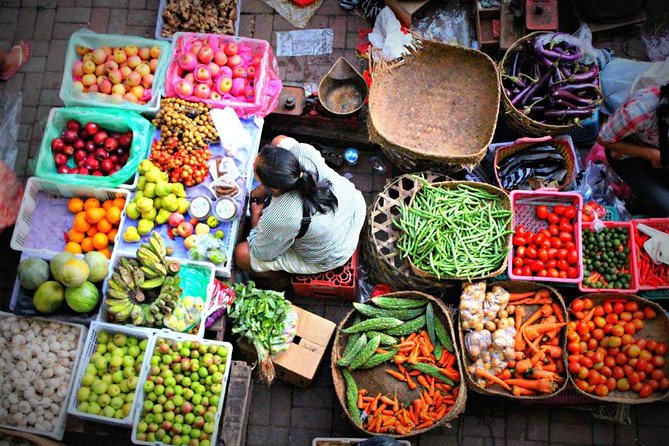
At $35 per person, the cost covers far more than a cooking demonstration. You receive hotel pickup, transport between the market and workshop, the market visit, cooking equipment, instruction, the meal you prepare, and taxes. Personal expenses are not included.
The strongest value comes from combining several activities that you might otherwise book separately. A market visit, cultural lesson, cooking class, lunch, and transport are all brought together in one morning. You also avoid the uncertainty of finding a suitable kitchen class on your own.
The price is especially fair for people who want to do the cooking themselves. If your main aim is simply to eat local food, a restaurant meal will cost less. If you want to learn techniques, understand ingredients, and take recipes home, the class offers more lasting value.
Families may also find the price reasonable because the day creates a shared activity rather than separate entertainment for adults and children. The group format means you are not paying for a private family guide, but the small size should still keep the lesson personal.
Group discounts are available, though the supplied details do not state the exact discount or minimum number of people. Check the current rate if you are booking for a family or larger party.
Practical points to consider before booking
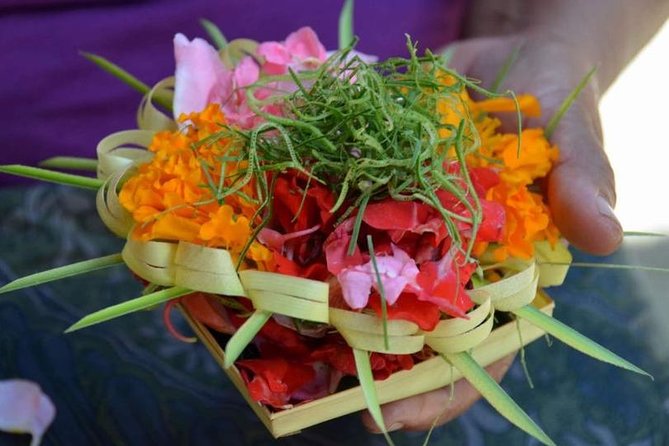
Plan on a full morning and part of the afternoon. The stated duration is approximately six hours, so do not schedule a tight midday flight, spa appointment, or distant sightseeing stop afterward.
The market is an active food environment, and you may encounter unfamiliar ingredients, smells, and textures. That is part of the point, but it may not suit you if you prefer a polished food hall or a quiet indoor tour.
The cooking venue is described as clean and attractive, but the available information does not provide a detailed accessibility assessment. If you have mobility, dietary, or medical needs, ask the provider for specific arrangements before paying.
The maximum group size is eight. That is small enough for direct instruction, but it is still a shared class. You will work alongside other people, and the pace may be influenced by the group’s mix of cooking experience.
The class uses mobile tickets, and confirmation is received at booking. Free cancellation is available until 24 hours before the start time. Cancellation inside that 24-hour window is not refunded, and changes then are not accepted.
Who will enjoy this class most?
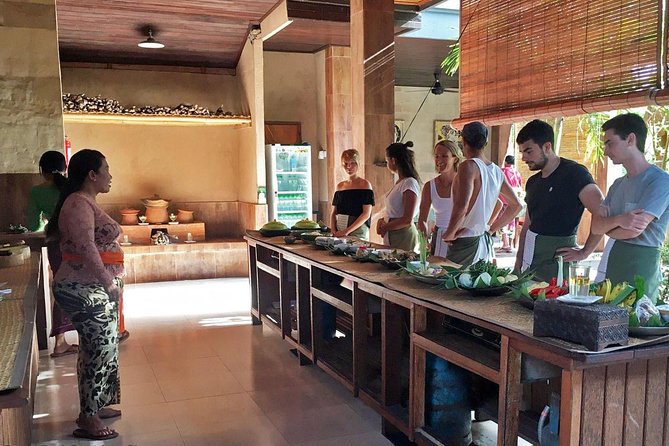
I would choose this class if you want a practical introduction to Balinese food and customs in one outing. It suits curious eaters, first-time cooks, solo visitors who enjoy meeting people, and families whose children can manage a long morning.
It is also a smart choice early in an Ubud stay. The market introduces ingredients you may notice later in restaurants, while the offering lesson gives you context for customs seen around town. You leave with more than a meal, including a better sense of how food fits into local life.
You may want a different activity if you are seeking a serious professional cooking course, a private chef lesson, or a long market photography tour. The class is designed to be friendly and accessible, not highly technical or specialized.
It also may not be ideal if you have no interest in cooking. The sit-down meal is enjoyable, but you earn it through several hours of participation. The point is to prepare the food, not merely watch someone else do it.
Final verdict: book it for food, culture, and hands-on time
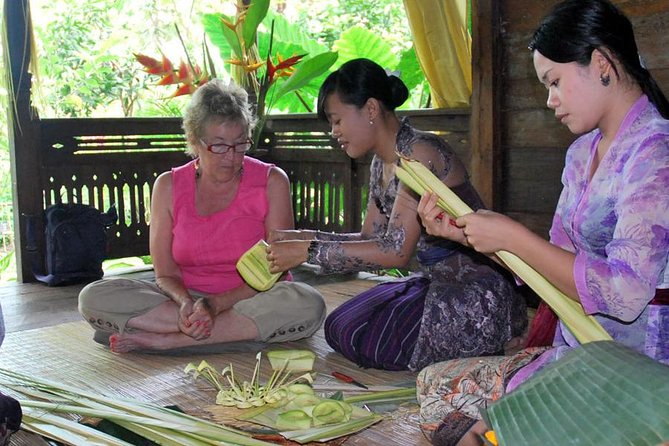
I would recommend this Balinese cooking class for the combination of market, canang-making, village setting, and shared meal. The best parts are the personal teaching from cooks such as Wayan and Putu, the small group size, and the amount of food you get to prepare for $35.
Book it if you want an active morning and a useful souvenir in the form of recipes and new cooking skills. Skip it only if your schedule is too tight, you dislike group activities, or you want a more advanced private culinary course. For most food-focused visitors staying in Ubud, this is a practical and good-value way to spend six hours.
FAQ
How long does the Balinese cooking class last?
The experience lasts approximately six hours, including hotel pickup, the morning market visit, the cultural activity, cooking lesson, and meal.
Is hotel pickup included?
Yes. Pickup is offered from your hotel, and air-conditioned transport is included for the journey to the market and cooking workshop.
How many people can join the class?
The maximum group size is eight people. Group discounts are also available, although the exact discount is not specified.
Does the experience include a market visit?
Yes. You visit a local morning market to learn about and select ingredients such as vegetables, herbs, fruit, meat, and spices.
Will I learn anything besides cooking?
Yes. The class includes instruction on making a canang and other elements used for Balinese offerings, along with explanations of local food and customs.
Can the class accommodate vegetarian diets?
Vegetarian options have been offered, and dietary requirements have been adapted in some sessions. Tell the provider about your needs before the class.
More Morning Classes in Ubud
- Tingly Thai Cooking Class with Morning Market Tour
★ 5.0 · 589 reviews - Cooking Morning Class Chiang Mai Visit Organic Garden and Market
★ 5.0 · 211 reviews - Morning Cooking Class in Organic Farm with Local Market Tour
★ 5.0 · 157 reviews - Kyoto: Morning Japanese Bento Cooking Class
★ 5.0 · 149 reviews
More Balinese Cooking Classes in Ubud
- Ubud Cooking Class Bali with Balinese Chef
★ 5.0 · 1,609 reviews - PRIVATE Authentic Balinese Cooking Class in Ubud at Putu’s Home
★ 5.0 · 644 reviews - Balinese Farm Cooking Class by Pemulan Bali
★ 5.0 · 410 reviews - Balinese Authentic Cooking Class in Ubud
★ 5.0 · 239 reviews
Just added around Ubud
- The Authentic Balinese Cooking Experience★ 5.0 · 4 reviews
- Ubud: Organic Farm Harvest, Bali Cooking Class by Pemulan★ 4.8 · 12 reviews
- packages cooking class and romantic dinner in a local home★ 5.0 · 4 reviews
- Jambangan bali cooking class with morning market tour★ 5.0 · 35 reviews
- Ubud: Balinese Cooking Class with Hotel Transfers★ 4.8 · 17 reviews
- Bali: Cooking Class with Monkey Forest and Art Village Tour★ 5.0 · 2 reviews
- Balinese cooking class/Go shopping at the market, cook, eat★ 5.0 · 12 reviews
- PRIVATE Ubud Market Tour & Balinese Cooking Class with Putu★ 5.0 · 125 reviews
Cooking Classes with a Market Tour, compared.
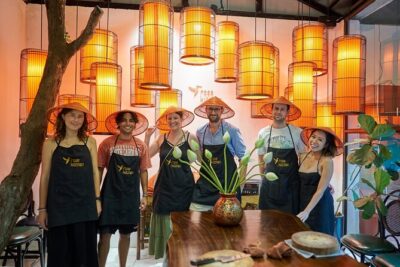
Hanoi Cooking Class: Culture, Local Market & Meaning CSR Impact
Read our review →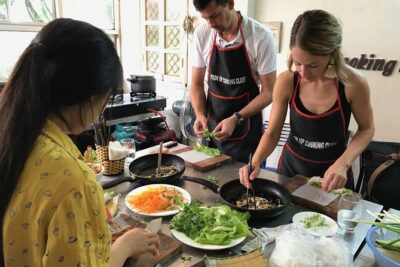
5 Traditional Dishes Hanoi Cooking Class with Market Trip
Read our review →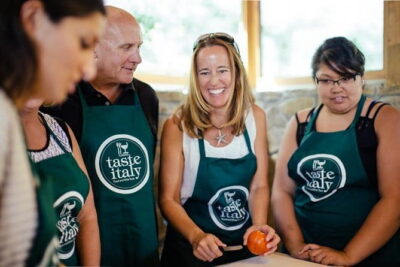
Cooking Class and Lunch at a Tuscan Farmhouse with Local Market Tour from Florence
Read our review →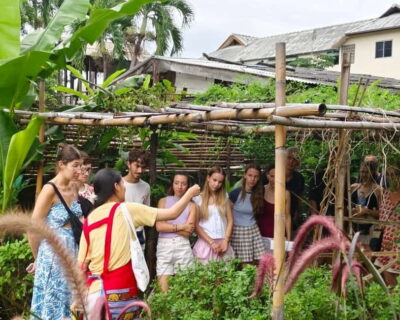
Cooking Class, Market & Thai Herbs Garden Tour
Read our review →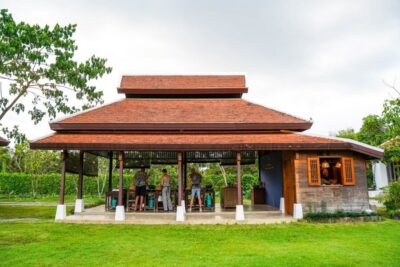
Authentic Cooking Class with Market & Farm Visit
Read our review →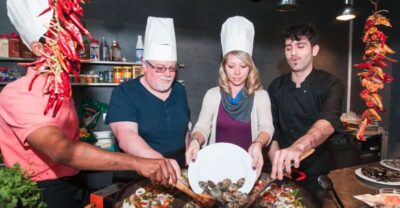
Paella Cooking Experience & Boqueria Market Tour
Read our review →
Cooking Class Hoi An:Local Market, Basket Boat, Fishing & Cooking
Read our review →