
REVIEW · SEMINYAK, INDONESIA
Nia Balinese Cooking Class
Come hungry and bring curiosity. Nia Balinese Cooking Class gives you a practical look at Bali’s food culture, starting with a morning market visit and ending with a large lunch of the dishes you helped prepare. I like the market stop because you see the ingredients where locals buy them, not just lined up neatly at a cooking school. I also like the friendly teaching style, especially when chefs such as Tommy or Komang are leading the group.
The main drawback is the length. Five hours on your feet can feel like a lot, and you may prepare nine, ten, or even eleven dishes as a shared group rather than making a complete individual meal from start to finish. At $45 per person, though, the class includes lunch, a recipe book, a certificate, and plenty of food, making it a strong value for anyone who wants more than a quick demonstration.
Key points to know before booking
- The day begins at 8:00 am at Warung Nia Balinese Food & Pork Ribs in Seminyak.
- A traditional market visit comes first, with time to see the ingredients used in Balinese cooking.
- You help prepare around nine dishes, including Ayam Betutu and Nasi Goreng.
- Lunch is the payoff, with the class sitting down to eat what was prepared.
- The class is social and shared, so expect teamwork rather than one personal cooking station for every dish.
- Bring a large appetite and comfortable shoes, since the program lasts about five hours.
Starting at Warung Nia in Seminyak
Your morning begins at Warung Nia Balinese Food & Pork Ribs, at Kayu Aya Square on Jalan Kayu Aya. The meeting time is 8:00 am, while the market visit is described as beginning around 8:30. Give yourself enough time to arrive early, especially if you are staying outside central Seminyak.
The meeting point sits near public transportation, which helps if you are not arranging a private car. The class does not include private transport or a ride back to your hotel. At the end, staff can help you arrange transport, but you should still plan your return before the class starts.
The cooking school accepts mobile tickets, and confirmation is provided when you book. The advertised group limit is 15 people. Some sessions have felt larger to participants, with reports of two groups sharing the market or cooking space, so ask ahead if a small-group setting matters to you.
More Balinese Cooking Classes in Indonesia:
- Ubud: Balinese Cooking Class at an Organic Farm
★ 5.0 · 1,786 reviews - Ubud Cooking Class Bali with Balinese Chef
★ 5.0 · 1,609 reviews - PRIVATE Authentic Balinese Cooking Class in Ubud at Putu’s Home
★ 5.0 · 644 reviews
Seeing Bali’s ingredients at the morning market
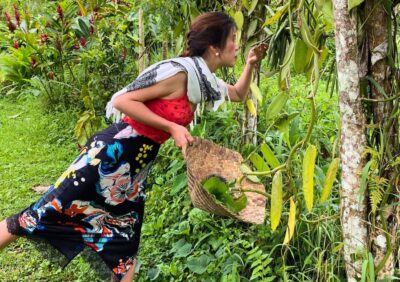
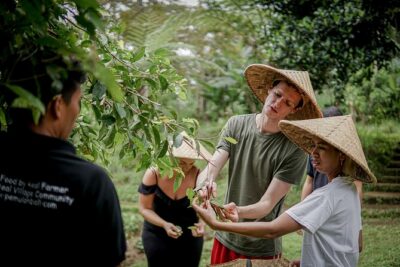
The market visit is one of the best parts of the morning. Instead of hearing a short explanation after the cooking begins, you see the raw ingredients in the place where they are sold. This gives you a better sense of how Balinese food begins, from fresh produce and spices to the ingredients used in local pastes.
The precise market arrangements can vary, but the program includes stops around Seminyak Square and the Seminyak Flea Market area. One part of the morning takes you through a traditional market, and the flea market gives you a useful chance to browse after the class if you want to stay in the area.
The market is not a polished food hall. It can be crowded, warm, and full of strong smells. That is part of its value, but you should be ready to walk and stand. A large group can also make it harder to stay close to the guide, particularly during a busy morning.
The guide explains how ingredients are used in Balinese cooking and shares details about local food and daily life. Participants have singled out Tommy and Chef Komang for their energy, humor, and clear instruction. The market section also helps you recognize ingredients later in Bali, and it can make the cooking class feel connected to the place rather than separated from it.
If you want to purchase ingredients to take home, the market may be useful. Check your own country’s customs rules before buying anything. Some ingredients may be allowed only if sealed and clearly labeled, and the class does not promise that every item can be taken through customs.
The cooking lesson: nine dishes, shared work
After the market, you return to the cooking venue for a snack and a drink before beginning the main lesson. The schedule then moves through a series of recipes, with the exact number described as nine, although some sessions have prepared ten or eleven dishes.
The food includes Ayam Betutu, a Balinese chicken dish traditionally wrapped in banana leaves, along with Nasi Goreng. You also work with fresh spice pastes and other local recipes. Corn is one dish that has received special praise, and it is a good example of how the class can add a new idea to your home cooking rather than simply repeat familiar fried rice.
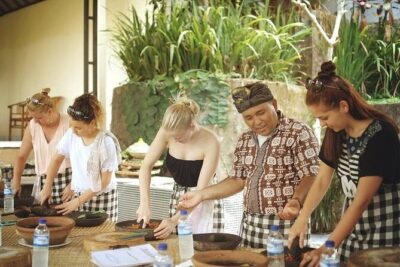
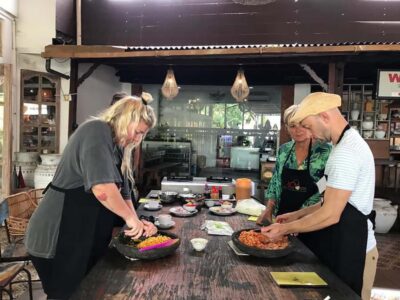
The class is hands-on. You are not just watching the chef cook while staff handle everything. Participants chop, mix, season, fold, and cook as the lesson moves along. The team keeps the work area moving, and staff may take a partly prepared dish away to finish while you begin the next recipe.
That system lets you cover a lot of food in five hours. It also has a tradeoff. If you want to follow every dish from raw ingredients to final plating, you may find the pace fragmented. One participant would have preferred making fewer dishes completely, rather than preparing many dishes in stages.
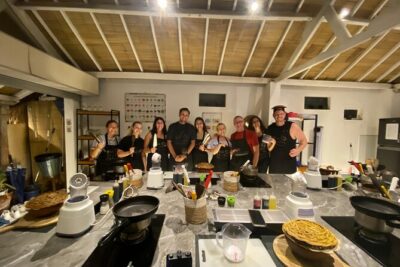
This is best understood as a group cooking party with instruction, not a private chef lesson. You work with other people, share the dishes, and learn by taking turns. That social format is part of the fun, especially if you are traveling with friends or enjoy meeting people from different countries.
The teaching quality appears to depend partly on the chef leading your session. Tommy is praised for keeping the mood light and interactive. Chef Komang is noted for handling a busy class calmly, explaining techniques, and keeping the work organized. Staff also help clear and reset stations between recipes, which makes the large menu possible.
Ayam Betutu and the details that make the class useful
The most useful part of a Balinese cooking class is often not the ingredient list. It is learning the small actions that affect the final dish. Ayam Betutu gives the session one of its more distinctive lessons, with the chicken wrapped in banana leaves and folded in a special way.
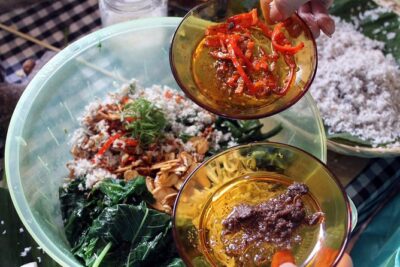
You also learn how fresh pastes fit into Balinese food. These pastes carry much of the flavor, and preparing them helps explain why local dishes taste different from a simple home version made with bottled sauces. The class is not only about copying recipes. It shows you the building blocks behind them.
The recipe book is a practical souvenir. It gives you a way to recreate some dishes after returning home, although you may need to find substitutes for ingredients that are difficult to buy locally. The certificate is a small extra rather than a major reason to book, but it makes a nice reminder of the day.
Staff also take photos and videos during some sessions and may send them afterward. This is not listed as a guaranteed inclusion, so treat it as a possible bonus rather than something to count on.
A few more cooking classes around Indonesia worth a look
- From Ubud: Authentic Cooking Class in a Local Village
★ 4.9 · 1,325 reviews - Ubud: Cooking Class with Transfers and Optional Market Visit
★ 4.9 · 824 reviews - Balinese Ubud cooking school (9 Dish Cooking and Market Tour)
★ 5.0 · 540 reviews - Ubud: Balinese Cooking Class and Market Tour
★ 4.8 · 531 reviews
Lunch is the reward, so skip the big breakfast
At the end of the preparation, you sit down for lunch and eat the food made during the class. There is a lot of it. Reports describe a banquet-style meal with several dishes, so a heavy breakfast would be a mistake.
The early snacks and drinks mean you will not be left waiting in an empty stomach for five hours. Still, the main meal comes later, and you should arrive ready for a large serving. The food is one of the most praised parts of the program, especially when shared around a table with the people from your group.
Lunch also gives you time to compare results. You may have worked on only part of a dish, but you get to taste the full collection at the end. That makes the shared format more worthwhile, since everyone contributes something to the final meal.
The dining portion is not a separate restaurant lunch added to the class. It is the result of the work you have just done. For me, that connection is what gives the class its strongest sense of purpose.
Is five hours the right length?
Five hours is generous for a cooking class. It allows time for the market, snacks, instruction, food preparation, lunch, and the certificate presentation. You do not need to rush from one recipe to the next, and the chef has time to explain local ingredients and cooking methods.
Still, five hours can feel long if you are not keen on cooking or if you struggle with heat. One participant described the class as warm and noted being on their feet from around 8:00 am until after 1:00 pm. Comfortable shoes, water, and light clothing will help.
The pace may also feel repetitive because staff remove dishes while you move on to another recipe. If your goal is to master two or three dishes in detail, a shorter private lesson might suit you better. If your goal is to sample a broad range of Balinese food and spend a social morning, the longer schedule works well.
The class has earned a 4.9 rating from 202 reviews, with 99 percent recommending it. Those figures suggest a reliably positive operation, but they do not erase the main limitations: group cooking, possible heat, standing, and a full five-hour schedule.
What the $45 price includes
At $45 per person, the price is reasonable for Seminyak if you value food and activity rather than transport. You receive the market visit, cooking instruction, lunch, a recipe book, and a certificate. The amount of food is generous enough that lunch alone would form a substantial part of the value.
You do not pay separately for a private car, hotel drop-off, or return transfer because none is included. If you are staying far from Seminyak, add the cost and time of reaching Kayu Aya Square and arranging your ride home.
The class also gives you something that a standard restaurant meal cannot: a better understanding of how Balinese dishes are built. You leave with recipes, cooking practice, and a clearer sense of the ingredients you have been eating around Bali.
Who will enjoy Nia Balinese Cooking Class most
I would recommend this class to food lovers, couples, friends, and solo visitors who enjoy a social activity. It is also a good choice if you want a cultural experience that involves doing something, not just looking at monuments or listening to a guide.
It suits people who like variety. You may prepare close to ten dishes, taste fresh pastes, visit a market, and share lunch with a mixed group. The class also works well for a birthday or a relaxed group celebration, since the chefs use humor and keep the mood friendly.
You may want to choose another activity if you need one-on-one instruction, dislike shared meals, or want to spend three hours rather than five. It is also not recommended for people with a vitamin allergy, as specifically stated in the activity information. If you have food allergies or dietary restrictions beyond that, contact the provider before booking rather than relying on changes during the class.
Cancellation is free if you cancel at least 24 hours before the local start time. Late cancellations and late changes are not refunded. Poor weather or failure to reach the required minimum number of participants can lead to a new date, another experience, or a full refund.
Should you book this cooking class?
Book it if you want a generous meal, a market visit, and a lively introduction to Balinese cooking for $45. The strongest reasons are the fresh market setting, the number of dishes, the friendly chefs, and the chance to eat what you prepare.
Skip it if you want a quiet private lesson or a short, highly focused class. Before booking, check the group size, confirm how your allergies will be handled, and leave your morning open until around 1:00 pm. For most food-focused visitors in Seminyak, Nia offers a full and good-value half-day.
FAQ
Where does the Nia Balinese Cooking Class begin?
It begins at Warung Nia Balinese Food & Pork Ribs, Kayu Aya Square, Jalan Kayu Aya No. 19-21, Seminyak, Bali.
What time does the class start?
The stated start time is 8:00 am. The traditional market visit begins around 8:30 in the morning.
How long does the cooking class last?
The activity lasts approximately five hours and finishes back at the meeting point.
Is lunch included?
Yes. Lunch is included, and you eat the dishes prepared during the class.
What else is included?
The price includes the cooking class, lunch, a cooking class certificate, and a recipe book.
Is transportation included?
Private transportation and drop-off transport are not included. Staff can assist you with arranging transport after the activity.
Can I cancel for a refund?
Yes. You can receive a full refund if you cancel at least 24 hours before the experience start time. Late cancellations are not refunded.
Just added around Indonesia
- Spice Garden, Jamu & Cooking Class in Bali Village★ 5.0 · 5 reviews
- Pure Bali Village Experience, Cooking & Jamu Class+VIP Transfer★ 5.0 · 16 reviews
- The Authentic Balinese Cooking Experience★ 5.0 · 4 reviews
- Seminyak : cooking class traditional food bali★ 5.0 · 5 reviews
- Seminyak: Vegetarian Cooking Class★ 5.0 · 3 reviews
- Quad ride, waterfalls & aunthentic cooking class in munduk★ 4.9 · 53 reviews
- Pure Bali Village Experience Cooking & Jamu Class, Transfer★ 4.8 · 5 reviews
- Ubud: Organic Farm Harvest, Bali Cooking Class by Pemulan★ 4.8 · 12 reviews
Balinese & Indonesian Cooking Classes, compared.
PRIVATE Authentic Balinese Cooking Class in Ubud at Putu’s Home
Read our review →
Balinese Ubud cooking school (9 Dish Cooking and Market Tour)
Read our review →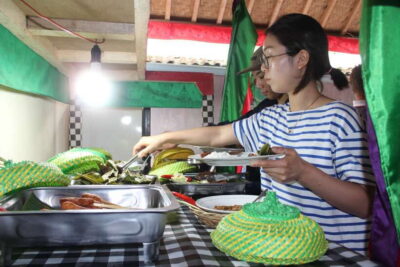
Learn to cook Indonesian food at Gili Cooking Classes Trawangan
Read our review →Lists this class appears in