
REVIEW · OSAKA, JAPAN
Osaka Cooking Class: Okonomiyaki &Japanese cuisines experience
Come hungry, leave with recipes. This Osaka cooking class brings you into a local home kitchen to prepare familiar Japanese comfort foods, including okonomiyaki and takoyaki, with patient instruction from Yayo. I like the personal setting and the chance to eat what you make. The main thing to consider is the generous amount of food, since you may have leftovers or find the full meal rather heavy.
The class lasts about two and a half hours and is limited to eight people. That small size matters: you get hands-on help instead of standing at the back of a large demonstration. You can also add a sake and beer pairing, though extra drinks are not included in the basic price.
The meeting point is outside Noda Station in Osaka, and the class ends there. Arrive on time, since participation is not guaranteed after 10 minutes late and there is no refund for a missed start.
Key points at a glance
- Cook in Yayo’s own home: The setting feels personal and relaxed rather than like a formal culinary school.
- Prepare Osaka favorites: You make okonomiyaki, takoyaki, and miso soup, then eat the finished dishes.
- Learn beyond recipes: Yayo explains ingredients, cooking methods, and the cultural background of each dish.
- Small class, real participation: With a maximum of eight people, you should get direct help at the work surface.
- Finish with taiyaki and matcha: The class closes with a fish-shaped cake and green tea.
- Strong value for a full meal: At $104.13 per person, the price includes ingredients, equipment, instruction, and lunch or dinner.
Why this class feels different from a restaurant meal
Osaka is famous for casual food, but ordering okonomiyaki in a restaurant only shows you the finished plate. Here, you learn how the meal comes together. That change in pace is the point. You handle ingredients, follow the cooking process, and leave with methods you can use at home.
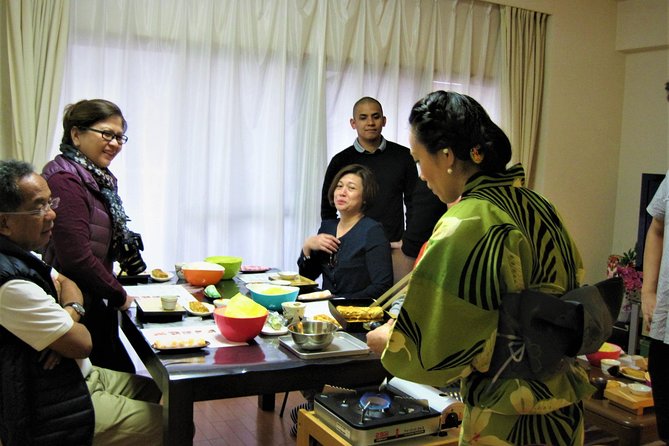
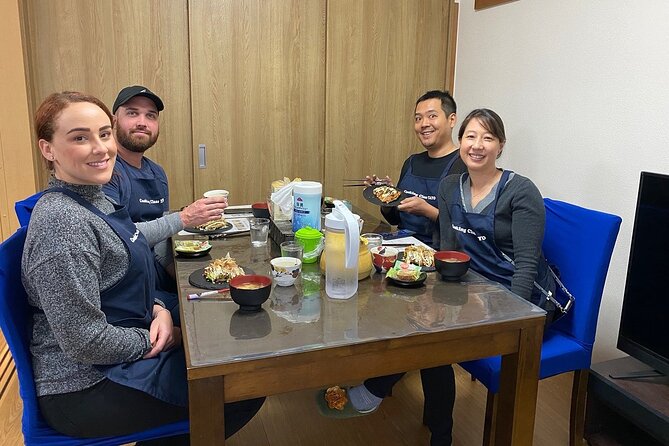
The home setting gives the class much of its character. You are not simply watching a chef work behind a counter. You enter Yayo’s personal space, sit down with a small group, and share a meal around the dishes you helped prepare. Several class accounts describe Yayo as warm, funny, patient, and generous with her time.
That personal welcome is especially useful if you are traveling alone or with a partner. A solo participant may receive a nearly private lesson if no one else books the same session. Couples and parent-child pairs also appear to fit the format well. You can cook, ask questions, and chat without the pressure of a large group.
The class has earned a 5 rating from 261 ratings, with 100 percent recommending it. Those figures suggest a very dependable experience, though you should still remember that a home class is less polished and spacious than a purpose-built cooking school.
More Sushi and Japanese Classes in Osaka:
- Sushi Making Osaka! Popular Sushi Class in Japan!
★ 5.0 · 500 reviews - Osaka: Ramen and Gyoza Cooking Class in Dotonbori
★ 5.0 · 378 reviews - Osaka: Roll and Authentic Sushi Making Class in Dotonbori
★ 4.9 · 239 reviews
Meeting Yayo near Noda Station
The class begins outside Noda Station at 1 Chome-1 Ohiraki, Fukushima Ward, Osaka. Hotel pickup and drop-off are not included, so you need to reach the station on your own. The meeting point is near public transportation, which keeps the arrival process fairly simple, but you should allow enough time to locate the exact spot.
The punctuality rule is strict. If you arrive more than 10 minutes late, you may not be allowed to join, and the payment will not be refunded. This is reasonable for a small home class, since the cooking begins as a group and the instructor cannot repeat the whole opening for one late arrival.
The class is offered as either a morning or evening experience. That makes it flexible for a full Osaka sightseeing day. An evening session can work well as dinner, while a morning session gives you the rest of the day afterward.
Miso soup and the small lessons that matter
The cooking starts with miso soup, a simple dish that rewards careful handling. This is a smart opening because it shows how Japanese cooking often depends on small choices rather than complicated equipment.
You learn about the ingredients and the effect of technique on the final taste. The class also introduces dashi, the stock used in many Japanese dishes. One parent and child found the process of making dashi much easier than expected, which is useful if you want to repeat the recipes at home.
Miso soup may seem basic compared with takoyaki or okonomiyaki, but it gives you a good foundation. You learn how a few ingredients can create a balanced dish, and you begin to understand why Japanese home cooking can taste subtle without being bland.
Yayo also explains the cultural background of the food. Her lessons include details about how ingredients and dishes can differ around Japan, along with stories connected to her family. That context gives the class more meaning than a simple recipe demonstration.
Turning batter into takoyaki
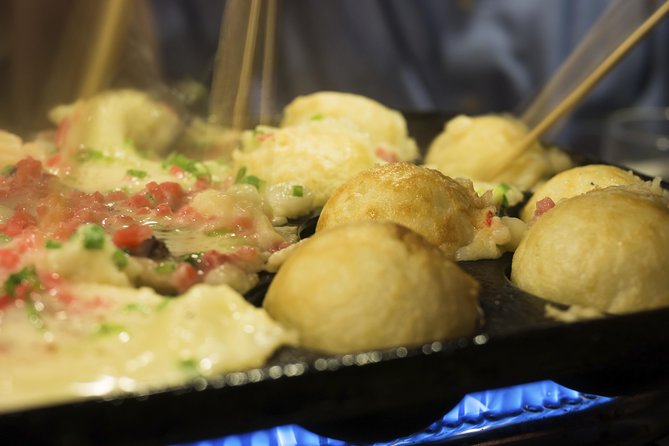
Takoyaki is one of Osaka’s signature foods: small balls of wheat-flour batter filled with octopus and cooked until browned. The shape is part of the challenge. You need to work the batter and filling into round pieces while they cook.
This is the most playful part of the class. You get to try a dish strongly linked with Osaka street food, but in a controlled setting where Yayo can guide you through the process. You do not need advanced cooking skills. The class is designed so that beginners can take part without worrying about ruining dinner.
The small group helps here. With no more than eight people, you should have a better chance to handle the food yourself and receive corrections when needed. Still, the cooking area is small, so do not expect the wide counters or individual stations found at a large culinary school.
The finished takoyaki becomes part of your meal. That makes the lesson satisfying right away, but it also means you will have several dishes arriving at the table in a short period. Pace yourself.
A few more cooking classes around Osaka worth a look
- Ramen and Gyoza Cooking Class in Osaka
★ 5.0 · 202 reviews - Osaka Sake Tasting with Takoyaki Cooking
★ 5.0 · 156 reviews - Osaka: Cooking Class Ramen & Gyoza Course in Nanba
★ 4.9 · 86 reviews - Osaka: Gluten-Free Ramen and Gyoza Cooking Class
★ 5.0 · 42 reviews
Building an Osaka-style okonomiyaki
Okonomiyaki is the main event for many people. The savory pancake combines egg, flour, cabbage, pork, and dried bonito flakes. The name is often explained as cooking according to what you like, and the dish has plenty of room for personal preference.
Yayo shows you how the mixture comes together and how to cook it properly. The useful lesson is not just the ingredient list. You also learn how to make a substantial home meal from ordinary items, a skill that translates well after your Japan trip.
The dish is filling, so this class works best when you have not already eaten a large lunch or dinner. One class account specifically warns you to leave room for everything. That is practical advice, not a minor detail. You will also have miso soup, takoyaki, and later taiyaki, so the meal builds quickly.
If you enjoy recreating food from your trips, okonomiyaki is one of the strongest reasons to book. It is approachable, flexible, and familiar enough to repeat at home. The class focuses on professional tips and practical methods rather than making the food look overly complicated.
Extra dishes, taiyaki, and matcha
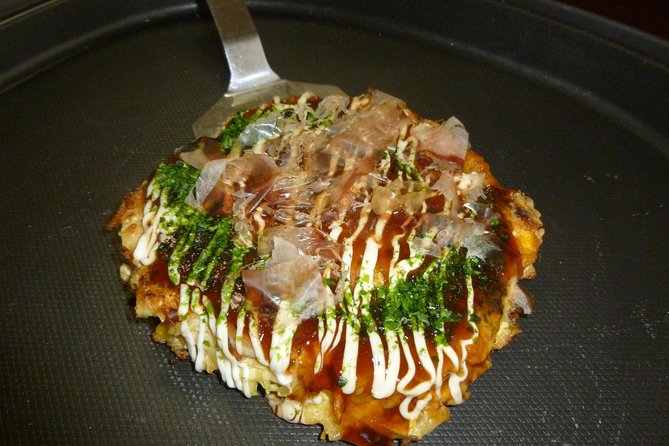
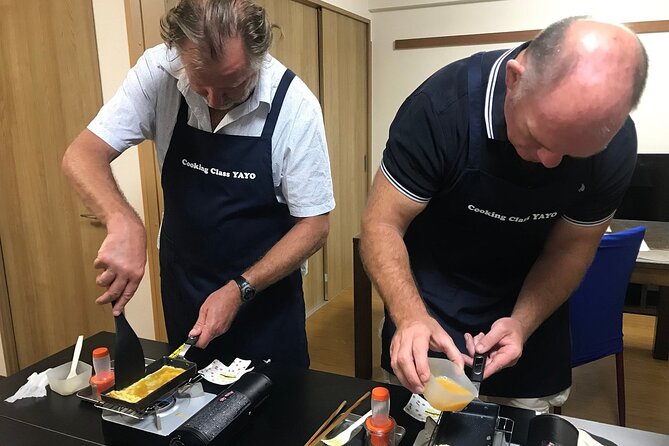
The core description focuses on miso soup, takoyaki, and okonomiyaki, but class accounts also describe making dashimaki tamago, a rolled Japanese omelette. Some participants also mention tamago-maki. These dishes give you another look at Japanese technique, especially the handling of eggs.
Menus can include additional touches, so it is best to think of the class as a broad Japanese home-cooking session rather than a lesson limited to exactly three recipes. You will still want to confirm any specific dietary request when booking.
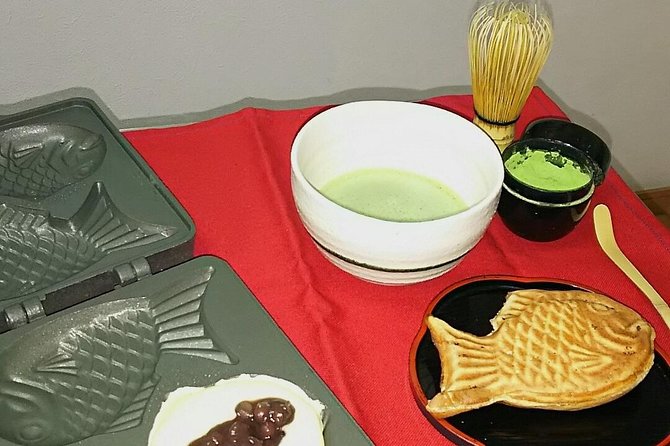
At the end, you try taiyaki, a fish-shaped cake, with matcha tea. This is a pleasant finish after the savory food. Taiyaki provides a sweet contrast, while matcha offers a simple introduction to a familiar Japanese drink.
The closing treats also make the session feel generous. Several people describe receiving small gifts, such as chopsticks or handmade paper cranes. These extras are not listed as formal inclusions, so do not book expecting a particular souvenir, but they reflect the care Yayo puts into hosting.
What the $104.13 price covers
At $104.13 per person, this is not a cheap meal. You can find less expensive food in Osaka, including excellent okonomiyaki and takoyaki from casual restaurants. The value comes from combining food with instruction, conversation, and a personal home setting.
Your fee includes the English-speaking instructor, ingredients, utensils, and the meal you prepare. You are paying for about two and a half hours of contact with a local cook, not just for a plate of food.
The class is especially good value if you enjoy learning recipes or want an activity that gives you something to take home beyond photographs. Several participants said they later made okonomiyaki or other dishes after returning home. That repeat value matters.
The optional sake and beer pairing can add to the meal, but the base booking does not include extra food or drinks. Gratuities are optional. If you want the pairing, select it when booking rather than assuming it will be available as a free extra.
Dietary needs and group size
Vegetarian and pescatarian options are available if you request them at the time of booking. Make that request early and clearly. The standard menu includes pork and octopus, so you should not assume the usual dishes will automatically be changed.
The maximum group size is eight people. That is small enough for personal guidance but not necessarily private. A solo booking may share the class with others, or may find that no one else has booked that session. The exact group mix can change.
The cooking studio is small, and only confirmed participants can join. Do not plan to bring an extra friend who was not included in the reservation. The compact setting is part of the friendly atmosphere, but it also limits room to move around.
The class is suitable for beginners. You do not need professional cooking experience, and the teaching style is built around participation without making you feel that failure is likely. Children aged two and under are exempt from adult pricing, according to the booking information.
The best fit for your Osaka itinerary
I would recommend this class to you if food is a major part of your trip and you like meeting local people in a relaxed setting. It is also a strong choice for a first evening in Japan, since the host offers a warm introduction to everyday dishes and customs.
Families, couples, solo visitors, and small groups should all find something to enjoy. A parent and child can share an easy activity, while a couple can book it as a hands-on dinner. Solo visitors may appreciate the chance to talk with other participants and receive close instruction.
You may want to skip it if you prefer a fast, polished restaurant meal or dislike eating in a private home. The room is small, the menu is substantial, and the class takes two and a half hours. It is an activity, not a quick food stop between sights.
You should also think about timing. Since lunch or dinner is included, do not schedule this right after a major meal. Leave enough time before the meeting point, and avoid booking it on a day when a 10-minute delay could spoil the rest of your plans.
Should you book Yayo’s Osaka cooking class?
Yes, if you want more than a taste of Osaka. The strongest features are Yayo’s personal teaching, the small group, the chance to cook several Japanese staples, and the fact that you eat your results at the end.
The $104.13 price is fair for a two-and-a-half-hour lesson with ingredients, utensils, a full meal, and an English-speaking host. It is not the right pick for a budget meal, but it offers lasting value if you plan to cook Japanese food at home.
Book this when you can arrive early, come hungry, and take part fully. Request vegetarian or pescatarian adaptations in advance, consider the sake and beer pairing if it suits you, and expect a friendly home kitchen rather than a large professional studio.
FAQ
Where does the Osaka cooking class begin?
The class begins outside Noda Station at 1 Chome-1 Ohiraki, Fukushima Ward, Osaka, 553-0007, Japan.
Where does the class end?
The activity ends back at the meeting point near Noda Station.
How long does the cooking class last?
The class lasts approximately two hours and 30 minutes.
What dishes will I prepare?
The class includes miso soup, takoyaki, and okonomiyaki. Class accounts also describe dishes such as dashimaki tamago, along with taiyaki and matcha at the end.
Is the food included?
Yes. The price includes the lunch or dinner you prepare and eat during the class, along with the ingredients and utensils.
Is a sake tasting included?
A local sake tasting is included only if you select the optional pairing. Beer and sake are not included in the basic booking.
Can vegetarian or pescatarian participants join?
Yes. Vegetarian and pescatarian options are available if you request them when booking.
How many people can join the class?
The class has a maximum of eight participants. The cooking space is small, and only people with confirmed bookings may attend.
What happens if I arrive late?
You should arrive on time. Participation cannot be guaranteed if you arrive more than 10 minutes late, and the payment will not be refunded.
Can I cancel for a refund?
Yes. You can cancel at least 24 hours before the start time for a full refund. Cancellations or changes made less than 24 hours before the start time are not refunded or accepted.
Just added around Osaka
- Osaka Sake Tasting with Takoyaki Cooking★ 5.0 · 156 reviews
- Okonomiyaki&Takoyaki for Families:Osaka Street Food Festival★ 5.0 · 4 reviews
- Osaka Okonomiyaki Cooking Experience for Families & Groups★ 4.9 · 8 reviews
- Osaka: Sashiko Japanese Craftsmanship Workshop★ 5.0 · 31 reviews
- Osaka : Exclusive Tea Ceremony & Wagashi Cooking★ 5.0 · 2 reviews
- Osaka: Okonomiyaki Cooking Class with Beer or Soft Drink★ 4.9 · 9 reviews
- Osaka: Cooking Class & Sake Tasting with Local Market Visit★ 4.8 · 31 reviews
- Osaka: Gluten-Free Ramen and Gyoza Cooking Class★ 5.0 · 42 reviews
Japanese & Sushi Cooking Classes, compared.
Ramen Cooking Class at Ramen Factory in Kyoto
Read our review →
Ramen & Gyoza Cooking Class in Tokyo with Local Supermarket Visit
Read our review →
Ramen Cooking Class at a Ramen Factory with Souvenir
Read our review →
Sushi Making Osaka! Popular Sushi Class in Japan!
Read our review →
Tokyo Tsukiji Fish Market Tour and Sushi Making Lesson
Read our review →
Japanese Washoku Bento Small Group Cooking Class
Read our review →
Lists this class appears in