
REVIEW · CHEFCHAOUEN, MOROCCO
Chefchaouen Cooking Class
Food is the fastest way into Moroccan life. This three-hour Chefchaouen cooking class combines a walk through the local market with hands-on preparation and a shared three-course meal. I like the chance to shop for ingredients with a local chef, and I like the small group of 10 people or fewer, which should leave room for questions instead of turning the class into a cooking demonstration from the back row.
The main consideration is that the class may cover several dishes in a short time. One vegetarian participant enjoyed the market visit and restaurant setting but wanted fewer dishes and more time doing the actual cooking. You should also expect a personal, informal experience rather than a highly structured culinary school course.
Key points at a glance
- Market shopping comes first: You help select the fresh ingredients needed for the meal while seeing how local residents shop.
- A three-course Moroccan lunch is included: You eat the food prepared during the class, followed by coffee or mint tea with cookies.
- Groups are capped at 10: This is small enough for direct contact with the chef and a more relaxed table setting.
- Youssef may lead the experience: He is praised for his English, friendly manner, food knowledge, and stories about Chefchaouen.
- The price is $68.95 per person: That covers the market visit, chef assistance, kitchen tools, and a three-course lunch.
- The activity begins at 11:00 a.m.: It starts at Hotel Bab El Ain and returns to the same meeting point.
Starting at Hotel Bab El Ain at 11:00 a.m.
The meeting point is Hotel Bab El Ain, at Rue Lala Horra Kayssariya No. 77. The listed location includes the hotel salon de thé, so check the exact entrance and allow a little time to find it in Chefchaouen’s old town streets.
The start time matters. An 11:00 a.m. meeting gives you a useful morning activity without making you rush out of bed, and it leads naturally into lunch. The experience lasts about three hours, so you should be finished around 2:00 p.m., though cooking times can vary.
You receive confirmation when booking, and the activity is near public transportation. A mobile ticket is accepted, which is handy if you are moving around Morocco with a phone rather than carrying printed documents.
The experience ends back at the starting point. That makes it easy to continue sightseeing in Chefchaouen afterward, return to your hotel, or stop for another drink in the old town.
A few more cooking classes around Morocco worth a look
- Marrakech: Moroccan Cooking Class with Pickup
★ 4.6 · 1,862 reviews - Marrakech: Traditional Moroccan Cooking Class & Market Visit
★ 4.8 · 1,861 reviews - Marrakesh: Moroccan Dishes Cooking Class with a Local Chef
★ 5.0 · 1,615 reviews
Walking through Chefchaouen’s local market
The market visit is not a decorative extra. It is the first working part of the class.
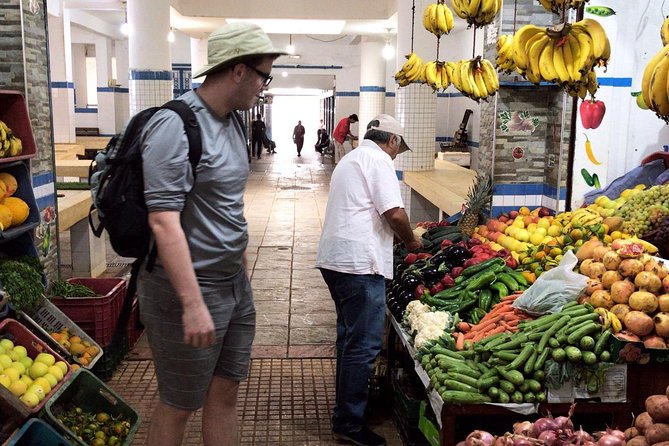
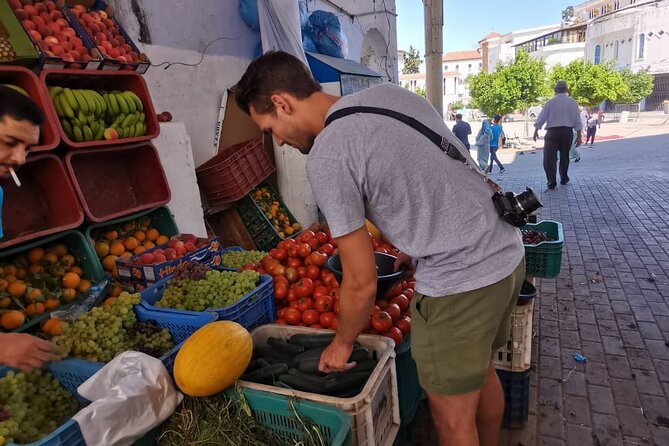
You walk with the chef to select the ingredients needed for the meal. This gives you a look at how Moroccan households shop for fresh products, rather than simply receiving a prepared basket in a cooking school kitchen. The chef can explain what you are buying and how those ingredients fit into the dishes you will prepare.
I like this format because it connects the finished meal to the town itself. You see the raw products before they reach the cooking pot, and you get a better sense of how Moroccan food is built from everyday market shopping.
The market also gives the chef a chance to introduce local food customs and methods in a natural setting. Instead of beginning with a long lecture, the class starts with practical questions: What is fresh? What amount do you need? How is this ingredient used? Which items are common in a Moroccan kitchen?
Do not expect a full market history lesson or a long free period to shop for yourself. The purpose is to buy what the group needs for lunch. Still, this part should be especially useful if you want to understand Moroccan cooking beyond a restaurant menu.
From shopping basket to working kitchen
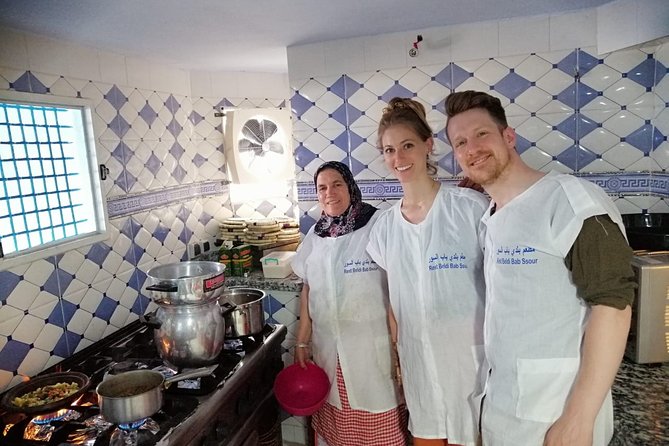
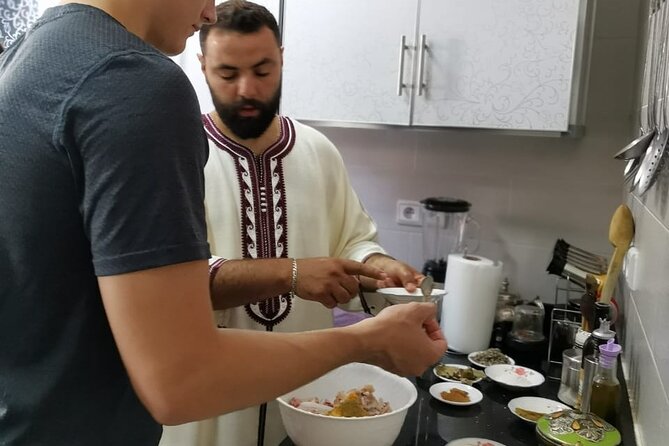
After the market, you take the ingredients back and begin cooking with the chef’s help. The experience is described as an in-home class, while one account refers to preparing the food in an actual restaurant and another describes being welcomed by a family. That suggests the setting may feel personal and local rather than like a polished cooking studio.
The chef provides assistance and kitchen tools. You do not need to bring cooking equipment, and you can focus on learning the methods and helping with the meal.
The small group is important here. With no more than 10 people, you have a better chance of seeing what is happening, asking for clarification, and getting some direct help. If Youssef is leading your class, his strong English and easy manner should help you follow the instructions and ask about Moroccan food and culture.
One point deserves a realistic warning: a three-course menu in three hours can mean that some preparation is shared among the group. You may help with several steps without personally preparing every part from start to finish. If your top priority is long, hands-on kitchen practice, ask how much individual cooking time is planned before booking.
The feedback also suggests that language is usually manageable but not guaranteed to be effortless with every host. One participant had a very welcoming experience despite not sharing English with the family. Cooking is often a forgiving form of communication, but you should be comfortable with demonstrations, gestures, and simple explanations if your guide is not fully fluent.
Learning Moroccan cooking methods, not just recipes
A useful cooking class teaches more than a list of ingredients. It shows you how a cuisine handles flavor, timing, and presentation.
Here, the stated focus is on traditional Moroccan dishes and culinary methods. The exact menu is not specified, so you should not book expecting a particular tagine, salad, pastry, or soup unless the provider confirms it in advance.
That lack of a fixed published menu can be a benefit. The chef may work with what is fresh and available at the market, giving the meal a more local quality. It also means the experience can reflect the day’s ingredients rather than a rigid demonstration repeated without change.
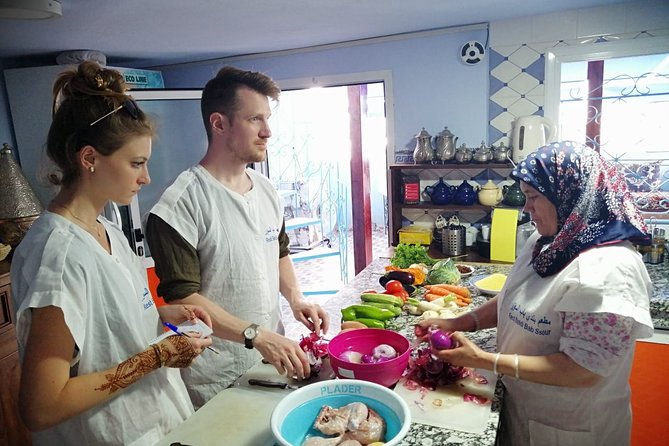
I would pay close attention to the small working choices: how ingredients are cleaned and cut, when seasonings are added, how dishes are timed, and how several courses are brought together. Those details are often more useful at home than memorizing a recipe with exact quantities.
The class also offers cultural context. Youssef is praised for speaking about Chefchaouen’s history and culture as well as its food. That combination can make the meal feel connected to the town, not like a generic Moroccan cooking lesson transplanted into any destination.
Same place, a different thing to cook:
- Moroccan Cooking Class & Marrakech Market Visit with Chef Khmisa
★ 5.0 · 1,504 reviews - Half-Day Cooking Class with Local Chef Laila in Marrakech
★ 5.0 · 952 reviews - Marrakech: Moroccan Cooking Class with a Local Family
★ 4.9 · 668 reviews - Marrakech: Moroccan Cuisine Cooking Class in Local Home
★ 4.8 · 508 reviews
Eating the three-course lunch you helped create
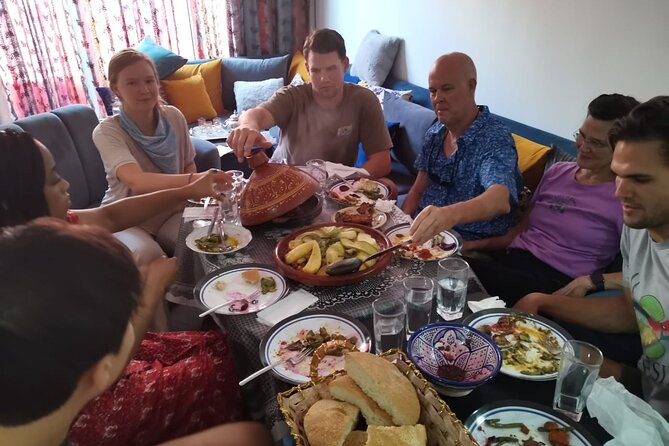
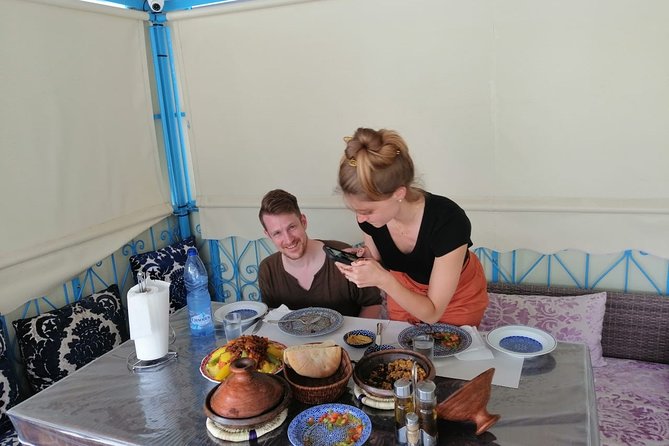
The best part comes after the cooking. You sit down to eat a three-course home-cooked lunch made during the class.
That meal is included in the price, so the experience functions as both a cooking lesson and a substantial midday meal. If you are arranging your day around this activity, you should not need to plan a separate lunch immediately afterward.
Eating together also gives you time to compare results, ask final questions, and enjoy the food without watching the clock. The meal is a natural reward for the preparation, and it lets you judge the cooking from the diner’s side as well as the cook’s side.
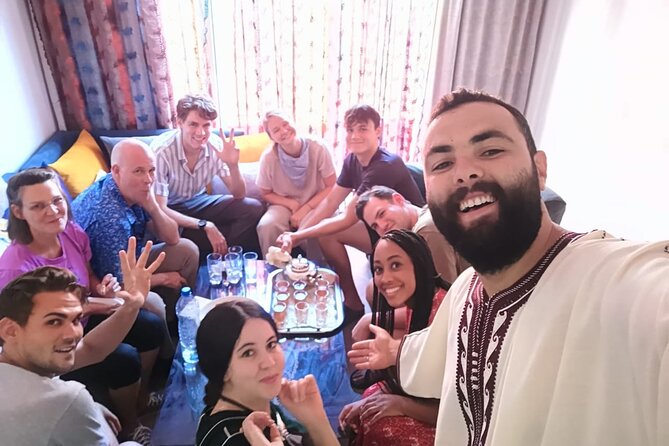
The meal ends with a choice of coffee or Moroccan mint tea and cookies. Choose mint tea if you want one of the country’s familiar table traditions, or coffee if that suits you better. Alcoholic drinks are not included.
Food quality appears to be a major strength. The meal has been described as delicious, and the welcome is repeatedly presented as warm and personal. One participant especially valued feeling at home with the family. That is an important distinction from a class where you cook briefly and leave without much contact with the people hosting you.
The role of Youssef and the personal welcome
If your chef is Youssef, you may get more than cooking instruction. He is described as a Chefchaouen native who speaks very good English and combines food with local history and culture.
His friendly personality is part of the appeal. One playful description compared him to George Clooney, which tells you that the host’s charm and presence are a memorable part of the experience. You should not book solely on that personality note, since hosts can vary, but it gives a useful picture of the tone: social, informal, and friendly.
The provider also presents the activity as a way to make friends and create memories. That language can sound promotional, but it fits the personal format described by participants. You are not simply watching a chef perform. You are shopping, preparing, eating, and talking together.
The tradeoff is structure. A warm family-style setting may feel less precise than a formal class with printed recipes, individual workstations, and timed lessons. Choose this experience for contact with local people and food, not for professional culinary certification.
Is $68.95 good value?
At $68.95 per person, this is not the cheapest way to eat lunch in Chefchaouen. You are paying for more than the food, though. The price includes the market visit, chef assistance, kitchen tools, and a three-course lunch, along with about three hours of activity.
I consider the price reasonable if you value the complete package. A standard meal gives you food for perhaps an hour. This experience adds a guided market visit, instruction, preparation, and cultural conversation before you sit down to eat.
The value is strongest for visitors who want an activity with a clear local connection. You see how ingredients are selected, learn how dishes are made, and eat what you helped prepare. That is more memorable than simply ordering a familiar Moroccan plate.
The value is weaker if you mainly want a long period of individual cooking practice. The menu includes three courses, and one participant specifically wanted fewer dishes with more direct kitchen work. Ask about the amount of hands-on preparation if that is your main reason for booking.
The experience is often reserved about 25 days ahead. That does not guarantee that every date sells out, but it is a good reason to plan early, especially if you are visiting Chefchaouen on fixed dates.
Who should book this class?
I would recommend it to couples, solo visitors, families, and small groups who enjoy food as a way to meet local people. The maximum of 10 participants keeps it more personal than a large group demonstration.
It is also a good fit if you want a midday activity that combines several parts of travel: walking through a market, learning a practical skill, eating lunch, and hearing about local culture. You do not need to be an experienced cook.
Vegetarians may find the class worthwhile, but I would confirm the menu and the amount of vegetarian hands-on preparation before booking. A vegetarian participant had a positive experience but wanted more time cooking and fewer dishes.
I would be more cautious about booking if you need a tightly timed itinerary, a guaranteed professional kitchen, or a fixed menu. The class is local and personal, which is its appeal, but that can also mean a less standardized format.
Booking, cancellation, and practical details
The activity starts at 11:00 a.m. at Hotel Bab El Ain and finishes at the same place. Confirmation is provided at booking, and you can use a mobile ticket.
Free cancellation is available if you cancel at least 24 hours before the local start time. Changes or cancellations made within 24 hours are not accepted for a refund. The activity also requires a minimum number of participants, so if that minimum is not met, you are offered another date or experience, or a full refund.
Plan to arrive ready to walk through a local market and take part in a kitchen session. Wear something comfortable, and keep your schedule open enough that you are not rushing away at the advertised three-hour mark.
Should you book the Chefchaouen cooking class?
Book it if you want a friendly, food-centered introduction to Chefchaouen with a market visit and a meal you help create. The small group, local ingredients, three-course lunch, and personal guidance from a host such as Youssef give it a strong sense of place.
Think twice if your ideal cooking class means spending most of the time at an individual workstation. This experience may divide tasks among the group, and the menu can cover a lot in three hours.
For most visitors, the balance is good: you shop, cook, eat, and gain a better feel for Moroccan daily life. At $68.95, it is a fair choice for an intimate food experience, especially if you book early and confirm your expectations about the menu and hands-on work.
FAQ
Where does the Chefchaouen cooking class start?
It starts at Hotel Bab El Ain, Rue Lala Horra Kayssariya No. 77, at the hotel salon de thé in Chefchaouen.
What time does the class begin?
The class begins at 11:00 a.m.
How long does the experience last?
The experience lasts approximately three hours.
How many people can join the class?
The activity has a maximum of 10 participants.
Is lunch included?
Yes. A three-course lunch is included, consisting of food prepared during the class.
Is the market visit included?
Yes. The experience includes a visit to the local market to select ingredients for the cooking session.
Are drinks included?
You can choose coffee or Moroccan mint tea with cookies after the meal. Alcoholic beverages are not included.
Can I cancel for a full refund?
Yes, if you cancel at least 24 hours before the local start time. Cancellations or changes made less than 24 hours before the start are not refunded.
Just added around Morocco
- Private Tagine Cooking Class in Chefchaouen with Lunch★ 5.0 · 5 reviews
- 3-Hour Cooking Class overlooking the Blue City★ 5.0 · 36 reviews
- Moroccan Cooking Class with a Local Family & Market Visit★ 5.0 · 16 reviews
- Chefchaouen Private Cooking Class with Mountain View★ 5.0 · 16 reviews
- Traditional Cooking Courses in Casablanca★ 5.0 · 2 reviews
- Market Tour & Moroccan Cooking Class in Casablanca with Transfers★ 5.0 · 18 reviews
- Private CousCous Cooking Class in a Traditional Family Home★ 5.0 · 7 reviews
- Private Moroccan Cooking Class in Casablanca with a Local Expert★ 5.0 · 12 reviews
Cooking Classes, compared.

Half-Day Thai Cooking Class at Organic Farm in Chiang Mai
Read our review →

3 in 1 Cooking Class near Navona: Fettuccine, Ravioli & Tiramisu
Read our review →
Pasta & Tiramisu Cooking Class with Unlimited Wine
Read our review →
Hanoi Cooking Class: Culture, Local Market & Meaning CSR Impact
Read our review →
5 Traditional Dishes Hanoi Cooking Class with Market Trip
Read our review →
Cooking Class and Lunch at a Tuscan Farmhouse with Local Market Tour from Florence
Read our review →
Cooking Class, Market & Thai Herbs Garden Tour
Read our review →Lists this class appears in