
REVIEW · AGADIR, MOROCCO
cooking with rabab Tagahzout
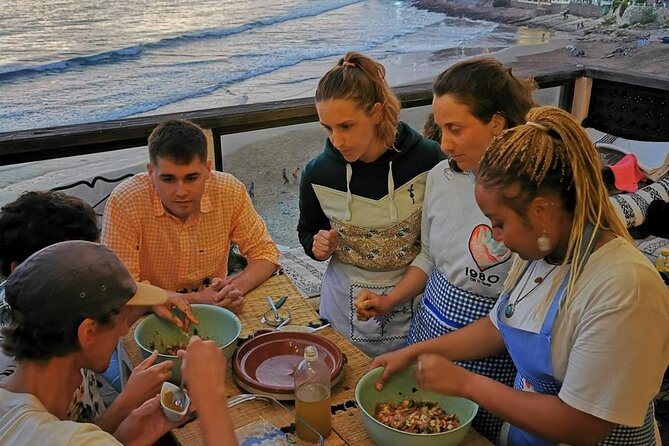
Moroccan cooking is best learned by doing. Cooking with Rabab near Taghazout gives you a hands-on introduction to local food, from mixing spices and shaping bread to cooking tagine and sharing the finished meal. I especially like the friendly, personal teaching style and the chance to connect food with Berber culture rather than simply sitting down to eat a prepared meal.
I also like the setting. Depending on the day and menu, you may cook in a Berber village or at a guesthouse with direct views across the Atlantic. The main consideration is that the exact dishes and setting can vary, so you should not book expecting one fixed menu or a formal cooking school.
Key points at a glance
- Cook rather than just watch: You cut, mix, season, cook, and assemble the dishes yourself.
- Rabab leads the class: Her relaxed style makes the experience feel more like cooking with a friend than attending a stiff lesson.
- Menus can include several Moroccan favorites: Past dishes have included chicken tagine with preserved lemons, vegetable tagine, kofta tagine, fish tagine, Moroccan salad, bread, mint tea, and cake.
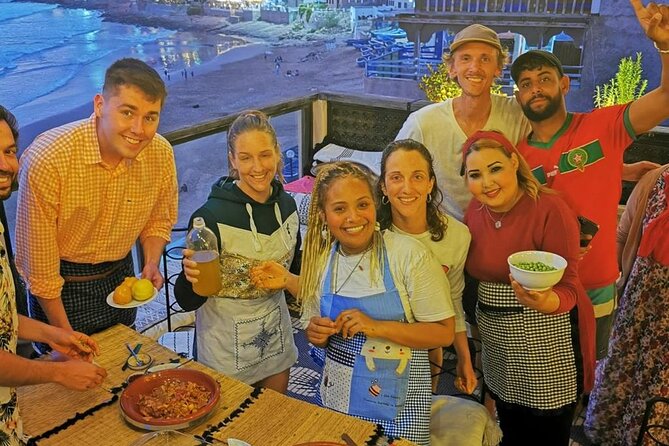
- Atlantic views add real pleasure: Some cooking takes place on a balcony or at a guesthouse overlooking Taghazout Bay.
- A link to Berber life: A Berber village setting, local women, homemade sweets, and a stone oven may form part of the experience.
- Good value for a small private group: At $47.12 per person for about three hours, the class includes instruction, food preparation, and a shared meal.
What Cooking with Rabab feels like
This is not a demonstration where you sit quietly while someone else does all the work. Rabab asks you to follow her directions and take part in each stage. You may prepare vegetables, cut ingredients, mix sauces, season the dish, and help assemble the meal before it goes onto the heat.
That matters because Moroccan food can look simple on the plate while relying on careful timing. Tagine is not just meat and vegetables placed in a ceramic pot. The order of ingredients, the balance of seasoning, and the slow cooking all affect the result. By working through those steps, you get a practical sense of how the food comes together.
Rabab also encourages questions and tasting as you go. That is useful if you want to understand the difference between a raw spice mixture and the finished sauce, or if you would like to ask about ingredients used in Moroccan homes. The tone appears relaxed rather than strict, which suits people who want a social afternoon as much as a cooking lesson.
The class lasts about three hours. That is long enough to prepare a proper meal without taking up an entire day of your time in the Agadir area. You should still allow flexibility around the start and finish, especially if you use the pickup option.
A few more cooking classes around Morocco worth a look
- Marrakech: Moroccan Cooking Class with Pickup
★ 4.6 · 1,862 reviews - Marrakech: Traditional Moroccan Cooking Class & Market Visit
★ 4.8 · 1,861 reviews - Marrakesh: Moroccan Dishes Cooking Class with a Local Chef
★ 5.0 · 1,615 reviews
From homemade sweets to Moroccan mint tea
The opening can include a warm welcome with homemade sweets and Moroccan mint tea. Learning to prepare the tea gives the class an early, low-pressure activity before the more involved cooking begins.
Mint tea is not simply a drink served at the end of a meal. It is closely tied to hospitality, and making it yourself gives you a small window into everyday Moroccan customs. You can ask questions, taste the tea, and share culinary advice with the people in your group.
This first stage also helps set the mood. You are not rushed straight into chopping vegetables. Instead, the experience can begin with conversation and a taste of something already prepared. If you are traveling with family or meeting other people during your stay, that social start may be one of the most enjoyable parts.
The menu is not fixed in the information available for this class. That is worth treating as a benefit and a limitation. A changing menu may let Rabab work with the ingredients and style of cooking best suited to the day, but you should contact her if you need a particular dish or have dietary restrictions.
Preparing tagine, salad, and bread
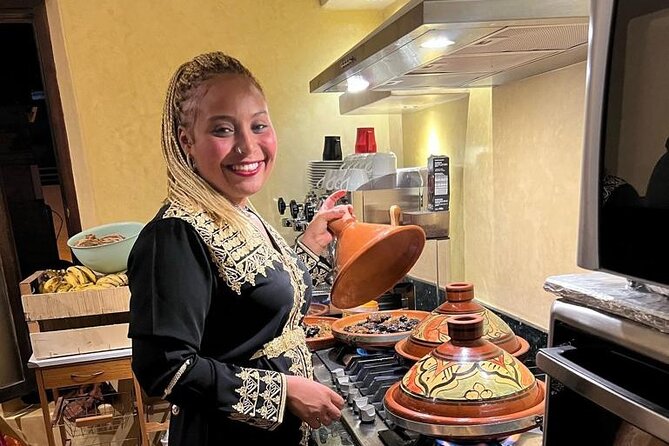
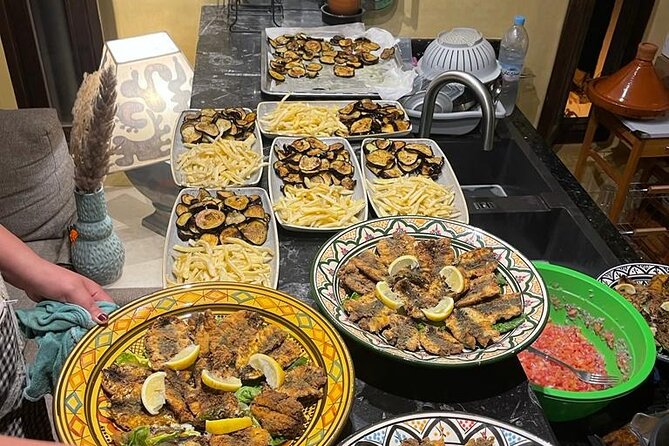
The central part of the class is hands-on preparation. Past menus have included chicken tagine with preserved lemons, vegetable tagine, kofta tagine, and fish tagine. Moroccan salad has also been part of a three-course meal.
Chicken with preserved lemons is a classic combination, with the salty citrus cutting through the savory sauce. Kofta tagine brings seasoned meat into the picture, while a vegetable version makes the class more appealing if you do not eat meat. Fish tagine is another possible choice, and fresh fish cooked slowly with the other ingredients can make a memorable meal.
One especially useful feature is that you are not limited to one dish. Some sessions have included a three-course meal, while another involved two tagines. That gives you a wider look at Moroccan cooking than a class focused only on one pot.
Bread may also be part of the activity. In the Berber village setting, participants have made their own bread in a stone oven. This is a more traditional touch than simply buying bread from a shop, and it gives you a chance to see how a basic household staple is prepared and cooked.
The practical lesson here is to expect participation, not precision. Rabab guides you through the work, but the goal is not to produce restaurant-perfect plates. You are there to learn the rhythm of the cooking, taste the food, and enjoy the process. A little uneven chopping will not ruin lunch.
A Berber village or a sea-view kitchen
The setting is one of the most appealing parts of this experience, but it may vary. Some classes take place in a Berber village with other Berber women nearby. In that version, you may receive homemade sweets, make mint tea, and bake bread in a stone oven.
That setting gives the food a stronger cultural connection. You are not only learning a recipe, but also seeing how cooking fits into local life. The encounter can feel more personal than a standard activity arranged inside a tourist restaurant.
Other sessions have taken place at Boris’s Guesthouse or Teddy Pirate, with direct sea views and a kitchen or balcony overlooking the bay at Taghazout. Eating a meal you helped prepare while looking across the Atlantic is a fine reward after several hours of chopping and stirring.
The sea view is not a substitute for the cooking, but it changes the pace of the afternoon. You have a pleasant place to sit, talk, and eat after the active part of the lesson. If the class takes place at a guesthouse, the atmosphere may feel informal and home-like rather than polished or commercial.
Because the description covers more than one setting, do not assume that every booking includes the village, the balcony, or the stone oven. If one of those details matters most to you, ask Rabab about the location before you reserve.
Same place, a different thing to cook:
- Moroccan Cooking Class & Marrakech Market Visit with Chef Khmisa
★ 5.0 · 1,504 reviews - Half-Day Cooking Class with Local Chef Laila in Marrakech
★ 5.0 · 952 reviews - Marrakech: Moroccan Cooking Class with a Local Family
★ 4.9 · 668 reviews - Marrakech: Moroccan Cuisine Cooking Class in Local Home
★ 4.8 · 508 reviews
Eating what you made
The meal at the end is more than a reward. It gives you a chance to see how the separate parts work together. A tagine, salad, bread, tea, and perhaps cake create a full Moroccan meal rather than a single sample.
The food itself receives especially high praise. The kofta tagine has been called the best tagine of a holiday, while the fish version has been described as especially good because slow cooking allowed the flavors to combine. Those are subjective judgments, of course, but they point to the main strength of the class: you eat food prepared with care, using techniques you have just practiced.
Cake and repeated rounds of mint tea may also appear, depending on the session. The result sounds generous for a three-hour activity. You are paying for instruction and a meal, not just a short tasting.
I would keep expectations sensible. This is a home-style cooking experience, not a professional culinary qualification. You may leave with a better feel for seasoning and technique, but you should not expect printed course materials, a formal kitchen setup, or a standardized restaurant menu unless Rabab confirms those details.
Why the personal approach matters
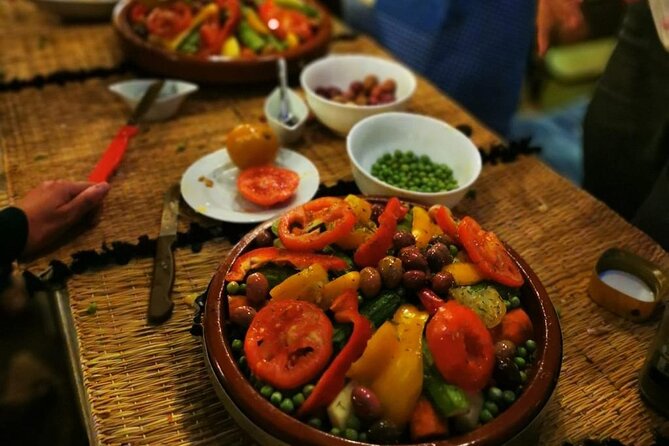
Rabab is repeatedly described as warm, fun, and easy to talk with. That is important in a class where much of the value comes from asking questions. A teacher who welcomes conversation can make the difference between copying instructions and actually understanding what you are doing.
The atmosphere also suits families. One family described the cooking day as a way to learn more about Moroccan culture and tradition together. Parents and children who enjoy practical activities may find this more rewarding than another sightseeing stop, although the available information does not specify a minimum age or child-focused program.
Couples, friends, and solo visitors can also fit comfortably into the format. One account describes cooking with just two people and the cook, while other sessions included contact with additional participants or Berber women. The booking is described as private, meaning only your group participates in the booked activity, but the wider setting may still include local people or others at the venue.
That distinction is useful. If you want a completely isolated private lesson, ask how the class will operate on your date. If you want a social experience with room for conversation, the informal style should work well.
Is $47.12 good value?
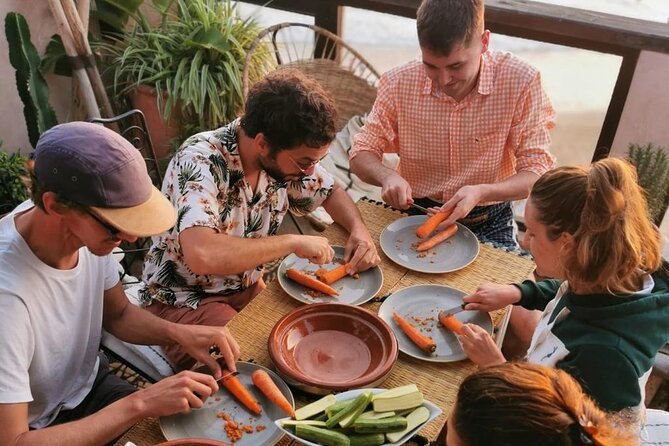
At $47.12 per person, this class is reasonably priced for about three hours of instruction, ingredients, and a meal. The value improves if you care about learning how the dishes are made rather than simply eating them at a restaurant.
You also receive several experiences in one package: food preparation, a cultural conversation, tea, and time in a village or sea-view setting. A restaurant meal might cost less, but it would not give you the same role in the cooking or the same chance to ask Rabab about local methods.
The price is less attractive if you are mainly looking for a quick meal or a polished culinary school lesson. Much of the appeal comes from the human contact and informal atmosphere. You need to enjoy a little conversation, shared work, and uncertainty about the exact menu.
Pickup is offered, and the location is near public transportation. Since the experience is listed in the Agadir area but is closely associated with Taghazout, confirm the meeting point and pickup details before the day. That small check can prevent an awkward start.
Who should book this cooking class?
I would recommend it most strongly if you:
- Want to learn Moroccan food by preparing it yourself
- Enjoy informal, social activities
- Like meeting a local host and asking questions
- Are interested in Berber culture and traditional home cooking
- Want a meal with an Atlantic view
- Are traveling as a couple, family, or small private group
- Prefer a three-hour activity over a full-day excursion
You may want to choose something else if you need a guaranteed menu, a formal certificate, a professional teaching kitchen, or a tightly timed schedule. You should also ask about ingredients in advance if you have allergies or follow a strict diet, since the available details do not give a list of substitutions.
The class has a perfect 5 rating from 11 reviews and is recommended by 100 percent of the recorded participants. That is a small sample, but the praise is consistent: Rabab’s hospitality, the food, the relaxed teaching, the views, and the cultural connection are the strongest points.
Should you book Cooking with Rabab?
Book it if you want more than another restaurant meal in Agadir or Taghazout. The best reason to go is the combination of hands-on Moroccan cooking and genuine conversation with Rabab. The sea view, village setting, homemade sweets, stone-oven bread, and mint tea add character, but the personal teaching is the heart of the experience.
Before booking, confirm the location, menu, pickup plan, and any dietary needs. If you are happy with some variation and want a friendly introduction to tagine, bread, salad, and Moroccan hospitality, $47.12 buys a worthwhile afternoon.
FAQ
Where does Cooking with Rabab take place?
The experience is listed in Agadir and is closely associated with Taghazout. Sessions may take place in a Berber village or at a guesthouse such as Boris’s Guesthouse or Teddy Pirate, so confirm the exact location before booking.
How long does the cooking experience last?
The experience lasts approximately three hours.
How much does it cost?
The listed price is $47.12 per person.
Is pickup available?
Yes. Pickup is offered, and the activity is also near public transportation.
Is the experience private?
Yes. It is described as a private activity, with only your group participating in the booked experience.
What food might I prepare?
Possible dishes include chicken tagine with preserved lemons, vegetable tagine, kofta tagine, fish tagine, Moroccan salad, bread, mint tea, and cake. The exact menu may vary.
Do I cook the food myself?
Yes. You are expected to follow Rabab’s instructions, prepare ingredients, cut, mix, cook, and assemble the dishes.
Can I ask questions during the class?
Yes. You can ask questions, taste the preparations, and share culinary advice with the other participants.
What is the cancellation policy?
You can cancel up to 24 hours before the experience for a full refund. Cancellations or changes made less than 24 hours before the start time are not accepted for a refund.
Just added around Morocco
- Private Tagine Cooking Class in Chefchaouen with Lunch★ 5.0 · 5 reviews
- 3-Hour Cooking Class overlooking the Blue City★ 5.0 · 36 reviews
- Moroccan Cooking Class with a Local Family & Market Visit★ 5.0 · 16 reviews
- Chefchaouen Private Cooking Class with Mountain View★ 5.0 · 16 reviews
- Chefchaouen Cooking Class★ 5.0 · 4 reviews
- Traditional Cooking Courses in Casablanca★ 5.0 · 2 reviews
- Market Tour & Moroccan Cooking Class in Casablanca with Transfers★ 5.0 · 18 reviews
- Private CousCous Cooking Class in a Traditional Family Home★ 5.0 · 7 reviews
Cooking Classes, compared.

Half-Day Thai Cooking Class at Organic Farm in Chiang Mai
Read our review →

3 in 1 Cooking Class near Navona: Fettuccine, Ravioli & Tiramisu
Read our review →
Pasta & Tiramisu Cooking Class with Unlimited Wine
Read our review →
Hanoi Cooking Class: Culture, Local Market & Meaning CSR Impact
Read our review →
5 Traditional Dishes Hanoi Cooking Class with Market Trip
Read our review →
Cooking Class and Lunch at a Tuscan Farmhouse with Local Market Tour from Florence
Read our review →
Cooking Class, Market & Thai Herbs Garden Tour
Read our review →Lists this class appears in