REVIEW · EAST CHINA, CHINA
Shanghai-Cooking Dumpling & Meal in Local Family-w/Vegan
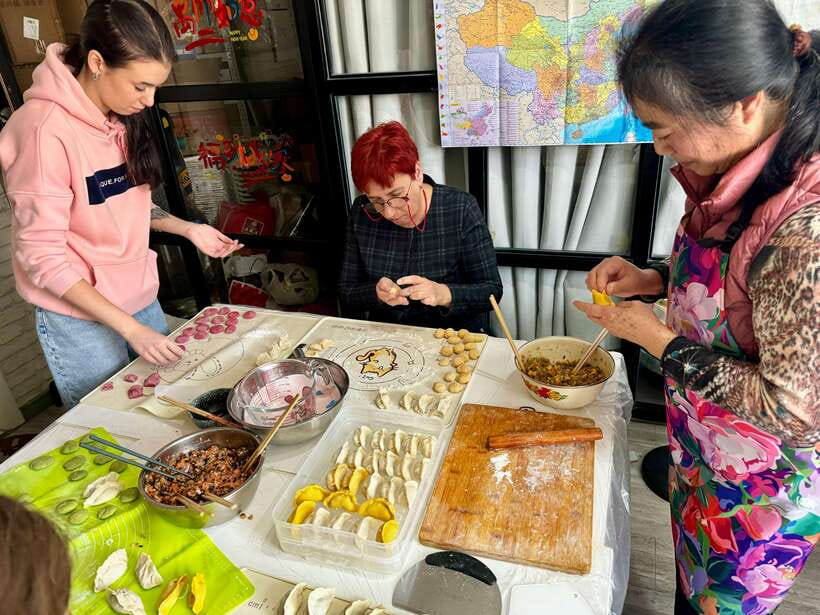
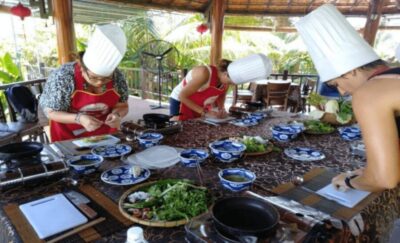
Roll dough, then meet Shanghai at the table. This three-and-a-half-hour cooking visit brings you into a local family setting, where Bonnie and her mother teach you to make dumplings from scratch, then serve a generous Chinese meal. I especially like the hands-on format and the small group of no more than six people, which gives you time to practice instead of simply watching.
The meal is another strong point. You do not just eat the dumplings you make. You may also taste dishes such as salted eggs, stinky tofu, tofu noodles, lotus root, bok choy, mushrooms, pork, chicken, seaweed, and cucumber with jellyfish. Bonnie also offers personal Shanghai and nearby-city advice, a useful bonus if you want more than the standard sightseeing route.
The main consideration is the food itself. Some dishes are bold, unusual, or unfamiliar, and the $82 price is more than a basic cooking class. You should also contact the host ahead of time about allergies, vegan needs, or ingredients you avoid, since the wider meal can include meat and seafood.
Key points to know before booking
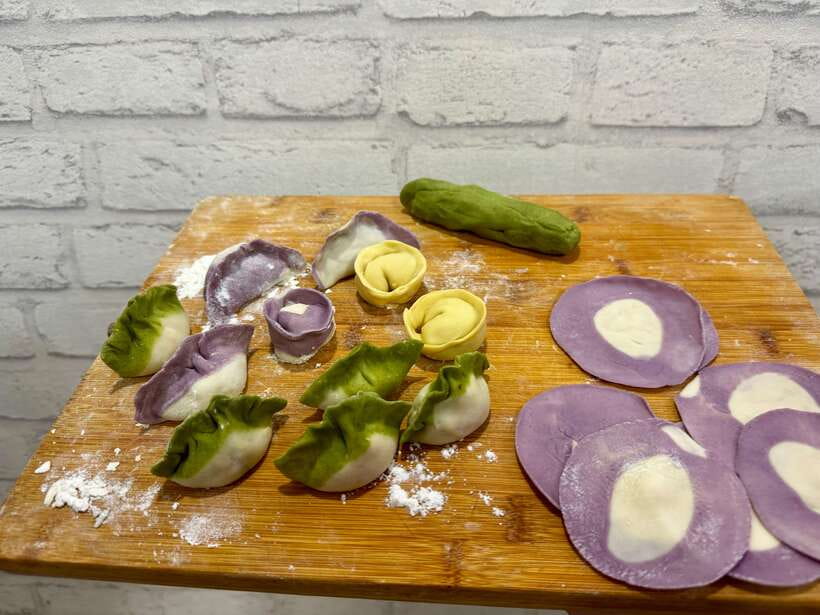
- A real dumpling lesson: You make dough, wrappers, fillings, and several dumpling shapes with guidance from Bonnie and her mother.
- A family-style meal afterward: The dumplings are joined by a broad selection of Shanghai and Chinese dishes, tea, drinks, and snacks.
- Only six participants: The small group makes it easier to ask questions and get help with folding technique.
- English instruction: Bonnie leads the class in English and explains both the cooking process and the cultural background.
- Useful Shanghai advice: You can ask about food, gardens, art, observation decks, and day trips around the city.
- Good access by metro: The meeting point is at Zhongxing Road Station on Metro Line 8, Exit 2.
Meeting the family near Zhongxing Road
The experience begins at 兴亚广场商务楼, located near Zhongxing Road Station on Metro Line 8. Use Exit 2. The Chinese station information is 地铁8号线,中兴路地铁站,2号口, which is handy to show if you need help finding the correct exit.
This is a practical starting point. You are not being sent across town to a remote suburb, and the metro gives you a straightforward way to reach the meeting point. Still, allow enough time to find the building. The stated meeting point is the commercial building rather than a famous landmark, so checking the exact directions with the host through WhatsApp is sensible.
Once inside, the tone changes quickly from city logistics to home hospitality. Bonnie welcomes the group with tea, snacks, and drinks before the cooking starts. Her mother takes part as well, offering family methods and small tricks that come from regular home cooking rather than a restaurant demonstration.
That family presence is central to the appeal. Bonnie handles the English explanations and keeps the class moving, while her mother adds the feel of a shared household meal. At times, other relatives may drop by, adding to the informal atmosphere.
More Home Cooking Classes in China
- Private Home Cooking Class with Shanghai Mama
★ 5.0 · 14 reviews - Private Home Cooking Class:Dumpling Cooking Class Tour in Xi’an
★ 5.0 · 7 reviews - Beijing: Vegan Home Cooking & Local Market Tour with Sanxia
★ 4.8 · 4 reviews
The 2.5-hour dumpling class
The cooking portion lasts about two and a half hours, so this is not a quick demonstration followed by a rushed lunch. You get time to work through the process from the beginning.
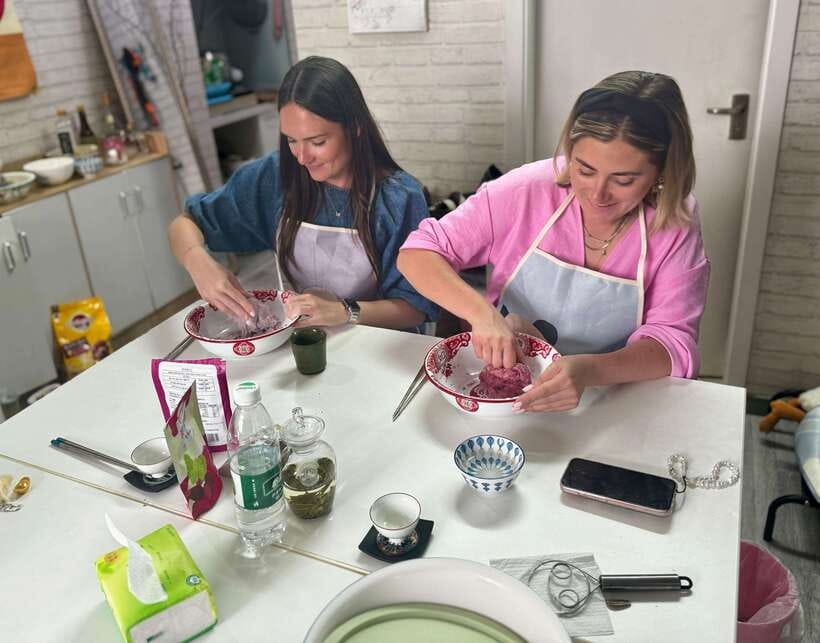
First comes a short introduction to dumplings and their place in Chinese food culture. You then work with the dough, prepare wrappers, mix fillings, and learn how to bring everything together. The lesson is designed for beginners, so you do not need previous cooking experience.
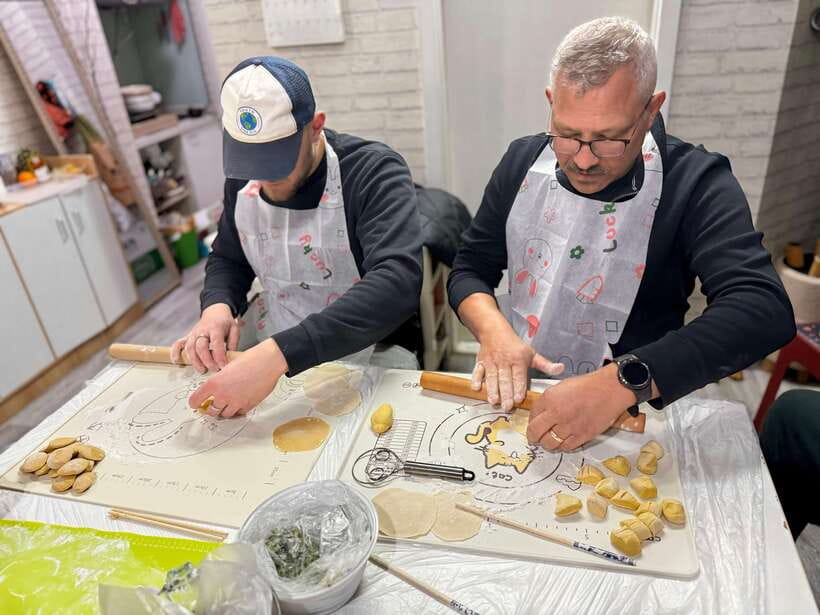
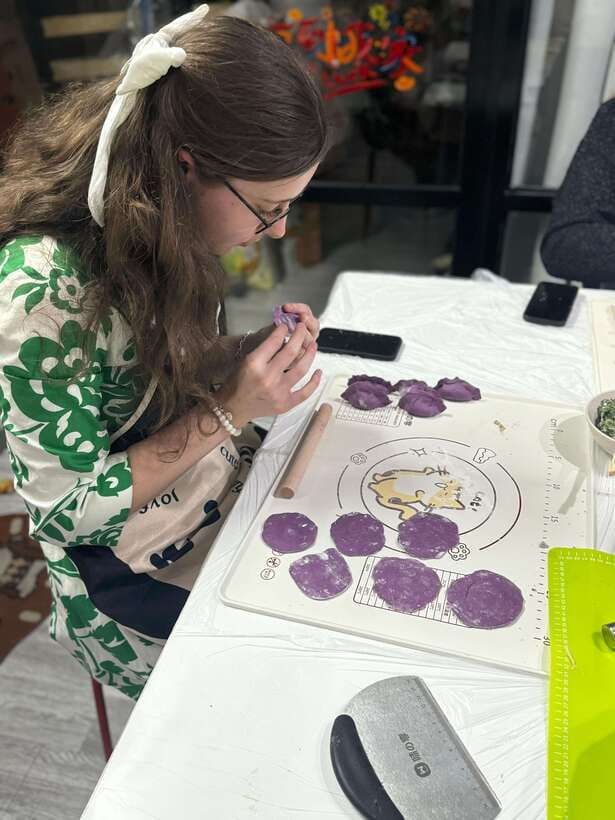
The wrapper is often the part that separates a home-style dumpling from a packet bought at a shop. You learn how to roll the dough into usable rounds, add filling without overstuffing, and seal each dumpling so it survives cooking. The first few may look uneven. That is part of the fun, and the small group means Bonnie can correct your technique without making the class feel like a formal exam.
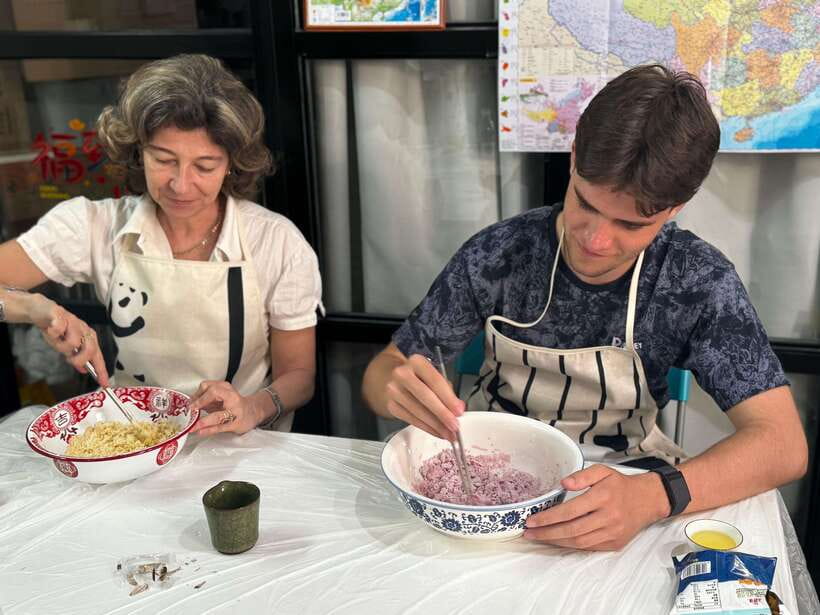
You will likely make more than one style or shape. That gives the lesson a useful rhythm: learn a fold, try it yourself, compare results, and then move to the next one. The process is social and practical. You are not just hearing about dumplings. You are handling the dough and repeating the movements until they begin to make sense.
Bonnie’s calm teaching style receives especially strong praise. She explains each step clearly, allows you to try several times, and keeps the mood relaxed. Her mother also shows techniques that add a family touch to the class.
I like that the cooking lesson leaves room for conversation. You can ask about ingredients, common Chinese meals, and the difference between what families cook at home and what visitors often find in restaurants. The host also shares details about Shanghai culture and her own experiences, giving the food a human connection.
One point to keep in mind is the length. Two and a half hours of preparation is generous, but it may feel long if your only goal is to eat dumplings. This is best for people who enjoy the process, including the imperfect folds, flour on the work surface, and repeated practice.
More than dumplings on the table
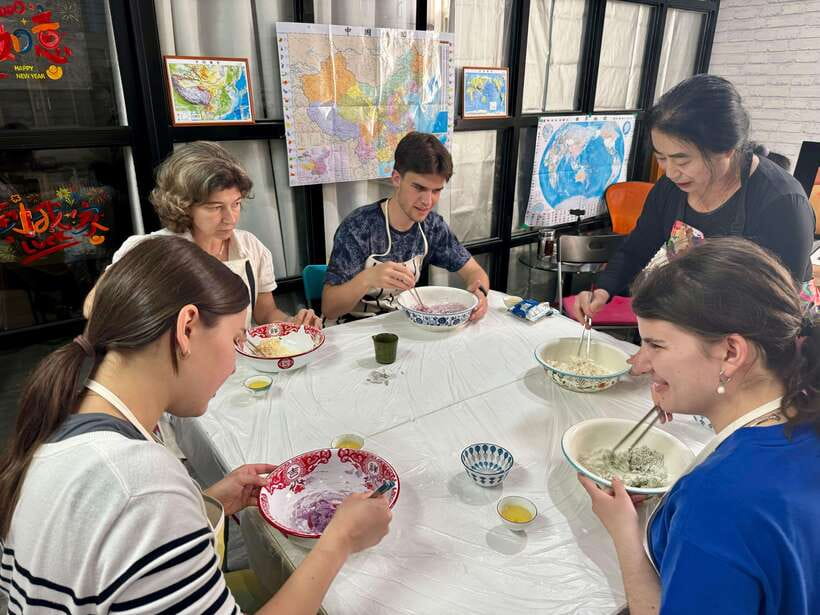
After the cooking session, about 40 minutes are set aside for tasting. The dumplings you helped prepare are served as part of a wider meal, not as the only course.
The exact dishes can vary, but the food served in this experience has included a striking range of Chinese specialties:
- Salted eggs and century eggs
- Stinky tofu
- Mushrooms with pork
- Chicken
- Jellyfish with cucumber
- Tofu noodles
- Bok choy
- Lotus root
- Spicy seaweed
- The handmade dumplings
Tea, beverages, snacks, and rice wine are also included. The meal is designed for sampling, so you can try small portions rather than committing to a full serving of every unfamiliar dish.
This is where the experience moves beyond a standard cooking class. A plate of dumplings alone would be pleasant, but a shared table filled with different textures and flavors gives you a better sense of how a Chinese meal works. You can compare the dumplings you made with other home dishes and see how vegetables, tofu, eggs, meat, and seafood appear together.
Some items may test your comfort zone. Stinky tofu, century eggs, and jellyfish are not mild introductions for every palate. That is not a reason to avoid the meal, but it is a reason to arrive curious and realistic. You can taste cautiously, ask what you are eating, and tell the host about dietary limits in advance.
Vegetarians and vegans should make contact before the visit. The experience specifically welcomes vegan participants when arrangements are made ahead of time, but the broader meal can include pork, chicken, seafood, eggs, and dairy or other animal-based ingredients. Do not wait until you arrive to explain a serious allergy or strict diet.
Bonnie’s Shanghai advice after the meal
One of the most useful extras is time with Bonnie as a local guide. She can offer suggestions based on what interests you, including local food in smaller lanes, classic gardens, modern art exhibitions, skyscraper observation decks, and visits to nearby cities.
This advice matters because Shanghai can pull you toward the same famous stops. A personal conversation helps you decide what fits your schedule and appetite. If you have already seen the major skyline views, you can ask about art or food. If this is your first visit, you can ask how to organize the city without spending every day crossing it.
The advice is informal rather than a separate sightseeing tour. You are not being escorted to each attraction. Instead, you leave with ideas, names, and context that may help shape the rest of your trip.
Bonnie also takes photos and videos during the experience, according to the details shared by participants. That can be a nice record of the cooking session, especially since your hands will be busy with dough and filling.
More Chinese Cooking Classes in China:
- Flavors of Beijing: Eat Like A Real Chinese
★ 5.0 · 78 reviews - Online Cooking Class Beijing Dumplings and Cuisine by Sunflowerli Renowned Chef
★ 5.0 · 65 reviews - Private Cooking Class: Make Your Own Dim Sum In Shanghai
★ 5.0 · 27 reviews - 2.5hrs Chinese Kitchen Cooking Class: Xiaolongbao Soup Dumplings
★ 5.0 · 12 reviews
Why the small group changes the experience
The maximum group size is six. That number is worth noting because cooking classes can become frustrating when one instructor has to divide attention among a large crowd.
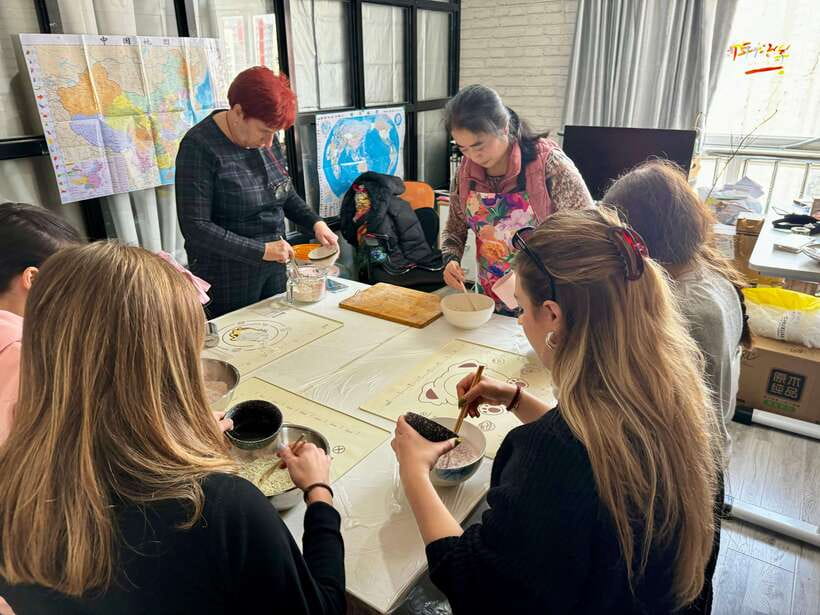
With six people, you have a better chance of receiving help with wrapper thickness, filling amounts, and folding. You can also talk with the other participants around the table. The class has attracted people from several countries, so the meal can become a casual cultural exchange among the group as well as with the host family.
The small size does not guarantee a private class. You may share the visit with other people, and the social side is part of the design. Solo visitors should find it easy to join in, while couples and families can work together without being separated into different activities.
The atmosphere is warm and relaxed, but it is still a planned three-and-a-half-hour session. If you want a quiet, private meal with no interaction, this may not be the right choice. If you like learning by doing and talking over food, the group format works well.
Is $82 a fair price?
At $82 per person, this is not the cheapest way to eat dumplings in Shanghai. You could buy a filling meal for much less, and a short restaurant class would likely cost less as well.
The value comes from the full package. You receive a 2.5-hour English-language lesson, all cooking materials, hands-on instruction, a substantial tasting meal, tea and snacks, and personal Shanghai advice. You are also paying for access to a family setting, which is difficult to reproduce by simply ordering dishes in a restaurant.
I consider the price fair for visitors who want an experience rather than just food. The cost is easier to justify if you take advantage of the conversation and ask for useful suggestions for the rest of your China trip. It is less attractive if you mainly want a quick introduction to folding dumplings.
The booking fee is used to reserve your place, and the activity allows you to reserve now and pay later. Free cancellation is available up to 24 hours in advance for a full refund. Check the current terms when booking, since practical conditions can change.
Food restrictions, comfort, and accessibility
The activity is listed as wheelchair accessible, and instruction is provided in English. You should still contact the host directly about the exact access arrangements at the building and cooking space if you use a wheelchair.
Food communication is especially important here. The meal may include meat, seafood, eggs, tofu, fermented foods, and unusual ingredients. Send details about allergies, vegan requirements, or foods you do not eat before the class. The host has shown care with food preferences, but advance notice gives the family time to prepare suitable options.
If you are simply a cautious eater, you can still enjoy the class. Ask questions, start with the dumplings and familiar vegetables, and treat the more unusual foods as optional tastes rather than obligations.
Who will enjoy this experience most?
I would recommend it to first-time visitors who want an introduction to Chinese food that includes conversation and participation. It is also a good fit for solo visitors, couples, families, and small friend groups who enjoy sitting around a table with new people.
Food lovers will get the most from the wide selection of dishes. People with an interest in home cooking will appreciate seeing how dumplings are prepared outside a restaurant kitchen. Visitors with only one free afternoon should note that the class takes three and a half hours, plus the time needed to reach and leave the meeting point.
This is not ideal for someone seeking a polished restaurant meal, a fast activity, or a tightly scheduled sightseeing tour. It is also not the best match if you dislike unfamiliar foods or do not want to communicate dietary needs in advance.
Should you book the Shanghai dumpling class?
Book it if you want family hospitality, hands-on cooking, and a generous tasting meal in one activity. Bonnie’s friendly teaching, her mother’s home-style input, and the small group make the class feel personal rather than commercial.
The strongest reason to go is the combination of food and conversation. You learn to make something yourself, taste a wider range of Chinese dishes, and leave with practical ideas for Shanghai. Skip it if $82 feels high for a meal, you have very limited time, or you prefer familiar food and a quiet setting.
For most visitors who want a more personal side of Shanghai, this is a thoughtful use of an afternoon. Contact the host early about dietary needs, arrive with an open mind, and do not worry if your first dumpling looks more like a folded envelope than a restaurant masterpiece.
FAQ
Where does the experience begin?
It begins at 兴亚广场商务楼 near Zhongxing Road Station on Metro Line 8. Use Exit 2. The Chinese station address is 地铁8号线,中兴路地铁站,2号口.
How long does the dumpling class and meal take?
The full experience lasts 3.5 hours. About 2.5 hours are used for cooking, followed by about 40 minutes of food tasting.
Is the activity taught in English?
Yes. The instructor is English-speaking, and the activity is conducted in English.
How many people are in the group?
The activity is limited to six participants, making it a small-group cooking class.
Can vegans or people with allergies join?
Yes, but you must contact the host after booking and explain allergies, vegan requirements, or foods you avoid. The meal can include meat, seafood, eggs, and other animal-based ingredients unless arrangements are made ahead of time.
What is included in the $82 price?
The price includes cooking materials, English-language instruction, hands-on dumpling making, a main meal with local dishes, tea, beverages, and snacks.
More Food Trips in China
- China’s Favourite Street Food Cooking Workshop
★ 5.0 · 16 reviews - Small Group Cooking Class & Market Food Tour in Florence
★ 5.0 · 1,574 reviews - Athens: Food Market Visit and Cooking Class with Wine
★ 4.9 · 1,087 reviews - Undiscovered Charleston: Half Day Food, Wine & History Tour with Cooking Class
★ 5.0 · 948 reviews
More Vegetarian Cooking Classes in China
- Oaxacan Vegetarian Cooking Class
★ 5.0 · 235 reviews - Marrakech: Moroccan Cooking Class for vegetarians and vegan
★ 4.9 · 156 reviews - Hoi An: Vegetarian Cooking Class w Local Family and transfer
★ 4.9 · 145 reviews - Oaxaca: Vegetarian Cooking Class
★ 4.8 · 139 reviews
Just added around China
- Private Panda Tour with Cooking Class One-day Trip★ 5.0 · 11 reviews
- Half-day Dandan Noodles Cooking Class with a Local Market Visit★ 5.0 · 8 reviews
- Half-Day Private Hot-Pot Cooking Class with a Local Market Visit★ 5.0 · 3 reviews
- Half-day Chengdu Handmade Tofu Making and Mapo Tofu Cooking Class★ 5.0 · 3 reviews
- Chengdu Dujiangyan Leshan Buddha Tea Plantation and Sichuan Cooking 3 Days★ 5.0 · 2 reviews
- Half day Chengdu Dumpling Class: Make from Scratch★ 5.0 · 8 reviews
- Half-Day Sichuan Cooking Class Experience in Chengdu★ 4.0 · 17 reviews
- Beijing: Private Dumpling Cooking Class in Local Family★ 5.0 · 3 reviews
Home Cooking Classes, compared.
Khmer Cooking Class at a Local’s Home in Krong Siem Reap
Read our review →
Local Home Korean Cooking Class & Market Adventure in Seoul
Read our review →
Mexican Cooking from Scratch in a Local Home in Tulum
Read our review →
Pastamama, Home Cooking Classes at Grace’s Home
Read our review →
Traditional Cooking Class & meal with Local Family
Read our review →