REVIEW · CHENGDU, CHINA
Half-Day Private Hot-Pot Cooking Class with a Local Market Visit
Hotpot is better when you make the broth. In Chengdu, this private 4.5-hour cooking class combines a spice-market visit, local snacks, Sichuan tea, and hands-on instruction in both spicy red pot and mild white pot. I like the market stop because it gives the meal a local setting, and I like the private format because your group can ask questions without keeping up with strangers.
The main consideration is heat. Sichuan peppercorns and chili peppers are central to the red pot, so diners who prefer mild food should make good use of the white broth. The class also takes most of a morning or afternoon, and the experience works best when you want food culture rather than a quick cooking demonstration.
The guide Lance receives especially warm praise for being engaging, clear, and easy to talk with. A professional chef leads the cooking, while Lance helps explain the market, ingredients, cutting, and table setup in a relaxed way. At $90 per person, the price is not a bargain meal, but it covers a private experience, market visit, instruction, and the food you cook and eat.
Key points to know before booking
- Two broths in one class: You prepare both Sichuan red pot with chili and peppercorns and a non-spicy white pot.
- A real market component: The experience begins with a spice-market visit, local snacks, and a look at ingredients before cooking starts.
- Private from start to finish: Only your group takes part, with pickup offered and group discounts available.
- Chef-led practical skills: You learn to cut ingredients and arrange dishes with decoration, not just watch someone cook.
- A relaxed Chengdu welcome: The class includes local tea, beer or other beverages, and the chance to eat the hotpot you made.
- Strong guide presence: Lance is praised for being engaging, informative, and willing to answer questions without giving a stiff speech.
Starting with Chengdu spices and market snacks
The experience begins with a guide-led visit to a spice market. This is an important choice because Sichuan hotpot is built around its ingredients. Before you sit at a cooking table, you get a chance to see the foods and seasonings that shape the meal.
The market visit includes local snacks, giving you something to taste before the main class. The description does not provide a fixed snack menu, so I would treat this as a chance to sample what is available rather than expect a particular dish. The focus is on seeing and tasting local food in a market setting.
I like this opening because it gives the cooking class some context. You are not simply handed a pot, a bowl of ingredients, and a recipe. You first encounter the food culture in a public market, then carry that knowledge into the kitchen.
The market is also a useful place to ask questions. You can ask Lance about unfamiliar spices, how ingredients are used, or which flavors are linked to red pot and white pot. His role is not limited to transportation. He is described as engaging and willing to answer questions, which matters in a food class where the ingredient names and flavors may be new to you.
One practical point: this is a market visit, not a separate sightseeing tour. The available information does not promise a long shopping period or specific stalls. Expect a guided introduction to spices and snacks, then a move to the cooking location.
More Cooking Classes with a Market Tour in China
- Half-Day Chengdu Cooking Class with a Local Market Visit
★ 5.0 · 465 reviews - Chengdu: Cooking Class with Fresh Market Half Day Experience
★ 5.0 · 42 reviews - Half-Day steamed Buns Cooking Class with a Local Market Visit
★ 5.0 · 26 reviews
Tea before the cooking begins
After the market, you go to the cooking-class venue. You can take a break there with Sichuan local tea before the hands-on work starts.
That pause is a small feature, but it helps the class feel less rushed. The total experience lasts about four and a half hours, and the market portion comes before the cooking. A tea break gives you time to settle in, listen to the initial instructions, and get ready for a meal built around several ingredients and two broths.
The tea also adds a local touch without turning the class into a formal cultural lecture. The emphasis is on simple hospitality and preparation. If you like food experiences that leave room for conversation, this part should suit you.
I would not expect the tea break to replace lunch or dinner. It is a pause before cooking, while the main meal comes later when you eat the hotpot prepared by your group.
Red pot, white pot, and the logic of Sichuan hotpot
The central lesson covers two forms of Sichuan hotpot. The red pot uses chili peppers and Sichuan peppercorns for a spicy, numbing flavor. The white pot uses a non-spicy broth. A double pot combines both, allowing diners to cook in the same shared vessel while choosing different levels of heat.
This two-broth format is one of the best reasons to book the class. It lets you understand the contrast between the fiery red broth and the gentler white version in one sitting. You can also make the meal more comfortable for a mixed group. People who want serious heat can use the red side, while those who prefer mild food can choose the white side.
The experience connects these cooking styles to a history of at least 1,700 years. That does not mean you should expect a long lecture on food history. The value is more practical: you learn how a familiar Chengdu meal can be organized around different broths, ingredients, and eating preferences.
The class is guided by a professional chef, so the emphasis is on doing the work correctly. You are not only watching a pot simmer. You take part in preparing the hotpot and learn how the ingredients are cut and arranged.
The exact recipe and ingredient list are not provided, so I would avoid booking this expecting a fixed menu or a particular spice level. The clear promise is the red pot, white pot, cutting, arrangement, and meal. The specific foods may reflect what is available at the market and class location.
Learning to cut and arrange the ingredients
The chef also teaches cutting and presentation. You learn how to prepare ingredients and set the dishes with decoration before they go into the hotpot.
This part may sound simple, but it changes the experience from eating to cooking. Hotpot ingredients cook at different speeds, and the way they are cut affects how easy they are to handle in the broth. The class gives you a guided introduction to those basic decisions without requiring advanced kitchen skills.
The decoration and arrangement add a visual side to the meal. You are not just piling food onto plates. You learn how dishes can be set out attractively before everyone begins cooking.
The supplied information does not state that you receive a recipe book or a take-home ingredient list. I would treat the class as a hands-on lesson rather than a formal certification course. Pay attention, ask questions, and take notes if you want to recreate the meal later.
The cooking instructor is praised for giving clear explanations and keeping the session professional without making it feel like a rehearsed speech. That balance is valuable. A class can be accurate but dull, or friendly but vague. Here, the available comments point to clear teaching with a personal touch.
More Private Cooking Classes in China
- Private Cooking Class: Make Your Own Dim Sum In Shanghai
★ 5.0 · 27 reviews - Private Home Cooking Class with Shanghai Mama
★ 5.0 · 14 reviews - Private Panda Tour with Cooking Class One-day Trip
★ 5.0 · 11 reviews - Private Home Cooking Class:Dumpling Cooking Class Tour in Xi’an
★ 5.0 · 7 reviews
Eating the hotpot you prepared yourself
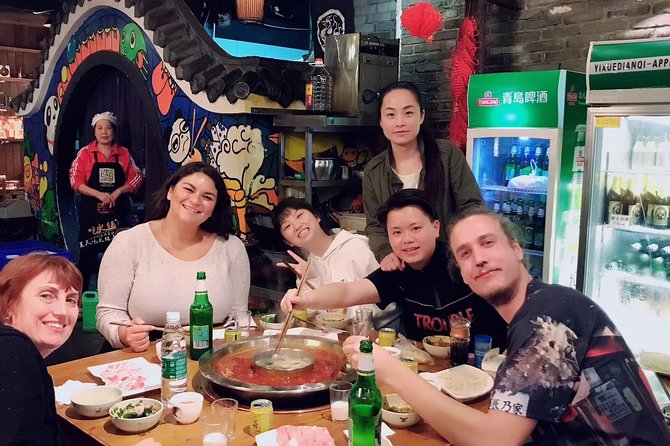
Once the broths and ingredients are ready, you eat the hotpot your group has cooked. Beer and other beverages are available to accompany the meal.
This final stage gives the class a satisfying purpose. You have seen the spices, tasted snacks, listened to explanations, prepared the ingredients, and cooked the food. The meal is not just served to you. It is the result of the work you have done during the class.
I like the shared format of hotpot because it suits a private group. You can talk while the broth simmers, try both sides of the pot, and compare how the same ingredient tastes in spicy and non-spicy broth. The exact food and beverages are not specified, so you should not assume a full drink package or a particular beer brand.
The spice level is the main issue to keep in mind. Sichuan peppercorns create a numbing sensation that is different from ordinary chili heat. If you are unsure about spicy food, focus on the white pot and ask the guide or chef how to balance your choices. The presence of a non-spicy broth makes the class more flexible, but the experience is still centered on Sichuan flavors.
Why the private format matters
This is a private tour and activity, so only your group participates. That makes a real difference in a cooking class. You can ask for an explanation to be repeated, spend more time on an unfamiliar cutting technique, or discuss spices without worrying about a larger class moving ahead.
Private does not mean completely unstructured. A guide leads the market visit, and a professional chef leads the cooking. You still follow the class plan, but the setting should allow more direct conversation than a large workshop.
This format suits couples, families, friends, and small groups with different levels of interest in food. A serious home cook can ask more technical questions, while a first-time cook can take the instructions at a comfortable pace. The group discount may also improve the value if several people book together.
Pickup is offered, and the venue is near public transportation. The available details do not specify the pickup area, vehicle type, or exact meeting arrangements, so confirm those details when booking. The tour is usually booked about 10 days ahead, which suggests planning early if your Chengdu schedule is tight.
Is $90 per person fair value?
At $90 per person, this is priced above a regular Chengdu meal. You are paying for more than food: a private guide, a market visit, snacks, tea, chef instruction, two hotpot broths, the cooking session, and the meal afterward.
I consider the price reasonable if you want an organized food experience with personal attention. The private format is the key value. A cheaper restaurant meal may give you excellent hotpot, but it will not include a guided spice-market visit or instruction on cutting and presentation.
The value is weaker if you only want to eat hotpot and already feel comfortable ordering in Chengdu. In that case, the cooking lesson and market visit may not justify the added cost. You should also remember that the class takes about four and a half hours, so the price includes a substantial block of your day.
For a couple or small private group, the format can feel worthwhile because the meal doubles as an activity. For someone focused only on budget, it is a splurge. Group discounts may help, but the supplied information does not state the discount amount.
Who will enjoy this Chengdu class most?
I would recommend this experience to you if you like food classes with local context. The market visit gives the session a sense of place, while the chef-led work gives you something concrete to do.
It is also a good fit for mixed groups. The red and white pots mean that one person can enjoy spicy food while another stays with a mild broth. The private setting makes it easier to handle different food interests and questions.
First-time visitors to Chengdu may get the most from the experience because it introduces several parts of local food culture in one outing: spices, snacks, tea, cooking technique, shared dining, and Sichuan heat.
You may want to skip it if you dislike chili, peppercorns, or shared hotpot dining. The white broth offers a mild choice, but the main subject remains Sichuan hotpot. You may also prefer another activity if your schedule is packed and you cannot spare four and a half hours.
The strongest reason to choose this class is the human side. Lance is described as warm, engaging, and clear, while the chef brings professional instruction. That combination should help the experience feel like a personal food lesson instead of a standard demonstration.
Booking and cancellation details
Confirmation is provided when you book. Pickup is offered, public transportation is nearby, and mobile tickets are available. Since the tour is often booked around 10 days ahead, I would reserve before your Chengdu plans become fixed.
You can cancel for a full refund up to 24 hours before the local start time. Cancellations or changes made within 24 hours are not refunded or accepted. The experience requires good weather, and if poor weather causes a cancellation, you are offered another date or a full refund.
Should you book the hotpot class?
Book it if you want to understand Chengdu hotpot by seeing the ingredients, preparing the food, and eating the result. The market visit, two broths, chef-led cutting practice, tea break, and private format give the $90 price a clear purpose.
I would be cautious only if you have a low tolerance for spice, want a short activity, or care more about a cheap meal than a guided experience. For everyone else, this is a well-shaped introduction to Sichuan cooking, especially with Lance helping connect the market visit to the kitchen.
FAQ
How long does the hotpot cooking class last?
The experience lasts approximately 4 hours and 30 minutes.
What types of hotpot will I prepare?
You will prepare both a spicy red pot with chili peppers and Sichuan peppercorns and a non-spicy white pot with broth.
Is the tour private?
Yes. Only your group participates in this private tour and activity.
Does the experience include a market visit?
Yes. Your guide takes you to a spice market where you explore, learn about local foods, and try local snacks.
Is pickup available?
Yes. Pickup is offered, and the cooking location is near public transportation.
What happens before the cooking starts?
After the market visit, you go to the cooking location and can take a break with Sichuan local tea before beginning the class.
What is the cancellation policy?
You can cancel at least 24 hours before the local start time for a full refund. Cancellations or changes within 24 hours are not refunded or accepted. If poor weather causes the experience to be canceled, you are offered another date or a full refund.
More Half-Day Experiences in China
- Half-Day Professional Mapo Tofu Cooking with a Local Market Visit
★ 5.0 · 19 reviews - Half-Day Sichuan Cooking Class Experience in Chengdu
★ 4.0 · 17 reviews - Half-day Dandan Noodles Cooking Class with a Local Market Visit
★ 5.0 · 8 reviews - Half-day Chengdu Handmade Tofu Making and Mapo Tofu Cooking Class
★ 5.0 · 3 reviews
Just added around China
- Private Panda Tour with Cooking Class One-day Trip★ 5.0 · 11 reviews
- Half-day Dandan Noodles Cooking Class with a Local Market Visit★ 5.0 · 8 reviews
- Half-day Chengdu Handmade Tofu Making and Mapo Tofu Cooking Class★ 5.0 · 3 reviews
- Chengdu Dujiangyan Leshan Buddha Tea Plantation and Sichuan Cooking 3 Days★ 5.0 · 2 reviews
- Half day Chengdu Dumpling Class: Make from Scratch★ 5.0 · 8 reviews
- Half-Day Sichuan Cooking Class Experience in Chengdu★ 4.0 · 17 reviews
- Beijing: Private Dumpling Cooking Class in Local Family★ 5.0 · 3 reviews
- Dumpling Cooking Class and Local Market Tour★ 5.0 · 3 reviews
Cooking Classes with a Market Tour, compared.

Hanoi Cooking Class: Culture, Local Market & Meaning CSR Impact
Read our review →
5 Traditional Dishes Hanoi Cooking Class with Market Trip
Read our review →
Cooking Class and Lunch at a Tuscan Farmhouse with Local Market Tour from Florence
Read our review →
Cooking Class, Market & Thai Herbs Garden Tour
Read our review →
Authentic Cooking Class with Market & Farm Visit
Read our review →
Paella Cooking Experience & Boqueria Market Tour
Read our review →
Cooking Class Hoi An:Local Market, Basket Boat, Fishing & Cooking
Read our review →