
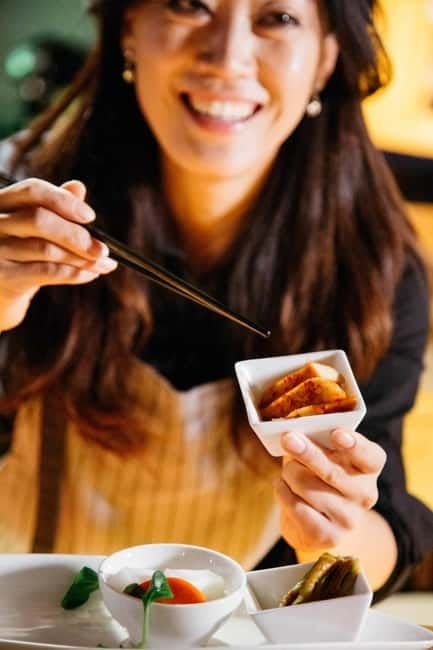
REVIEW · SOUTH KOREA
Seoul: Kimchi Dishes Cooking Class with Wine Pairing
Kimchi is more than a side dish. This two-hour Seoul class turns Korea’s famous fermented staple into a full meal, pairing tasting, cooking, culture, and wine in a small studio near Gyeongbokgung Palace. I like the clear introduction to four kinds of kimchi, and I like that you cook a dish you can realistically repeat at home. The price, $58 per person, is fair for the food, instruction, and wine, though adults who dislike spicy, sour, or fermented flavors may find the theme a little narrow.
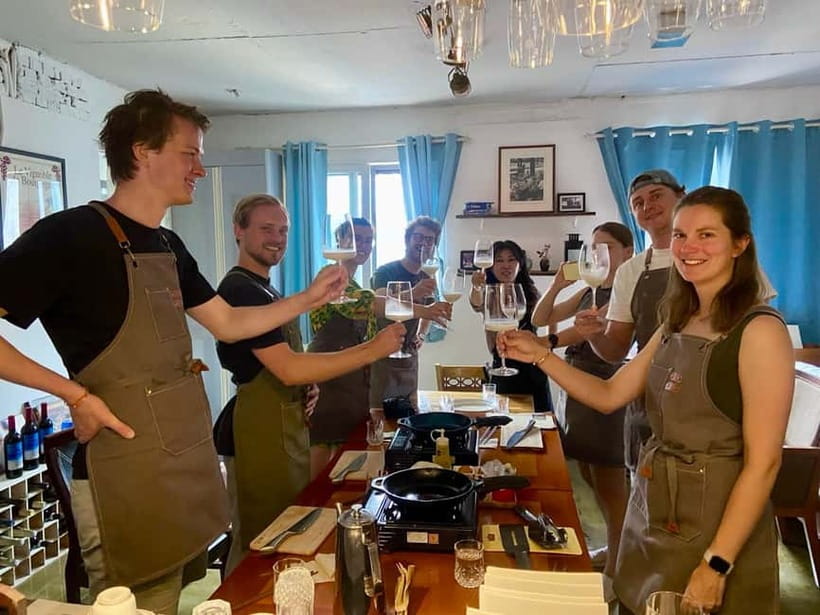
The host, Suyeon, brings useful experience as a former wine bar owner and sommelier. She is also praised for her patience and warm conversation, which matters in a small class limited to six people. The one point to note is that you may not make every dish yourself, since participants choose among the recipes and the exact cooking plan can change with group size.
Key points at a glance
- Four kimchi styles first: Taste cabbage kimchi, white kimchi, radish kimchi, and aged kimchi before cooking.
- Three practical recipes: Choose from kimchi pancake, white kimchi noodles, or radish and bacon stir-fried rice.
- A sommelier leads the pairing: Suyeon explains how wine works with spicy, sour, salty, and fermented flavors.
- A special main dish is prepared for you: Aged kimchi with braised pork belly is made in advance because it takes longer and is harder for beginners.
- A small, social setting: With no more than six participants, the class allows room for questions and conversation.
- A smart palace-day plan: The studio is about five minutes from Gyeongbokgung Palace, near Gyeongbokgung Station.
Why kimchi makes a good cooking class
Kimchi is often presented to first-time visitors as one thing: spicy fermented cabbage. That description is accurate, but it leaves out much of the fun. In this class, you get to compare several versions and see how texture, age, ingredients, and preparation change the flavor.
The tasting includes cabbage kimchi, white kimchi, radish kimchi, and aged kimchi. Cabbage kimchi gives you the familiar reference point, with its spicy and sour character. White kimchi offers a milder direction, while radish kimchi adds a different crunch and shape. Aged kimchi brings stronger, deeper flavors that work well in cooked dishes.
I like this order because it gives the class a purpose. You are not simply handed ingredients and told to follow a recipe. You first learn what the main ingredient tastes like in several forms. That makes the cooking section easier to understand, especially when you notice why fresh and aged kimchi behave differently in a pan or noodle dish.
The food also opens a door into Korean culture. Suyeon explains the history and process behind kimchi, along with details about Korean food traditions. Several participants found the cultural discussion as useful as the recipes, and that makes this a better choice than a class focused only on chopping and stirring.
More Korean Cooking Classes in Seoul:
- Local Home Korean Cooking Class & Market Adventure in Seoul
★ 5.0 · 1,024 reviews - Master Korean traditional cooking with a Kimchi chef
★ 5.0 · 385 reviews - Seoul: Korean Cooking Class at a Local Home and Market Tour
★ 5.0 · 348 reviews
Starting with four kinds of kimchi
The class begins with tasting and explanation. This is the least hands-on part, but it may be the most useful if kimchi is new to you. You learn the basic differences before deciding which flavors you prefer.
The tasting also helps you handle the common question, How spicy is kimchi? The answer changes from one type to another. White kimchi gives you a gentler example, while aged kimchi can have a more forceful sourness and depth. Radish kimchi brings its own texture, so the experience is not just a comparison of heat levels.
Suyeon’s background helps here. As a sommelier and former wine bar owner, she talks about flavor in a way that connects naturally to the pairing later. You learn to notice acidity, salt, heat, fermentation, and richness rather than treating kimchi as a single strong taste.
This is also where the class feels personal. The group is small, and Suyeon is praised for answering questions carefully and explaining the food in detail. The format suits people who enjoy conversation and want more context than a standard demonstration provides.
Choosing your kimchi dish
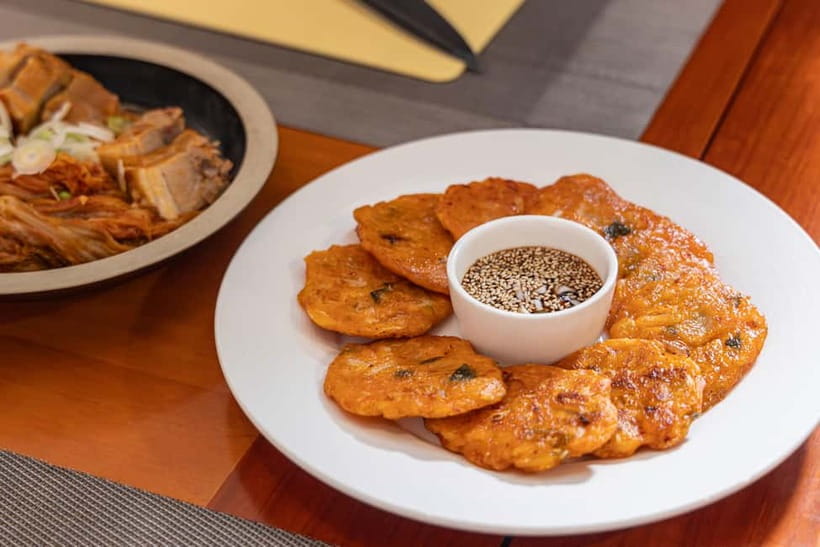
After tasting, you choose which dish you want to learn. The planned options are:
- Kimchi pancake
- White kimchi noodles
- Radish and bacon stir-fried rice
All three recipes offer a different way to use kimchi. The pancake is likely the most immediately familiar as a Korean dish, with kimchi worked into a batter and cooked until browned. It is a good pick if you want a simple snack or shared starter at home.
White kimchi noodles take the class in a cooler, lighter direction. They show that kimchi does not always have to be fiery or heavy. This is a useful option if you enjoy noodles and want to understand how mild kimchi can shape a dish without dominating it.
The radish and bacon stir-fried rice is the heartier choice. It brings together the fermented flavor of kimchi, the savory quality of bacon, and the comfort of fried rice. It is also the most obvious candidate for a quick meal at home, since the basic idea can be adapted to ingredients you already have.
The exact arrangement can change with the number of participants. You should not assume that you will personally prepare all three recipes. The class is designed around sharing, and each participant chooses a dish so the group can create a wider meal together. That gives you more variety at the table, but it also means you may spend less time practicing a recipe you did not select.
The recipes are aimed at beginners. Instructions are presented as simple enough to repeat with friends or family at home, which is one of the strongest practical reasons to book this class. You leave with ideas that do not require a professional kitchen or advanced technique.
The host’s aged kimchi and pork belly
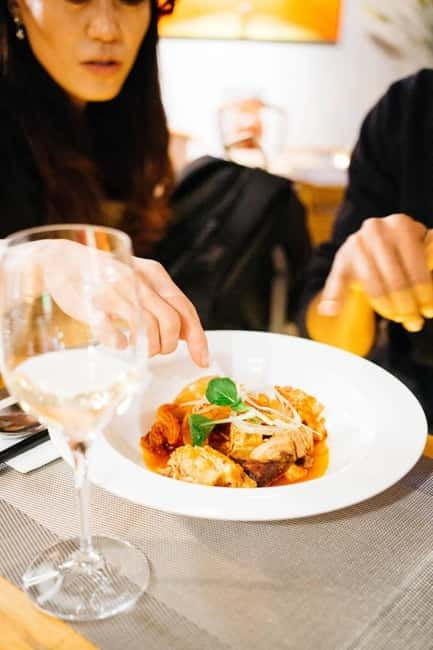
One dish is prepared in advance by Suyeon: aged kimchi with braised pork belly. This is a smart choice for a two-hour class. Braising takes time, and the dish can be difficult for first-time cooks to complete during the session.
The pre-made dish adds a richer, slower-cooked element to the meal. It also shows what aged kimchi can do when it is paired with tender pork and given time to develop. You are not cooking this dish yourself, so it does not offer the same hands-on value as the pancake, noodles, or fried rice. Still, it rounds out the tasting and lets you try a more involved Korean preparation without waiting through a long cooking period.
I see this as a good trade. A class that tried to fit every technique into two hours might become rushed. Preparing the pork ahead of time leaves room for explanation, tasting, and conversation.
More Cooking Classes with Wine Tasting in Seoul:
- Florence: Pasta Cooking Class with Unlimited Wine
★ 4.9 · 10,285 reviews - Florence: Pasta & Tiramisu Cooking Class with Unlimited Wine
★ 4.9 · 6,708 reviews - Rome: Pasta Making Class with Wine, Limoncello, and Dessert
★ 4.9 · 3,177 reviews - Florence: Cooking Class Pasta & Tiramisu Making Unlimited Wine
★ 5.0 · 2,234 reviews
Wine pairing with a sommelier
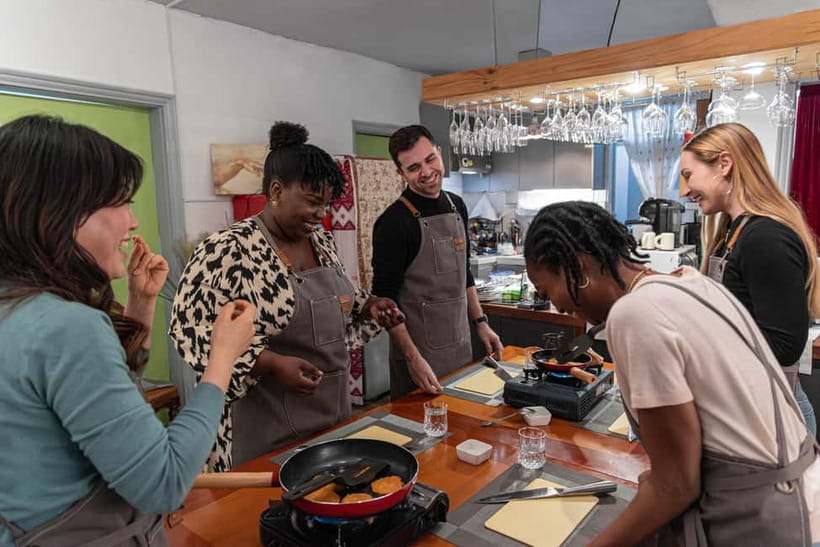
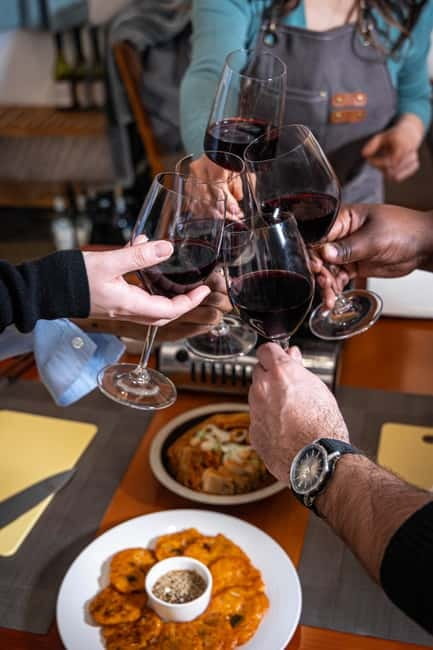
The wine pairing is what sets this class apart from a basic Korean cooking lesson. Kimchi can be tricky with wine because it combines acidity, spice, salt, and fermentation. Suyeon uses her sommelier experience to explain which wines work with those competing flavors.
You do not simply drink a glass alongside the finished food. The pairing is tied to the tasting and the shared meal, so you can compare how wine responds to different kimchi styles and cooked dishes. A wine that works with mild white kimchi may not be the best match for aged kimchi and pork belly.
The included drink is described as a glass of wine selected by the sommelier. One session included an Italian white wine from Veneto, while another featured yuja makgeolli. That suggests the drink selection may vary, or that the class can sometimes include a Korean-style pairing in addition to wine. If the specific beverage matters to you, ask when booking.
The pairing adds real value to the $58 price. A cooking class alone might teach you recipes, but this one also gives you a way to think about drinks with Korean food. That is especially useful if you enjoy wine but usually reach for beer or soju with spicy dishes.
Sharing the meal at a six-person table
The final part is a shared meal. Participants bring together the dishes they prepared, then add the aged kimchi and braised pork belly made by Suyeon. This format gives you a wider taste of Korean home cooking than a class based on one recipe per person.
The small group size matters. With up to six participants, there is a better chance to ask questions, watch the cooking closely, and talk with the host. It also creates a social meal rather than a quick demonstration followed by a private plate.
The mood is relaxed and conversational. Suyeon is praised for discussing Korean culture and food history, and several people found that the two hours passed quickly. That is a good sign if you prefer an intimate class with personal attention. It may be less appealing if you want a tightly timed professional workshop with everyone completing the same dish.
You should also arrive ready to share. The dishes made by participants are intended for the group, not for each person to take away as a private meal. The benefit is variety and conversation. The drawback is that you do not leave with packaged portions or a full set of every dish you made.
Location near Gyeongbokgung Palace
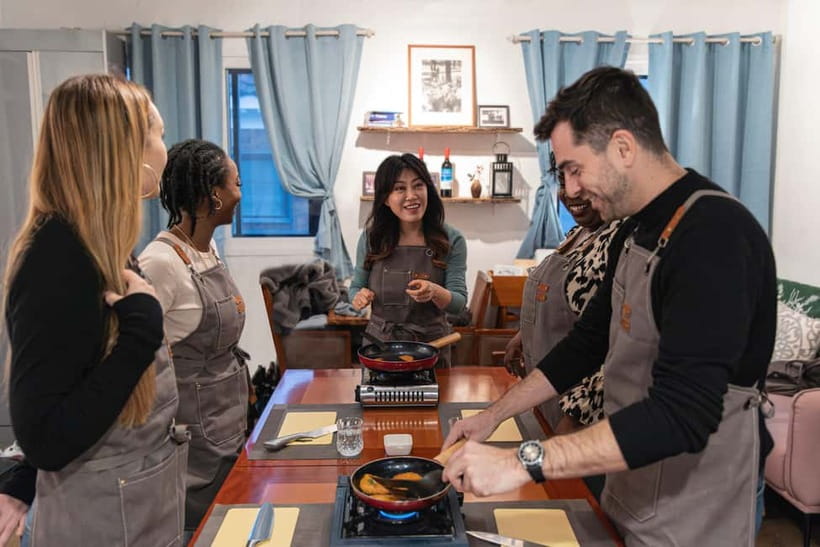
The studio is easy to add to a central Seoul sightseeing day. From Exit 2 of Gyeongbokgung Station, walk straight for about 200 meters, then turn left at Woori Bank. Continue past the bar Cham. The studio is on the third floor of the building with Cuisine La Cle restaurant on the first floor.
The class is about five minutes from Gyeongbokgung Palace, making it a natural follow-up after palace sightseeing. I would plan the class after the palace rather than before it. You can spend the morning at the palace, then move to the studio for food and a slower indoor activity.
The nearby setting also gives you options afterward. Suyeon has recommended the palace and the Museum of Contemporary and Modern Art to participants, and the area has bars nearby. Since the class includes several dishes, you may not need dinner afterward.
Allow a few extra minutes to find the building and reach the third floor. The directions are clear, but the studio is not described as a street-level storefront, so looking for the restaurant on the first floor is the useful landmark.
Is $58 a fair price?
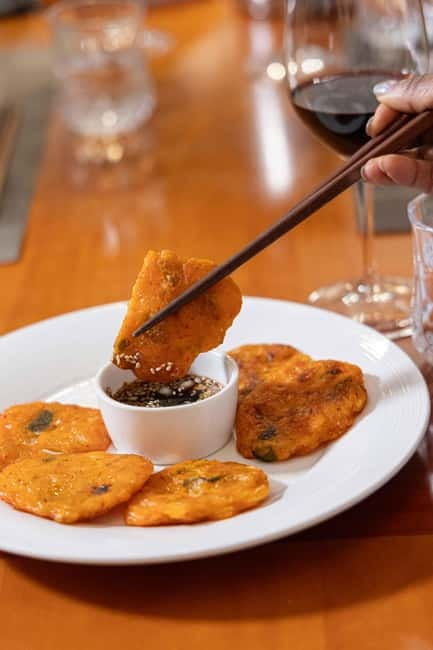
At $58 per person, this is not the cheapest way to eat kimchi in Seoul. You can find kimchi dishes at restaurants for much less. That comparison misses the main point, though. Here you are paying for instruction, four tastings, a hands-on dish, a shared meal, a sommelier-led pairing, and a small group setting.
The value is strongest if you want to recreate the food at home. The recipes are beginner-friendly, and the ingredients and methods are explained in a way that gives you confidence to try them later. The class is also a good use of time for someone who wants one organized food experience rather than several separate restaurant meals.
The price is less compelling if you mainly want a large meal or a private cooking lesson. You may prepare only one of the three listed dishes, and the pork belly dish is made by the host. Participants looking for advanced fermentation skills should also know that this is a kimchi tasting and cooking class, not a full workshop on making and storing kimchi from scratch.
Free cancellation up to 24 hours before the start gives you some useful flexibility, and you can reserve now and pay later. The activity is for people aged 18 and over.
Who should book this class?
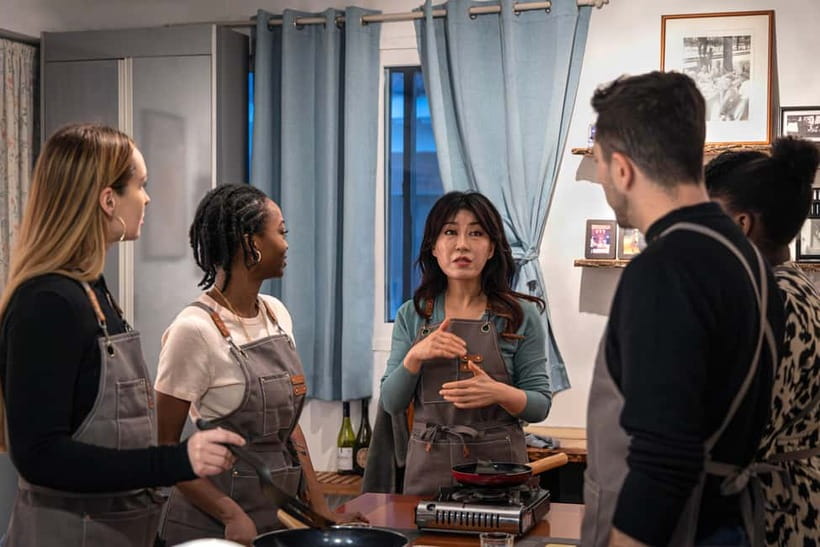
I would recommend it to food-focused adults who want a direct introduction to Korean cuisine. It works particularly well for:
- First-time visitors who want more context behind kimchi
- Couples and friends who enjoy cooking together
- Wine drinkers curious about Korean food pairings
- Beginners who want recipes they can repeat at home
- People building a day around Gyeongbokgung Palace
- Solo participants comfortable sharing a small table with others
It is less suitable for children under 18, anyone who dislikes fermented or spicy food, or cooks looking for advanced technical training. If you want to make every dish on the menu yourself, the shared format may also disappoint.
The class is conducted in English, and the small group gives you a good chance to ask for clarification. Suyeon’s patient teaching style is a major part of the appeal. She also adds useful local suggestions, such as visiting the palace and the nearby museum after the meal.
My verdict: a smart Seoul food experience
I would book this class if you want to understand kimchi rather than simply order it. The tasting gives you a clear starting point, the recipes are manageable, and the wine pairing adds an unusual layer that most Korean food classes do not offer.
The best plan is to schedule it after Gyeongbokgung Palace, when you are ready to sit down and eat. Keep in mind that the group shares the cooking, the menu can shift slightly, and the host prepares the pork belly in advance. For a small, friendly, food-centered afternoon at $58, those are reasonable compromises.
FAQ
How long does the kimchi cooking class last?
The experience lasts two hours.
How much does the class cost?
The price is $58 per person.
How many people are in the group?
The class is limited to six participants.
Which kimchi styles will I taste?
You will taste cabbage kimchi, white kimchi, radish kimchi, and aged kimchi.
Which dishes can I learn to cook?
You can choose from kimchi pancake, white kimchi noodles, or radish and bacon stir-fried rice. The exact dishes may vary slightly with the number of participants.
Is the wine included?
The experience includes a glass of wine selected by the sommelier to pair with the food. Some sessions have also included yuja makgeolli, so ask about the drink selection if this is important to you.
Where does the class meet?
Meet at the kimchi and wine cooking studio near Gyeongbokgung Station. From Exit 2, walk about 200 meters, turn left at Woori Bank, pass the bar Cham, and look for the building with Cuisine La Cle restaurant on the first floor. The studio is on the third floor.
Just added around Seoul
- Seoul: Korean Kimchi Cooking Class in the Heart of the City★ 5.0 · 3 reviews
- Seoul: Premium Korean Feast Cooking Class★ 5.0 · 3 reviews
- Seoul: Korean Cooking Class with Local Grocery Shopping★ 5.0 · 13 reviews
- Seoul: Korean Home Visit, Cooking & Cultural Experience★ 5.0 · 2 reviews
- (Seoul) Korean Cooking Class with a Professional Chef★ 5.0 · 14 reviews
- Seoul: Cooking Class and Tour with Michelin-Trained Chef★ 5.0 · 11 reviews
- Seoul: Authentic Korean Cooking Class and Market Tour★ 5.0 · 6 reviews
- Seoul: Royal Seoul Cooking Class in a 100-Year-Old Hanok★ 5.0 · 96 reviews
Cooking Classes with Wine Tasting, compared.


Pasta & Tiramisu Cooking Class with Unlimited Wine
Read our review →
Pasta Making Class with Wine, Limoncello, and Dessert
Read our review →
Cooking Class Pasta & Tiramisu Making Unlimited Wine
Read our review →
Fettuccine & Tiramisù: Cooking Class with Wine & Limoncello
Read our review →
Pasta Making & Wine Tasting with Dinner in Frascati from Rome
Read our review →
Rome Cooking Class: Make Pasta, Dine & Drink Wine With Local Chef
Read our review →
Combo Pizza and Pasta Cooking Class with Wine
Read our review →Lists this class appears in