
REVIEW · RABAT-SALé-KéNITRA, MOROCCO
Rabat: Cooking Class in a Family Home
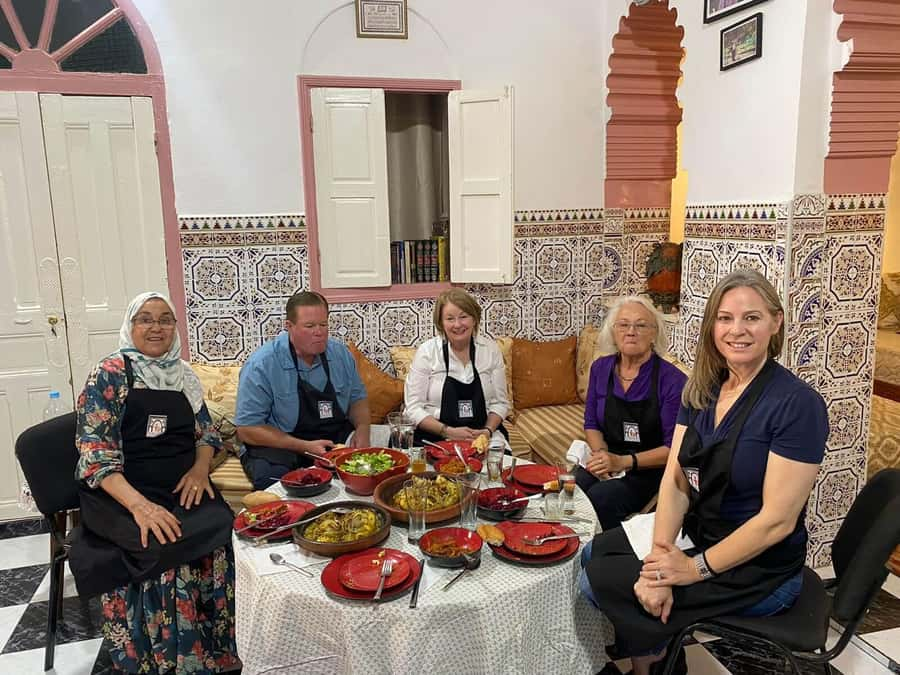
A market basket becomes your Moroccan dinner. This four-hour Rabat experience combines a local market visit with hands-on cooking in a family home, so you learn about food by buying, preparing, and eating it. I like that you help choose the menu rather than simply follow a fixed demonstration, and I especially like the warm family setting, where the meal becomes a shared occasion instead of a restaurant service. The main consideration is that transportation is not included, and you must reach the meeting point at Tramway station Hopital Moulay Youssef.
The price is $72 per person, which is fair if you value a full meal, a market visit, instruction, drinks, and cultural conversation in one outing. The small group, limited to eight, should make it easier to take part. Menus can vary, so you may cook couscous, tagine, vegetable salads, or a Moroccan dessert rather than receiving one guaranteed set of dishes.
Key points at a glance
- Shop before you cook: Walk through a neighborhood market and select fresh ingredients with your host.
- Choose the menu: Your preferences help shape the three-course meal.
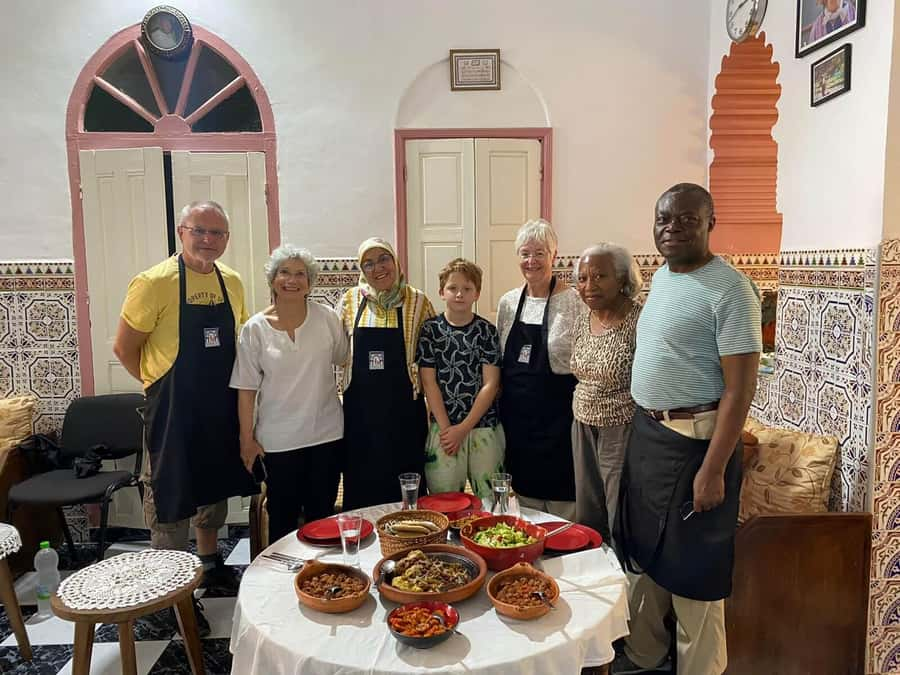
- Cook in a real family home: The workshop takes place in a historic Moroccan family house, not a commercial studio.
- Learn traditional dishes: Past menus have included Moroccan couscous, chicken tagine, roasted eggplant, peppers, fruit salad, and millefeuille with orange blossom and saffron.
- Finish with hospitality: Sit down to eat what you made, with tea or coffee and bottled water included.
- Keep it personal: The group is capped at eight, and French and English are offered.
Meeting at Tramway station Hopital Moulay Youssef
Your starting point is Tramway station Hopital Moulay Youssef in Rabat. Transportation is not included, so you need to make your own way there and allow enough time to find the correct station entrance and meet the host or greeter.
This arrangement is useful if you are already exploring Rabat by tram. It also keeps the experience simple: you meet locally, walk to the market, and continue to the family house. You do not pay for a hotel pickup or sit in a vehicle crossing the city.
The activity lasts four hours. That is long enough for the market, cooking, meal, and tea without turning the day into an all-day food project. Starting times vary, so check availability when booking. The host or greeter speaks French and English, which should help with ingredient names, cooking instructions, and questions about Moroccan customs.
More Home Cooking Classes in Morocco
- Marrakech: Moroccan Cooking Class with a Local Family
★ 4.9 · 668 reviews - Marrakech: Moroccan Cuisine Cooking Class in Local Home
★ 4.8 · 508 reviews - Fez: Souk Tour and Traditional Home Cooking Class
★ 4.9 · 186 reviews
The market comes before the recipe
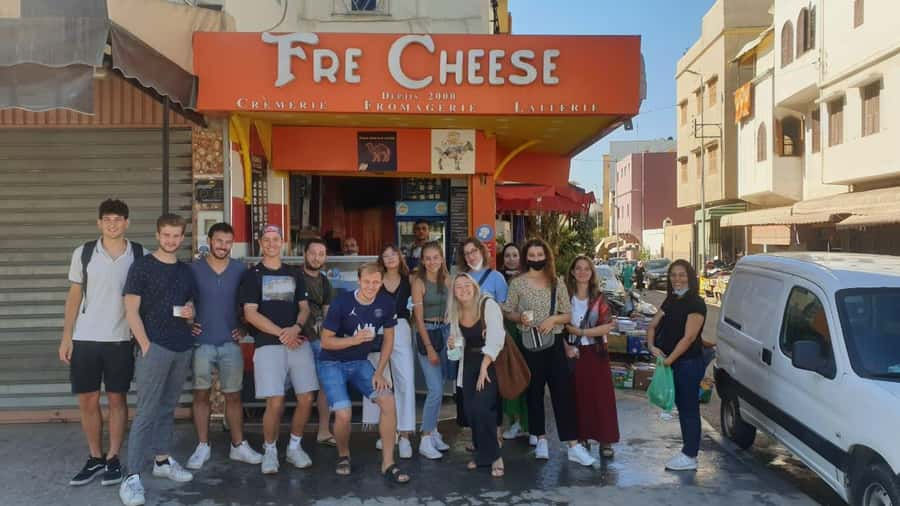
The first part is a guided visit to a fresh produce market in a local neighborhood. This is more useful than simply arriving at a kitchen with ingredients already measured. You see what is available, learn how food is selected, and connect the final dishes to everyday shopping in Rabat.
Your host asks about your preferences and recommends a menu. You then help buy the ingredients for the workshop. That choice matters. If you are especially interested in couscous, tagine, vegetables, or dessert, you have a chance to signal that before the cooking begins.
The shopping also gives you a better feel for Moroccan cooking. A recipe is not just a list of ingredients. The market shows you the raw materials and the decisions behind the meal. You can ask about customs, local food, and how particular ingredients are used at home.
I would treat this part as a chance to slow down. Do not rush through the stalls just to reach the kitchen. Pay attention to what your host recommends and ask why one ingredient is chosen over another. Since the menu is shaped around your preferences, the quality of this conversation can affect the rest of the class.
Inside the family kitchen
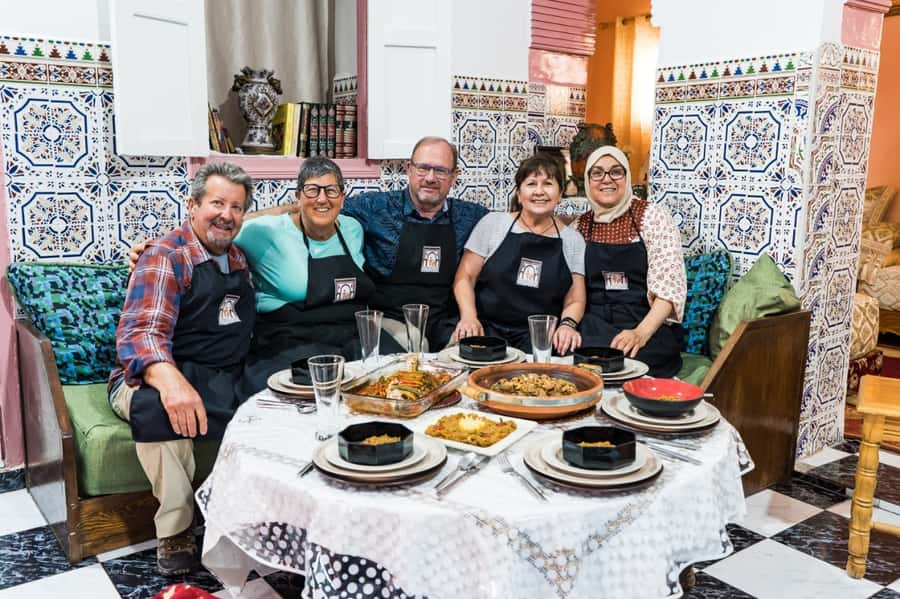
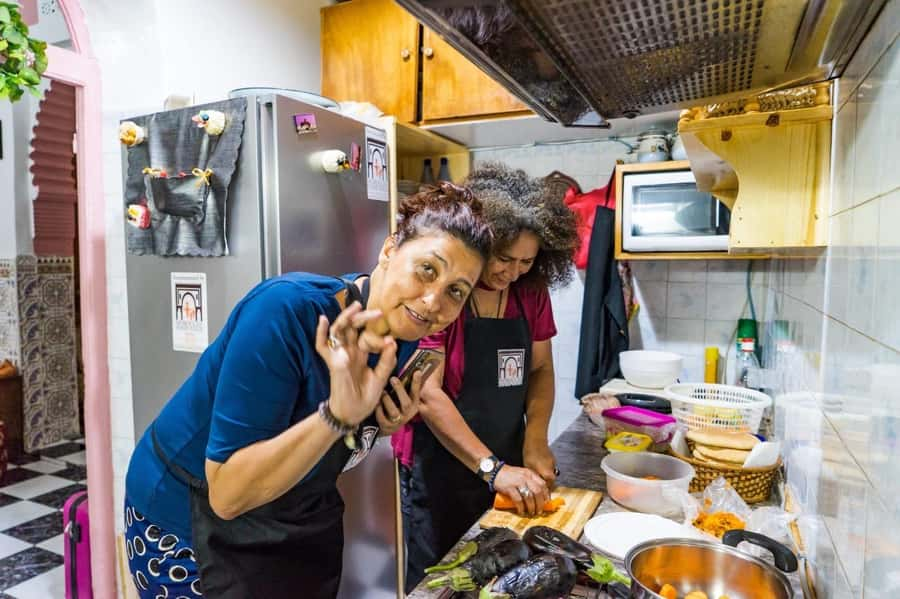
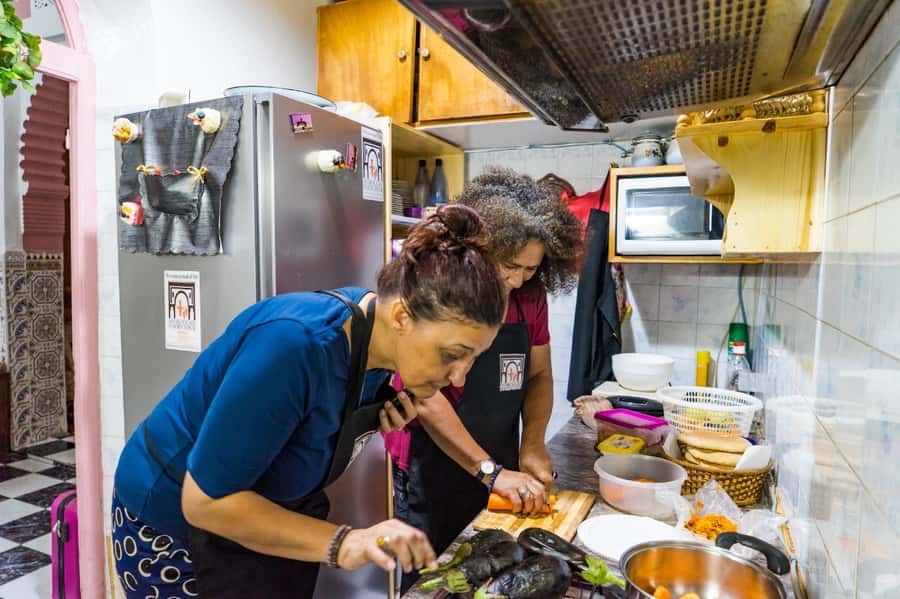
After shopping, you go to a historic family-owned Moroccan house. The cooking takes place in the chef’s kitchen, giving the class a home setting rather than the polished feel of a school designed only for visitors.
The atmosphere is part of the appeal. You are not just watching a cook perform from a distance. You join the work and prepare the dishes with guidance. The class is described as interactive, and the available information points to a practical session where you learn techniques, take part in the preparation, and then eat the results.
The host connected with the experience is Imane. One of the especially appealing arrangements described for the class includes Imane and her mother-in-law, who was formerly a chef for ambassadors. That background adds a serious cooking pedigree to what remains a personal family setting.
You should expect instruction rather than a formal culinary qualification. The point is to understand Moroccan methods and flavors well enough to repeat them at home. One useful detail from the cooking experience is that recipes are provided, and you can photograph and write down the process. That makes the class more valuable after your holiday ends.
Do not expect every measurement to be handled like a laboratory experiment. Moroccan home cooking often includes a little of this and a little of that, adjusted by sight, smell, and taste. If you want exact quantities, ask questions and take notes as you go. That informal style may feel less precise, but it is also what makes the meal feel like home cooking rather than a staged recipe demonstration.
What might reach the table
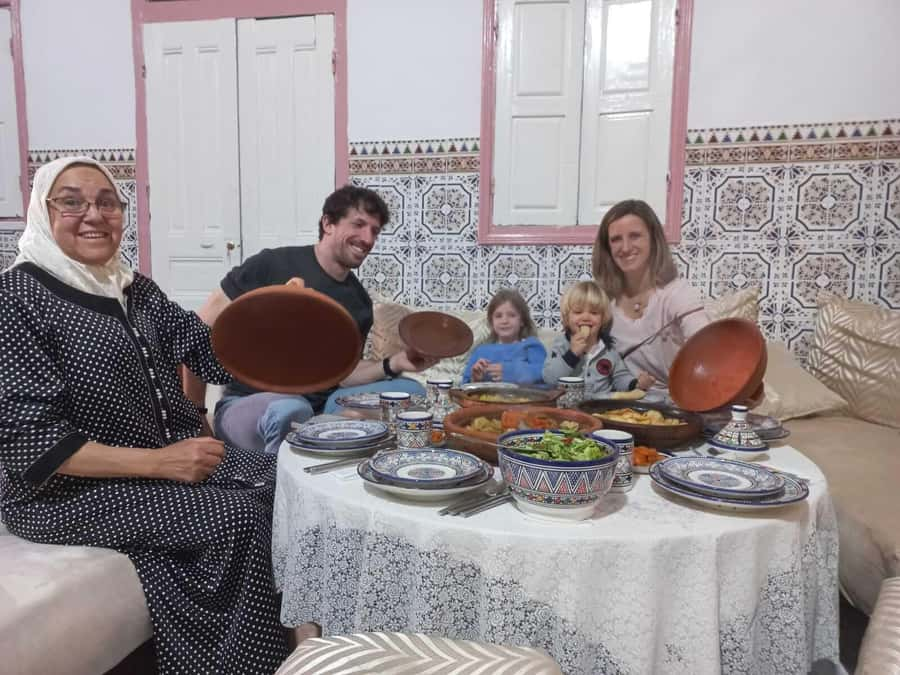
The menu is flexible, so no single set of dishes is guaranteed. That is both a strength and a small source of uncertainty. You can help decide what to cook, but you should not book expecting one exact dessert or main course unless the host confirms it in advance.
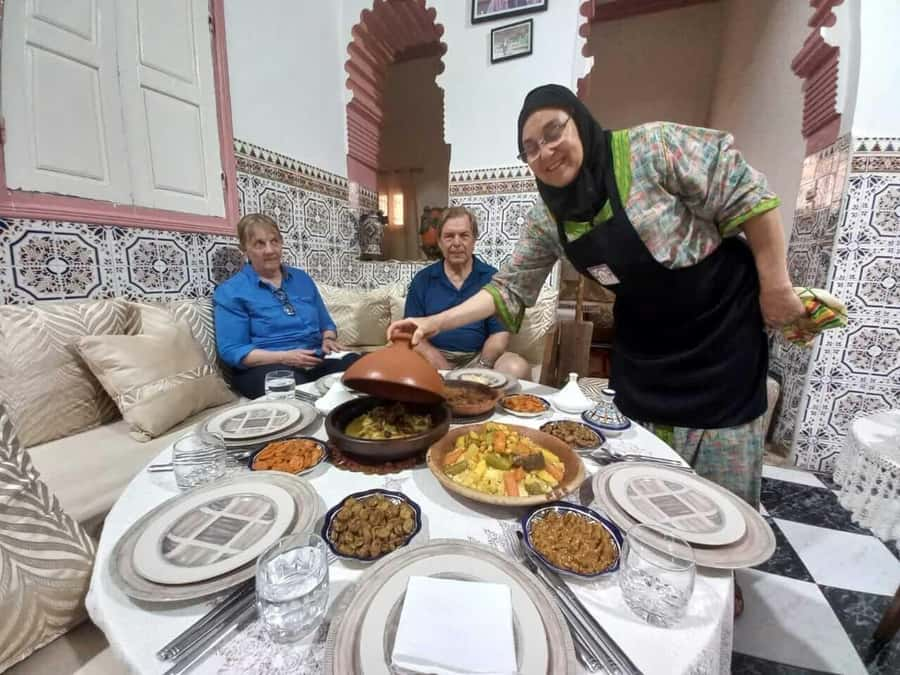
A three-course menu can include an appetizer, main dish, and dessert. Past cooking sessions have included eggplant and pepper prepared without their skins, chopped and seasoned with spices, then served with bread. Another menu featured chicken tagine followed by fruit salad and freshly squeezed orange juice.
Couscous is another possibility. One particularly memorable menu centered on a proper Moroccan couscous prepared in the traditional Friday style. If you have a strong interest in couscous, it is worth asking for it when discussing your preferences.
Dessert can be just as instructive as the main course. One example was a Moroccan millefeuille with homemade pastry cream, orange blossom, and saffron. The thin pastry was purchased at the market, where it was made in front of the group from flour, water, and salt. The sheets were almost transparent, then cut into rounds, fried, and layered.
That kind of detail is exactly why I prefer a cooking class with market shopping. You see that the dessert is not simply a ready-made sweet placed on a plate. You learn about the pastry itself, the technique, and the flavors used to finish it.
Same place, a different thing to cook:
- Marrakech: Moroccan Cooking Class with Pickup
★ 4.6 · 1,862 reviews - Marrakech: Traditional Moroccan Cooking Class & Market Visit
★ 4.8 · 1,861 reviews - Marrakesh: Moroccan Dishes Cooking Class with a Local Chef
★ 5.0 · 1,615 reviews - Moroccan Cooking Class & Marrakech Market Visit with Chef Khmisa
★ 5.0 · 1,504 reviews
Eating the meal you helped make
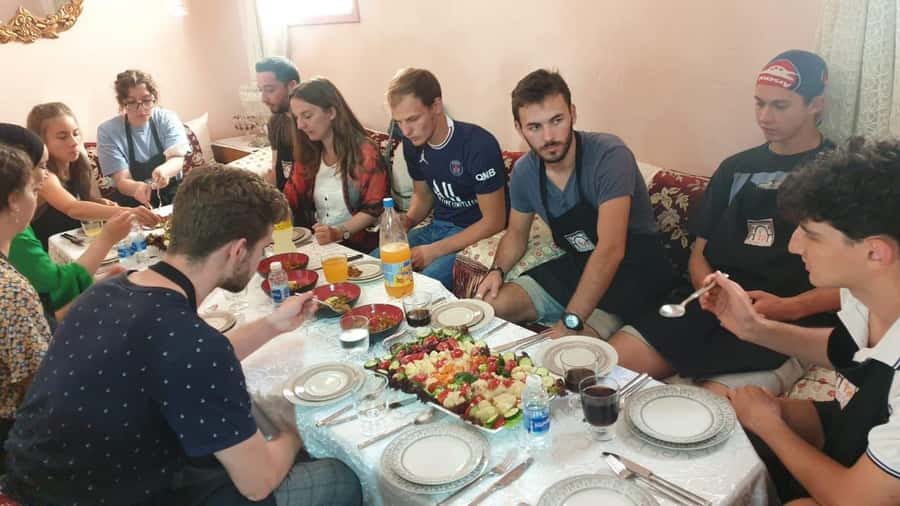
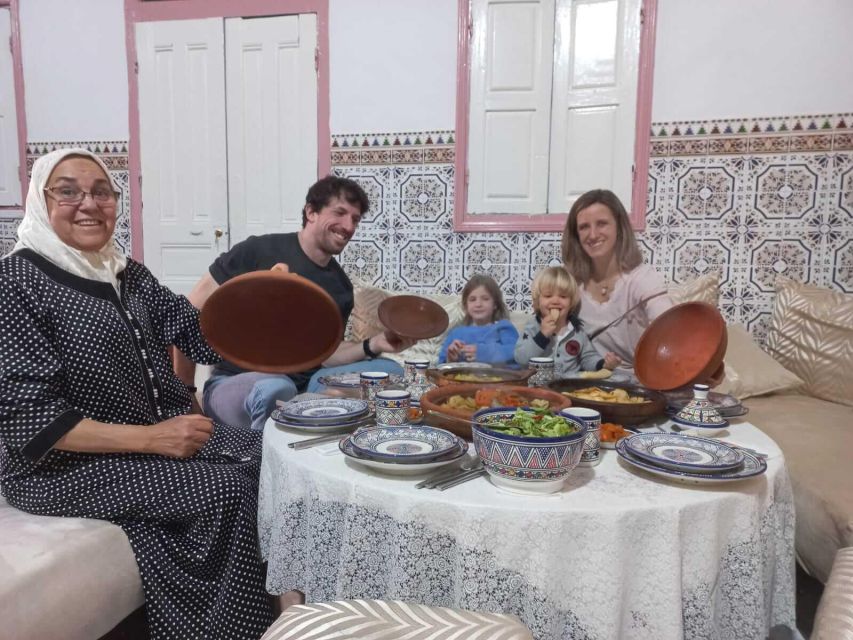
Once the cooking is done, you sit down to eat the full menu. The meal is served with Moroccan hospitality, followed by Moroccan tea. Tea or coffee and bottled water are included, so you do not need to budget separately for the basic drinks.
The shared meal is the natural payoff. You can taste how the ingredients changed during cooking and ask questions while everyone is relaxed. It also gives the class a social side, especially because the group may include people from different countries and language backgrounds.
The group limit is eight people. That is small enough for a more personal session, although the exact amount of hands-on time can still depend on the group and the menu. If you want to be active, volunteer for tasks and ask to repeat techniques. A cooking class can become passive if you stand back and let the most enthusiastic person take over.
Friends who did not attend the cooking session can join the meal for a supplement of €15. This is a practical option if someone in your party prefers to explore Rabat while you cook, then meet you for lunch or dinner. The supplement applies to the meal, not to joining the cooking class.
Why the home setting matters
A family kitchen changes the tone of the activity. You get conversation about customs alongside the food, and the setting allows the host to explain how dishes fit into Moroccan life. A Friday couscous meal, for example, is not just a recipe choice. It connects food with a familiar weekly tradition.
You may also meet more than the cook. One account describes eating with the family and a young granddaughter after the class. That detail reflects the informal nature of the experience, although you should understand that the exact family members present may vary.
This is not the right choice if you want a silent, highly controlled workshop with professional equipment and restaurant-style presentation. It is better suited to you if you enjoy conversation, a lived-in setting, and a little flexibility in how the meal comes together.
The family setting also means you should show normal courtesy. Ask before photographing people or private parts of the home, even though you are welcome to photograph the food and write down recipes. A friendly, respectful approach will make the experience better for everyone.
Is $72 a good value?
At $72 per person, the experience costs more than buying a meal at a local restaurant. But the price covers several parts: the guided market visit, ingredients, cooking instruction, a three-course meal, tea or coffee, bottled water, and four hours of time in a small group.
I consider that good value for someone who wants more than a plate of Moroccan food. You are paying for access to a home kitchen, help with menu choices, and the chance to learn dishes you can attempt again. The included meal also means the cooking is not an extra activity before you go elsewhere to eat.
The value is weaker if you mainly want a quick lunch or a fixed menu. You may spend much of the four hours shopping, preparing, and talking. That is the point of the experience, but it is not the fastest way to eat.
The reserve-now-and-pay-later option is useful if you are still arranging your Rabat schedule. You can hold a place without paying immediately, and free cancellation is available up to 24 hours before the activity for a full refund. Check the current booking terms when you reserve, since the starting times depend on availability.
Who will enjoy this Rabat cooking class?
I would recommend it to food-focused visitors who want contact with local life and do not mind getting involved. It suits couples, solo participants, and small groups who enjoy cooking, conversation, and a long shared meal.
It is also a good pick if you want a break from standard sightseeing. Rabat has plenty to see, but a home kitchen offers a different way to understand the city. You leave with flavors, techniques, and stories rather than only photographs.
Families and mixed-interest groups should think about the format. The cooking session is hands-on, so it works best when at least one person genuinely wants to cook. The €15 meal option makes it easier for friends to join afterward without taking part in the full class.
You should ask about the menu if you have firm dietary needs or a particular dish in mind. The supplied information confirms that preferences help shape the menu, but it does not promise a specific dietary arrangement or a fixed recipe. French and English are available, which is helpful, but no other languages are listed.
Should you book it?
Book this Rabat experience if you want to shop, cook, and eat in one family setting. The strongest reasons are the small group, the flexible menu, the family welcome, and the chance to learn recipes such as couscous, tagine, Moroccan salads, or a pastry with orange blossom and saffron.
Skip it if you want a short activity, guaranteed dishes, or transport included from your hotel. For everyone else, $72 is a sensible price for four hours of food, instruction, and conversation. Meet at Tramway station Hopital Moulay Youssef, arrive ready to participate, and tell the host what you most want to cook.
FAQ
How much does the Rabat cooking class cost?
The price is $72 per person. Friends can join the meal after the cooking session for an additional €15.
How long does the experience last?
The experience lasts four hours. Starting times depend on availability.
Where is the meeting point?
Meet at Tramway station Hopital Moulay Youssef in Rabat.
Is transportation included?
No. Transportation to and from the meeting point is not included.
What does the experience include?
It includes the market visit, cooking session, three-course menu, tea or coffee, and bottled water.
What languages are available?
The host or greeter speaks French and English.
How many people can join the group?
The activity is limited to eight participants.
Can I help choose the menu?
Yes. The host asks about your preferences, recommends a menu, and shops with you for fresh ingredients.
Can I cancel for a full refund?
Yes. You can cancel up to 24 hours in advance for a full refund. A reserve-now-and-pay-later option is also available.
Just added around Morocco
- Moroccan Cooking Class with a Local Family & Market Visit★ 5.0 · 16 reviews
- Private Tagine Cooking Class in Chefchaouen with Lunch★ 5.0 · 5 reviews
- 3-Hour Cooking Class overlooking the Blue City★ 5.0 · 36 reviews
- Chefchaouen Private Cooking Class with Mountain View★ 5.0 · 16 reviews
- Chefchaouen Cooking Class★ 5.0 · 4 reviews
- Traditional Cooking Courses in Casablanca★ 5.0 · 2 reviews
- Market Tour & Moroccan Cooking Class in Casablanca with Transfers★ 5.0 · 18 reviews
- Private CousCous Cooking Class in a Traditional Family Home★ 5.0 · 7 reviews
Home Cooking Classes, compared.
Khmer Cooking Class at a Local’s Home in Krong Siem Reap
Read our review →
Local Home Korean Cooking Class & Market Adventure in Seoul
Read our review →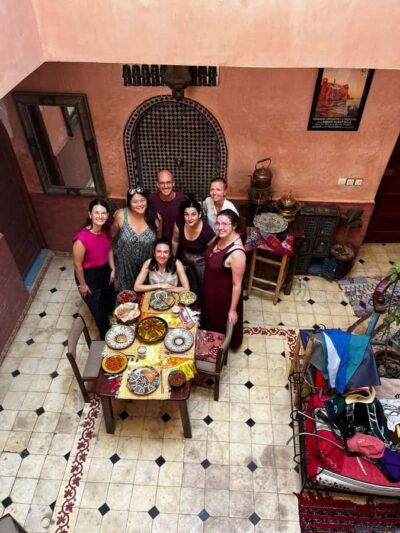
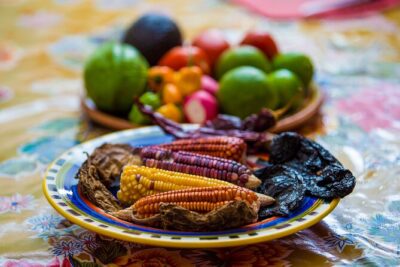
Mexican Cooking from Scratch in a Local Home in Tulum
Read our review →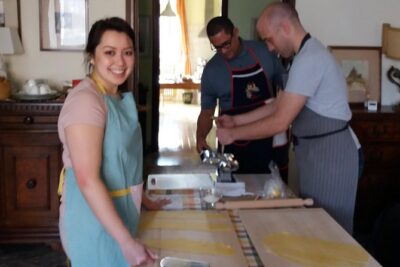
Pastamama, Home Cooking Classes at Grace’s Home
Read our review →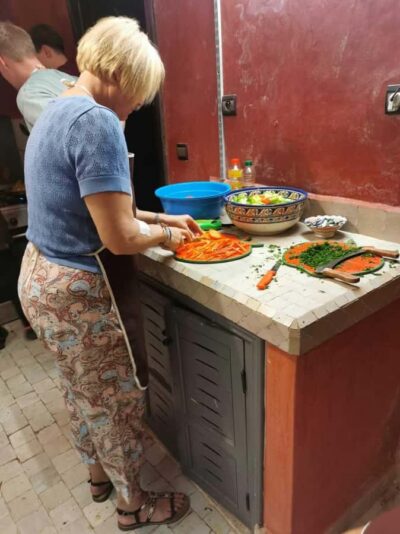
Traditional Cooking Class & meal with Local Family
Read our review →
Lists this class appears in