REVIEW · ILE-DE-FRANCE, FRANCE
Paris: Millefeuille baking class with a chef
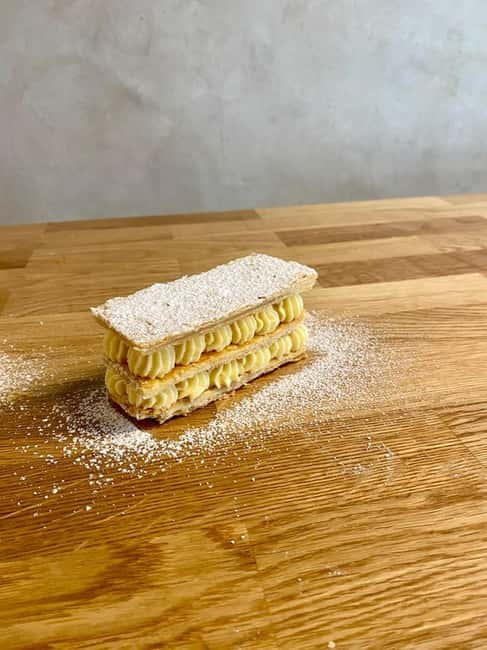
Layer by layer, Paris tastes better. This small-group workshop gives you a hands-on way to learn one of France’s most demanding pastries, with a professional chef guiding you through puff pastry, pastry cream, baking, and assembly. I especially like the chance to make the dessert from scratch and the practical bonus of taking it home in travel packaging. The main consideration is the price: at $159 per person, this is a special-interest activity rather than a casual pastry stop.
The class also gets high marks for its warm, patient teaching style. One participant, Rohit, had a private session and made three millefeuilles, while Dora praised the chef’s patience and useful tips during a family booking. The group is capped at eight, which should give you more attention than a large demonstration, though the published information describes the session as both 150 minutes and three hours, so confirm the exact timing when you book.
Key points at a glance
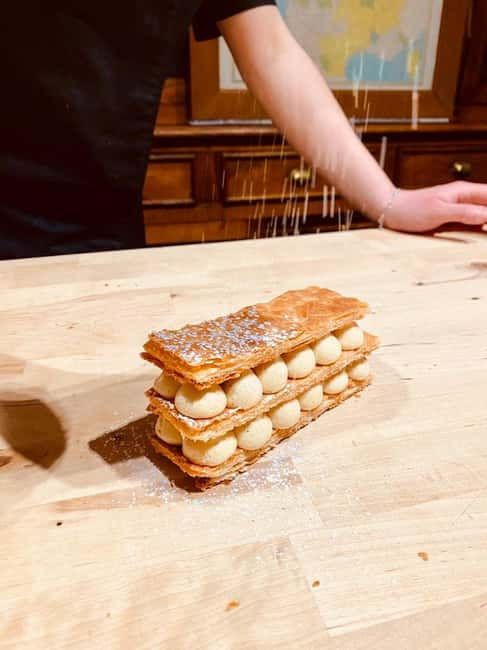
- You make the entire millefeuille: Learn the dough, pastry cream, baking, and final assembly rather than simply decorating a premade dessert.
- A professional chef leads the class: The instruction is in English, with step-by-step help and practical tips.
- Small groups keep the work personal: The class is limited to eight people, and at least one booking took place as a private one-on-one session.
- You can add your own decoration: The final dessert is not just a technical exercise. You get room for personal touches.
- Your pastry travels with you: Transport packaging is provided, so you do not have to eat the whole millefeuille on the spot.
- The digital recipe extends the value: You receive the workshop recipe so you can try the process again at home.
Why millefeuille makes a good Paris pastry class
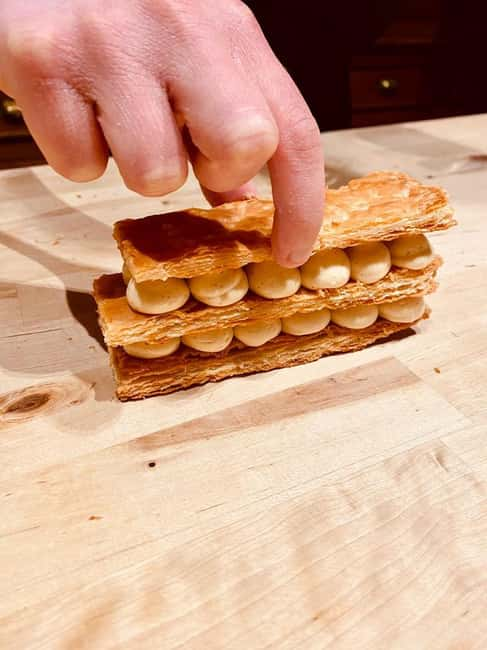
Millefeuille is a classic French pastry built from crisp layers of puff pastry and smooth pastry cream. It is sometimes called a Napoleon, though the important point here is not the nickname. It is the technique.
The pastry is associated with François Pierre de la Varenne, an influential French chef from the 18th century. His connection gives the dessert a useful place in French culinary history, but this workshop focuses on what you can do with your hands: fold the dough, manage the texture, prepare the cream, and put the layers together properly.
That makes the class more useful than a quick pastry tasting. You are not only sampling a finished dessert from a shop window. You are learning why the pastry works. Puff pastry needs careful folding and handling. Pastry cream needs the right texture. Assembly calls for a light touch, since crisp layers can break and soft cream can squeeze out.
I like this choice for Paris because it gives you a short break from sightseeing without cutting you off from the city’s food culture. You spend time with a French pastry tradition, but the result is personal. You make the dessert yourself, add decorative touches, and leave with something you can enjoy later.
More Baking Classes in France
- Paris Croissant Small-Group Baking Class with a Chef
★ 5.0 · 910 reviews - Paris: French Croissant Baking Class with a Chef
★ 4.9 · 712 reviews - Paris Macarons Small-Group Baking Class with a Chef
★ 5.0 · 316 reviews
The 150-minute workshop and its pace
The listed duration is 150 minutes, or two and a half hours. The description also refers to a three-hour class, so I would check the confirmed start and finish times before building another activity immediately afterward.
Either way, plan on giving the workshop a meaningful part of your day. Millefeuille is not a quick cupcake project. The class covers several separate tasks, and the value comes from learning the process instead of rushing through it.
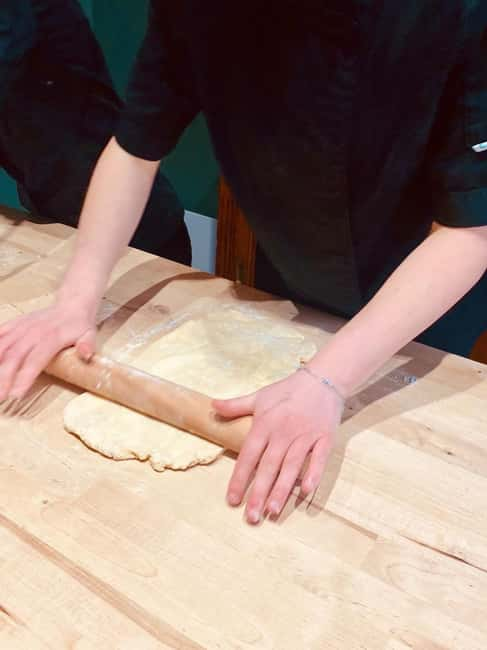
The session begins with the pastry work. You will handle the puff pastry and learn about folding and texture. This is the part that requires the most care. If you are new to baking, do not worry about arriving with polished skills. The class is designed for beginners as well as more experienced home bakers.
Next comes the pastry cream. This smooth filling gives the millefeuille its contrast: crisp pastry against a soft, creamy center. The chef explains the method and helps you aim for the right consistency. That guidance matters because pastry cream can quickly become too thin, too firm, or uneven if the steps are rushed.
The pastry is then baked and assembled. You also have time to personalize the finished dessert with decorative details. This gives the class a creative finish after the more technical work.
Tea, coffee, and water are available throughout. That is a small but welcome touch during a session that lasts several hours. Additional food and drinks outside the workshop are not included.
Working beside a professional pastry chef
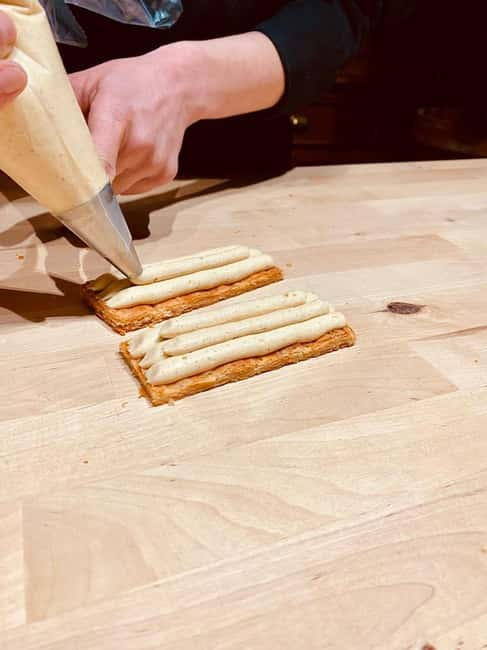
The teaching style is one of the strongest reasons to book this experience. The chef works through each stage with you, rather than leaving you to follow a recipe sheet alone.
Dora’s family described the chef as personable, patient, and generous with tips. Those qualities matter in a pastry class. A good teacher can show you what the dough should feel like, explain why a step matters, and correct a small mistake before it affects the finished pastry.
Rohit’s one-on-one booking offers another useful detail. In that session, he made three millefeuilles, suggesting that the amount you produce can vary with the group setup and pace. Do not assume every class will be private or that you will make exactly three. The standard format is a small group of up to eight, but the private booking shows that the experience can sometimes be especially personal.
No chef name is provided, so you should not book expecting a particular instructor. The useful promise is English-language instruction and direct contact with a working pastry chef.
For a complete beginner, the step-by-step approach should make the process approachable. For an experienced baker, the value is less about learning what puff pastry is and more about refining technique, texture, and presentation.
Puff pastry: the technical heart of the class
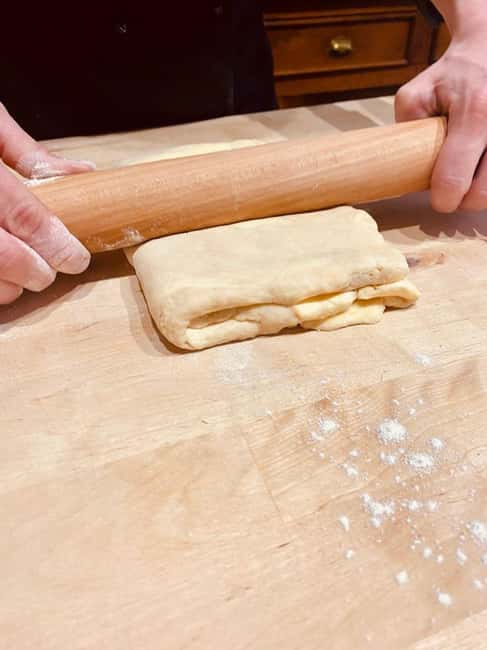
Puff pastry is the part of millefeuille that separates a proper finished dessert from a disappointing one. Its many layers need to bake into a light, crisp structure. The class teaches the folding process and the texture you should be looking for.
This is also where the workshop offers value that a standard pastry tasting cannot. At a bakery, you can admire the layers. Here, you learn how they are made.
You should expect to pay attention. Pastry work rewards care, and the chef’s guidance is especially useful when you are deciding how to handle the dough. The information provided does not promise that you will master puff pastry in one session, and it would be unfair to expect that. But you will leave with a practical foundation and a digital recipe for another attempt.
If you already bake at home, bring curiosity rather than assumptions. French pastry techniques often depend on small details, and the chef’s tips may be as useful as the basic recipe.
More Baking Classes in Paris
- Paris: Macaron Baking Class for Families and Kids
★ 4.7 · 270 reviews - Paris: Macaron Baking Class in Central Paris
★ 5.0 · 208 reviews - Paris: Croissant Baking Class with a Chef
★ 5.0 · 201 reviews - Paris French Baking Class Baguettes and Croissants in a Bakery
★ 4.5 · 172 reviews
Pastry cream and the balance of textures
A millefeuille is not just stacked pastry. The filling has to support the crisp layers without making them soggy or collapsing the dessert.
The class includes instruction in making silky pastry cream. You will learn how the cream should look and feel, then use it during assembly. This gives you a clearer understanding of how the dessert comes together as a whole.
The contrast is the point. Crisp pastry provides structure, while the cream brings softness and richness. The finished dessert needs both. If one part is too firm, too loose, too dry, or too heavy, the balance suffers.
I find this combination makes the workshop useful for cooks who want to understand pastry beyond a simple recipe. You are learning how ingredients behave and how several components affect each other. That is a better takeaway than a finished sweet with no explanation.
Decorating and assembling your own dessert
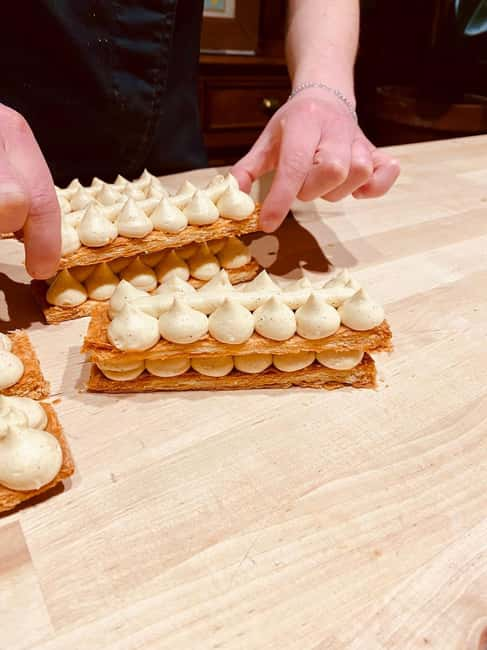
After the baking and cream preparation, you assemble the millefeuille and add decorative touches. This is where the class becomes less formal and more personal.
You are not expected to copy one exact design. The opportunity to decorate your dessert lets you make the final result your own, even if your puff pastry folds were not perfect. It also gives the session a satisfying finish because you can see all the separate steps become one recognizable French pastry.
The supplied information does not specify the decoration options, so do not arrive expecting a particular design or set of toppings. The important point is that you have some creative control over the presentation.
The finished dessert is yours to enjoy after the session. Transport packaging is also provided, which is helpful if you are heading to another appointment or want to save the pastry for later. Carrying a delicate millefeuille across Paris still calls for care, but the packaging removes one practical worry.
What the $159 price really buys
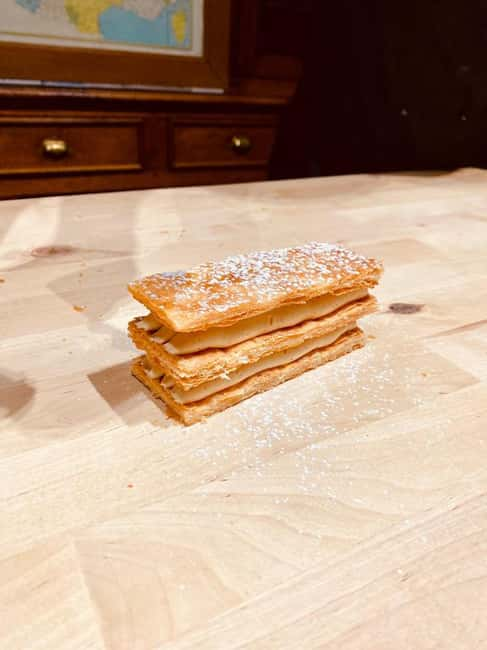
At $159 per person, this is not an inexpensive way to get a dessert. You can buy a millefeuille from a Paris pastry shop for much less. The price makes sense only if you want the activity, instruction, and hands-on practice as much as the food.
The fee includes all baking ingredients, the chef’s instruction, tea, coffee, water, transport packaging, and a digital recipe. You are paying for a small-group lesson, not simply a plate of pastry.
The group limit of eight improves the value. You have a better chance of getting direct help than you would in a large class. If the group happens to be smaller, the experience may feel more personal, as shown by the one-on-one booking that produced three millefeuilles.
Still, you should compare this price with your interests. If you mainly want to taste a traditional millefeuille, visit a bakery. If you want to understand the work behind it and make your own, the workshop is easier to justify.
The included recipe also adds value after your Paris visit. You may not reproduce the dessert perfectly on your first home attempt, but you have a written reference for practicing again.
Who will enjoy this Paris pastry workshop
I would recommend this class most strongly to:
- Home bakers who want to improve pastry technique
- Visitors who prefer food activities to standard sightseeing
- Families looking for a hands-on activity in English
- Couples or friends who enjoy making and eating dessert together
- Beginners who want patient guidance
- Experienced bakers interested in French pastry methods
It also suits people who like a finished souvenir they can eat. The transport packaging makes the result easier to carry, and the digital recipe gives you something practical to keep.
You may want to skip it if you have little interest in baking, dislike spending several hours on one food project, or are looking for a low-cost snack. This is a focused workshop, not a broad tour of Parisian food.
The small group should help, but the exact feel will depend on who books that day. A private session may offer more individual attention than a full group of eight. The experience is wheelchair accessible, which expands its usefulness for visitors who need an accessible activity.
Practical planning before you book
The workshop does not include transportation to the location, so you need to make your own way there. No travel between locations is involved, and the activity is described as easily accessible in Paris.
Book with enough time around the class. The published information gives both 150 minutes and three hours as the duration. I would not schedule a museum entry, train departure, or restaurant reservation too tightly against the workshop until the confirmed timing is clear.
Instruction is in English. All ingredients are included, so you do not need to shop before arriving. Tea, coffee, and water are available during the session, but other food and drinks cost extra.
Cancellation is flexible up to 24 hours before the activity for a full refund. You can also reserve now and pay later, which is useful when your Paris schedule is still taking shape.
FAQ
How long does the millefeuille class last?
The activity is listed as 150 minutes. The workshop description also calls it a three-hour class, so confirm the exact timing when you book.
What language is the class taught in?
The class is taught in English.
What does the price include?
The $159 price includes the baking ingredients, instruction from a professional pastry chef, tea, coffee, water, transport packaging, and a digital recipe.
Is transportation to the workshop included?
No. You are responsible for getting to the workshop, and no transportation between locations is provided.
Can beginners join the class?
Yes. The workshop is designed for all skill levels, including beginners and experienced bakers.
How many people are in the group?
The class is limited to eight participants. A private one-on-one booking has also taken place, but a private session is not stated as the standard format.
Can I take my millefeuille home?
Yes. Transport packaging is provided so you can carry your finished creation with you.
Should you book the millefeuille class?
Book it if you want more than a pastry tasting. The best parts are the small group, direct help from a professional chef, and the chance to learn both puff pastry and pastry cream from the start. The warm, patient teaching style described by Dora and the unusually personal one-on-one experience reported by Rohit suggest that the class can feel friendly rather than stiff.
At $159, it is a splurge. I would choose it for a food-focused Paris day, a family activity, or a special occasion. I would not choose it simply because you are hungry for dessert.
Check the final duration before booking, leave room in your schedule, and expect to spend the session working rather than watching. If that sounds like fun, this workshop gives you a useful skill, a memorable French dessert, and something sweet to carry through the rest of your Paris day.
Just added around Paris
- Paris: Macaron Baking Class★ 4.4 · 26 reviews
- Paris: Traditional Croissant Cooking Class With Local Baker★ 5.0 · 2 reviews
- Paris: The Soufflé Baking Class with Chef★ 4.5 · 2 reviews
- Paris: Hands-On Small Group Cooking Class★ 4.9 · 19 reviews
- Paris: Lemon Tart Baking Class with a Pastry Chef★ 5.0 · 4 reviews
- Paris: Evening Cooking Class with Optional Market Visit★ 4.8 · 19 reviews
- Paris Cooking Class: French Desserts Class★ 4.9 · 13 reviews
- Eclair Baking Class with A Pastry Chef★ 5.0 · 3 reviews
Baking & Bread Classes, compared.
Paris Croissant Small-Group Baking Class with a Chef
Read our review →
Paris Macarons Small-Group Baking Class with a Chef
Read our review →