
REVIEW · HONSHU, JAPAN
Osaka: Gluten-Free Ramen and Gyoza Cooking Class
Good food starts with your hands. This three-hour Osaka class turns rice flour, broth, and filling into a full Japanese meal, with chef Yuki guiding you through gluten-free ramen and gyoza in her home. I especially like the tiny group size, limited to four people, and the chance to make two ramen styles rather than only one dish. The main consideration is the $103 price, which is fair for a private-style lesson and full meal, but more than a casual market snack or short demonstration.
I also like that this is not simply a lesson for people avoiding wheat. You learn practical techniques, receive recipes and tips, and eat everything you prepare. The setting is personal and relaxed, though a home kitchen may feel less polished than a large cooking studio, and three hours of hands-on work requires comfortable clothing and a willingness to participate.
Key points to know before booking
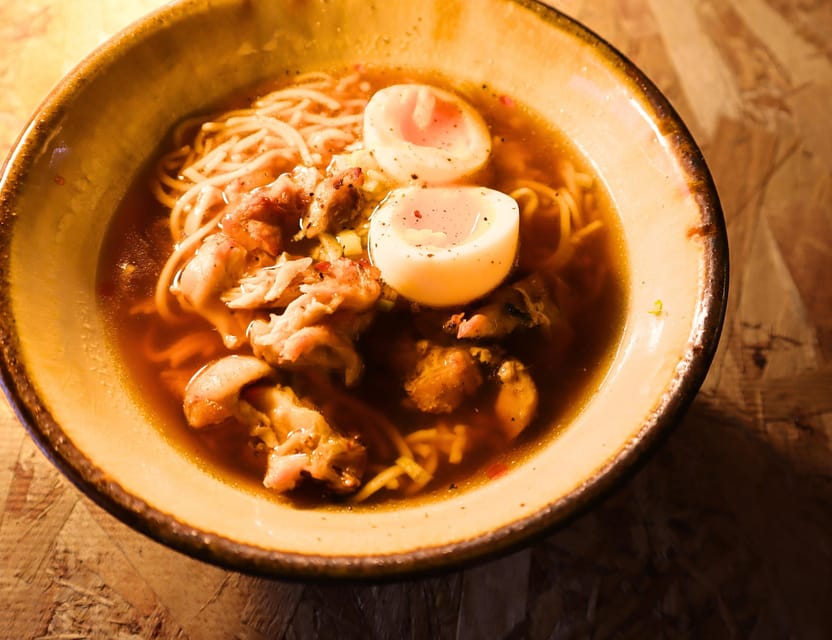
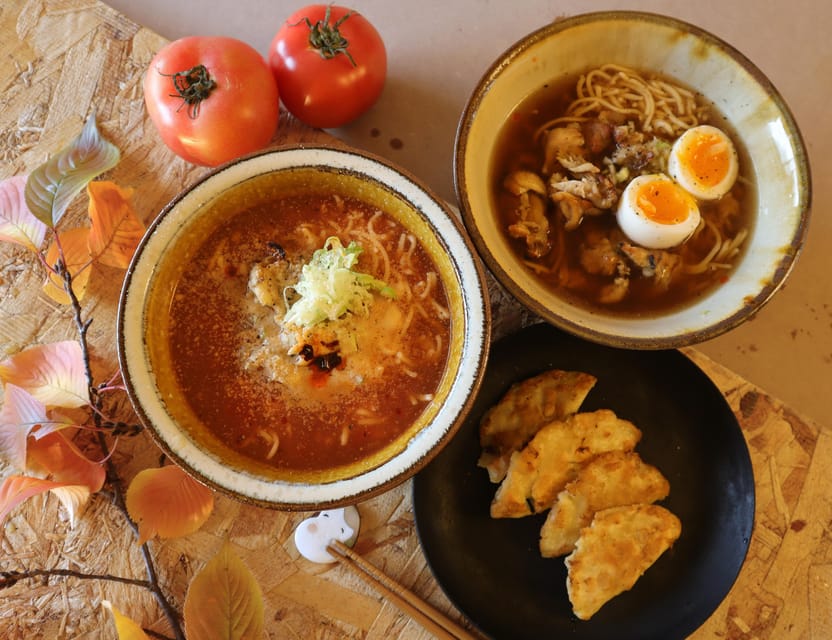
- Two ramen recipes in one class: Make handmade gluten-free noodles, then use them in soy sauce ramen and a less common tomato ramen.
- Rice flour from start to finish: Prepare both ramen noodles and gyoza wrappers without wheat flour.
- Only four people: The small group gives Yuki time to explain techniques and answer questions.
- A real meal, not just a sample: Sit down afterward and eat your ramen and crispy pan-fried gyoza.
- Optional three-part sake pairing: Add chilled Junmai, chilled Junmai Ginjo, and warm Junmai, each served in a 45 ml portion.
- Easy station access: The home is about a five-minute walk from Nukata Station in Osaka.
A quiet Osaka home near Nukata Station
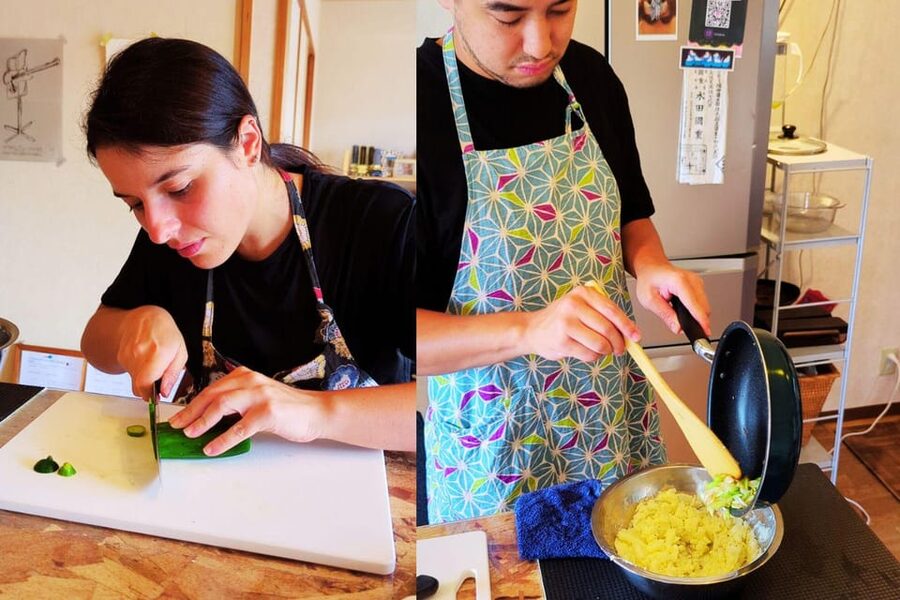
The class takes place at 4-19 Nukata-cho, in a quiet residential area about five minutes from Nukata Station. Look for a welcoming sign at a clean, residential-style building. Detailed directions arrive after booking, which matters because this is a home setting rather than a large venue with a prominent commercial storefront.
That residential location is part of the appeal. You are not being moved through a production line. You enter a Japanese-style home, meet the person teaching you, and spend the afternoon or evening around a kitchen table and cooking area. The tradeoff is simple: you need to allow time to find the address, and you should not expect the visual polish or space of a professional cooking school.
The class is taught in English. Yuki also has Japanese culinary experience and has spent more than a year teaching international participants. That combination is useful for a lesson where texture and timing matter. A noodle dough can look ready before it feels right, and a gyoza wrapper can become too dry or too thick if you rush it.
More Sushi and Japanese Classes in Osaka:
- Sushi Making Osaka! Popular Sushi Class in Japan!
★ 5.0 · 500 reviews - Osaka: Ramen and Gyoza Cooking Class in Dotonbori
★ 5.0 · 378 reviews - Osaka Cooking Class: Okonomiyaki &Japanese cuisines experience
★ 5.0 · 261 reviews
The first lesson: building gluten-free ramen noodles
The class begins with an introduction to the ingredients, tools, and cooking methods. You do not need prior experience. Yuki explains how traditional Japanese dishes are usually made and how she adapted them for a gluten-free kitchen.
You then work with rice flour to make ramen noodles from scratch. This is the part that gives the class real value for anyone who wants to cook at home. Gluten normally helps dough stretch and hold together, so producing a chewy noodle with rice flour takes a different approach. Yuki breaks the process into manageable steps and gives you techniques designed for a home kitchen.
The practical benefit is bigger than a bowl of noodles. If you regularly avoid wheat, restaurant ramen in Japan can be difficult to navigate. Learning a recipe you can repeat gives you more control once you return home. You also get the satisfaction of seeing a basic ingredient become something with spring and bite.
Do not expect a quiet demonstration while you watch from the side. The format is hands-on, and you are part of the preparation team. That makes the class more fun, but it also means you should arrive ready to work rather than simply take photographs.
Soy sauce ramen and the familiar flavors of Japan
Once the noodles are ready, the class moves to soy sauce ramen. You prepare a savory broth and learn how it comes together with the handmade noodles. Soy-based ramen is a useful starting point because it shows how a few carefully balanced flavors can create a satisfying bowl.
Yuki also uses this stage to explain Japanese flavoring and cooking tips. The lesson is not only about following a recipe. It gives you a better sense of how broth, seasoning, noodles, and toppings need to work together.
The first ramen is likely to feel familiar, especially if you already love Japanese food. The homemade noodles make the dish personal, while the lesson keeps the focus on methods you can repeat. You should leave with recipes and enough guidance to try the meal again, though your first attempt at home may still require practice. Homemade gluten-free noodles are rewarding, but they are not instant.
Tomato ramen brings a modern twist
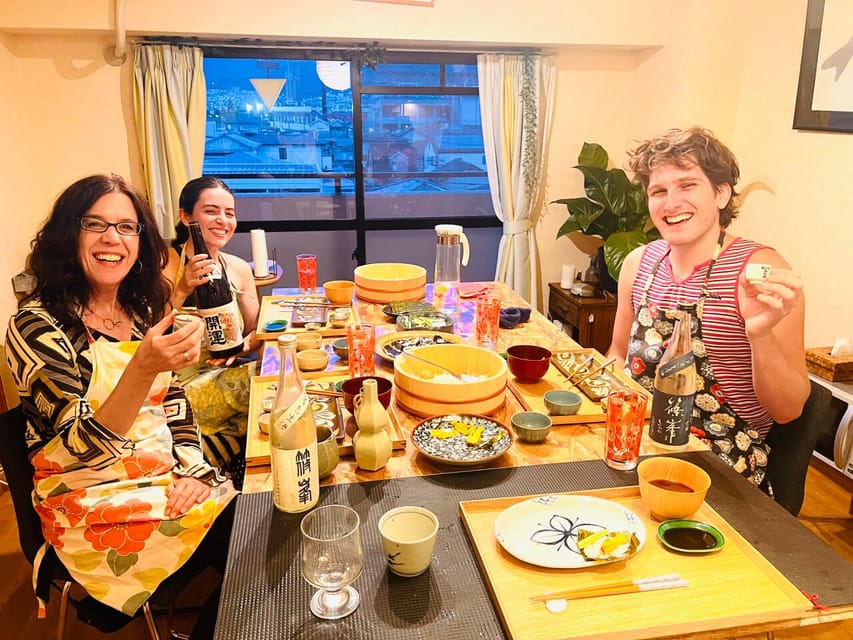
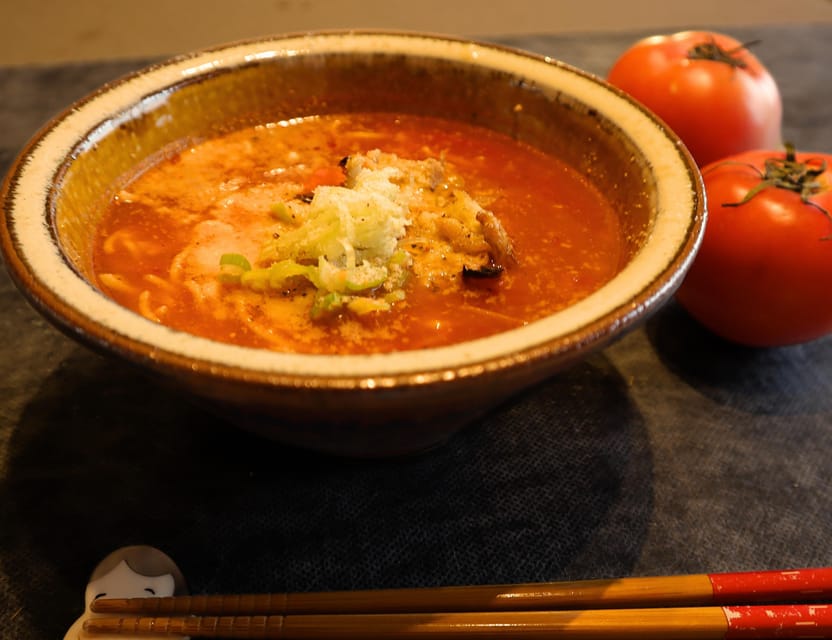
The second bowl is tomato ramen, a more unusual variation that adds tang and freshness to the meal. Tomato ramen is still uncommon in Japan, so this recipe gives the class a broader view of Japanese cooking. Tradition is present, but there is also room for new combinations.
This is one of the best parts for someone who has already tried standard ramen. You get a classic soy-based style and a more creative dish in the same session. The contrast helps you understand how much the broth changes the character of the noodles.
Making two kinds of ramen also helps justify the three-hour length and the price. You are not spending most of the class on one bowl and then receiving a small tasting portion. The food is the main event, and the variety keeps the work from feeling repetitive.
A few more cooking classes around Osaka worth a look
- Ramen and Gyoza Cooking Class in Osaka
★ 5.0 · 202 reviews - Osaka Sake Tasting with Takoyaki Cooking
★ 5.0 · 156 reviews - Osaka: Cooking Class Ramen & Gyoza Course in Nanba
★ 4.9 · 86 reviews - Osaka: Cooking Class & Sake Tasting with Local Market Visit
★ 4.8 · 31 reviews
Folding rice-flour gyoza wrappers
After the ramen preparation, you make gyoza wrappers from rice flour. This is another useful adaptation of a wheat-based favorite. The wrappers need to be thin enough to fold, but sturdy enough to hold the filling and survive the pan.
Yuki guides you through the process, then helps you prepare the savory filling. The exact ingredients are not specified, so you should think of this section as a lesson in technique and assembly rather than a fixed ingredient list you can plan around in advance.
Folding gyoza is where the class gains a social rhythm. You make one dumpling, then another, and gradually improve the shape. The goal is not perfect restaurant-style pleats on your first try. The useful skill is learning how to seal the wrapper well and create a dumpling that cooks evenly.
The class then pan-fries the gyoza until the outside is crisp and golden while the inside stays tender. That contrast is the payoff. Freshly cooked gyoza also gives you a clear lesson in timing, since the dumplings need enough heat for color without burning the wrapper.
Sitting down to eat what you made
At the end, you gather in a cozy dining area and eat the ramen and gyoza you prepared. This full meal is important when judging the $103 cost. You are paying for instruction, ingredients, recipes, a personal teacher, and dinner, not just an hour of rolling dough.
I like this format because the meal gives each technique a purpose. You are not making noodles for a photograph or folding dumplings that someone else cooks later. You see the work through to the final bowl and plate.
The dining portion also gives Yuki time to explain the flavors and discuss how the sake pairs with the food. Several people praised the combination of social conversation, clear teaching, and a delicious final meal. That mix suits you if you want a food activity that also feels like a relaxed cultural visit.
Optional sake with three small servings
You can add a sake pairing with three 45 ml servings: chilled Junmai, chilled Junmai Ginjo, and warm Junmai. The small pours let you compare styles without turning the cooking class into a drinking event.
The pairing is optional, so it should not affect the basic appeal of the class if you do not drink alcohol. If you do choose it, the structure gives you three different temperatures and sake styles alongside the food. Yuki also explains how the sake works with the dishes, adding a little context to the meal.
This is a nice extra rather than the reason to book. The strongest part of the class is still the cooking, especially the gluten-free noodle and wrapper work.
What the small group changes
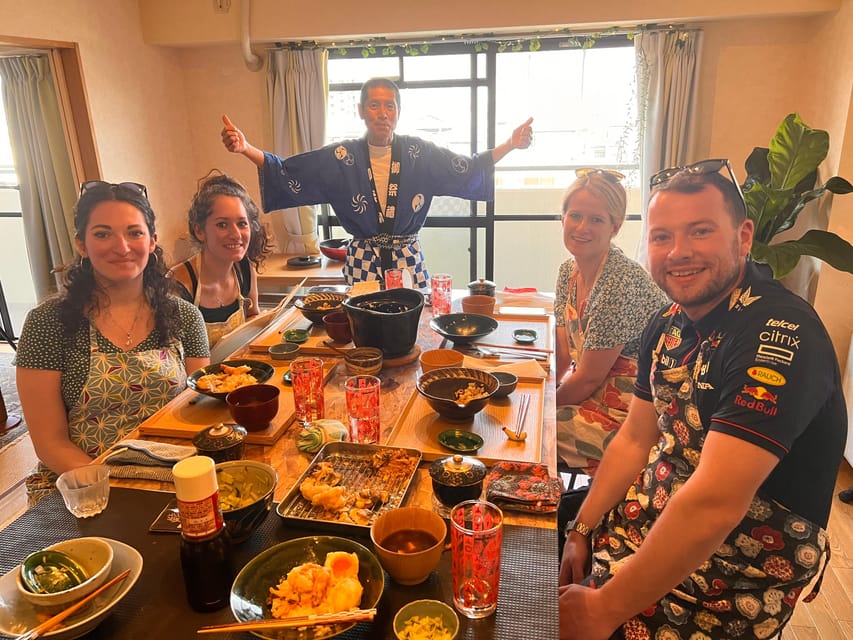
With a maximum of four people, this is a personal class. Yuki can watch your dough, correct your folding technique, and answer questions without dividing her attention among a large room.
That matters most if you are new to cooking. Several participants valued Yuki’s patience and clear explanations, and the format suits different skill levels. You can ask why a step matters instead of trying to keep up with a crowd.
A small group also means the social side depends on the people who book that day. You might enjoy easy conversation with a couple or a few other food lovers. You might instead find the setting quiet and focused. Either way, the small number keeps the lesson friendly and gives you more direct contact with the instructor.
The gluten-free question
This experience is designed around gluten-free ramen and gyoza, which is its main reason to exist. For many people, that makes it far more useful than a standard Japanese cooking class. You learn how to replace wheat flour in two foods that are normally difficult to order safely.
If you have celiac disease or a serious allergy, contact the provider before booking and explain your needs clearly. The supplied information confirms that the recipes are gluten-free, but it does not give detailed information about cross-contact procedures, ingredient brands, or kitchen separation. That is a sensible question to ask before paying.
For a general gluten-free diet, the class offers an unusually practical way to enjoy Japanese food. You also receive recipes and tips, so the value continues after you leave Osaka.
Is $103 a good value?
At $103 per person, this is not a budget meal. You can eat more cheaply in Osaka, and you can find cooking demonstrations that cost less. The value comes from the combination of a three-hour lesson, a maximum of four participants, a personal instructor, two ramen recipes, handmade gyoza, a full meal, and take-home recipes.
I would consider it a good purchase for someone who actively wants gluten-free Japanese cooking instruction. It is also reasonable for couples and small groups who prefer a home-based activity over a large commercial class.
The price is harder to justify if you only want to taste ramen or if you dislike practical work. You will be mixing, shaping, folding, and cooking. If you want the easiest possible afternoon, choose a restaurant instead.
Free cancellation is available up to 24 hours before the start time, and you can reserve now and pay later. Those terms help if your Osaka plans are still shifting, though you should still check the available start times before building the class into your day.
Who should book this class?
This is a strong match for you if:
- You need or prefer gluten-free food.
- You want to learn recipes you can recreate at home.
- You enjoy small-group activities and direct instruction.
- You are curious about Japanese cooking beyond eating in restaurants.
- You like the idea of making a complete meal from raw ingredients.
- You are comfortable spending three hours in a home kitchen.
It is less suitable if you want a quick activity, dislike cooking, or need a highly formal classroom. The class welcomes beginners, so skill is not the issue. Your willingness to participate is.
The activity is not suitable for people over 95, according to the provided booking information. Wear comfortable clothes suitable for cooking, and arrive hungry for both food and instruction.
My verdict on the Osaka ramen and gyoza class
I would book this if gluten-free Japanese food is important to you, or if you want a personal cooking lesson with a real meal at the end. The strongest points are Yuki’s patient teaching, the small four-person limit, and the unusual chance to make both ramen noodles and gyoza wrappers with rice flour.
The $103 price makes sense when you count the teaching, food, recipes, and three-hour format. It is not the right pick for a cheap lunch or a passive cultural stop. But if you want to leave Osaka with new skills, two ramen styles, crispy homemade gyoza, and a recipe collection you can use at home, this class offers a satisfying afternoon in a quiet local setting.
FAQ
Where does the Osaka gluten-free cooking class take place?
The class takes place at 4-19 Nukata-cho, Osaka, in a residential-style building about a five-minute walk from Nukata Station.
How long does the cooking class last?
The class lasts three hours. Available start times should be checked before booking.
How many people can join?
The class is limited to four participants, creating a small and personal setting.
Is the class taught in English?
Yes. The instructor teaches in English.
Do I need previous cooking experience?
No. The class is suitable for beginners as well as people with more cooking experience.
What will I cook?
You will make gluten-free ramen noodles, soy sauce ramen, tomato ramen, gyoza wrappers, gyoza filling, and pan-fried gyoza.
Is the meal included?
Yes. You eat a full meal made from your cooking, including the ramen and gyoza.
Is sake included?
An optional sake pairing is available. It includes three 45 ml servings: chilled Junmai, chilled Junmai Ginjo, and warm Junmai.
What should I wear?
Wear comfortable clothes suitable for cooking. Transportation to the venue is not included.
Just added around Osaka
- Osaka Sake Tasting with Takoyaki Cooking★ 5.0 · 156 reviews
- Okonomiyaki&Takoyaki for Families:Osaka Street Food Festival★ 5.0 · 4 reviews
- Osaka: Sashiko Japanese Craftsmanship Workshop★ 5.0 · 31 reviews
- Osaka Okonomiyaki Cooking Experience for Families & Groups★ 4.9 · 8 reviews
- Osaka : Exclusive Tea Ceremony & Wagashi Cooking★ 5.0 · 2 reviews
- Osaka: Okonomiyaki Cooking Class with Beer or Soft Drink★ 4.9 · 9 reviews
- Osaka: Cooking Class & Sake Tasting with Local Market Visit★ 4.8 · 31 reviews
- Osaka: Japanese Cooking Class with Matcha Experience★ 5.0 · 4 reviews
Japanese & Sushi Cooking Classes, compared.
Ramen Cooking Class at Ramen Factory in Kyoto
Read our review →
Ramen & Gyoza Cooking Class in Tokyo with Local Supermarket Visit
Read our review →
Ramen Cooking Class at a Ramen Factory with Souvenir
Read our review →
Sushi Making Osaka! Popular Sushi Class in Japan!
Read our review →
Tokyo Tsukiji Fish Market Tour and Sushi Making Lesson
Read our review →
Japanese Washoku Bento Small Group Cooking Class
Read our review →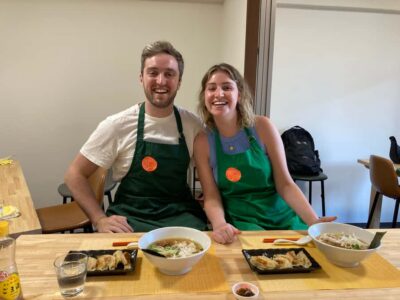
Lists this class appears in