
REVIEW · MARMARA REGION, TURKEY
Authentic Turkish Cooking at a Local’s Home in Istanbul
The best Istanbul meal may happen at home. This three-hour cooking experience brings you to a local apartment in Sarıyer, where two sisters welcome you with Turkish tea or coffee, family recipes, and a shared meal. I like the personal setting and the chance to learn dishes you can actually make again, including dolma, havuç tarator, and sigara böreği. The main drawback is location: reaching the home from central Istanbul can take about an hour, and the return trip may be much longer in rush-hour traffic.
I also like the flexible menu. Previous cooking sessions have included vegetarian baba ghanoush, cacık, and patatesli köfte, as well as sarma and eggplant dishes. Özge has received especially warm praise for her patient teaching and hospitality, but you should confirm the host and menu after booking, since the sisters may adjust the dishes to suit your group.
Key points to know before booking
- This is a home visit in Sarıyer: You leave the tourist center and enter a residential part of Istanbul.
- Tea and conversation come first: The experience begins with Turkish tea or coffee before any chopping starts.
- The menu can be adjusted: Share allergies, dietary restrictions, or preferences after booking.
- You eat what you prepare: The session ends with lunch at noon or dinner at 5pm.
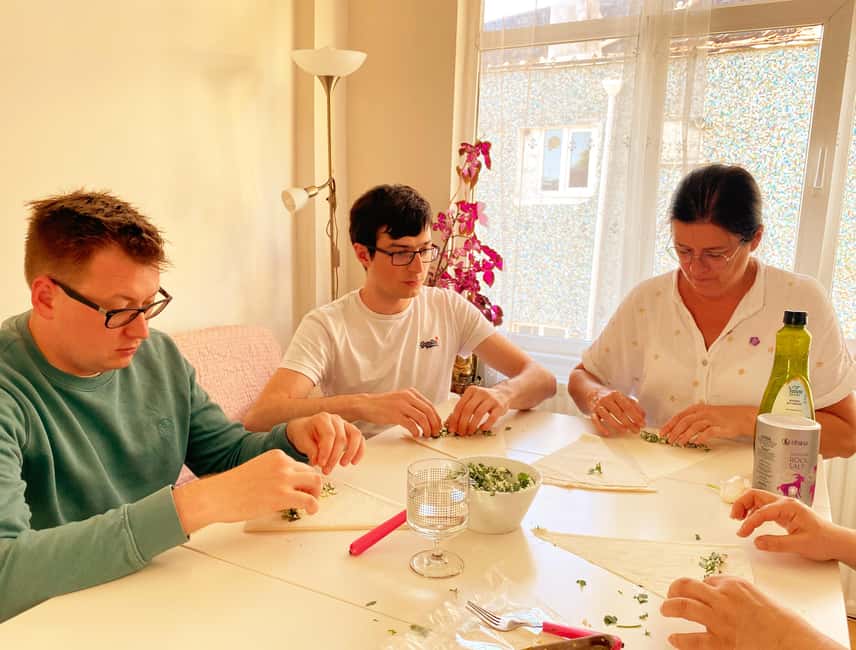
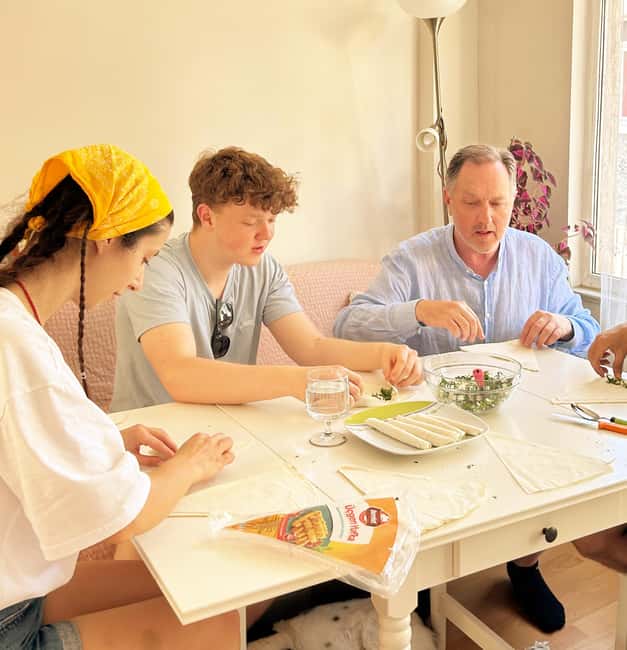
- The cooking is hands-on: You help prepare stuffed vegetables, meze, pastries, and other Turkish home dishes.
- Pets live in the home: A friendly cat is part of the household, and some sessions have also included a dog.
A Turkish welcome before the cooking starts
The first part is deliberately unhurried. You arrive at the hosts’ home, sit down with Turkish tea or coffee, and spend time getting acquainted. That opening matters because this is meant to feel like an invitation into a home, not a demonstration behind a counter.
Turkish tea is part of daily social life, usually served in a small tulip-shaped glass. Turkish coffee offers a stronger, thicker alternative. The hosts provide coffee and/or tea, so you can begin with a familiar local ritual before moving into the kitchen.
The social side is one of the strongest reasons to book. You are not simply handed a recipe card and left to copy steps. The format allows space for questions about family food, local customs, spices, shopping, and everyday life in Istanbul. Özge has also shared suggestions about spice markets and places to shop, which can be useful if you want to continue exploring Turkish food after the class.
English and Turkish are spoken. The tone appears relaxed and friendly, with several cooking sessions described as feeling like time spent with a family friend. That warmth is a big part of the value, especially if you want a local connection rather than another formal food demonstration.
More Home Cooking Classes in Turkey
- Traditional Home Cooking with a Local in İstanbul City Center
★ 5.0 · 82 reviews - Traditional Home Cooking with a Local in İstanbul Center
★ 4.9 · 78 reviews - Istanbul Turkish Home Cooking Class with a Local
★ 5.0 · 18 reviews
What you may cook in three hours
The listed menu centers on three classic dishes, each showing a different side of Turkish home cooking.
Dolma, stuffed peppers with a full meal inside
Dolma refers to vegetables stuffed with a seasoned filling. Here, the featured version uses peppers filled with meat, rice, spices, and vegetables. It is a useful dish to learn because the method can be adapted to other vegetables and fillings.
You can expect to work through the filling, prepare the peppers, and learn how the ingredients are combined. The hosts explain the seasoning rather than treating the recipe as a fixed formula. One of the most useful parts of the class is learning how Turkish cooks balance rice, meat, vegetables, and spices without letting one flavor take over.
Past sessions have also featured sarma, the rolled version often made with vine leaves. Aysu once prepared around 200 sarmas with a participant, who took some home. That detail gives you a sense of how hands-on the work can become when the dish calls for repetition. If you love stuffed vegetables, ask in advance which version you will prepare.
Havuç tarator, a simple meze with a big role
Havuç tarator combines carrots with a creamy, garlicky mixture. It is a meze, so it works as part of a table filled with small dishes rather than as a stand-alone main course.
This is likely to be one of the more approachable recipes for home cooks. It uses a few familiar ingredients, but the class can show you how Turkish cooks turn them into something suited to sharing. It also teaches an important part of Turkish eating culture: a meal often includes several small dishes that are passed around and enjoyed together.
Same place, a different thing to cook:
- Farmers Market visit & Turkish Cooking Class
★ 5.0 · 60 reviews - Bodrum: Market Visit and Cooking Class
★ 4.9 · 41 reviews - Cooking Class in Authentic Etrim Village
★ 4.5 · 23 reviews - Istanbul: Turkish Cooking Class with a Professional Chef
★ 4.8 · 23 reviews
Sigara böreği, crisp pastry with feta and herbs
Sigara böreği are thin pastries rolled into narrow shapes and filled with feta cheese and herbs. They are crisp, savory, and easy to understand once you have seen the folding and rolling technique.
This is the sort of dish where a little guidance helps. Pastry can split, overfill, or cook unevenly if handled carelessly. The hosts guide you through the process and then serve the finished pastries as part of the meal.
The menu can change, and that is a good thing
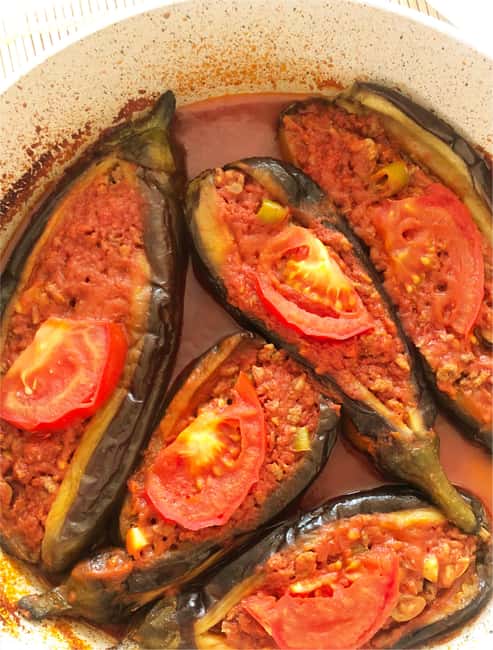
Although dolma, havuç tarator, and sigara böreği form the advertised menu, the cooking sessions have not all followed exactly the same list. Vegetarian participants have prepared baba ghanoush, cacık, and patatesli köfte. Other sessions included an eggplant and meat dish.
That flexibility is useful if you have already tried the standard Turkish classics or want to focus on vegetarian food. One vegetarian participant particularly enjoyed learning baba ghanoush, while another session focused on sarma. Tell the hosts your preferences after booking, rather than waiting until you arrive.
Dietary restrictions and allergies should be shared in advance. The hosts say they can adjust the menu, but the exact replacement dishes are not specified. If you avoid meat, dairy, gluten, or particular vegetables, ask what can be prepared before committing to the booking.
Why the shared meal matters
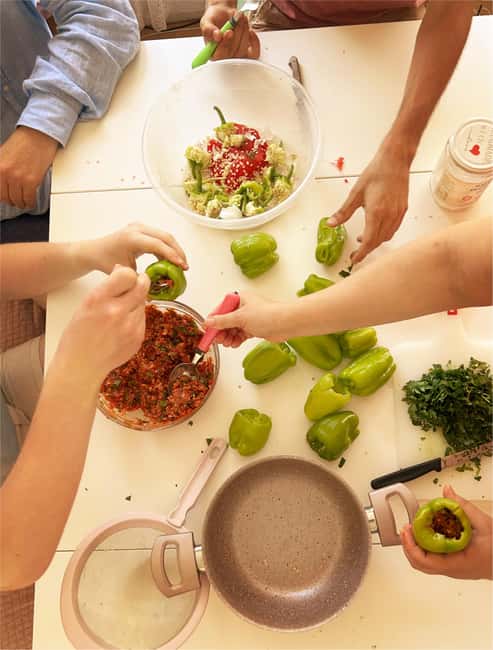
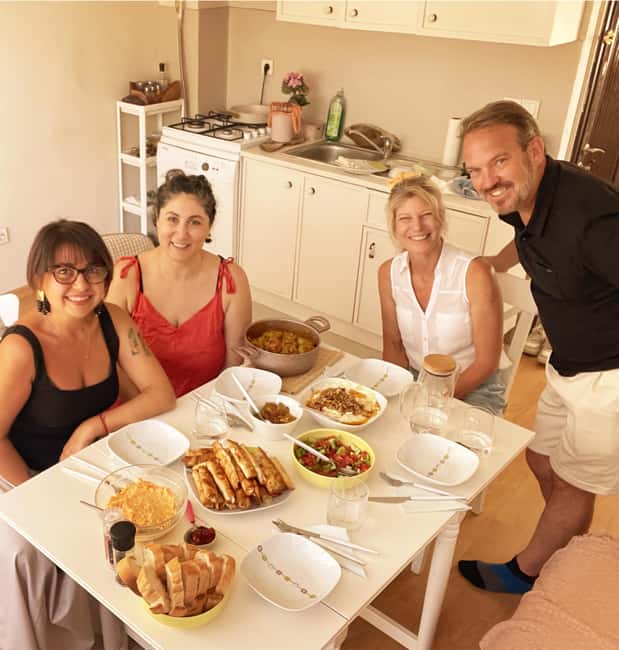
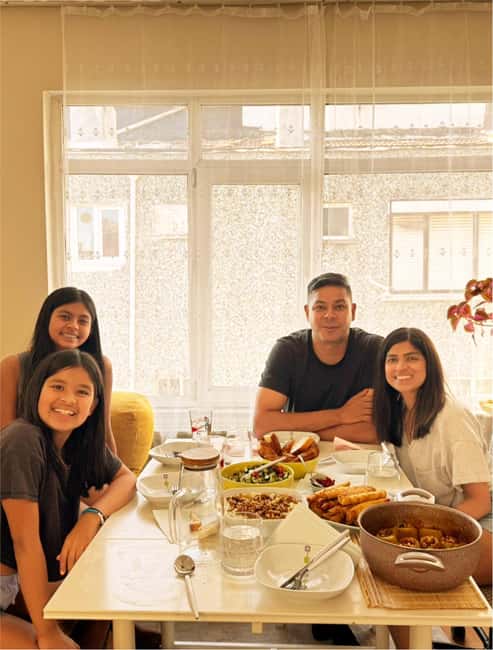
Once the dishes are ready, you sit down with the hosts and eat together. The included meal is not an extra add-on. It is the natural finish to the class, giving you time to taste the results and continue the conversation.
At noon, the meal is lunch. At 5pm, it is dinner. That simple timing detail matters when planning your day in Istanbul. The 5pm start could work well after sightseeing, but you should allow enough time for the journey to Sarıyer and the trip home.
The meal also lets you compare how the dishes work together. Turkish home cooking is not only about mastering a single recipe. It is about contrast: creamy with crisp, garlicky with fresh, savory with gently spiced. The small-dish format makes that clear.
I would not book this expecting an elaborate restaurant service or a polished cooking studio. The appeal is the opposite. You are helping prepare food in a private home, then sharing it around a table. That can feel more personal, but it also means the setting will be informal and shaped by the household.
The hosts and the home atmosphere
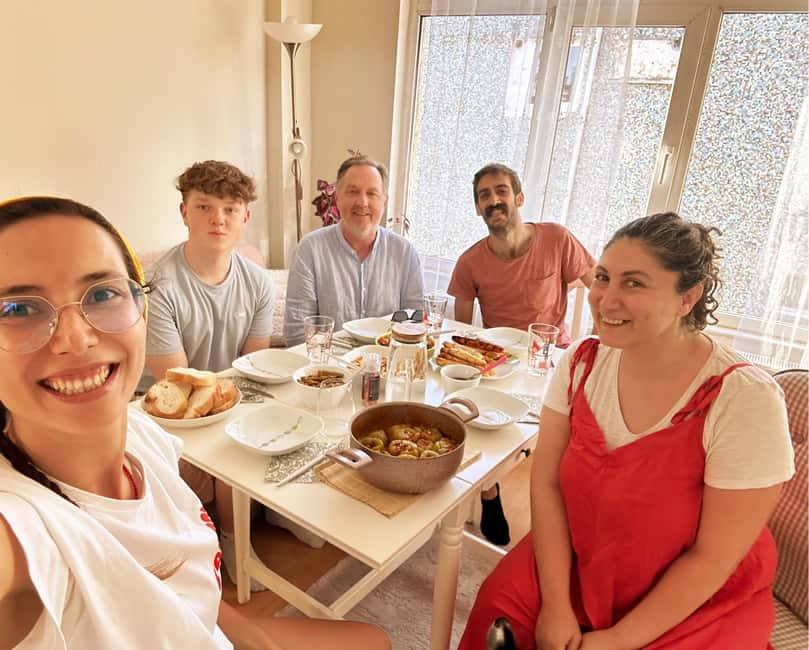
Özge receives especially strong praise for being patient, warm, and clear when explaining each step. Several cooking sessions describe her as making people feel comfortable from the beginning. That is important for beginners, since Turkish recipes can seem complicated when you first see stuffed vegetables, rolled pastries, or several meze prepared at once.
Aysu has also hosted sessions, including the sarma class. The names and menu may vary depending on the date, so check your confirmation if meeting a particular sister is important to you.
The home includes a friendly cat. Some sessions also included a dog called Penny, while another mention refers to Theo. The pet details are not perfectly consistent, so ask the host if you have an allergy or concern. This is a private home with animals, not a pet-free culinary school.
For many people, the pets add to the homey character. For anyone with allergies, it is a practical issue to settle before booking.
Getting to Huzur in Sarıyer
The address is Huzur, Oyak Sitesi No. 21, 34475 Sarıyer, Istanbul. This is not in Sultanahmet, Galata, Taksim, or central Kadıköy. You are heading north into the wider Istanbul area.
The recommended route from the Old Town is:
- Take tram T1 to Laleli-İstanbul University.
- Walk to Vezneciler.
- Take the M2 metro toward Hacıosman.
- Get off at Sanayi Mahallesi.
- Transfer to the metro for Seyrantepe.
- Exit at Otopark 3.
- Walk about 10 minutes downhill.
From Taksim or Galata, use the M2 from Taksim or Şişhane toward Hacıosman. Get off at Sanayi Mahallesi, transfer to Seyrantepe, exit at Otopark 3, and walk downhill for about 10 minutes.
I would use public transport rather than a taxi if traffic is heavy. The hosts specifically recommend the ferry, metro, and tram. From central areas, the trip may take about an hour even outside peak traffic. Returning to Kadıköy can take close to two hours during rush hour, so do not schedule a tight evening appointment afterward.
The long ride is the clearest trade-off. You give up time in the city center, but you gain a look at a residential side of Istanbul that most food-focused excursions do not reach. If your schedule is short, consider booking this on a day when you are already planning to be north of the Golden Horn or when you can spare most of an afternoon.
Is $84 a fair price?
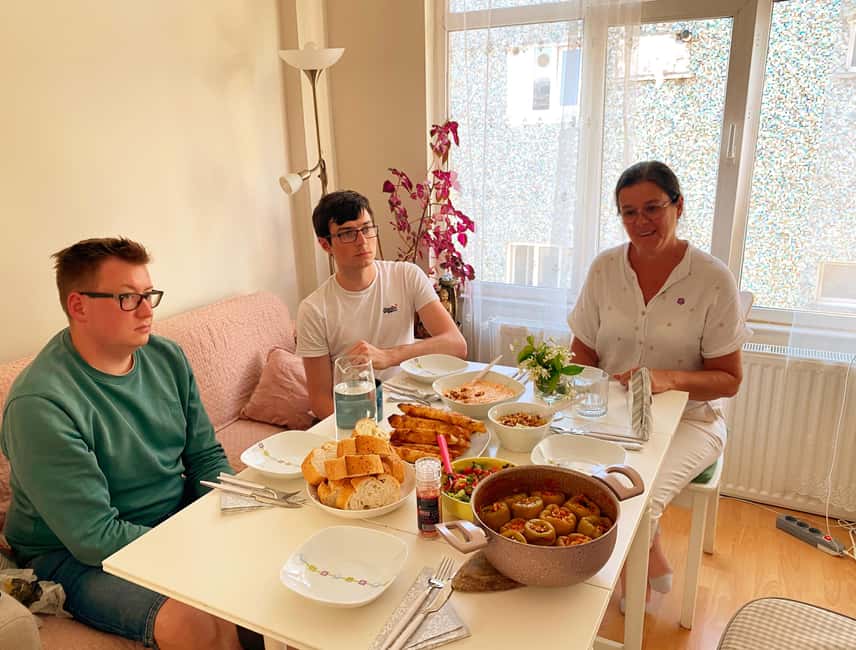
The cost is $84 per person for three hours. That is more than a quick market snack tour or a standard restaurant meal, but the price includes instruction, tea or coffee, and lunch or dinner.
The value depends on what you want from a food experience. If you only want to taste Turkish dishes, you can spend less elsewhere. If you want to learn methods, ask questions, meet local hosts, and leave with recipes you can repeat at home, the price is easier to justify.
The small-group or private format also matters. You are not one person in a large class watching a chef work from across the room. You can ask about spices, filling textures, preparation methods, and substitutions. One participant said the class gave them more confidence to cook Turkish food at home, which is a useful measure of value.
The price is strongest for people who care about the social setting and practical cooking. It is weaker for anyone who dislikes long transfers or wants a highly polished professional kitchen.
How the class handles communication and planning
The hosts speak English and Turkish. Communication before the activity has generally been helpful, though one participant found the arrangements confusing. I would confirm the exact meeting instructions, host name, menu, dietary needs, and pet situation before the day of the class.
Private and small-group bookings are available. The exact group size is not given, so ask if you need a private session or want to avoid joining other people.
You can cancel up to 24 hours in advance for a full refund. A reserve-now, pay-later option is also offered, which helps if your Istanbul plans are still changing. Availability and start times should be checked for your chosen date.
Who will enjoy this most?
I would recommend this to you if you:
- Want to cook rather than only eat
- Enjoy meeting local people in a home setting
- Like Turkish meze, stuffed vegetables, pastries, and family recipes
- Need a vegetarian menu and are willing to arrange it ahead of time
- Have at least half a day for the journey and class
- Prefer a relaxed social experience over a formal culinary school
It may not suit you if you have a very tight Istanbul schedule, dislike pets, or want a class close to Sultanahmet or Taksim. The trip to Sarıyer is part of the decision, not a minor footnote.
Should you book this Istanbul cooking class?
Book it if you want more than a plate of Turkish food. The strongest parts are the home setting, the patient guidance from hosts such as Özge and Aysu, the chance to adjust the menu, and the meal shared after the cooking is finished.
I would set aside a full afternoon or evening, use public transport, and confirm every detail before leaving your hotel. If you can accept the long ride to Sarıyer, this offers a personal way to learn Turkish food and meet the people behind it. If you are short on time, choose a food experience closer to the center instead.
FAQ
Where does the Turkish cooking class take place?
It takes place in a private home at Huzur, Oyak Sitesi No. 21, 34475 Sarıyer, Istanbul, Turkey.
How long does the experience last?
The cooking experience lasts three hours.
What time does the class start?
Available start times should be checked for your date. A booking at 12pm is held as lunch, while a booking at 5pm is held as dinner.
What food will I prepare?
The listed dishes are dolma, havuç tarator, and sigara böreği. Other sessions have included sarma, baba ghanoush, cacık, patatesli köfte, and an eggplant dish with meat.
Can the menu be adapted for allergies or dietary restrictions?
Yes. You should tell the hosts about allergies and dietary preferences after booking so they can adjust the menu.
Are tea and coffee included?
Yes. The experience includes Turkish tea and/or coffee.
Are pets present in the home?
Yes. The home has a friendly cat. Some sessions have also included a dog, so ask the host about the current pet situation if you have allergies or concerns.
How do I reach the home from central Istanbul?
From the Old Town, take the T1 tram to Laleli-İstanbul University, walk to Vezneciler, then take the M2 toward Hacıosman. Transfer at Sanayi Mahallesi to Seyrantepe, exit at Otopark 3, and walk about 10 minutes downhill. From Taksim or Galata, take the M2 toward Hacıosman and follow the same transfer instructions.
Just added around Turkey
- Bodrum Cooking Class★ 5.0 · 3 reviews
- Bodrum Cooking Class with Local Couple★ 5.0 · 6 reviews
- Farmers Market visit & Turkish Cooking Class★ 5.0 · 60 reviews
- Cooking Class in Authentic Etrim Village★ 4.5 · 23 reviews
- Turkish Cuisine Cooking Class at Local Home with Family★ 5.0 · 9 reviews
- Istanbul: Traditional Cooking Class with a Local Mom★ 5.0 · 2 reviews
- Istanbul: Vegan/Vegetarian Cooking Class with Locals at Home★ 5.0 · 8 reviews
- Istanbul: Turkish Baklava Cooking Class with a Local Host★ 5.0 · 3 reviews
Home Cooking Classes, compared.
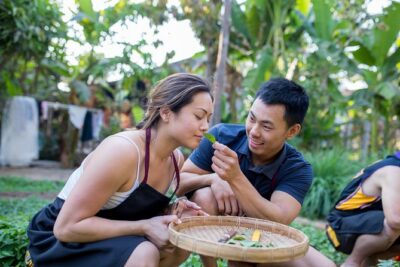
Khmer Cooking Class at a Local’s Home in Krong Siem Reap
Read our review →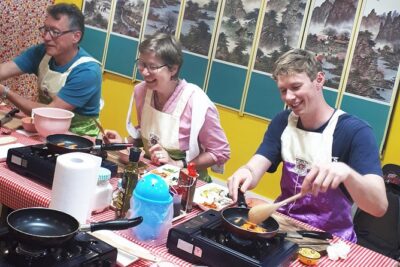
Local Home Korean Cooking Class & Market Adventure in Seoul
Read our review →
Mexican Cooking from Scratch in a Local Home in Tulum
Read our review →
Pastamama, Home Cooking Classes at Grace’s Home
Read our review →
Traditional Cooking Class & meal with Local Family
Read our review →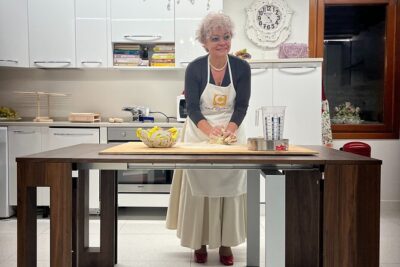
Lists this class appears in