REVIEW · ILE-DE-FRANCE, FRANCE
Paris: Macaron Baking Class in Central Paris
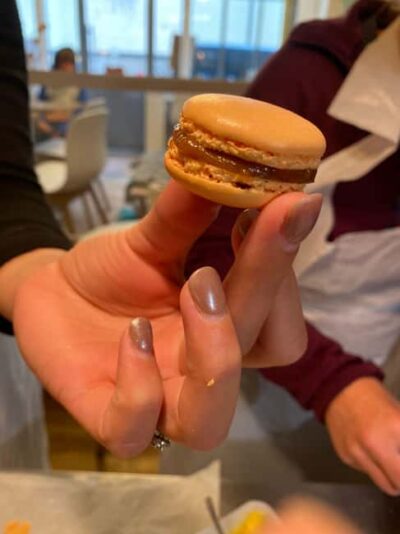
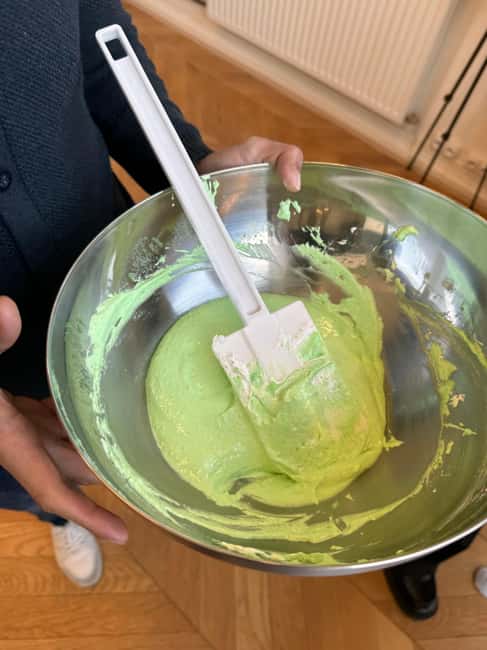
Macarons are harder than they look. This 150-minute class at Studio Pâtisserie gives you a practical way to understand these delicate French sweets, from measuring ingredients to piping shells and matching them with fillings. You work in a small English-speaking group, then taste what you made.
I especially like the hands-on format, since you make the shells yourself rather than simply watching a pastry chef. I also like the useful follow-up: you receive a recipe to take home, and Chef Leo has offered advice about baking in different climates and recommendations for places to eat in Paris. The main consideration is the fixed flavor selection, which may disappoint you if you have your heart set on pistachio, vanilla, or lemon.
Key points to know before booking
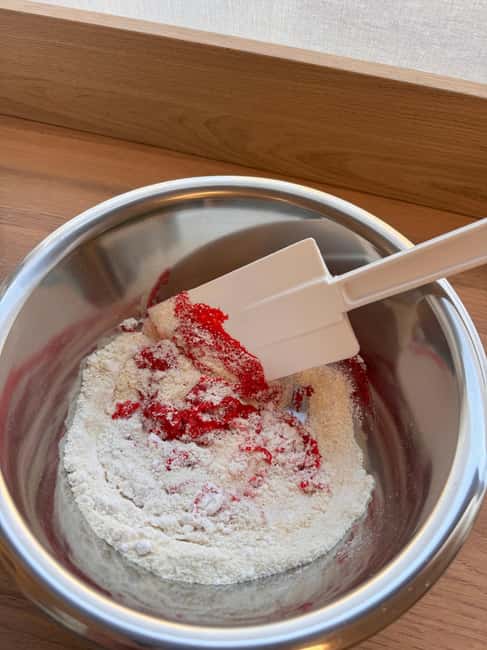
- You make the macarons from start to finish: The class covers shells, fillings, mixing, piping, baking, and tasting.
- The group is capped at 10 people: Past sessions have often had eight or nine participants, giving you room to ask questions.
- Chef Leo and Maria receive especially warm praise: Their clear instructions, humor, patience, and friendly teaching style are a major part of the appeal.
- You usually leave with a generous batch: Several participants reported making about 15 macarons each, or around 30 for two people.
- The class focuses on baking science: You learn why texture, timing, measurements, and technique matter.
- Nut allergies and vegan diets are a problem: Macarons use ingredients that make this class unsuitable for vegans and people with nut allergies.
What makes this Paris baking class worthwhile
Paris offers endless pastry shops, so paying $122 for a baking class needs a good reason. Here, the value comes from doing something you cannot get by simply buying a box of macarons. You learn the method, practice the tricky parts, eat the results, and take home a recipe that can be tested again.
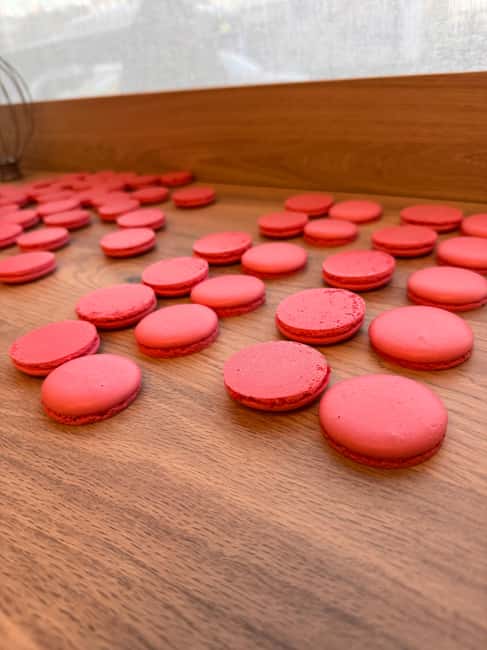
I see this as part food lesson and part Paris memory. You are not just sampling a polished pastry from a display case. You are watching smooth batter become piped rounds, seeing the shells rise, and finding out if your technique produced the right texture. That small sense of suspense makes the final tasting more satisfying.
The price is easier to justify if you attend as a couple, family, or small group and divide the fun across the whole session. You also receive a substantial amount of food. Several people described taking home roughly 15 macarons per person, while one couple reported leaving with about 30 handmade macarons.
Still, this is not the cheapest way to eat dessert in Paris. If you only want to taste macarons, buy a box from a fine pastry shop. Book this class if you want skills, conversation, and a story to bring home with the sweets.
More Baking Classes in France
- Paris Croissant Small-Group Baking Class with a Chef
★ 5.0 · 910 reviews - Paris: French Croissant Baking Class with a Chef
★ 4.9 · 712 reviews - Paris Macarons Small-Group Baking Class with a Chef
★ 5.0 · 316 reviews
Arriving at Studio Pâtisserie in central Paris
The meeting point is easy to identify by the grey-colored storefront on the main road. You will want to pay attention to that detail, since a simple street-front description is more useful than a large landmark in a busy city.
The studio has been described as clean, organized, and well prepared before the class begins. Ingredients and equipment are set out in advance, so you can spend your time working instead of waiting for basic preparation.
The class is taught in English. That matters because macaron making depends on small instructions. A phrase about mixing speed, batter texture, or piping pressure can affect the result. An English-speaking instructor lets you ask for clarification at the moment you need it.
Wear comfortable clothes and shoes. This is a practical kitchen session, not a sit-down demonstration, so you should expect to stand, move around your station, and work with ingredients and equipment.
The opening lesson: macarons as pastry and science
The class begins with an introduction to the background and craft of macarons. You learn about their place in French food culture and the ingredients behind the familiar smooth shells and creamy centers.
The useful part is the focus on why each step matters. Macarons are famously fussy. The finished pastry may look simple, but small changes in mixing, moisture, piping, or baking can produce cracked shells, uneven shapes, or the wrong texture.
Chef Leo has been praised for explaining the reasons behind the method instead of asking you to copy movements without context. That approach is helpful at home, where your oven, room temperature, and humidity may differ from those in Paris.
One especially practical point is climate. Chef Leo has given advice about adjusting the process for baking in participants’ home countries. You should listen closely here. A recipe is useful, but understanding the conditions around it gives you a better chance of repeating the result.
Mixing and piping the macaron shells
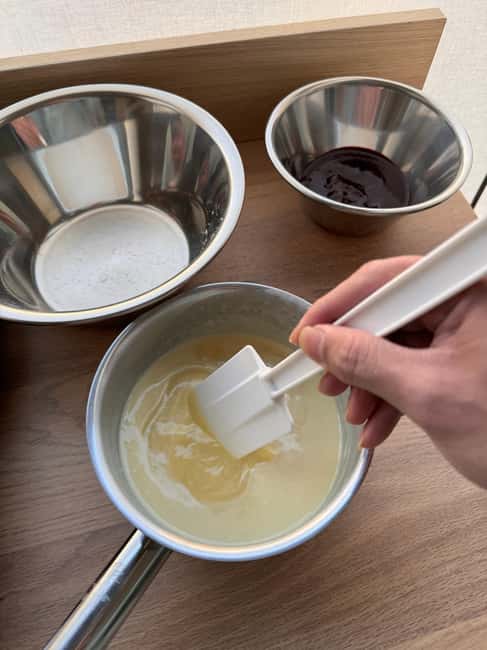
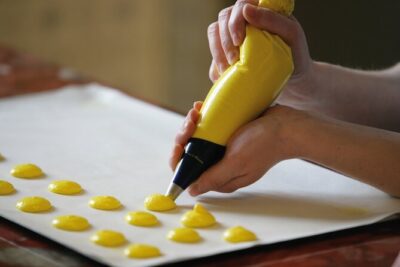
The most valuable part of the class is the hands-on work. You learn to prepare the macaron shells and then pipe them into shape. These are the steps where the pastry changes from a list of ingredients into something that demands control.
You will work on batter consistency, mixing technique, and piping pressure. Several people appreciated learning how to mix correctly and how to pipe evenly, since both skills affect the final appearance and bite.
I like that the stations are arranged so you are not packed shoulder to shoulder. A small group of no more than 10 participants gives the instructor a realistic chance to check your work. Past sessions have often included eight or nine people, which is a comfortable size for a class that involves several active stages.
Do not worry if your first shells are not perfectly identical. The point is to practice under supervision and learn what to correct. Maria has been praised for clear, encouraging instruction, while Chef Leo is often described as patient, lively, and quick to help when someone gets stuck.
This is also where the class may challenge complete beginners. Macarons reward careful listening more than casual guesswork. You cannot rush through the instructions and expect the same result. The activity is fun, but it is still a real baking lesson.
More Baking Classes in Paris
- Paris: Macaron Baking Class for Families and Kids
★ 4.7 · 270 reviews - Paris: Croissant Baking Class with a Chef
★ 5.0 · 201 reviews - Paris French Baking Class Baguettes and Croissants in a Bakery
★ 4.5 · 172 reviews - Croissant Baking Class, Mastering the Art with a Pastry Chef
★ 5.0 · 116 reviews
Fillings, baking, and the wait for the finished batch
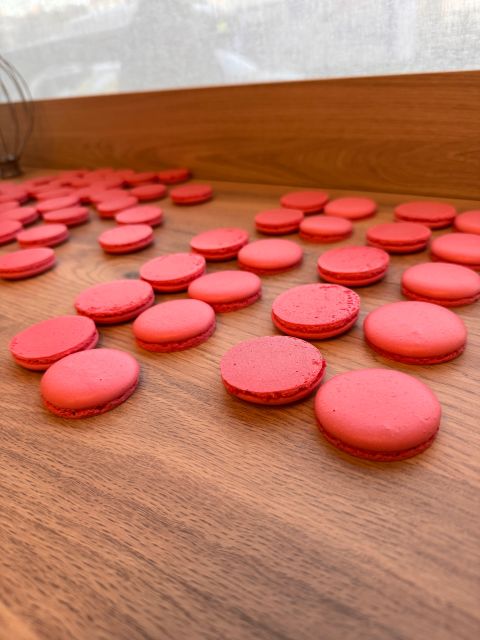
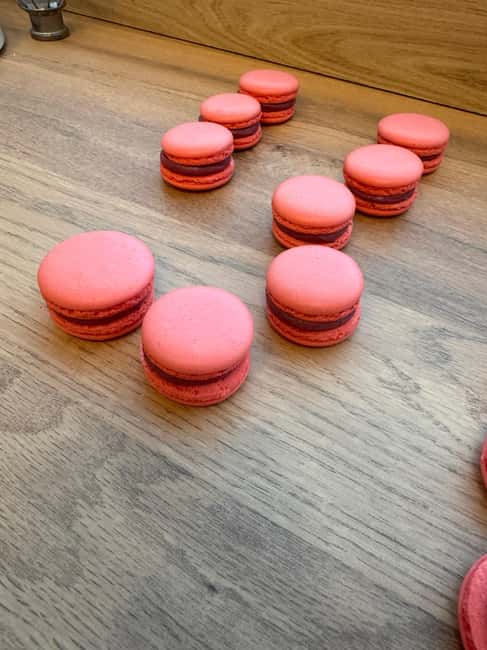
After the shells, you work with the fillings and prepare the macarons for baking. The instructor helps you connect the separate parts into the finished pastry.
One detail to check before booking is the flavor plan. The available flavors have included chocolate, black currant, and passionfruit. Chocolate has broad appeal, but not everyone wants fruit flavors, and the selection may not match the classic combinations you had in mind.
A participant specifically wished for choices such as pistachio, vanilla, or lemon. That is a fair limitation to keep in mind. You may be able to share flavors with others, but you should not assume that custom flavor choices are available.
While the macarons bake, the class has time to pause. One session included a refreshing drink while everyone waited. This break gives you a chance to chat, ask last questions, and watch for the signs that the shells are ready.
The baking stage also makes the science easier to understand. You can see why accurate measurements and controlled technique matter. The recipe is not simply about combining sweet ingredients. It is about getting a delicate structure to hold together.
Tasting what you made yourself
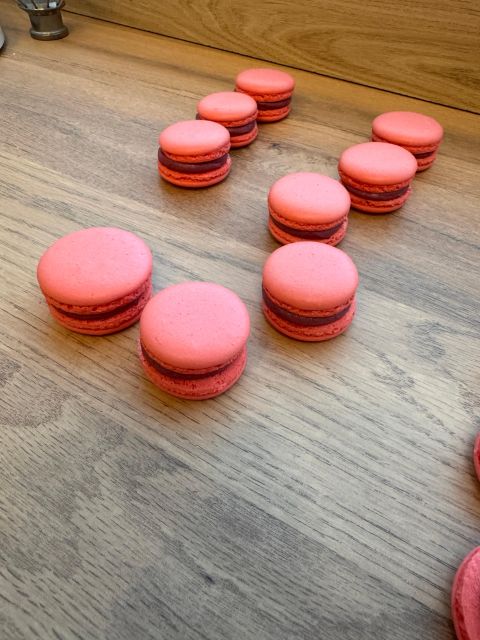
The tasting is the payoff. You sample the finished macarons and judge the texture, flavor, shape, and overall result.
This is more rewarding than eating a pastry bought from a shop because you know exactly where it came from. You handled the batter, practiced the piping, and waited for the oven. Even a slightly imperfect shell can taste excellent when you made it yourself.
The finished macarons have been described as delicious, with many participants surprised by how professional the results looked and tasted. One person who considered themselves a poor baker said the macarons impressed family and friends at home.
You may also leave with enough to snack on for several days. Amounts vary by session, but 15 macarons per person has been reported more than once. For two people, that can mean a box of about 30 handmade treats.
Pack them carefully for the rest of your day. The supplied information does not specify special transport packaging or storage instructions, so ask the instructor how best to handle them if you plan to walk around Paris afterward.
The instructors make the difference
The strongest part of this class is the teaching. Chef Leo is repeatedly described as cheerful, funny, patient, and clear. Those qualities matter more than a polished kitchen when you are trying a technical recipe for the first time.
He also appears willing to talk beyond the recipe. Participants have received Paris food suggestions and answers to assorted questions about where to eat. If you want local restaurant or pastry ideas, this class may be especially useful early in your stay.
Maria receives similar praise. She has been described as welcoming, funny, encouraging, and well organized. Her teaching style seems to put beginners at ease without making the class feel childish.
The tone is friendly, but the instruction remains practical. You get explanations, demonstrations, and time to try the steps yourself. That balance suits people who want a social activity but still hope to learn a real skill.
Is the small group really important?
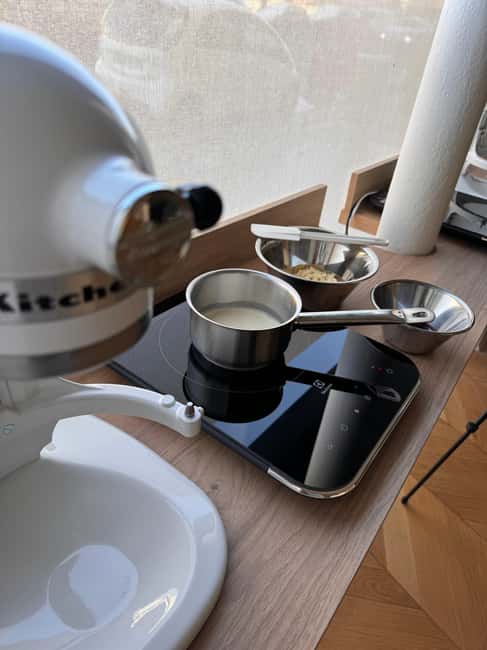
Yes. A macaron class can lose much of its value if you are standing at the back and watching someone else do the difficult parts.
The maximum group size is 10. Reports of groups with eight or nine participants suggest that the class often stays below that limit. This gives you a better chance to get direct help with mixing and piping.
A small class also makes the activity work for different types of participants. Couples can share the experience, parents can work with older children, and solo participants can join a group without feeling isolated. One person attended alone in a group of nine and still found the session welcoming.
The minimum age is 12. Teenagers aged 13 and 15 were reported to enjoy the class, and Chef Leo has been praised for working patiently with children. Younger children cannot join, so families should plan around the age rule.
Who should book this experience?
I would recommend it to:
- First-time macaron makers who want clear guidance
- Couples looking for a shared activity beyond sightseeing
- Families with children aged 12 or older
- Solo visitors who enjoy meeting people through food
- Home bakers who want to understand the technical details
- Paris visitors who enjoy French pastry and want a take-home skill
It is also a good choice if you like structured activities. The session lasts 150 minutes, which is long enough to cover the process without turning into an all-day commitment.
I would be more cautious if you are vegan, have a nut allergy, or strongly dislike the listed flavor styles. The experience is not suitable for vegans or people with nut allergies, and the flavor selection may be set by the instructor.
You should also avoid booking it only because you want a cheap dessert. The class costs $122 per person. The value is in the lesson, the hands-on work, the instructor, the tasting, and the recipe, not just in the macarons themselves.
Practical timing and booking advice
The class lasts two and a half hours, though the exact starting time depends on availability. That makes it easy to fit into a Paris day, but you should avoid scheduling something that begins immediately afterward. Baking involves several stages, and you will get more from the lesson if you are not watching the clock.
Booking near the beginning of your stay could be smart. Chef Leo has provided recommendations for restaurants and other food stops in Paris, and you can use those suggestions during the rest of your visit.
The activity offers free cancellation up to 24 hours before the start time, with a full refund. You can also reserve now and pay later, which helps if your schedule is still changing.
The language is English, the group is small, and the meeting point is a grey storefront on the main road. Bring comfortable clothing and shoes, then arrive ready to listen carefully and work with your hands.
My final take: should you book it?
Book this class if you want more than a pastry tasting. The teaching is the main attraction, and Chef Leo and Maria appear to make the technical work approachable through patience, humor, and close guidance.
The strongest reasons to go are the hands-on format, the small group, the generous quantity of macarons, and the recipe you can try at home. I also like the practical advice about baking in different countries and the extra Paris food recommendations.
Skip it if you are vegan, allergic to nuts, or only want to buy a box of macarons. For everyone else, $122 is a fair price for a two-and-a-half-hour activity that gives you a skill, a story, and a sweet souvenir you made yourself.
FAQ
How long does the macaron baking class last?
The class lasts 150 minutes, or two and a half hours.
Where does the class meet?
It meets at Studio Pâtisserie in central Paris. Look for a grey-colored storefront on the main road.
What language is the class taught in?
The instructor teaches the class in English.
How many people can join the class?
The group is limited to 10 participants. Previous sessions have included eight or nine people.
What is included in the price?
The price includes the instructor, baking class, tasting, and a recipe to take home.
How many macarons will I make?
The exact number can vary, but several participants reported making about 15 macarons each. Two people may leave with roughly 30 macarons.
Is the class suitable for children?
Children under 12 cannot join. Children aged 12 and older may attend.
Can vegans or people with nut allergies take the class?
No. The class is not suitable for vegans or people with nut allergies.
Can I cancel my booking for a refund?
You can cancel up to 24 hours in advance for a full refund. You can also reserve your place and pay later.
Just added around Paris
- Paris: Millefeuille baking class with a chef★ 5.0 · 5 reviews
- Paris: Macaron Baking Class★ 4.4 · 26 reviews
- Paris: Traditional Croissant Cooking Class With Local Baker★ 5.0 · 2 reviews
- Paris: Lemon Tart Baking Class with a Pastry Chef★ 5.0 · 4 reviews
- Paris: The Soufflé Baking Class with Chef★ 4.5 · 2 reviews
- Paris: Hands-On Small Group Cooking Class★ 4.9 · 19 reviews
- Paris: Evening Cooking Class with Optional Market Visit★ 4.8 · 19 reviews
- Paris Cooking Class: French Desserts Class★ 4.9 · 13 reviews
Baking & Bread Classes, compared.
Paris Croissant Small-Group Baking Class with a Chef
Read our review →
Paris Macarons Small-Group Baking Class with a Chef
Read our review →