
REVIEW · ARUSHA (REGION), TANZANIA
Arusha: Traditional Tanzania Cooking class& Food Market Tour
Come hungry and ready to get involved. This five-hour Arusha experience combines a guided visit to a central food market with hands-on cooking in a local home, giving you a direct look at everyday food culture rather than a polished restaurant demonstration. I especially like the chance to choose ingredients at the market and the patient, personal teaching style described by guests who cooked with chef Neema and guides Liroy and Israel.
The price is also appealing. At $45 per person, you receive hotel pickup and drop-off, the market visit, ingredients, instruction, and the meal you prepare. The main consideration is comfort: the cooking takes place in a small local house, and one guest found that handwashing and cutting-board cleaning did not match standards common in the United States. Food was fully cooked, but you should be comfortable with a simple, homespun setting.
Key details before you book
- Market time comes first: Allow roughly 30 to 50 minutes to see dry goods, meat, fruit, vegetables, and other daily ingredients.
- You help select the menu: The class can include plantain banana, chapati, ugali, vegetables, and an optional stewed or barbecued meat dish.
- The kitchen is genuinely local: Cooking takes place in a small home rather than a formal culinary school.
- Expect a flexible class length: The cooking portion may last from one to three hours, depending on the menu and pace.
- Hotel pickup is included: Pickup and return are offered from hotels in Arusha town, especially near the city center.
- Bring practical clothing: Wear comfortable shoes, comfortable clothes, and long pants.
Starting in Arusha with a hotel pickup
The experience begins with pickup from your hotel in Arusha town. That simple detail matters, especially if you are still finding your way around the city or have plans later in the day. The advertised duration is five hours, so I would keep the rest of your schedule light rather than booking a tight afternoon connection.
The exact pickup time depends on availability, so check the start options when booking. English is the tour language, and the guides are described as friendly and open to questions. Liroy received especially warm praise for explaining the market, town, food, and daily life in a clear and personal way.
One useful detail from the experience is the use of local transport. One guest was collected from a lodge and traveled to the market by tuk-tuk with the guide. That may not be the arrangement for every departure, but it shows that the outing is designed to feel connected to ordinary Arusha life, not separated from it by a private tourist bubble.
More Cooking Classes with a Market Tour in Tanzania:
- Arusha: Traditional Tanzania Cooking Class & Food Market Tour
★ 5.0 · 34 reviews - Hanoi Cooking Class: Culture, Local Market & Meaning CSR Impact
★ 5.0 · 5,147 reviews - 5 Traditional Dishes Hanoi Cooking Class with Market Trip
★ 5.0 · 4,890 reviews
Arusha Central Market: food, people, and daily work
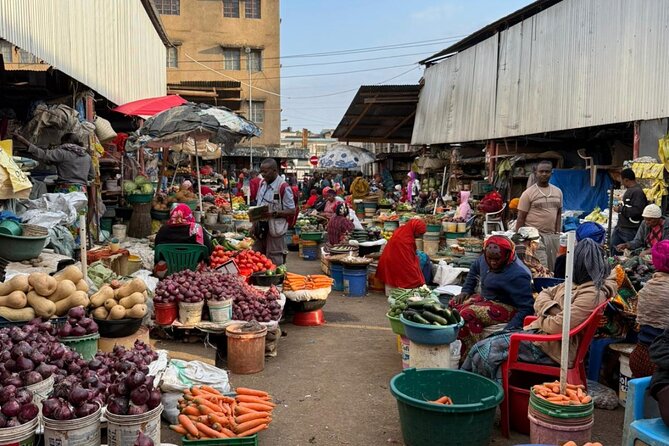
The first major stop is a local central food market. You spend about 30 to 50 minutes walking through the stalls, looking at ingredients, taking photographs, and speaking with vendors when appropriate. The selection includes dry foods, meat, fruit, vegetables, and other supplies used in Tanzanian kitchens.
This is more than a shopping stop. The market gives you a visual introduction to the ingredients before you cook with them. You can ask what a product is, how it is prepared, and why it belongs in a particular dish. The guide’s role is important here. Liroy was praised for explaining both the products and the people selling them, while also answering questions about the town and local life.
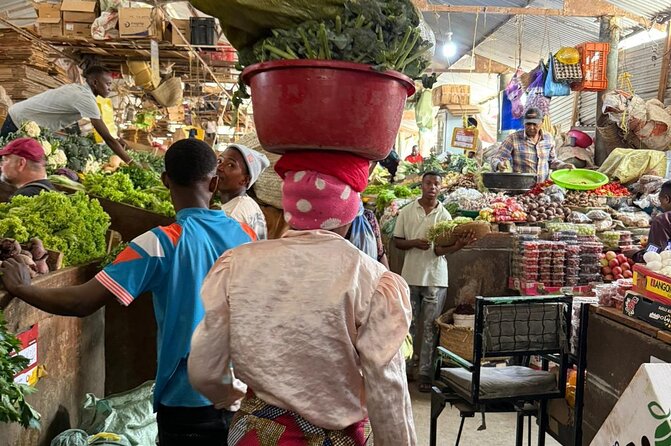
You should stay alert as you walk. One guest appreciated the guide moving them aside when workers carrying heavy loads came through the market. That is a small but useful sign of good guiding. Markets are working places first, and shoppers need to avoid blocking narrow paths or slowing down people who are doing their jobs.
Photography is allowed, but I would still ask before photographing individual vendors. The experience gives you a chance to interact with local people, not simply point a camera at them. A respectful approach will make the visit more pleasant for everyone.
Some departures may include a second, smaller market stop to buy ingredients for the class. The exact route can vary, but the basic idea remains the same: you see the food in its everyday setting, then use it in the kitchen a short time later.
Choosing what to cook
After looking around the market, you discuss the menu and shop for the ingredients. This is one of the strongest parts of the experience because the food does not arrive as a fixed classroom kit. You see what is available, help gather what you need, and then turn those ingredients into lunch.
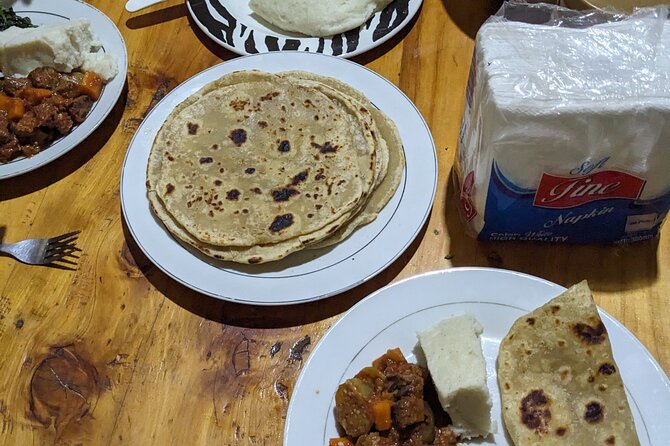
The listed dishes include plantain banana, chapati, ugali, and vegetables. Meat lovers can also choose a stewed or barbecued dish. One guest described selecting three dishes from four options, which suggests that the menu may allow some choice rather than requiring every participant to cook the same full set.
That flexibility is useful. If you already know ugali, you might want to spend more time learning chapati. If you enjoy meat, you can ask about the stewed or grilled option. If you prefer a vegetable-based meal, discuss that before shopping so the chef can plan the ingredients.
The menu also gives you a good sample of Tanzanian home cooking. Ugali is a firm maize-based staple commonly served with vegetables or meat. Chapati brings a flatbread technique into the class, while plantain adds a different texture and flavor. The vegetables tie the plate together and show how fresh market produce becomes a simple daily meal.
Cooking with chef Neema in a local home
The class lasts between one and three hours. That is a wide range, and your pace may depend on the number of people, the menu, and how much instruction you want. One guest felt the class took a while, but also said the final meal made the extra time worthwhile.
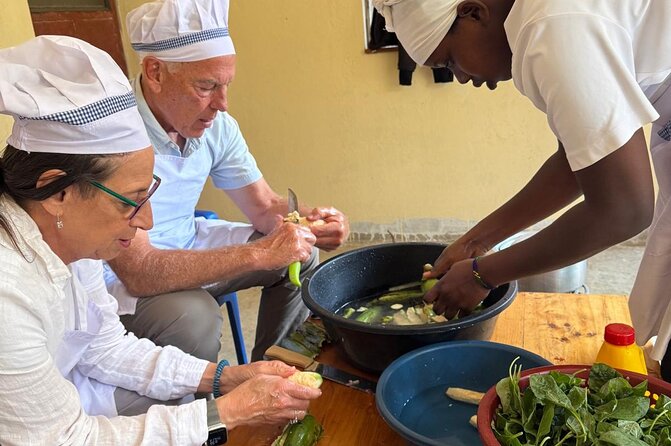
The cooking takes place in a small local house with a washroom. This is not a polished demonstration kitchen with matching counters and restaurant equipment. For me, that is part of the appeal. You get a closer look at how food is prepared in an ordinary home, including the practical rhythm of cooking several dishes at once.
Chef Neema guides you through each step. A particularly useful teaching method is to demonstrate a task first, then have you complete it while she moves on to another part of the meal. You are not simply watching someone cook. You are cutting, mixing, shaping, stirring, and helping bring the plate together.
The cooking may use both charcoal and propane stoves. That detail adds to the sense of a working home kitchen, but it also means the setting may feel basic. Wear clothes you do not mind cooking in, and choose comfortable shoes. Long pants are recommended.
The guides and chef also appear to keep the tone relaxed. Photos may be taken during the cooking, and guests received help from both the guide and chef. That is handy if you want a record of yourself making chapati or preparing ugali, although you should still focus on the task and ask before photographing people in the home.
More Food and Drink Trips in Tanzania:
- Local Tanzanian Food Cooking Class by Kingstone Asilia (Arusha)
★ 5.0 · 2 reviews - Dar es Salaam: Taste of Tanzania Cooking Class and Food Tour
★ 3.6 · 2 reviews - Small Group Cooking Class & Market Food Tour in Florence
★ 5.0 · 1,574 reviews - Pasta Making & Wine Tasting with Dinner in Frascati from Rome
★ 5.0 · 1,326 reviews
What the meal is like
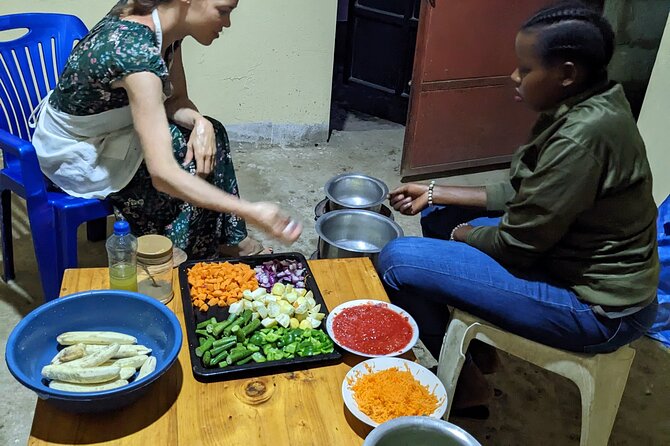
The best reward comes after the work. You sit down with the group and eat the dishes you prepared together. Because you helped shop for and cook the ingredients, the meal feels more personal than a standard restaurant lunch.
The food is described as fresh, approachable, and traditional. The class is not presented as a difficult professional course. Instead, the chef shows you techniques you can repeat at home, using dishes that are familiar in Tanzanian kitchens.
If there is food left over and time allows, you may pack some to take back to your hotel. This is not guaranteed, since it depends on the amount prepared, but it is a welcome option after a substantial cooking session.
Drinks are not included. This is worth planning for because the meal itself is included, but beverages are an extra cost. One guest said the guide kindly found water and a beer, yet I would not assume that every departure includes the same arrangement. Bring money for drinks or confirm what is available before the meal begins.
Hygiene and comfort: what to know
The setting is informal, and standards may differ from what you are used to at home. Soap and water were available during one class, but one guest felt that hands and cutting boards were not cleaned as thoroughly as they would be in the United States, particularly after handling meat.
That does not mean the food is unsafe, but it is a real consideration. All food in that account was fully cooked. If you are uneasy, choose vegetarian dishes or ask the chef about handwashing, surfaces, and meat preparation before you begin.
The class takes place in a small house, so you should not expect a large dining room or a fully accessible cooking studio. The available details do not specify accessibility features, group size, or the exact kitchen layout. If you have mobility, dietary, or medical needs, contact the provider before booking.
The tour prohibits weapons and sharp objects. That rule is straightforward, but it is worth noting if you are carrying a pocketknife or similar item after another activity.
The value of $45 per person
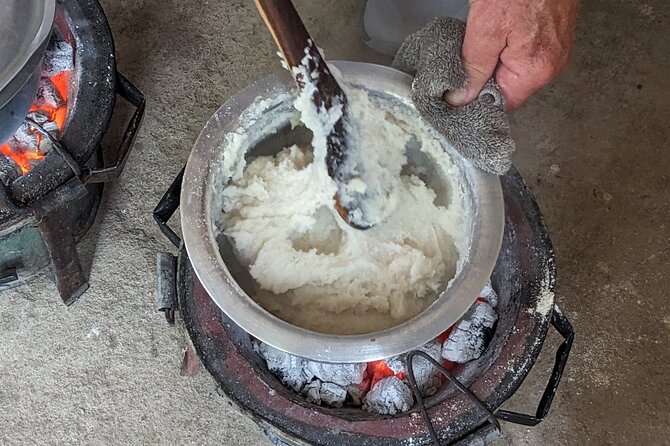
At $45, this is a good-value half-day experience if you want more than a restaurant meal. Hotel transport, a guided market visit, the chef, cooking ingredients, and the food you prepare are all included. You also gain recipes and practical skills to use at home.
The value is strongest for people who care about contact and participation. You are not paying only for a plate of food. You are paying for the market walk, explanations about ingredients and vendors, help choosing the menu, and time in a local kitchen.
The value is weaker if you want a fast, polished class with exact timings. The cooking can run from one to three hours, and the home setting is simple. The market visit may also move at a slower pace than a standard sightseeing stop because questions, shopping, and conversations shape the outing.
Free cancellation up to 24 hours before the experience and the option to reserve without immediate payment make the booking more flexible. Still, the most important practical step is checking the available start time and confirming that pickup from your particular Arusha hotel is covered.
Who will enjoy this Arusha food tour?
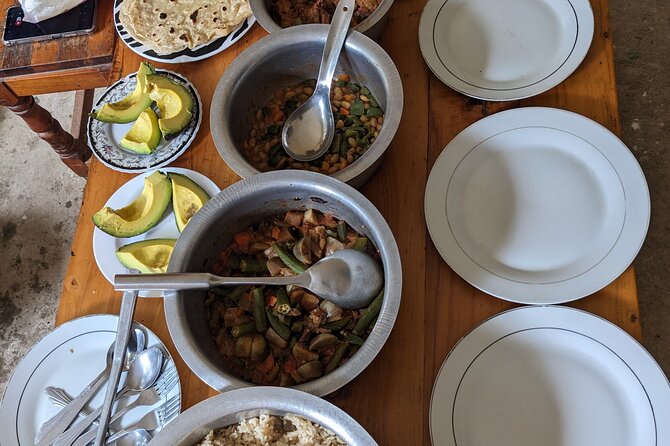
I would recommend it to first-time visitors who want an introduction to Arusha through food. The market shows you daily shopping, while the class explains how those ingredients become a shared meal.
It also suits curious cooks. You do not need professional skills, but you should enjoy taking part. The chef demonstrates the steps, then gives you work to do. If you prefer to sit back and watch, this may feel too hands-on.
Families and small groups may appreciate the friendly format, though the data does not specify age limits or group size. Solo visitors can also fit in well, particularly if they enjoy conversation and meeting local hosts.
This is less suitable for anyone needing strict timing, formal hygiene standards, or guaranteed dietary arrangements. The menu has some flexibility, but the information does not confirm vegetarian, vegan, allergy-free, or gluten-free options. Ask before you reserve if food restrictions matter to you.
Should you book it?
Book this experience if you want to shop for real ingredients, cook in a local home, and share a meal with the people guiding you. The strongest features are the market explanations, the warm attention from guides such as Liroy and Israel, and the step-by-step work with chef Neema.
Go in with realistic expectations. The kitchen is simple, the class may take longer than expected, drinks are extra, and hygiene practices may not match those at home. For $45, though, you receive a personal food lesson and a useful look at ordinary Arusha life. I would choose it for a relaxed day with time to talk, cook, and eat slowly.
FAQ
How long does the Arusha cooking experience last?
The advertised duration is five hours. The market visit takes about 30 to 50 minutes, while the cooking class lasts between one and three hours.
What dishes can I learn to cook?
The listed dishes include plantain banana, chapati, ugali, and vegetables. You may also have the option of preparing a stewed or barbecued meat dish.
Is hotel pickup included?
Yes. Pickup and drop-off are included for hotels in Arusha town, particularly those near the city center.
Is the market visit guided?
Yes. An English-speaking guide accompanies you through a local central food market and explains ingredients, vendors, and local life.
Are drinks included with the meal?
No. Drinks are not included in the price.
Can I take photographs?
Yes. Photography is permitted during the tour, including at the market and during the cooking class. Ask permission before photographing individual people.
What should I wear and bring?
Wear comfortable shoes, comfortable clothing, and long pants. Weapons and sharp objects are not allowed.
More Food Trips in Tanzania
- Athens: Food Market Visit and Cooking Class with Wine
★ 4.9 · 1,087 reviews - Undiscovered Charleston: Half Day Food, Wine & History Tour with Cooking Class
★ 5.0 · 948 reviews - Vietnamese Food Cooking Class in Hanoi with Market Experience
★ 5.0 · 778 reviews - Milan: Italian Cooking Class with Food and Wine
★ 4.7 · 509 reviews
Just added around Tanzania
- Cooking and Sewing & Jewelry Workshops in Arusha★ 5.0 · 14 reviews
- NGO Lifted Strong – Traditional Tanzanian Cooking Class★ 5.0 · 39 reviews
- Local Tanzanian Food Cooking Class by Kingstone Asilia (Arusha)★ 5.0 · 2 reviews
- Arusha: Traditional Tanzania Cooking Class & Food Market Tour★ 5.0 · 34 reviews
- Cooking Class Tour, Stone Town Tour, Horseback Riding★ 5.0 · 2 reviews
- Dar es Salaam: Taste of Tanzania Cooking Class and Food Tour★ 3.6 · 2 reviews
- Arusha: Local Tanzanian Cooking Class by Kingstone Asilia★ 5.0 · 3 reviews
- Zanzibar Cooking Class & Spice Tour★ 4.5 · 77 reviews
Cooking Classes with a Market Tour, compared.

Hanoi Cooking Class: Culture, Local Market & Meaning CSR Impact
Read our review →
5 Traditional Dishes Hanoi Cooking Class with Market Trip
Read our review →
Cooking Class and Lunch at a Tuscan Farmhouse with Local Market Tour from Florence
Read our review →
Cooking Class, Market & Thai Herbs Garden Tour
Read our review →
Authentic Cooking Class with Market & Farm Visit
Read our review →
Paella Cooking Experience & Boqueria Market Tour
Read our review →
Cooking Class Hoi An:Local Market, Basket Boat, Fishing & Cooking
Read our review →
Hoi An Cooking Class(Market,BasketBoat Crabfishing&Cooking Class)
Read our review →Lists this class appears in