
REVIEW · ANTALYA PROVINCE, TURKEY
Antalya: Turkish Cooking Class with a Local Host
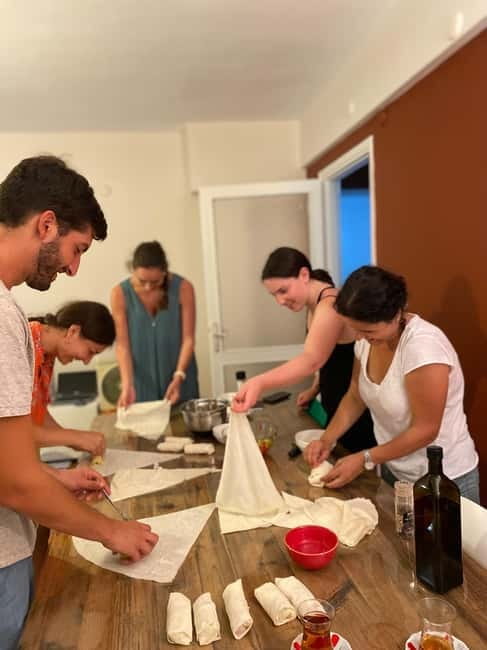
A Turkish kitchen can teach you plenty. This three-hour class brings you into Sinem’s Antalya home to prepare a four-course meal, including börek, stuffed grape leaves, salad, and a seasonal main dish. The setting is personal, the group is capped at six, and the food becomes a doorway into family life.
I especially like the hands-on cooking and the warm welcome over Turkish tea. You do not simply watch a demonstration, you take part in preparing the meal and then sit down to eat it. I also like that the menu changes with the season, keeping the class tied to what a Turkish home cook might actually prepare. The main consideration is that this is a home-based cultural visit, not a polished restaurant kitchen, and English is the only listed teaching language.
Key points to know before you book
- Sinem learned from her grandmother: The recipes come from family cooking rather than a formal culinary school.
- You prepare four courses: Börek, sarma, seasonal salad, and a changing main dish form the meal.
- The class begins with tea: Turkish tea and introductions set an easy, social tone before the cooking starts.
- The group is limited to six: This small size gives you a better chance to work directly with the host.
- The meal changes through the year: Seasonal ingredients shape the main course and may affect the menu.
- The experience costs $94 per person: The price includes the class, tea, four-course meal, and cultural conversation.
Entering Sinem’s Antalya home
The first part of this experience is not about rushing into recipes. You meet Sinem at her home, settle in with Turkish tea, and make introductions before heading to the kitchen. That opening matters because it gives the class a human rhythm. You are not just arriving at a cooking station, collecting an apron, and waiting for instructions.
You are entering a family setting. Sinem learned to cook from her grandmother, so the class carries the feel of food passed through generations. Her cooking is tied to memory and family, not only to measurements and technique. I find that especially valuable in Turkey, where food often connects daily life, hospitality, and regional tradition.
The welcome has received strong praise for its warmth. Sinem and her husband are described as friendly and open, and the home setting helps create the sense that you have been invited in rather than processed through an activity. Tea is included, and one account also appreciated coffee at the welcome, though Turkish tea is the clearly stated part of the experience.
The meeting point is simply Sinem’s home. Because no public landmark or transport arrangement is listed, you should check the exact meeting instructions when booking and allow enough time to arrive. The important practical point is that this is not a class held in a central cooking school or hotel. It takes place in a real local home.
A few more cooking classes around Turkey worth a look
- Traditional Home Cooking with a Local in İstanbul City Center
★ 5.0 · 82 reviews - Traditional Home Cooking with a Local in İstanbul Center
★ 4.9 · 78 reviews - Farmers Market visit & Turkish Cooking Class
★ 5.0 · 60 reviews
Preparing börek and stuffed grape leaves
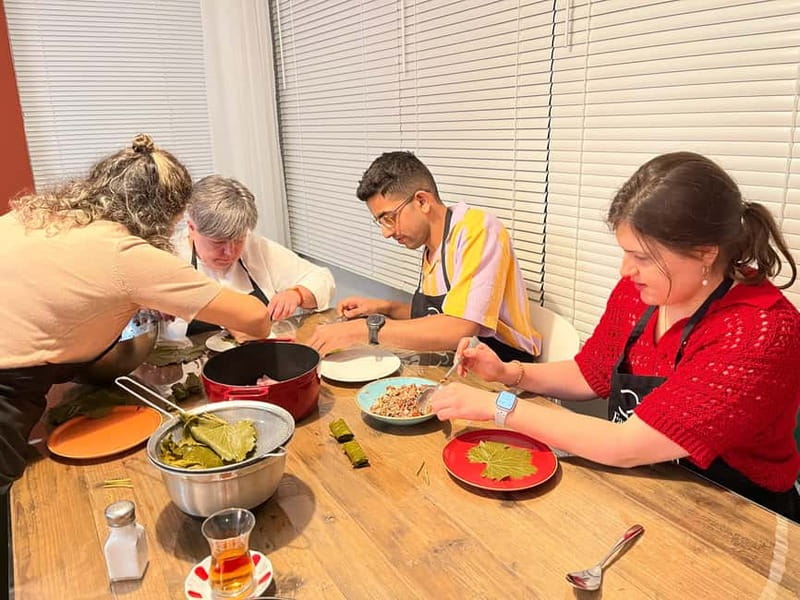
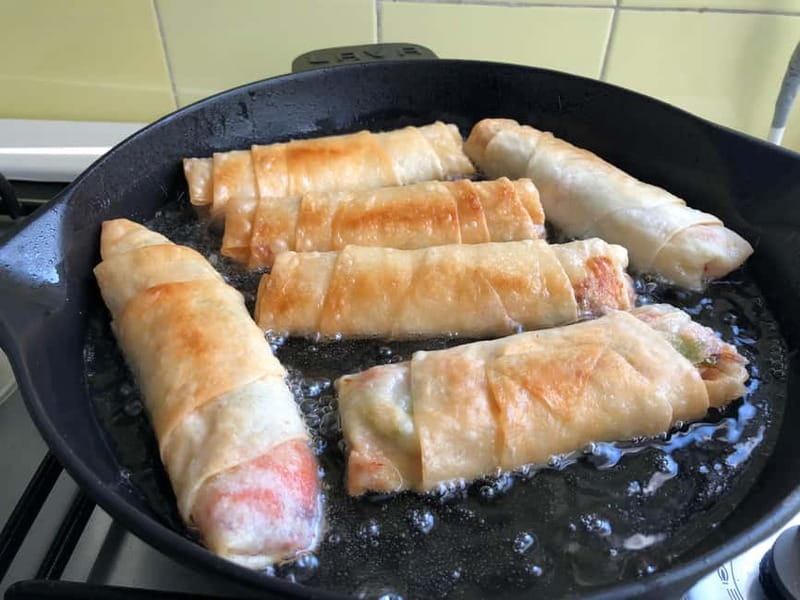
The cooking begins with traditional dishes that require patient hands. Börek is one of the featured recipes, giving you a chance to work with a familiar Turkish favorite in a home kitchen setting. The experience also includes stuffed grape leaves, known as sarma, a dish that rewards care more than speed.
These are useful dishes to learn because they are not just one-pot meals. You get to see how several small steps shape the final result. The process gives you a better sense of Turkish home cooking than simply eating a finished plate in a restaurant. You may leave with recipes you can try again, which was one of the most praised parts of the class.
Sarma also gives the group something to work on together. You are not cooking four separate courses alone. Participants share the preparation, and the small group means each person can take part rather than watch from the edge of the room. With no more than six people, you have a better chance to ask questions, handle ingredients, and follow Sinem’s methods closely.
The menu is presented as seasonal, so the exact ingredients and preparation may vary. That is a strength if you enjoy food that reflects the time of year. It is less ideal if you need a fixed menu in advance or have your heart set on one specific main course. Börek and sarma are named examples, while the other dishes can change.
Building a four-course Turkish meal
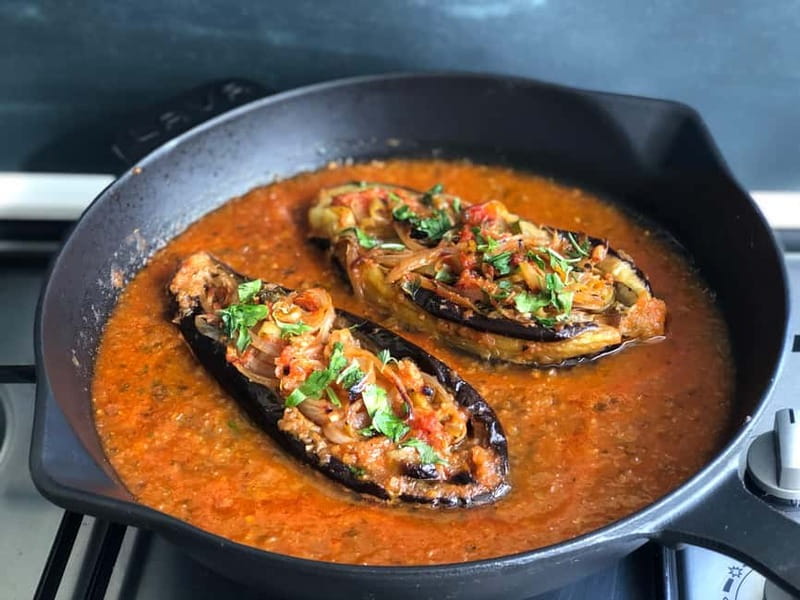
The class does more than teach two recipes. You prepare a complete four-course meal with a seasonal salad and a hearty main course alongside the börek and sarma. This makes the experience feel like a full introduction to a Turkish meal rather than a single cooking lesson.
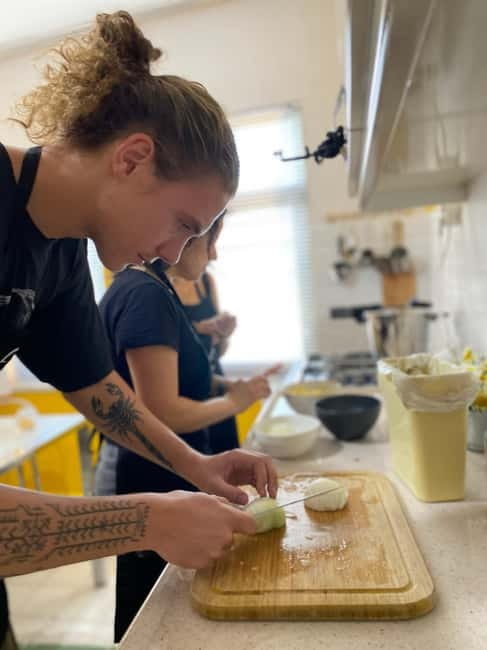
The salad may sound like the simplest course, but it helps show how a home meal is put together. Fresh ingredients are emphasized, and the group prepares the food together from the start. You get to see how the courses fit as a meal, not just how each recipe works on its own.
The main course changes with the time of year. That flexibility is worth noting before you book. You are signing up for Sinem’s seasonal choice, not selecting from a restaurant menu. For many people, that is part of the appeal. It keeps the class connected to local home cooking and prevents the meal from feeling like a fixed performance repeated without change.
Fresh ingredients are another important part of the experience. The food is not presented as a set of preassembled teaching samples. You work with the ingredients as a group and then eat what you helped make. That connection between preparation and meal gives the class its strongest sense of value.
Learning from a home cook, not a stage performer
Sinem’s role is central. She learned from her grandmother, and she shares the family side of cooking along with the practical steps. You are likely to hear stories about where recipes come from, who taught them, and why food brings people together.
That cultural conversation is included in the experience, and it is more than filler between recipes. It explains why a dish matters. A technique can be copied from a cookbook, but the story behind the dish gives you a better sense of how food functions inside a Turkish family.
English is the listed language for the class. Communication appears to work well for the activity, though one participant noted some language barriers while still feeling able to connect with Sinem and her husband. I would treat that as a realistic expectation rather than a warning. This is a social cooking class, so patience, gestures, and shared work are part of the experience.
The atmosphere is described as welcoming, with interesting conversation and plenty of laughter. That tone will suit you if you enjoy meeting local people and learning through informal contact. If you prefer a highly structured lesson with exact culinary terminology and constant technical instruction, you may find the home setting more relaxed than expected.
Same place, a different thing to cook:
- Bodrum: Market Visit and Cooking Class
★ 4.9 · 41 reviews - Authentic Turkish Cooking at a Local’s Home in Istanbul
★ 4.9 · 24 reviews - Cooking Class in Authentic Etrim Village
★ 4.5 · 23 reviews - Istanbul: Turkish Cooking Class with a Professional Chef
★ 4.8 · 23 reviews
Sitting down to eat what you made
After the cooking, you share the meal with Sinem and the other participants. This final stage is important because it turns the class into a complete social occasion. You can taste the results while the recipes and techniques are still fresh in your mind.
The four-course meal includes the dishes prepared during the class. Instead of eating a sample made before you arrived, you share the fruits of your work. That gives you a useful sense of how the different preparations come together at the table.
I also like the way the meal creates time for more conversation. Cooking can feel rushed when the class ends as soon as the last pan leaves the stove. Here, the meal provides a natural pause to talk, compare results, and ask about Turkish food and family traditions.
The strongest praise centers on both the food and the company. The dishes are described as delicious, and Sinem is praised as a good teacher. The combination matters. A cooking class can have excellent recipes but poor teaching, or friendly hosts but disappointing food. This one has earned five out of five from five verified ratings, with repeated praise for the welcome, fresh ingredients, shared cooking, and recipes worth making at home.
What $94 gets you in Antalya
At $94 per person, this is not a cheap meal. You should judge the price as a small cultural activity plus dinner, not as a simple restaurant bill. The fee includes the hands-on class, Turkish tea, a four-course meal, and cultural conversation.
The value is strongest if you want personal contact and practical learning. You receive instruction from a local home cook, help prepare several dishes, eat the meal, and leave with recipes you can try again. The group limit of six also makes the price easier to understand. You are paying for a more personal format rather than a large class where you might stand at the back and watch.
It may be less appealing if your main goal is simply to eat Turkish food as cheaply as possible. Antalya has many ways to enjoy a meal without spending $94. This class makes more sense when you want the preparation, conversation, and home setting as part of the meal.
The price also includes something difficult to buy on your own: a structured invitation into a local home. You could eat börek and sarma elsewhere, but you would not get the same chance to learn how they are prepared and why they matter to the family cooking tradition.
The three-hour pace and group size
Three hours is a sensible length for this class. It gives enough time for introductions, preparation, cooking, the meal, and conversation without turning the activity into a full-day commitment.
The small group limit of six is one of the most useful details. Cooking space can become crowded quickly, especially when several people need to prepare food at once. A maximum of six should make it easier for you to see what Sinem is doing and take an active role.
The pace will likely feel social rather than hurried. The class begins with tea and introductions, then moves into the kitchen and ends at the table. You should plan around the full three hours, since the meal and conversation are part of the experience, not optional extras.
Starting times depend on availability. Since the meeting point is Sinem’s home and no pickup service is included in the stated details, you should confirm the start time and arrival instructions before you set your day around it.
Who will enjoy this cooking class most?
I would recommend this class to you if food is one of your favorite ways to understand a place. It suits people who enjoy small groups, informal conversation, and active participation. It is also a good fit for couples, solo visitors, and friends who want an evening or daytime activity with more personal contact than a standard sightseeing stop.
Families may enjoy it too, though the provided details do not specify a minimum age or child arrangements. If you are considering bringing children, ask before booking.
This class is especially useful for people who want recipes to take home. The dishes are practical enough to repeat, and one participant specifically looked forward to making them again. You do not need advanced cooking skills, since the activity is designed around learning from Sinem, but you should be comfortable working as part of a group.
You may want to choose another activity if you need a guaranteed menu, a professional restaurant kitchen, or instruction in a language other than English. The changing main course is part of the charm, but it means you do not know every dish in advance.
Simple booking flexibility
The booking terms are friendly to changing plans. You can cancel up to 24 hours before the activity for a full refund, and you can reserve now while paying later. That is useful when you are arranging several activities in Antalya and do not yet know exactly how your schedule will fall.
The class is offered in English, and the small group is limited to six participants. Check availability for the starting time, then confirm the home meeting details so you know where to go.
Should you book it?
Book this class if you want more than a meal. You will cook with Sinem, learn family-style recipes, drink Turkish tea, share stories, and sit down to a four-course meal in her home. The warm welcome, fresh ingredients, and chance to repeat the recipes at home give the experience real substance.
I would skip it only if you want a fixed menu, a low-cost dinner, or a formal culinary lesson with no language uncertainty. For everyone else, $94 is a fair price for a small, personal introduction to Turkish cooking and hospitality in Antalya.
FAQ
Where does the cooking class take place?
The class takes place at Sinem’s home in Antalya Province, Turkey.
How long does the experience last?
The cooking class lasts three hours.
How much does the class cost?
The price is $94 per person.
What food will I prepare?
The meal includes börek, stuffed grape leaves called sarma, a seasonal salad, and a hearty main course that changes with the time of year.
Is a meal included?
Yes. You prepare and share a four-course meal with your host and the other participants.
Is Turkish tea included?
Yes. Turkish tea is included and is served during the welcome and introductions.
What language is the class taught in?
The listed language is English.
How many people can join?
The class is a small-group activity limited to six participants.
Who teaches the class?
The class is taught by Sinem, a local home cook who learned her cooking from her grandmother.
Can I cancel for a full refund?
Yes. You can cancel up to 24 hours in advance for a full refund.
Can I reserve now and pay later?
Yes. The activity allows you to reserve your spot and pay later.
Just added around Turkey
- Bodrum Cooking Class★ 5.0 · 3 reviews
- Bodrum Cooking Class with Local Couple★ 5.0 · 6 reviews
- Farmers Market visit & Turkish Cooking Class★ 5.0 · 60 reviews
- Cooking Class in Authentic Etrim Village★ 4.5 · 23 reviews
- Turkish Cuisine Cooking Class at Local Home with Family★ 5.0 · 9 reviews
- Istanbul: Traditional Cooking Class with a Local Mom★ 5.0 · 2 reviews
- Istanbul: Vegan/Vegetarian Cooking Class with Locals at Home★ 5.0 · 8 reviews
- Istanbul: Turkish Baklava Cooking Class with a Local Host★ 5.0 · 3 reviews
Cooking Classes, compared.

Half-Day Thai Cooking Class at Organic Farm in Chiang Mai
Read our review →

3 in 1 Cooking Class near Navona: Fettuccine, Ravioli & Tiramisu
Read our review →
Pasta & Tiramisu Cooking Class with Unlimited Wine
Read our review →
Hanoi Cooking Class: Culture, Local Market & Meaning CSR Impact
Read our review →
5 Traditional Dishes Hanoi Cooking Class with Market Trip
Read our review →
Cooking Class and Lunch at a Tuscan Farmhouse with Local Market Tour from Florence
Read our review →
Cooking Class, Market & Thai Herbs Garden Tour
Read our review →Lists this class appears in