REVIEW · VALENCIAN COMMUNITY, SPAIN
Real Paella Cooking Class – Market Visit & Sangría Workshop
Paella tastes better when you make it. This 3.5-hour class from My First Paella combines a local market visit, hands-on cooking, and a long communal meal for $77 per person. I like the visit to Ruzafa Market, where residents do their daily shopping, and the clear focus on socarrat, the prized crisp rice layer at the bottom of the pan.
The warm, social teaching style is another strong point. Guides such as Anna, José, Guillermo, and Cristina are repeatedly praised for making newcomers feel part of a family meal. The main consideration is group size: some sessions are small, while others are larger than expected. That can mean less individual attention, though it also creates a lively table and easy conversation.
Key points at a glance
- Ruzafa instead of Central Market: You visit a neighborhood market where Valencians shop for everyday ingredients.
- Socarrat gets proper attention: The chefs explain how to create the golden, crunchy rice crust without burning the paella.
- Two paella paths: You prepare either Valencian meat and vegetable paella or seafood paella with salmorreta sofrito.
- A full food-and-drink experience: Tapas, sangria, beer, wine, salad, fruit, cake, coffee, and mistela are included.
- Friendly, active teaching: You help prepare the dish instead of sitting through a cooking demonstration.
- Good flexibility: You can cancel up to 24 hours before the activity, and reserve now while paying later.
Meeting at San Valero Church in Ruzafa
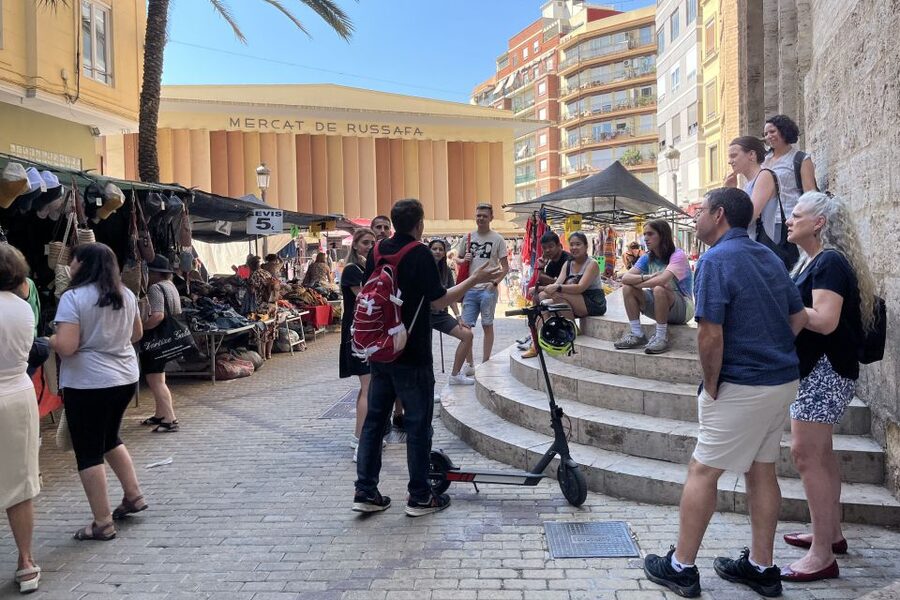
Your starting point is the door of the Church of San Valero. That gives you a clear landmark in Ruzafa, one of Valencia’s best areas for seeing ordinary city life rather than only the major sights.
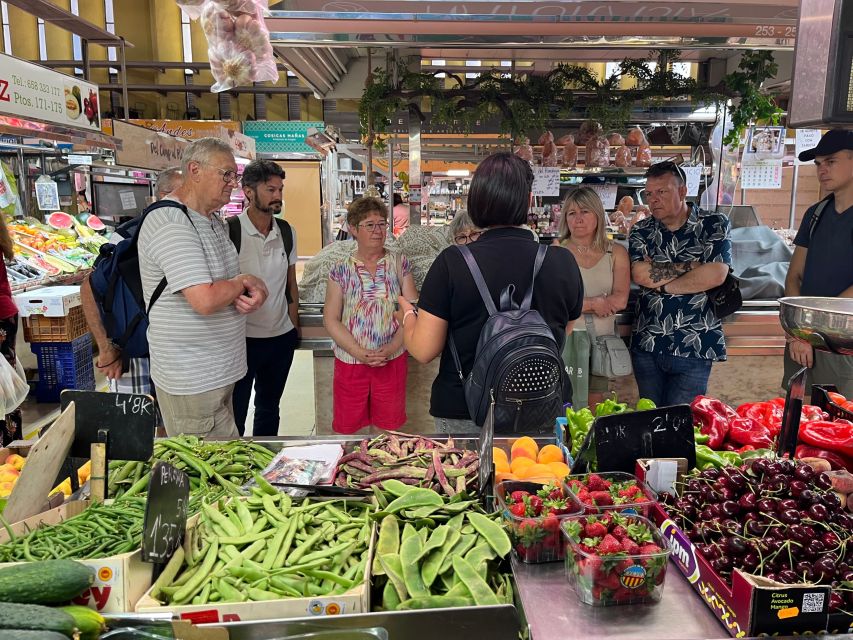
From there, the group heads to Ruzafa Market. This is not the grand Central Market experience, with its famous architecture and crowds of camera-carrying visitors. Ruzafa is presented as a working neighborhood market, where the point is to see ingredients in their everyday setting and select what you will use later.
That difference matters. A market stop can easily become a quick photo opportunity, but here it has a job to do. Your chef introduces the ingredients, explains what to look for, and connects the produce, meat, seafood, rice, and seasonings to the pan you will cook afterward.
The market visit is described as short, so do not book this expecting a full food tour or a long period of free shopping. Extra purchases are not included, and anything you buy for yourself is your responsibility. Still, this is a useful opening because it helps you understand that paella begins with shopping and local habits, not with a packet of seasoning from a supermarket.
More Cooking Classes with a Market Tour in Spain
- Barcelona: Paella Cooking Experience & Boqueria Market Tour
★ 4.8 · 3,661 reviews - Barcelona Paella Cooking Class with Market Visit, Tapas & Sangria
★ 5.0 · 2,531 reviews - Paella Cooking Class, Wine Tasting & Central Market in Valencia
★ 5.0 · 1,150 reviews
Why Ruzafa Market improves the class
I like this part because it gives the cooking lesson a sense of place. The class is not simply teaching a generic Spanish rice dish in a rented room. It connects the recipe to Valencia, where paella is part of local identity and family tradition.
You also get a chance to ask questions before the cooking begins. One of the most useful lessons is likely to be learning which ingredients belong in the selected style of paella and which do not. A review from Louise specifically appreciated learning that the meat and seafood versions are separate, rather than mixing both into one pan.
That point is worth noting. Outside Valencia, restaurants and home cooks often pile several kinds of meat and seafood into one dish and call it paella. This class takes a more traditional Valencian approach, offering either meat and vegetables or seafood, rather than treating every possible ingredient as fair game.
Tapas, sangria, and the class begins early
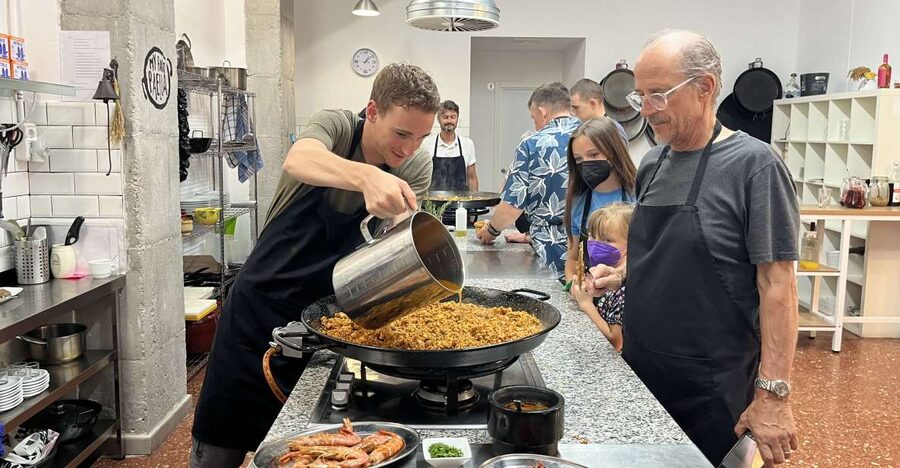
After the market, you walk a short distance to the cooking kitchen. The welcome is generous: manchego cheese, jamón, steamed mussels, patatas bravas, and olives are served before the main work starts.
This is more than a snack. It gives the group time to settle in, and it helps turn a group of strangers into a shared table. Patatas bravas were singled out as especially memorable in one account, while several people praised the quality of the jamón, cheese, and other small plates.
The drink service is a major part of the atmosphere. You learn how to make sangria and can drink sangria while preparing the meal. Beer, DO Valencia wine, and soft drinks are also included, and non-alcoholic choices are available.
That makes the class feel closer to a social Spanish lunch than a formal culinary lesson. It also means you should pace yourself. The sangria is described as plentiful, and wine, beer, and a later mistela are part of the experience. If you prefer to keep the focus on cooking, ask for soft drinks and take your time.
The sangria lesson is a useful extra because it gives you another recipe to take home. It is not the main subject, but it adds a practical skill and makes the opening hour more relaxed.
The hands-on paella lesson
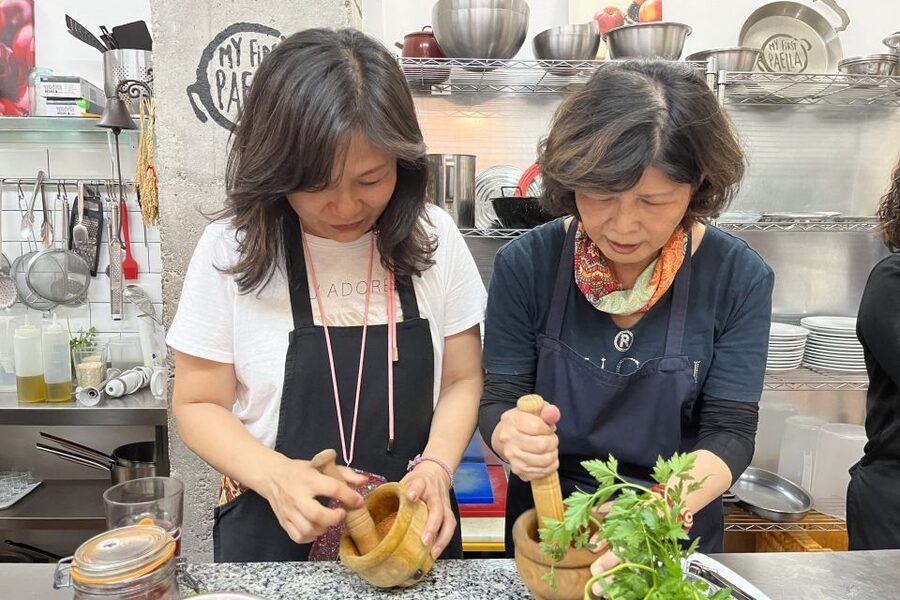
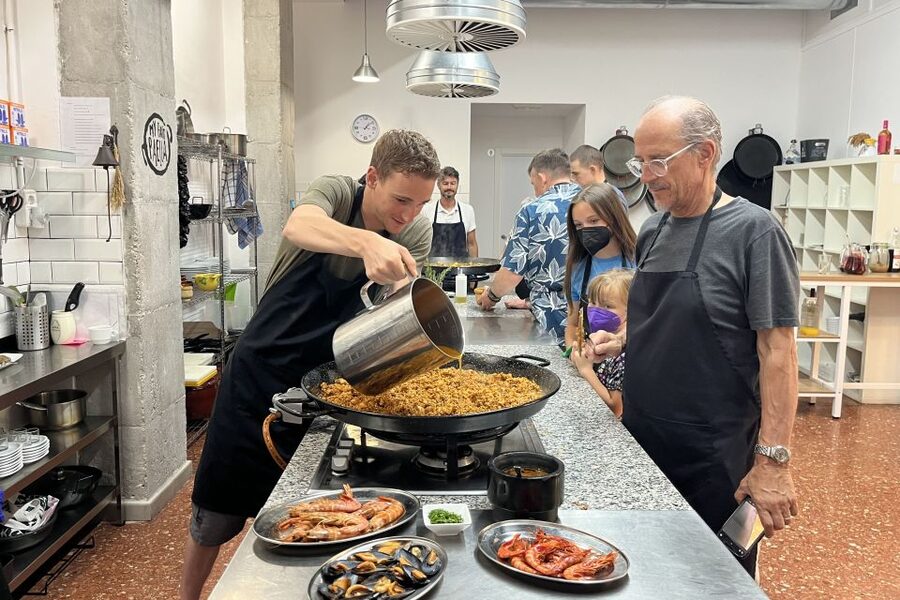
The central promise is simple: you cook the paella yourself with guidance from local chefs. This is not a demonstration where the instructor does all the work and you watch from a distance.
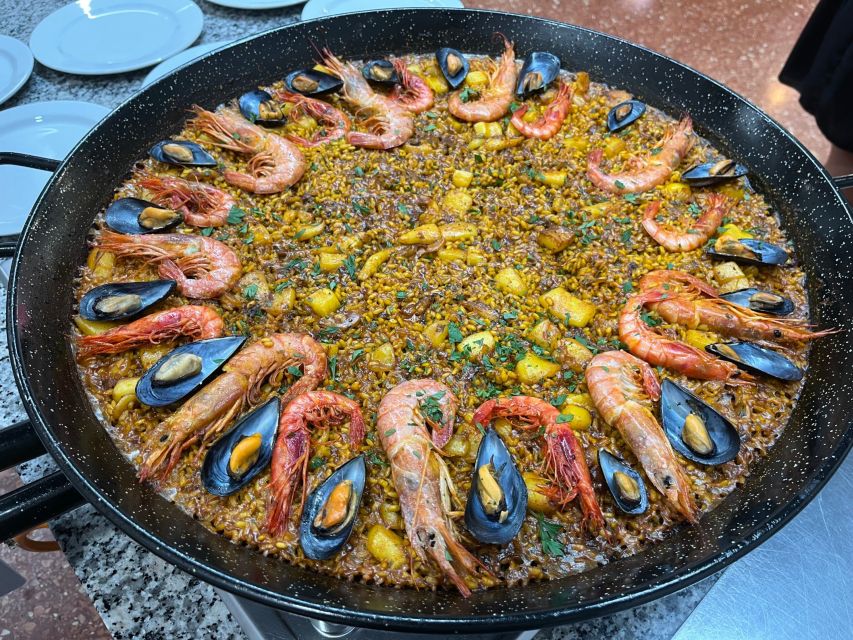
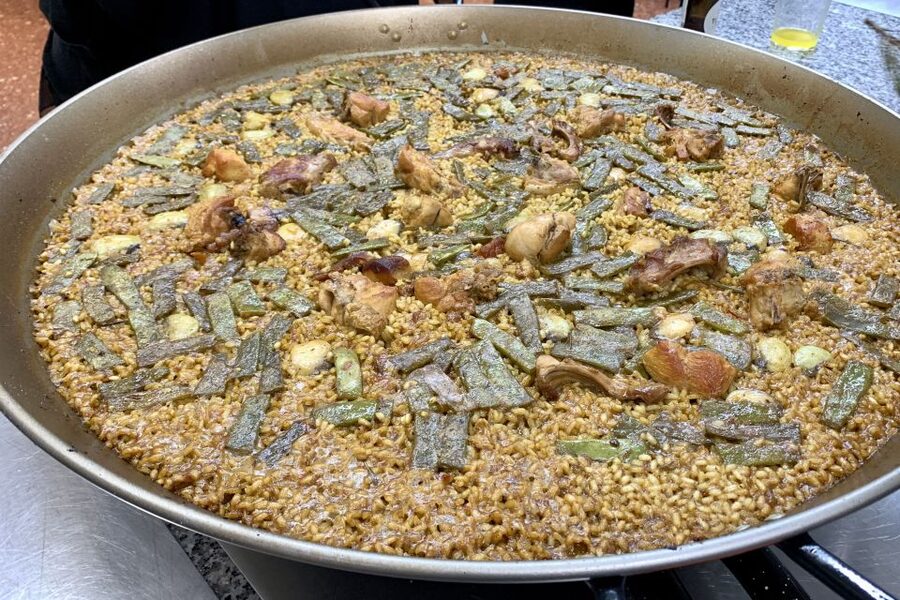
The class covers either Valencian paella with meat and vegetables or seafood paella. The seafood version uses a traditional salmorreta sofrito, an important flavor base that gives the dish more depth than simply adding stock and seafood to rice.
You learn why J. Sendra rice is used, how saffron affects the finished dish, and how to avoid overdoing it. Those details matter because paella is less forgiving than it looks. Too much liquid can leave the rice soft, too little can leave it hard, and heavy seasoning can cover the taste of the stock and ingredients.
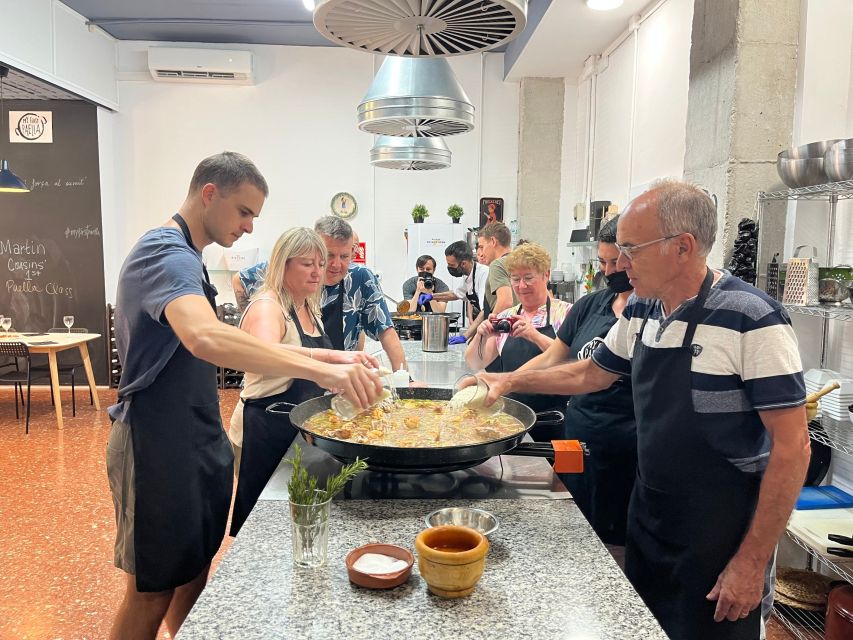
The chefs guide you through the process and correct your technique as you go. That hands-on correction is one of the best reasons to choose this class instead of merely ordering paella at a restaurant. You can see how the pan behaves, watch the rice absorb the liquid, and understand why the timing matters.
The group is divided into smaller cooking teams or stations in some sessions. That gives everyone a task, though your exact amount of individual work can depend on the size of the class. Smaller groups of six have been reported, while another session was larger than expected. The larger format may feel less intimate, but it also creates a cheerful, communal mood.
More Paella and Spanish Classes in Spain:
- Barcelona Interactive Spanish Cooking Experience
★ 4.5 · 2,155 reviews - Spanish Cooking Class Paella Tapas and Sangria in Madrid
★ 5.0 · 1,340 reviews - Paella Cooking Class in Madrid with Bottomless Wine Pairing
★ 5.0 · 985 reviews - Seville: Spanish Cooking Class with Dinner
★ 4.9 · 900 reviews
The real lesson is the socarrat
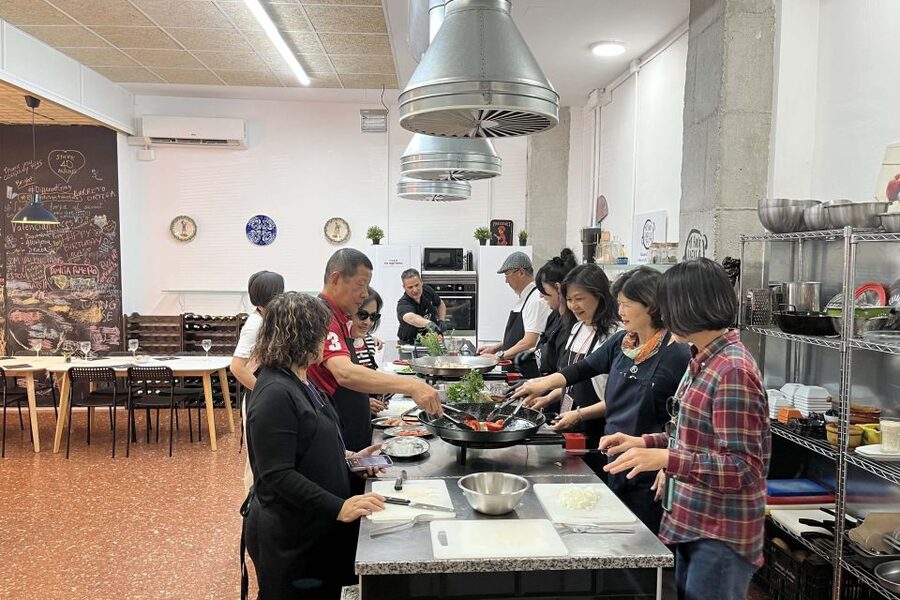
The most distinctive technical point is socarrat. This is the crisp, browned rice layer that forms on the bottom of the pan, and many Valencians consider it the best part of the dish.
A good socarrat is not simply burnt rice. The chefs explain how to bring the pan to the right stage at the end of cooking so the bottom develops color and crunch without turning bitter. This is the sort of detail that is hard to learn from a written recipe alone.
I would pay close attention here and take notes. The recipe is designed to be used at home, but the socarrat technique may need practice because household burners, pan sizes, and heat levels vary. Still, understanding what you are trying to achieve is a valuable first step.
The class also helps correct a common mistake: stirring paella too much. The experience emphasizes the traditional method, where the rice is allowed to cook in place rather than treated like risotto. That practical difference may be one of the most useful things you take home.
Sitting down to eat what you made
When the paella is ready, the group sits down together for the main meal. The food is served with Valencian tomato salad, seasonal fruit, coca de llanda, coffee, and mistela.
Coca de llanda is a traditional Valencian sponge cake. Mistela, served at the end, is a sweet local drink that gives the meal a distinctly regional finish. This is not a quick taste and goodbye. The meal is designed to feel like a shared family lunch, with the group eating the result of its own work.
That format is especially good for solo visitors and couples who want a social activity. Several people describe meeting fellow participants from around the world and leaving with new contacts. Families also seem well served, with children included in the preparation during at least one session.
The meal is a strong value point. At $77, you are paying for a guided market visit, a chef-led class, all cooking ingredients, a full selection of tapas, multiple drink options, the paella itself, dessert, coffee, and mistela. Comparable cooking classes may charge less if they provide only instruction and a tasting, but this package covers an entire afternoon of food and drink.
The teaching style and group atmosphere
The guides are central to the experience. Anna is praised for being funny, warm, and clear, while José is described as caring, entertaining, and good at explaining the process. Guillermo and Cristina also receive strong praise for creating a friendly group atmosphere.
The tone is informal rather than academic. You can expect jokes, conversation, encouragement, and plenty of interaction. That works well if you want a relaxed Spanish food experience, not a strict professional cooking course.
The strongest praise centers on hospitality. People repeatedly describe the atmosphere as a family meal, with the staff making sure everyone takes part. That is important because cooking classes can sometimes leave less confident participants standing at the edge of the counter. Here, the stated aim is to include the full group.
Still, you should keep the group-size point in mind. A bigger class can mean more energy and more people to meet, but less time for detailed one-to-one instruction. If you want a quiet lesson focused on advanced technique, this may feel too social. If you want to cook, eat, drink, and talk with other people, the format should suit you well.
What the $77 price really covers
The price is fair because the activity combines several paid experiences in one. You are not just buying a cooking lesson. You get:
- A guided visit to Ruzafa Market
- All ingredients for the paella
- A chef-led workshop
- Tapas before cooking
- Sangria instruction and service
- Beer, wine, and soft drinks
- A full paella meal
- Salad, seasonal fruit, coca de llanda, coffee, and mistela
The included food is substantial enough to replace a major meal. The alcohol also adds value, though it may be less important to you if you do not drink. In that case, the cooking instruction, market stop, and meal still carry the experience.
The main thing not covered is anything you personally buy at the market. That is a minor extra cost and easy to control.
Free cancellation is available up to 24 hours before the activity, and you can reserve while paying later. Starting times vary, so you need to check availability for your date. The tour is conducted in English.
Who should book this experience?
I would choose this class if you want to do more than eat paella in Valencia. It suits food lovers, first-time cooks, couples, families, solo visitors, and anyone who enjoys a social afternoon.
It is also a good choice for people who have already taken cooking classes in other cities and want a regional specialty rather than a broad introduction to Spanish food. The focus on rice, saffron, salmorreta, rice selection, and socarrat gives the class a clear subject.
The experience may be less suitable if you want a private class, a very small group, or a strict culinary curriculum. You should also be comfortable with a lively setting and repeated drink service. Soft drinks are included, but the class’s social character is closely tied to sangria, wine, beer, and the final mistela.
The 3.5-hour length is another advantage. It is long enough to include the market, instruction, cooking, and meal without taking an entire day. Plan to arrive hungry, but not so hungry that you skip the tapas while waiting for the rice.
Should you book the Real Paella Cooking Class?
Yes, if you want an active and friendly food experience rooted in Valencia. The best reasons to book are the Ruzafa Market visit, the chance to cook instead of watch, the clear focus on socarrat, and the generous meal and drinks.
I would not book it expecting a private chef lesson or a quiet market walk. Group size can change, and larger sessions may feel more like a party than a small workshop. But for most visitors, that shared energy is part of the appeal.
At $77, the experience offers strong value, especially if you enjoy the tapas, sangria, wine, dessert, and communal meal. You leave with a recipe you can use, a better understanding of Valencian paella, and hopefully the confidence to try that crisp bottom layer at home.
FAQ
Where does the paella class meet?
Meet your guide at the door of the Church of San Valero in Valencia.
How long does the experience last?
The activity lasts 3.5 hours.
What language is the class conducted in?
The live tour guide conducts the experience in English.
Which market do you visit?
You visit Ruzafa Market, a neighborhood market where locals shop for daily ingredients.
Which types of paella can I prepare?
You can prepare either Valencian meat and vegetable paella or seafood paella. The seafood version includes a traditional salmorreta sofrito.
Is the paella workshop hands-on?
Yes. You take part in preparing the paella with guidance from the chefs rather than only watching a demonstration.
What food and drinks are included?
The experience includes tapas, sangria, beer, DO Valencia wine, soft drinks, paella, salad, seasonal fruit, coca de llanda, coffee, and mistela.
Can I cancel the booking?
You can cancel up to 24 hours in advance for a full refund. You can also reserve now and pay later.
Just added around Spain
- Basque Pintxos and Tapas Cooking Class in Bilbao★ 5.0 · 73 reviews
- Paella and Burnt Basque Cheesecake Cooking Class (in Bilbao)★ 5.0 · 46 reviews
- Small-group Immersive Basque Cooking Class in Bilbao with Open Bar★ 5.0 · 65 reviews
- Pintxos and Tapas Cooking Class in Bilbao★ 5.0 · 38 reviews
- Rooftop Paella Seafood Cooking Class Experience in Barcelona★ 5.0 · 59 reviews
- Private Authentic Paella Cooking Class in Barcelona with Josh★ 5.0 · 3 reviews
- Private Barcelona Market Tour & Paella Cooking Class with Josh★ 5.0 · 4 reviews
- Premium Paella & Tapas Feast: Unlimited Wine & Rambla Views★ 5.0 · 13 reviews
Cooking Classes with a Market Tour, compared.
Hanoi Cooking Class: Culture, Local Market & Meaning CSR Impact
Read our review →
5 Traditional Dishes Hanoi Cooking Class with Market Trip
Read our review →
Cooking Class and Lunch at a Tuscan Farmhouse with Local Market Tour from Florence
Read our review →
Cooking Class, Market & Thai Herbs Garden Tour
Read our review →
Authentic Cooking Class with Market & Farm Visit
Read our review →
Paella Cooking Experience & Boqueria Market Tour
Read our review →
Cooking Class Hoi An:Local Market, Basket Boat, Fishing & Cooking
Read our review →