REVIEW · UBUD, INDONESIA
Balinese Cooking Class at Organic Farm
Fresh food tells Bali’s story. This five-hour class combines a walk through an organic farm with hands-on cooking, and I like the chance to pick ingredients before preparing them. I also like the traditional wood-fired stove and the small group size, which make this feel more personal than a standard cooking demonstration. The main consideration is location: pickup is offered from central Ubud, but the farm meeting point is outside town.
You’ll make six Balinese dishes, including tuna sate or sate lilit and corn fritters, then eat together in a quiet gubuk, or hut. Drinks are part of the experience too, from fresh juice and infused water to herbal drinks, Balinese coffee, and lemongrass tea. If you want a polished kitchen and restaurant-style lesson, this may feel rustic. If you want food tied to farms, family cooking, and local community life, it is a strong choice.
Key points to know before booking
- Harvest first, cook second: You pick herbs, fruit, and vegetables from the farm before using them in lunch.
- Traditional fire cooking: Several dishes are prepared with an outdoor grill and wood-fired stove.
- Small hands-on class: The advertised group is capped at eight, with a maximum of 10 listed elsewhere.
- More than a food lesson: You learn about organic farming and Bali’s UNESCO-protected subak irrigation system.
- Good value at $40: The price covers roughly five hours, drinks, the farm visit, cooking, lunch, and central Ubud transfers.
- A community-focused stop: Your booking supports farmers and villagers in Pejeng through Mai Organic Farm.
Why this farm class works better than a kitchen-only lesson
Many cooking classes begin with a chopping board and end with a plate of food. This one begins earlier, with the soil and the plants. That matters because Balinese cooking depends heavily on fresh herbs, spices, vegetables, and careful preparation. You get to see where part of the meal begins before you turn it into lunch.
I like that the farm visit is not just a short photo stop. The class explains how the community grows its organic produce and how Mai Organic Farm supports local farmers from Pejeng. You are not simply buying a meal. You are helping fund a small local operation that aims to improve farmer and villager incomes.
The setting also changes the mood. Instead of spending five hours indoors, you move through the farm, return to the cooking area, and finish in a gubuk. The pace sounds social and relaxed, with enough structure to keep the morning moving without turning it into a rushed kitchen exam.
More Farm Cooking Classes in Indonesia
- Balinese Farm Cooking Class by Pemulan Bali
★ 5.0 · 410 reviews - From Ubud: Authentic Bali Farm Cooking School & Organic Farm
★ 5.0 · 122 reviews - Small-Group Farm Tour & Balinese Cooking Class in Ubud with Kadek
★ 5.0 · 16 reviews
Starting with a welcome drink at Mai Organic Farm
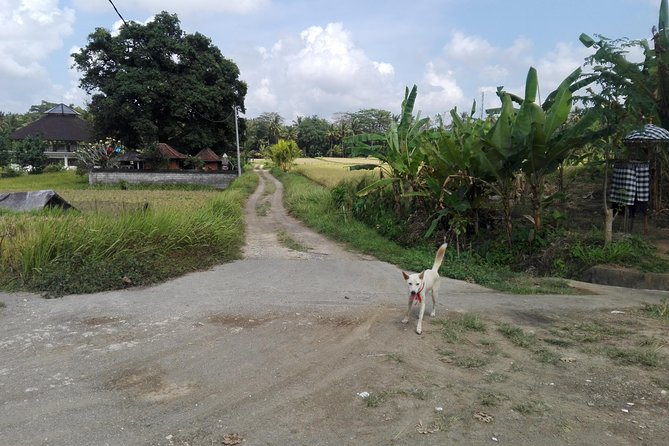
The class begins at Mai Organic Farm in Pejeng, outside Ubud. The listed meeting point is Subak Kana, Banjar Panglan, in the Gianyar area. If you stay in central Ubud, round-trip pickup is offered from hotels and rentals, which removes much of the stress of finding a rural address.
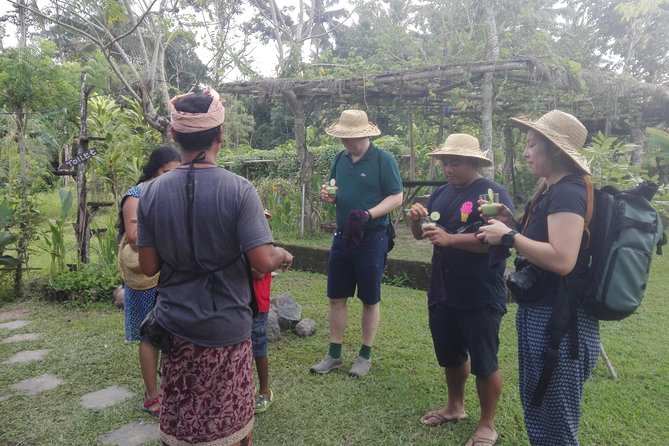
At the farm, you receive a welcome drink while sitting in a shaded area. This gives the teaching team time to explain the community movement and the way the farm grows its produce. Fresh coconut is also part of the welcome described by visitors, so you may begin with coconut water before the farm walk.
That opening is useful for two reasons. First, you get a gentle start after the drive. Second, you hear the purpose behind the farm before you begin picking ingredients. I prefer this kind of introduction to a quick greeting followed by an immediate cooking lesson because it gives the food a local setting.
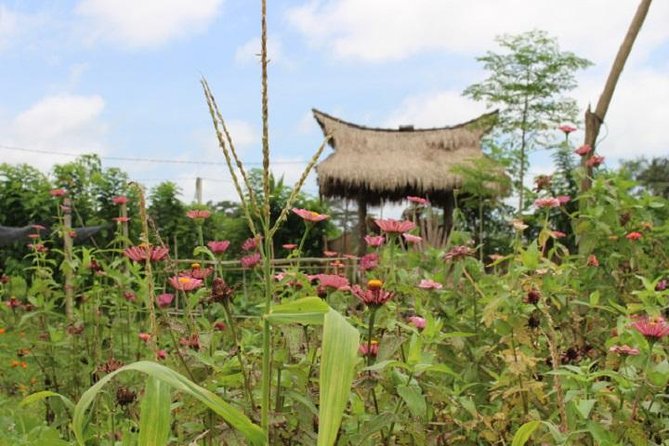
The farm is not presented as a formal botanical attraction. You should expect a working community farm, not a manicured garden with signs beside every plant. That may be part of its appeal, but it also means the experience is best for people who enjoy a simple, outdoor setting.
Picking ingredients and learning about Bali’s subak system
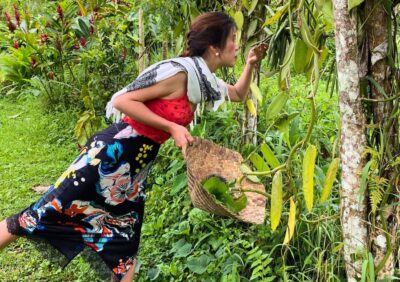
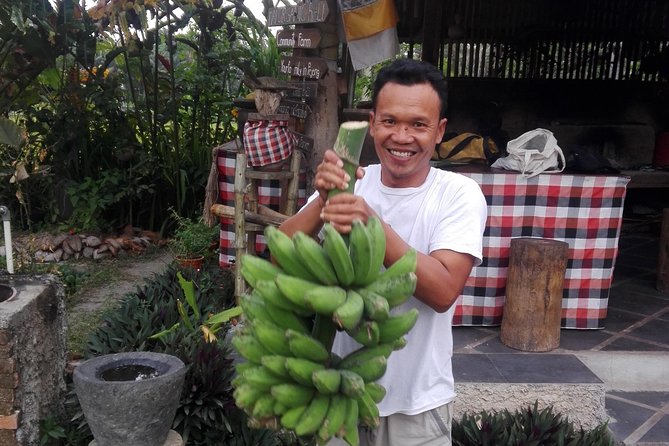
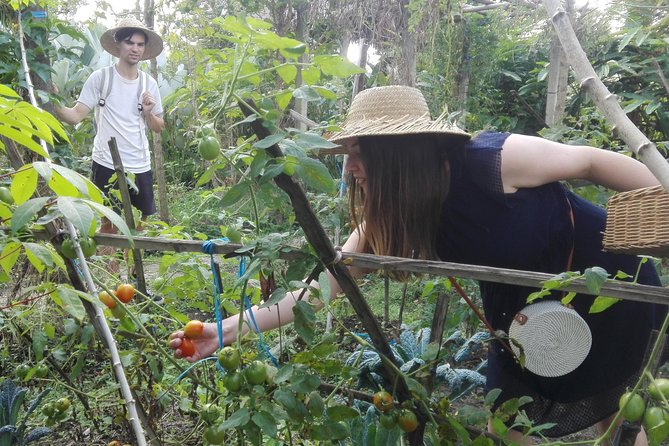
The farm walk is one of the strongest parts of the experience. You pick some of the ingredients that will later go into the meal, including herbs, fruit, and vegetables. You might also taste fruit directly from the plant and smell spices in the garden, depending on what is growing that day.
This creates a clear link between the farm and the cooking class. When you later prepare a sauce or fritter, you know that at least some of the produce came from the ground you just walked across. Children can take part in this stage too. Families with children aged six, nine, 12, and 13 have found the harvesting and cooking engaging, which suggests the class can work well across age groups.
The guide also explains Bali’s subak system, the traditional cooperative approach to irrigation that is recognized by UNESCO. This is more than a technical detail. Subak connects farming, village cooperation, water management, and religious life, so it helps explain why agriculture remains such an important part of Balinese culture.
The farm walk does require some outdoor movement and attention to footing. The information provided does not specify exact accessibility arrangements, so I would contact the operator before booking if you need step-free access or have difficulty walking on farm paths.
Six Balinese dishes prepared by the group
After harvesting, you move to the Mai Organic Farm cooking center. The class prepares six Balinese dishes, with examples including tuna sate, sate lilit, and corn fritters. Sate lilit is especially interesting because the seasoned mixture is formed around a skewer rather than simply threaded onto it, giving you a different take on the familiar Indonesian kebab.
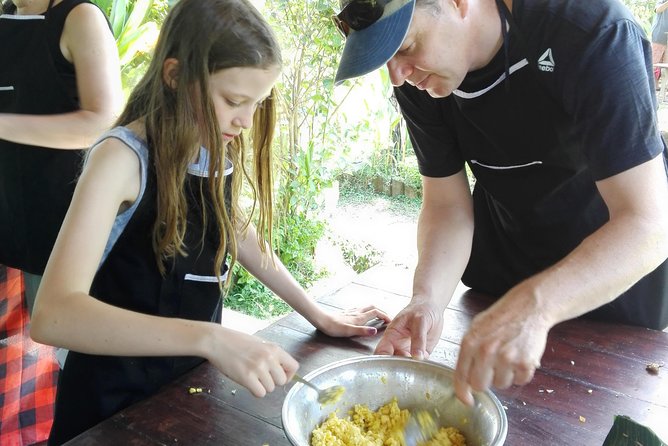
You can take part as much or as little as you like. That flexibility is important in a group class. Confident home cooks can get involved with shaping, mixing, seasoning, and cooking, while beginners can watch first and step in when ready. The shared format also lets families and friends work side by side instead of sitting through a long demonstration.
The cooking uses an outdoor grill and a traditional wood-fired stove. This is a real strength if you care about how food is prepared, not just what appears on the plate. Fire cooking adds a practical lesson that a modern indoor kitchen cannot offer. It also means conditions may be rustic. Heat, smoke, and uneven timing are part of the setting, so do not expect the precision of a professional culinary school.
The class is designed as communal cooking. You help produce a meal that the whole group will eat together, rather than making one small dish and leaving. That shared effort is where the social side becomes most valuable. You can arrive as a couple, family, or solo participant and still have a natural reason to work with the people around you.
One instructor identified in visitor accounts is Korong, described as cheerful and full of useful information. If Korong is leading your class, expect plenty of energy and laughter alongside the cooking instruction. Kadek is also associated with the team and is noted for asking participants how the class could improve, a good sign for an operator that pays attention to the details of its program.
More Farm Cooking Classes in Ubud
- Ubud: Organic Farm Harvest, Bali Cooking Class by Pemulan
★ 4.8 · 12 reviews - Bali: Cooking Class with Monkey Forest and Art Village Tour
★ 5.0 · 2 reviews
Drinks that make the meal feel complete
The food is only part of the tasting. The class includes a vegetable and fruit juice made with produce from local farms, as well as infused water and herbal drinks. Balinese coffee and lemongrass tea are also included.
I appreciate this range because it lets you taste the farm in several forms. The fresh juice offers a quick, cool drink after the farm walk. Coffee and tea give the meal a more familiar ending, while the herbal drinks add another look at local ingredients.
The exact drinks may vary with the day and available produce. The experience description lists the full range, but it does not promise a fixed drink sequence or particular juice recipe. If you have dietary restrictions, ask ahead about the ingredients.
The class also makes a point of reducing plastic use. One French-language account specifically praises the experience for avoiding plastic from beginning to end. That is a small detail, but it fits the farm’s wider focus on local produce and practical environmental care.
Eating lunch in the gubuk
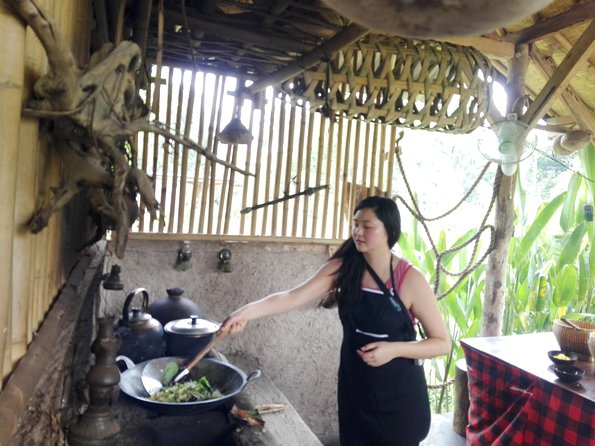
The final meal is served in a tranquil gubuk, a traditional hut-like shelter. This is a pleasant finish because you can sit down after the farm walk and cooking without being rushed out for the next scheduled attraction.
The food is made by the group, so lunch carries a different satisfaction from a restaurant meal. You have harvested some ingredients, handled the preparation, and cooked over fire. The meal becomes a record of the morning’s work.
The setting is also suited to conversation. You eat with new people from the class, and the team remains part of the experience rather than disappearing after the last dish. Families can share the meal together, while couples and solo participants have room to talk with others.
Do keep your expectations grounded. This is a community farm lunch, not a tasting menu with polished plating. Its value comes from freshness, participation, and context. The food can be excellent, but the lesson is the full package.
What $40 buys you in practical terms
At $40 per person, the price is fair for a five-hour experience that combines several separate activities. You are paying for a farm visit, ingredient harvesting, cultural explanation, six-dish cooking class, drinks, lunch, and round-trip transfers from central Ubud hotels or rentals.
That is better value than a short cooking lesson that only covers one or two recipes. It also saves you the cost and planning effort of arranging transport to the farm. For a family, the total cost still adds up, but the broad age range that has enjoyed the class makes it more useful than an adults-only food workshop.
The group size is described as capped at eight, while the additional information gives a maximum of 10. I would expect a small class, but I would confirm the number when booking if personal instruction is your main reason for going. A smaller group should give you more time at the stove and a better chance to ask questions.
The experience is booked, on average, 17 days ahead. That is a useful planning clue, especially if your Bali schedule is short. I would reserve before arriving rather than assume you can find a place at the last minute.
Confirmation is sent within 48 hours of booking, subject to availability. Pickup is offered, but the listed start and end point is Mai Organic Farm, so check the pickup details for your exact central Ubud address. The activity ends back at the meeting point.
Who will enjoy this most
I would recommend this class to you if food is one of your main ways of understanding a place. It is also a good match for families, couples, friends, and solo participants who like social activities.
You will get the most from it if you enjoy participating rather than only watching. The class lets you choose your level of involvement, but the best moments come from picking, chopping, seasoning, shaping, and cooking as part of the group.
It suits people who want a connection to rural Bali without giving up the convenience of a guided experience. You get transport from central Ubud, but the morning takes you away from the town’s cafes and shops and into a farming community.
I would be more cautious about booking if you want a sleek culinary school, a fixed restaurant menu, or a lesson focused on advanced cooking technique. The wood stove, farm paths, and communal kitchen are central to the experience. They are strengths for some people and drawbacks for others.
The weather also matters. The class requires good weather, and poor conditions can lead to a new date or a full refund. Free cancellation is available up to 24 hours before the start time. Changes or cancellations made within 24 hours are not accepted for a refund.
My verdict on the Mai Organic Farm cooking class
I would book this if you want a hands-on morning that connects Balinese food with farming and community life. The harvesting, wood-fire cooking, friendly teaching, and shared lunch receive the strongest praise, and those parts give the experience its character.
The class is not perfect for every cooking enthusiast. It is rustic, the group limit may vary between eight and 10 people, and the rural setting means you should be comfortable outdoors. But at $40, the combination of transport, drinks, food, cultural context, and five hours of activity makes it a strong value near Ubud.
If your Bali itinerary has room for only one food experience, this is a sensible pick for an authentic, social, family-friendly morning. Book ahead, confirm your pickup location, and arrive ready to do more than eat. The best part is helping turn a farm’s produce into lunch.
FAQ
How long does the Balinese cooking class last?
The experience lasts approximately five hours.
Where does the class take place?
It takes place at Mai Organic Farm in Pejeng, near Ubud, at Subak Kana, Banjar Panglan, Gianyar, Bali.
Is pickup available from Ubud?
Yes. Round-trip transfers are offered from central Ubud hotels and rentals.
How many dishes will I prepare?
You will prepare six Balinese dishes. Examples include tuna sate, sate lilit, and corn fritters.
What drinks are included?
The experience includes juice, infused water, herbal drinks, Balinese coffee, and lemongrass tea.
Is the class suitable for children?
Children have taken part successfully, including children aged six, nine, 12, and 13. The class allows participants to take part as much or as little as they wish.
Can I cancel for a full refund?
Yes. You can cancel at least 24 hours before the start time for a full refund. If poor weather causes the operator to cancel, you will be offered another date or a full refund.
More Balinese Cooking Classes in Ubud
- Ubud Cooking Class Bali with Balinese Chef
★ 5.0 · 1,609 reviews - PRIVATE Authentic Balinese Cooking Class in Ubud at Putu’s Home
★ 5.0 · 644 reviews - Balinese Ubud cooking school (9 Dish Cooking and Market Tour)
★ 5.0 · 540 reviews - Ubud: Balinese Cooking Class and Market Tour
★ 4.8 · 531 reviews
Just added around Ubud
- The Authentic Balinese Cooking Experience★ 5.0 · 4 reviews
- Ubud: Organic Farm Harvest, Bali Cooking Class by Pemulan★ 4.8 · 12 reviews
- packages cooking class and romantic dinner in a local home★ 5.0 · 4 reviews
- Jambangan bali cooking class with morning market tour★ 5.0 · 35 reviews
- Ubud: Balinese Cooking Class with Hotel Transfers★ 4.8 · 17 reviews
- Bali: Cooking Class with Monkey Forest and Art Village Tour★ 5.0 · 2 reviews
- Balinese cooking class/Go shopping at the market, cook, eat★ 5.0 · 12 reviews
- PRIVATE Ubud Market Tour & Balinese Cooking Class with Putu★ 5.0 · 125 reviews
Farm & Countryside Cooking Classes, compared.
Half-Day Thai Cooking Class at Organic Farm in Chiang Mai
Read our review →
Cooking Class and Lunch at a Tuscan Farmhouse with Local Market Tour from Florence
Read our review →
Authentic Cooking Class with Market & Farm Visit
Read our review →