
REVIEW · LIMA, PERU
#1 Rated Cooking Classes with Local Market Tour & Pickup
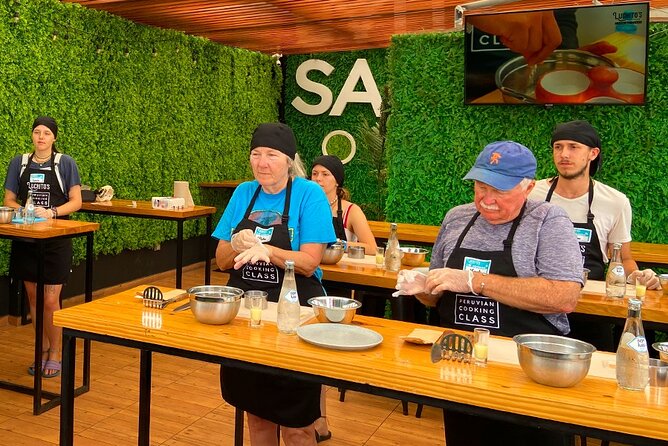
Come hungry and curious. This Lima experience pairs a guided visit to Surquillo Market with hands-on cooking, giving you both the ingredients and the finished dishes. I like the market-first format because you see unfamiliar fruits, herbs, meats, and cheeses before learning how they fit into Peruvian food. I also like the small maximum of 12 people, which should make it easier to ask questions and follow the chef.
The main point to check is the timing. The advertised duration is about one hour, yet the market visit, fruit tasting, cooking, meal, cocktail, and certificate sound like a fuller activity. Some descriptions also suggest an afternoon spent across the market and cooking school, so confirm the exact schedule when booking. Pickup and transportation are included, but the precise pickup details are not provided.
Key points at a glance
- Surquillo Market comes first: You tour Mercado Nro. 1 de Surquillo with a guide and learn about Peruvian produce at the place where it is sold.
- Causa and ceviche take center stage: These are the dishes most clearly linked to the class, with step-by-step instruction from the local chef.
- Fruit tasting adds real context: You may sample unfamiliar fruits, cheese, herbs, and other ingredients before cooking.
- A pisco cocktail is included: The class includes one cocktail, bottled water, a two-course meal, recipes, and a certificate.
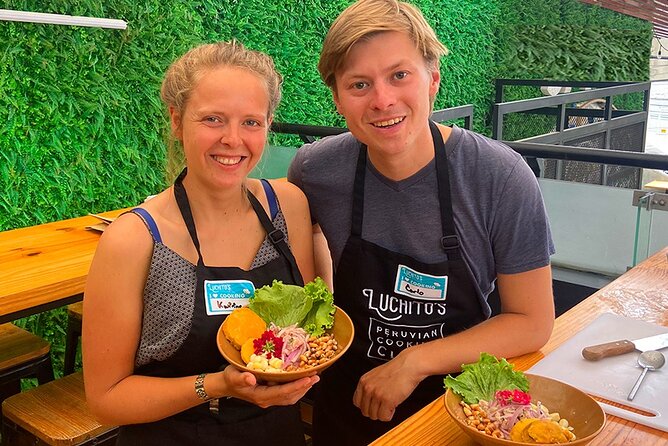
- Small groups make the class more personal: The maximum group size is 12, and some sessions have been especially intimate.
- Guides bring different strengths: Camila, Dasha, Lucho, and Jorge are all associated with especially warm, useful instruction.
Why the market visit makes the food easier to understand
Peruvian cooking makes more sense once you see the ingredients in their everyday setting. At Surquillo Market, you can expect a guided walk through Mercado Nro. 1 de Surquillo, a well-known Lima market with a wide range of fruits, vegetables, meats, herbs, and prepared foods.
This is not just a quick stop for a few ingredients. The useful part is the explanation. A good market guide can show you how much variety is packed into Peruvian cooking, especially if you are not familiar with the local produce. Dasha has been praised for explaining fruits clearly, while Camila has led market walks that included tastings of fruits and cheese.
I like this order of events. You see and taste an ingredient before it appears in a recipe, so the cooking class has a stronger connection to the city. Instead of treating Peruvian food as a list of restaurant dishes, you begin to understand the raw materials behind it.
The market also gives you a chance to ask practical questions. You can learn which fruits are sweet, sour, soft, or unfamiliar, and how herbs and other products are used. The provided information does not name every ingredient or guarantee a specific tasting list, so think of the market as an introduction rather than a fixed food sampling menu.
There is one practical consideration. Markets can be active places, and the experience is more about seeing, tasting, and learning than about quiet sightseeing. If you want a polished culinary studio from start to finish, the market portion may feel less tidy. If you want a direct look at local food culture, it is the part that gives the class its purpose.
More Cooking Classes with a Market Tour in Peru:
- Cusco: Peruvian Cooking Class, Cocktails & Local Market Tour
★ 4.9 · 512 reviews - Cooking class and market tour with a local chef
★ 5.0 · 186 reviews - Market Tour, Tasting of 35 Fruits, and 4-Course Peruvian Cooking Class in Lima
★ 5.0 · 86 reviews
Making causa and ceviche with a local chef
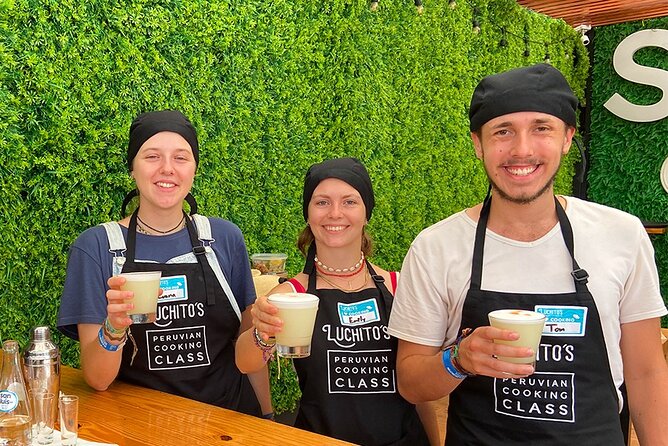
After the market, you move to the cooking class. The clearest dishes associated with the experience are causa and ceviche, two Peruvian favorites with very different methods and textures.
Causa is a potato-based dish that shows how a few carefully balanced ingredients can become something special. Ceviche is more immediate and lively, with fresh ingredients and a preparation style that rewards attention to timing, seasoning, and texture. Making both gives you a useful contrast: one dish is assembled with care, while the other depends on freshness and a confident hand.
The instruction is described as step by step. That matters if you are not an experienced cook. You are not simply handed a plate and told what went into it. You take part in making the food, then eat the two-course meal included with the class.
Camila is repeatedly associated with clear explanations and friendly instruction. Jorge is described as fun and welcoming, while Lucho is praised for explaining both Peruvian cuisine and the country’s history. Dasha has also led sessions that combined a market tour with cooking guidance and bartending.
The staff names matter because a cooking class depends heavily on the person leading it. The available information suggests that different guides and chefs may handle different parts of the experience. Camila may lead the market visit or the cooking lesson, Dasha may guide the market or teach the class, and Lucho or Jorge may be involved in other sessions. If you have a strong preference, ask ahead rather than assuming a particular person will be there.
Fruit tasting, pisco, and the social side of class
The class includes a pisco cocktail, bottled water, and a two-course meal. Fruit tasting is also part of the experience described by several participants, with market produce brought into the cooking-school setting for explanation and sampling.
This makes the class more than a demonstration. You get a chance to taste ingredients on their own, learn how they are used, and then sit down to eat food connected to the lesson. The cocktail adds a social touch, and one account specifically praised Dasha’s bartending skills.
Additional drinks are not included, so budget for them if you want anything beyond the supplied cocktail and water. Tips are also not included. The stated price is $66.75 per person, which is fair if you value the combination of transportation, a guided market visit, food tastings, a two-course meal, a cocktail, instruction, recipes, and a certificate.
The value depends on what you want from a cooking class. If you mainly want to eat ceviche, a restaurant meal will cost less and take less time. If you want to understand the ingredients, make the dishes yourself, and leave with recipes, this package offers more than lunch.
The certificate is a small extra rather than a reason to book by itself. The recipes are more useful. They give you a way to repeat the dishes at home, though the supplied details do not specify the exact recipe format or whether all market ingredients can be found easily outside Peru.
A small group with several possible guides
The maximum group size is 12 people. That is a sensible limit for a practical cooking class. With fewer people around the work area, you should have a better chance of seeing the preparation and getting help when you need it.
The available accounts include groups of five and sessions with only two people at the market. That suggests the actual atmosphere can vary. A small group may feel almost private, while a fuller class will be more social and may involve more waiting for shared instruction.
I like the fact that the experience has received a 5 rating from 70 published ratings, with 100 percent recommending it. More important than the numbers is the pattern in the feedback: the strongest praise goes to the staff, the market explanations, the fresh ingredients, the clear recipes, and the friendly mood.
Camila is described as genuine, personable, and clear. Dasha is praised for her positive energy, fruit knowledge, and cooking tips. Lucho receives strong marks for connecting food with Peruvian culture and history. Jorge is described as friendly and fun. These details suggest an experience led by people who enjoy working directly with guests.
Still, food classes are personal. One person may want lots of culinary detail, while another may mainly want an entertaining afternoon. The tone here leans social and welcoming rather than formal or chef-school strict. That is good for most visitors, but less suited to someone seeking advanced technique or professional kitchen training.
A few more cooking classes around Peru worth a look
- Miraflores: Amazing Peruvian Cooking Class Ceviche Seafood and Pisco Sour
★ 4.9 · 57 reviews - Cook with Maido’s creative chef and chef de cuisine
★ 5.0 · 53 reviews - Cusco: Peruvian Cooking Class & Market Tour
★ 4.9 · 19 reviews - Lima: Cooking Workshop and Water Circuit Tour
★ 5.0 · 16 reviews
What the one-hour duration really means
The listed duration is approximately one hour. That is short for a market tour, a cooking class, tastings, a meal, a cocktail, and a certificate. The descriptions of the activity suggest a broader sequence, and one account even describes spending all day with the guides.
You should clarify the schedule before you commit the rest of your day. Ask when transportation begins, how long the market walk lasts, how much time is spent cooking, and when the meal is served. This is especially important if you have a museum booking, airport transfer, or dinner reservation afterward.
The start time is 12:30 pm, so the experience is positioned as a midday or afternoon activity. That timing works well if you want lunch to be part of the class. It may be less convenient if you prefer an early morning market visit or have a full day of sightseeing planned.
Transportation is included, which can make the outing easier in Lima. The exact pickup arrangement is not supplied, so confirm where you will be collected and where the activity ends. The meeting information also says the experience is near public transportation, giving you another option if pickup details are not convenient.
Who will get the most from this Lima activity
I would choose this class if you want food to be your way into Lima. The market visit provides local context, and the cooking session turns that context into something you can taste and prepare.
It should suit:
- First-time visitors to Peru who want a friendly introduction to local ingredients.
- Couples and friends looking for an interactive midday activity.
- Families with older children who enjoy tasting and making food, provided everyone can take part comfortably.
- Home cooks who want recipes for causa and ceviche.
- People who prefer small groups over large demonstrations.
- Anyone who likes meeting local guides and hearing personal explanations of food and culture.
It may not be the best choice if you want a long, highly technical cooking course, a fixed chef-led menu with advanced methods, or a fully predictable one-hour schedule. The activity appears designed for participation, conversation, tasting, and cultural introduction.
Most people can participate, according to the supplied information. No special accessibility details are provided, so ask directly if you have mobility needs or other concerns about the market setting and cooking area.
Price, booking demand, and cancellation terms
At $66.75 per person, the cost covers quite a lot: transportation, professional market guidance, the class, a two-course meal, one pisco cocktail, bottled water, recipes, and a certificate. I see the best value in the combination of market access and hands-on cooking. Either part alone would offer less context.
The activity is often booked about 35 days ahead. That suggests you should reserve early if your Lima dates are fixed, particularly if you want a small group or a specific start day. Confirmation is provided when you book.
Free cancellation is available up to 24 hours before the start time for a full refund. Changes or cancellations made less than 24 hours before the start time are not accepted for a refund, and the cut-off follows local Lima time.
Should you book Luchito’s Peruvian Cooking Class?
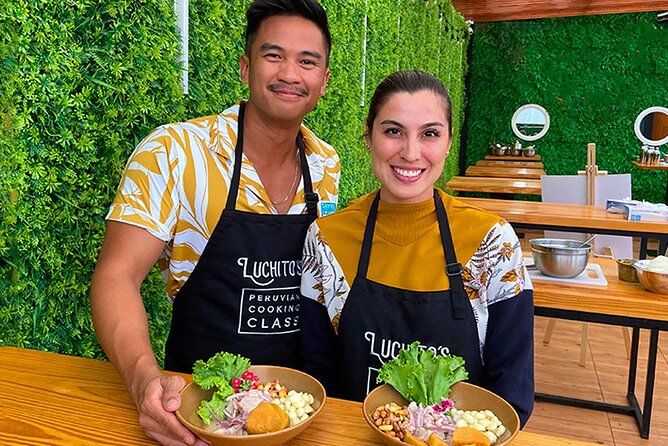
Book it if you want a friendly, food-focused introduction to Peru. The market tour gives the class a real sense of place, while causa and ceviche give you two memorable dishes to make and eat. The guides are the strongest part of the experience, with Camila, Dasha, Lucho, and Jorge each receiving praise for clear instruction, warmth, and cultural insight.
Before paying, confirm the actual duration and pickup details. The one-hour listing does not fully match the range of activities described, so you should know how much of your day to reserve.
If your priority is fresh food, personal instruction, and a look at Lima beyond restaurant tables, this is a good-value choice. If you want a serious chef-training session or a tightly timed activity, choose something more formal and ask detailed questions first.
FAQ
Where does the market visit take place?
The market stop is Mercado Nro. 1 de Surquillo in Lima.
What time does the experience start?
The stated start time is 12:30 pm.
How long does the activity last?
The listed duration is approximately one hour. Because the activity includes a market visit, cooking, food, and a cocktail, you should confirm the exact schedule before booking other plans.
What food do you make?
The experience includes preparation of causa and ceviche, with step-by-step guidance.
Is transportation included?
Yes. Transportation is included, although the supplied details do not specify the exact pickup location or route.
What is included in the price?
The price includes transportation, a professional guided market visit, a two-course meal, one pisco cocktail, bottled water, a certificate, and recipes.
Can I cancel for a full refund?
Yes. You can cancel at least 24 hours before the local start time for a full refund. Cancellations or changes made less than 24 hours before the start time are not accepted for a refund.
Just added around Peru
- Lima: Peruvian cooking class and tour of Surquillo market★ 5.0 · 2 reviews
- Lima: Market Tour and Cooking Class with Pisco Sour★ 5.0 · 3 reviews
- Lima: Cooking Workshop and Water Circuit Tour★ 5.0 · 16 reviews
- Lima: Market Tour, 35 Fruits Tasting & Cooking Class★ 5.0 · 3 reviews
- Lima: 4-Course Peruvian Cooking Class in Miraflores★ 5.0 · 4 reviews
- Lima : Cooking Class – A Peruvian Culinary exploration★ 5.0 · 2 reviews
- Lima: Demo Cooking Class with Lunch at Cala Restaurant★ 4.1 · 4 reviews
- Cusco: Peruvian Cooking Class★ 5.0 · 2 reviews
Cooking Classes with a Market Tour, compared.
Hanoi Cooking Class: Culture, Local Market & Meaning CSR Impact
Read our review →
5 Traditional Dishes Hanoi Cooking Class with Market Trip
Read our review →
Cooking Class and Lunch at a Tuscan Farmhouse with Local Market Tour from Florence
Read our review →
Cooking Class, Market & Thai Herbs Garden Tour
Read our review →
Authentic Cooking Class with Market & Farm Visit
Read our review →
Paella Cooking Experience & Boqueria Market Tour
Read our review →
Cooking Class Hoi An:Local Market, Basket Boat, Fishing & Cooking
Read our review →
Hoi An Cooking Class(Market,BasketBoat Crabfishing&Cooking Class)
Read our review →Lists this class appears in