
REVIEW · CUSCO REGION, PERU
Cusco: Peruvian Cooking Class, Cocktails & Local Market Tour
Come hungry, leave with recipes. This four-hour Cusco experience pairs a guided walk through San Pedro Market with a small-group cooking class in the historic center. I like the direct link between the market and the kitchen, since you see ingredients such as quinoa, potatoes, cacao, cheese, and local fruit before using Peruvian flavors at the table. I also like the relaxed teaching style, with chefs including Jesus, Jorge, and Eric praised for their clear explanations and good humor.
The main consideration is that this is not a serious chef-training course. Much of the work involves preparing and assembling ingredients rather than cooking every element from scratch. You also need to be comfortable in a group of up to 10 people, and the activity is offered in English only.
Key points at a glance
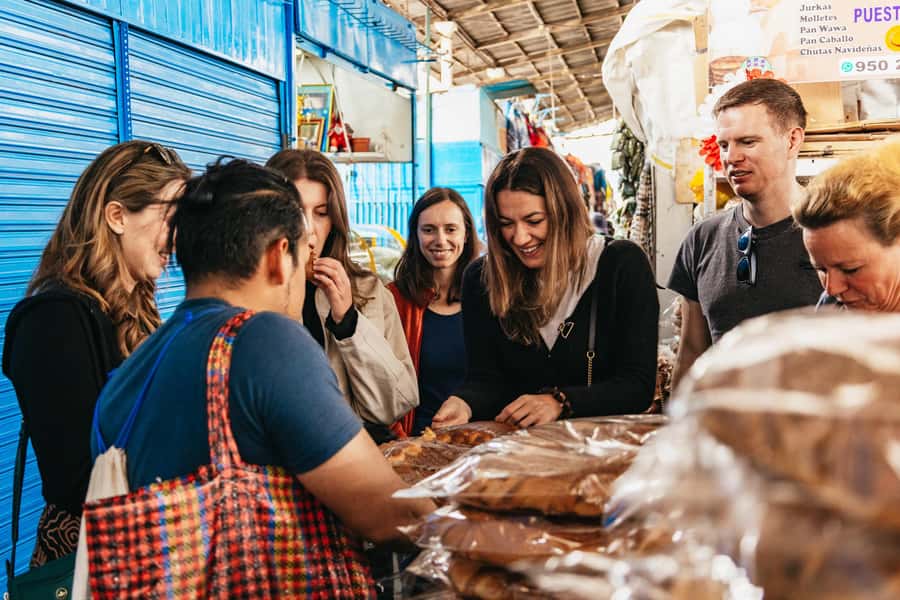
- San Pedro Market comes first: You explore one of Cusco’s oldest markets and see the produce, bread, cheese, chocolate, cacao, quinoa, and potatoes that shape local cooking.
- Two pisco cocktails are included: You make your own drinks during class, with non-alcoholic versions available.
- Three Peruvian dishes fill the main lesson: The menu includes cebiche, causa limeña, and a quinoa tamal.
- Picarones finish the meal: These Peruvian-style sweet fritters come with honey, with sugar-free and gluten-free choices available.
- Dietary needs receive real attention: Vegetarian, vegan, gluten-free, and non-alcoholic options are available, though you should state your needs clearly when booking and again at the start.
- The group stays small: With no more than 10 participants, you get a better chance to follow the chef and ask questions.
Starting at San Pedro Market
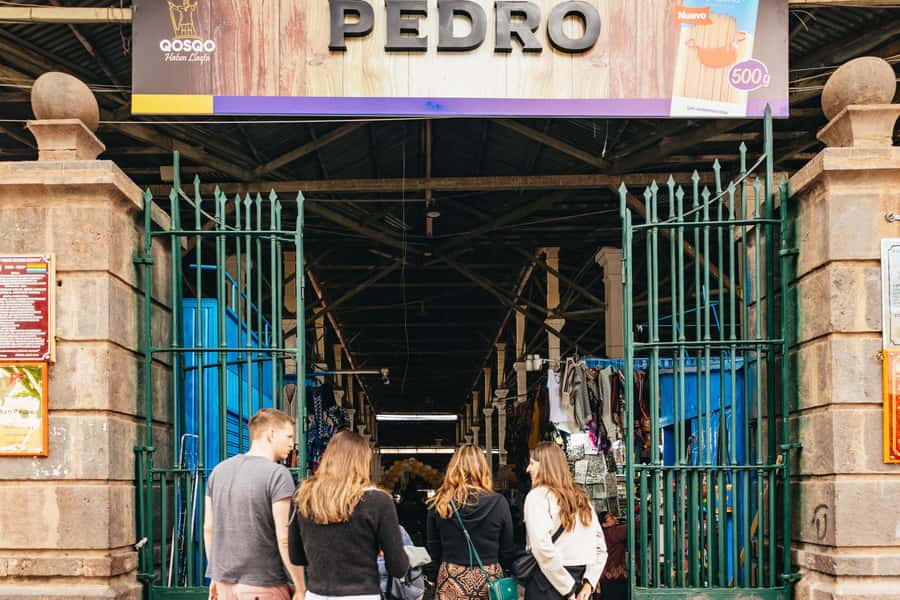
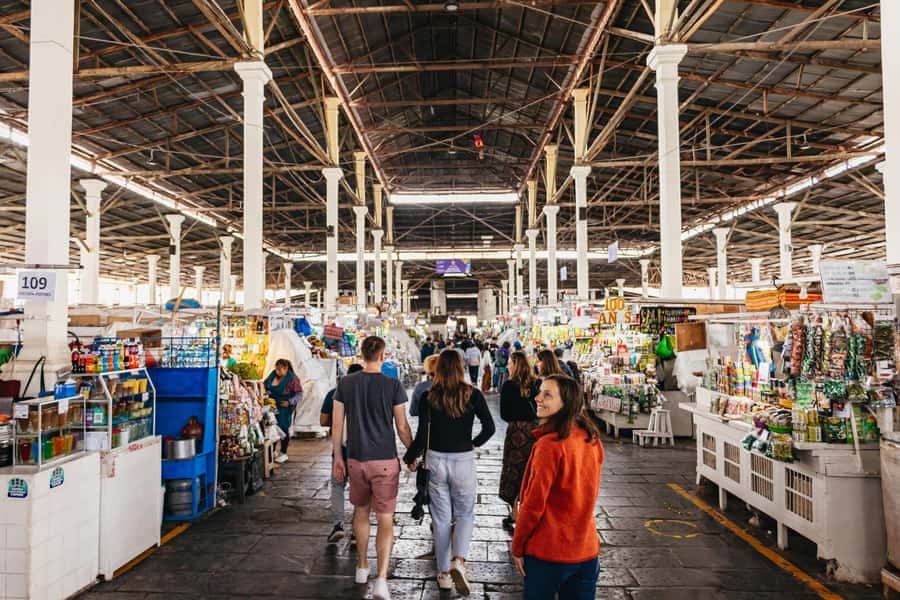
Meet at Door Number 1 of San Pedro Market. This is a practical starting point because the market gives you immediate context for the food you will prepare later.
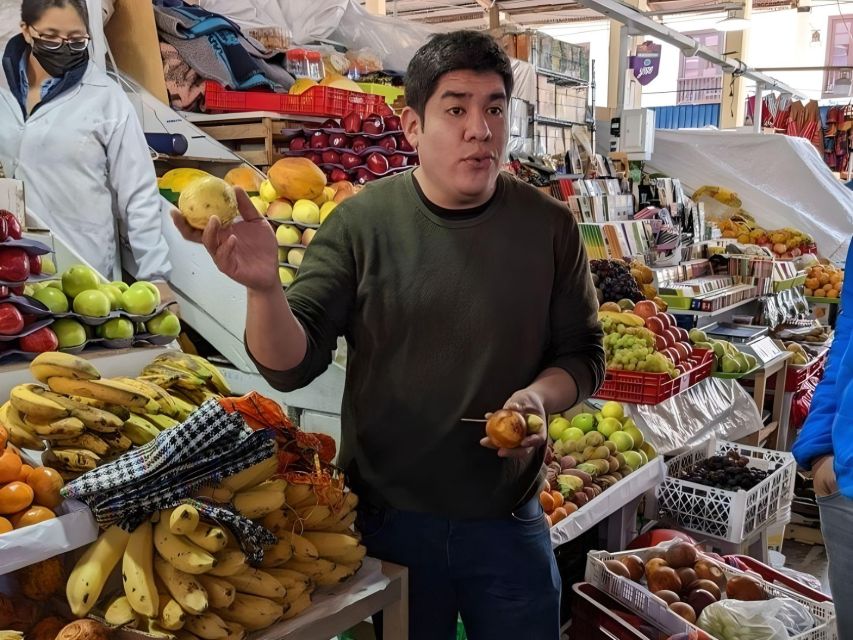
The tour takes you through sections featuring local cheese, bread, chocolate, cacao, coffee, fruit, potatoes, quinoa, and other Peruvian ingredients. You may also have chances to taste samples along the way. The market visit is not just a shopping stop. It helps you understand that Peruvian cooking is built around unusual varieties of potatoes, highland grains, sharp citrus, fresh herbs, seafood, and ingredients unfamiliar to many visitors.
The guide also buys ingredients used in the cooking class. That connection gives the afternoon a clear purpose. You are not simply looking at food stalls, then heading to an unrelated demonstration. The produce in the market becomes part of the meal you prepare.
San Pedro Market can be a lot to take in, especially if you have just arrived in Cusco. The sights, smells, and range of produce may feel intense, but that is part of the point. Wear comfortable shoes and clothes, since the experience includes walking through the market and then moving around a kitchen.
One useful detail is that the market portion can still work if San Pedro Market is closed for cleaning. In that situation, the guide has taken groups to a local food market instead, where ingredients were purchased for the class. The exact market route can therefore change, but the food-focused part of the experience remains intact.
More Cooking Classes with a Market Tour in Peru:
- Cooking class and market tour with a local chef
★ 5.0 · 186 reviews - Market Tour, Tasting of 35 Fruits, and 4-Course Peruvian Cooking Class in Lima
★ 5.0 · 86 reviews - #1 Rated Cooking Classes with Local Market Tour & Pickup
★ 5.0 · 69 reviews
A short walk to the cooking studio
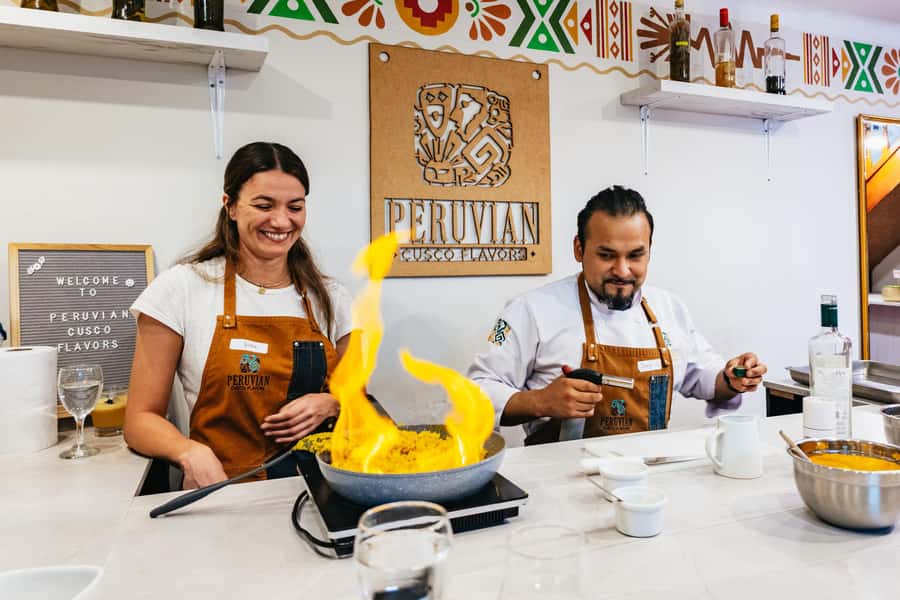
After the market, you walk a short distance to a cooking studio in Cusco’s historic center. The change from market stalls to a modern, clean kitchen gives the class a more organized feel.
You tie on an apron, settle into the work area, and meet the chef. The class is led by a professional chef, with Chef Jesus named in the experience details. Sessions have also been led by Jorge and Eric, so the individual guide may vary. If you particularly want to meet a certain chef, confirm that before booking rather than assuming the same person leads every departure.
The strongest part of the teaching is the cultural explanation. The chef does not simply tell you to chop, mix, or plate. You learn about the background of each dish and the influences that shaped Peruvian cuisine. This makes the class useful even if you are not especially interested in cooking technique.
The small group matters here. Ten people is large enough for a social meal but small enough that the chef can usually keep an eye on the work. Several people have enjoyed the easy atmosphere and the way cooking gave the group a quick reason to talk to one another.
Making the pisco cocktails
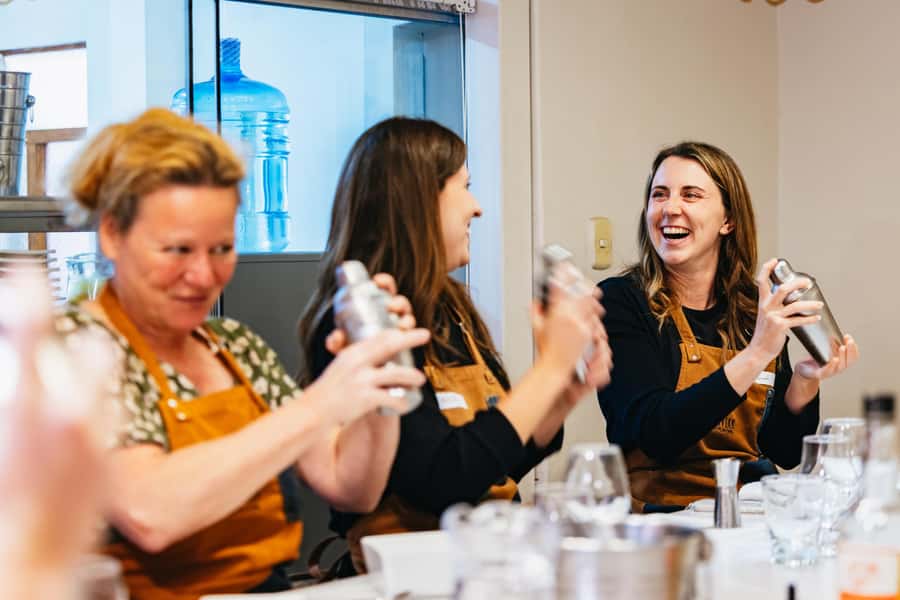
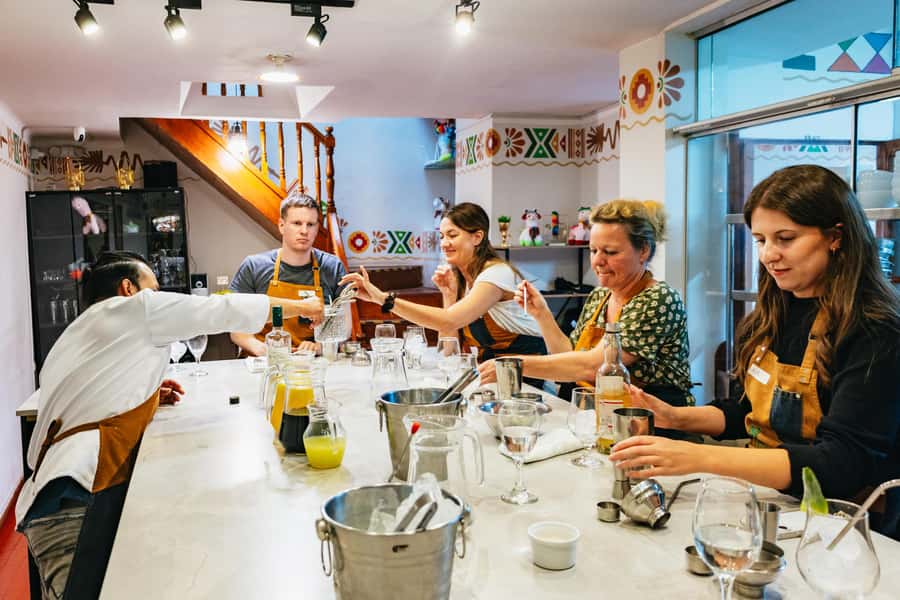
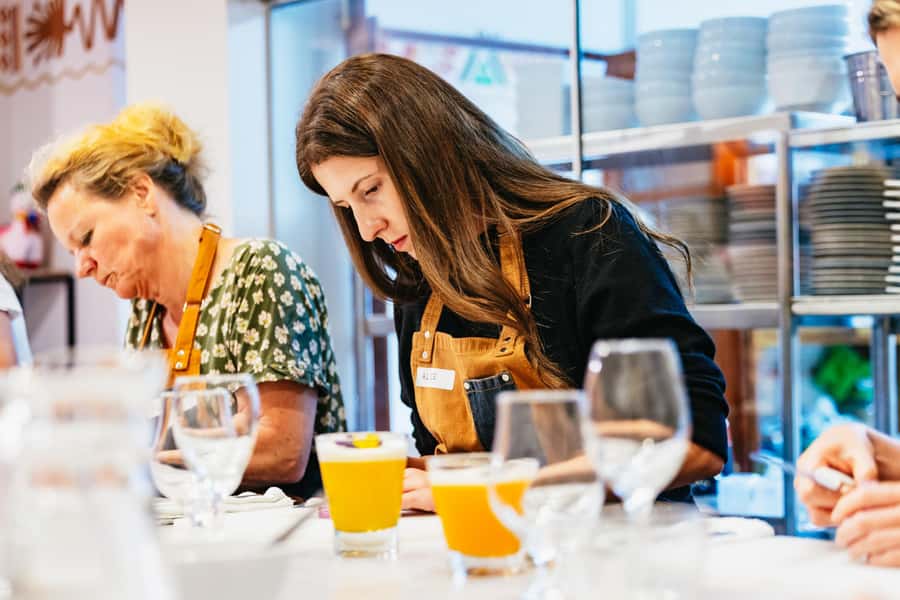
The class begins with a Peruvian cocktail. You make two pisco-based drinks during the experience and sip them as the lesson continues.
This is a smart opening activity. Mixing a drink is less demanding than preparing a full dish, so it gives the group a simple way to get involved. It also introduces pisco, one of Peru’s best-known spirits, before the food preparation begins.
You do not have to drink alcohol. Non-alcoholic recipes are available, and the class can prepare mocktails instead. This has worked well for people who do not drink, as well as for those who want to stay clear-headed while adjusting to Cusco’s altitude.
The drinks are part of the meal rather than a separate tasting session. If you are sensitive to alcohol or altitude, pace yourself and use the water provided. The class includes water, but it is still sensible to drink regularly during your time in Cusco.
Preparing cebiche, causa limeña, and quinoa tamal
The main lesson covers three well-known Peruvian dishes: cebiche, causa limeña, and quinoa tamal. Together, they give you a useful sample of Peru’s coastal, Andean, and modern home-cooking traditions.
A few more cooking classes around Peru worth a look
- Miraflores: Amazing Peruvian Cooking Class Ceviche Seafood and Pisco Sour
★ 4.9 · 57 reviews - Cook with Maido’s creative chef and chef de cuisine
★ 5.0 · 53 reviews - Cusco: Peruvian Cooking Class & Market Tour
★ 4.9 · 19 reviews - Lima: Cooking Workshop and Water Circuit Tour
★ 5.0 · 16 reviews
Cebiche
Cebiche is the most immediately recognizable dish on the menu. The chef explains how its fresh, sharp flavors come together, then guides you through the preparation.
The class is especially useful if you have eaten cebiche in Peru but have not understood how the balance works. You see how the ingredients are combined and how the dish is presented. Several people have singled out the cebiche as a favorite part of the meal.
Because the class is designed for a mixed group, do not expect restaurant-level knife training or a long technical session. The chef handles some steps, and participants take part in the preparation and assembly. That approach keeps the activity manageable, but it may disappoint you if you want every element to be made entirely from scratch.
Causa limeña
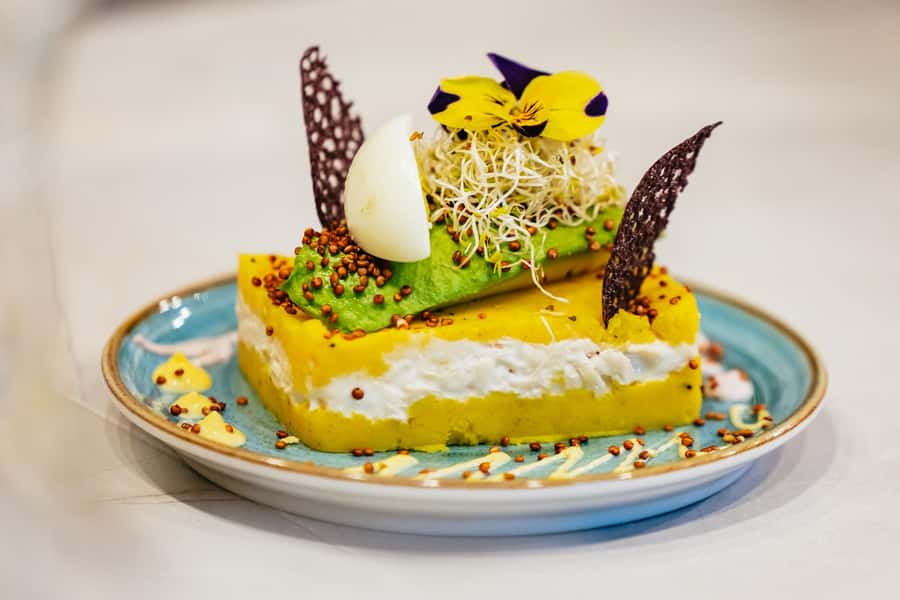
Causa limeña is a layered potato dish with a soft texture and bright seasoning. It is one of the best choices for showing how important potatoes are in Peruvian food.
You get to shape and plate the causa, which is satisfying even for a beginner. The presentation also makes this dish feel more polished than its simple ingredients might suggest. One participant described feeling like a chef after putting the causa together with Chef Eric, and that captures the appeal: you are given enough guidance to create something that looks special without needing advanced skills.
Vegetarian versions and other adjustments are available. Ask about your version before preparation begins so the chef can organize the ingredients correctly.
Quinoa tamal
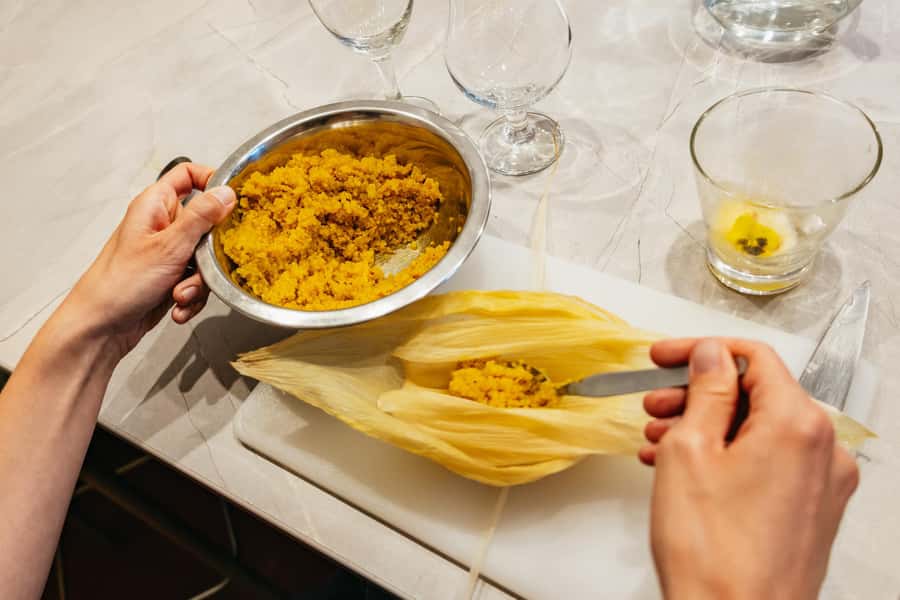
The quinoa tamal brings an Andean ingredient into the menu. Quinoa is familiar around the world now, but using it in a Peruvian tamal gives you a better sense of its place in local food traditions.
This dish also adds variety to the meal. Cebiche is fresh and acidic, causa is soft and potato-based, and the quinoa tamal offers a different texture and flavor. The chef explains the steps while the group works through the recipe.
The menu is substantial for a four-hour activity. One useful tip is to arrive with an appetite, but not after skipping food all day. You will make and eat several dishes, two drinks, and a dessert.
Picarones and the final meal
The class ends with picarones served with honey. These sweet fritters provide a pleasant finish after the savory dishes and cocktails.
Picarones are a particularly good choice for a cooking class because they introduce a traditional Peruvian dessert rather than ending with a generic cookie or piece of fruit. Sugar-free and gluten-free options are available, so ask for the version that suits you.
After preparation, you sit down and eat what the group has made. This shared meal is an important part of the afternoon. You can compare results, trade stories with the other participants, and ask final questions while the chef remains nearby.
The food is not merely a demonstration that disappears behind a kitchen door. You take part, then eat the result. Still, keep your expectations realistic. The class combines guided preparation with ingredients and elements that may already be partly prepared. It is best understood as a hands-on introduction to Peruvian dishes, not a professional kitchen practicum.
How good is the value at $67?
At $67 per person, the price is fair for a four-hour activity that combines several separate experiences. You receive a market tour, a professional chef, ingredients, two cocktails, three main dishes, picarones, and water.
A market visit alone would give you sights and samples but not much help in understanding how to use the ingredients. A cooking lesson alone would miss the connection to daily food shopping in Cusco. This experience links the two and includes a full meal, which makes the cost easier to justify.
The value is strongest if you want an activity that mixes food, culture, and social time. It is less compelling if you only want a quick cooking demonstration or a formal restaurant meal.
The included drinks add value, though they also mean the experience is not ideal for someone seeking a completely alcohol-free group unless you are comfortable with mocktails. Non-alcoholic recipes are available, so this is not a serious problem, but mention it in advance.
Free cancellation is available up to 24 hours before the activity, and you can reserve now and pay later. Starting times vary, so check availability for your date. The activity lasts four hours, making it a substantial half-day plan rather than a quick stop between major sights.
Dietary choices and practical limits
Vegetarian, vegan, and gluten-free menus are available. Non-alcoholic cocktails can also be prepared. Several people with different dietary needs have been accommodated successfully, including vegetarian and gluten-free participants in the same group.
You should still be direct. State your dietary requirements when booking, then remind the chef at the start. One person experienced confusion about a gluten-free request, which is a useful warning. Special diets may be handled well, but clear communication reduces the chance of a mix-up.
The experience is available in English only. Children under 10 are not permitted, so this is better suited to adults, older children, couples, friends, and solo visitors who enjoy meeting people around a shared table.
Comfortable shoes matter more than you might expect. The market tour involves walking, and you then spend time standing or moving around the kitchen. Comfortable clothes are also recommended, especially since cooking can get messy.
Best time to fit it into a Cusco visit
This class works particularly well early in a Cusco stay. Several people have used it as an easy activity while adjusting to the altitude, since it provides a calm indoor portion after a manageable market walk.
That said, the cocktails and full meal make it wise to avoid scheduling the class immediately before a demanding hike. It is also a good choice near the end of a Peru trip, when you have already tasted local food and want to understand it better before heading home.
The class can also become a useful pause between sightseeing days. You spend time in the center, learn something practical, and avoid another afternoon of simply looking at ruins and churches.
Who should book this experience?
I would recommend it to you if you enjoy food markets, like learning through stories, and want more than a standard sightseeing tour. It suits beginners because the chef guides every stage and helps with plating.
It is also a strong choice for solo visitors. A small group and shared meal make conversation easy, and the activity has a clear structure from the market to the kitchen to the table.
Couples and friends will enjoy it too, especially if one person is more interested in food than the other. The market and cocktail portions keep the experience varied.
You should think twice if you want advanced culinary instruction, a quiet private meal, or a very short activity. The four-hour schedule is generous, and the group format means you will share the work and the kitchen space.
Should you book the Cusco cooking class?
Yes, if you want a practical introduction to Peruvian cuisine with a strong local connection. The best parts are the market tour, the chef’s explanations, the two cocktails, and the chance to eat cebiche, causa limeña, quinoa tamal, and picarones that you helped prepare.
Book it early in your Cusco stay if you want a gentle food-focused day while getting your bearings. Choose it later if you want to finish your Peru trip with recipes and flavors you can recreate at home. Just remember that the class is partly hands-on assembly, the language is English, and dietary needs should be repeated clearly.
At $67, the combination of food, drinks, instruction, and market time makes this a good-value half-day experience for most food-curious visitors.
FAQ
Where does the Cusco cooking class meet?
Meet at Door Number 1 at San Pedro Market in Cusco.
How long does the experience last?
The activity lasts four hours.
What food will I prepare?
You will learn to prepare cebiche, causa limeña, and quinoa tamal. The experience also includes picarones with honey for dessert.
Are drinks included?
Yes. Two cocktails are included, along with water. Non-alcoholic recipes are available.
Can I join if I am vegetarian or vegan?
Yes. Vegetarian and vegan menu options are available.
Is a gluten-free menu available?
Yes. Gluten-free options are available, including a gluten-free version of the dessert. State your requirement when booking and confirm it with the chef at the start.
What language is the class offered in?
The experience is offered in English, with a live English-speaking guide.
Can children join the cooking class?
Children under 10 years old are not permitted to participate.
How many people are in the group?
The group is limited to 10 participants.
What should I bring?
Bring comfortable shoes and comfortable clothes for walking through the market and taking part in the cooking class.
Just added around Peru
- Lima: Peruvian cooking class and tour of Surquillo market★ 5.0 · 2 reviews
- Lima: Market Tour and Cooking Class with Pisco Sour★ 5.0 · 3 reviews
- Lima: Cooking Workshop and Water Circuit Tour★ 5.0 · 16 reviews
- Lima: Market Tour, 35 Fruits Tasting & Cooking Class★ 5.0 · 3 reviews
- Lima: 4-Course Peruvian Cooking Class in Miraflores★ 5.0 · 4 reviews
- Lima : Cooking Class – A Peruvian Culinary exploration★ 5.0 · 2 reviews
- Lima: Demo Cooking Class with Lunch at Cala Restaurant★ 4.1 · 4 reviews
- Cusco: Peruvian Cooking Class★ 5.0 · 2 reviews
Cooking Classes with a Market Tour, compared.
Hanoi Cooking Class: Culture, Local Market & Meaning CSR Impact
Read our review →
5 Traditional Dishes Hanoi Cooking Class with Market Trip
Read our review →
Cooking Class and Lunch at a Tuscan Farmhouse with Local Market Tour from Florence
Read our review →
Cooking Class, Market & Thai Herbs Garden Tour
Read our review →
Authentic Cooking Class with Market & Farm Visit
Read our review →
Paella Cooking Experience & Boqueria Market Tour
Read our review →
Cooking Class Hoi An:Local Market, Basket Boat, Fishing & Cooking
Read our review →
Hoi An Cooking Class(Market,BasketBoat Crabfishing&Cooking Class)
Read our review →Lists this class appears in