
REVIEW · CASABLANCA-SETTAT, MOROCCO
Casablanca : Traditional Moroccan Cooking Class with Locals
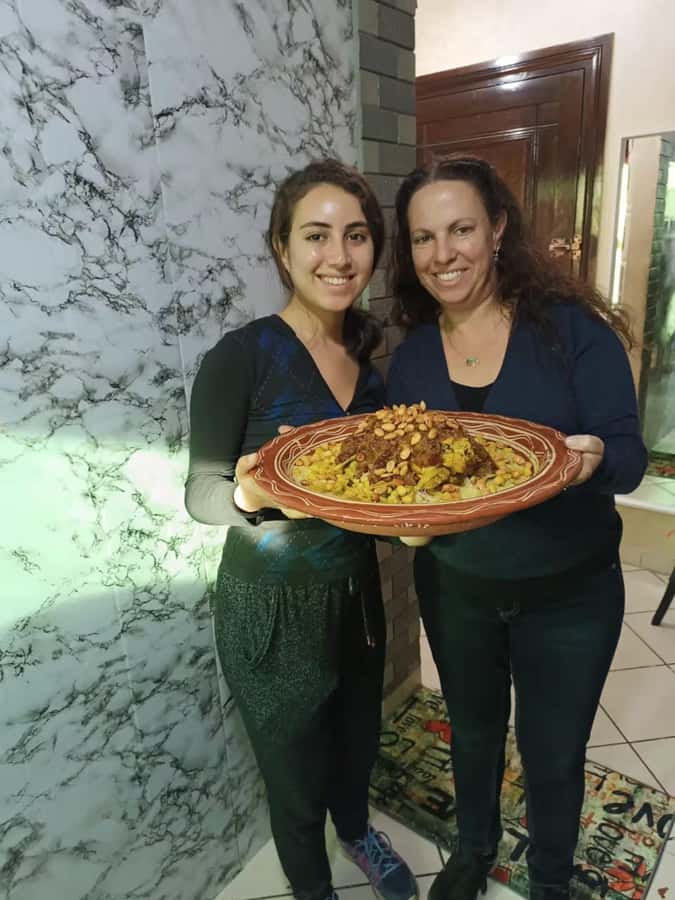
Morocco’s best souvenir may be dinner. This four-hour class brings you into Inas’s family home in Casablanca, where you prepare tagine, couscous, pastilla, and Moroccan salads with recipes taught across generations. I like the warm family setting, and I like that the meal is cooked and shared together rather than simply served to you.
The main consideration is location: you must make your own way to Résidence El Fath on Abdellah Ibrahim Street, near BIM Attacharok. This is not a polished cooking school with a hotel pickup. It is a small, local home experience, which is exactly its appeal, but it may require more planning.
Key things to know before booking
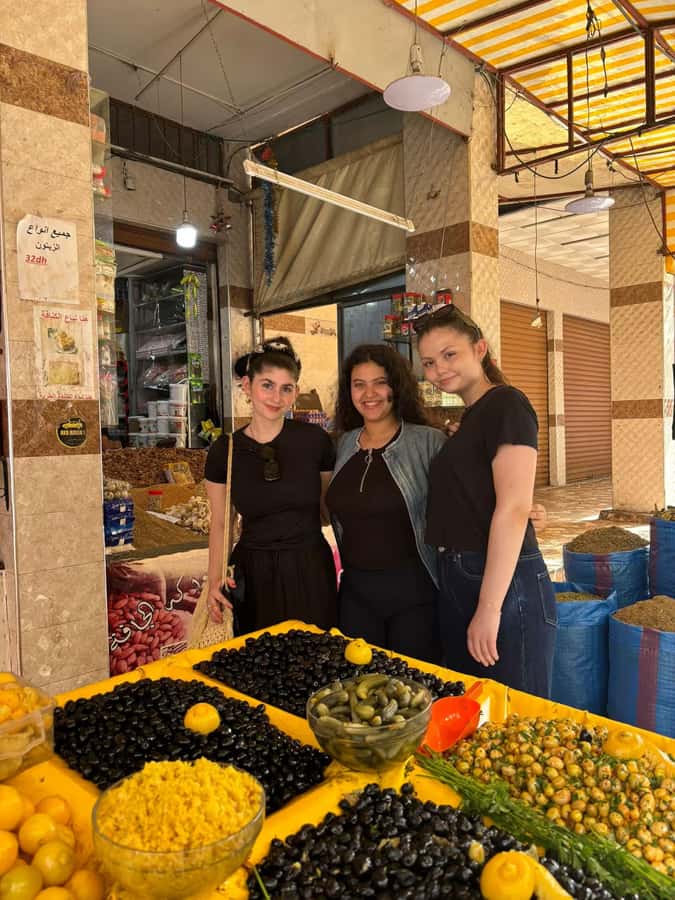
- You cook inside a local family home: The setting is personal and traditional, not a commercial kitchen.
- Inas leads the class: She learned Moroccan cooking from her grandmother and mother, both experienced home cooks.
- The meal is part of the lesson: After preparing the food, you sit down with the family and eat together.
- The class lasts four hours: That gives you time for cooking, conversation, cultural context, and the shared meal.
- The group is limited to 10 people: You should have more contact with the instructor than in a large group class.
- Arabic, French, and English are spoken: The class can welcome visitors from several language backgrounds.
Entering a Casablanca family kitchen
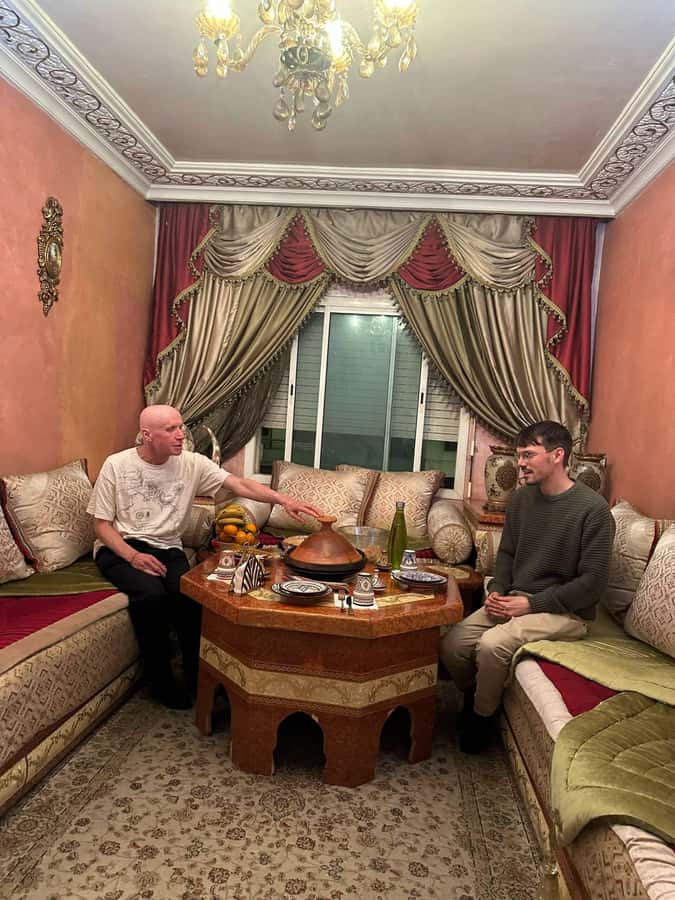
The first surprise is that this is not held in a purpose-built cooking studio. You meet at Résidence El Fath, on Abdellah Ibrahim Street at BIM Attacharok, then enter a local family home in Casablanca.
That setting changes the whole tone. You are not only learning how to mix spices or prepare vegetables. You are seeing where a Moroccan family cooks, talks, welcomes visitors, and shares food. The class is built around hospitality, so the cultural side is just as important as the recipes.
Inas is the host and instructor. She learned from her grandmother and mother, each of whom had more than 40 years of experience with Moroccan cuisine. That background matters because Moroccan food is often shaped by small habits that do not appear in a recipe: how ingredients are layered, when seasoning is added, how a dish is watched as it cooks, and how food is presented for sharing.
You should expect a friendly, informal atmosphere rather than a strict demonstration followed by a quick tasting. The class includes storytelling, customs, and conversation. If you enjoy meeting people through food, this is the heart of the experience.
More Moroccan Cooking Classes in Morocco:
- Marrakech: Moroccan Cooking Class with Pickup
★ 4.6 · 1,862 reviews - Marrakech: Traditional Moroccan Cooking Class & Market Visit
★ 4.8 · 1,861 reviews - Marrakesh: Moroccan Dishes Cooking Class with a Local Chef
★ 5.0 · 1,615 reviews
What you cook during the four-hour class
The exact menu can include tagine, couscous, pastilla, and Moroccan salads. The available information does not promise that every dish will be prepared at every session, so check the menu when you book if one particular recipe matters to you.
Tagine with Moroccan flavor
Tagine is likely to be the dish many people most want to learn. The name refers both to the food and to the familiar conical cooking vessel. At this class, you use traditional methods and learn the household tips that make the dish work at home.
One reported session included tagine with preserved lemon. That combination gives you a useful introduction to Moroccan flavor: savory cooking balanced with the sharp, salty taste of preserved citrus. You are not simply eating the finished dish. You help prepare it and can ask why each step matters.
For home cooks, this is valuable. Moroccan recipes can look simple on paper, but timing and seasoning make a large difference. Inas’s patient instruction should help you understand the process instead of copying a list of ingredients without context.
Couscous with vegetables
Couscous provides a different lesson in texture and patience. One session included couscous with vegetables, giving participants a familiar Moroccan staple in a practical form.
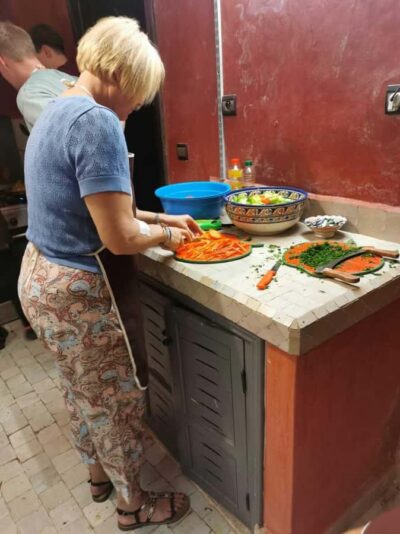
The class uses fresh, local ingredients. That means the experience is tied to the way Moroccan food is cooked in homes, where the ingredients are part of an everyday meal rather than a staged tasting menu. You learn through handling and preparing the food, which can be more useful than watching a chef work at a distance.
A few more cooking classes around Morocco worth a look
- Moroccan Cooking Class & Marrakech Market Visit with Chef Khmisa
★ 5.0 · 1,504 reviews - Half-Day Cooking Class with Local Chef Laila in Marrakech
★ 5.0 · 952 reviews - Marrakech: Moroccan Cooking Class with a Local Family
★ 4.9 · 668 reviews - Marrakech: Moroccan Cuisine Cooking Class in Local Home
★ 4.8 · 508 reviews
Pastilla and Moroccan salads
Pastilla offers another side of Moroccan cooking. It is traditionally associated with layered pastry and a combination of sweet and savory flavors, though the exact preparation in this class is not specified. If pastilla is included on your day, expect a dish that shows how varied Moroccan cooking can be.
Moroccan salads round out the meal with fresh, seasoned preparations. These dishes may seem less dramatic than a tagine, but they help you understand how a Moroccan meal is built. Food is not treated as one large centerpiece alone. Several dishes can work together around the table.
The family meal is the real finish
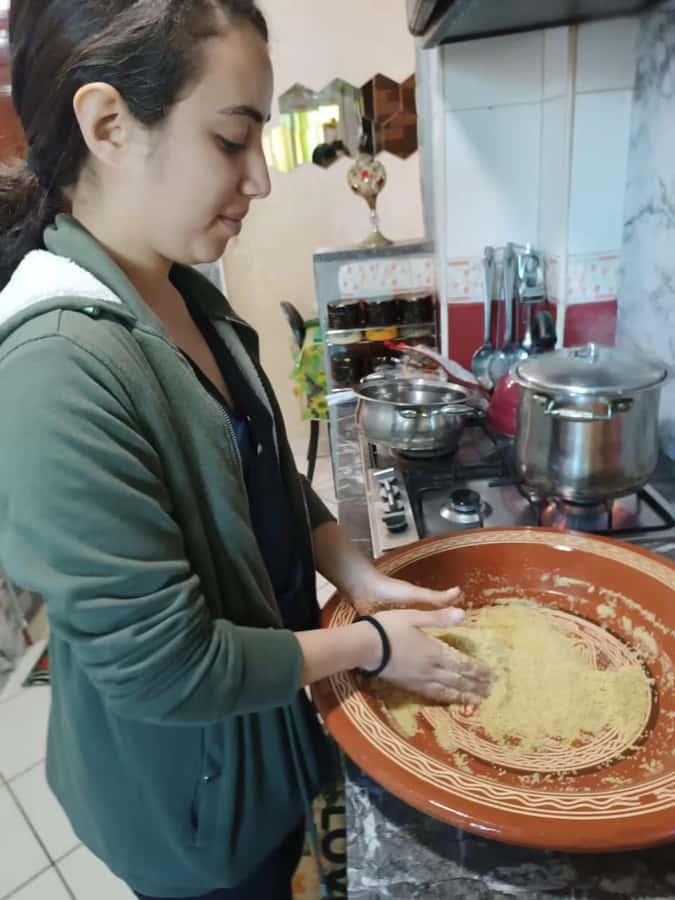
After the cooking, you sit down and eat with the family. This is more than a convenient way to sample the food you prepared. Sharing a meal gives the class a natural ending and allows the conversation to continue.
You may hear stories about Moroccan customs, family cooking, and daily life. The experience is designed around exchange, so you can ask questions rather than simply listen to a guide recite facts. That makes the meal especially useful if you want a personal introduction to Casablanca beyond major sights.
The strongest praise for this experience centers on the welcome. People describe being treated like friends and feeling at home quickly. One participant called the family their favorite part of a Casablanca visit, while another appreciated the chance to make new friends from Australia during the class.
That warmth is a major part of what you are paying for. The food matters, but the chance to sit at a family table gives the class its character.
Why Inas makes a difference
A cooking class can be useful or frustrating depending on the teacher. Inas receives repeated praise for patience, clear explanations, and kindness.
That combination is important for beginners. Moroccan cooking may include unfamiliar methods, and you may need a step repeated or explained in another way. Inas teaches in Arabic, French, and English, which helps make the class accessible to an international group.
Her role also goes beyond recipes. She explains Moroccan culture, traditions, land, and people while you cook. This creates a stronger connection between the meal and the place you are visiting.
The class is limited to 10 participants. That is small enough to keep the experience personal, though the atmosphere will depend on the final number booked that day. A full group could feel more social, while a smaller group may allow more direct time with Inas.
A close look at the four-hour pace
Four hours is a generous amount of time for a cooking class. You are not being rushed through one recipe in an hour before being sent away.
A typical flow includes:
- Arrival at the family home and introductions
- An explanation of the dishes and ingredients
- Hands-on preparation using traditional techniques
- Time for cultural conversation and family stories
- Cooking and finishing the dishes
- A shared meal with the family
The exact order and menu can vary. Some dishes take longer than others, so you should expect the rhythm of a home kitchen rather than a tightly timed restaurant production.
That slower pace is a plus if you want conversation and instruction. It may feel long if you only want a quick food activity. I would choose this class for an afternoon or evening when you can give it your full attention, not when you are trying to squeeze in several other Casablanca stops.
The value of $60 per person
At $60 per person, the class is not the cheapest way to eat in Casablanca. You could order Moroccan food for much less. But that comparison misses the point.
The price includes a four-hour hands-on class, fresh local ingredients, cultural instruction, and a meal with the family. You are also paying for a small group and direct guidance from a home cook who learned these methods through her family.
The value is strongest if you plan to use the recipes at home. A restaurant can show you what tagine tastes like. Inas can help you understand how to prepare it yourself, including the small techniques passed through her family.
The value is also strong for a first-time visitor who wants a personal introduction to Moroccan culture. You get food, conversation, and a look inside everyday life in one activity. If you dislike cooking or prefer formal sightseeing, the price may feel less convincing.
One particularly practical detail is that Inas helped one participant with indoor protected parking for a car. That was a personal courtesy, not something listed as a standard inclusion, so do not assume parking is guaranteed. If you plan to drive, ask ahead.
What could be less convenient
The home setting is a strength, but it also creates a few limits.
Transportation is not included. You must reach Résidence El Fath on Abdellah Ibrahim Street at BIM Attacharok yourself. Since the activity takes place in a local community rather than a central hotel, allow time to find the meeting point and confirm directions before you leave.
The menu is not fixed in the information provided. You may cook tagine, couscous, pastilla, salads, or a combination, but you should not book on the assumption that every dish will appear in one session.
Dietary requests may be possible. Inas accommodated dietary needs for one participant, which is encouraging, but you should tell the provider in advance rather than wait until you arrive.
This is also not a luxury food tour. The focus is family hospitality and traditional technique. You should expect a genuine home visit, not professional restaurant service or a staged culinary show.
Who should book this Casablanca experience?
I would recommend it most strongly to:
- First-time visitors who want personal contact with Moroccan culture
- Couples, friends, and solo visitors who enjoy cooking together
- Home cooks who want practical tagine or couscous skills
- People who prefer small groups to large sightseeing tours
- Food lovers interested in family recipes and traditions
- Visitors with a free four-hour block in Casablanca
Families may also enjoy the shared meal and hands-on format, though the provided information does not specify a minimum age. Ask before booking if you are traveling with children.
You may want a different activity if you need hotel pickup, a guaranteed menu, or a short demonstration with little participation. The class rewards curiosity and patience. It is less suitable if you want to remain an observer.
Booking details worth checking
The experience costs $60 per person and lasts four hours. The group size is limited to 10 people, and the class is offered in Arabic, French, and English.
You can reserve now and pay later, which is useful if your Casablanca schedule is still shifting. You can also cancel up to 24 hours before the activity for a full refund.
Accommodation and transportation are not included. The meeting point is Résidence El Fath in Street Abdellah Ibrahim at BIM Attacharok, so confirm the exact directions with Discover with Inas before setting out.
The experience has a 5 out of 5 rating from 22 verified bookings. The repeated strengths are clear: Inas’s patience, the family’s welcome, the quality of the food, and the chance to learn about Moroccan customs while cooking.
Should you book it?
Book this class if you want Casablanca to feel personal. The strongest reason to go is not only the tagine or couscous. It is the chance to cook in a family home, learn from Inas, share stories, and sit down for a meal with people who welcome you warmly.
At $60, it offers good value for a four-hour cultural activity with food and direct instruction. Just plan your own transport, confirm the menu and dietary needs, and arrive ready for a relaxed home visit rather than a formal cooking school.
If that sounds like your kind of afternoon, this is one of the more memorable ways to meet Casablanca through its food.
FAQ
Where does the cooking class take place?
The class takes place in a local family’s home at Résidence El Fath on Street Abdellah Ibrahim at BIM Attacharok in Casablanca.
How long does the experience last?
The cooking class lasts four hours.
What dishes might I learn to prepare?
The class can include Moroccan tagine, couscous, pastilla, and Moroccan salads. The exact selection may vary.
Is a meal included?
Yes. After the cooking session, you share the prepared meal with the family.
What languages are spoken?
The class is offered in Arabic, French, and English.
How many people can join the class?
It is a small-group experience with a maximum of 10 participants.
Is transportation included?
No. You must arrange your own transportation to and from the meeting point.
Just added around Morocco
- 3-Hour Cooking Class overlooking the Blue City★ 5.0 · 36 reviews
- Moroccan Cooking Class with a Local Family & Market Visit★ 5.0 · 16 reviews
- Private Tagine Cooking Class in Chefchaouen with Lunch★ 5.0 · 5 reviews
- Chefchaouen Private Cooking Class with Mountain View★ 5.0 · 16 reviews
- Chefchaouen Cooking Class★ 5.0 · 4 reviews
- Traditional Cooking Courses in Casablanca★ 5.0 · 2 reviews
- Market Tour & Moroccan Cooking Class in Casablanca with Transfers★ 5.0 · 18 reviews
- Private CousCous Cooking Class in a Traditional Family Home★ 5.0 · 7 reviews
Moroccan Cooking Classes, compared.
Traditional Moroccan Cooking Class & Market Visit
Read our review →
Moroccan Dishes Cooking Class with a Local Chef
Read our review →
Moroccan Cooking Class & Marrakech Market Visit with Chef Khmisa
Read our review →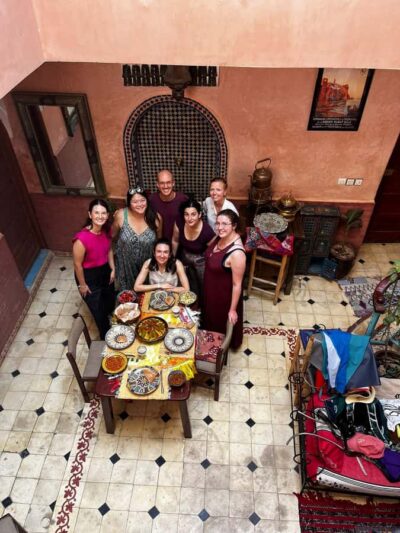
Lists this class appears in