
REVIEW · BIG ISLAND OF HAWAII, USA
Hands-On Hawaiian Imu Cooking and Cultural Dining Experience
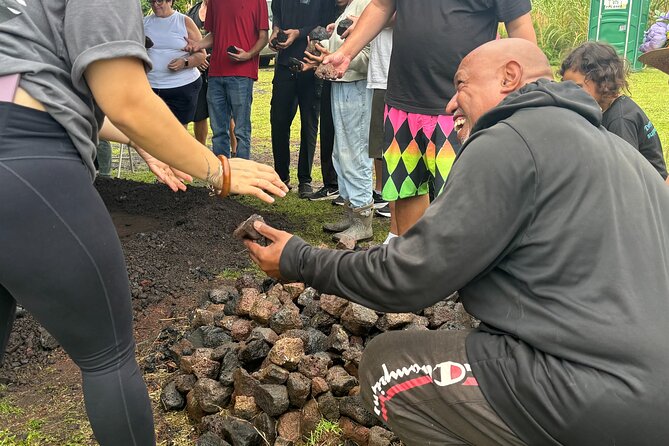
Fire, earth, food, and family come together here. This four-hour Big Island experience gives you a hands-on lesson in building an imu, a traditional underground oven, with the Men of Pa’a, whose families have practiced this cooking method for generations. I like the chance to work alongside Native Hawaiian hosts rather than simply watch a staged show, and I like that the meal connects directly to the work you have just done. The main consideration is the location in Pāhoa, which may require a substantial drive depending on where you are staying.
The $150 price is not just for lunch. It covers an English-language activity guide, bottled water, participation in the imu preparation, cultural explanation, and a full meal of kalua pork, kalua chicken, vegetables, and kulolo. I would plan ahead, too: this experience is often reserved about 25 days in advance, and the group can include up to 50 people.
Quick Takeaways
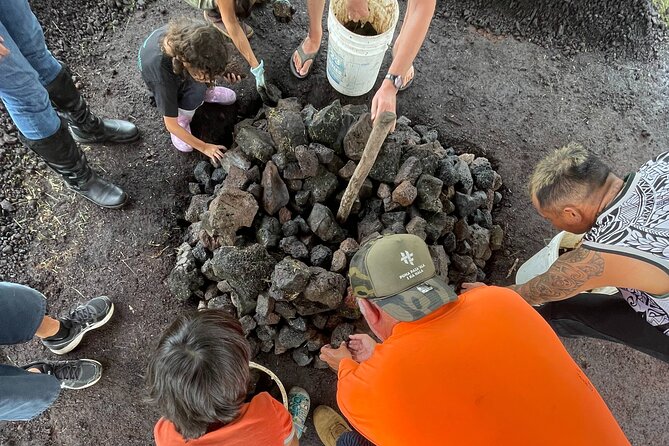
- Build an imu from scratch: You help prepare the underground oven instead of watching the cooking from a distance.
- Learn from Native Hawaiian hosts: The Men of Pa’a share family traditions, Hawaiian words, history, chanting, and the meaning of food and gathering.
- Eat what you helped prepare: Kalua pork, chicken, island vegetables, and kulolo are cooked in the earth and served as a communal lunch.
- Expect a four-hour commitment: The activity starts at 10:00 a.m. at 15-1380 Auina Street in Pāhoa and ends at the same location.
- The cultural side is the real value: This is designed around ohana, or family, and the way food brings people together.
- Plan for weather and demand: Poor weather or too few bookings can lead to a new date or a full refund.
Why the Imu Matters
An imu is an underground oven. Food is cooked slowly in the earth, using natural materials and retained heat to produce tender meat and soft vegetables.
That basic description does not quite convey why the process is important. Here, cooking is presented as a connection among land, food, family, and community. You are not simply handed a plate of kalua pork. You take part in the work that makes the meal possible, then sit down with the people who taught you.
I like this format because it gives the food a story. Kalua pork tastes different when you have watched the cooking method unfold and learned why the earth oven matters. The meal becomes part of the lesson, not a separate restaurant stop tacked onto a cultural activity.
The Men of Pa’a place strong emphasis on welcome and inclusion. Their presentation includes explanations of Hawaiian language, family traditions, gathering, and the meaning behind the food. One of the most repeated ideas is ohana, or family, with food serving as a way to strengthen ties between people.
More Dinner Trips in the USA:
- San Francisco: Dumpling Cooking Class & 3-Course Dinner
★ 5.0 · 10 reviews - Cooking Class/Dinner W/ Celebrity French Chef OR Private Chef Ser
★ 4.5 · 9 reviews - Pasta Making & Wine Tasting with Dinner in Frascati from Rome
★ 5.0 · 1,326 reviews
Starting at 10:00 a.m. in Pāhoa
The meeting point is 15-1380 Auina Street, Pāhoa, Hawaii 96778. You should allow enough time to reach Pāhoa without rushing, especially if you are staying in another part of the Big Island.
Pāhoa is on the eastern side of the island, so the location matters. This is not a hotel pickup activity, and transportation to the meeting point is not listed as part of the experience. You will need to arrange your own way there and return to your accommodation afterward.
The day begins at 10:00 a.m. and lasts about four hours. That timing gives the activity a relaxed lunch schedule, but it also means you should avoid pairing it with a tight afternoon appointment. The experience ends back at the starting point.
A mobile ticket is accepted, and the activity is offered in English. Confirmation is provided when you book. Since the experience is often reserved about 25 days ahead, I would not leave it until the last few days of a Big Island visit.
Building the Underground Oven
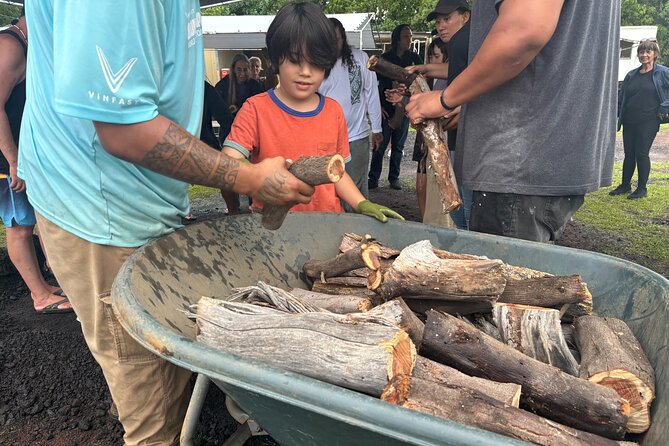
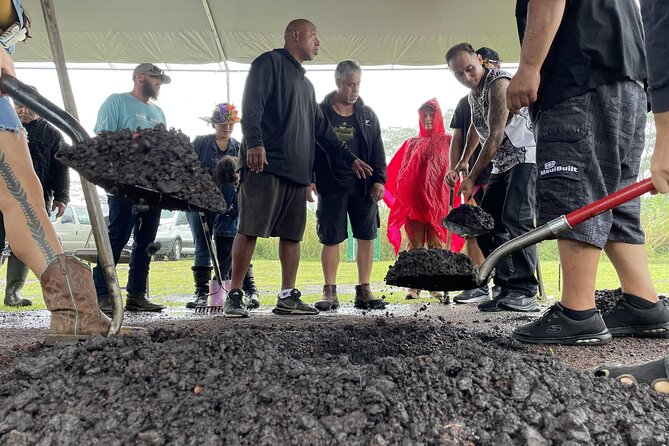
The hands-on work is the heart of the morning. You take part in building the imu from the beginning, guided by Native Hawaiian hosts who have learned the method through family practice.
The information provided does not spell out every physical step or list each material used, so you should not expect a technical construction course with a written blueprint. Instead, the focus is on participating, listening, and understanding why cooking in the earth has cultural meaning.
That distinction is important. The activity is not designed as a quick demonstration where you stand behind a rope and take pictures. You are included in the process. The hosts explain the intention behind the cooking and invite you to work together.
This shared effort also shapes the mood of the day. The group may include as many as 50 people, so the experience is not guaranteed to feel intimate. Still, the emphasis on cooperation helps turn a potentially large group into a common project.
I especially like this part for families and curious eaters. Children and adults can see that a traditional meal requires time, care, and teamwork. It is a useful change from the usual vacation pattern of ordering food, eating quickly, and moving on.
Learning with the Men of Pa’a
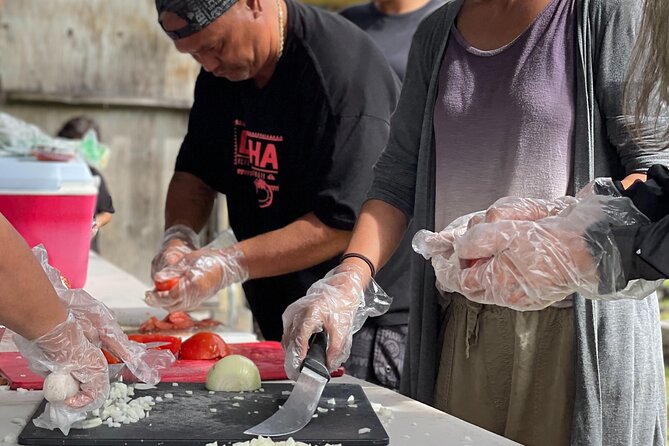
The cultural teaching goes beyond the imu itself. The hosts discuss Hawaiian words, family, food, history, and the importance of gathering. Chanting and carefully chosen words are also part of the welcome.
The tone appears warm and personal. The Men of Pa’a are described as a kind and inspiring group, with a strong love of the land and an obvious commitment to sharing their traditions. Iopa Maunakea is associated with the experience, and the group’s replies to visitors use the language of aloha and ohana.
One especially personal account involved a family who spoke English and Chinese. The lead host made time for translation, and the group felt included rather than hurried. That detail matters if your party has different language needs, although English is the stated language of the activity and formal translation service is not promised.
The teaching also reaches beyond food preparation. The hosts explain how food can bring people together and why community care matters. You may hear less about famous sights and more about relationships, responsibility, and Hawaiian identity. That is the point of this experience.
I would approach the cultural portion with attention and respect. Listen to the words, ask questions when invited, and remember that this is a living tradition shared by people with family ties to it. It is not just an entertaining cooking trick.
More Meals Out in the USA:
- Rome: Pasta Making with Wine Tasting and Dinner in Frascati
★ 4.9 · 979 reviews - Palermo: Pizza and Gelato Cooking Class with Dinner and Wine
★ 4.9 · 951 reviews - Seville: Spanish Cooking Class with Dinner
★ 4.9 · 900 reviews - Greek Cooking Class in Athens Including Rooftop Dinner with Acropolis View
★ 5.0 · 826 reviews
The Meal From the Earth
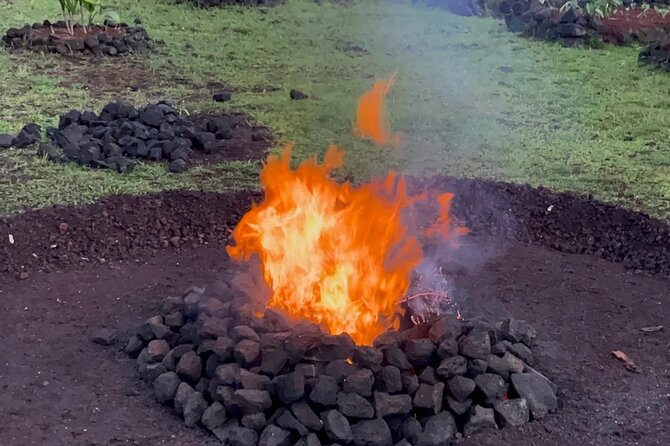
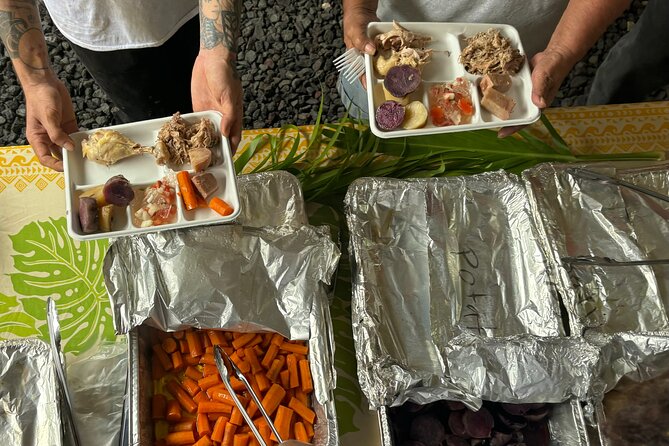
After the imu is uncovered, you gather for lunch. The meal includes several foods cooked in the underground oven:
- Kalua pork
- Kalua chicken
- Kalua vegetables
- Kulolo for dessert
- Bottled water
The pork and chicken are steamed in the imu, while the vegetables include local sweet potato, kalo, carrots, celery, and other ingredients. Kulolo is a Hawaiian dessert made with kalo, coconut milk, and honey.
Kalua pork is likely to be the main attraction, but the vegetable selection makes the meal more useful for people who do not want a plate built entirely around meat. Kalo, also called taro, is particularly important in Hawaiian food culture, and its appearance in both the savory meal and the dessert gives you two different ways to taste it.
Kulolo may be unfamiliar to many visitors. Its ingredients suggest a dense, soft dessert with the earthy character of taro, balanced by coconut milk and honey. Since it is made with the same broader food traditions discussed during the activity, dessert feels like part of the cultural lesson rather than an unrelated sweet ending.
The meal is described as backyard-style, which sets the right expectation. This is not a polished restaurant lunch with individual courses and formal service. It is a shared feast connected to the cooking work and the people around you.
What Makes the Experience Feel Personal
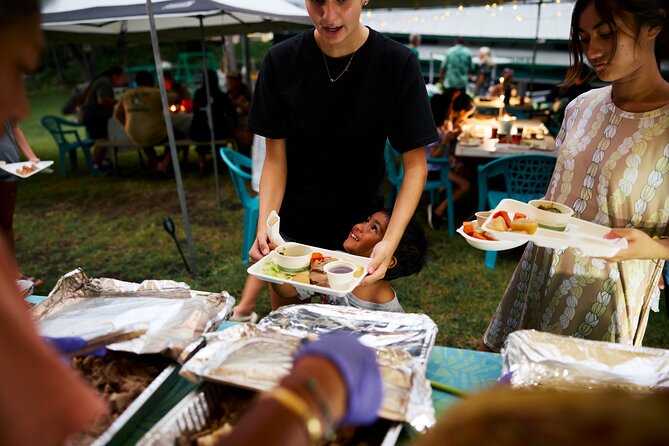
The strongest feature is the connection between participation and hospitality. You help prepare the imu, learn why it matters, and then eat the food produced by the process. That sequence gives the afternoon a clear purpose.
The welcome also seems to be a major part of the experience. The hosts make an effort to create a sense of family and togetherness, and the language of aloha is not treated as a decoration. It informs how the group is received and how the meal is shared.
There is also room for meaningful conversation. One family described hearing about cultural observations from a host who had recently visited China as part of a Hawaiian tourism delegation. That kind of exchange shows how the activity can move in two directions: you learn about Hawaiian culture, and the hosts also remain curious about the people they meet.
Still, expectations matter. If you want a small private cooking class with one-on-one instruction, a group of up to 50 may feel broad. The format is communal, not exclusive. You may have a more personal experience during the teaching and meal if the group is smaller, but the maximum size is significant.
Is $150 a Fair Price?
At $150 per person, this is more expensive than an ordinary lunch. I would not judge the cost by comparing it with the price of a plate of kalua pork at a casual restaurant.
The fee includes four hours of guided activity, cultural instruction, hands-on imu preparation, bottled water, and lunch. You are paying for access to a traditional cooking practice and for time with the people who carry that knowledge, not simply for ingredients.
The value is strongest if you want cultural context and active participation. If you only want to taste Hawaiian food, you can spend less elsewhere. If you want to understand how the food is prepared and why gathering around it matters, the price is easier to justify.
The group size affects the value somewhat. A maximum of 50 means you should not assume a private lesson. The experience earns its price through the cultural program and shared work, not through luxury surroundings or personalized service.
Who Will Enjoy This Most?
I would recommend this to families, couples, food-focused visitors, and anyone who prefers meeting local people over watching a choreographed performance. It also suits first-time visitors who want an introduction to Hawaiian food and cultural values in one activity.
It should work especially well for people who enjoy learning by doing. If you want to touch the materials, help with preparation, ask questions, and sit down for a communal meal, this format gives you plenty to engage with.
You should think twice if your schedule is packed or if you are staying far from Pāhoa. Four hours is a real half-day commitment, and the drive to and from the meeting point adds more time. It may also be less suitable if you want a quiet, small-group meal with minimal participation.
The experience is offered in English, so English speakers will have the clearest access to the explanations. A family needing another language should contact the provider before booking rather than assume translation is included.
Booking, Weather, and Practical Planning
Free cancellation is available if you cancel at least 24 hours before the 10:00 a.m. start time. Changes or cancellations made less than 24 hours before the start are not accepted for a refund.
Weather matters because the activity takes place outdoors and depends on conditions suitable for the imu. If poor weather causes a cancellation, you are offered another date or a full refund. The experience also requires a minimum number of bookings. If that minimum is not reached, you are offered another date or activity, or a full refund.
I would book ahead, confirm the meeting point, and keep the rest of the day flexible. Since the experience is often reserved 25 days in advance, waiting until the week of your visit could leave you without a place.
The maximum capacity is 50 people. That number is useful to know because it tells you the activity has a communal design. You can expect a shared cultural lunch rather than a private appointment.
Should You Book the Imu Experience?
I would book this if you want a meaningful food experience built around participation, family, and Hawaiian tradition. The best parts are the chance to help build the imu, learn from the Men of Pa’a, and eat kalua dishes prepared through the method you have just studied.
I would skip it only if Pāhoa is inconvenient, your schedule cannot spare four hours, or you are looking for a small private class. At $150, the value depends on caring about the cultural teaching as much as the meal.
For the right visitor, this can become one of the most memorable parts of a Big Island trip. You leave with more than a full stomach. You leave with a clearer sense of how food, land, language, and family can belong to one shared tradition.
FAQ
Where does the imu cooking experience take place?
It takes place at 15-1380 Auina Street, Pāhoa, Hawaii 96778, USA.
What time does the experience start?
The start time is 10:00 a.m.
How long does the activity last?
The experience lasts approximately four hours.
Where does the experience end?
It ends back at the original meeting point in Pāhoa.
What food is included?
Lunch includes kalua pork, kalua chicken, kalua vegetables, and kulolo dessert. Bottled water is also included.
What is kulolo?
Kulolo is a Hawaiian dessert made with kalo, or taro, coconut milk, and honey.
What language is the experience offered in?
The activity is offered in English.
How many people can join the activity?
The maximum group size is 50 people.
Is cancellation free?
Yes. You can cancel for a full refund if you cancel at least 24 hours before the experience start time.
What happens if bad weather cancels the activity?
You are offered a different date or a full refund if poor weather causes the experience to be canceled.
Just added around the USA
- Hands-on Cooking Class in Charleston★ 5.0 · 83 reviews
- Sushi Making Cooking Class at a Local Brewery in Charlotte★ 5.0 · 2 reviews
- Authentic Asian Cooking Class in NYC (Includes 4-Course Meal)★ 5.0 · 8 reviews
- Farm to Table Cooking Class at Kulaniapia Falls★ 4.5 · 36 reviews
- Baumkuchen Campfire Baking Class★ 5.0 · 3 reviews
- French Cooking Class in Baltimore (Includes 3-Course Meal)★ 5.0 · 2 reviews
- Private Atlanta Cooking Class with a Fun Local Chef Naina★ 5.0 · 2 reviews
- Thai Cooking Class in Fullerton, California★ 5.0 · 3 reviews
Cooking Classes, compared.

Half-Day Thai Cooking Class at Organic Farm in Chiang Mai
Read our review →

3 in 1 Cooking Class near Navona: Fettuccine, Ravioli & Tiramisu
Read our review →
Pasta & Tiramisu Cooking Class with Unlimited Wine
Read our review →
Hanoi Cooking Class: Culture, Local Market & Meaning CSR Impact
Read our review →
5 Traditional Dishes Hanoi Cooking Class with Market Trip
Read our review →
Cooking Class and Lunch at a Tuscan Farmhouse with Local Market Tour from Florence
Read our review →
Cooking Class, Market & Thai Herbs Garden Tour
Read our review →Lists this class appears in