
REVIEW · ANAHEIM & BUENA PARK, USA
Thai Cooking Class in Fullerton, California
Thai food makes a fine afternoon lesson. This private Fullerton class brings you into Young’s home kitchen near California State University, where you’ll prepare three dishes from scratch and learn how Central Thai, Royal Thai, and Isaan cooking differ. I like the small private setting and the chance to eat food you helped make. I also like that the class covers flavor balance, not just a list of steps.
The main consideration is that this is a home-based experience, not a polished cooking school with a restaurant-style setup. You’ll need to be comfortable entering a residential home and spending several hours in a personal kitchen. The class costs $66 per person, which is fair if you value hands-on instruction and conversation, but less compelling if you simply want a quick Thai meal.
Key points about the Fullerton cooking class
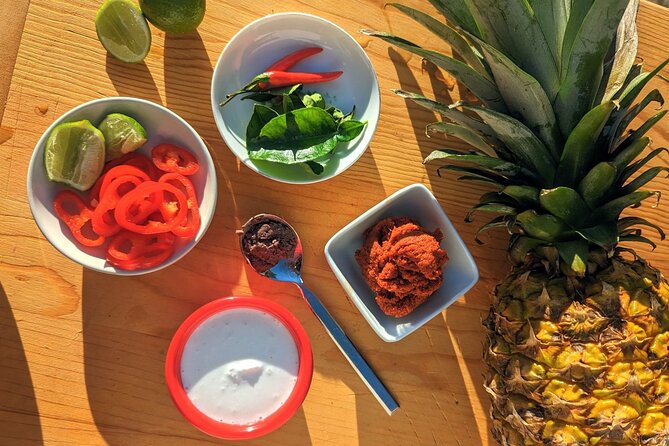
- Three dishes from scratch: Prepare pineapple curry, wing bean salad, and galangal soup during the hands-on lesson.
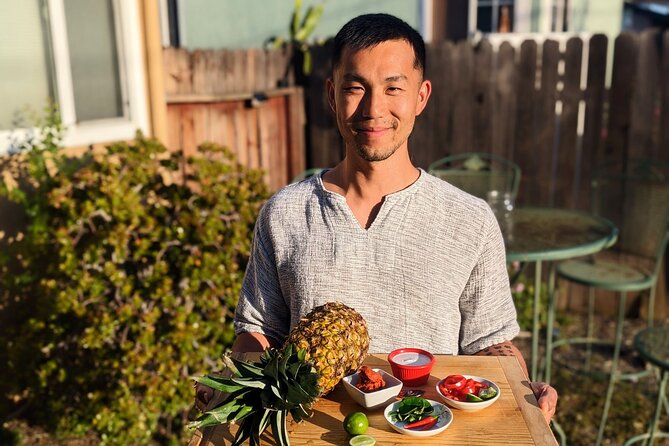
- Private home setting: Only your group participates with Young, his wife, and his father in their Fullerton home.
- Thai regional context: Learn about Central Thai food, Royal Thai cuisine, and Northeastern Thai, also called Isaan, cooking.
- A meal follows the lesson: After about two hours of cooking, sit down and eat what you prepared.
- Dietary choices are available: Vegetarian, vegan, and pescatarian versions can be arranged if you share your needs ahead of time.
- Simple three-hour plan: Meet at 819 N Acacia Ave, near California State University, and finish at the same address.
Arriving at Young’s Fullerton home
The experience begins at 819 N Acacia Ave in Fullerton, a residential address near California State University. That location matters because this is not a class inside a tourist district or a commercial kitchen. You are visiting a local household, and the setting shapes the whole experience.
You’ll meet Young, who lives with his wife and father. The family setting gives the class a more personal feel than a large group lesson, where an instructor may have to divide attention among several tables. Here, your questions can guide the conversation, and the pace can stay comfortable for your group.
The meeting point is near public transportation, which helps if you are not driving. Still, you should check your route before setting out, since the experience ends back at the same location and no transport beyond the meeting point is included.
Your booking confirmation arrives within 48 hours, subject to availability. Since the class is private and takes place in a home, I would avoid leaving this until the last minute. It is booked an average of 12 days in advance, a useful clue that planning ahead is sensible.
More Thai Cooking Classes in the USA:
- Half-Day Thai Cooking Class at Organic Farm in Chiang Mai
★ 5.0 · 19,087 reviews - Chiang Mai: Cooking Class, Market & Thai Herbs Garden Tour
★ 4.9 · 4,824 reviews - Thai and Akha Cooking Class in Chiang Mai
★ 5.0 · 4,358 reviews
Two hours of hands-on Thai cooking
The cooking portion lasts about two hours. That is long enough to give you more than a quick demonstration, but short enough to fit into a larger day in Orange County.
Young teaches you to prepare three dishes from scratch. The menu includes pineapple curry, wing bean salad, and galangal soup. Each dish brings a different part of Thai cooking into view: curry offers layered seasoning, the salad adds texture and freshness, and the soup highlights the fragrant, earthy character of galangal.
I like this combination because it gives the class some range. You are not making three versions of the same dish. Instead, you get a look at how Thai food can move between creamy, crisp, sour, spicy, and aromatic flavors.
The important lesson is balance. Thai cooking is rarely about making one flavor dominate. Young focuses on how to bring sweet, sour, salty, spicy, and fragrant elements into proportion. That kind of guidance is more useful than simply copying a recipe, because it helps you adjust a dish when ingredients or quantities change at home.
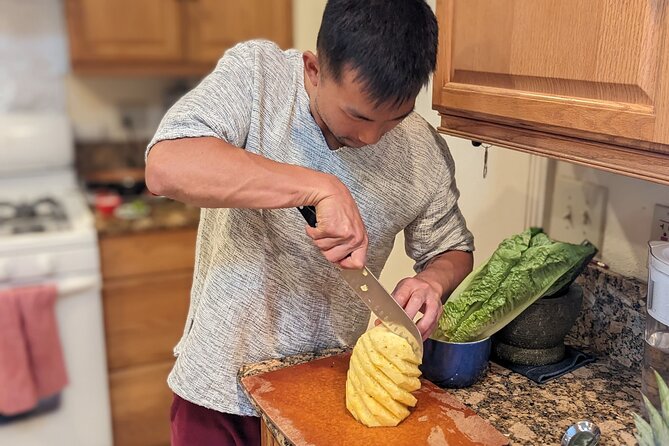
The class is described as hands-on, so you should expect to take part rather than sit quietly and watch. The exact order of preparation is not specified, but the format allows you to work through the dishes with Young’s instruction. The pace is reported as comfortable, which is good news if you want time to ask questions or understand why a particular ingredient matters.
Pineapple curry, wing bean salad, and galangal soup
The menu gives the class a clear structure. You begin with dishes that show different cooking methods and flavor patterns, then bring them together for the shared meal.
Pineapple curry is likely to be the most familiar example of Thai curry to many diners, but the lesson gives you a chance to understand how fruit can work with savory and spicy ingredients. The point is not just to produce a sweet curry. You learn how the pineapple fits into the wider flavor mix.
Wing bean salad offers a different experience. The dish introduces a vegetable that may be unfamiliar to some home cooks, along with the contrast between crisp texture and a seasoned dressing. If you like learning about ingredients you do not often see in American kitchens, this part of the class should be especially useful.
Galangal soup brings another set of aromas and flavors. Galangal looks somewhat like ginger, but it has its own character and is important in Thai cooking. Preparing the soup gives you a chance to understand how fragrant roots and other seasonings build depth in a broth.
The three dishes also give you a practical meal plan to remember. You leave with ideas for a curry, a salad, and a soup, rather than one elaborate recipe that may be difficult to recreate.
Thai regions explained around the kitchen table
Young’s instruction covers three food traditions. Central Thai cuisine forms the main base, while Royal Thai food, sometimes called traditional Thai cuisine, adds another layer. You also learn about Isaan food from Northeastern Thailand.
This regional context is one of the strongest reasons to choose the class. Thai food in the United States is often presented as a single category, but Thailand has distinct cooking traditions shaped by geography, local ingredients, and cultural influences. A conversation about these differences can make a familiar restaurant dish easier to understand.
Royal Thai food is associated with careful preparation and traditional presentation. Isaan cooking is known for its own flavor patterns and regional identity. You are not promised a full survey of every Thai province, but the class does give you a useful introduction to how Thai food varies within the country.
The setting helps here. A local host can connect a dish to customs and everyday cooking in a way that a standard recipe card cannot. Young also discusses Thai hospitality and culture, so the experience is about more than getting dinner on the table.
One previous participant praised the detailed conversation about the various Thai regions. That is a good sign for anyone who likes context with a cooking lesson. If you want only a fast recipe demonstration, this cultural discussion may feel like extra time. If you enjoy understanding the food as part of a wider tradition, it adds real value.
A few more cooking classes around the USA worth a look
- New Orleans Demonstration Cooking Class with Meal
★ 5.0 · 3,000 reviews - New Orleans Hands-On Cooking Class with Meal
★ 5.0 · 1,183 reviews - Undiscovered Charleston: Half Day Food, Wine & History Tour with Cooking Class
★ 5.0 · 948 reviews - New Orleans: Cajun and Creole Cooking Class
★ 4.9 · 730 reviews
Sharing the meal you helped prepare
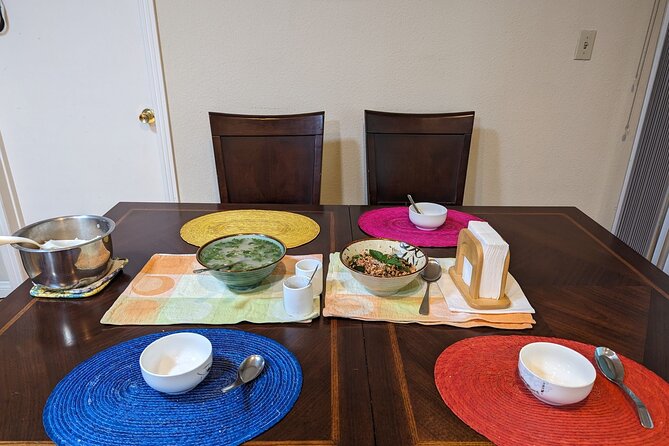
After the cooking lesson, you sit down to eat the food prepared during the class. The full activity lasts about three hours, so the shared meal takes up roughly the final part of the visit.
This is where the home setting pays off. You are not rushing out after a demonstration or eating a pre-set dish made by someone else. The meal connects directly to the work you have just done. You can taste the balance Young has explained, compare the textures, and ask follow-up questions while eating.
Young’s wife and father are part of the household, though the information does not specify exactly how involved they are in the cooking or meal. You should see the family presence as part of the atmosphere rather than expect a separate performance or formal cultural program.
I also like that the meal gives the class a natural ending. Cooking lessons can feel unfinished when the final dish is packed away or left for someone else to serve. Here, you sit at the table and enjoy the result with your host.
The food is homemade, and that distinction matters. You are getting a meal prepared in a private home, with the direct connection between instruction, cooking, and eating. It may not offer the polished presentation of a restaurant, but it should feel more personal.
What the $66 price includes in value
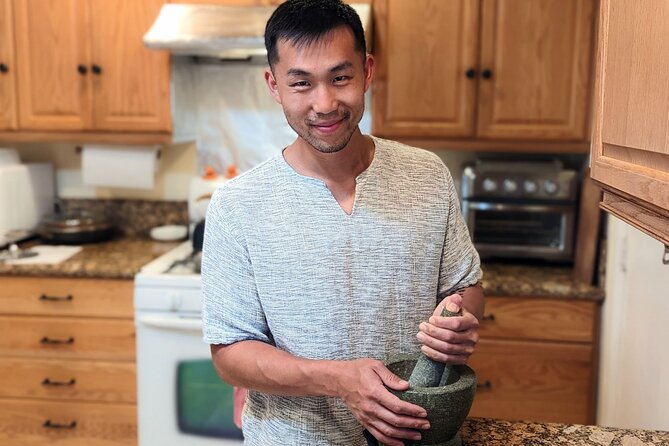
At $66 per person, this is priced above a basic meal and below many highly formal cooking workshops. The value depends on what you want from the afternoon.
You are paying for about three hours of time, a private class, instruction in three dishes, a shared meal, and an introduction to Thai food traditions. Since only your group participates, the class can be more focused than a large public session.
The private format is especially useful for people who want to ask questions. You can ask about flavor balance, regional dishes, or adapting recipes to dietary needs without waiting for a group of strangers to finish. That personal attention is a major part of the price.
Still, I would not book this solely as a cheap way to eat Thai food. If your main goal is lunch or dinner, a restaurant will be faster and may cost less. This experience makes more sense if you want instruction, cultural conversation, and a meal in a local home.
The price also includes an experience that is difficult to reproduce on your own. You can buy Thai ingredients and follow a recipe, but you will not automatically get Young’s explanation of how the flavors work together or how Central Thai and Isaan food differ.
Vegetarian, vegan, and pescatarian options
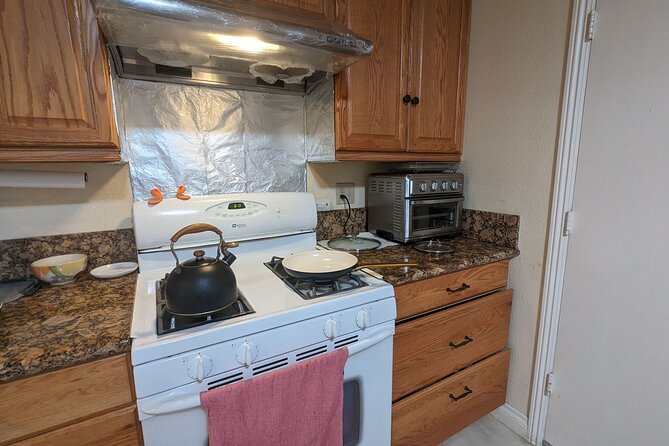
Young can accommodate vegetarian, vegan, and pescatarian diets. You need to share your dietary restrictions in advance, rather than assuming substitutions will be available when you arrive.
That advance notice is especially important in Thai cooking, where sauces, pastes, broths, and seasonings may contain fish, shellfish, or other animal products. The supplied information confirms that these three diet categories can be accommodated, but it does not list the exact replacement ingredients or final menu for each one.
If you have allergies or restrictions outside vegetarian, vegan, or pescatarian eating, ask about them before booking or as soon as you reserve. Do not rely on a last-minute adjustment in a private home kitchen.
Who will enjoy this class most
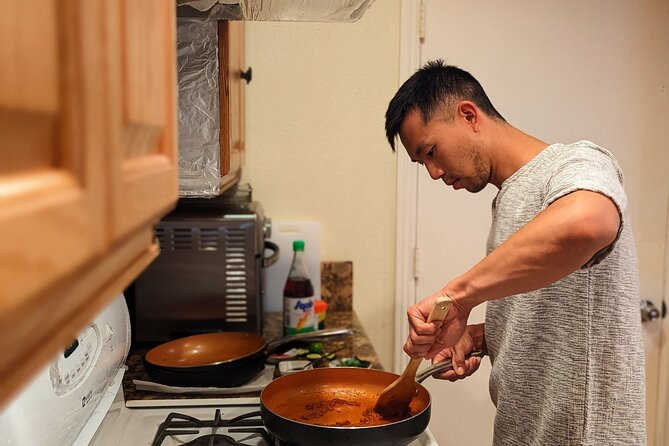
I would recommend this experience to people who like food with a story. It suits couples, families, friends, and small groups who want a private activity rather than a large class.
It is also a good choice for home cooks who want to improve their feel for Thai flavors. The focus on balance can help you cook with more confidence instead of treating a recipe as a fixed formula.
People interested in Thai culture should appreciate the discussion of regional food traditions and hospitality. The class offers a local point of view in Fullerton, which can be a welcome change from spending the day only at major attractions in Anaheim or Buena Park.
The class may be less suitable if you dislike entering private homes, want a highly polished culinary studio, or have only a short window in your schedule. The activity lasts around three hours, and the cooking plus meal format requires you to settle in and stay awhile.
The class has a top rating from the three available ratings, and the strongest praise focuses on Young’s patient teaching, thorough preparation, clear understanding of Thai food and customs, and colorful conversations. Those details point to an experience built around hospitality and explanation, not just chopping vegetables.
Practical planning for your afternoon
Set aside the full three hours, even though the cooking itself lasts about two hours. The final meal is part of the experience, not an optional add-on.
Use the exact meeting address, 819 N Acacia Ave, Fullerton, CA 92831. The activity starts and ends there. A mobile ticket is provided, and the location is near public transportation.
Because confirmation can take up to 48 hours and the class is private, check that your reservation is confirmed before finalizing a tightly timed schedule. Booking around 12 days ahead is a practical target.
If your plans change, you can cancel for a full refund up to two full days before the start time. The cut-off follows local time, so do not wait until the final evening and expect the same flexibility.
Should you book the Fullerton Thai cooking class?
Book it if you want a personal home visit, a hands-on lesson, and a meal that connects directly to what you cooked. The strongest reasons are the private format, Young’s patient teaching style, the three-dish menu, and the introduction to Central Thai, Royal Thai, and Isaan food.
Skip it if you are looking for a quick restaurant meal, a formal cooking studio, or a broad sightseeing tour. At $66, the value comes from time with a local host and the chance to learn, not from the food alone.
For curious eaters with three hours to spare in Fullerton, this is a warm and practical way to understand Thai cooking beyond the menu at a restaurant.
FAQ
Where does the Thai cooking class take place?
The class takes place at 819 N Acacia Ave, Fullerton, California 92831, near California State University.
How long does the experience last?
The activity lasts approximately three hours. The hands-on cooking class lasts about two hours, followed by a shared meal.
What dishes will I learn to prepare?
The class includes pineapple curry, wing bean salad, and galangal soup. You learn to prepare the dishes from scratch.
Is the class private?
Yes. This is a private activity, so only your group participates.
Can the class accommodate special diets?
Vegetarian, vegan, and pescatarian options are available. You should tell Young about your dietary needs in advance.
Where does the experience end?
The activity ends back at the meeting point on N Acacia Avenue in Fullerton.
How far ahead should I book?
The experience is booked an average of 12 days in advance. Confirmation is sent within 48 hours of booking, subject to availability.
Just added around the USA
- Hands-on Cooking Class in Charleston★ 5.0 · 83 reviews
- Sushi Making Cooking Class at a Local Brewery in Charlotte★ 5.0 · 2 reviews
- Authentic Asian Cooking Class in NYC (Includes 4-Course Meal)★ 5.0 · 8 reviews
- Hands-On Hawaiian Imu Cooking and Cultural Dining Experience★ 5.0 · 95 reviews
- Farm to Table Cooking Class at Kulaniapia Falls★ 4.5 · 36 reviews
- Baumkuchen Campfire Baking Class★ 5.0 · 3 reviews
- French Cooking Class in Baltimore (Includes 3-Course Meal)★ 5.0 · 2 reviews
- Private Atlanta Cooking Class with a Fun Local Chef Naina★ 5.0 · 2 reviews
Thai Cooking Classes, compared.

Half-Day Thai Cooking Class at Organic Farm in Chiang Mai
Read our review →
Cooking Class, Market & Thai Herbs Garden Tour
Read our review →
Phuket Thai Cooking Class with Market Tour Option
Read our review →
Tingly Thai Cooking School Half-Day Cooking Class
Read our review →
Lists this class appears in