
REVIEW · ADDIS ABABA, ETHIOPIA
Market Tour and Cooking Class with a Coffee Ceremony at a Home in Addis Ababa
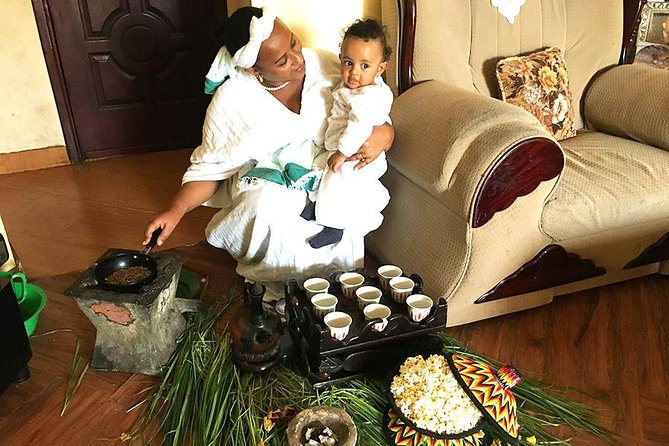
Food opens doors quickly. This private Addis Ababa experience takes you through a market, into a local home kitchen, and around a coffee tray for a traditional Ethiopian meal. I like the personal setting with Daniel and Tigist, and I like that you do more than watch: you help prepare dishes such as injera and roast coffee by hand. The main drawback is logistics, since the home may be about 40 minutes from central Addis Ababa and hotel pickup is not included.
At about three and a half hours, this is a compact way to meet a family and learn how food fits into daily life. The price is $168 per person, so it is not a cheap cooking demonstration. Still, the private format, market visit, meal, drinks, coffee ceremony, taxes, and gratuities make it easier to judge as a cultural visit rather than a standard class.
Key points to know before booking
- Daniel and Tigist host you at home: This is a family visit with cooking, conversation, and a shared meal, not a commercial teaching kitchen.
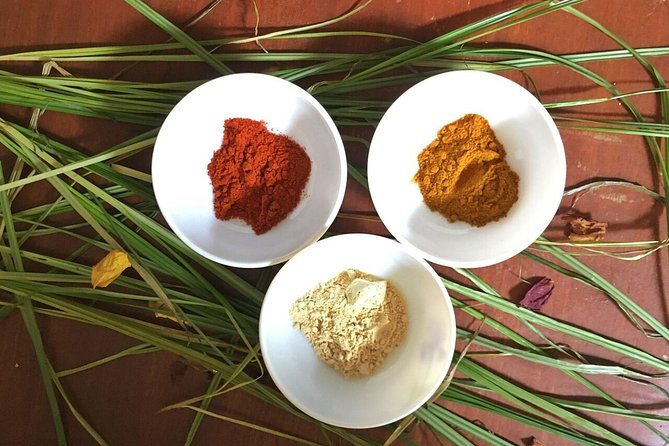
- The market comes first: You get a look at the ingredients behind Ethiopian cooking before preparing food.
- Injera is part of the lesson: You learn about Ethiopia’s famous fermented flatbread rather than simply receiving it at a restaurant.
- Coffee is roasted by hand: The closing ceremony gives the experience a strong cultural finish.
- Lunch or dinner is available: You can choose the time that fits your Addis Ababa plans.
- The tour is private: Only your group participates, allowing the hosts to adjust the visit to your interests and food needs.
A home kitchen instead of a standard cooking school
The setting is the heart of this experience. You are welcomed into the Addis Ababa home of Daniel and Tigist, where cooking is tied to family life rather than arranged around rows of workstations and polished equipment.
That distinction matters. A commercial cooking class can teach a recipe well, but a home visit gives you a better sense of how food is prepared and shared in an Ethiopian household. You are not just learning a dish for its own sake. You are meeting the people who cook it and eating with them afterward.
Daniel, Tigist, and their children have been described as warm, accommodating, and easy to spend time with. Daniel and Tigist also offer insight into Ethiopia beyond the kitchen, which adds value if you are visiting Addis Ababa for the first time and want more context than a restaurant meal can provide.
The atmosphere may suit you if you prefer conversation and personal contact over a formal lesson. It may not suit you if you want a highly structured class with exact timings, printed recipes, or professional cooking stations. The experience is intentionally informal.
More Cooking Classes with a Market Tour in the world:
- Hanoi Cooking Class: Culture, Local Market & Meaning CSR Impact
★ 5.0 · 5,147 reviews - 5 Traditional Dishes Hanoi Cooking Class with Market Trip
★ 5.0 · 4,890 reviews - Cooking Class and Lunch at a Tuscan Farmhouse with Local Market Tour from Florence
★ 5.0 · 4,831 reviews
Starting at an Addis Ababa market
The outing begins with a private market visit. This gives you a practical introduction to the ingredients that later appear in the cooking session.
A market stop is useful because Ethiopian food can look unfamiliar when it arrives on a large shared platter. Seeing ingredients before they are cooked helps connect the finished meal to everyday shopping and preparation. You can expect the market portion to be guided by your hosts, who can explain what you are seeing and how it is used at home.
The available information does not name the market or list every ingredient, so you should not expect a fixed shopping checklist. The selection may also shift with the season. That flexibility is part of the point, but it means the menu is not guaranteed in advance.
This is also the part of the experience most affected by the meeting arrangements. The activity begins and ends at the stated meeting point in Addis Ababa, and hotel pickup and drop-off are not included. One account placed the home roughly 40 minutes outside central Addis Ababa. Allow extra time for getting there, especially if your schedule includes a museum, flight, or another timed activity.
Learning the basics of injera
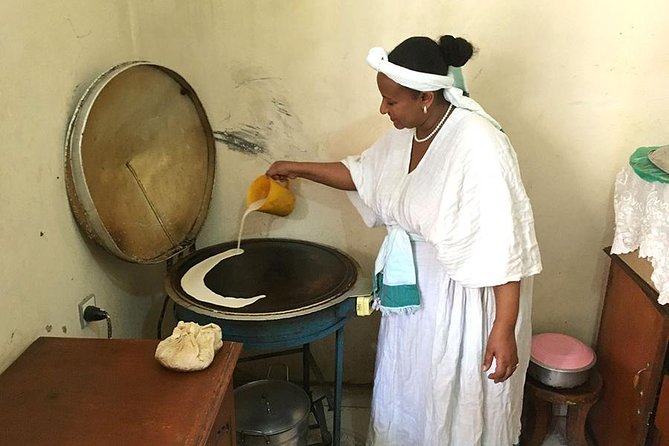
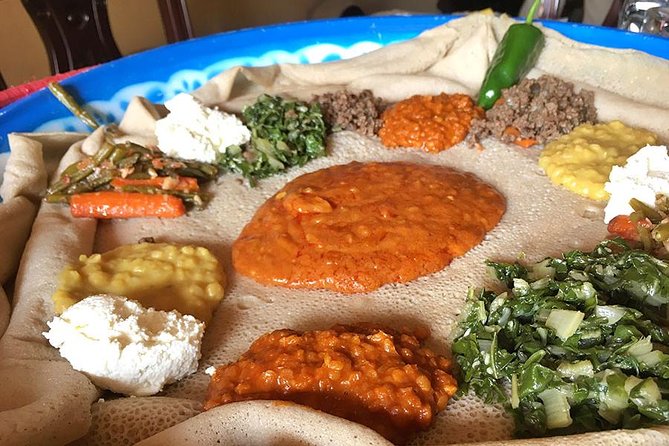
Injera is the food lesson most visitors will be keen to understand. This soft, fermented flatbread is central to many Ethiopian meals, both as food and as the surface used to gather stews and vegetables.
The class introduces you to the process rather than treating injera as a mysterious side dish. You learn how it is prepared, and you get to take part in making traditional Ethiopian food. The precise menu can change with the season, but injera is specifically highlighted as one of the dishes you may prepare.
I like this part because it turns lunch or dinner into a lesson in how an Ethiopian meal works. You are not simply sampling a plate of unfamiliar dishes. You are learning one of the foundations of the cuisine, then eating the results with your hosts.
Keep your expectations practical. This is not advertised as professional chef training, and the menu is not fixed. If you need a vegetarian meal, have an allergy, or follow a particular diet, tell the provider when booking. The vegetarian option is available, but advance notice matters.
Cooking, eating, and talking with the family
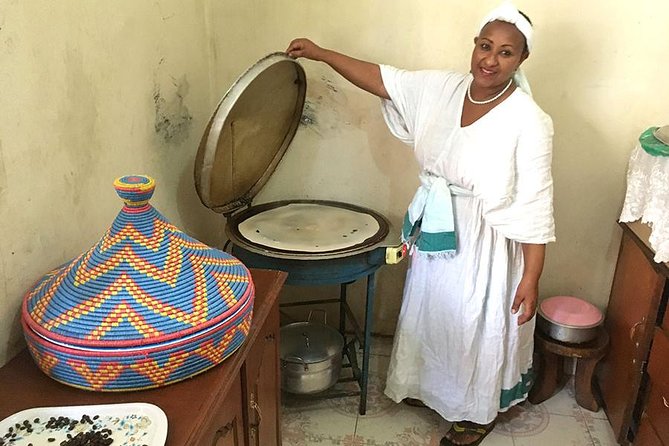
After the market, you prepare food in the family kitchen. The experience is private, so your group is not combined with a larger class. That can make a real difference for questions, pace, and dietary requests.
Tigist is described as a patient teacher, which is useful for a hands-on lesson involving unfamiliar methods. You can expect guidance as you prepare the menu, though the exact recipes and dishes may depend on what is in season.
The meal that follows is a major part of the value. The food is not a sample portion handed over at the end of a demonstration. You prepare it, sit down with the hosts, and eat it as part of the visit. That gives the class a more natural rhythm and helps turn a recipe lesson into a family experience.
Daniel and Tigist are also a resource for questions about Ethiopia. The visit can include conversation about local life and culture, not only instructions about cooking. One account even described the family helping with a museum visit, but you should not assume that this is part of the standard three-and-a-half-hour program.
The family setting also means the experience may feel less polished than a restaurant-based class. That is not a flaw for most people booking this activity. It simply tells you what you are paying for: personal contact and home cooking, not a staged culinary production.
More Home Cooking Classes in the world:
- Khmer Cooking Class at a Local’s Home in Krong Siem Reap
★ 5.0 · 2,731 reviews - Local Home Korean Cooking Class & Market Adventure in Seoul
★ 5.0 · 1,024 reviews - Marrakech: Moroccan Cooking Class with a Local Family
★ 4.9 · 668 reviews - Mexican Cooking from Scratch in a Local Home in Tulum
★ 5.0 · 585 reviews
Ending with a hand-roasted Ethiopian coffee ceremony

The coffee ceremony provides the clearest cultural finale. Fresh beans are roasted by hand, and the coffee is prepared as part of the traditional ceremony after the meal.
Coffee is more than a final drink here. The ceremony creates time to sit, talk, and watch a familiar ingredient handled with care. If you have only ordered Ethiopian coffee in a cafe, this gives you a better sense of the ritual surrounding it.
I especially like the order of the experience. You first see food in the market, then help cook it, then share the meal, and finally take part in coffee preparation. The sequence feels connected rather than like three unrelated activities.
The supplied details do not specify how many coffee servings are offered or the exact length of the ceremony. You can expect the coffee portion to be included, along with beverages, but exact presentation may vary.
Is $168 per person a fair price?
At $168 per person, this experience costs more than a basic market walk or a group cooking class. The price makes more sense if you value the private format and the chance to spend time in a real home.
Your fee includes the private market tour, cooking class, coffee ceremony, beverages, taxes, handling charges, and gratuities. There are no surprise add-ons listed for those core parts. Only your group participates, which is a strong benefit for couples, families, and small groups who want the visit to feel personal.
The price also covers something difficult to arrange independently: a local introduction to shopping, cooking, family life, and coffee culture in one short outing. You are paying for access and conversation as much as for food.
The value is weaker if you mainly want a large quantity of food or a formal cooking qualification. You may also need to budget for your own transport because hotel pickup and drop-off are not included. If the home is about 40 minutes from your hotel, the transfer time adds to the practical cost of the afternoon or evening.
Group discounts are available, so larger parties should check how the per-person cost changes. For a private group that wants an easy cultural activity, the fee can be reasonable. For a solo visitor comparing it with a restaurant meal, it will feel expensive.
Timing, transport, and who will enjoy it
The experience lasts approximately three hours and 30 minutes. You can choose a lunch or dinner tour, giving you some flexibility when planning your Addis Ababa sightseeing.
I would place this on a day when you can keep the schedule loose. The market, travel to the home, cooking, meal, and coffee ceremony all work better without a clock pressing you toward the next stop. The activity ends back at the meeting point, not at your hotel.
Public transportation is nearby, and most people can participate. Service animals are allowed. Because the experience is private, you can raise mobility, food, or cooking concerns when you book, although the supplied information does not describe the specific home layout.
The best match is someone who enjoys:
- Meeting local people in a home setting
- Learning by taking part rather than watching
- Trying traditional food with some flexibility in the menu
- Asking questions about Ethiopian culture
- Sharing a meal in a small private group
- Making room for a longer transfer outside central Addis Ababa
You may prefer another activity if you want a quick central-city stop, a fixed menu, or a polished professional kitchen.
Dietary requests and seasonal menus
The menu may change depending on the season. That is useful if you want food connected to what is available locally, but it means you should avoid booking with one exact dish in mind unless the provider confirms it.
Vegetarian food is available. Allergies, dietary restrictions, and cooking preferences should be provided at the time of booking. This is especially important in a home kitchen, where advance notice gives Daniel and Tigist a fair chance to plan the meal.
The class is designed for most participants, but the available information does not promise that every dietary need can be met. Ask before booking if your requirements are strict or medically serious.
Cancellation and booking timing
Confirmation is provided when you book, and the experience is often reserved well ahead of the date. Booking about 89 days in advance is the average, so popular dates may require planning.
You can cancel for a full refund if you do so at least two full days before the local start time. Inside that two-day window, the payment is not refunded, and changes are not accepted. I would avoid booking this on a day when your arrival, transport, or flight plans remain uncertain.
Should you book this Addis Ababa food experience?
I would book it if you want personal contact, home cooking, and a gentle introduction to Ethiopian food culture. Daniel and Tigist are the main reason to choose it over a standard class, while the market and coffee ceremony give the visit a fuller shape.
The strongest parts are the warm family setting, patient instruction, hands-on preparation, and freshly roasted coffee. The main cautions are the $168 price, the lack of included hotel transport, the possible 40-minute journey, and the fact that the menu changes with the season.
Choose a lunch or dinner time that leaves you breathing room. Tell the provider about dietary needs when you reserve. If you can accept a less formal class and see the meal as part of a cultural visit, this is a rewarding way to spend half a day in Addis Ababa.
FAQ
How long does the experience last?
The experience lasts approximately three hours and 30 minutes.
Where does the activity take place?
It takes place in Addis Ababa, Ethiopia, beginning at the stated meeting point and ending back at the meeting point.
What is included in the price?
The price includes beverages, taxes, fees, handling charges, gratuities, a private market tour, a cooking class, and a coffee ceremony with Daniel and Tigist.
Is hotel pickup included?
No. Hotel pickup and drop-off are not included.
Is the experience private?
Yes. Only your group participates in this private activity.
Can I choose lunch or dinner?
Yes. The experience offers a choice of lunch or dinner to fit your schedule.
Is a vegetarian option available?
Yes. A vegetarian option is available, but you should request it when booking.
Can the menu accommodate allergies or dietary restrictions?
You should advise the provider about allergies, dietary restrictions, and cooking preferences at the time of booking. The menu may vary by season.
Is this a commercial cooking class?
No. It is a visit to an Addis Ababa home where local hosts share Ethiopian food and culture through a market visit, cooking session, meal, and coffee ceremony.
What is the cancellation policy?
You can receive a full refund if you cancel at least two full days before the experience start time. Cancellations or changes made within two full days are not refunded or accepted.
More Coffee Stops in the world
- Da Nang Cooking Class with Coffee Tasting and Market Visit
★ 5.0 · 310 reviews - Hanoi Cooking Class: Pho/Bun Cha/Banh Xeo…+Free Egg/Salt Coffee
★ 5.0 · 267 reviews - Ethiopian Cooking Class and Coffee Ceremony with a Local in Addis with transfers
★ 5.0 · 14 reviews - Hanoi Cooking Class: Pho/Bun Cha/Nem + Free Egg/ Salt Coffee
★ 4.9 · 11 reviews
Just added around the world
- Aroidee’s Farm-Fresh Thai Cooking Experience★ 5.0 · 8 reviews
- Signature Thai Cooking Course★ 5.0 · 79 reviews
- Private Half-Day Thai Cooking Class in Chiang Mai★ 5.0 · 4 reviews
- Half Day Guided Thai Cooking Class in Chiang Mai★ 5.0 · 13 reviews
- Private Virtual Thai Cooking Class★ 5.0 · 9 reviews
- Northern Thai Cooking Class in Chiang Mai in a Countryside Home★ 5.0 · 2 reviews
- Online Thai and Akha Cooking Class★ 5.0 · 70 reviews
- 5 Hour Morning Thai Cooking Course★ 5.0 · 31 reviews
Cooking Classes with a Market Tour, compared.

Hanoi Cooking Class: Culture, Local Market & Meaning CSR Impact
Read our review →
5 Traditional Dishes Hanoi Cooking Class with Market Trip
Read our review →
Cooking Class and Lunch at a Tuscan Farmhouse with Local Market Tour from Florence
Read our review →
Cooking Class, Market & Thai Herbs Garden Tour
Read our review →
Authentic Cooking Class with Market & Farm Visit
Read our review →
Paella Cooking Experience & Boqueria Market Tour
Read our review →
Cooking Class Hoi An:Local Market, Basket Boat, Fishing & Cooking
Read our review →
Hoi An Cooking Class(Market,BasketBoat Crabfishing&Cooking Class)
Read our review →Lists this class appears in