
REVIEW · BALI, INDONESIA
The Authentic Balinese Cooking Experience
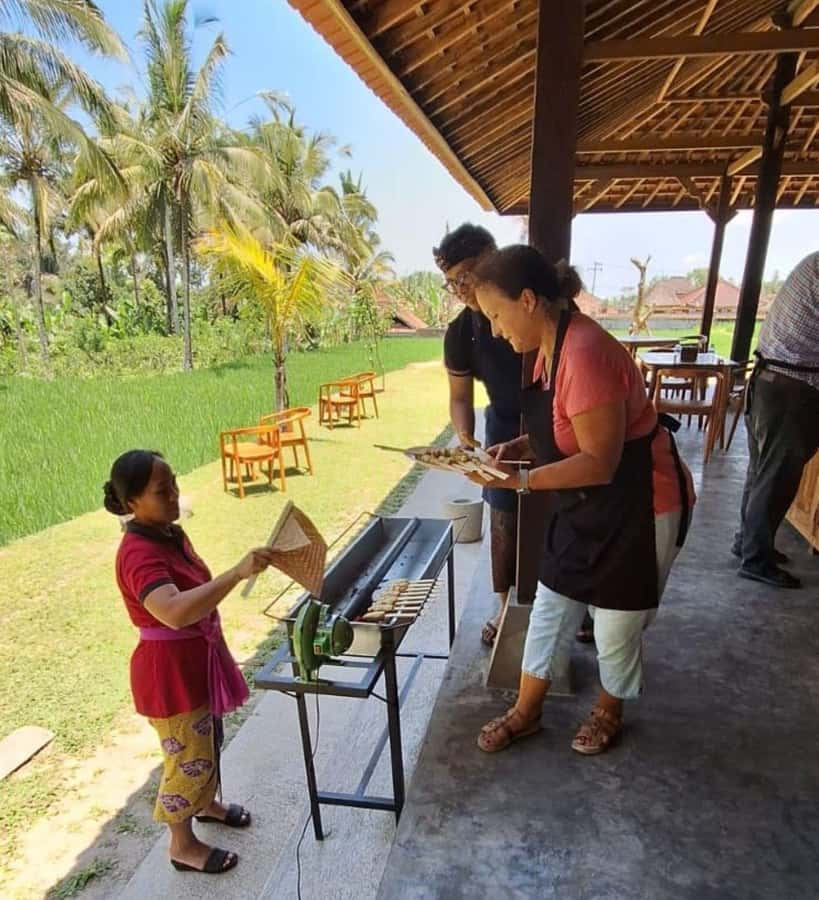
Cook Bali where the rice fields begin. This four-hour experience brings you from an Ubud hotel pickup to a traditional home, a small farm, and a cooking station beside rice fields. I like the way it connects food with everyday Balinese life, rather than treating the cooking class as a stand-alone kitchen lesson.
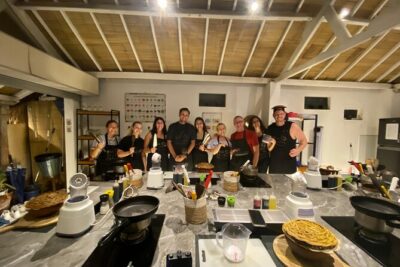
I also like the modest group size, with no more than eight people, and the chance to eat the dishes you prepare. The main consideration is that each cooking station is shared by two people, so you may not handle every step yourself. The setting is not suitable for wheelchair users.
Key points at a glance
- A cultural visit before cooking: See a traditional Balinese house, its layout, and local customs before entering the kitchen.
- A farm stop with fruit tasting: Learn about local plants, help harvest fruit, and see ingredients in their growing environment.
- Five main dishes and one dessert: You prepare a substantial menu, guided by a Balinese instructor in English or Indonesian.
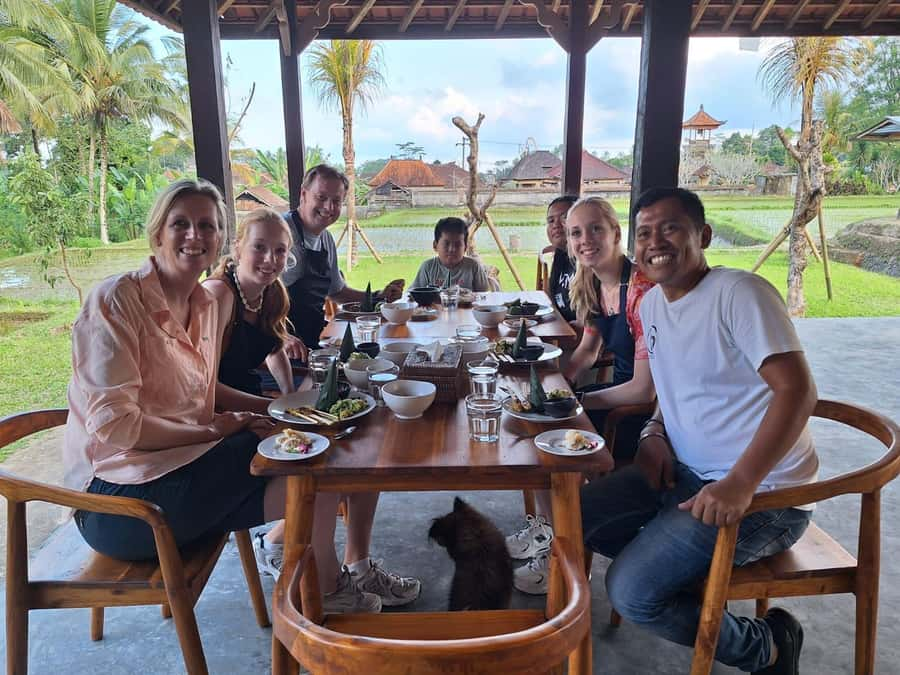
- A meal beside rice fields: Eat your own cooking with green views, and possibly a sunset if your class takes place later in the day.
- Small group, shared stations: The maximum is eight participants, with two people assigned to each cooking station.
- Good value at $33: Transport from and back to hotels in the Ubud area, ingredients, equipment, recipes, coconut, water, and your meal are included.
From Ubud roads to a Balinese family home
The day begins with pickup and drop-off in the Ubud area. That matters because a cooking class can lose much of its value when you must arrange separate transport across unfamiliar roads. Here, the ride is part of the outing, taking you toward the rice fields and away from the busiest parts of town.
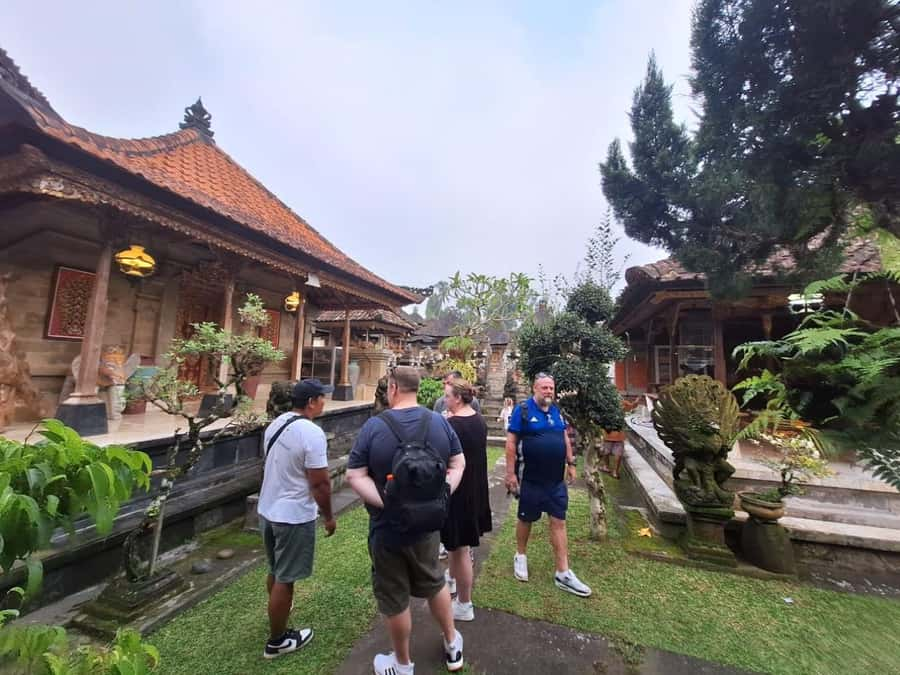
The first stop is a traditional Balinese house. This is not just a quick photo stop before the cooking begins. You learn about the arrangement of the home and local customs, giving you useful context for the family setting that follows.
Balinese traditional compounds often reflect the way family life, ritual, and daily work fit together. The information provided for this activity does not promise a detailed architectural lecture, so you should expect a practical introduction rather than a formal museum tour. Still, seeing the home before preparing food makes the class feel more personal.
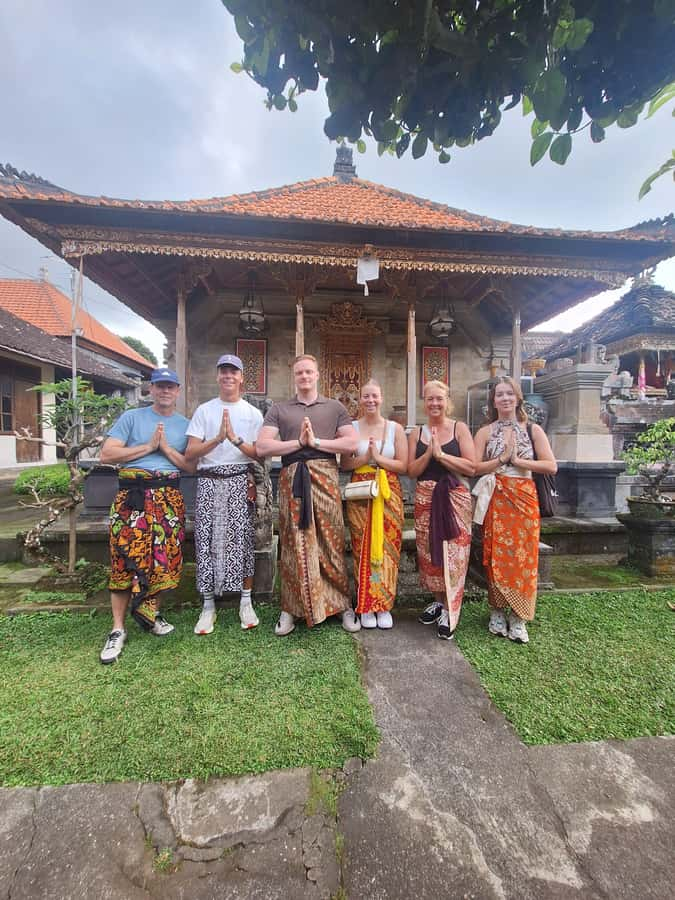
One of the strongest parts of the experience is the chance to see a private home and family temples. That detail gives the visit a more intimate quality than a commercial kitchen class. You should show the same care you would in any family home: listen to instructions, dress respectfully, and ask before photographing private areas.
More Balinese Cooking Classes in Ubud:
- Ubud Cooking Class Bali with Balinese Chef
★ 5.0 · 1,609 reviews - PRIVATE Authentic Balinese Cooking Class in Ubud at Putu’s Home
★ 5.0 · 644 reviews - Balinese Ubud cooking school (9 Dish Cooking and Market Tour)
★ 5.0 · 540 reviews
A short walk through ordinary Bali
After the house visit, you walk toward the cooking place near the rice fields. The walk lets you see local daily activity instead of moving directly between tourist stops. It is a small distinction, but it changes the pace of the day.
You may see people working and going about their routines along the way. The available details do not specify the walking distance or the exact terrain, so comfortable shoes are sensible. Anyone with limited mobility should note that the activity is not suitable for wheelchair users.
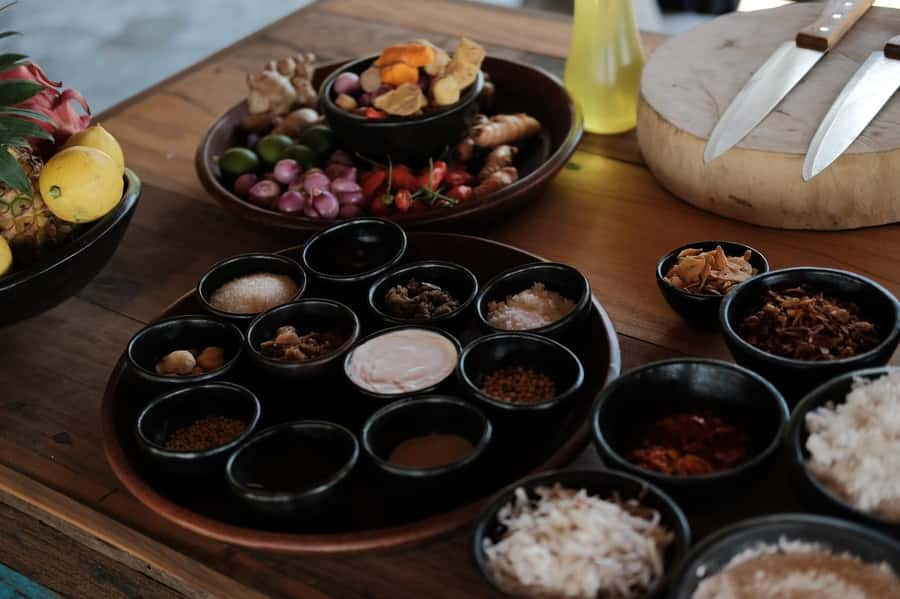
The setting also helps explain Balinese cooking. Ingredients are not presented as anonymous items taken from a packet. You get a chance to see where local plants grow and how fruit fits into daily life before you begin chopping and grinding.
What the farm visit adds
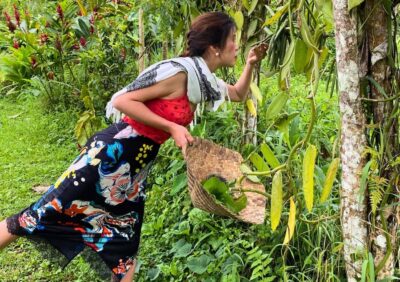
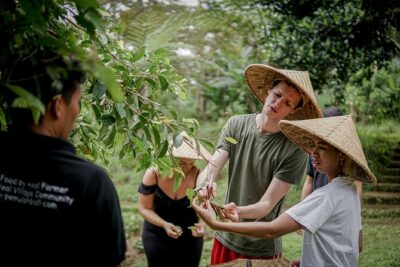
The farm stop focuses on local plants, with time to learn about the ingredients and taste local fruit. You may also help harvest fruit, which gives the visit a hands-on touch without making it another major activity.
I like this part because it answers a question many cooking classes skip: what are these ingredients before they reach the cutting board? Even if you already cook Asian food at home, seeing the plants and tasting fruit at the source can make the later lesson easier to remember.
You should keep expectations realistic. This is a farm visit within a four-hour program, not a full agricultural tour. The supplied information does not name the plants or guarantee a particular fruit, since availability may change. Think of it as a useful introduction to local produce, not a catalog of every Balinese crop.
The farm stop is especially worthwhile if you enjoy learning through place. You are not only collecting recipes. You are connecting the spices, fruit, and plants to the village setting around you.
Coconut first, then the cooking lesson
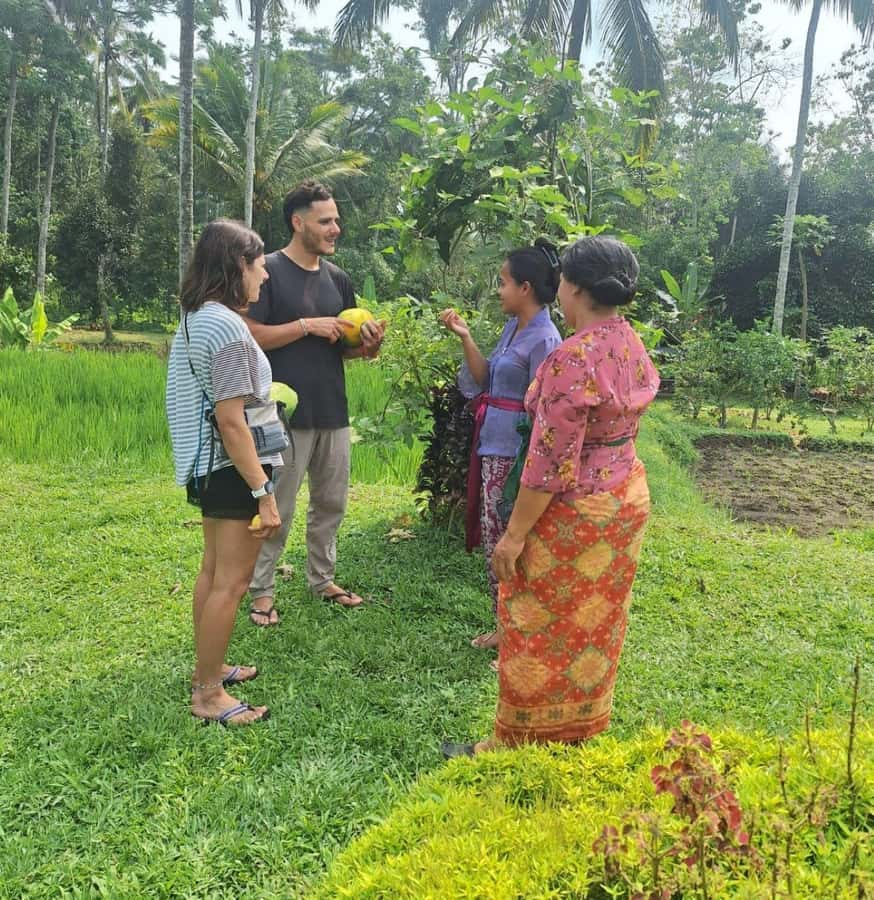
Before cooking, you receive a young coconut as a welcome drink. It is a simple touch, but a fitting one after the ride and walk. Mineral water is also included.
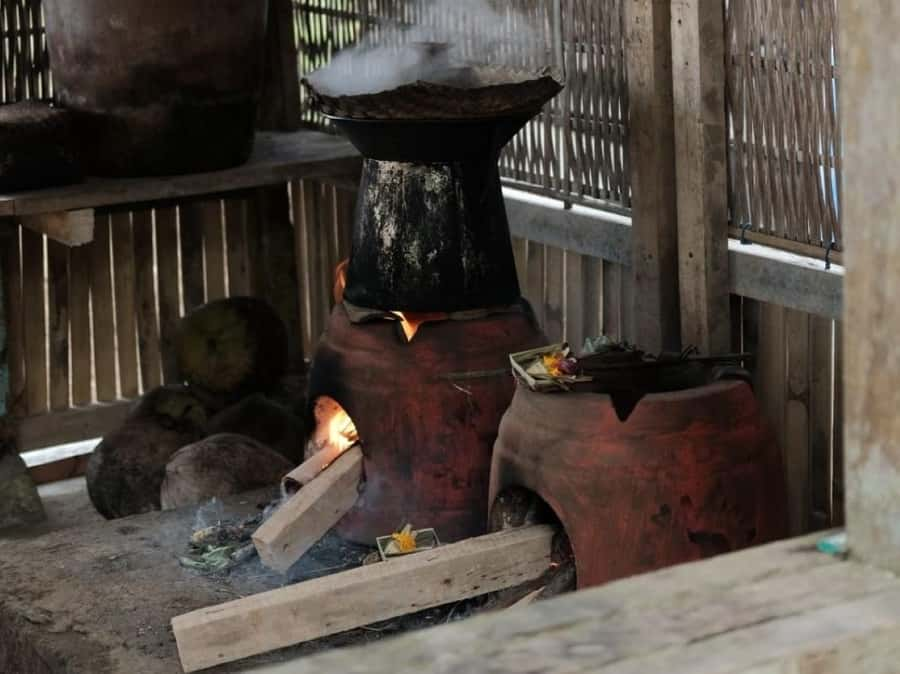
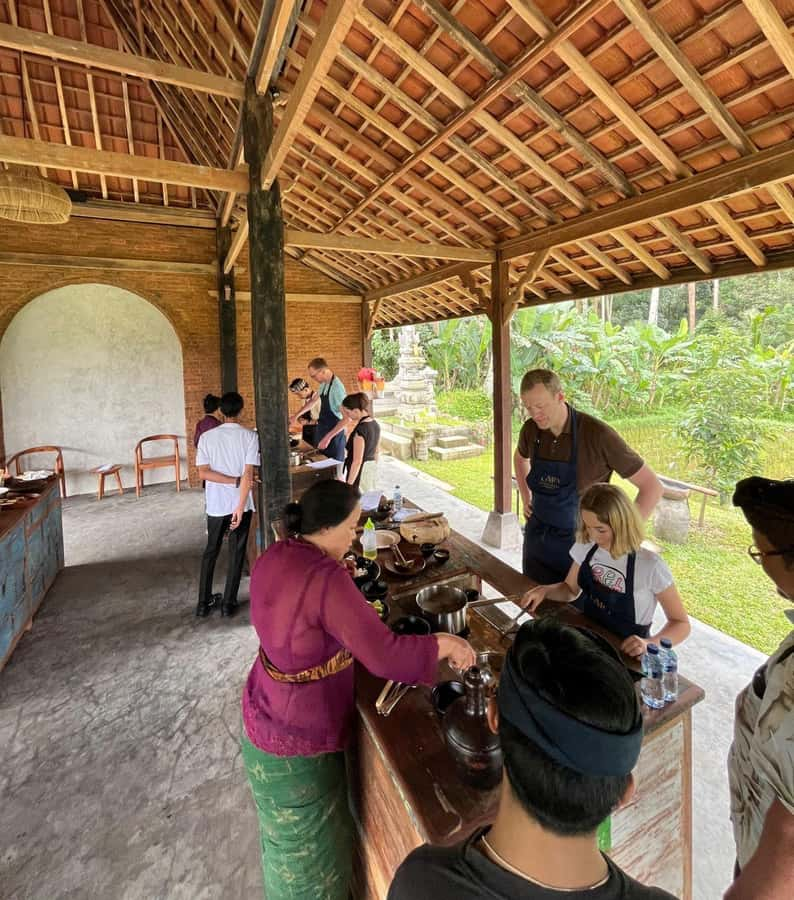
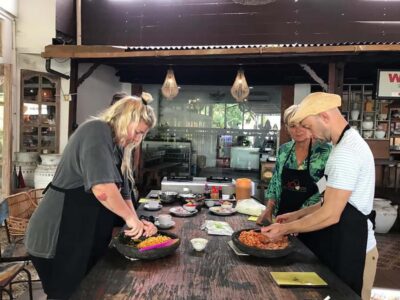
The cooking lesson then moves into the practical work. You chop, grind, and simmer while the instructor explains how the ingredients work together. The focus is on Balinese spices and the balance of flavors, rather than simply following a list of instructions.
The instructor speaks English or Indonesian. The class is designed to guide you through each step, but you still have room to adjust the food to your own taste. That is important because a dish prepared to your preference is more useful than one produced only for demonstration.
The cooking process takes about two hours. You prepare five types of main dish and one dessert, which is a generous amount for a class lasting four hours overall. The exact dishes are not provided, so do not book expecting a named menu unless the operator confirms it before your visit.
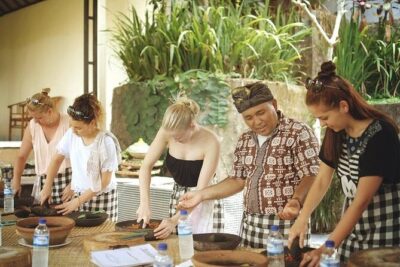
Each station is shared by two people. This setup can work well for couples, friends, or family members who want to cook together. It also means you should not assume that every participant gets an individual station or performs every task alone.
If you are keen to practice every technique yourself, speak up early and take turns with your partner. If you are less confident in the kitchen, sharing may make the class easier. The arrangement gives you company, but it slightly reduces individual hands-on time.
A few more cooking classes around Ubud worth a look
- Ubud: Cooking Class with Transfers and Optional Market Visit
★ 4.9 · 824 reviews - Ubud: Balinese Cooking Class and Market Tour
★ 4.8 · 531 reviews - Balinese Farm Cooking Class by Pemulan Bali
★ 5.0 · 410 reviews - Balinese Authentic Cooking Class in Ubud
★ 5.0 · 239 reviews
Why the spice lesson matters
Balinese food is shaped by layers of seasoning, and the class gives you a chance to understand how those layers are built. The goal is not just to copy a recipe book. You learn the role of different ingredients and how they combine into the flavor of the finished food.
The class includes a recipe book, so you can try the dishes again at home. That improves the value of the $33 fee. A pleasant meal is easy to forget, but written recipes give you a way to keep the experience going after Bali.
The information does not identify a particular spice paste, cooking method, or named dish. That is worth noting if you are a serious food enthusiast looking for a very specific menu. The class is better suited to someone who wants a broad, practical introduction to Balinese cooking and culture.
I would also expect the results to vary slightly according to your own taste. Since you serve your creations according to your preference, the meal is not meant to be a rigid, restaurant-style presentation. That freedom is part of the appeal.
Eating your own food beside the rice fields
After roughly two hours of cooking, you sit down to eat the meal you prepared. The food is served with views of the rice fields, and an afternoon session may include a sunset.
This is where the various parts of the day come together. You have seen the home, walked through the local area, visited a farm, handled the ingredients, and then eaten the finished meal in the same rural setting. The view is not a substitute for good instruction, but it gives the meal a pleasant sense of place.
The program describes lunch or dinner, depending on the starting time. Check availability for the available times when you book. If you want the best chance of an afternoon sunset, confirm that the selected start time lines up with the later session.
Soft drinks and beer are not included, though they are available to purchase. Young coconut and mineral water are included, so you are not left without a drink, but budget a little extra if you want something else with the meal.
What $33 really gets you
At $33 per person, this is good value for a four-hour outing, particularly because the fee covers several separate elements:
- Hotel pickup and drop-off in the Ubud area
- A traditional house visit
- A farm visit and local fruit tasting
- Fruit harvesting
- Young coconut and mineral water
- Cooking equipment
- A recipe book
- The food you prepare and eat
If you booked transport, a cultural visit, a farm stop, and a cooking class separately, the day would quickly cost more and require extra planning. The included transport is useful, especially for a first visit to Bali.
The value is strongest for people who want more than a meal. If your main goal is simply to eat excellent Balinese food, a restaurant will be quicker and easier. Here, you pay for the setting, instruction, cultural access, and the work of preparing the food yourself.
The small group also helps. With a maximum of eight participants, the instructor has a better chance of answering questions and keeping an eye on each station. The shared setup is the trade-off, but it is still more personal than a large demonstration class.
Who will enjoy this most
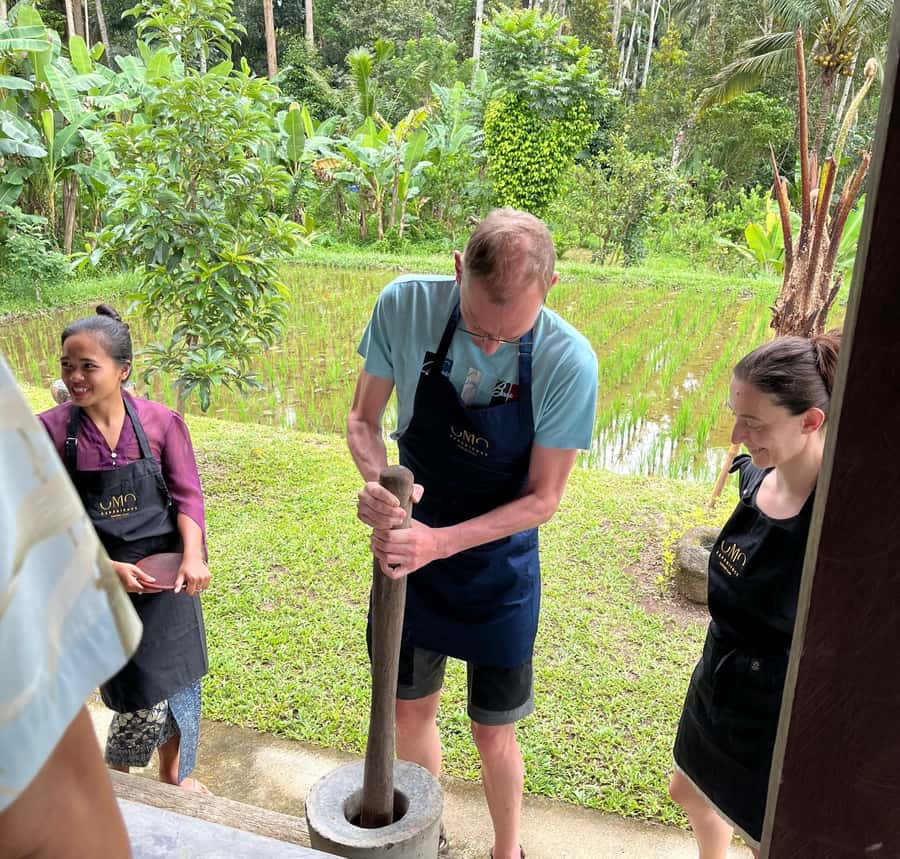
I would recommend this experience to couples, families, solo visitors who enjoy small groups, and anyone who likes food with a cultural connection. It is also a good choice if someone in your party claims not to enjoy cooking. One attendee who normally dislikes cooking still found the activity enjoyable, which suggests the welcoming setting does some of the work.
You do not need to be an experienced cook. The class is built around guidance, and the opportunity to season food to your taste removes some pressure. You should be comfortable with basic kitchen activity such as chopping and stirring, but there is no stated skill requirement.
This is less suitable if you want a highly technical culinary course, a private station for every person, or a fixed menu of named dishes. It is also not suitable for wheelchair users because of the house visit, farm stop, and walk to the cooking area.
Bring a camera if you want to record the house, garden, farm, food, and rice field setting. Pets are not allowed. The most useful clothing choice is something comfortable for walking and cooking, though no formal dress code is provided.
Booking flexibility and practical limits
You can cancel up to 24 hours before the activity for a full refund, and you can reserve now and pay later. Those terms help if your Ubud schedule is still shifting.
The group size is limited to eight, but the cooking stations are shared between two people. If you are booking alone, you should be prepared to work with another participant. If you are booking with a companion, the shared arrangement will likely feel natural.
The activity lasts four hours, but the exact starting times depend on availability. Hotel transport is specified for the Ubud area, so confirm pickup details if you are staying elsewhere. The available information does not promise transfers from every part of Bali.
Should you book this Balinese cooking class?
I would book it if you want a friendly, useful introduction to Bali through food, especially if you are staying in Ubud and value included transport. The house visit, farm stop, fruit tasting, cooking lesson, and rice field meal make this feel like a half-day cultural outing rather than a class alone.
The strongest reasons to go are the family setting, the small group, and the chance to eat your own six-part menu. The main compromises are shared workstations, an unspecified menu, and limited suitability for anyone using a wheelchair.
At $33, the experience offers a lot for the price. Book it when you want to meet local culture through a home, a garden, and a shared meal. Skip it only if you prefer a private, advanced cooking lesson with a guaranteed list of dishes.
FAQ
How long does the Balinese cooking experience last?
The activity lasts four hours. The cooking process itself takes approximately two hours, followed by the meal you prepare.
How much does the experience cost?
The price is $33 per person.
Does the price include hotel transportation?
Yes. Hotel pickup and drop-off are included for hotels in the Ubud area.
How many people can join the activity?
The small group has a maximum of eight participants.
Do participants get individual cooking stations?
No. Each cooking station is shared between two people.
What food will be prepared?
You prepare five types of main dish and one type of dessert. The specific dishes are not stated.
Is food included after the class?
Yes. You eat the meals you prepare during the class.
Is a recipe book provided?
Yes. A recipe book is included.
What drinks are included?
A welcome drink of young coconut and mineral water are included. Soft drinks and beer can be purchased separately.
Which languages does the instructor speak?
The instructor speaks English and Indonesian.
Is the activity suitable for wheelchair users?
No. The experience is not suitable for wheelchair users.
Can I cancel the booking?
You can cancel up to 24 hours in advance for a full refund. You can also reserve now and pay later.
Just added around Ubud
- Ubud: Organic Farm Harvest, Bali Cooking Class by Pemulan★ 4.8 · 12 reviews
- packages cooking class and romantic dinner in a local home★ 5.0 · 4 reviews
- Jambangan bali cooking class with morning market tour★ 5.0 · 35 reviews
- Ubud: Balinese Cooking Class with Hotel Transfers★ 4.8 · 17 reviews
- Bali: Cooking Class with Monkey Forest and Art Village Tour★ 5.0 · 2 reviews
- Balinese cooking class/Go shopping at the market, cook, eat★ 5.0 · 12 reviews
- PRIVATE Ubud Market Tour & Balinese Cooking Class with Putu★ 5.0 · 125 reviews
- From Ubud: Authentic Bali Farm Cooking School & Organic Farm★ 5.0 · 122 reviews
Balinese & Indonesian Cooking Classes, compared.
PRIVATE Authentic Balinese Cooking Class in Ubud at Putu’s Home
Read our review →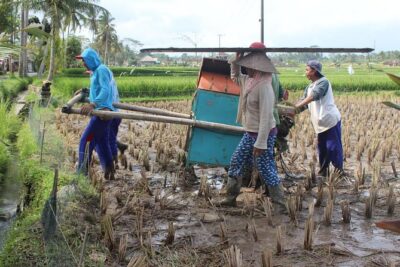
Balinese Ubud cooking school (9 Dish Cooking and Market Tour)
Read our review →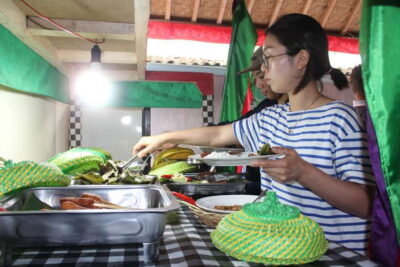
Learn to cook Indonesian food at Gili Cooking Classes Trawangan
Read our review →Lists this class appears in