
REVIEW · TUSCANY, ITALY
Siena countryside: cooking class in a real Tuscan farmhouse
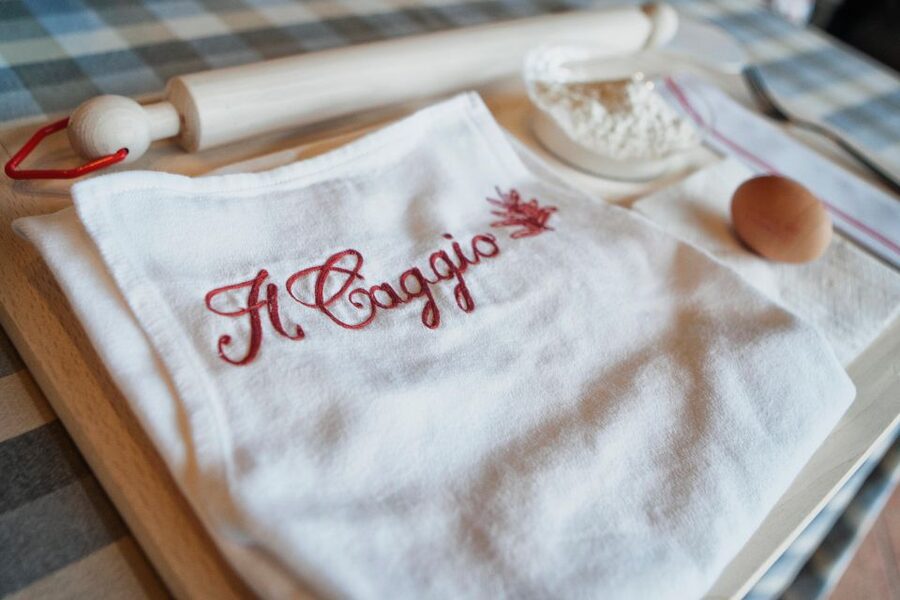
Put your apron on in the Tuscan countryside. This four-hour cooking class at Agriturismo Il Caggio combines hands-on pasta making with a visit to a working 20-hectare family farm. I like the use of fresh farm ingredients, and I like that you sit down afterward for a full three-course meal rather than simply sampling a bite. The main drawback is practical: you must arrange your own transport to the farmhouse.
The class is taught in Italian and English, with an experienced cook guiding you through family recipes. Rebecca and her mother have been praised as warm hosts, and a booking with no other participants once turned into a private lesson. That kind of small-scale setting can make the class feel personal, though group size can vary by date.
Key points at a glance
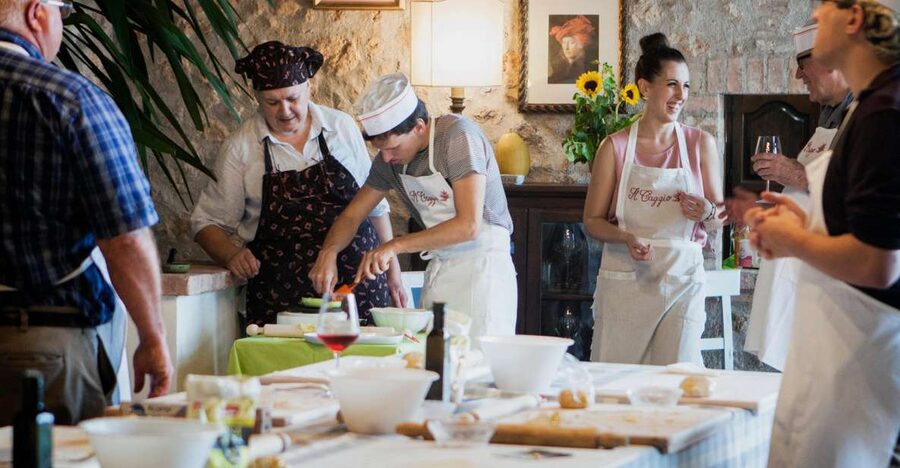
- Fresh pasta is the main event: You might prepare ravioli, tagliatelle, pici, or gnocchi, depending on the class and season.
- The farmhouse is part of the experience: You visit the vegetable garden and olive grove before cooking with ingredients from the family farm.
- You eat what you make: The class ends with a three-course meal, drinks, and refreshments at the farmhouse.
- Family recipes come home with you: Each participant receives the recipes used during the class.
- The setting is outside Siena: Free parking is available, but transfers are not included.
- It offers strong value for food lovers: At $141.61 per person, the price covers about four hours, instruction, tools, ingredients, a meal, and a farm visit.
Arriving at Agriturismo Il Caggio near Siena
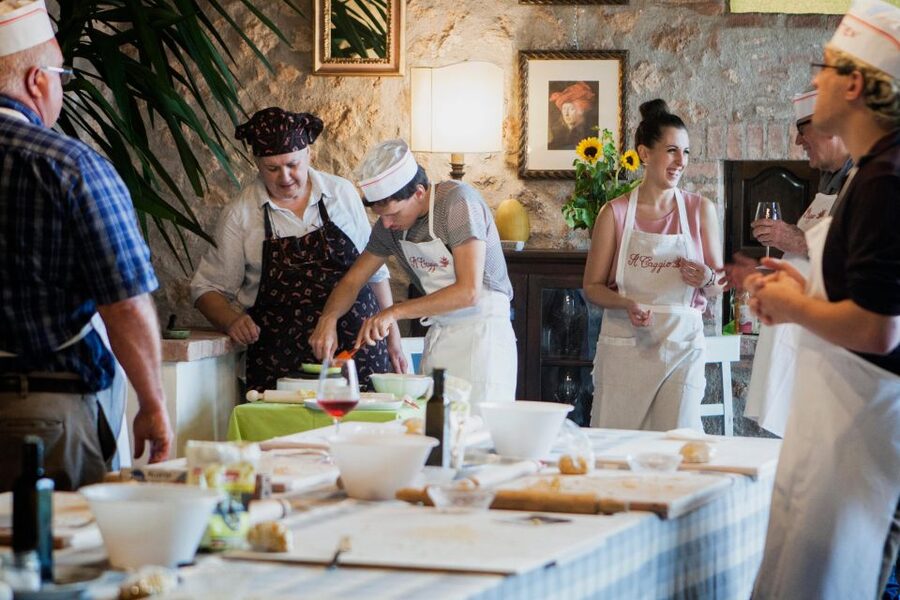
Agriturismo Il Caggio is a few minutes from Siena, in the Sienese countryside. You meet at the farmhouse itself, not in central Siena, and the activity ends there too. If you are driving, free parking is available for cars and motorbikes.
That simple meeting arrangement matters. You do not spend part of the class waiting for a shuttle or rounding up a group in town. On the other hand, the absence of a transfer means you need to plan the journey yourself. The experience price covers the class and farm visit, not transportation.
The exact starting time depends on the date you choose. Allow the full four hours, since the cooking portion takes about three hours and the final meal follows. This is not a quick pasta demonstration squeezed between Siena sights. It works better as a main activity for half a day.
The farmhouse setting gives the class a useful sense of place. You are not only learning an Italian dish in a kitchen. You are seeing where some of the ingredients come from and eating in the same rural setting where the food is prepared.
More Farm Cooking Classes in Italy
- Cooking Class and Lunch at a Tuscan Farmhouse with Local Market Tour from Florence
★ 5.0 · 4,831 reviews - Hands-On Cooking Class & Farmhouse Tour on the Amalfi Coast
★ 5.0 · 956 reviews - Florence: Cooking Class at a Tuscan Farm & Local Market Tour
★ 4.9 · 354 reviews
From vegetable garden to olive grove
The visit includes a look around a 20-hectare family farm. The stated route takes you from the vegetable garden to the olive grove, giving you a quick look at the ingredients and setting behind the meal.
You should not expect a long farm tour with a formal lecture. The value is more direct. You see the kind of produce used in the cooking, then work with fresh local ingredients during the class. That connection helps explain why Tuscan cooking often relies on a few good ingredients rather than complicated sauces or elaborate techniques.
The farm also gives you a break from the worktable. Cooking classes can become cramped if you spend every minute indoors, especially when several people are preparing food at once. A short walk through the property adds fresh air and a better feel for the countryside around Siena.
The visit may be especially appealing if you want more than a restaurant meal. You get a small look at rural life, not just a plate designed for visitors. Still, the available details do not promise a large tasting session or a detailed agricultural tour, so keep your expectations focused on the cooking experience.
Making fresh pasta the family way
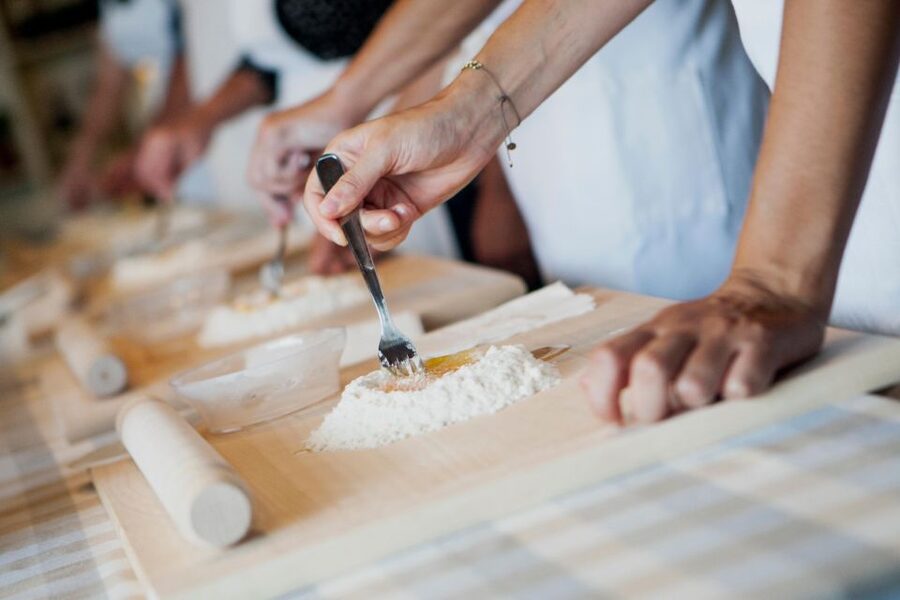
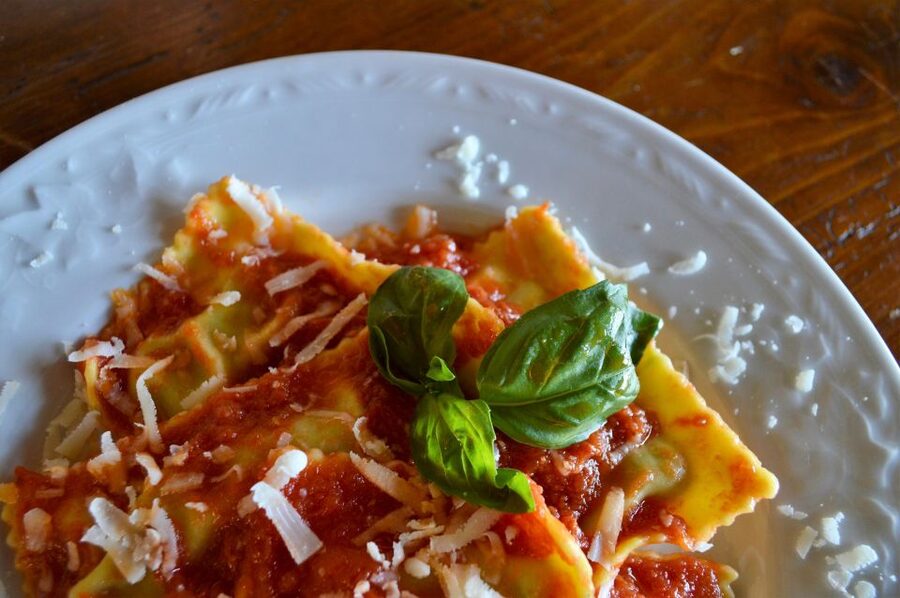
The hands-on class lasts about three hours and focuses on practical techniques. Depending on the menu, you may prepare ravioli, tagliatelle, pici, or gnocchi. These pastas have different shapes and textures, so the class can teach more than one basic dough routine.
Ravioli gives you practice with filled pasta. Tagliatelle introduces the broad ribbons familiar from many Italian kitchens. Pici, a thicker hand-rolled pasta strongly associated with southern Tuscany, offers a more rustic task. Gnocchi shifts the lesson away from rolled dough and toward shaping soft potato dumplings.
The exact dishes are not fixed in the information provided, so the class likely changes with season and availability. That is a plus for the farm-to-table idea, but it also means you should not book expecting one exact recipe unless the provider confirms it.
I like that the stated goal is to teach methods you can use in other recipes. You are not simply copying a finished dish under strict instruction. You work with techniques that can carry into your own kitchen, such as handling fresh pasta, preparing seasonal starters, and making a simple Italian dessert.
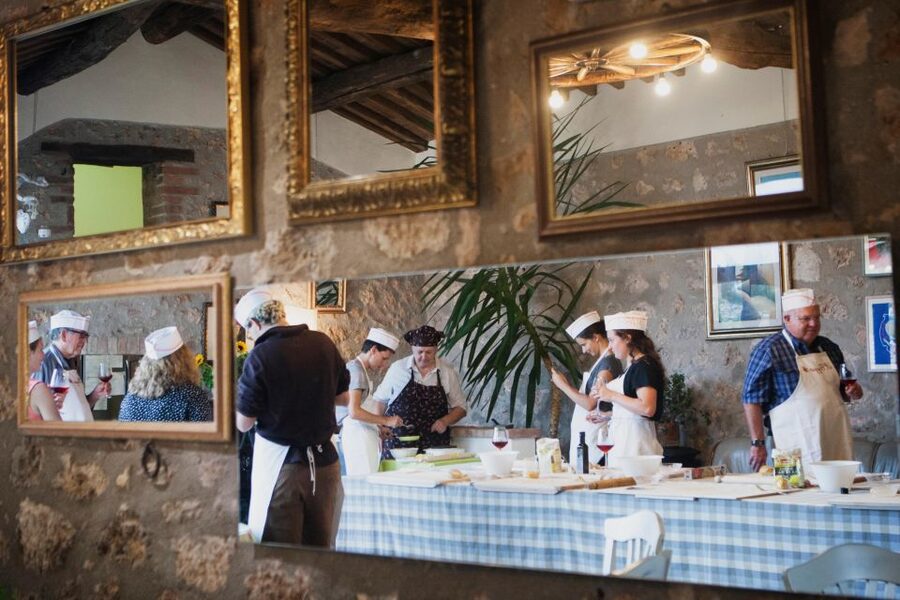
The setting should suit beginners. You receive an apron and kitchen tools, and an experienced cook teaches the class in Italian and English. Nothing in the description requires previous cooking experience. If you already make pasta at home, you may find the family approach more valuable than basic instruction, especially if the class includes pici or a recipe you do not often prepare.
The presence of Rebecca and her mother is another appealing detail. Their role as hosts suggests a personal family connection rather than a large culinary school operation. One booking became a private lesson because no other participants had reserved a place, but you should not assume every date will be private.
Seasonal starters and Tuscan desserts
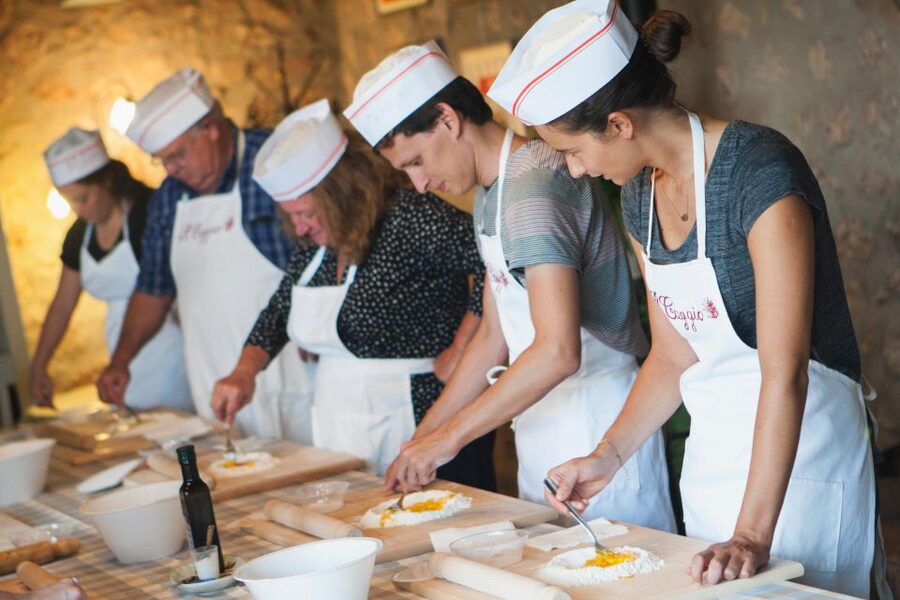
The pasta is the obvious attraction, but the class also includes seasonal starters and typical Tuscan or Italian desserts. This broadens the lesson into a complete meal instead of making fresh pasta the entire focus.
Seasonal cooking is important here. The available ingredients may change during the year, so the starter and perhaps the dessert can reflect what the farm has on hand. That gives the meal a more local feel, though it also means the menu is not fully specified in advance.
You will prepare the food together, then eat it at the farmhouse. This is where the class becomes social. You are not sent away with a container of pasta or left to guess how the finished dish turned out. You sit down and taste the results with local hosts and other participants when the class is shared.
The three-course format adds real value to the $141.61 price. A cheaper pasta lesson might include only a small sample. Here, the meal is part of the experience, and drinks and refreshments during the class are included as well. Additional drinks are not included, so keep that distinction in mind if you plan to order anything beyond what the class provides.
More Italian Cooking Classes in Italy:
- Tuscan Cooking Class and Dinner in Florence
★ 4.5 · 732 reviews - Rome Pasta Making Class with Italian Sauces and Wine Included
★ 5.0 · 645 reviews - Tuscan Cooking Class
★ 5.0 · 584 reviews - Milan: Italian Cooking Class with Food and Wine
★ 4.7 · 509 reviews
The final meal makes the lesson worthwhile
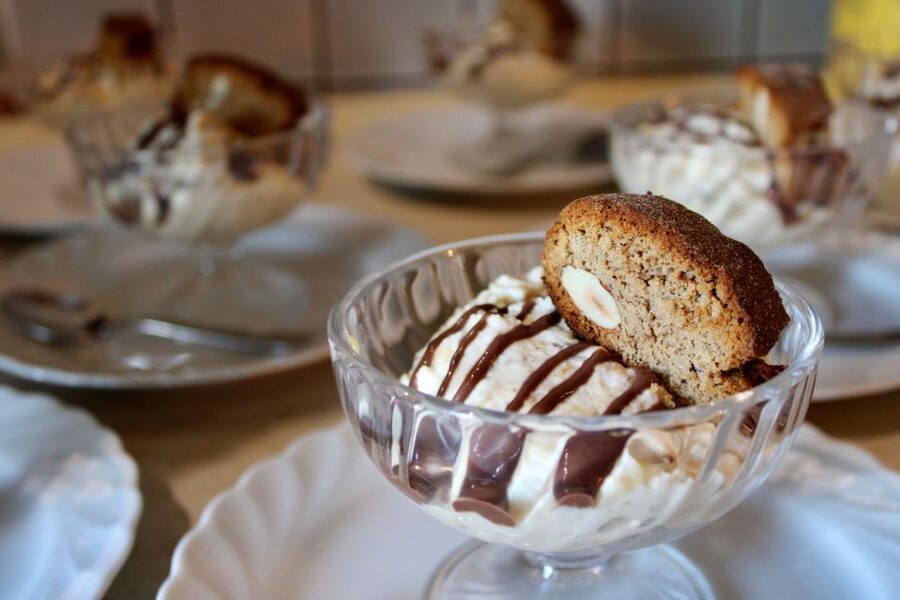
I consider the shared meal one of the strongest parts of this experience. Cooking can be fun, but the reward is better when you get to eat the finished dishes in a farmhouse setting.
The meal also gives you time to slow down. Siena is full of art, churches, and busy sightseeing routes. A rural lunch or dinner offers a different rhythm. You can talk with the hosts, compare results with other participants, and enjoy the setting without rushing to the next monument.
The experience is described as a healthy organic meal. Ingredients come from the family farm and are prepared with traditional recipes. That does not mean the food will suit every diet, since no dietary requirements are listed. If you have allergies or special food needs, ask before booking rather than assuming the menu can be changed.
The social side will depend on the date. A full group can make the class lively and communal. A lightly booked date can feel more like a private family lesson. Both formats have advantages. A group gives you more conversation and shared fun, while a smaller class gives you more direct attention.
Recipes, tools, and what you take home
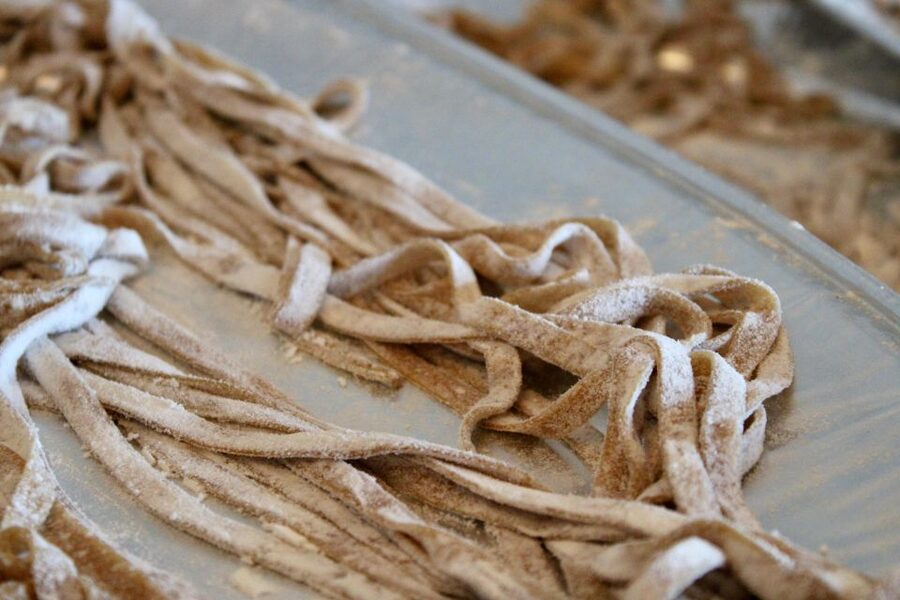
You receive an apron and kitchen tools during the class. The practical benefit is clear: you can focus on learning instead of wondering what equipment to bring.
Each participant also gets a copy of the recipes used. This is one of the most useful extras because fresh pasta lessons can be hard to remember once you return home. The recipe booklet gives you a starting point for recreating the dishes and adapting the methods to your own ingredients.
You should still take mental notes during the class. A recipe can list measurements, but the instructor can show you how dough should feel, how pasta should look when rolled, or how soft gnocchi mixture needs to be. Those small visual and tactile clues often matter as much as the written instructions.
The recipes also make the price easier to judge. You are paying for instruction, food, a meal, a farm visit, and a takeaway resource. If you only want to eat Tuscan food, a restaurant may cost less. If you want to learn how to prepare it and repeat the experience at home, this class offers more lasting value.
Is $141.61 a fair price?
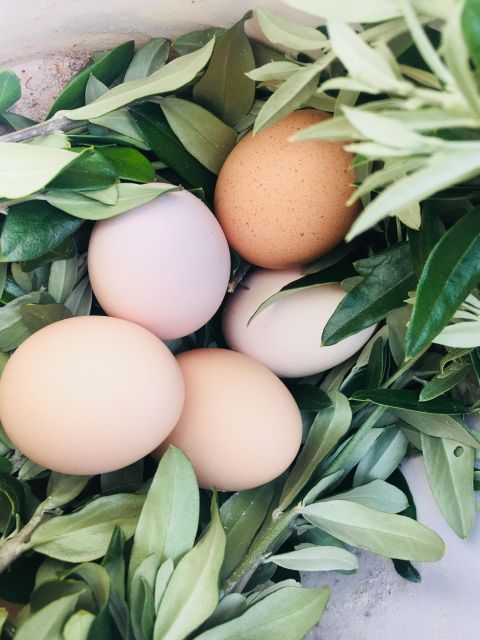
At $141.61 per person, this is not a budget meal. It is a half-day food experience with several parts: about three hours of instruction, fresh ingredients, tools, an apron, drinks and refreshments, a three-course meal, the recipe book, and a visit to a 20-hectare farm.
The cost makes the most sense for someone who values participation. You are not paying only for what appears on the plate. You are paying for the time spent preparing it, the guidance of an experienced cook, and access to a family farmhouse near Siena.
The price is also easier to justify if you would otherwise book a cooking class and a separate countryside meal. Here, those elements are combined. The added farm visit gives the afternoon more substance without requiring another booking.
Still, you should compare it with your own interests. If you do not enjoy cooking, the hands-on format may feel like work before dinner. If you are staying in Siena without a car, the missing transfer could add cost and planning effort. The activity is best value when you already have transport and want food preparation to be a main part of your day.
Who should book this farmhouse class?
I would recommend it most strongly to:
- Couples who want a relaxed half-day outside Siena
- Families looking for a practical food activity
- Beginners curious about fresh pasta
- Home cooks who want Tuscan recipes and techniques
- People who prefer family-run settings to large commercial classes
- Anyone who values a full meal after the lesson
It may be less suitable if you want a fixed menu, a short tasting, or a class in central Siena. It may also disappoint visitors hoping for hotel pickup, since no transfer is included.
The language setup is helpful for international participants. Instruction is available in Italian and English, so you can follow the demonstrations and ask questions in either language. The available details do not list other languages.
The class also makes a good choice for a day when you want to reduce the pace. You will spend time outdoors, cook with local ingredients, and eat in the same farmhouse rather than moving from one crowded sight to another.
Booking and practical tips
The experience allows free cancellation up to 24 hours before the scheduled activity for a full refund. You can also reserve and pay later, which helps if your Siena plans are still shifting.
Because the starting time varies, check the available times before arranging other activities. A four-hour class can take up much of a morning or afternoon, especially when you include the drive to and from the farmhouse.
Wear clothing you do not mind cooking in, even though an apron is provided. The class includes tools and ingredients, so you do not need to bring kitchen equipment.
Plan to eat the meal as part of the activity. Arriving after a large breakfast or lunch would undercut one of the main pleasures of the class. Additional drinks cost extra, while the listed refreshments are included.
If you are particularly interested in pici, ravioli, tagliatelle, gnocchi, or a specific dessert, ask which dishes are planned for your date. The menu is seasonal and not fixed in the supplied details.
Should you book it?
Book this class if you want to learn by doing, eat a complete Tuscan meal, and spend time at a real family farmhouse near Siena. The combination of fresh farm ingredients, traditional recipes, a countryside visit, and a take-home recipe book gives the experience more substance than a short pasta demonstration.
I would pause only if you lack transport, need a guaranteed menu, or would rather spend your time sightseeing in Siena. For food lovers with a car or another way to reach Agriturismo Il Caggio, the $141.61 price is reasonable for a four-hour activity that feeds you, teaches you, and gives you something useful to repeat at home.
FAQ
Where does the cooking class take place?
The class takes place at Agriturismo Il Caggio, a farmhouse a few minutes from Siena. The activity begins and ends at the farmhouse.
Is parking available?
Yes. Free parking is available for cars and motorbikes at the venue.
Is transportation to the farmhouse included?
No. You are responsible for arranging your own transfer to and from Agriturismo Il Caggio.
What languages are spoken during the class?
The class is offered in Italian and English.
What food might I prepare?
The class may include fresh pasta such as ravioli, tagliatelle, pici, or gnocchi, along with seasonal starters and typical Tuscan or Italian desserts. The exact menu can vary.
What is included in the price?
The price includes about three hours of hands-on instruction, an apron, kitchen tools, fresh ingredients from the family farm, drinks and refreshments during the class, a three-course meal, a recipe book, and a visit to the 20-hectare farm. Additional drinks and transportation are not included.
Just added around Italy
- Cooking Class in a Sicilian countryhouse★ 5.0 · 5 reviews
- Cesarine: Home Cooking Class & Meal with a Local in Catania★ 4.5 · 10 reviews
- Cesarine: Market Tour & Home Cooking Class in Catania★ 4.0 · 6 reviews
- Cooking Class in Taormina with Lunch Included★ 5.0 · 2 reviews
- Cooking Class and Wine Pairing in Capri★ 5.0 · 57 reviews
- Cooking class in Capri for small groups★ 4.0 · 4 reviews
- Private Cooking Class Experience in Reggio Calabria★ 5.0 · 5 reviews
- Lezione di Cucina : Pasta Fresca★ 5.0 · 12 reviews
Farm & Countryside Cooking Classes, compared.

Half-Day Thai Cooking Class at Organic Farm in Chiang Mai
Read our review →
Cooking Class and Lunch at a Tuscan Farmhouse with Local Market Tour from Florence
Read our review →
Authentic Cooking Class with Market & Farm Visit
Read our review →
Hands-On Cooking Class & Farmhouse Tour on the Amalfi Coast
Read our review →Lists this class appears in