
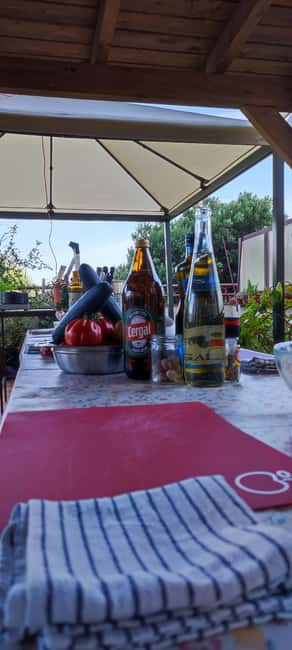
REVIEW · NORTE REGION, PORTUGAL
Porto: Portuguese Cooking Class on the Terrace
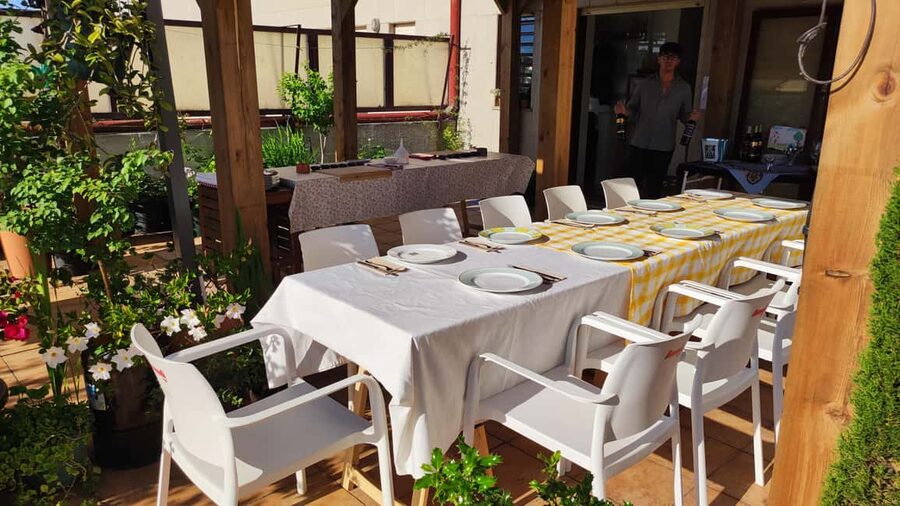
Porto tastes better at a family table. This 3.5-hour cooking class brings you into a small one-bedroom apartment with a roomy terrace, where a Portuguese family helps you prepare a full meal from start to finish. I like the private-group setting and the chance to cook dishes such as bacalhau fritters, pork with chestnuts, tomato rice, and pastel de nata rather than simply watch a chef work.
I also like the warm, informal touch: a welcome drink, music, conversation, and even the neighborhood cat. The main consideration is space. This is a family home, not a purpose-built cooking school, so you should expect a personal and homely setting rather than a polished professional kitchen.
Key points at a glance
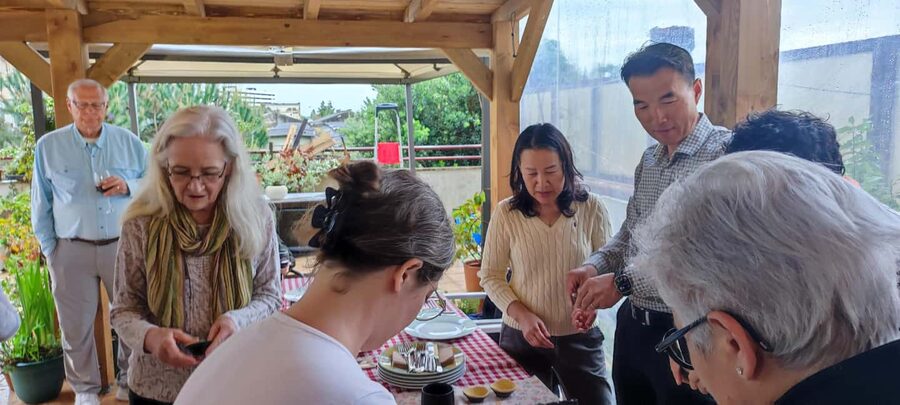
- A full Portuguese menu: Prepare Pataniscas de Bacalhau, salad, Rojões de Porco with Chestnuts, tomato rice, and Pasteis de Nata.
- A family-hosted experience: Meet Jorge, João, Isabel, and Miguel in their home and share food around their table.
- Hands-on from the start: You help prepare the ingredients, cook the dishes, and learn practical tips along the way.
- Terrace atmosphere: Enjoy a welcome drink, appetizers, music, conversation, and time outside during the class.
- Flexible for dietary needs: The menu can be adjusted, including a meat substitution when needed.
- Simple planning: The activity lasts 3.5 hours, is conducted in Portuguese, English, or French, and allows cancellation up to 24 hours before the start.
A Portuguese cooking class that feels like a family evening
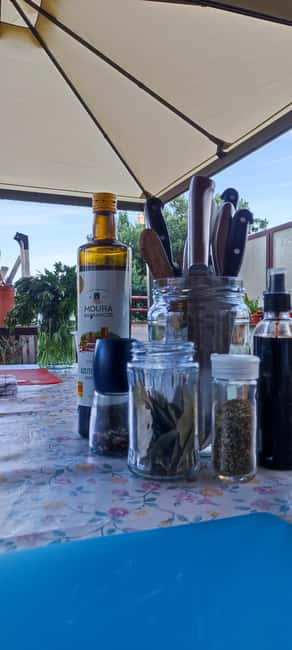
Many cooking classes place you at a long counter under bright lights. This one takes a different route. You arrive at a small apartment in Porto, meet the resident family, and settle into a relaxed home setting with a spacious terrace.
The family includes Jorge, João, Isabel, and Miguel. Their role is not just to demonstrate recipes. They welcome you with a drink and an appetizer, explain how the class will work, and then invite you into the preparation of the meal.
I like that the experience is built around conversation as much as food. You can talk about Portuguese habits, local customs, and interesting details about Porto and the country while the meal comes together. That gives the class a useful local angle without turning it into a formal lecture.
The private-group format should appeal to couples, families, and small groups of friends who want time to ask questions. It also makes the experience more personal than a large workshop. The tradeoff is that the setting is a one-bedroom apartment. If you want restaurant-style service, professional equipment, or a large teaching kitchen, this may feel too informal.
A few more cooking classes around Portugal worth a look
- Porto: Pastel de Nata Cooking Class with Grandma’s Recipe
★ 5.0 · 1,565 reviews - Porto: Pastel de Nata Cooking Class with Port Wine – Sé
★ 4.8 · 888 reviews - Lisbon: Traditional Portuguese Cooking Class
★ 4.9 · 592 reviews
Arriving at the apartment and meeting the family
The meeting point is simply the door of the apartment, at 41.17914581298828, -8.614091873168945. The cooking takes place at the same address, so there is no separate meeting point, transfer, or walk to another venue.
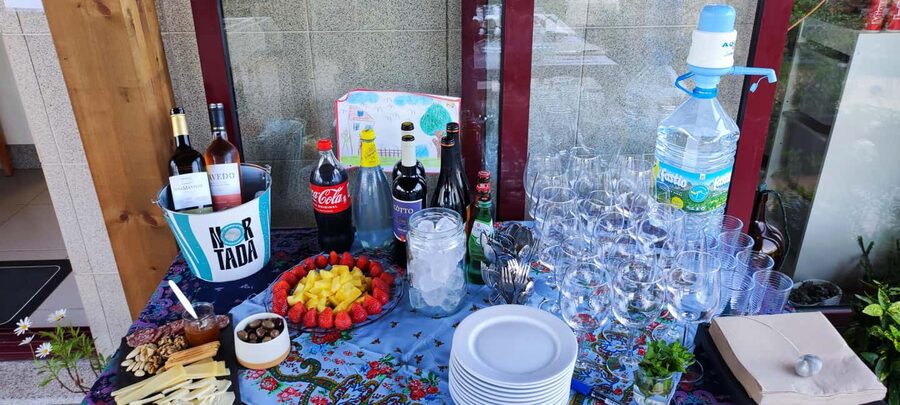
The opening is designed to help you settle in. You receive a welcome drink and an appetizer, meet the family, and hear a short explanation of the evening. This matters because cooking in someone’s home can feel unfamiliar at first. A friendly introduction makes the arrangement clear and gives you a chance to mention dietary needs before the food preparation begins.
The atmosphere includes music and the presence of a neighborhood cat. Those small details help explain the character of the class. This is not a silent, step-by-step lesson where every movement is timed. It is closer to being welcomed into a Portuguese household for a shared meal, with cooking as the reason everyone gathers.
A verified booking from Canada described the family as Jorge, João, Isabel, and Miguel, and praised the way they handled dietary restrictions. That is useful practical information. If you have an allergy, dislike, or dietary limit, tell the hosts clearly before you begin. The menu can be adapted, and meat can be substituted, but you should discuss the change in advance.
Preparing the starter: Pataniscas de Bacalhau
The first main dish is Pataniscas de Bacalhau, Portuguese cod fritters. Bacalhau, or salted cod, is one of the best-known ingredients in Portuguese cooking, and these fritters offer a friendly introduction to it.
You take part in preparing the ingredients rather than simply watching someone fry the finished mixture. The hosts explain how the ingredients are handled and share tips for preparation. That practical guidance is one of the strongest reasons to choose this activity over a meal at a restaurant. You leave with a better sense of how a familiar Portuguese dish is built.
The fritters are paired with a fresh salad. That adds a crisp, lighter part to the menu and keeps the meal from feeling like a succession of heavy dishes. Since the class includes the entire menu, you are not focused on a single specialty. You move between different techniques, flavors, and courses.
The meal is described as a combination of products widely used in Portuguese cuisine rather than a strict traditional menu. That distinction is worth noting. You receive a broad taste of common Portuguese ingredients, but this is not presented as one exact regional feast with a formal historical story behind every dish.
Cooking Rojões de Porco with chestnuts
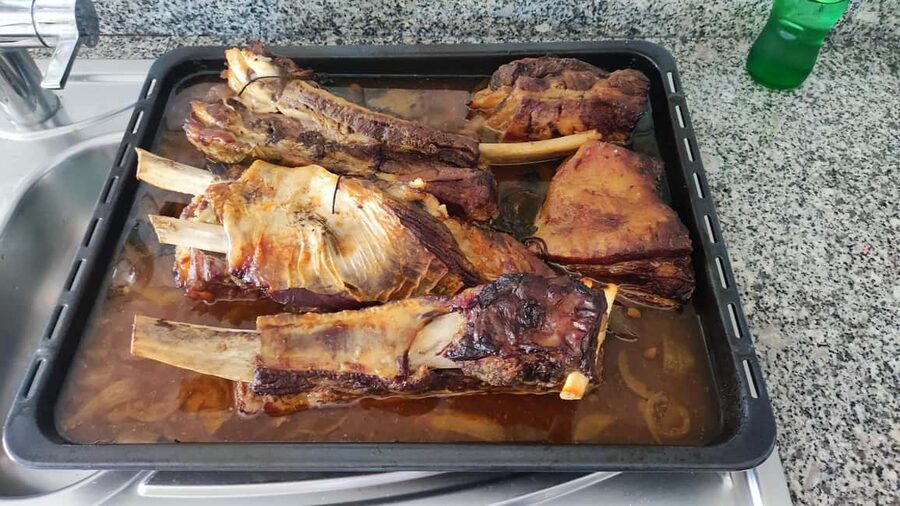
The main course is Rojões de Porco with Chestnuts, served with tomato rice. Rojões are pieces of pork, and the chestnuts add a distinctly Portuguese touch to the plate.
This part of the class gives you more time to work with a substantial main dish and learn how several components come together. You prepare the pork, chestnuts, and rice as part of one meal rather than treating each recipe as an isolated demonstration.
Tomato rice is a particularly useful accompaniment for a class because it shows how a simple side dish can carry plenty of flavor. You also gain a better sense of balance: the pork and chestnuts provide the hearty center, while the rice and salad round out the plate.
The hosts offer drinks and small appetizers during the preparation. That makes the 3.5-hour schedule feel social rather than rushed. Still, you should allow the full time. This is not a quick demonstration followed by a short tasting. You are preparing several dishes, sitting down to eat, and spending time in conversation afterward.
Alcoholic drinks are served only to people over 21. That rule is worth remembering if your group includes younger participants. The supplied details do not specify which drinks are available, so you should not expect a fixed wine or cocktail menu unless the hosts confirm one.
Same place, a different thing to cook:
- Lisbon: Pastel de Nata Baking Class
★ 4.9 · 2,106 reviews - Porto: Pastel de Nata Cooking Class from Scratch
★ 4.9 · 468 reviews - Lisbon: 2-Hour Pastel de Nata Cooking Class
★ 4.8 · 461 reviews - Lisbon Portuguese Cooking Class with 3-Course Dinner
★ 5.0 · 445 reviews
Learning the pastry behind pastel de nata
Dessert is Pasteis de Nata, the small custard pastries found throughout Portugal. They are familiar to many visitors, but making them yourself gives the final part of the class a practical purpose.
You take part in preparing the dessert along with the savory courses. The hosts explain the process and pass along tips, so the pastry is not just a sweet reward at the end. It becomes another recipe you can try after returning home.
One Canadian participant described making pastel de nata along with mushrooms and bacalhau, with plenty of laughter and conversation through the evening. The mushroom dish is not part of the stated standard menu, so it should not be treated as guaranteed. It does show, however, that the hosts may adapt the food to the group.
If pastel de nata is your main reason for booking, keep your expectations clear. This is not a pastry-only workshop. The custard tart is one part of a complete meal that also includes fish, pork, salad, rice, and chestnuts.
Sitting down for the meal and the conversation
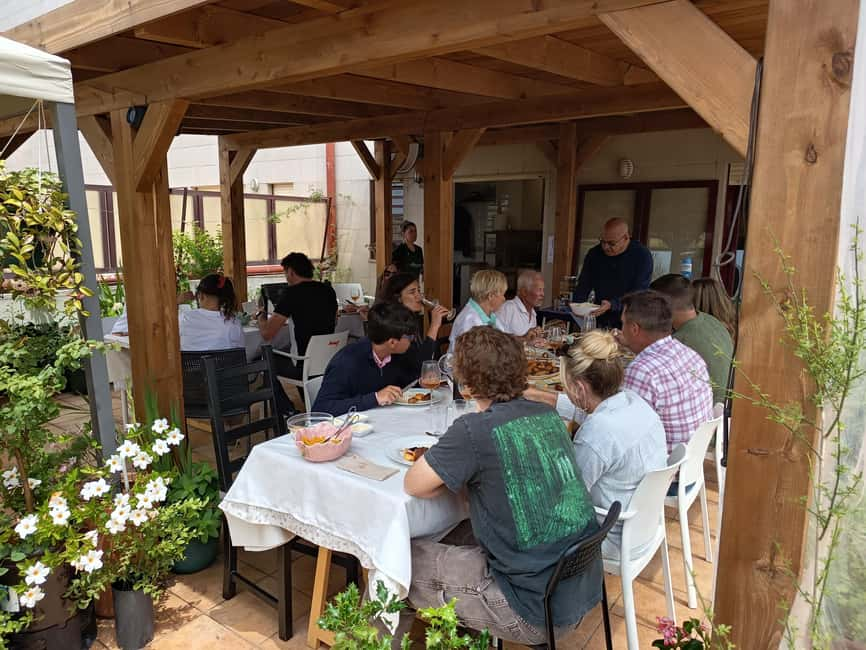
Once the food is ready, you sit at the table and eat what you have prepared. This shared meal is the natural payoff of the class, but it is also where the family-hosted format matters most.
You can talk with the hosts about Porto, Portuguese customs, daily habits, and memorable facts about the city and country. The conversation is part of the experience, not filler between cooking steps. For many people, this is more valuable than receiving another printed recipe.
The tone is relaxed and social. One participant from the United States described an evening of cooking, eating, drinking, and laughing, repeated throughout the class. Another participant said the setting felt like being welcomed into a Portuguese family home and praised the care shown around dietary restrictions.
That warmth is the most highly praised part of the experience. The food matters, but the personal welcome seems to be what makes the evening memorable. You should book this class for the human contact as much as for the recipes.
The terrace, music, and neighborhood cat
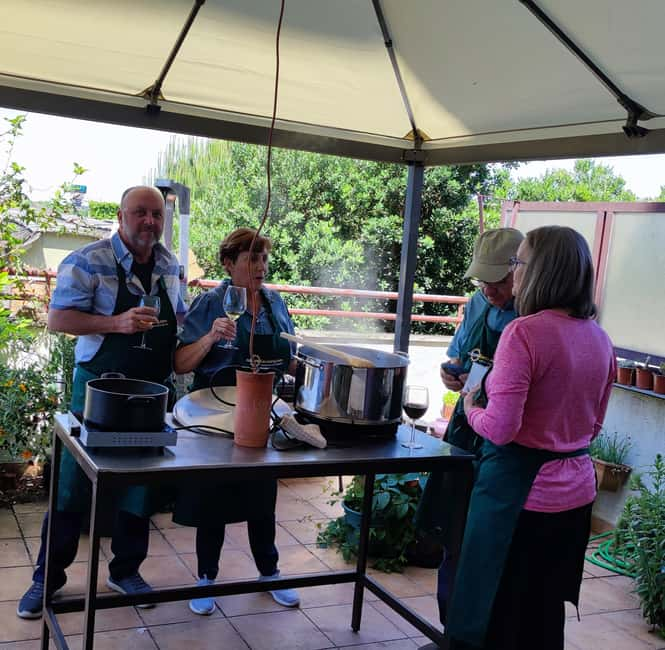
The terrace gives the class its strongest sense of place. You are not eating in a generic cooking studio. You are spending time in a real home, with an outdoor area that adds room to relax and talk.
Music helps keep the mood light, while the neighborhood cat adds a touch of everyday life. These details may sound minor, but they separate a home-based activity from a standard cooking lesson. You get a glimpse of how an ordinary Portuguese evening can unfold around food, family, and conversation.
The terrace should not be confused with a sightseeing platform. No specific view or terrace feature is promised. Its value is the extra breathing room and informal atmosphere, not a city panorama.
Weather may also affect how much time you spend outside, though no weather policy is provided. If you are choosing this class for the terrace itself, keep that in mind. The food preparation and meal take place at the apartment, so the core experience does not depend on the outdoor area.
Who will get the most from this experience
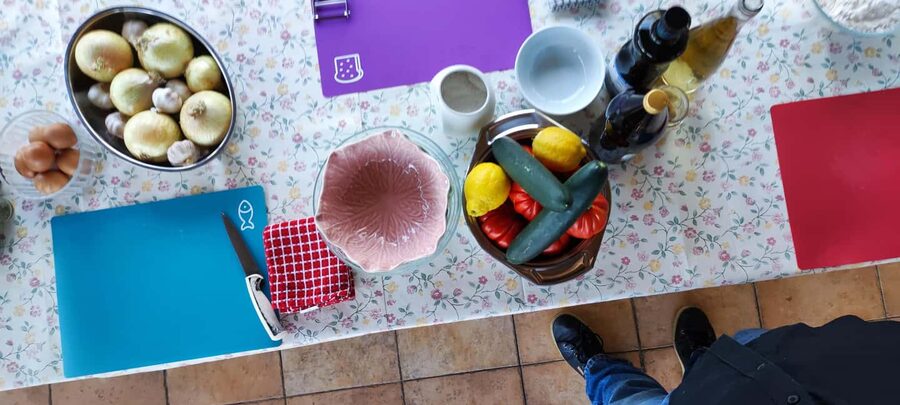
I would choose this class for someone who wants a personal evening in Porto rather than a standard restaurant meal. It suits people who enjoy cooking with others, asking questions, and talking over a long meal.
It is especially fitting for:
- Couples looking for a relaxed evening activity
- Families who want a shared meal with hands-on tasks
- Small private groups who prefer personal attention
- People curious about Portuguese home cooking
- Visitors with dietary needs who want to discuss menu changes
- Anyone who likes food experiences with local conversation
It may be less suitable if you want a formal culinary qualification, a professional chef-led workshop, or a market visit. The class does not include a market tour, and the menu is prepared in the hosts’ apartment.
You should also be comfortable with an intimate home environment. The one-bedroom apartment is part of the appeal, but it means the experience will feel close and informal. Space and equipment may not match what you find in a dedicated cooking school.
Language, timing, and practical value
The class lasts 3.5 hours, which is enough time to prepare several dishes, eat, and talk without forcing the evening into a tight schedule. Starting times vary, so you need to check availability for your chosen date.
Instruction is available in Portuguese, English, and French. That makes the class accessible to a broad range of visitors, though some content may appear in its original language. If a particular language is important to you, confirm it when booking.
The private-group format is a major value point. You are paying for more than food. You are also receiving direct help with preparation, recipe advice, a family welcome, and a shared meal in a private setting. Since no price is provided here, I cannot judge the exact cost against other Porto classes. I can say that the value improves for people who care about personal contact and a small-group atmosphere.
The booking terms are also practical. You can cancel up to 24 hours before the activity for a full refund, and you can reserve while paying later. Those options help if your Porto plans are still changing.
How this compares with other Porto food activities
Porto offers cooking classes focused on different experiences. Some center on a market visit followed by Portuguese tapas. Others focus almost entirely on pastel de nata, including workshops built around a grandmother’s recipe. There are also creative activities such as tile painting paired with Porto wine.
This class sits in the middle. It gives you a complete savory and sweet menu, but it does not include a market trip. It gives pastel de nata a place on the table, but it is not a pastry-only lesson. It also offers more family contact than an activity built around a chef, a market, or a studio setting.
Choose the market-and-tapas option if shopping for ingredients and learning about food stalls is your priority. Choose a pastry workshop if you want to spend most of your time perfecting custard tarts. Choose this apartment class if you want a broad Portuguese meal and an evening of personal conversation.
Should you book this Porto cooking class?
Book it if you want a warm, private, home-based experience where cooking leads naturally to a shared meal. The strongest reasons are the family welcome from Jorge, João, Isabel, and Miguel, the full menu, the flexible approach to dietary needs, and the relaxed terrace setting.
Skip it if you want a professional kitchen, a market visit, or a tightly structured culinary lesson. The apartment setting is central to the experience, so you should like the idea of cooking in a family home.
For most food-minded visitors, I think the personal atmosphere is the real value. You prepare bacalhau, pork, rice, and pastel de nata, but you also leave with stories, local conversation, and the feeling of having spent an evening at someone’s table rather than simply attending a class.
FAQ
Where does the cooking class take place?
The activity takes place at a small one-bedroom apartment with a spacious terrace in Porto. The meeting point is at the apartment door.
How long does the experience last?
The cooking class lasts 3.5 hours.
What dishes are prepared?
The stated menu includes Pataniscas de Bacalhau, a fresh salad, Rojões de Porco with Chestnuts, tomato rice, and Pasteis de Nata.
Is the entire menu prepared by the participants?
Yes. You take part in preparing the ingredients and the full menu, with explanations, tips, and guidance from the hosts.
Can the menu be adapted?
Yes. The menu can be adapted to customer requirements, including substituting the meat.
Who hosts the experience?
The resident family includes Jorge, João, Isabel, and Miguel.
Which languages are available?
The experience is offered in Portuguese, English, and French. Some content may appear in its original language.
Is this a private activity?
Yes. The activity is offered for a private group.
Are drinks included?
A welcome drink, appetizers, and drinks for tasting are available during the preparation. Alcoholic drinks are served only to people over 21.
Can I cancel the booking?
You can cancel up to 24 hours in advance for a full refund. You can also reserve now and pay later.
Just added around Portugal
- Cooking Workshop in Cascais (group of 4 min)★ 5.0 · 13 reviews
- Cooking Class★ 5.0 · 17 reviews
- Terceira Island: Azores Cooking Class Experience★ 5.0 · 14 reviews
- Porto: Cooking Class with Local Market Visit★ 5.0 · 15 reviews
- Porto: Local Market Tour & Cooking Class/Showcooking★ 4.9 · 32 reviews
- Porto: Coastal Villages Market & Seafood Cooking Tour★ 5.0 · 2 reviews
- Lagos: Market Tour and Cataplana Cooking Class★ 5.0 · 9 reviews
- Lisbon: Traditional Portuguese Cooking Class★ 5.0 · 41 reviews
Cooking Classes, compared.

Half-Day Thai Cooking Class at Organic Farm in Chiang Mai
Read our review →

3 in 1 Cooking Class near Navona: Fettuccine, Ravioli & Tiramisu
Read our review →
Pasta & Tiramisu Cooking Class with Unlimited Wine
Read our review →
Hanoi Cooking Class: Culture, Local Market & Meaning CSR Impact
Read our review →
5 Traditional Dishes Hanoi Cooking Class with Market Trip
Read our review →
Cooking Class and Lunch at a Tuscan Farmhouse with Local Market Tour from Florence
Read our review →
Cooking Class, Market & Thai Herbs Garden Tour
Read our review →Lists this class appears in