
REVIEW · NORTE REGION, PORTUGAL
Porto: Pastel de Nata Cooking Class with Grandma’s Recipe
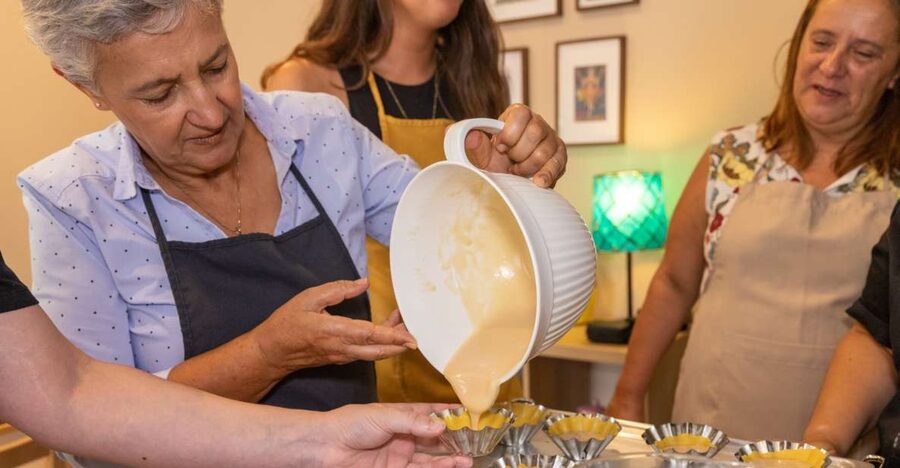
Pastry, family stories, and a warm kitchen make a fine Porto afternoon. This two-hour class brings you into Joana’s home, where you learn to make pastéis de nata from scratch, including the pastry dough that some cooking classes prepare before you arrive. I like the personal welcome and the chance to work with a real family recipe. I also like that the class ends around a shared table with coffee, tea, juice, and fresh tarts.
The main drawback is location. Joana’s home is about 10 minutes by car from central Porto, and one recent booking put the extra Uber cost at about €12. Public transport works, but it takes longer and requires a little more planning.
At a glance
- A real home kitchen: You bake in Joana’s apartment rather than a commercial school.
- The pastry is made from scratch: You work on both the dough and the custard.
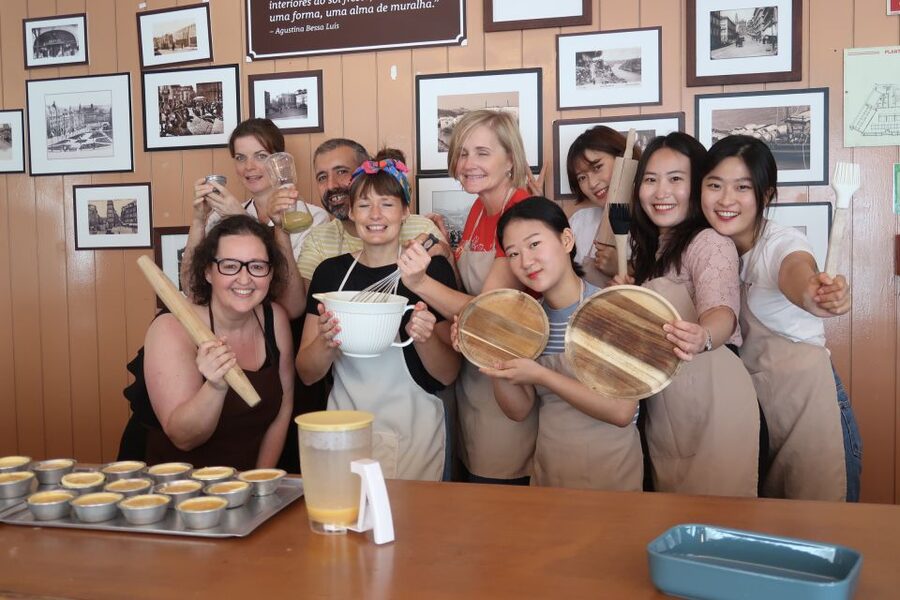
- Small, social group: The class holds up to 10 people, with everyone taking a turn.
- A family recipe: The method comes from Joana’s grandmother and is explained in English.
- Warm finish: You sit down together with your pastries and non-alcoholic drinks.
- Good rainy-day choice: The relaxed indoor setting suits a quiet morning or afternoon in Porto.
Why This Class Feels Different From a Standard Food Tour
Porto has no shortage of cafés selling pastel de nata. You can buy one for a few euros, stand at a counter, and move on. This class gives you something different: time with a local host, a look inside a Portuguese home, and the skills to try the pastry again after your holiday.
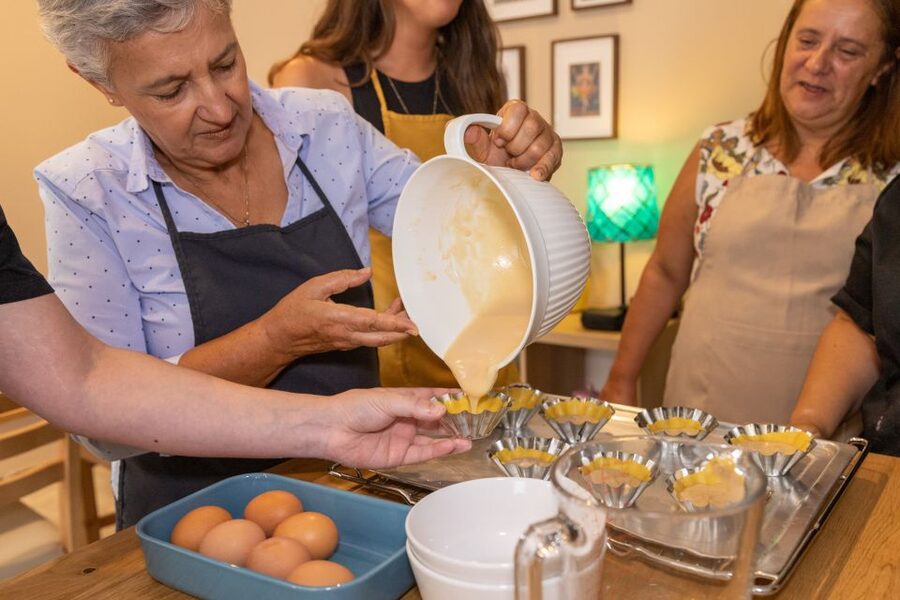
Joana’s home is part of the experience. The kitchen has natural light, and the apartment is described as comfortable, attractive, and carefully prepared for the group. Music from a record player may be playing in the background, and the table is set for the final tasting. These details matter because the class feels more like being welcomed into someone’s home than attending a formal workshop.
Joana is the host and teacher. Her English is clear, and her teaching style is patient and encouraging. That helps if you are a beginner, but experienced bakers should not feel out of place. One participant who already baked regularly still found the class worthwhile.
The class also works well for solo visitors. The group format gives you an easy way to meet people, and the shared meal at the end creates natural conversation. You could arrive alone and leave with new friends, or book it as a relaxed activity for a couple, family, or small group.
A few more cooking classes around Portugal worth a look
- Porto: Pastel de Nata Cooking Class with Port Wine – Sé
★ 4.8 · 888 reviews - Lisbon: Traditional Portuguese Cooking Class
★ 4.9 · 592 reviews - Porto: Pastel de Nata Cooking Class from Scratch
★ 4.9 · 468 reviews
Arriving at Joana’s Home
The home is roughly 10 minutes by car from Porto city center, though traffic and the exact pickup point can affect that estimate. Bolt or Uber is the simplest option, especially if you are traveling with more than two people. Splitting the fare can make the ride the fastest and most practical choice.
If you prefer public transport, you have two stated options:
- From Bolhão, bus 800 or 801 takes about 20 minutes and stops across from the house. You can buy the ticket on the bus, but you need coins.
- From Trindade, take the Orange Metro Line to Fânzeres. The ride takes about 30 minutes, followed by a walk of around 700 meters, or about 10 minutes.
The public transport route is manageable, but it takes more time than a car. Leave room for finding the station, waiting for the vehicle, and locating the building. When you arrive, ring the bell marked 2 Andar. Joana waits inside her home.
There are free parking spaces on the street if you drive. Still, I would favor a ride service unless you already have a rental car. You do not want to arrive late with flour on your mind and Porto traffic in your way.
The Welcome and Family Story
The class begins with introductions. Joana tells you about herself and her family before the baking starts, giving the recipe a personal setting. This is a small part of the schedule, but it helps explain why the method matters.
A grandmother’s recipe is not simply a list of ingredients. It carries the habits and small decisions that make home baking work: how to handle the pastry, how to prepare the custard, and how to judge when the mixture is ready. The class presents the recipe as something made with patience and care rather than as a quick demonstration.
That personal approach is one of the strongest reasons to choose this activity. If you only want to eat a custard tart, a pastry shop is quicker. If you want to understand how the treat comes together and hear the story behind it, the home setting adds real value.
Making the Dough From Scratch
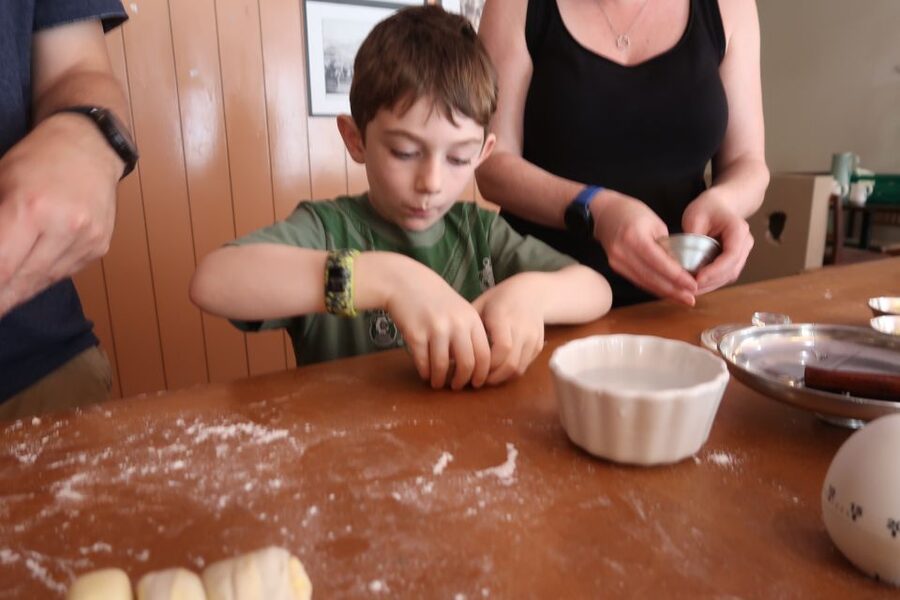
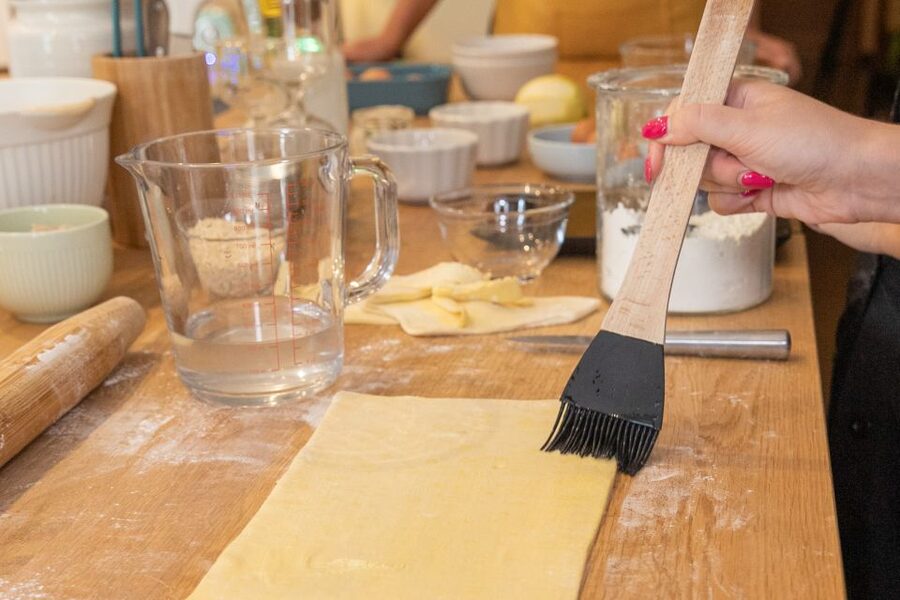
The pastry stage is especially useful because the dough is made during the class. Some cooking workshops prepare this part ahead of time to save minutes. Here, you get to see more of the actual process.
The group takes turns, so not every person will necessarily handle every single task for the same amount of time. A class of up to 10 people has practical limits, and the session uses a rotating system to keep everyone involved. Recent class descriptions explain that participants may work in two teams, with each person contributing to the final batch.
That setup is a good compromise. It keeps the class moving and prevents ten people from crowding one small work surface. The tradeoff is that you may not personally complete every step from beginning to end. If hands-on practice is your only goal, ask Joana how the group will divide the work at the start.
The dough is important because the pastry gives the tart its familiar flaky shell. Learning this part makes the recipe more useful at home. You are not simply watching a filling being stirred and poured into ready-made cases.
Same place, a different thing to cook:
- Lisbon: Pastel de Nata Baking Class
★ 4.9 · 2,106 reviews - Lisbon: 2-Hour Pastel de Nata Cooking Class
★ 4.8 · 461 reviews - Lisbon Portuguese Cooking Class with 3-Course Dinner
★ 5.0 · 445 reviews - Porto: Pastel de Nata Cooking Class with Porto Wine (Sé do Porto)
★ 5.0 · 340 reviews
Preparing the Creamy Custard
After working on the pastry, you prepare the custard. Joana guides the group through the steps and explains what to do as you go. Her calm style is helpful here, since custard can feel less forgiving than ordinary cake batter.
The goal is the contrast that makes a good pastel de nata so appealing: crisp, layered pastry around a smooth, creamy center. The class gives you the chance to taste that result while it is still fresh from the oven.
Several participants particularly praised the final texture. The tarts were described as flaky and creamy, and one person felt they compared favorably with famous versions tasted in Lisbon. That is a high compliment, though your results will depend partly on how carefully you follow the instructions and how much each person gets to practice.
The process is not rushed, but two hours is still a compact schedule. You are learning a traditional pastry, not completing a full professional baking course. The value comes from clear instruction, teamwork, and a recipe you can try again later.
The Best Part: Eating the Fresh Batch
At the end, everyone gathers at the table. You eat the freshly baked pastéis de nata with coffee, tea, or orange juice. The included drinks are non-alcoholic, though one participant also mentioned being offered port wine. Treat that as a possible extra rather than a guaranteed part of the package.
This final sitting changes the mood from lesson to social visit. The group can talk about the baking, compare the results, and share Porto tips. It also gives the experience a proper ending instead of sending you straight back onto the street with a pastry in your hand.
The table setting and relaxed atmosphere receive repeated praise. Joana’s hospitality is a major part of the appeal, and the food tastes better when you have helped make it. You are not just buying a snack. You are paying for the story, the instruction, the setting, and the time spent with other people.
What You Take Home
The obvious souvenir is the pastry itself, but the more useful takeaway is the method. Joana has shared the family recipe with participants, including through follow-up messages after some classes. That gives you a chance to repeat the experience at home.
You also leave with a better sense of the work behind the pastry. Pastel de nata looks simple in a café display, but the dough and custard require care. After the class, you can appreciate the difference between a hurried factory-made version and one prepared with attention.
Do not expect to leave with a box of pastries for later. The included food is the batch you prepare and eat during the session. If you want more natas for the rest of your trip, plan a separate stop at a bakery.
Is $33 a Fair Price?
At $33 per person, the class is reasonably priced for a two-hour food activity in Porto. The fee covers ingredients, cooking utensils, instruction, drinks, and the pastries you make. You also receive a home-based cultural experience rather than a standard café visit.
The value is strongest if you are curious about cooking or enjoy meeting people. A pastry shop will cost much less if all you want is a taste. But a commercial cooking class can cost more, and this one includes the host’s home, a family recipe, a small group, and the full pastry process.
Remember to budget for transport. A ride from central Porto may add to the cost, especially if you are traveling alone. The bus and metro options save money, but they take more time and involve a walk or a coin purchase.
The free cancellation option up to 24 hours before the class and the reserve-now, pay-later booking arrangement also make it easier to fit into a changing itinerary. Starting times depend on availability, so check the schedule before building your day around it.
Who Should Book This Porto Baking Class?
I would choose this class if you enjoy food with a personal story. It is also a strong pick for solo visitors, couples, families with older children, and anyone looking for a rainy-day activity.
You do not need baking experience. Joana’s patience and clear explanations make the class accessible to beginners. Experienced bakers can still enjoy the traditional method, especially because the pastry dough is prepared during the session.
It may not suit you if you need step-free access. The activity is not suitable for wheelchair users. It may also disappoint if you expect a central Porto location or a private class. The group can reach 10 people, so some tasks are shared.
The class is conducted in English. If you need another language, this is not the right choice based on the information available.
Practical Tips Before You Go
Arrive with enough time for the journey. The location is outside central Porto, and public transport is slower than a car.
Carry coins if you take bus 800 or 801 from Bolhão. The ticket can be bought onboard, but coins are required.
Wear something comfortable for kitchen work. You will be taking turns with the dough and custard, so you should expect to participate rather than sit through a demonstration.
If you are booking with friends, a ride service can be a good deal for three or more people. If you are alone, compare the cost with the metro and bus routes.
Ask about the recipe before leaving if you want to recreate the tarts at home. The recipe has been shared with participants, and confirming how you will receive it avoids confusion later.
Should You Book It?
Book it if you want more than a quick pastry stop. The strongest parts are Joana’s warm hosting, the home setting, the grandmother’s recipe, and the chance to make the dough rather than watch someone else do it.
Skip it if your Porto schedule is packed with central sights or if the extra ride feels like a nuisance. The location is the one clear compromise. For most people who enjoy food, conversation, and hands-on activities, $33 is a fair price for two hours of instruction and a memorable taste of Portuguese home life.
The perfect candidate is someone who wants to leave Porto with both a warm pastel de nata and the ability to try making one again.
FAQ
How long does the pastel de nata class last?
The class lasts two hours.
How much does the experience cost?
The listed price is $33 per person.
Where does the class take place?
The class takes place in the host Joana’s home, about 10 minutes by car from Porto city center.
How do I reach the host’s home?
You can use Bolt or Uber. From Bolhão, bus 800 or 801 takes about 20 minutes and stops across from the house. From Trindade, take the Orange Metro Line to Fânzeres, then walk about 700 meters.
What should I do when I arrive?
Ring the doorbell marked 2 Andar. The host waits inside her home.
Is transportation included?
No. Transportation to and from the host’s home is not included.
What is included in the price?
Ingredients, cooking utensils, the guided class, non-alcoholic drinks, and the pastries are included.
Is the class suitable for wheelchair users?
No. The activity is not suitable for wheelchair users.
Just added around Portugal
- Cooking Workshop in Cascais (group of 4 min)★ 5.0 · 13 reviews
- Cooking Class★ 5.0 · 17 reviews
- Terceira Island: Azores Cooking Class Experience★ 5.0 · 14 reviews
- Porto: Portuguese Cooking Class on the Terrace★ 5.0 · 2 reviews
- Porto: Cooking Class with Local Market Visit★ 5.0 · 15 reviews
- Porto: Local Market Tour & Cooking Class/Showcooking★ 4.9 · 32 reviews
- Porto: Coastal Villages Market & Seafood Cooking Tour★ 5.0 · 2 reviews
- Lagos: Market Tour and Cataplana Cooking Class★ 5.0 · 9 reviews
Cooking Classes, compared.
Half-Day Thai Cooking Class at Organic Farm in Chiang Mai
Read our review →
3 in 1 Cooking Class near Navona: Fettuccine, Ravioli & Tiramisu
Read our review →
Pasta & Tiramisu Cooking Class with Unlimited Wine
Read our review →
Hanoi Cooking Class: Culture, Local Market & Meaning CSR Impact
Read our review →
5 Traditional Dishes Hanoi Cooking Class with Market Trip
Read our review →
Cooking Class and Lunch at a Tuscan Farmhouse with Local Market Tour from Florence
Read our review →
Cooking Class, Market & Thai Herbs Garden Tour
Read our review →Lists this class appears in