
REVIEW · PASHCHIMANCHAL, WESTERN REGION, NEPAL
Nepalese Kitchen in Pokhara: Momos or Dal Bhat Cooking Class
Come hungry, leave with a recipe. This three-hour cooking class brings you into a real Nepalese home kitchen in Pokhara, where Sarita guides you through momos or dal bhat from raw ingredients to the finished meal. I like the warm, personal setting and the chance to learn food that Nepali families actually cook. I also like that you receive a recipe to use at home. The main consideration is that the class can run longer than three hours, especially when making momos, and the included taxi transfer may need a little attention.
This is not a large demonstration with a chef cooking in front of you. It is a private-group lesson, often with just you, your companions, and your host. Sarita’s patience and clear English receive repeated praise, while fresh vegetables, homemade ingredients, family conversation, and generous portions make this feel more like being welcomed into a household than attending a standard tourist activity.
Five things to know before booking
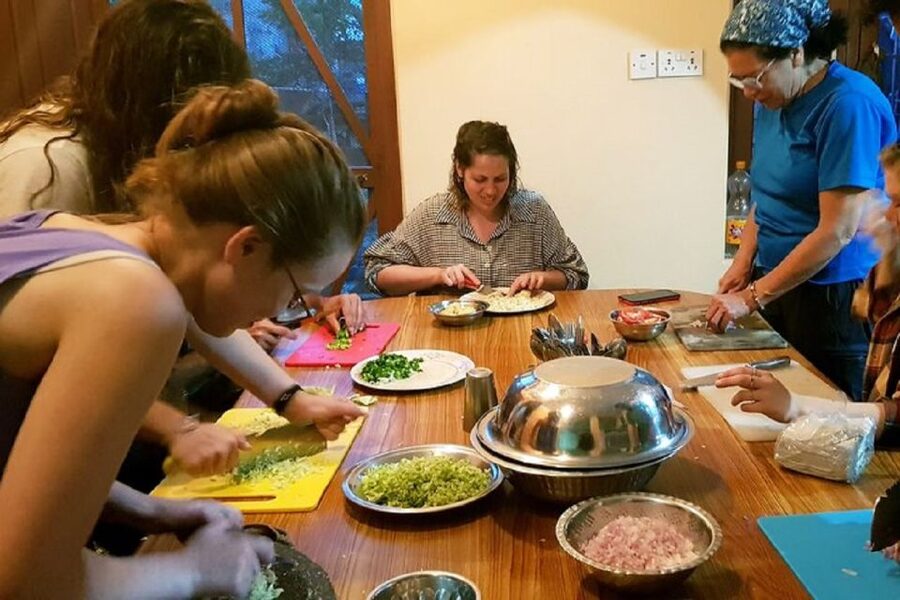
- You cook in Sarita’s home kitchen, not in a restaurant or training room.
- Choose momos or dal bhat, two of Nepal’s most important everyday foods.
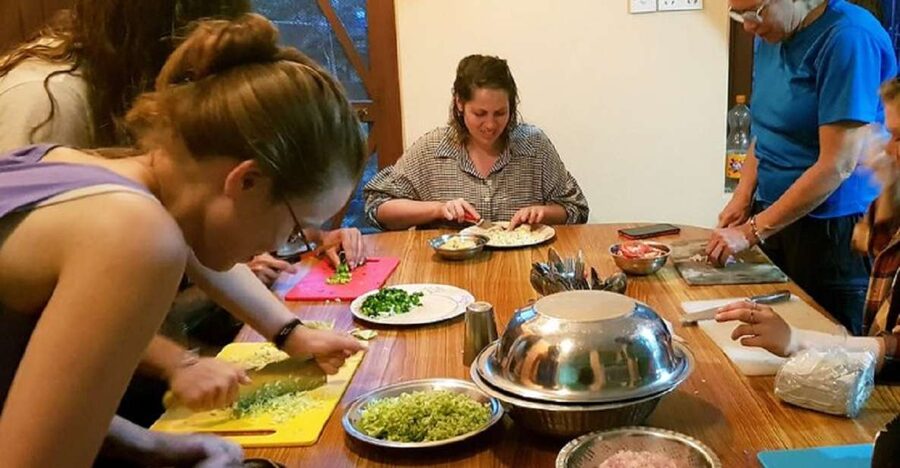
- The class is genuinely hands-on, with chopping, mixing, seasoning, shaping, and cooking.
- Momo portions are generous, with some sessions producing 70 or more dumplings.
- Pickup and drop-off cover the Pokhara Lakeside area, with Lakeside Road listed as the main meeting point.
- You get a recipe for home use, and the class costs $28 per person for about three hours.
Walking into a real Pokhara home
The class begins with pickup from the Pokhara Lakeside area, listed at Lakeside Road in Lakeside-6. Round-trip transfer is included, which is useful if you do not want to find a home address in an unfamiliar part of town. The exact meeting point and pickup details should be confirmed when you book.
On arrival, you meet your local instructor and enter a working family kitchen. That setting matters. You are not simply learning how to copy a restaurant dish. You are seeing how ingredients, spices, utensils, and cooking habits fit into everyday Nepali life.
Several details make the visit feel personal. Sarita welcomes people into her home, introduces them to family members, and creates a relaxed atmosphere. You might receive tea, water, or a small snack before cooking begins. The kitchen is described as clean, and the ingredients are prepared fresh for the lesson.
The private format is a major advantage. You can ask questions without competing with a dozen other people, and Sarita can slow down when a technique feels awkward. This is especially helpful for momo shaping, which looks simple until you try to make neat, even folds yourself.
A few more cooking classes around Nepal worth a look
- Half day cooking class in Thamel kathmandu
★ 5.0 · 607 reviews - Kathmandu: Local Women-Led Nepali Cooking & Momo Class
★ 4.9 · 360 reviews - Kathmandu: Local Lead Nepali Cooking & Momo-Making Class
★ 5.0 · 212 reviews
Choosing momos or dal bhat
Your central choice is between momos and dal bhat. Both dishes teach you something different about Nepali cooking.
Momos are stuffed dumplings, usually served with a dipping sauce. The class focuses on preparing the filling, mixing the ingredients, making the dough, rolling wrappers, shaping the dumplings, and steaming them. Depending on the session, the filling may be vegetable or cheese. The supplied details also mention chicken and buff momos in connection with Nepali cooking, but you should confirm the exact filling available when booking.
Dal bhat is the classic rice and lentil meal eaten across Nepal. It is not just one pot of food. A lesson can involve several parts, including lentils, rice, vegetables, spices, and side dishes. That means dal bhat can teach you more about everyday Nepali seasoning and meal structure, but it also requires more steps.
If you want a focused, social activity with a clear hands-on challenge, I would choose momos. If you want a broader lesson in Nepali home cooking, dal bhat is the better pick. Either option ends with you eating what you prepared.
Making momos, from dough to a mountain of dumplings
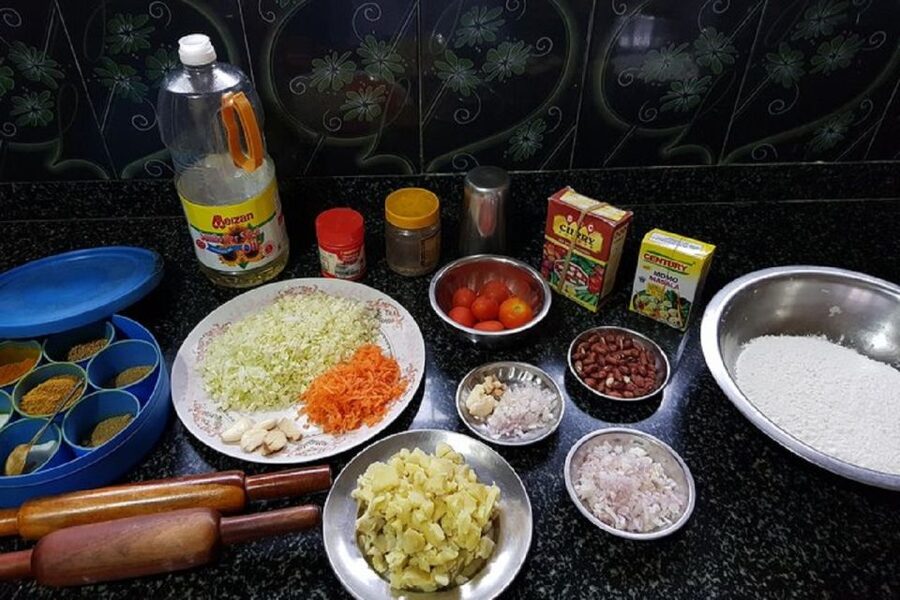
The momo session begins with ingredients and preparation. You will chop vegetables, season the filling, and learn how the mixture should feel before it goes inside the dough. Sarita explains each stage and lets you do most of the work.
The dough and shaping are where the class becomes more than a recipe demonstration. You roll out wrappers, add filling, and fold the edges into shape. Your first dumplings may look a little uneven. That is normal. One participant described early momos as rather Frankenstein-like, but patience and practice improved the results.
You are likely to make a large batch. One session produced more than 70 momos, so you should arrive hungry. This is excellent value if you enjoy practical cooking, but it may feel like a lot if you expected to prepare only a small tasting plate.
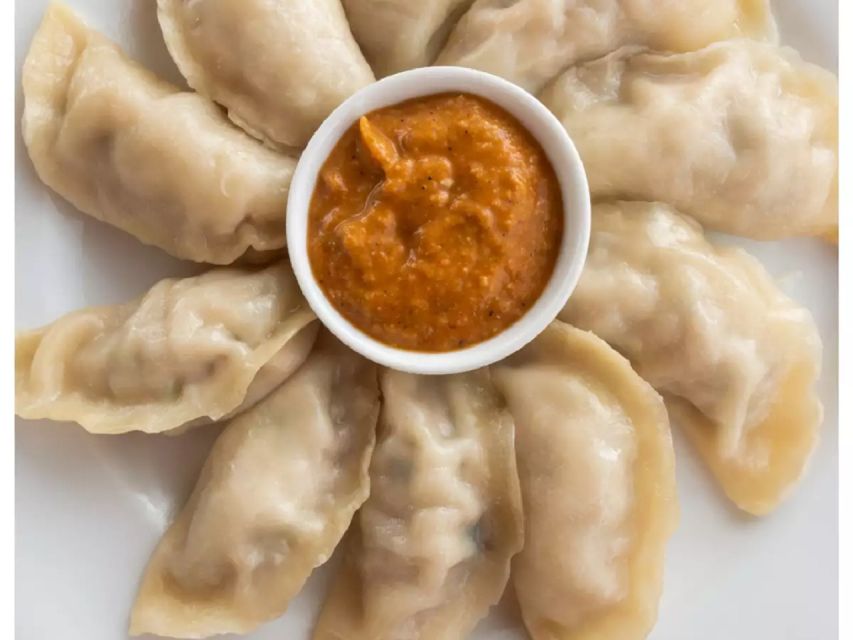
The dumplings are steamed and served with a dipping sauce. The final meal gives you an immediate reward for the work, and it also helps you understand the difference between a homemade momo and one ordered in a café.
A useful point for experienced cooks is that the lesson appears to focus on one main style rather than a tasting menu. If you want to compare vegetable, chicken, and buff fillings, or learn fried momos as well as steamed ones, ask in advance. One person specifically wished for smaller batches of several types and instruction in frying. That is a fair request, but it is not part of the stated class promise.
Preparing dal bhat in several stages
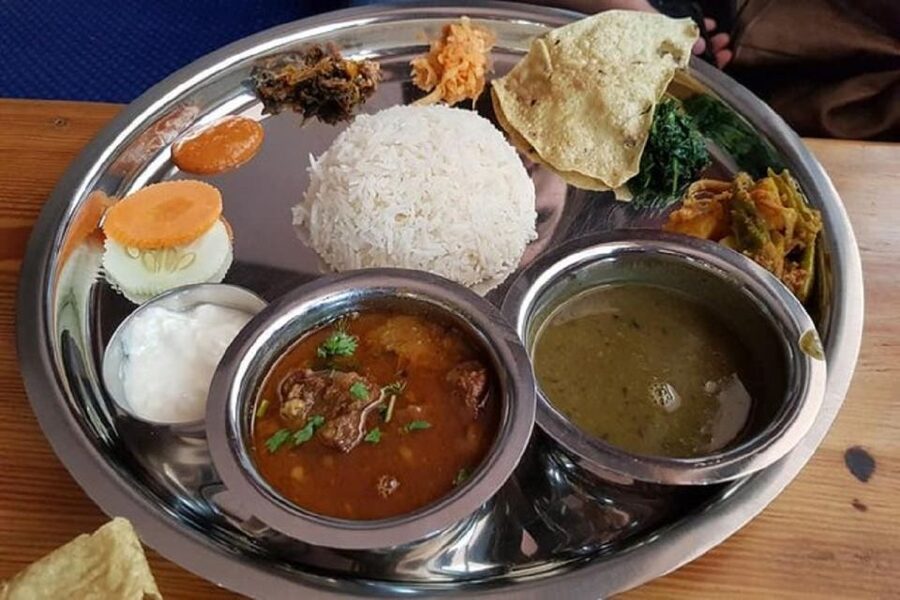
Dal bhat is a better choice if you want to understand the rhythm of a Nepali household meal. You begin with fresh ingredients, learn about spices, and work through the different preparations with Sarita’s guidance.
The method involves more stages than many first-time cooks expect. You may chop vegetables, mix seasonings, prepare lentils, cook rice, and make accompanying dishes. Sarita explains how the ingredients work together and how traditional techniques create balance rather than simply adding heat.
This is also where the cultural side of the class is strongest. Food provides an easy way to talk about Nepali habits, family meals, local ingredients, and daily life. You learn not only what to add, but why a dish is prepared in a certain way.
The finished dal bhat is substantial and satisfying. Several people praised the freshness of the ingredients and the flavor of the completed meal. You should not expect a quick lesson, though. Dal bhat has enough separate steps that the full process can take time, particularly if you ask questions or prepare multiple dishes.
A small practical improvement would be to have the recipe sheet in hand from the beginning. One person found it helpful but suggested receiving it at the start, since a written sequence makes it easier to follow several preparations at once. You can also ask Sarita to write down unfamiliar spice names or cooking terms as you go.
Same place, a different thing to cook:
- Local Women Lead Nepali Cooking Class
★ 5.0 · 125 reviews - Kathmandu: Local Women-Lead Nepali Cooking & Momo Class
★ 4.9 · 45 reviews - Kathmandu: Local Lead Nepali Cooking & Momo Making Class
★ 4.9 · 40 reviews - MoMo or Dal Bhat Cooking Class at Aama Kitchen in Pokhara
★ 4.9 · 28 reviews
Why the home setting adds value
The home kitchen is the heart of this experience. In a restaurant class, you might get better equipment or a more polished setup. Here, the benefit is direct contact with a family and a more ordinary view of Nepali cooking.
You see the kitchen where the food is prepared, meet family members, and share a meal in the same place where the cooking happens. That makes the experience feel down-to-earth. It also gives you a chance to ask questions about customs and household food that would not always come up during a sightseeing tour.
Sarita’s teaching style is another strong point. She is repeatedly described as friendly, patient, organized, and clear. English, Hindi, and Nepali are available, so English-speaking visitors can follow the lesson without needing to know Nepali. A Japanese participant with limited English still found the instructions slow and simple enough to follow.
The class is welcoming for beginners. You do not need to arrive as a confident cook. In fact, the mistakes are part of the fun, especially when shaping momos. Sarita’s willingness to correct you without taking over is important because you leave with a skill you can repeat, not just a meal you watched someone else make.
Pickup, timing, and the practical details
The listed price is $28 per person. For that fee, you receive round-trip transportation from the Pokhara Lakeside area, ingredients, spices, instruction, drinking water, and the meal you prepare. A printed or digital recipe is also included.
I consider that good value for a private three-hour experience, particularly because the food, teaching, and transport are bundled together. You are paying for more than lunch. You are also paying for the time spent preparing the ingredients, learning the technique, and talking with a local family.
The class is listed as three hours, but momo preparation can take longer. One person reported spending about four hours learning the full process. Build in some flexibility rather than scheduling a tight appointment immediately afterward.
Pickup is convenient, but it is worth confirming how the transfer works. One participant had trouble with a taxi driver who tried to charge extra for additional services. That does not cancel out the convenience of included transport, but it is a reminder to clarify the agreed arrangement before setting off.
The activity lists two pickup options and two drop-off options, all connected with Lakeside Road in Lakeside-6, Pokhara. Bring a passport or identification card, with a copy accepted. Extra food and drinks outside the class are not included, and personal expenses remain your responsibility.
Cancellation is flexible: you can cancel up to 24 hours ahead for a full refund. You can also reserve and pay later, which helps if your Pokhara schedule depends on weather or trekking plans.
Who will enjoy this class most
This experience suits you if you want a quieter cultural activity between hikes, sightseeing, and long drives. It works especially well for couples, families, solo cooks, and small private groups.
I would recommend the momo option to anyone who enjoys hands-on tasks and does not mind repetitive work. Rolling and folding dozens of dumplings takes effort, but you finish with a useful technique and plenty to eat.
The dal bhat option suits you if you want to learn a complete meal rather than one item. It is also a good match if you have already eaten dal bhat in Nepal and want to understand how the separate parts come together.
The class may be less suitable if you want a fast demonstration, a formal cooking school, or a menu with many different dishes. It is also not the right pick if you prefer not to eat a generous portion of the food you prepare. This is a cook, eat, and talk experience, not a quick photo stop.
Small details that make the lesson memorable
Fresh ingredients are a recurring part of the experience. Some come from homemade sources, and one session included vegetables from the host’s garden. That does not mean every ingredient will be grown at the home, but it does show the close link between the kitchen and local produce.
The recipes are useful after the holiday. One participant had already made two more batches of momos at home, while another appreciated receiving the full recipe in their preferred language. You should keep the recipe safe in your luggage and take a photo of it before leaving.
Come with an empty stomach, particularly for momos. The quantity can be generous, and the meal is not a token tasting. You may also receive tea or a sample of another homemade dish, such as dal bhat, depending on the session.
Finally, allow yourself time to talk. The food is the main activity, but the stories about family life, ingredients, and Nepali customs are part of what you are paying for. If you rush through the cooking, you miss much of the value.
Should you book the Pokhara cooking class?
I would book this class if you want authentic food, a private setting, and patient personal instruction. The strongest reasons are the home kitchen, Sarita’s friendly teaching, fresh ingredients, generous portions, and the recipe you can use after Nepal.
Choose momos for a lively, practical lesson with lots of shaping and eating. Choose dal bhat for a fuller introduction to the structure of a Nepali home meal. Confirm the filling, pickup arrangement, and expected duration before you go.
At $28, the experience offers solid value for a three-hour private lesson with transport and food included. It is not polished entertainment, and it may run long. That is exactly why I think it works: you get a real kitchen, a real meal, and a skill that can follow you home.
FAQ
Where does the cooking class take place?
The class takes place in a Nepalese home kitchen in Pokhara. Pickup and drop-off are listed for the Lakeside area, including Lakeside Road in Lakeside-6.
How long does the class last?
The listed duration is three hours. Momo preparation can take longer, so allow extra time if your schedule is tight.
Can I choose between momos and dal bhat?
Yes. The experience offers a choice between a momo cooking lesson and a dal bhat cooking lesson.
Is transportation included?
Yes. Round-trip transfer from the Pokhara Lakeside area is included.
Which languages are available?
The live guide can provide instruction in English, Hindi, or Nepali.
What should I bring?
Bring a passport or identification card. A copy of the document is accepted.
Can I cancel the booking?
Yes. You can cancel up to 24 hours in advance for a full refund. The experience also allows you to reserve now and pay later.
Just added around Nepal
- Kathmandu: 3-Hours of Cooking Class with Meals★ 5.0 · 10 reviews
- Pokhara: Nepali Cooking Class and Momo Making Workshop★ 5.0 · 6 reviews
- Pokhara: 3 Hour MoMo cooking class★ 4.5 · 10 reviews
- MoMo or Dal Bhat Cooking Class at Aama Kitchen in Pokhara★ 4.9 · 28 reviews
- Local Women Led Nepali Cooking Class★ 5.0 · 6 reviews
- Kathmandu: Women-Led Cooking Class & Momo Making-Local Taste★ 4.8 · 15 reviews
- Kathmandu: Nepali Cooking Class with Hotel Pickup★ 4.1 · 5 reviews
- Kathmandu: Local Women-Lead Nepali Cooking & Momo Class★ 4.9 · 45 reviews
Cooking Classes, compared.

Half-Day Thai Cooking Class at Organic Farm in Chiang Mai
Read our review →

3 in 1 Cooking Class near Navona: Fettuccine, Ravioli & Tiramisu
Read our review →
Pasta & Tiramisu Cooking Class with Unlimited Wine
Read our review →
Hanoi Cooking Class: Culture, Local Market & Meaning CSR Impact
Read our review →
5 Traditional Dishes Hanoi Cooking Class with Market Trip
Read our review →
Cooking Class and Lunch at a Tuscan Farmhouse with Local Market Tour from Florence
Read our review →
Cooking Class, Market & Thai Herbs Garden Tour
Read our review →Lists this class appears in