
REVIEW · BAGMATI ZONE, NEPAL
Local Women Led Nepali Cooking Class
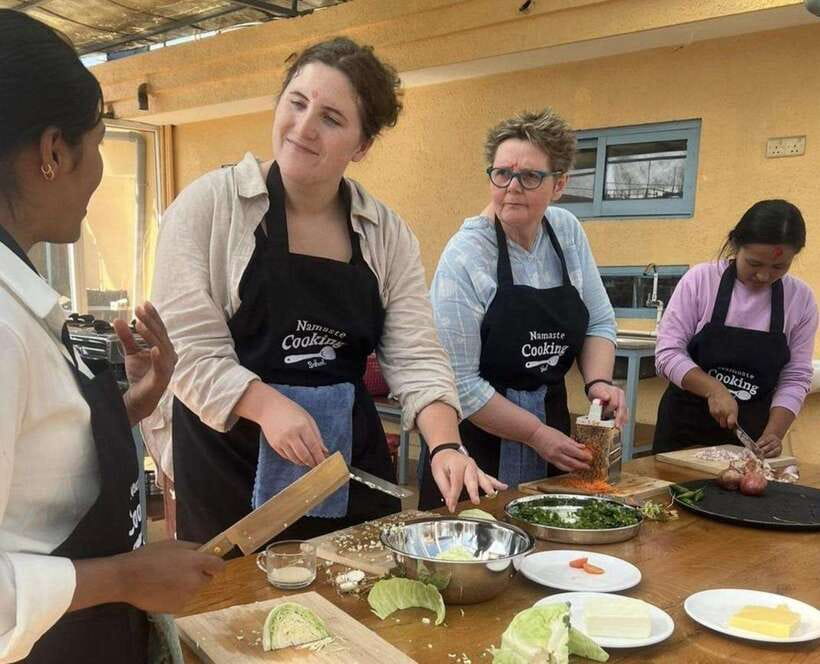
Come hungry, leave with a story. Namaste Cooking School offers a three-hour Nepali cooking class in the heart of Thamel, combining local food, hands-on cooking, and support for women who survived trafficking. I like the direct farm-to-table approach, and I like that your $30 fee includes the meal, recipes, and a participation certificate.
The small group limit of eight should keep the class personal rather than factory-like. The main consideration is simple: the available information does not name the dishes on the menu, so you should check the current selection before booking if you have a particular Nepali recipe in mind. Hotel pickup and drop-off are not included, even though pickup service is advertised as available, so confirm the arrangement in advance.
Key points at a glance
- Three hours in central Thamel: The school is easy to reach if you are staying in Kathmandu’s main visitor district.
- Women-led social mission: Your booking supports a team of women survivors of trafficking as they build independent lives through work and hospitality.
- Farm-to-table ingredients: Food is sourced from local farmers, giving the class a stronger connection to Nepal’s farming communities.
- A full cooking experience: The menu can include an entree, main course, and dessert, followed by the meal you prepare.
- Small group of eight: The limited size should allow more direct help during the cooking session.
- Useful extras included: You receive all cooking ingredients, lunch or dinner, a recipe booklet, and a certificate of participation.
Why this class matters beyond the kitchen
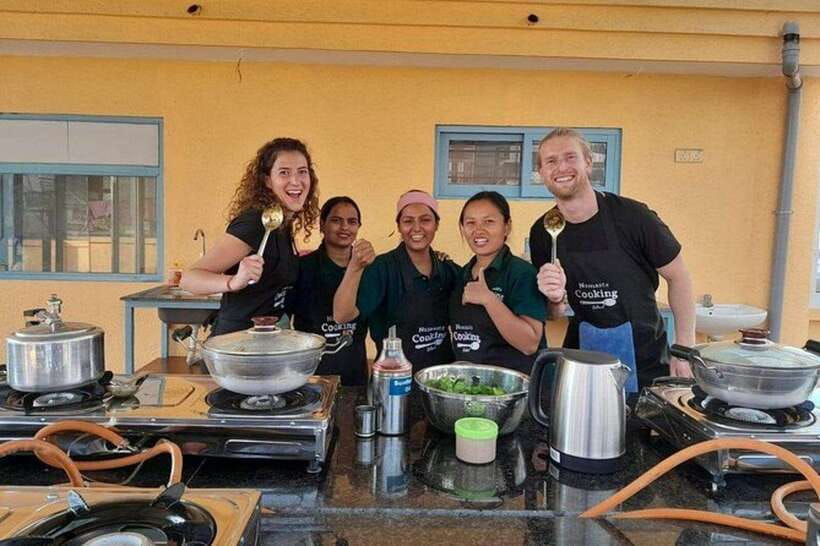
Cooking classes can be a pleasant break from sightseeing. This one also asks you to think about how tourism can support local people. Namaste Cooking School is led by women who survived trafficking, and the school presents them as workers, teachers, and decision-makers rather than as objects of pity.
That distinction matters. You are not simply donating money from a distance. You are paying for a real service, learning Nepali food traditions, and sharing a meal prepared through the work of the team. The experience connects your spending with employment and personal independence.
The school’s message is built around resilience and empowerment. Those ideas can sound abstract in a brochure, but here they are tied to a practical activity. You cook, eat, ask questions, and take home recipes. The human side of the experience is part of the class, not a separate lecture added on at the end.
The available rating is a perfect 5 from six published reviews. One Australian participant described the women leading the class as friendly and highly capable, while Maciek from Poland praised the three hours of laughter, fun, and a satisfying meal. Those details suggest that the tone is warm and social, not formal or intimidating.
A few more cooking classes around Kathmandu worth a look
- Half day cooking class in Thamel kathmandu
★ 5.0 · 607 reviews - Kathmandu: Local Women-Led Nepali Cooking & Momo Class
★ 4.9 · 360 reviews - Kathmandu: Local Lead Nepali Cooking & Momo-Making Class
★ 5.0 · 212 reviews
Arriving in Thamel and getting settled
The school is located in Thamel, Kathmandu’s best-known visitor district. That makes this a practical choice if you are already staying nearby or spending the day in central Kathmandu. You do not need to build a separate long excursion around the class.
Pickup requires a little care. Pickup service is listed as available, but hotel pickup and drop-off are also listed among the items not included. Treat that as a sign to ask the provider exactly what is offered, where the meeting point is, and whether an extra charge applies. Do not assume that a pickup service is automatically part of the $30 price.
Starting times depend on availability. The class lasts three hours, so allow enough space around it rather than squeezing it between two tightly scheduled sightseeing stops. A cooking class runs on its own rhythm, and rushing away before the meal would defeat much of the point.
English is the listed teaching language. The group is limited to eight participants, which is a useful size for a cooking lesson. You should have a better chance of seeing what is happening and getting help than in a large demonstration class, though the exact level of individual instruction can vary.
The opening lesson: ingredients, people, and place
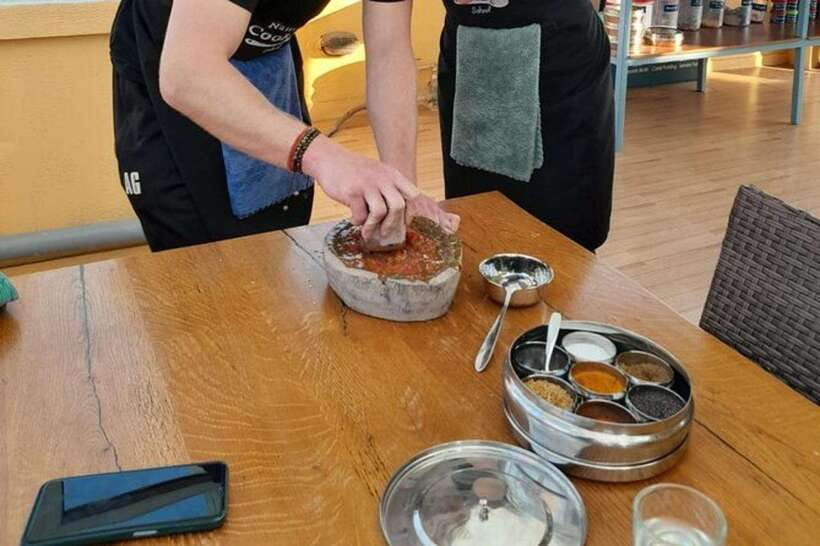
The session begins with the foundation of Nepali cooking: its ingredients and local connections. The school sources produce and other cooking supplies from local farmers, creating a farm-to-table element that goes beyond a slogan.
You will work with ingredients supplied by the school, so you do not need to shop before arriving. The information does not specify individual farmers, markets, or exact produce, and it would be wrong to promise those details. What you can expect is a lesson built around ingredients connected to Nepal rather than a generic international cooking menu.
This is also where the school’s purpose becomes clear. The class is operated by women survivors of trafficking, and the food lesson supports their work. You are likely to get more from the session if you approach it with curiosity and respect. Ask about flavors, techniques, and food traditions, but let the instructors guide how much personal background they wish to share.
The setting in Thamel adds convenience, though it may also mean you are in a visitor-focused part of Kathmandu rather than a rural kitchen. That is a fair trade for easy access and a class designed for people with limited time.
Cooking across three courses
The menu is described as covering an entree, a main course, and dessert. That range gives the class a proper meal structure rather than focusing on one recipe alone. You should expect to prepare several parts of a Nepali meal, then sit down to eat what you have made.
The exact dishes are not provided, so do not book this class expecting a named recipe unless the school confirms it first. The broad menu format is useful for beginners who want a general introduction to Nepali food, but less useful for someone hunting for one specific dish.
A three-hour session gives you enough time for more than a quick demonstration. You can expect the cooking to form the main part of the experience, with instruction, preparation, and time to eat. The published information does not give a minute-by-minute schedule, so the pace and order may change depending on the menu and group.
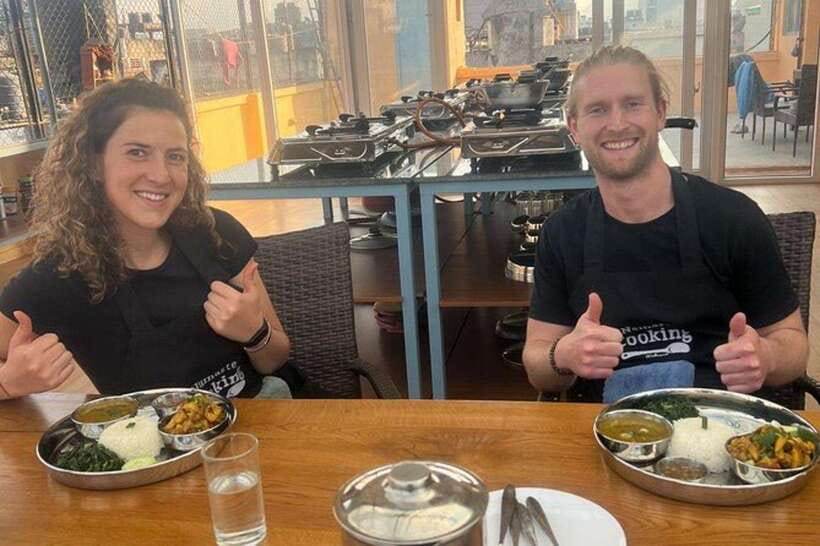
I like the fact that the meal is included. You are not cooking a small sample and then paying again for lunch or dinner. The food you prepare becomes part of the value of the experience, and sharing it at the end gives the class a natural finish.
The class may suit you if you are not a confident cook. The emphasis is on participation and cultural exchange, not on passing a difficult culinary test. At the same time, experienced home cooks should have enough room to ask questions and compare techniques, particularly in a group capped at eight.
Same place, a different thing to cook:
- Local Women Lead Nepali Cooking Class
★ 5.0 · 125 reviews - Kathmandu: Local Women-Lead Nepali Cooking & Momo Class
★ 4.9 · 45 reviews - Kathmandu: Local Lead Nepali Cooking & Momo Making Class
★ 4.9 · 40 reviews - Kathmandu: Women-Led Cooking Class & Momo Making-Local Taste
★ 4.8 · 15 reviews
Farm-to-table flavor with a practical payoff
The local sourcing is one of the strongest features here. It gives the class a connection to farmers and food production in Nepal, even if the session does not take you to a farm. You get to think about where ingredients come from instead of treating them as anonymous items on a work surface.
That approach also supports the school’s stated focus on sustainability and the purity of Nepali cuisine. The claims are broad, and the supplied details do not explain the exact purchasing system or the percentage of ingredients sourced locally. Still, the goal is clear: keep the cooking connected to local food traditions and communities.
For you, the practical payoff is better context. You are not just learning a flavor combination. You are learning how a cooking school links its menu to farmers, local traditions, and the people running the class.
Do not expect a restaurant tasting menu. This is a hands-on lesson, and the final meal reflects what you and the group prepare. That is part of the charm. A polished restaurant can serve you Nepalese food, but it cannot give you the same sense of participation.
What the $30 price includes
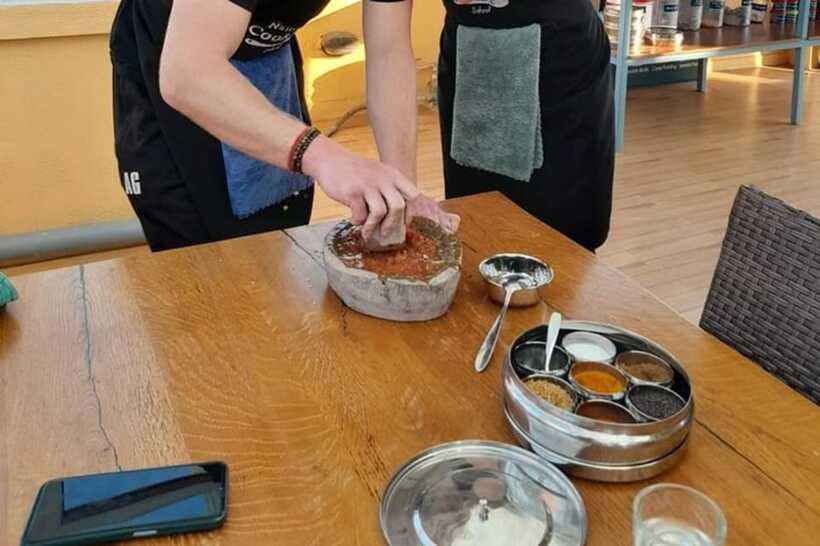
At $30 per person, the class offers solid value if you use everything included:
- All cooking ingredients
- Lunch or dinner made during the class
- A recipe booklet
- A certificate of participation
- Three hours of instruction in English
- A small group limited to eight people
The recipe booklet adds value after you leave Nepal. Without it, the class would be a pleasant meal with a short memory. With it, you have a chance to repeat what you learned at home, although the supplied information does not say how many recipes it contains.
The certificate is less important for most people, but it can be a fun keepsake. The real value is in the class, the meal, and the chance to support the women-led operation.
You should also factor in transport. Hotel pickup and drop-off are not included, and personal expenses are your responsibility. Since the school is in Thamel, reaching it may be straightforward for many people, but confirm the meeting details before you pay.
The social side of a small group
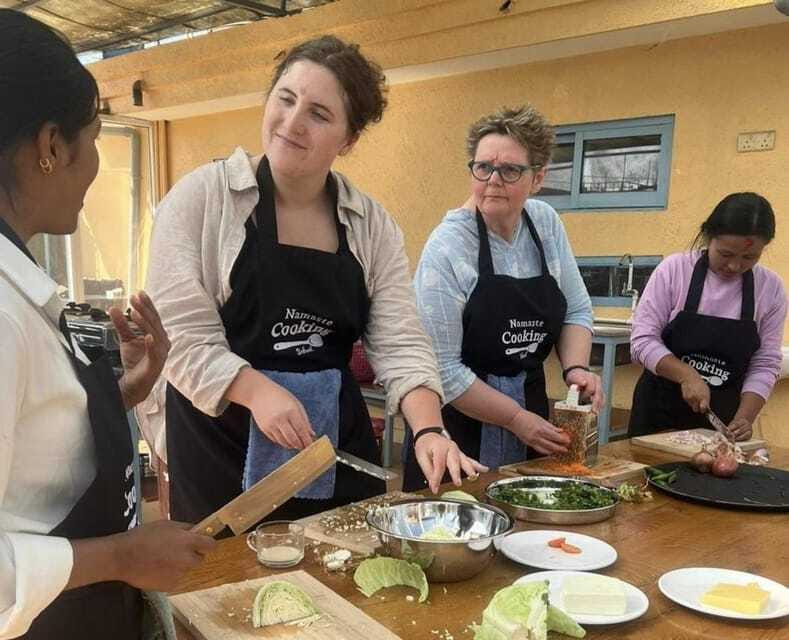
The group limit of eight is a strong practical feature. Cooking is easier when you can see the demonstration and get a turn at the work surface. A smaller group also creates better conditions for conversation, which is important when the experience is built around food and culture.
The published feedback points to a cheerful atmosphere. Maciek from Poland described the group of four women leading the session as positive and fun, with plenty of laughter during the three hours. That gives you a useful clue about the mood: this is not meant to feel like a strict professional kitchen.
Still, small does not mean private. You may share the class with people you have never met, and the pace will depend on the group. If you prefer a quiet one-on-one lesson, this may not be the right format. If you enjoy meeting people over food, the setup should work well.
The instructors’ friendly approach is one of the most praised parts of the experience. That is especially valuable for first-time visitors who may not know Nepali food customs or cooking terms. English is the listed language, so you can take part without needing to arrange an interpreter.
What to know before booking
The class is best for people who want a cultural activity with an ethical purpose. It suits couples, solo visitors, food-focused families, and anyone who wants a break from temples, trekking plans, and urban sightseeing.
I would especially consider it if you have only a short stay in Kathmandu. The three-hour length gives you a focused experience without taking an entire day. The Thamel location also makes it easier to fit into a city itinerary.
You may want to ask a few questions before confirming:
- What dishes are currently on the menu?
- Is pickup available from your hotel?
- Does pickup cost extra?
- What time should you arrive?
- Can dietary needs be accommodated?
Only some of these details are answered in the supplied information, so direct confirmation is sensible. The class includes ingredients and a meal, but no dietary policy is stated.
Cancellation is flexible enough for many schedules. You can cancel up to 24 hours before the experience for a full refund. You can also reserve now and pay later, which helps if your Kathmandu plans are still moving around.
Who should book this cooking class?
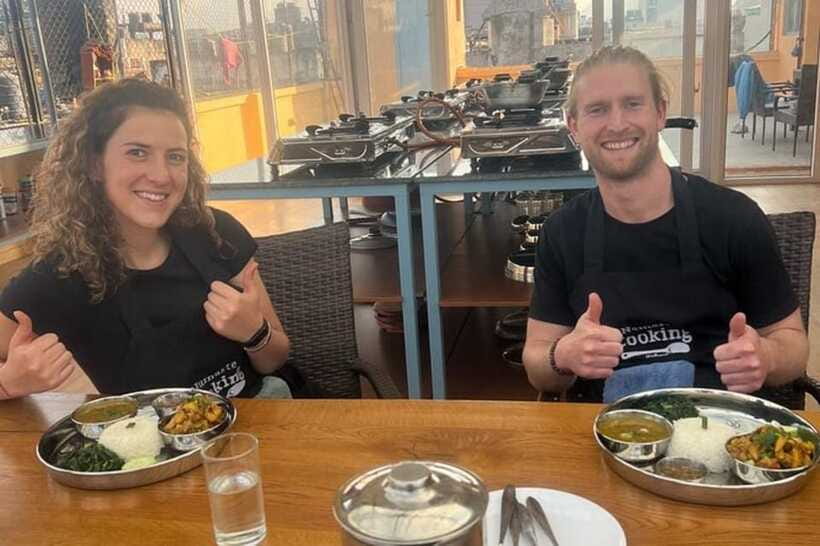
Book it if you want to do more than eat Nepali food. You will get a guided activity, a meal, recipes to take home, and a direct connection to a women-led social enterprise.
It is also a good choice if you like small groups and informal instruction. The perfect rating from six reviews, along with praise for the friendly women running the class and the fun atmosphere, supports that appeal.
Think twice if your main goal is a specific named recipe, a private class, or a farm visit. None of those details is promised. The menu is described by course rather than by dish, and the farm-to-table idea refers to ingredient sourcing rather than a stated visit to a farm.
Should you book Namaste Cooking School?
I would book this class if I wanted a practical introduction to Nepali food and a meaningful way to support local women in Kathmandu. The $30 price covers the ingredients, the meal, the recipe booklet, and the certificate, while the eight-person limit should keep the session personal.
Before booking, confirm the current menu and transport arrangements. If those details fit your needs, this is an easy activity to recommend. You get to cook, eat, laugh with the group, and support an enterprise built around work, dignity, and independence. That is a good use of three hours in Thamel.
FAQ
How long does the Nepali cooking class last?
The class lasts three hours.
Where is Namaste Cooking School located?
It is located in Thamel, in Nepal’s Bagmati Zone.
How much does the cooking class cost?
The price is $30 per person.
What is included in the price?
The price includes all cooking ingredients, lunch or dinner with the dishes you prepare, a recipe booklet, and a certificate of participation.
Is the class taught in English?
Yes. English is the listed teaching language.
How many people can join the class?
The class is limited to eight participants.
Just added around Kathmandu
- Kathmandu: 3-Hours of Cooking Class with Meals★ 5.0 · 10 reviews
- Kathmandu: Women-Led Cooking Class & Momo Making-Local Taste★ 4.8 · 15 reviews
- Kathmandu: Nepali Cooking Class with Hotel Pickup★ 4.1 · 5 reviews
- Kathmandu: Local Women-Lead Nepali Cooking & Momo Class★ 4.9 · 45 reviews
- Cook with Lisha: Nepali and Newari Cooking Class★ 5.0 · 2 reviews
- Kathmandu: Local Lead Nepali Cooking & Momo Making Class★ 4.9 · 40 reviews
- Kathmandu: Cooking Class in Nepal★ 5.0 · 2 reviews
- Kathmandu: About 3-hour Cooking Class Experience near Thamel★ 5.0 · 3 reviews
Cooking Classes, compared.

Half-Day Thai Cooking Class at Organic Farm in Chiang Mai
Read our review →

3 in 1 Cooking Class near Navona: Fettuccine, Ravioli & Tiramisu
Read our review →
Pasta & Tiramisu Cooking Class with Unlimited Wine
Read our review →
Hanoi Cooking Class: Culture, Local Market & Meaning CSR Impact
Read our review →
5 Traditional Dishes Hanoi Cooking Class with Market Trip
Read our review →
Cooking Class and Lunch at a Tuscan Farmhouse with Local Market Tour from Florence
Read our review →
Cooking Class, Market & Thai Herbs Garden Tour
Read our review →Lists this class appears in