
REVIEW · AREQUIPA REGION, PERU
Arequipa: Peruvian Cooking Class
Meet Peru on a plate. This two-hour class in Arequipa’s historic center gives you hands-on practice with a professional chef, plus a welcome glass of Chicha Morada, the sweet, nonalcoholic purple-corn drink. I like the chance to cook recognizable Peruvian dishes yourself, and I like that the class ends with a proper two-course meal and dessert. The main consideration is menu coordination: your preferred menu should be requested when booking, and one past participant was served a different menu than requested.
At $63 per person, the class is not the cheapest meal in Arequipa, but it includes instruction, ingredients, cookware, lunch or dinner, Wi-Fi, and a bilingual chef. Small groups are limited to 12, which should make it easier to follow the cooking and ask questions. The activity has earned a 4.4 rating from nine reviews, with especially strong praise for the food, organization, pleasant atmosphere, and clear English instruction.
Key points at a glance
- Three Peruvian menus: Choose among Andean, Traditional, and Seafood dishes, with the final menu arranged after booking.
- A full meal, not just a demonstration: You prepare two courses, eat what you cook, and finish with dessert.
- Historic-center location: Meet at Casa de Avila Hotel, so you can fit the class into a day of sightseeing in central Arequipa.
- Diana received special praise: One recent participant called her a perfect teacher, while another praised the instructor’s strong English and detailed explanations.
- Dietary requests matter: Vegetarian choices are available, but allergies and restrictions should be reported when you reserve.
- Allow two hours, with some flexibility: One participant reported finishing an hour early, so the pace may depend on the group and menu.
Cooking Peruvian food at Casa de Avila Hotel
The class begins at Casa de Avila Hotel in Arequipa’s historic center. You arrange your own way there, since hotel transfers are not included. That is a minor drawback, but the central location keeps the meeting point practical if you are already exploring the city on foot.
After arriving, you receive a glass of Chicha Morada. This deep-purple drink is made from purple corn and served without alcohol. It is sweet and refreshing, and it gives the class an immediate taste of Peruvian food culture before you reach for a knife or frying pan.
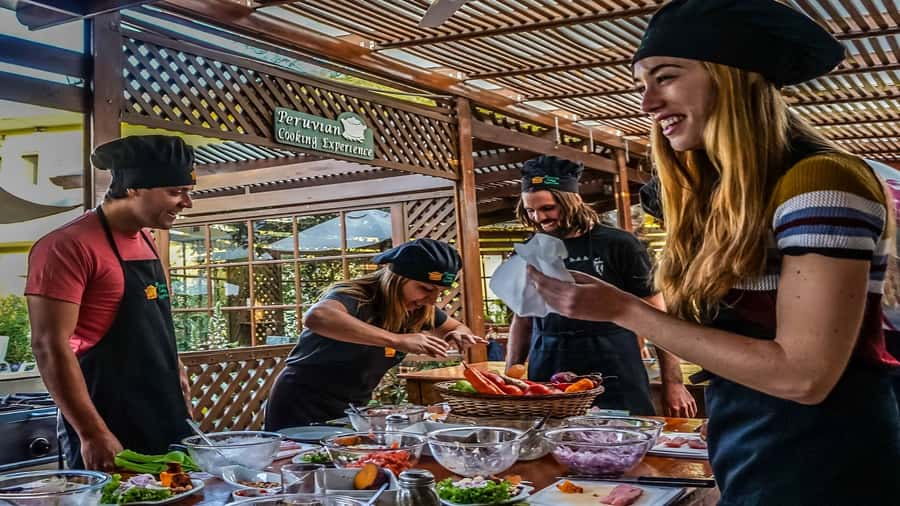
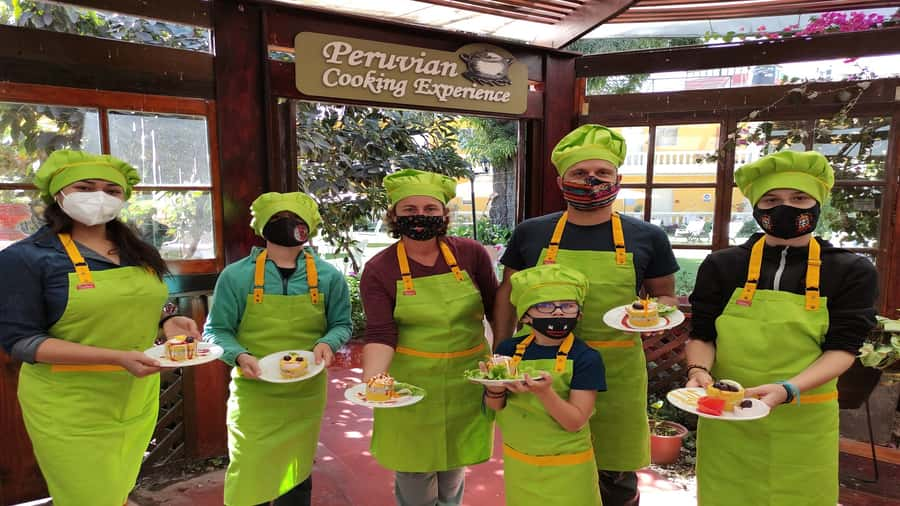
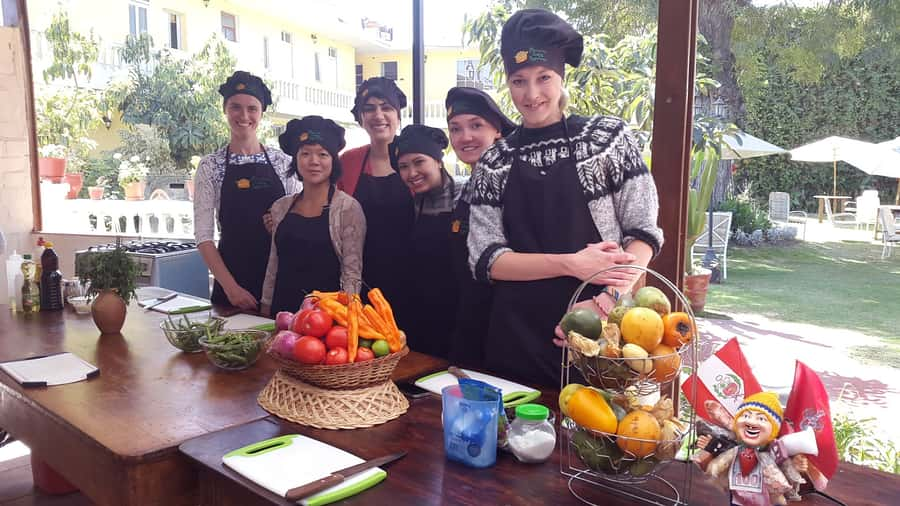
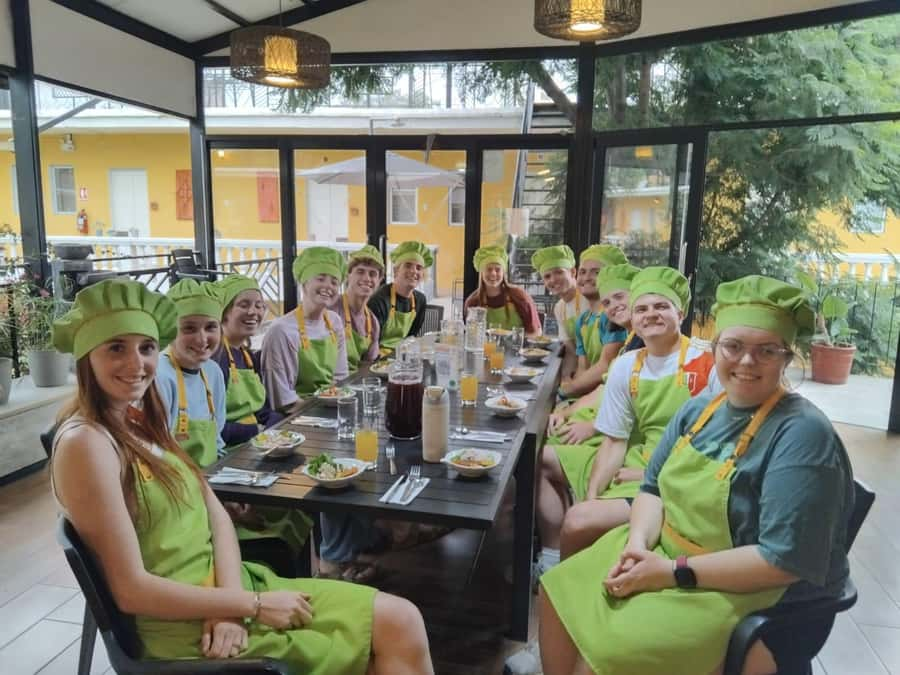
Then comes the fun part: apron and chef’s hat. It is a simple touch, but it helps turn an ordinary meal into an activity. You are not only watching a cook prepare food while standing at the edge of a kitchen. You are expected to take part, follow instructions, and help create the dishes you later eat.
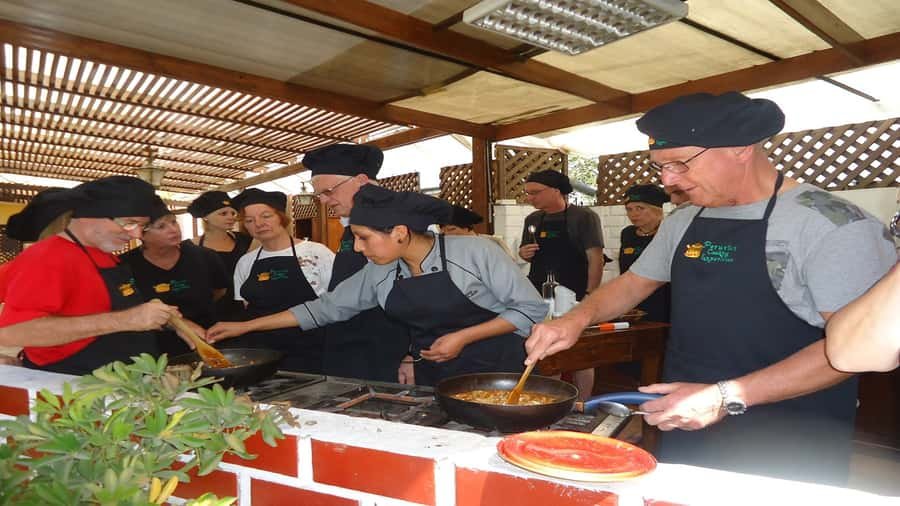
The professional chef explains each stage in Spanish and English. That bilingual format is important in a cooking class, where a missed instruction can mean a burned onion or a badly seasoned sauce. English-speaking participants have found the explanations clear, and the instructor’s upbeat style has been praised.
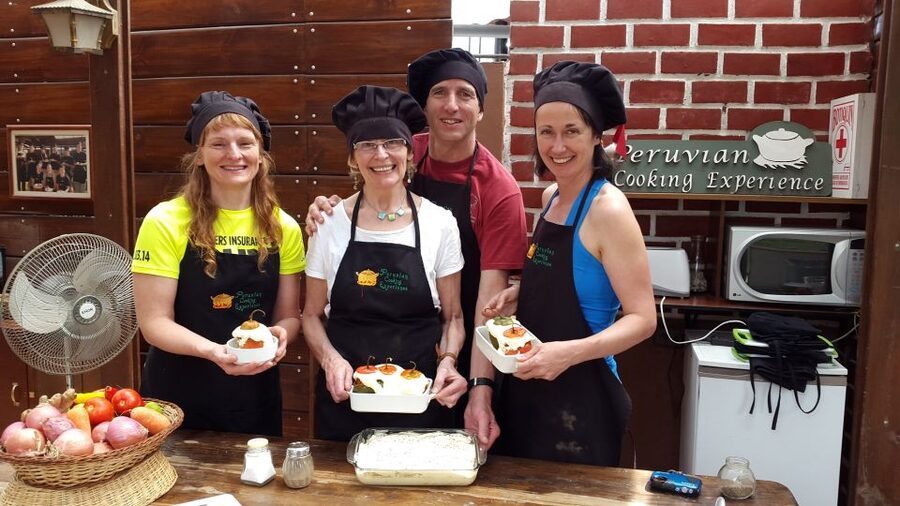
The group can be as large as 12 people, so this is not a private cooking lesson. Still, the size is modest enough that you should have a reasonable chance to see the preparation and participate. The experience works best when everyone arrives ready to share kitchen space and exchange stories with the chef and other people in the group.
A few more cooking classes around Peru worth a look
- Cusco: Peruvian Cooking Class, Cocktails & Local Market Tour
★ 4.9 · 512 reviews - Cooking class and market tour with a local chef
★ 5.0 · 186 reviews - Market Tour, Tasting of 35 Fruits, and 4-Course Peruvian Cooking Class in Lima
★ 5.0 · 86 reviews
Three menus, three different views of Peru
The menu is one of the most important decisions to make before booking. You may cook the Andean Menu, Traditional Menu, or Seafood Menu. The selected menu is confirmed after the reservation, so tell the provider your preference, vegetarian needs, allergies, and dietary restrictions as early as possible.
Andean Menu: Solterito and Rocoto Relleno
The Andean option begins with Solterito, a fresh salad made with onion, tomato, corn, beans, cheese, and potatoes. It is a useful introduction to ingredients associated with the highlands, and it gives you a colorful, lighter first course before the main dish.
The second course is Rocoto Relleno. The rocoto is a red pepper with an apple-like shape, but its heat can be serious. It is stuffed with ground meat seasoned with spices, cheese, and raisins. That mix of savory meat, melted cheese, sweetness from raisins, and chile heat makes the dish a good example of how Peruvian cooking can combine strong, contrasting flavors.
If you do not enjoy spicy food, ask about the heat before choosing this menu. The information provided does not promise a mild version, and the rocoto is specifically described as a strong spicy fruit. For many people, that heat is the point. For others, it may be the main risk of choosing the Andean menu.
Traditional Menu: Causa and Lomo Saltado
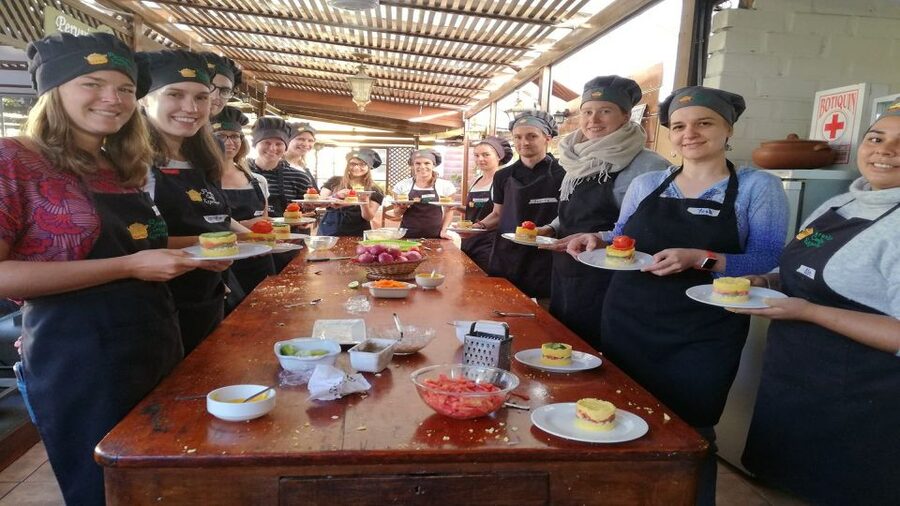
The Traditional Menu starts with Causa, a chilled or room-temperature potato dish seasoned with yellow pepper and lemon. It is filled with avocado and either tuna or chicken, then decorated with black olives and vegetables.
Causa is a smart dish to learn because it shows how much character Peruvian cooks can bring to the humble potato. The yellow pepper and lemon provide the seasoning, while the filling gives it a fuller texture. You also get a chance to practice presentation, since the dish is arranged in layers and finished with garnishes.
The main course is Lomo Saltado, one of Peru’s best-known Chinese-Peruvian fusion dishes. Beef, onion, yellow pepper, and tomato are cooked in a wok, then served with French fries and white rice. It is hearty, familiar, and easy to enjoy even if you are trying Peruvian food for the first time.
The wok preparation also gives the class a little theater. You see how quickly the ingredients come together and how the beef, vegetables, fries, and rice create a distinctly Peruvian combination. If you want the safest all-around choice for a first cooking class, this menu offers broad appeal.
Same place, a different thing to cook:
- #1 Rated Cooking Classes with Local Market Tour & Pickup
★ 5.0 · 69 reviews - Miraflores: Amazing Peruvian Cooking Class Ceviche Seafood and Pisco Sour
★ 4.9 · 57 reviews - Cook with Maido’s creative chef and chef de cuisine
★ 5.0 · 53 reviews - Cusco: Peruvian Cooking Class & Market Tour
★ 4.9 · 19 reviews
Seafood Menu: Ceviche and Pescado a lo Macho
The Seafood Menu begins with ceviche, using fresh fish marinated in lemon juice and served with onion, sweet potato, and corn. This is a dish where timing and balance matter. The fish, citrus, onion, and accompaniments each play a clear role, so the chef’s step-by-step guidance is especially useful.
The second course is Pescado a lo Macho, a fried fish fillet topped with a sauce of onions and tomatoes. It is served with white rice. Compared with ceviche, this dish is warm and comforting, giving you two very different seafood preparations in one meal.
If you enjoy fish, this is likely the most distinctive menu. It also depends on ingredients and preparation that need to be handled correctly, which makes the lesson more meaningful than simply assembling a salad. As with the other menus, report allergies and dietary restrictions at booking.
What the two-hour schedule feels like
The advertised duration is two hours, covering the welcome drink, preparation of two dishes, the meal, and dessert. That is a compact schedule. You should expect a focused class rather than a slow afternoon devoted to every detail of Peruvian cuisine.
The usual flow is straightforward:
- Arrive at Casa de Avila Hotel and receive Chicha Morada.
- Put on the apron and chef’s hat.
- Follow the chef through the preparation of two traditional dishes.
- Sit down to eat the food you made.
- Taste a dessert at the end.
The experience is designed to be social. You share the kitchen and table with the group, talk about your trip, and compare results. One participant praised the pleasant atmosphere and said the class offered useful ideas to take home. That is a good way to think about the activity: you are buying a meal, but also a practical food lesson and a cultural conversation.
There is one warning about the timing. One person reported being rushed through the class and finishing about an hour early, without receiving the quinoa dessert. That appears to be an exception rather than the stated plan, but it is worth keeping in mind. If you are choosing the class mainly for a relaxed cooking session, ask at the start how the schedule will run.
A separate comment noted that music was too loud to make conversation easy at the table. This may depend on the day and the group, but do not expect a silent classroom. If you want to ask questions or chat with the chef, speak up when needed.
Food quality, instruction, and the human side
The strongest pattern in the feedback is positive reaction to the food and teaching. The class has been described as well prepared and organized, with good food and clear instruction. Diana was singled out as a great teacher who created a fun atmosphere for the group.
That matters because a cooking class can fail in two ways. The food may be good but the lesson weak, or the instruction may be polished while the final meal disappoints. Here, the available feedback points to both parts working well most of the time.
The bilingual instruction is another real advantage. If you are not comfortable with Spanish cooking terms, being able to follow the chef in English reduces confusion. At the same time, Spanish speakers can participate naturally, making the activity suitable for mixed-language groups.
You should also expect the chef to explain more than just the order of ingredients. The class is meant to cover the history of Peruvian food, so it offers some context along with the recipes. The supplied details do not promise a long lecture, and the two-hour format limits how much background can fit in. Still, the dishes themselves provide a useful introduction to Peru’s ingredients and culinary influences.
The menus show several sides of Peruvian cooking: potatoes and peppers from the Andes, wok cooking shaped by Chinese-Peruvian traditions, seafood prepared with citrus, and familiar combinations of rice, corn, beans, cheese, and meat. You leave with more than a list of recipes. You get a practical sense of how varied Peruvian food can be.
Is $63 a fair price?
At $63, this class costs more than ordering a two-course meal at a local restaurant. You should not book it simply as a cheap way to eat lunch or dinner. The price is paying for the instruction, ingredients, cookware, chef, drink, dessert, and the chance to prepare the meal yourself.
For someone who already plans to eat Peruvian food in Arequipa, the value depends on your interest in participation. If you want a quick, inexpensive meal, the price may feel high. One participant specifically considered the value poor, so this is not an automatic bargain.
I see the price as more reasonable if you value a structured activity in the city center and want to understand how the dishes are made. The class also gives you recipes and techniques you can try again at home, although the exact take-home materials are not specified. A family group, food-focused couple, or solo visitor hoping to meet people may find the added experience worthwhile.
The class is capped at 12 people, which helps support the price. You are not signing up for a giant cooking show. Still, the group is large enough that the amount of hands-on time can vary. Your value depends partly on how actively the chef involves everyone.
Who should book this cooking class?
I would recommend this activity to adults and older children who enjoy food, conversation, and practical cultural activities. Children under eight are not suitable for the class, and the minimum age rule should be taken seriously because kitchen work requires attention and patience.
The class is especially well suited to:
- First-time visitors who want an introduction to several Peruvian dishes.
- Couples or friends looking for a shared evening activity.
- Solo visitors who like meeting people around a table.
- People who want English instruction in a Spanish-speaking destination.
- Cooks who want to learn Causa, Lomo Saltado, ceviche, Rocoto Relleno, or other local dishes.
It may not suit you if you dislike group activities, cannot tolerate spicy food, or want full control over the menu. It is also not ideal for someone who expects a long, leisurely chef’s workshop. Two hours is enough for a meal and a useful lesson, but not enough for an exhaustive study of Peruvian cooking.
Vegetarians can be accommodated, but you must request that option when booking. The same applies to allergies and other restrictions. Since one participant had trouble with a menu request, I would repeat your preference when the provider contacts you after reservation and confirm what you will actually cook.
Practical details before you go
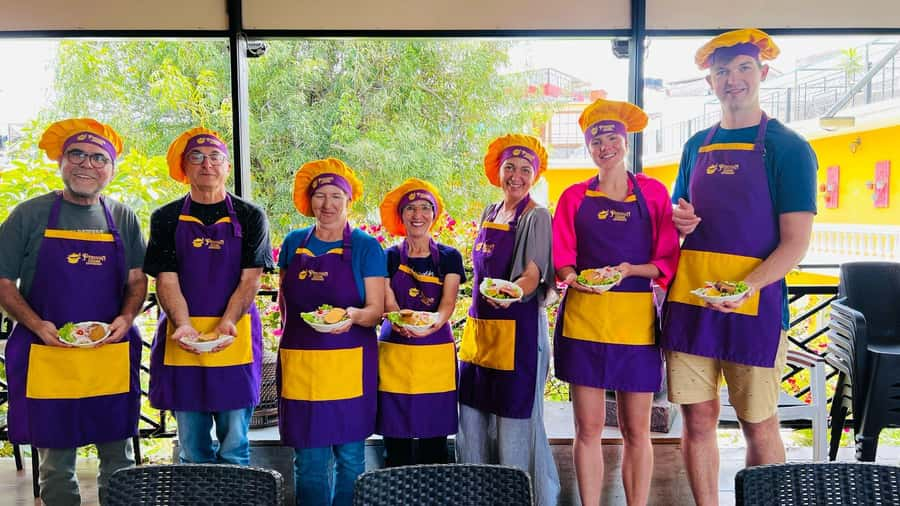
Wear comfortable clothes. You will be cooking, handling ingredients, and wearing an apron and chef’s hat, so practical clothing is more useful than dressing for a formal restaurant.
Plan your own route to Casa de Avila Hotel. Transfers to and from your accommodation are not included. The location in the historic center makes the meeting point convenient if you are already sightseeing nearby, but you should leave enough time to arrive without rushing.
The class requires at least two people to operate. If you are booking alone, availability may depend on another participant joining. The maximum group size is 12, and the chef teaches in Spanish and English.
You can cancel up to 24 hours before the activity for a full refund, and the reserve-now, pay-later option keeps your plans flexible. Those policies are useful if your Arequipa schedule is still changing.
Should you book the Arequipa cooking class?
Book it if you want to do more than eat Peruvian food. The best parts are the hands-on format, the strong menu choices, the bilingual chef, the central location, and the chance to sit down to a meal you helped prepare. The praise for Diana, clear explanations, good organization, and tasty food gives the experience a solid track record.
I would be cautious if menu choice is essential to you. Confirm your selection and dietary needs in advance, then check the menu again when you arrive. I would also ask about the expected finishing time if you have plans afterward.
At $63, this is a food experience rather than a budget meal. For a relaxed and social introduction to Peruvian cooking, it earns its place on an Arequipa itinerary. For the lowest-cost lunch, choose a restaurant instead.
FAQ
Where does the cooking class meet?
The meeting point is Casa de Avila Hotel in the historic center of Arequipa.
How long does the class last?
The stated duration is two hours. One participant reported finishing about an hour early, so the actual pace may vary.
What menus can I choose from?
You can choose an Andean Menu, Traditional Menu, or Seafood Menu. The selected menu is arranged after your reservation is confirmed.
What dishes are included in the Andean Menu?
You prepare Solterito as the first course and Rocoto Relleno as the second course.
What dishes are included in the Traditional Menu?
The first course is Causa, followed by Lomo Saltado with rice and French fries.
What dishes are included in the Seafood Menu?
The first course is ceviche, followed by Pescado a lo Macho with white rice.
Can I request vegetarian food or report an allergy?
Yes. Vegetarian options are available, and allergies or dietary restrictions should be reported when booking so the menu can be adapted.
Is transportation from my hotel included?
No. Roundtrip transfers to and from your hotel are not included, so you must make your own way to Casa de Avila Hotel.
Just added around Peru
- Lima: Peruvian cooking class and tour of Surquillo market★ 5.0 · 2 reviews
- Lima: Market Tour and Cooking Class with Pisco Sour★ 5.0 · 3 reviews
- Lima: Cooking Workshop and Water Circuit Tour★ 5.0 · 16 reviews
- Lima: Market Tour, 35 Fruits Tasting & Cooking Class★ 5.0 · 3 reviews
- Lima: 4-Course Peruvian Cooking Class in Miraflores★ 5.0 · 4 reviews
- Lima : Cooking Class – A Peruvian Culinary exploration★ 5.0 · 2 reviews
- Lima: Demo Cooking Class with Lunch at Cala Restaurant★ 4.1 · 4 reviews
- Cusco: Peruvian Cooking Class★ 5.0 · 2 reviews
Cooking Classes, compared.

Half-Day Thai Cooking Class at Organic Farm in Chiang Mai
Read our review →

3 in 1 Cooking Class near Navona: Fettuccine, Ravioli & Tiramisu
Read our review →
Pasta & Tiramisu Cooking Class with Unlimited Wine
Read our review →
Hanoi Cooking Class: Culture, Local Market & Meaning CSR Impact
Read our review →
5 Traditional Dishes Hanoi Cooking Class with Market Trip
Read our review →
Cooking Class and Lunch at a Tuscan Farmhouse with Local Market Tour from Florence
Read our review →
Cooking Class, Market & Thai Herbs Garden Tour
Read our review →Lists this class appears in