
REVIEW · WESTERN GREECE, GREECE
Phyllo Pie Baking Class @ Lefkada Micro Farm
Fresh dough, garden greens, and fire. That is the appeal of this four-hour class at Lefkada Micro Farm, where you make rustic Greek pies from scratch rather than watch someone else do the work. I like the garden harvest and the old family recipes, both of which give the class a real sense of place. The main drawback is the $123 price, which is a serious spend for a cooking lesson.
I also like that the group is limited to 10 people and taught in English. You should expect a relaxed pace, an open-air kitchen, and time at a shared farmer’s table while the pies bake. The class is best for people who enjoy hands-on food experiences, though it may feel long if you want a quick demonstration instead of four hours at the farm.
Key things to know before you book
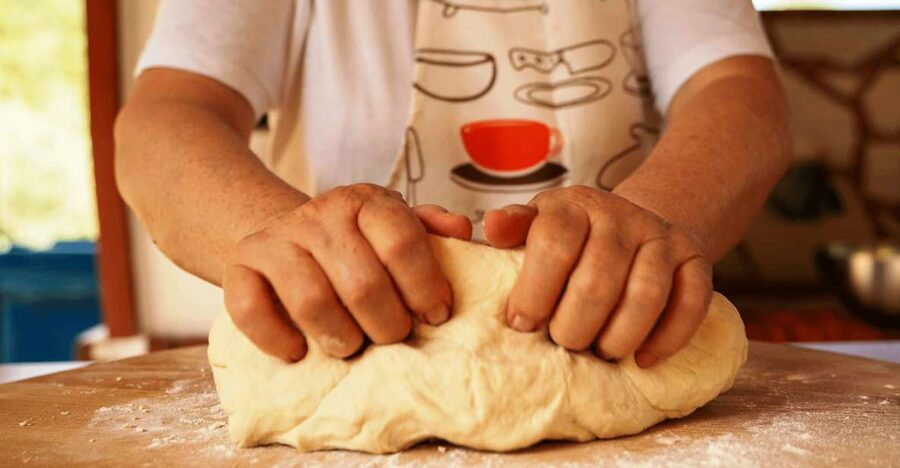
- You make phyllo dough from scratch: Learn to knead, roll, and stretch the thick, rustic dough used in the Greek countryside.
- The filling begins in the garden: Harvest seasonal greens and herbs before returning to the kitchen.
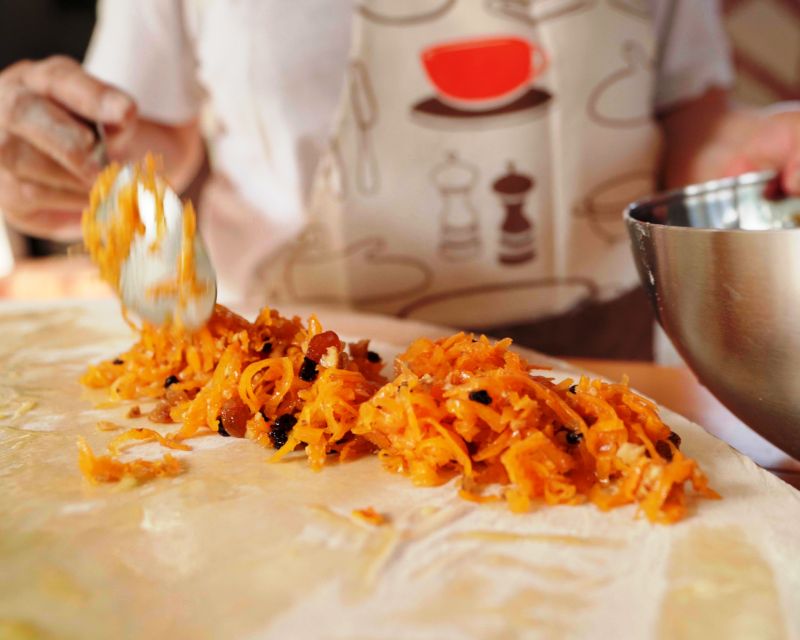
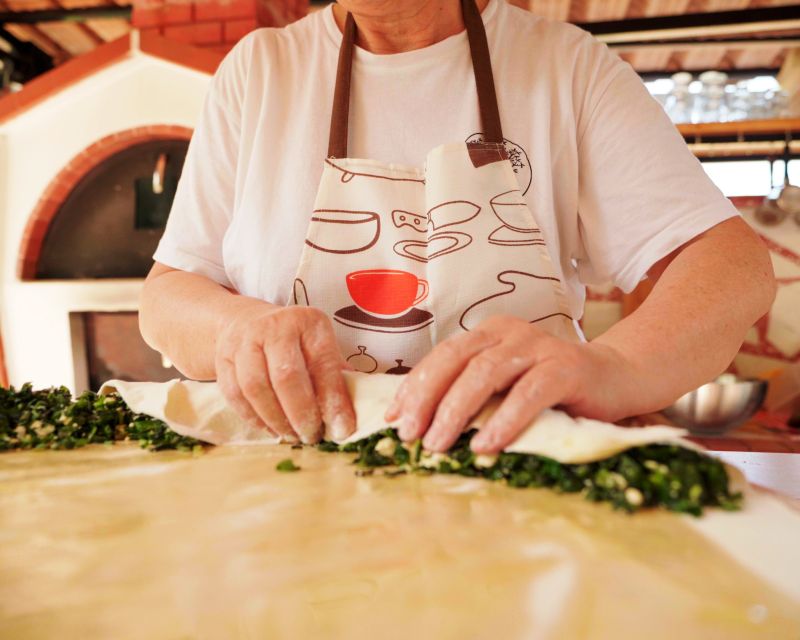
- Four recipes are part of the experience: Prepare wild greens with feta, goat cheese with sun-dried tomatoes and olives, pumpkin with walnuts, and baklava.
- A wood-burning oven finishes the meal: The pies bake with the farm’s own extra virgin olive oil and are served fresh.
- The small group matters: With no more than 10 participants, you should have room to work and ask questions.
- The mood is peaceful and social: Sue from the United Kingdom called the farm peaceful and praised the cooking class after a verified visit in September 2025.
Why this Lefkada farm class feels different
Many cooking classes give you a recipe, a quick demonstration, and a plate of food. This one is built around the full chain of making a meal: gathering ingredients, preparing dough, filling pies, baking them, and eating together.
That order matters. You are not simply cooking with ingredients bought for the occasion. You walk through the organic garden and collect seasonal greens and herbs. Then you take those ingredients into the open-air kitchen, where the work continues with simple tools, family methods, and the farm’s own extra virgin olive oil.
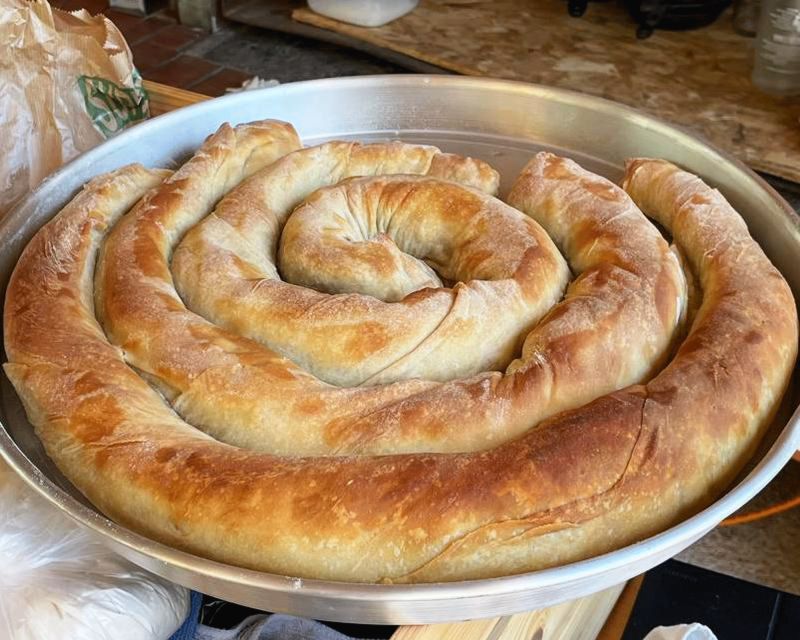
The class also leans into country-style Greek cooking. The phyllo is not presented as delicate restaurant pastry. It is thick, rustic, crunchy, and meant to hold hearty fillings. That makes the technique more approachable. You do not need to produce paper-thin sheets worthy of a pastry competition.
I like this practical approach. You can take the recipes home without needing rare ingredients or specialist equipment. The method is meant for an ordinary kitchen, even though the farm’s wood-burning oven gives the final pies a special finish.
More Farm Cooking Classes in Greece
- Naxos Perivoli Farm Experience & Wood-fire Cooking Class
★ 5.0 · 339 reviews - Melanes: Naxos Perivoli Farm & Cooking Class with Wood Fire
★ 5.0 · 177 reviews - Santorini Family Farm Food & Wine Tour with Cooking Class
★ 5.0 · 107 reviews
Starting with the garden harvest
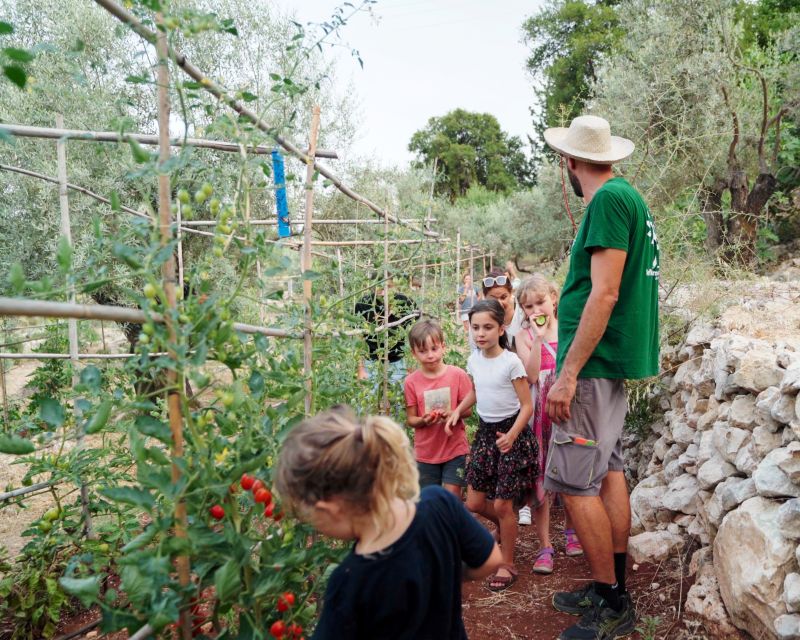
The class begins with a walk through the farm’s organic garden. You harvest seasonal greens and herbs that become part of the meal. The exact produce will depend on the time of year, so you should not expect the same garden selection at every visit.
This is one of the most valuable parts for anyone interested in Greek food. Greens are not just decoration here. They are central to the flavor of the traditional pies, particularly the wild greens and feta recipe. Picking them yourself helps explain why Greek pies can taste so satisfying with a short list of ingredients.
The garden visit also sets a slower pace. You are not rushing straight to a workbench. Instead, the class connects the food to the soil, the season, and the people preparing it. A verified participant, Sue from the United Kingdom, specifically praised the peaceful setting. That makes sense: the farm experience is designed as a break from the noise and speed of ordinary sightseeing.
You should tell the farm about food allergies or dietary restrictions before the class. This is especially important because the planned recipes include dairy, nuts, olives, and wheat-based dough.
Learning the old phyllo method
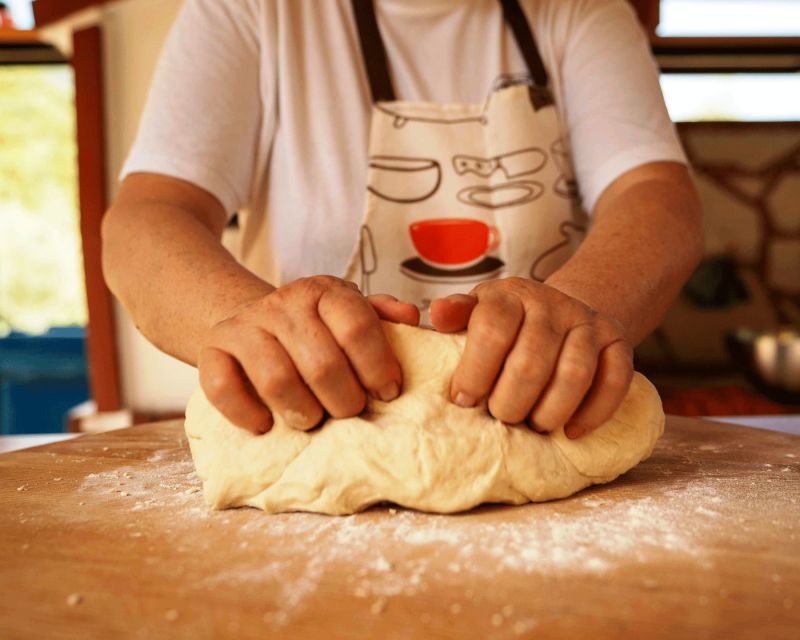
Back in the open-air kitchen, you learn how to make the dough from scratch. The family recipes have been passed down for about 100 years, and the class focuses on the traditional countryside style rather than a polished modern version.
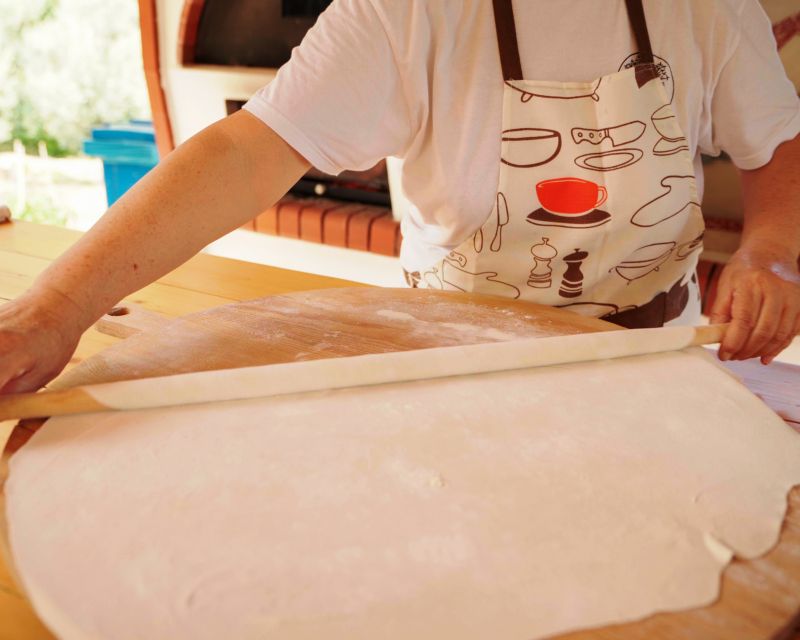
You will knead the dough, roll it, and stretch it by hand. The aim is a thick, rustic crust with a crisp finish. The technique is described as easy to knead and stretch, which should make it suitable for beginners. Still, working dough by hand takes patience. If you expect instant perfection, you may find the first attempt a little awkward.
That is part of the fun. Handmade phyllo does not need to look identical from one person to the next. A slightly uneven crust fits the country style better than a perfectly uniform sheet. You learn the feel of the dough, how much pressure to use, and how to create a base sturdy enough for a generous filling.
Cooking utensils and an apron are included, so you do not need to bring special equipment. The instruction is in English, and the small group size of 10 or fewer should make it easier to follow the demonstration and get help as you work.
Four fillings, four very different flavors
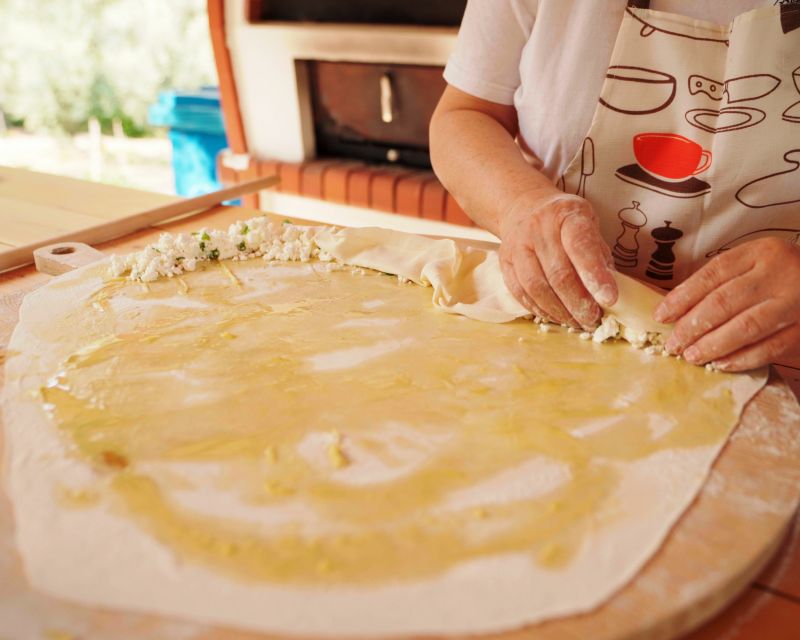
The class includes four recipes, giving you a useful range of Greek baking styles.
More Baking Classes in Greece:
- From Mykonos: Mykonian Farm Baking Class with Brunch
★ 4.7 · 29 reviews - Chania Sourdough Bread Class – Olive Oil Tasting
★ 5.0 · 6 reviews - Lisbon: Pastel de Nata Baking Class
★ 4.9 · 2,106 reviews - Paris Croissant Small-Group Baking Class with a Chef
★ 5.0 · 910 reviews
Wild greens and feta
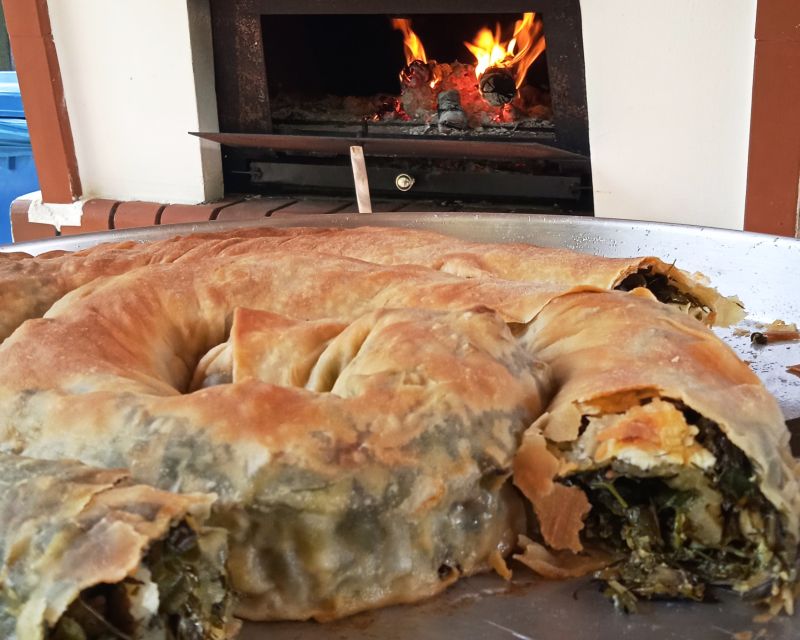
This is the most closely tied to the garden harvest. Greens and feta create a savory filling with the salty, earthy character associated with traditional Greek pies. It is a good recipe to pay attention to if you want to recreate the farm experience at home.
The exact greens will be seasonal, so the flavor may change during the year. That flexibility is useful. You learn a method rather than a rigid formula.
Goat cheese, sun-dried tomatoes, olives, and oregano
This filling brings stronger Mediterranean flavors. The goat cheese adds a distinct tang, while sun-dried tomatoes and olives provide salt and concentrated flavor. Oregano gives it a familiar Greek accent.
If you are sensitive to strong cheeses or olives, this may not be your favorite combination. It is still helpful as a lesson in balance, since a simple dough can carry bold ingredients without needing a complicated sauce.
Pumpkin with walnuts, cinnamon, and raisins
The pumpkin pie moves into sweeter territory but remains firmly connected to the same dough technique. Walnuts add crunch, while cinnamon and raisins give the filling warmth and sweetness.
This recipe is a good reminder that Greek pies are not limited to savory fillings. The same handmade crust can handle a dessert-style mixture, making the class more useful when you return home and want to experiment.
Baklava with honey, cinnamon, and walnuts
Baklava gives the class a final sweet note. Honey, cinnamon, and walnuts are classic partners, and the wood-burning oven brings the meal to its finish.
You should be aware that this is a busy four-hour program. You are not making only one pie and leaving. You are working through several recipes and sharing the results, so the length is justified for people who enjoy cooking. If your main goal is a quick taste of Greek food, this will probably feel too involved.
The wood-burning oven and farmer’s table
Once the pies are prepared, they go into a traditional wood-burning oven. The oven is one of the class’s most appealing features because it gives the food a clear connection to older rural cooking methods.
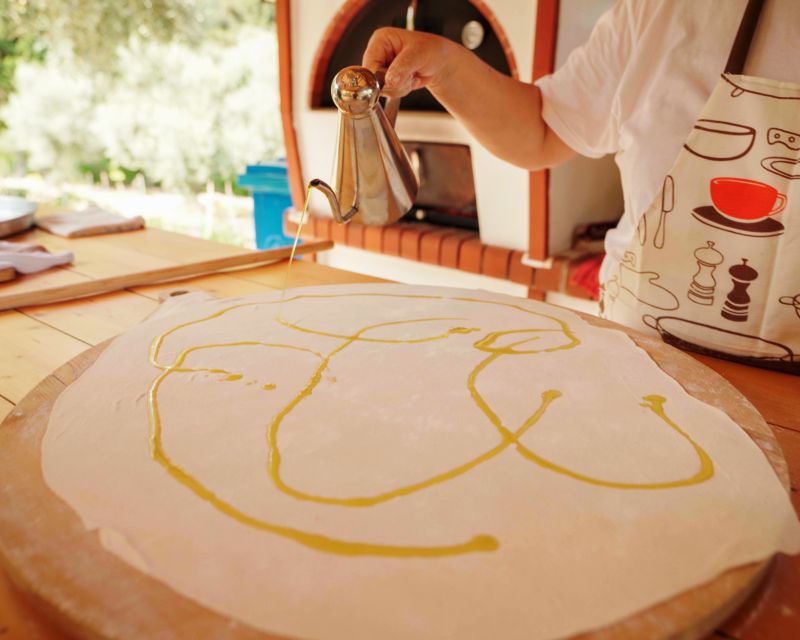
The farm also uses its own extra virgin olive oil. That is not a minor detail. Olive oil shapes the flavor and texture of Greek pies, and using the farm’s own selection makes the class feel more personal than a standard kitchen lesson.
As the pies bake, you gather at the big farmer’s table and eat together. This shared meal is part of the experience, not simply an afterthought. You get to taste the results while they are fresh, compare the different fillings, and enjoy the social side of the class.
Sue’s description of the farm as peaceful fits this part especially well. The class is meant to help you disconnect from modern noise and focus on food, conversation, and the work you have just completed. I would choose this activity on a day when you want a slower change of pace, not when you are trying to fit several sights into a tight schedule.
Is $123 a good value?
At $123 per person, this is not a bargain cooking demonstration. The price makes more sense when you count what is included: four hours, instruction in English, cooking utensils, an apron, garden time, several recipes, a wood-burning oven, and a shared meal.
You are also paying for a small group. With a limit of 10 participants, the class should offer more personal attention than a large commercial food tour. That matters when you are learning dough work, since a quick correction from the instructor can prevent a frustrating result.
The value depends on how you use the class. If you want a meal alone, $123 is hard to justify. If you want a hands-on cultural activity, practical recipes, and a slow afternoon at a farm, the price is easier to defend.
The strongest value is for someone who will actually use the recipes at home. The class is designed to send you away with skills you can repeat, not just memories and a full stomach. You will need to decide if that matters to you.
Who will enjoy the class most?
I would recommend this experience to:
- Home cooks who want to learn handmade dough
- Couples or friends looking for a shared activity
- Food lovers interested in traditional Greek recipes
- Visitors who prefer a quiet farm setting to a crowded attraction
- Beginners who like learning by doing
- People who enjoy long meals and social cooking
Families may also find it appealing, but the supplied information does not specify a minimum age or child policy. Ask before booking if children will be part of your group.
The class is wheelchair accessible, which is useful for visitors who need an accessible activity. You should still contact the provider about any personal access needs, especially since the experience includes a garden walk and work in an open-air kitchen.
Practical details that affect your decision
The activity lasts four hours, and starting times depend on availability. Plan it as a major part of your day rather than a short stop between other plans.
Instruction is in English. The group is limited to 10 people, and the experience provider is Lefkada Micro Farm Experiences. Cooking utensils and an apron are provided.
You can cancel up to 24 hours in advance for a full refund. The reserve-now, pay-later option also helps if your Western Greece plans are still shifting. You reserve your place without paying at the time of booking.
The most important preparation is to report allergies and dietary restrictions in advance. The recipes include feta, goat cheese, walnuts, raisins, honey, olives, and wheat-based phyllo, so this is not an activity to book without sharing relevant food information.
Should you book the Lefkada Micro Farm class?
Book it if you want to spend four unhurried hours making food with your hands, learning family recipes, and eating at a shared farm table. The garden harvest, small group, and wood-burning oven give the class a strong sense of place, while the recipes are practical enough to use at home.
Skip it if you want a quick cooking demonstration, dislike working with dough, or find $123 too high for a single meal and class. For the right person, though, the cost buys more than lunch. It buys time, instruction, and a genuine connection to the way traditional Greek pies are made.
FAQ
How long does the phyllo pie baking class last?
The class lasts four hours.
How much does the experience cost?
The price is $123 per person.
What language is the class taught in?
The class is taught in English.
How many people can join the class?
It is a small-group experience limited to 10 participants.
What recipes are included?
The recipes include wild greens and feta, goat cheese with sun-dried tomatoes, olives, and oregano, pumpkin with walnuts, cinnamon, and raisins, and baklava with honey, cinnamon, and walnuts.
Are cooking utensils and an apron provided?
Yes. Cooking utensils and a cooking apron are included.
Can I cancel the booking for a refund?
Yes. You can cancel up to 24 hours in advance for a full refund.
Just added around Greece
- Authentic and Traditional Cooking Class in Chania Crete★ 5.0 · 5 reviews
- Private Cooking Class – A Culinary Journey in Argostoli★ 5.0 · 2 reviews
- Chania Cooking Class in Crete with rustic, delicious and homely Cretan food!★ 4.5 · 14 reviews
- Private Greek Cooking Class in Athens-Learn to Cook with Angelina★ 5.0 · 3 reviews
- Cook with Katerina: Authentic Greek Home Cooking Class in Athens★ 5.0 · 15 reviews
- Private Walking Meze Cooking Course★ 5.0 · 6 reviews
- Greek Cooking Class with Acropolis View★ 5.0 · 76 reviews
- Cooking Class in Athens: Learn the Art of Phyllo with Christina★ 5.0 · 24 reviews
Baking & Bread Classes, compared.
Paris Croissant Small-Group Baking Class with a Chef
Read our review →
Paris Macarons Small-Group Baking Class with a Chef
Read our review →
Lists this class appears in