
REVIEW · CRETE, GREECE
Dining In Rethymno: An Evening Of Cretan Cooking
Good food tastes better when you help make it. This four-hour evening near Rethymno combines a small-group cooking class with a generous home meal, garden produce, wine, and homemade raki. Androniki leads the cooking, while her husband helps keep the evening moving. Together, they offer a friendly look at everyday Cretan food and hospitality.
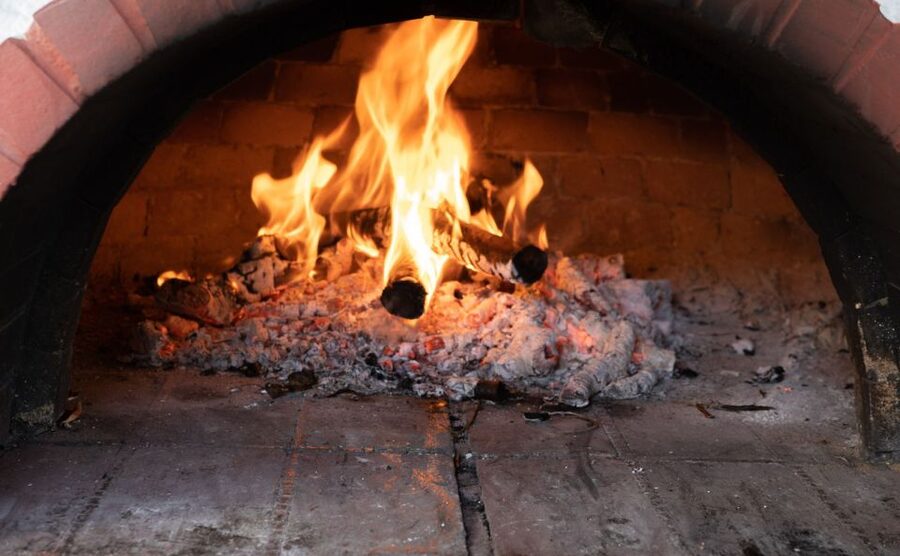
I especially like the use of vegetables and herbs from the hosts’ own garden, plus the outdoor wood oven that gives the class a real sense of place. I also like the relaxed social setup, with no more than 10 people around the table. The main consideration is transport: Loutra is 11 kilometers from Rethymno, and the village has no street names, so you need to plan your arrival carefully.
Key points to know before booking
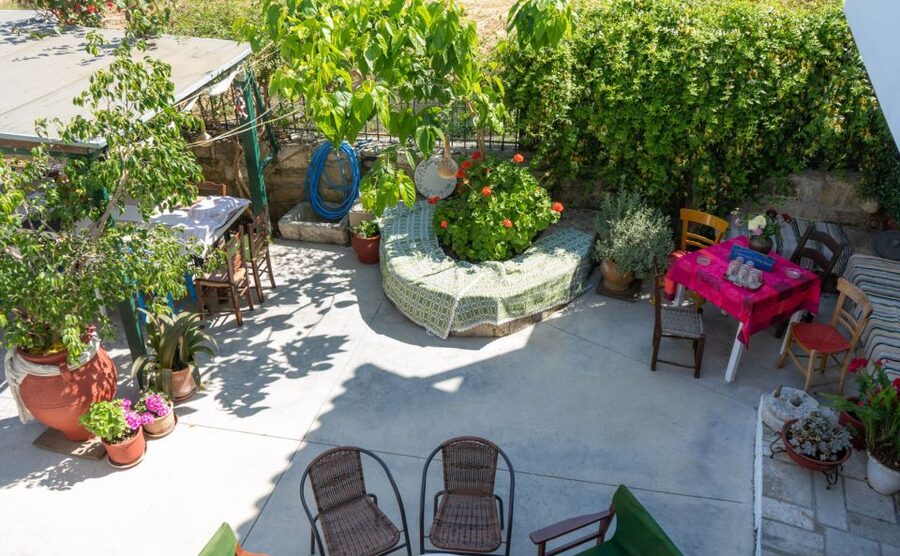
- The cooking takes place outdoors around a wood oven, giving the meal a rustic Cretan setting rather than a standard classroom feel.
- Androniki teaches traditional dishes, including wild herb pies, onion kalitsounia, stuffed vegetables, moussaka, dakos, and village salad.
- Homegrown vegetables, herbs, and homemade olive oil are central to the meal.
- Homemade raki and Greek wine are included, along with the food prepared during the evening.
- The group is limited to 10 people, which helps keep the cooking personal and the meal sociable.
- Loutra is easy to reach from Rethymno by car, taxi, or bus, but you should use the provided map because the village lacks street names.
Why this cooking evening feels different
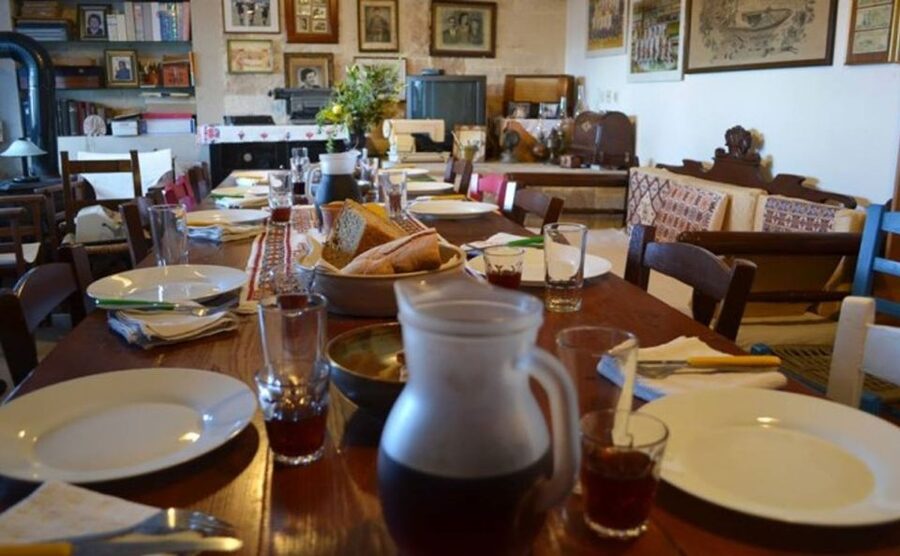
Many food activities in Crete take place in restaurants or polished cooking studios. This one happens at Androniki’s home in Loutra, a small village outside Rethymno. That changes the mood from formal instruction to a shared evening with local hosts.
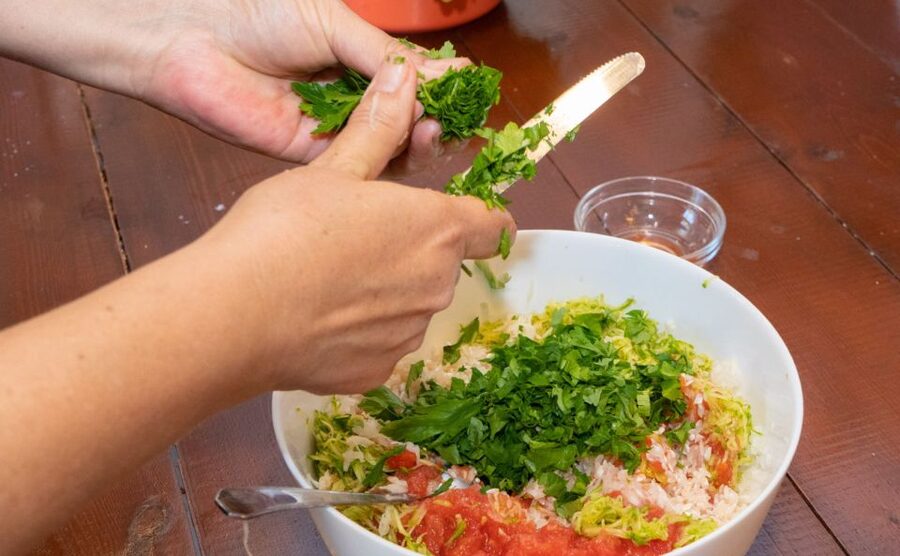
The setting matters. You are not simply watching a chef prepare a plate. You are handling ingredients, helping shape traditional dishes, and then sitting down to eat them. The experience is built around participation, conversation, and plenty of food.
Androniki’s husband also plays an important supporting role. The evening works as a team effort, with Androniki guiding the cooking and her husband helping with preparation and service. This warm partnership is one reason the event feels personal rather than commercial.
The class is conducted in Greek and English. You do not need advanced cooking skills. The hands-on work is described as basic but informative, making it suitable for beginners who want to learn without being put under pressure.
More Dinner Trips in Greece:
- Greek Cooking Class in Athens Including Rooftop Dinner with Acropolis View
★ 5.0 · 826 reviews - Greek Small-Group Athens Cooking Class & Dinner
★ 5.0 · 574 reviews - Athens: Greek Cooking Class & Dinner on a Rooftop
★ 5.0 · 383 reviews
Arriving in Loutra from Rethymno
Loutra is about 11 kilometers from Rethymno. You can reach the village by car, taxi, or bus from Rethymno, but the final approach requires some attention. The village is small and does not use street names, so the hosts identify their home on Google Maps as Andronikis Cretan House.
Your voucher provides the full address, and it is sensible to check the map before leaving Rethymno. If you are taking a bus, confirm how close the stop is to the house and how you will manage the final part of the journey. The information provided does not specify a pickup service, so you should not assume transportation is included.
This is one of the few practical drawbacks. The setting feels more authentic because it is in a real village home, but that also means it is not as simple as walking to a restaurant in central Rethymno. Build a little extra time into your plans, especially if you are driving or arranging a taxi.
Meeting Androniki and seeing the garden
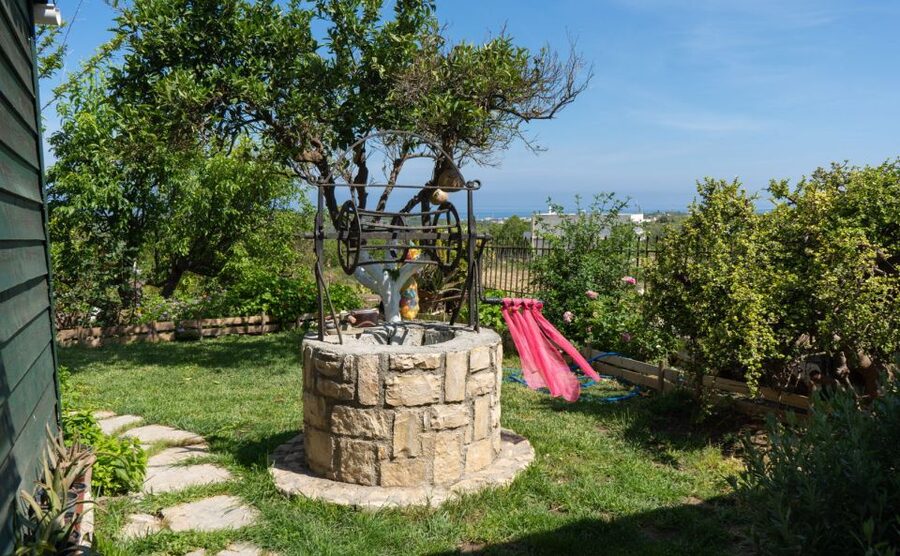
The evening begins at the hosts’ home, where you meet Androniki and her husband. Their own garden supplies vegetables and herbs for the cooking, and the garden is part of the experience rather than a decorative backdrop.
One particularly appealing detail is that you may be able to take some herbs home. That small touch connects the meal to the garden and gives you a practical reminder of the evening after you leave.
The focus on homegrown ingredients also helps explain the character of Cretan cooking. The food is not presented as complicated restaurant cuisine. It is based on vegetables, herbs, olive oil, cheese, dough, and careful cooking. Freshness does much of the work.
The hosts also use homemade olive oil and other homemade ingredients. You will still want to tell them about allergies, food restrictions, or special diets before the visit. This is especially important in a cooking class, where ingredients may be prepared in advance.
Cooking with the wood oven
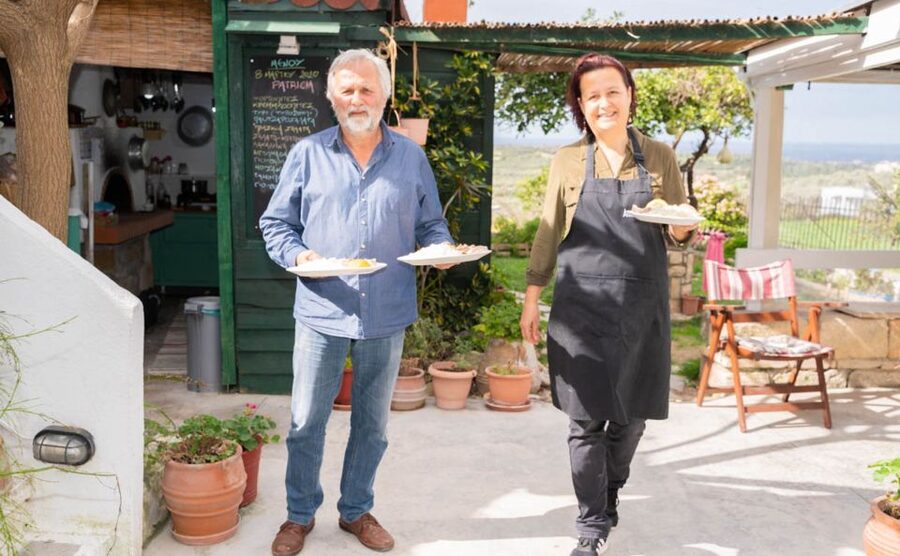
The outdoor wood oven is the heart of the evening. It adds heat, smoke, and a little theater to the process, but it is also a working part of the cooking. You get to see how traditional dishes move from raw ingredients to the table.
The exact order of the dishes can vary, but the menu includes several classic Cretan and Greek preparations:
- Chortopites, savory pies filled with wild greens and herbs
- Kremidokalitsouna, small onion-filled pastries or pies
- Sfakianes pites, a traditional Cretan flat pie associated with the Sfakia region
- Dakos, a Cretan bread and tomato dish
- Greek village salad
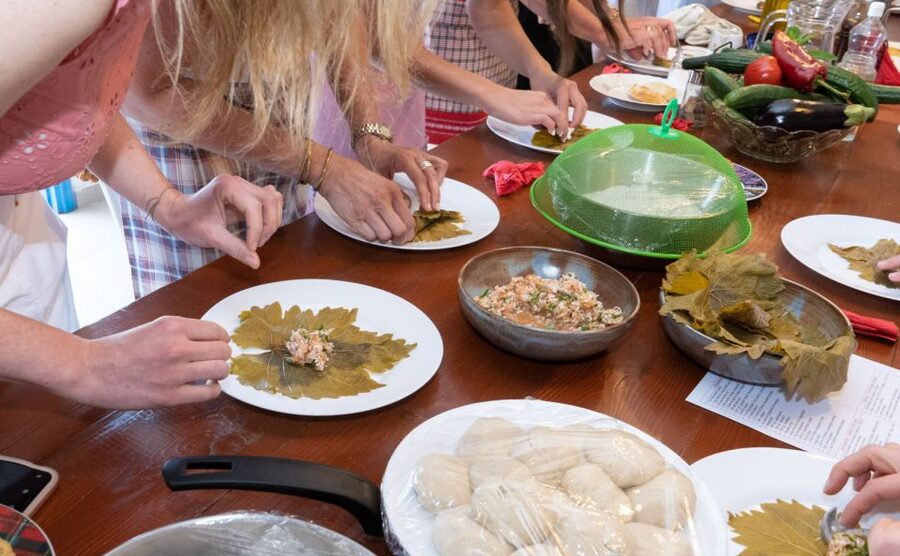
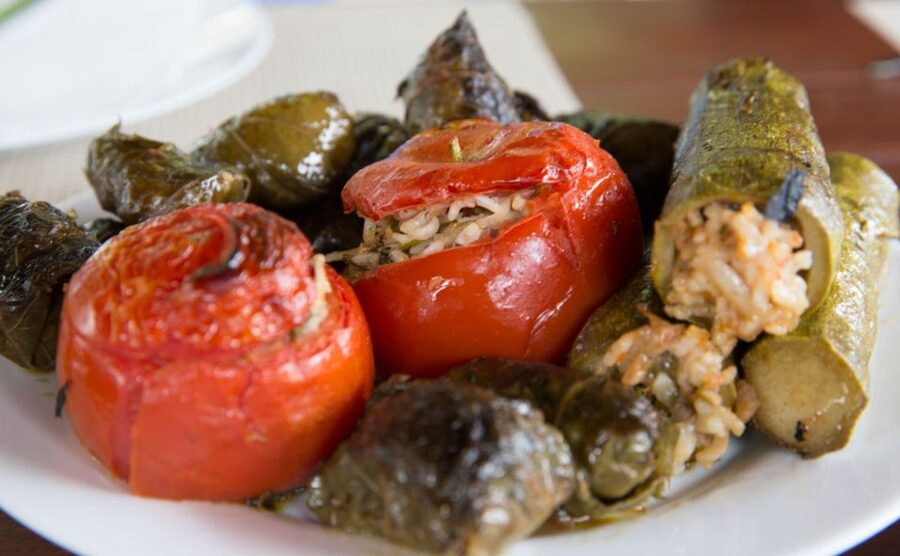
- Gemista, vegetables stuffed with a seasoned filling
- Moussaka
- Tzatziki and cheese
Some dishes are likely prepared partly in advance so the evening can include a full meal within four hours. That is not a weakness. It lets you spend time cooking your own portion while still sampling a broad range of food.
You should expect a practical introduction rather than a professional chef-training course. The emphasis is on learning traditional recipes, improving basic cooking skills, and enjoying the process. If you want advanced knife work, precise pastry technique, or a formal lesson with written measurements, this may feel too relaxed.
For most people, that relaxed approach is the point. You learn enough to understand the method, then eat the results while talking with the hosts and the other people in the group.
More Meals Out in Greece:
- Athens: Greek Cuisine Cooking Class and 3-Course Dinner
★ 4.8 · 270 reviews - Traditional Greek cooking class and lunch or dinner with an Acropolis view
★ 5.0 · 250 reviews - Thessaloniki: Cooking & Dining Experience with Greek Family
★ 4.9 · 85 reviews - Greek Meze Cooking class and dinner with an Acropolis view
★ 5.0 · 41 reviews
The dishes that give Crete its flavor
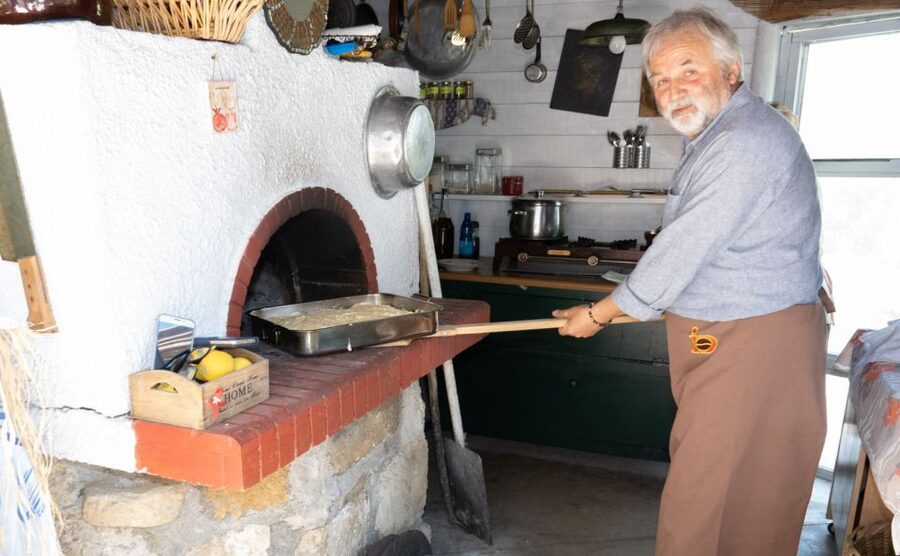
The menu offers a useful cross-section of Cretan food. The wild herb pies are especially interesting because they show how strongly local cooking depends on greens and herbs. Their appeal is not just the pastry. It is the combination of dough, filling, olive oil, and whatever seasonal plants are available.
Kremidokalitsouna gives you a taste of a more specific Cretan specialty. The onion filling brings a sweet, savory quality, while the pastry makes it easy to share around the table.
Sfakianes pites add another regional note. This type of pie is closely linked with western Crete and is often associated with a thin dough and a soft cheese filling. The details of the preparation may vary, but learning about it in a Cretan home gives the dish more meaning than simply ordering it from a menu.
Dakos is one of the simplest dishes served during the evening, yet it is also one of the most recognizable. Crisp barley rusk, tomato, olive oil, and cheese show how a few good ingredients can make a satisfying meal.
The presence of gemista and moussaka broadens the menu beyond small bites. These are filling, comforting dishes that take more preparation and help turn the class into a full dinner. Add salad, tzatziki, cheese, wine, and sweets, and you should arrive hungry.
The menu is generous enough that this is not a light tasting. Plan for a substantial meal.
Homemade raki and wine at the table
Drinks are included, with Greek wine and homemade Cretan raki among the highlights. Raki is a strong grape-based spirit traditionally served in small glasses, often at the end of a meal or during a social visit.
The homemade version is part of the hosts’ personal welcome. You can try it as part of the evening, but pace yourself. The combination of a large dinner, wine, and raki can catch up with you faster than expected.
The drink service also helps create the social rhythm of the event. This is not a silent lesson where everyone watches the instructor. Food is prepared, poured, tasted, and discussed. The atmosphere is intended to feel like an evening in someone’s home.
If you do not drink alcohol, the activity description confirms that drinks and beverages are included, but it does not specify the nonalcoholic options. Tell the hosts in advance if this matters to you.
A small group with plenty of conversation
The group is limited to 10 participants. That is a useful size for this kind of activity. You get the social energy of cooking with other people, without the crowd of a large commercial class.
Previous bookings have included couples and small groups from several countries. That mix can add to the evening, especially because cooking gives everyone an easy way to interact. You may be shaping dough beside someone you met only minutes earlier, then sharing the finished dish at dinner.
The hosts’ hospitality receives especially strong praise. Androniki is described as organized, patient, and welcoming, while her husband works hard behind the scenes. Those qualities matter in a home cooking class. If the preparation is confusing or the hosts are distant, the evening quickly loses its charm. Here, the tone is warm and inclusive.
Still, you should understand that the social side is part of the package. If you want a private meal for your own party, this may not be the right choice. The group can include other couples or independent participants, and the value comes partly from sharing the table.
What the four hours are likely to feel like
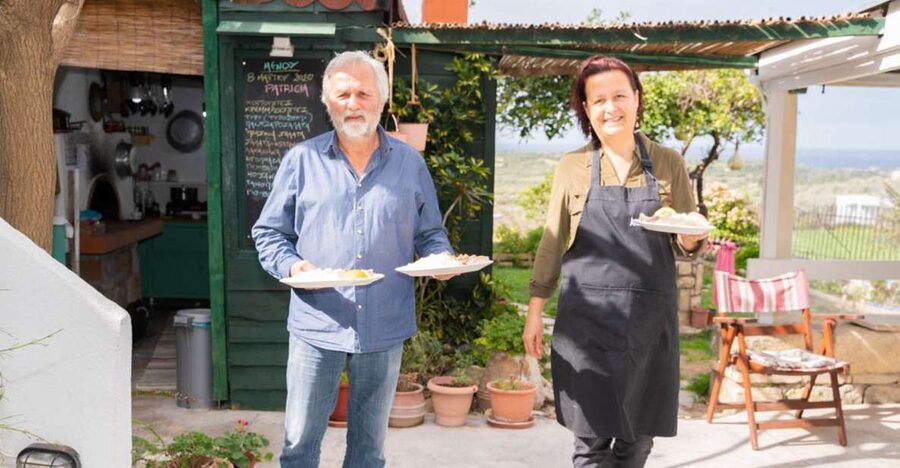
The four-hour duration gives the evening enough breathing room. You meet the hosts, see the ingredients, learn the recipes, help with the cooking, and sit down to eat without rushing through every step.
A typical flow should feel something like this:
- Arrival at the home in Loutra and introductions
- A look at the garden, herbs, and ingredients
- Preparation of selected appetizers, pies, or main dishes
- Cooking with the outdoor wood oven
- Sampling dishes that have been prepared for the table
- A long shared meal with wine, raki, cheese, and sweets
- Informal conversation and a look at the hosts’ Cretan food traditions
The activity information does not promise a fixed menu or precise minute-by-minute schedule, so you should treat this as a general shape rather than a guarantee. The hosts may adjust the cooking according to the season and the needs of the group.
That flexibility is useful. Fresh garden produce changes through the year, and traditional home cooking rarely follows a rigid restaurant timetable.
Is $114 a fair price?
At $114 per person, this is not the cheapest meal you can buy in Crete. You can eat very well at a local taverna for less, especially if you choose simple dishes and skip the drinks.
The comparison is not quite fair, though. Here you are paying for four hours, instruction from a local cook, participation in the preparation, a home meal, Greek wine, homemade raki, and the chance to see how the food is made. You are also paying for a small group rather than a packed dining room.
I think the price offers good value if you want an activity as well as dinner. It is less appealing if you mainly want a quick meal or if you already plan to take several cooking classes during your trip.
The strongest value comes from the personal setting. The garden ingredients, outdoor oven, and home table make this more than a menu tasting. You leave with recipes, new cooking ideas, and a clearer sense of how food fits into Cretan family life.
Who should book this experience?
I would recommend this evening to you if you enjoy food, conversation, and hands-on activities. It suits couples, solo visitors, friends, and families with older children who can take part in simple cooking tasks.
It is also a good choice if you want a break from the standard sightseeing route around Rethymno. The village setting gives you a different side of Crete, and the hosts offer a direct connection to local cooking rather than a staged restaurant presentation.
You may want to skip it if you have serious food allergies and cannot confirm how the meal will be adapted. Contact the hosts in advance with full details. You should also think twice if you dislike shared meals, group activities, or strong alcoholic drinks.
The class is available in Greek and English, and the limited group size should make communication manageable. The cooking is not presented as highly technical, so beginners can join without feeling out of place.
Practical tips for a smoother evening
- Eat lightly beforehand. The meal includes several appetizers, main dishes, sweets, cheese, and drinks.
- Confirm dietary needs early. The hosts specifically ask for information about allergies and special diets.
- Save the map before leaving Rethymno. Loutra has no street names, and the hosts’ Google Maps listing is the clearest guide.
- Arrange transport in advance. You can come by car, taxi, or bus, but the activity does not include a stated pickup service.
- Wear comfortable clothing. You will be cooking outdoors and working around a wood oven.
- Bring a relaxed attitude. The best part is taking part, not producing perfect restaurant plates.
- Pace the drinks. Wine and homemade raki are included, and raki is stronger than an ordinary table drink.
Cancellation is free up to 24 hours before the scheduled start, and you can reserve now and pay later. Starting times vary, so check availability for your date.
Should you book Dining in Rethymno?
Yes, if you want a warm, food-focused evening with real participation. The strongest reasons to book are Androniki’s patient teaching, the hosts’ generous hospitality, the homegrown produce, and the chance to cook beside a traditional wood oven.
The main tradeoffs are the price and the transport to Loutra. You also need to be comfortable with a shared group meal and confirm any dietary restrictions ahead of time.
For a simple dinner, choose a taverna. For an evening that connects food, people, garden ingredients, and Cretan home life, this is a very good choice. I would especially consider it near the start of a Crete trip, since the dishes and ingredients may help you order more confidently at tavernas later.
FAQ
Where does the cooking experience take place?
It takes place at Androniki’s home in Loutra, a village about 11 kilometers from Rethymno.
How can I reach the hosts’ home?
You can travel from Rethymno by car, taxi, or bus. The village has no street names, so use the Google Maps location listed as Andronikis Cretan House. The full address is provided in the voucher.
How long does the experience last?
The cooking and dining experience lasts four hours.
What languages are spoken?
The hosts speak Greek and English.
What food might I prepare and eat?
The menu can include chortopites, kremidokalitsouna, Sfakianes pites, dakos, Greek salad, gemista, moussaka, tzatziki, cheese, sweets, and other traditional dishes.
Are drinks included?
Yes. Drinks and beverages are included, with Greek wine and homemade Cretan raki specifically mentioned.
Can I tell the hosts about an allergy or special diet?
Yes. You should communicate any food allergies, restrictions, or special diet before the experience.
More Evening Classes in Greece
- Mykonos Small-Group Cooking Class with Sunset Option
★ 5.0 · 3 reviews - Cooking Class & Greek Night Experience
★ 5.0 · 3 reviews - Chiang Mai: Evening Cooking Class and Local Market Visit
★ 4.9 · 648 reviews - Paris Evening Cooking Class French Dinner and Market Visit Option
★ 5.0 · 430 reviews
Just added around Greece
- Authentic and Traditional Cooking Class in Chania Crete★ 5.0 · 5 reviews
- Private Cooking Class – A Culinary Journey in Argostoli★ 5.0 · 2 reviews
- Chania Cooking Class in Crete with rustic, delicious and homely Cretan food!★ 4.5 · 14 reviews
- Private Greek Cooking Class in Athens-Learn to Cook with Angelina★ 5.0 · 3 reviews
- Cook with Katerina: Authentic Greek Home Cooking Class in Athens★ 5.0 · 15 reviews
- Private Walking Meze Cooking Course★ 5.0 · 6 reviews
- Cooking Class in Athens: Learn the Art of Phyllo with Christina★ 5.0 · 24 reviews
- Greek Cooking Class with Acropolis View★ 5.0 · 76 reviews
Cooking Classes, compared.

Half-Day Thai Cooking Class at Organic Farm in Chiang Mai
Read our review →

3 in 1 Cooking Class near Navona: Fettuccine, Ravioli & Tiramisu
Read our review →
Pasta & Tiramisu Cooking Class with Unlimited Wine
Read our review →
Hanoi Cooking Class: Culture, Local Market & Meaning CSR Impact
Read our review →
5 Traditional Dishes Hanoi Cooking Class with Market Trip
Read our review →
Cooking Class and Lunch at a Tuscan Farmhouse with Local Market Tour from Florence
Read our review →
Cooking Class, Market & Thai Herbs Garden Tour
Read our review →Lists this class appears in