REVIEW · ATHENS, GREECE
Traditional Greek cooking class and lunch or dinner with an Acropolis view
Come hungry, leave with recipes. This three-hour Athens class turns a familiar sightseeing day into a shared Greek meal, with hands-on work, family recipes, wine, and a view toward the Acropolis. I especially like the chance to make phyllo dough from scratch and the relaxed meal afterward, when everyone eats what they prepared.
I also like that the menu changes with the season and can be adjusted for dietary needs if you provide notice. The main caution is practical: the studio can be hard to find, and one report describes the room as uncomfortably hot. Arrive early, read the directions sent after booking, and do not expect a polished restaurant kitchen.
- Six or more Greek dishes: Prepare appetizers, pie, salad, a main course, and dessert.
- Hands-on phyllo making: Everyone takes part in key techniques, including dough from scratch.
- A full meal at the end: Sit down with your classmates to eat what you cooked.
- Wine and Greek spirits included: Two alcoholic drinks per person are provided.
- Seasonal, flexible menu: Dishes change, and dietary needs can be addressed with advance notice.
- Small enough to participate: The class has a maximum of 16 people and is taught in English.
What the Three-Hour Class Is Really Like

This is not a demonstration where you stand at the back and watch a chef do everything. You chop, mix, shape, roll, fill, and cook. The class is designed so everyone handles the key parts of the meal, especially the techniques that make Greek food distinct.
The menu normally covers two appetizers, a Greek pie, salad, a main dish, and dessert. The exact selection depends on the time of year and the ingredients available. You may make tzatziki, stuffed peppers, dolmadakia, spinach pie, cheese pie, moussaka, pastitsio, chicken, baklava rolls, yogurt mousse, or loukoumades in winter.
The class begins on time, so I would arrive 10 minutes early. The meeting point is CookinAthens at Evripidou 90 in central Athens. Directions are important here because the entrance and upper-floor location can be easy to miss. Look for the CookinAthens sign, and check the advance email for the floor and building instructions.
Starting With Tzatziki and Greek Appetizers
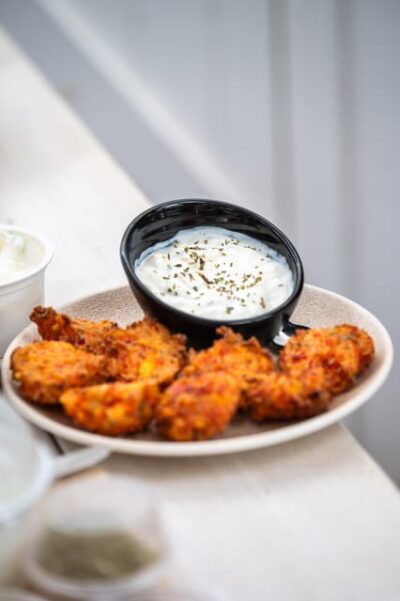
The opening dishes give you quick wins. Tzatziki combines Greek yogurt, garlic, dill, and cucumber, so you learn how a few sharp, fresh ingredients can make a dish far better than its short ingredient list suggests.
You may also prepare stuffed peppers with cheese and thyme or grape leaves filled with rice and herbs. Dolmadakia take more patience than tzatziki, but they are a useful introduction to the careful wrapping and seasoning used in Greek home cooking.
These early dishes also set the social tone. You work beside other people, share tasks, and get a taste of what will later appear on the table. I like this part because it is active without being difficult. The class has been praised for clear instructions and a pace that lets beginners keep up.
More Greek Cooking Classes in Athens:
- Greek Cooking Class in Athens Including Rooftop Dinner with Acropolis View
★ 5.0 · 826 reviews - Greek Small-Group Athens Cooking Class & Dinner
★ 5.0 · 574 reviews - Athens: Greek Cooking Class & Dinner on a Rooftop
★ 5.0 · 383 reviews
Making Greek Salad the Greek Way
Greek salad seems simple, but the ingredients matter. The class uses tomatoes, cucumbers, peppers, Kalamata olives, capers, and xinomizithra, a tangy Greek cheese.
This is not the sort of dish that needs a long cooking lesson, yet it teaches an important Greek habit: use good local ingredients and avoid burying them under heavy dressing. You prepare the vegetables yourself, then see how the salty, sour, creamy, and fresh elements work together.
I would not book this class expecting every minute to involve a complicated technique. Some parts are basic. That is part of the appeal, though. You leave with dishes you can actually make at home, not just a recipe that requires restaurant equipment.
The Main Event: Phyllo From Scratch
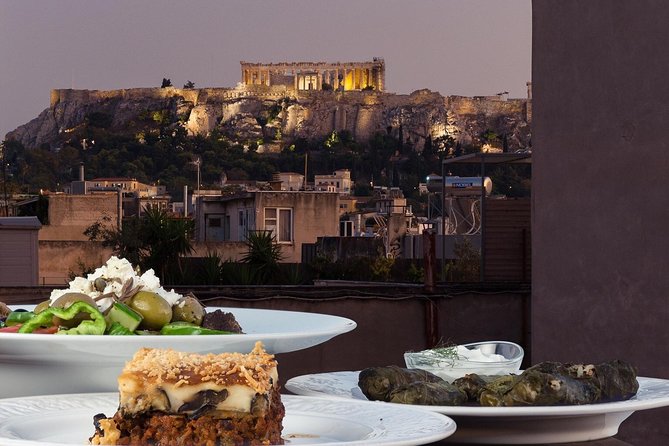
For many people, making phyllo is the highlight. The dough must become thin and delicate, and it can look intimidating if you have only seen finished pastry in a bakery window.
The class breaks the process into manageable steps. You may prepare spinach pie with spinach, leeks, herbs, and manouri cheese, or a cheese pie with kaseri and manouri. The pastry is made from scratch, rather than pulled from a packet, and everyone takes part in the technique.
I like that the instructors do not treat phyllo as a magic trick. You get to handle the dough and learn the practical details needed to repeat it at home. One particularly useful lesson is that paper-thin pastry is challenging but not impossible. Skill and patience matter more than fancy equipment.
The pie also gives the class a shared project. Several people can work on different parts, then see the result come together in the oven. If you want to make just one dish again after returning home, this may be the recipe that earns the most attention.
Moussaka, Pastitsio, Chicken, or a Seasonal Main
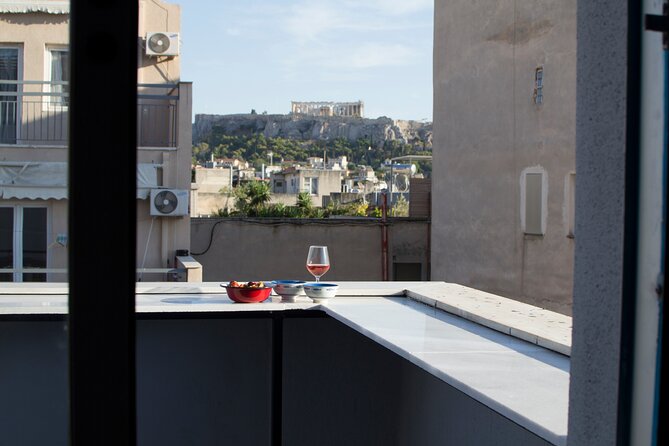
The main course varies. Possible choices include moussaka, pastitsio, soutzoukaki, gemista, chicken lemonato, chicken youvetsi, or chicken in tomato sauce.
Moussaka gives you eggplant, a tomato-based meat sauce, and béchamel. Pastitsio offers a baked pasta dish with a similar sense of comfort. Chicken dishes may bring in lemon, tomato, or the slow-baked style of youvetsi.
Winter menus can include pork braised with leeks and celery, served with egg-lemon sauce, or youvarlakia, a soup of meatballs, rice, herbs, and egg-lemon sauce. Egg-lemon chicken soup is another seasonal possibility.
This variety is a strength, but it means you should not book with a single dish guaranteed unless you contact the provider after booking. The menu changes with seasonality. If you have your heart set on moussaka, spinach pie, or another specific recipe, ask in advance.
More Cooking Classes with a Meal in Athens:
- Pasta Making & Wine Tasting with Dinner in Frascati from Rome
★ 5.0 · 1,326 reviews - Palermo: Pizza and Gelato Cooking Class with Dinner and Wine
★ 4.9 · 951 reviews - Seville: Spanish Cooking Class with Dinner
★ 4.9 · 900 reviews - Paris Evening Cooking Class French Dinner and Market Visit Option
★ 5.0 · 430 reviews
Ending With Baklava, Yogurt, or Loukoumades
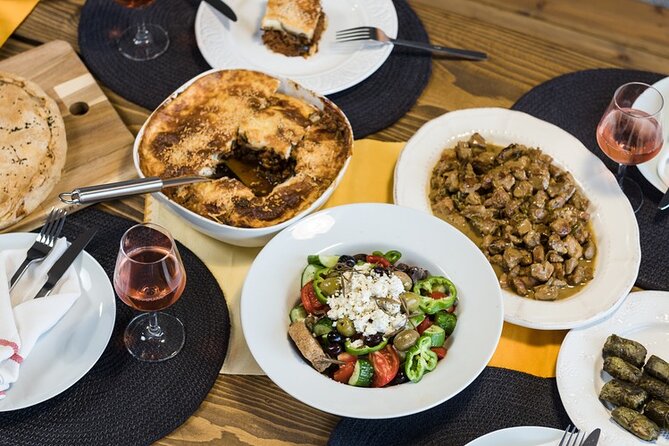
Dessert completes the meal. Depending on the menu, you may make baklava rolls, Greek yogurt mousse, or loukoumades, which are available in winter.
Baklava rolls continue the pastry theme and give you another use for thin dough. Greek yogurt mousse is lighter and simpler. Loukoumades offer a warm, sweet finish, though the menu information specifically identifies them as a winter option.
The dessert is not just an extra course. It helps make the class feel like a complete family meal, from the first dip to the final sweet bite. The recipes are emailed afterward, so you can repeat the full menu at home rather than trying to remember every measurement while eating.
Sitting Down to Eat What You Made
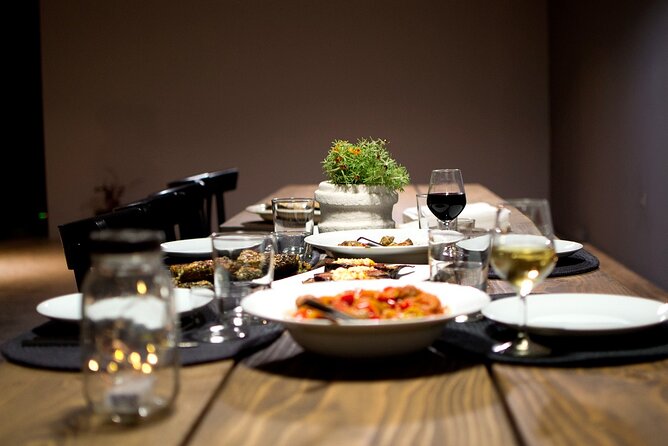
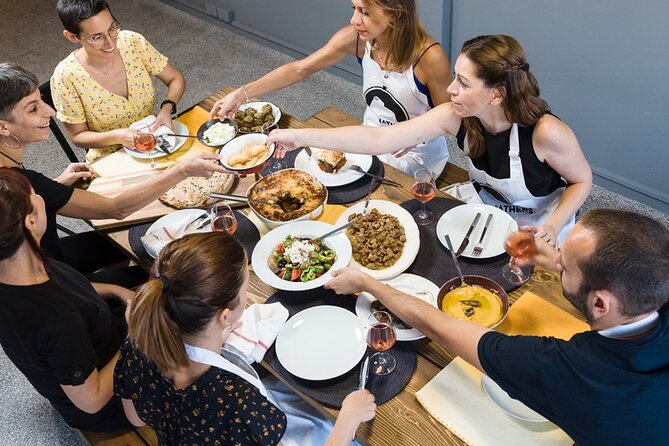
After the cooking comes the part most people are waiting for: lunch or dinner at the table. You eat the dishes you prepared, with Greek wine and traditional spirits included.
Two alcoholic drinks per person are provided. Other beverages are also included, but the class is clearly built around food, conversation, and wine rather than a long tasting session.
I like this format more than a standard restaurant meal because you understand the work behind each dish. The pie tastes different after you have rolled the dough. The moussaka feels more satisfying after you have built its layers. You also get an easy chance to talk with people from other countries while eating.
The meal is described as leisurely, and the full activity lasts about three hours. You should arrive hungry, but not so hungry that you cannot concentrate during the cooking. The portions are described as abundant, so a light meal beforehand makes sense.
The Teaching Style and Group Size
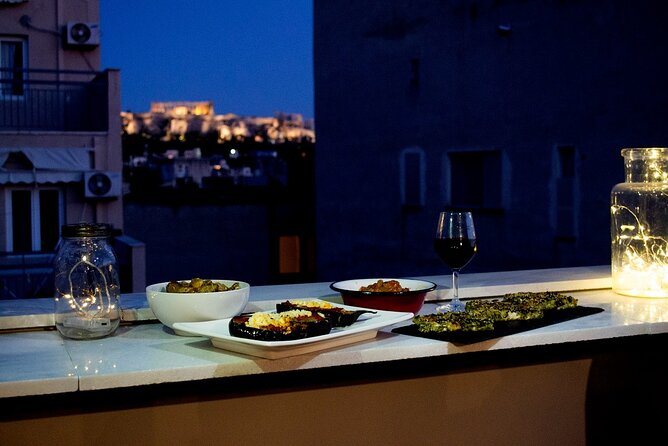
The class is offered in English and can include up to 16 people. That is small enough for a social atmosphere, though it is not a private lesson. Your experience will depend partly on the size of your group and how actively you take part.
Marilena is the chef most often identified with the experience. The teaching style is casual but effective, with a mix of instruction, humor, and practical correction. Assistants may help with cleanup, which means you can focus on cooking and eating instead of spending the final hour washing every pan.
The strongest praise centers on friendly teaching, patience, clear instructions, and an organized kitchen. The class is also described as clean and sanitary. Those details matter when you are handling dough, meat, dairy, and several courses in a short period.
I would suit this class to a beginner who wants to do real work, not to someone seeking a formal culinary-school lesson. You will learn useful methods, but the mood is social and welcoming rather than strict.
The Acropolis View: A Nice Extra, Not the Main Reason to Book
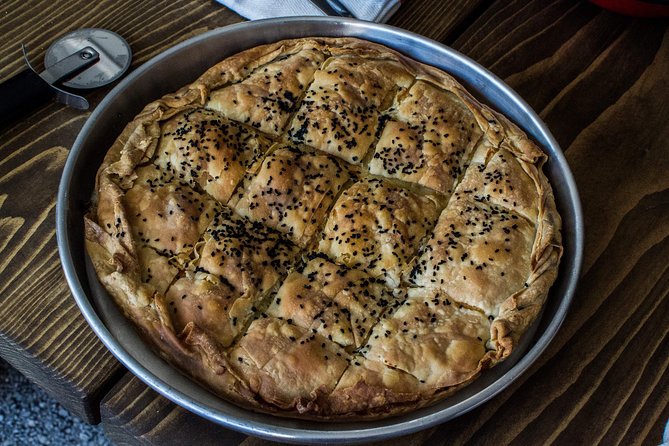
The experience is promoted with an Acropolis view, and some descriptions specifically place the shared meal within sight of it. That can add a memorable Athens setting to the final course.
Still, I would keep expectations sensible. The class takes place in a cooking studio, not at an outdoor rooftop restaurant. Your view may depend on where you are standing or sitting, and one account found the view less noticeable during the kitchen work.
The food and participation are the real reasons to book. Think of the Acropolis as a bonus during the meal, not as a sightseeing stop. If a clear, uninterrupted monument view is your top priority, choose a dedicated rooftop venue instead.
Heat, Finding the Studio, and Other Practical Details
The location has drawn a few practical complaints. One person found the studio difficult to locate, especially because it is on an upper floor. Another found the room too hot during the class and felt the air conditioning was not enough.
The provider says the studio has air conditioning and that detailed directions, including the floor and building information, are sent before the class. Even so, I would leave extra time for arrival. A cooking lesson is not the place to rush in five minutes late, especially because the class starts promptly.
The building itself may not feel as polished as a modern cooking school. That can be a drawback if you want sleek facilities. On the other hand, the home-style setting fits the purpose. You are there to cook traditional dishes with ordinary methods, not to tour a luxury culinary studio.
Service animals are allowed, and the activity is near public transportation. The minimum age is 12. The class is not described as a private experience, so families with younger children will need to choose another activity.
Is $114.93 a Fair Price?
At $114.93 per person, this is not a cheap lunch. But the price includes about three hours of instruction, a full multi-course meal, the ingredients, recipes sent by email, Greek wine, traditional spirits, and the chance to prepare at least six dishes.
The value improves if you care about learning. A restaurant meal gives you dinner, but this gives you dinner plus techniques you can use again. The recipe collection may be especially useful if you enjoy hosting friends or want to create a Greek meal at home.
The value is weaker if you mainly want to eat or see the Acropolis. You will spend a good part of the session chopping, rolling, stirring, and waiting for dishes to cook. That is the point, but it is not the right fit for someone who wants a passive food tasting.
I consider the price fair for a hands-on, food-centered Athens experience, particularly if you share the meal with people in your group and make use of the recipes afterward.
Who Should Book This Greek Cooking Class?
I would recommend it most strongly to:
- People who enjoy cooking and want more than a restaurant meal
- Couples, families with children aged 12 or older, and solo visitors who like social activities
- Beginners who want clear instruction without a formal classroom mood
- Anyone interested in traditional Greek dishes and seasonal cooking
- Visitors with dietary needs who can provide details before the class
- People with a half-day free in Athens
I would be more cautious if you dislike group activities, cannot stand warm indoor rooms, or need a guaranteed view of the Acropolis. You should also avoid arriving at the last minute, since no-shows are not refunded and late changes are not accepted.
Should You Book It?
Yes, if you want to understand Greek food by making it yourself. The strongest parts are the hands-on phyllo lesson, the generous multi-course meal, the friendly instruction from Marilena and her team, and the recipes you can use later.
Book with two small plans: tell CookinAthens about dietary needs or a must-have dish after booking, and arrive 10 minutes early with the directions open on your phone. If you do that, this class offers a warm, practical way to spend three hours in Athens, with good food at the end and a possible Acropolis view to enjoy while you eat.
FAQ
How long does the cooking class and meal last?
The class and lunch or dinner last about three hours.
Where does the experience begin?
It begins at CookinAthens, Evripidou 90, Athina 105 53, Greece.
Where does the experience end?
The activity ends back at the meeting point.
How many Greek dishes will I prepare?
You will prepare a menu of six dishes, including two appetizers, a Greek pie, Greek salad, a main course, and dessert. The exact dishes can change with the season.
Will I make phyllo dough from scratch?
Yes. Making dough from scratch is one of the key techniques practiced by all class participants.
What food might be on the menu?
Possible dishes include tzatziki, spinach or cheese pie, stuffed peppers, dolmadakia, Greek salad, moussaka, pastitsio, chicken dishes, seasonal pork, egg-lemon soup, baklava rolls, Greek yogurt mousse, or loukoumades in winter.
Can dietary needs be accommodated?
The class can be tailored to dietary preferences and needs. You should provide those details when booking or contact the provider by email afterward.
Are drinks included?
Yes. Greek wine and traditional spirits are included, with two alcoholic drinks per person. Other beverages are also included.
Is the class taught in English?
Yes. The experience is offered in English.
What is the minimum age?
Participants must be at least 12 years old.
Can I cancel for a full refund?
You can cancel for a full refund up to 24 hours before the experience start time. Cancellations or changes made less than 24 hours beforehand are not refunded or accepted.
More Dinner Trips in Athens
- Athens: Greek Cuisine Cooking Class and 3-Course Dinner
★ 4.8 · 270 reviews - Greek Meze Cooking class and dinner with an Acropolis view
★ 5.0 · 41 reviews - Rome: Pasta Making with Wine Tasting and Dinner in Frascati
★ 4.9 · 979 reviews - Tuscan Cooking Class and Dinner in Florence
★ 4.5 · 732 reviews
More Lunch Trips in Athens
- Athens Cooking Class and Lunch in our beautiful garden in Greece
★ 5.0 · 130 reviews - Cooking Class in Athens with Shopping in Central Market & Lunch
★ 5.0 · 55 reviews - Athens: Cooking Class, Market Visit & Lunch at Local Tavern
★ 4.9 · 27 reviews - Cooking Class and Lunch at a Tuscan Farmhouse with Local Market Tour from Florence
★ 5.0 · 4,831 reviews
Just added around Athens
- Private Greek Cooking Class in Athens-Learn to Cook with Angelina★ 5.0 · 3 reviews
- Cook with Katerina: Authentic Greek Home Cooking Class in Athens★ 5.0 · 15 reviews
- Private Walking Meze Cooking Course★ 5.0 · 6 reviews
- Cooking Class in Athens: Learn the Art of Phyllo with Christina★ 5.0 · 24 reviews
- Greek Cooking Class with Acropolis View★ 5.0 · 76 reviews
- Athens: Traditional Vegan Cooking Class incl. Drinks★ 5.0 · 41 reviews
- Greek Meze Cooking class and dinner with an Acropolis view★ 5.0 · 41 reviews
- Hands On Greek Cooking Classes in Athens★ 5.0 · 7 reviews
Cooking Classes with Lunch or Dinner, compared.
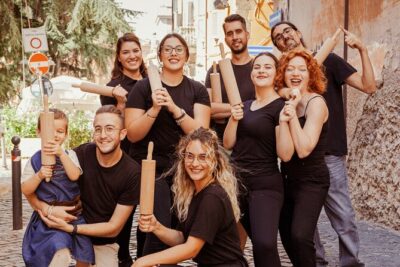
Pasta Making & Wine Tasting with Dinner in Frascati from Rome
Read our review →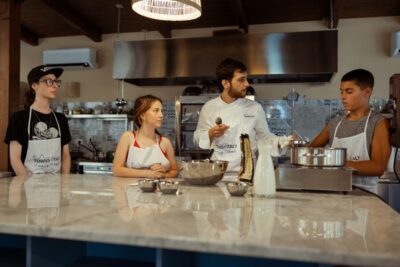
Pizza and Gelato Cooking Class with Dinner and Wine
Read our review →
Paris Evening Cooking Class French Dinner and Market Visit Option
Read our review →
Paris French Cuisine Small Group Cooking Class with Lunch
Read our review →
Cooking class, dinner and wine tasting near Lecce
Read our review →