REVIEW · CHIANG MAI PROVINCE, THAILAND
Chiang Mai: Evening Cooking Class and Local Market Visit
Thai food starts at the market. This five-hour Chiang Mai class brings you there first, then turns fresh ingredients into a generous dinner. I like the chance to choose from familiar dishes such as Pad Thai, green curry, Tom Yum, and Khao Soi. I also like the friendly, practical teaching style reported from instructors including New, Aoy, Oi, and Nu. The main thing to consider is the long evening: with four dishes to prepare and eat, you should arrive hungry and expect a full schedule.
At $28 per person, this is good value for a hands-on activity that includes transport, ingredients, equipment, drinks, instruction, and recipes. The market visit is fairly brief, and the exact pickup area is limited, so check your hotel location carefully before booking.
Key points at a glance
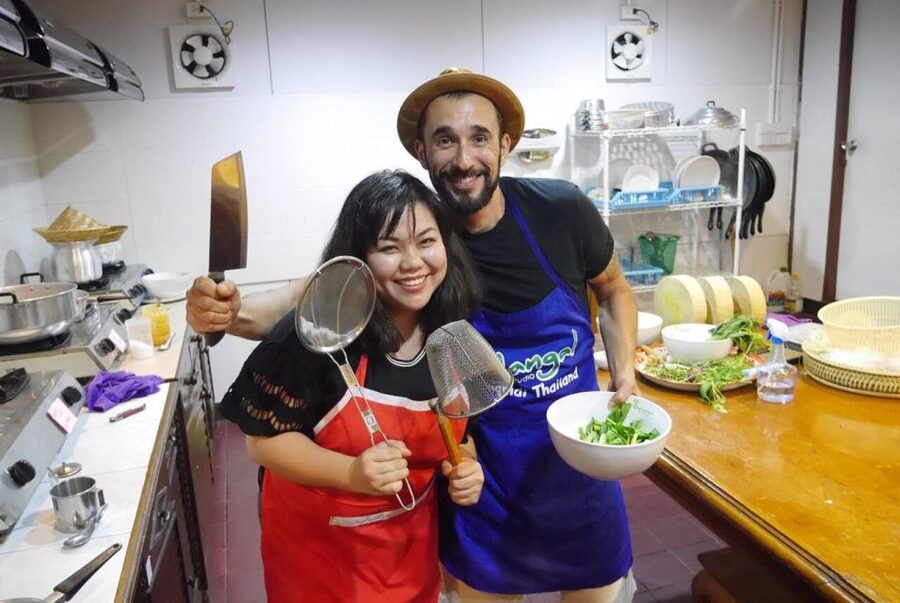
- Four dishes, not just a cooking demonstration: You choose one stir-fry, one soup, one appetizer, and one curry, with curry paste made as part of the process.
- The market comes first: You see Thai vegetables, herbs, and other cooking ingredients before working with them in class.
- Khao Soi is on the menu: This northern Thai noodle dish gives the class a strong Chiang Mai connection.
- Dietary needs are taken seriously: Vegetarian, vegan, Halal, gluten-free, and allergy-friendly adjustments are available.
- Pickup is useful but limited: Hotel transfers cover much of central Chiang Mai, but not every street or accommodation.
- Come very hungry: Portions are generous, and leftovers may be packed for you to take away.
Why this Chiang Mai class is worth your evening
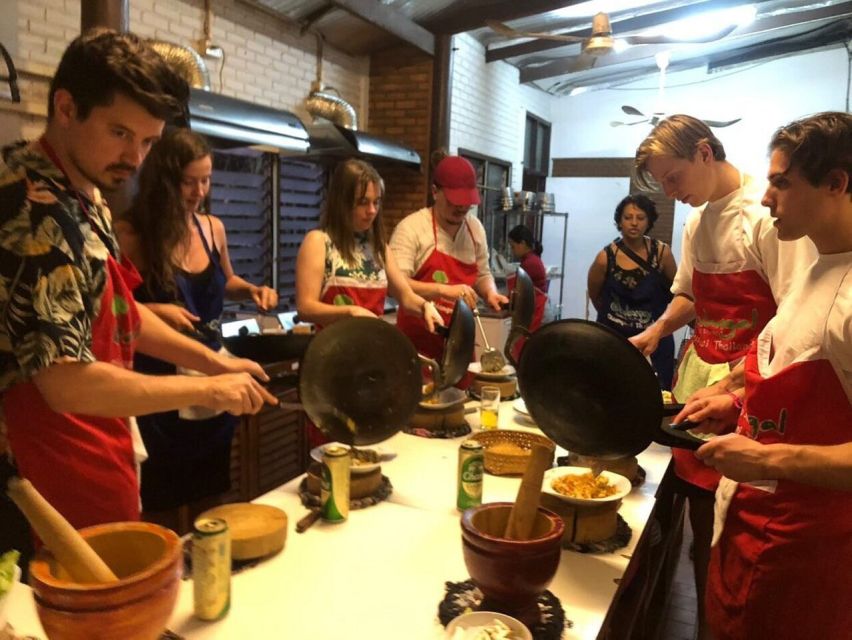
Cooking classes can go one of two ways. You either watch someone chop onions while you stand around, or you actually cook. This class belongs in the second group. You prepare the food yourself, with an instructor guiding each step and explaining what the ingredients do.
The teaching has earned especially strong praise for being warm, clear, and personal. New is frequently singled out for remembering names, helping with substitutions, and keeping everyone on track. Aoy, Oi, and Nu also receive praise for making beginners feel comfortable. That matters in a Thai kitchen, where unfamiliar herbs, curry pastes, and strong flavors can make a first attempt feel a little uncertain.
The class also gives you a useful choice. Instead of forcing every person to make the same menu, you select dishes from several categories. That makes the meal more relevant to you. If Pad Thai is your favorite Thai dish, choose it. If you want something more regional, go for Khao Soi. If you avoid seafood, the instructor can help you select another soup.
The drawback is that the menu involves a lot of food. You make four dishes, then sit down to eat them. This is not a light snack or a quick demonstration. I would avoid booking it right after a large lunch.
More Cooking Classes with a Market Tour in Chiang Mai
- Chiang Mai: Cooking Class, Market & Thai Herbs Garden Tour
★ 4.9 · 4,824 reviews - Chiang Mai: Authentic Cooking Class with Market & Farm Visit
★ 4.9 · 4,546 reviews - Chiang Mai: Cooking Class with Market and Pickup
★ 4.9 · 1,365 reviews
Hotel pickup through central Chiang Mai
Pickup is scheduled between 3:15 and 3:45 PM, with the driver arriving before 3:45 PM. You should wait in your hotel lobby 5 to 10 minutes early, since the vehicle will wait no longer than five minutes after the scheduled pickup time.
The service covers hotels in Chiang Mai Old City, Santitham, and parts of Huay Kaew Road between Kad Suan Kaew and Maya Shopping Mall. Some parts of Nimmanhaemin Road, Sirimongkrajan Road, Wat Ket Road, Chang Phueak, Chang Khlan, and Chang Moi are also included.
This is helpful in Chiang Mai, where evening traffic can slow a short journey. The pickup vehicle may be a red songthaew, the shared red truck commonly used around the city. It is a practical way to begin the evening, though you should not expect limousine comfort or a perfectly exact pickup time.
If your accommodation is outside the service area, you will need to arrange your own transport to the school or meeting point. Confirming the address ahead of time is wise. Infant seats are available for the pickup service, and the activity is listed as wheelchair and stroller accessible.
A local market before the cooking begins
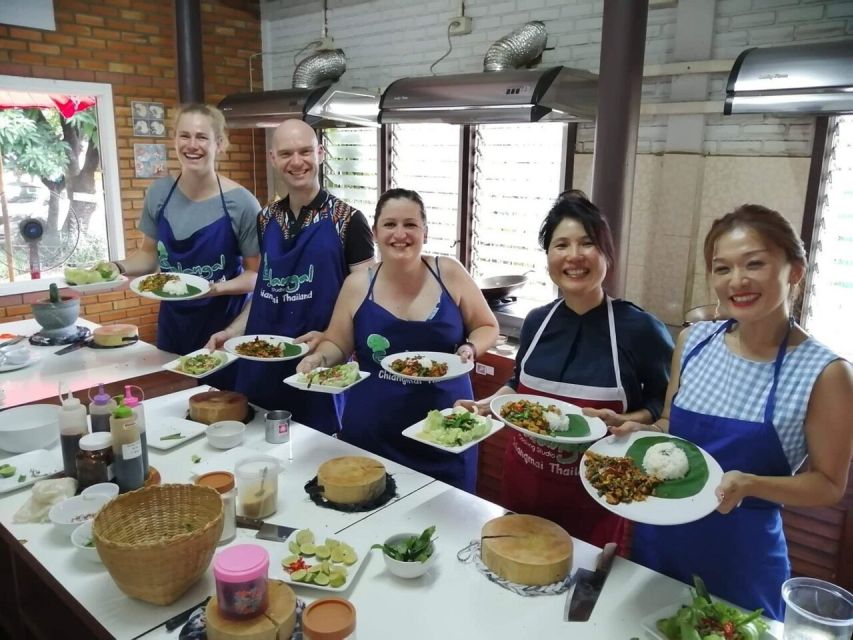
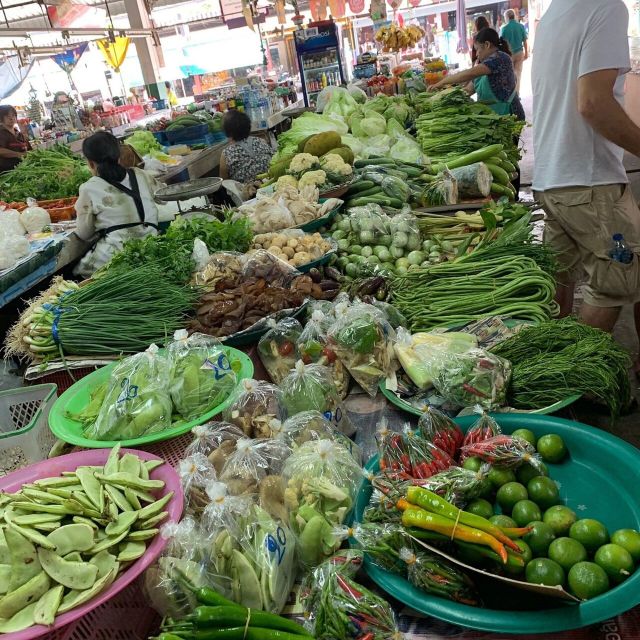
The market visit gives the class a useful foundation. Rather than meeting a pile of prepared ingredients at the school, you first see the produce and learn what goes into Thai cooking.
Your guide can point out vegetables, herbs, and other ingredients used in the evening menu. You may also have time to walk around the market on your own. The visit depends somewhat on interest, so the amount of free browsing can vary.
I like this part because it puts common Thai dishes into context. Fresh basil, chilies, garlic, lemongrass, galangal, lime, coconut milk, and curry ingredients are not just items on a printed recipe. At the market, you start to see how Thai cooking depends on balancing heat, sourness, sweetness, salt, and fragrance.
Do not expect a major food tour. This is a shopping stop connected to the cooking lesson, not a long market expedition with tastings at every stall. Still, it is enough to make the later kitchen work more meaningful.
The organic garden and Thai ingredients
The class also includes a visit to an organic garden. You can walk through the growing area and see how herbs and vegetables are cultivated in Thailand.
This is a small but worthwhile addition. It connects the plants you see in the soil with the ingredients you later chop and cook. For people who want more than a restaurant meal, this is one of the most educational parts of the outing.
The garden is not described as a large farm visit, so keep your expectations modest. Its purpose is to show how ingredients grow, not to fill a separate afternoon. The market and garden together take up the early portion of the activity before you settle into the kitchen.
More Cooking Classes with a Market Tour in Thailand
- Evening Cooking Class in Organic Farm with Local Market Tour
★ 5.0 · 394 reviews - Cooking Morning Class Chiang Mai Visit Organic Garden and Market
★ 5.0 · 211 reviews - Cooking Evening Class Chiang Mai Visit Organic Garden and Market
★ 5.0 · 187 reviews - Half-Day Cooking Class with Market Tour
★ 5.0 · 163 reviews
Four dishes, with plenty of choice
The class menu is divided into four useful categories. You choose one dish from each.
Stir-fried dishes
Options include:
- Pad Thai, Thai-style fried noodles
- Pad See Ew, stir-fried noodles with chicken
- Kai Pad Med Mamuang Him Ma Pan, chicken with cashews
- Pad Kaphao Kai, minced chicken with holy basil
This is a friendly starting point for beginners. Stir-frying is quick, and you can see how heat and timing affect the finished dish. Pad Thai is familiar to many visitors, while Pad Kaphao offers a more strongly seasoned basil flavor.
Soups
Soup choices include:
- Tom Yum Kung, hot and sour prawn soup
- Tom Kha Kai, chicken in coconut milk
- Tom Kha Je, vegetarian or vegan coconut soup
- Tom Zap Kai, hot and sour chicken soup
These dishes show the contrast between sharp, spicy broth and softer coconut-based soup. The instructor can help if you cannot eat seafood. Vegetarian and vegan options are clearly included, which makes the menu easier to manage for mixed groups.
Appetizers
The appetizer choices are:
- Som Tam, green papaya salad
- Por Pia Thod, spring rolls
- Larb Kai, chicken salad
- Yam Woon Sen, glass noodle salad
Som Tam and the salads involve balancing sour, salty, spicy, and sweet notes. Spring rolls offer a more familiar, hands-on option. If you want to understand Thai seasoning, this category is especially useful because small changes in lime, chili, or fish sauce can shift the whole dish.
Curry and curry paste
The curry choices include:
- Massaman curry
- Green curry
- Panang curry
- Khao Soi, Chiang Mai noodles with chicken
- Red curry
- Yellow curry
- Dry red curry
Making curry paste from scratch is one of the strongest parts of the class. You get to work with the ingredients rather than opening a jar, and the instructor explains how the paste shapes the final taste.
Khao Soi is the most regionally distinctive choice. It is closely linked with northern Thailand and gives the experience a stronger Chiang Mai identity than another standard stir-fry would. You should choose it early if it is important to you, since the available options may depend on the class setup.
The description refers to five Thai dishes across the cooking categories, while the practical format described by participants is four finished dishes per person: one stir-fry, one soup, one appetizer, and one curry, with curry paste prepared for the curry. In other words, plan to cook and eat four main dishes rather than five separate meals.
What the kitchen experience feels like
The cooking takes place in an indoor kitchen with an air-conditioned dining room. That is a real advantage in Chiang Mai, especially during a long evening of chopping, stirring, and eating.
You receive the ingredients, equipment, and cooking instructions. The class is taught in English, with an English audio guide included. The format suits beginners because the dishes are broken into clear steps, and instructors help as you go rather than leaving you to work alone.
The atmosphere appears relaxed rather than formal. Small groups may finish earlier than the advertised 4 PM to 8:30 PM schedule. Larger groups of around 10 to 12 people, or more, may use the full evening. This means the pace depends on the number of bookings.
That variation is worth knowing. A small group can feel more personal and may move faster. A larger group can be more social, but you may wait briefly while other people catch up. The class has also operated as a private one-person session when only one participant was booked, though you should not assume that will always happen.
Dietary restrictions and substitutions
This is one of the more useful features for people with food restrictions. The class can accommodate vegetarian, vegan, Halal, gluten-free, and allergy-related needs.
Tell the provider about your restrictions as early as possible. The instructors have helped replace seafood and adjust dishes for vegetarians, but substitutions work best when planned rather than announced at the chopping board.
You should still carry any personal medication you need. Smoking is not allowed indoors, and alcohol and drugs are prohibited.
How much food do you really get?
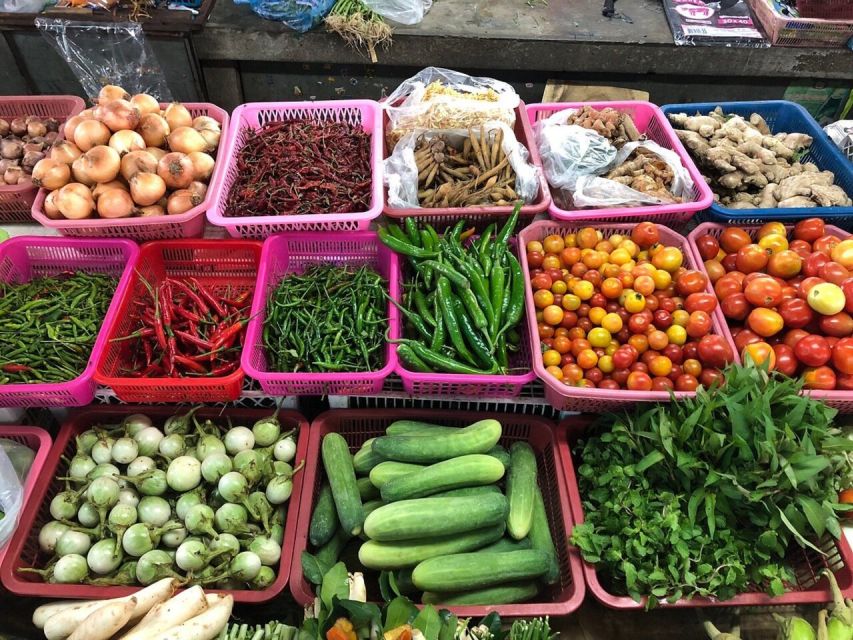
A lot. The strongest practical tip is to arrive with an empty stomach.
You prepare four dishes and then eat them in the air-conditioned dining room. Several people have taken leftovers away, so you may not need to finish every bite at the table. Still, Thai food is easy to underestimate when you are tasting each dish as it comes together.
The meal is part of the value. At $28, you are not paying only for a lesson. You are also receiving dinner, drinks, ingredients, equipment, hotel transfers, and a recipe book in PDF form. Water, tea, and coffee are included.
For Chiang Mai, that is a fair price for a five-hour evening, especially if you would otherwise pay separately for transport and a restaurant meal. The value is lower if you dislike group activities, already know Thai cooking well, or mainly want a market tour.
Recipes you can use at home
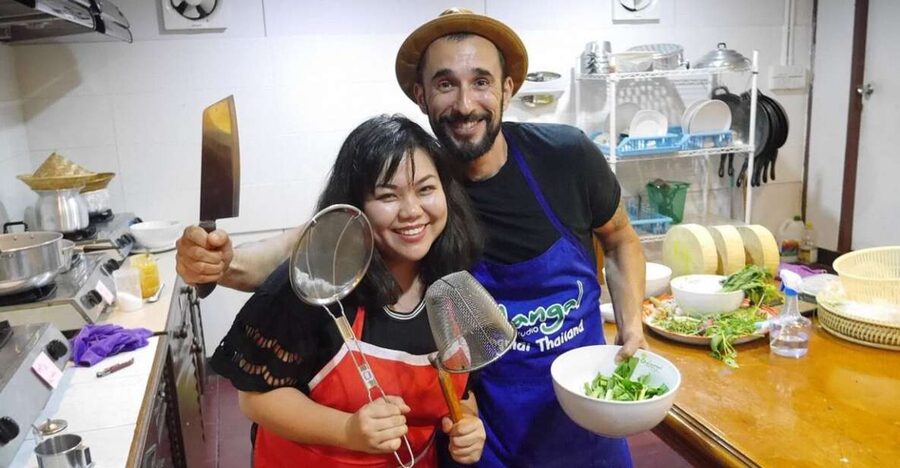
The recipe book is supplied as a PDF, and recipes are also sent by email in some cases. That gives the class a life beyond the evening.
The recipes are aimed at home cooks, and the dishes are not presented as overly complex. You learn methods that can be repeated, such as making curry paste, stir-frying noodles, and adjusting a soup to your preferred level of heat.
Thai ingredients may be harder to find at home, depending on where you live. Still, the class helps you understand which flavors matter most and where substitutions may be possible. The practical benefit is greater if you take notes about the ingredients and ask questions while cooking.
Who should book this experience?
I would recommend it to first-time visitors who want a meal and an activity in one evening. It is also a good fit for couples, families with older children, solo visitors, and people who enjoy meeting other tourists in a relaxed setting.
The class works particularly well for:
- Beginners who want clear guidance
- People interested in northern Thai food
- Vegetarians, vegans, and people with selected dietary restrictions
- Families with preteen or teenage children
- Anyone staying within the central pickup area
- Visitors who want recipes to use after returning home
It may not suit you if you want a quiet private lesson, a long market exploration, or a short evening activity. Observers are welcome, but adults pay 500 Thai baht and children aged 6 to 12 pay 350 Thai baht. That fee is worth considering if a family member wants to watch without cooking.
The activity is not suitable for people with altitude sickness, although altitude is not normally the main concern in central Chiang Mai. The more practical issue is the five-hour duration and the amount of food.
Practical booking advice for a smoother evening
Book with enough time to confirm your accommodation falls inside the pickup area. If it does not, arrange transport to the cooking school or market in advance.
Set an alarm for the lobby. Be ready by 3:15 PM, even if your hotel is given a later estimate. Traffic and multiple pickup points can cause delays, but the driver cannot wait long.
Wear clothing suitable for cooking, and bring any medication you need. You do not need to bring ingredients or equipment. Those are supplied, along with water, tea, and coffee.
Free cancellation is available up to 24 hours before the activity, and you can reserve now and pay later. Starting times vary, so check the date when booking.
Should you book the Chiang Mai cooking class?
Yes, if you want an active, food-focused evening with solid value. The best reasons to book are the menu choice, the market and garden visits, the chance to make curry paste, and the friendly teaching style associated with New, Aoy, Oi, and Nu.
I would skip it only if you dislike group cooking, need a very short activity, or are staying well outside the transfer zone. For most visitors based in central Chiang Mai, this is an easy way to turn dinner into something you can repeat at home.
FAQ
How long does the Chiang Mai cooking class last?
The advertised duration is five hours. Large groups of around 10 to 12 people or more may run from about 4 PM to 8:30 PM, while smaller groups may finish earlier.
What dishes can I cook?
You choose one dish from each category: stir-fry, soup, appetizer, and curry. Choices include Pad Thai, Pad See Ew, Tom Yum, Tom Kha, Som Tam, spring rolls, green curry, Massaman curry, Panang curry, red curry, yellow curry, and Khao Soi.
Is curry paste made during the class?
Yes. Curry paste is prepared as part of the curry section, giving you a chance to make it from scratch rather than using a ready-made paste.
Is hotel pickup included?
Yes, hotel pickup and drop-off are included for selected areas of central Chiang Mai. Coverage includes the Old City, Santitham, and parts of several nearby roads and neighborhoods.
What time should I wait for pickup?
Pickup takes place between 3:15 and 3:45 PM. You should wait in the hotel lobby 5 to 10 minutes early, and the driver will wait no longer than five minutes after the scheduled pickup time.
Can vegetarians and vegans join?
Yes. Vegetarian and vegan dishes are available, including vegetarian or vegan Tom Kha Je. The class also accommodates Halal, gluten-free, and some allergy-related needs.
Are drinks included?
Yes. Water, tea, and coffee are included in the experience.
Do I receive the recipes?
Yes. You receive a PDF recipe book, and recipes may also be sent by email.
Can someone attend without cooking?
Yes, observers are welcome, but they must pay an additional fee. An observing adult pays 500 Thai baht, while an observing child aged 6 to 12 pays 350 Thai baht.
More Evening Classes in Chiang Mai
- Evening Cooking Class
★ 5.0 · 164 reviews - Sunset Thai Cooking with Grandma – Farm & Evening Feast
★ 5.0 · 127 reviews - Half Day Evening Cooking Class with Market Tour in Chiang Mai
★ 5.0 · 91 reviews - Evening Thai cooking class
★ 5.0 · 28 reviews
Just added around Chiang Mai
- Aroidee’s Farm-Fresh Thai Cooking Experience★ 5.0 · 8 reviews
- Signature Thai Cooking Course★ 5.0 · 79 reviews
- Private Half-Day Thai Cooking Class in Chiang Mai★ 5.0 · 4 reviews
- Half Day Guided Thai Cooking Class in Chiang Mai★ 5.0 · 13 reviews
- Online Thai and Akha Cooking Class★ 5.0 · 70 reviews
- Private Virtual Thai Cooking Class★ 5.0 · 9 reviews
- Northern Thai Cooking Class in Chiang Mai in a Countryside Home★ 5.0 · 2 reviews
- 5 Hour Morning Thai Cooking Course★ 5.0 · 31 reviews
Cooking Classes with a Market Tour, compared.
Hanoi Cooking Class: Culture, Local Market & Meaning CSR Impact
Read our review →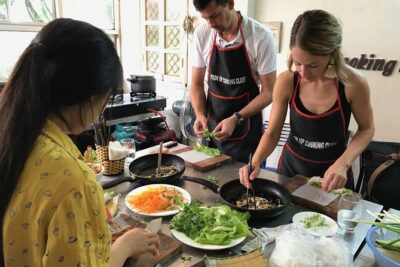
5 Traditional Dishes Hanoi Cooking Class with Market Trip
Read our review →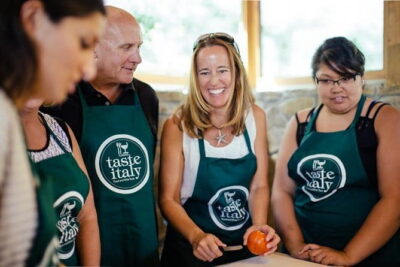
Cooking Class and Lunch at a Tuscan Farmhouse with Local Market Tour from Florence
Read our review →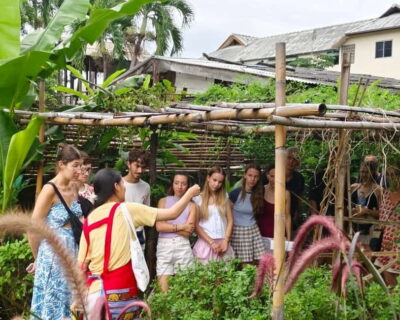
Cooking Class, Market & Thai Herbs Garden Tour
Read our review →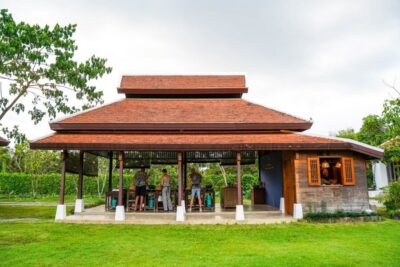
Authentic Cooking Class with Market & Farm Visit
Read our review →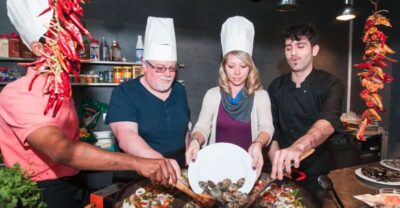
Paella Cooking Experience & Boqueria Market Tour
Read our review →
Cooking Class Hoi An:Local Market, Basket Boat, Fishing & Cooking
Read our review →