
REVIEW · SICILY, ITALY
Catania: Private Cooking Class at a Local’s Home
Bring an appetite for Sicily. This three-hour class takes you into a local family home, where a certified Cesarina teaches three regional recipes, then sits down with you to enjoy the meal. I especially like the private setting, which gives you direct time with your host, and the fact that you eat the food you prepare rather than watching a demonstration from the sidelines. The main consideration is the price, $164.26 per person, which makes this a special splurge rather than a casual budget activity.
I also like the personal touch of family cookbooks and recipes passed down through generations. The class includes water, local red and white wines, coffee, and all tastings, so the cost covers more than instruction alone. You need at least two people for the class to operate, and the home address is only provided after booking.
Key points to know before booking
- Three recipes in three hours: You cook, taste, and learn practical techniques instead of simply observing.
- Private home setting: The class takes place in a local family home, not a large commercial kitchen.
- A real host makes the difference: Maurizio has been praised for his patience, humor, hospitality, and teaching style.
- The meal is part of the class: You sit at a prepared table and eat what you have made with local wines.
- Flexible start times: Classes usually begin around 10 AM or 5 PM, but other times may be possible with advance notice.
- Plan for a two-person minimum: Solo bookings cannot run unless another participant is included.
Why a home kitchen makes this class different
Catania has no shortage of places to eat. You can order pasta, pastries, seafood, and Sicilian specialties all over town. A cooking class gives you something a restaurant cannot: a look at how local food is prepared in a family setting, with someone explaining the small decisions behind the recipes.
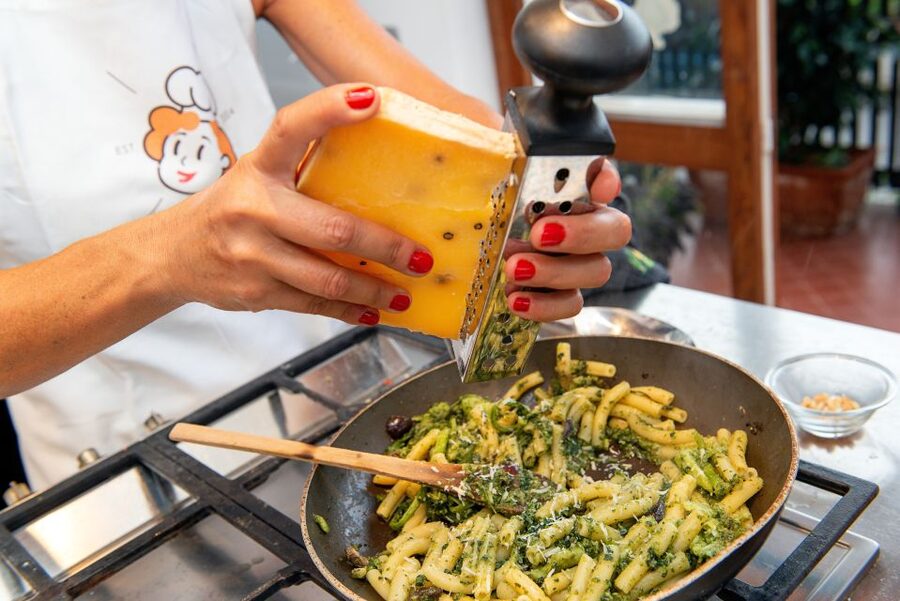
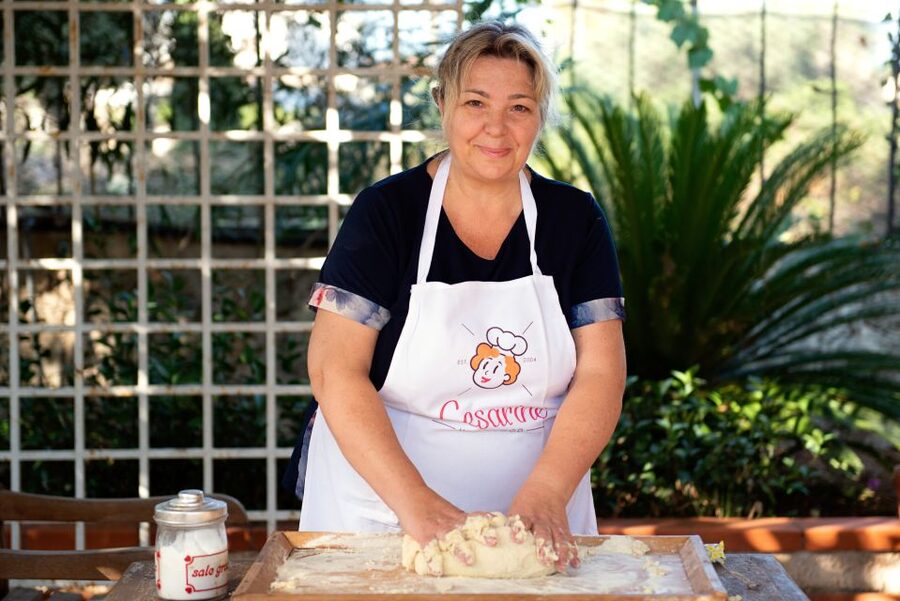
This experience takes place in a private home with a Cesarina, the name used for the certified local cook leading the lesson. You are not simply handed a recipe card and sent to a workstation. The host shares family recipes, cooking habits, and practical tricks that have been passed down over time.
That personal format matters. In a large class, the instructor may demonstrate while you struggle to see or keep up. Here, the group is private, and your station comes equipped with utensils and ingredients. You can ask questions as you work, repeat a step, and get help before a small mistake becomes a kitchen disaster.
The class is conducted in English and Italian. That makes it accessible to English-speaking visitors, while the Italian setting still gives the experience a local character. You may pick up a few food words along the way, but you do not need to speak Italian to take part.
More Private Cooking Classes in Italy
- Rome: Pasta Making Class with Tiramisu & Wine PRIVATE OPTION
★ 4.8 · 404 reviews - Private Cooking Class in Rome with Chef Andrea Consoli
★ 5.0 · 150 reviews - Rialto Market Tour & Private Cooking Class in the Heart of Venice
★ 5.0 · 106 reviews
A three-hour lesson built around three recipes
The class is organized around three authentic local recipes. The exact dishes are not specified in advance, so you should not book expecting a particular pasta, dessert, or seafood preparation. Instead, think of the menu as a regional introduction chosen by the host.
The first stage is the setup. Your Cesarina provides the ingredients and utensils, then explains what you will make and how the work will be divided. Since the class is private, the pace can be more relaxed than in a group workshop. You can focus on technique instead of racing to keep up with a room full of other cooks.
The cooking itself is hands-on. You prepare the dishes with guidance from the host, learning the methods that make the recipes work. The useful part is not only knowing which ingredients go into a dish. You also get help with timing, shaping, mixing, and the small practical steps that are often missing from printed recipes.
One past class with Maurizio included homemade pasta. His guest struggled with the pasta shape, but Maurizio was described as extremely patient and encouraging. That is an important detail if you are not confident in the kitchen. The experience is designed for participation, not for people who already cook at a professional level.
The third recipe may be a dessert. In Maurizio’s class, tiramisu was part of the meal and was especially well received. Since menus can vary, treat that as an example rather than a promise. The broader point is that the class gives you a full meal to prepare, rather than a single short recipe.
The table is the reward for the work
After the cooking, you sit down and taste all three recipes. This is when the class becomes a shared meal rather than a lesson that ends at the stove.
The table is prepared for the occasion, and one account of Maurizio’s class describes a spread of cheese, bread, and spreads available before cooking began. That kind of welcome helps set the tone. You have something to nibble on while learning, rather than waiting hungrily for the final dish.
The included drinks are water, local red and white wines, and coffee. The wine is not an optional add-on, and you do not need to budget separately for the beverages listed as part of the experience. You should still drink sensibly, especially if you have an evening plan afterward.
The meal is also where you can appreciate the value of doing the work yourself. A dish tends to taste different when you know how it was shaped, seasoned, and assembled. You leave with more than a pleasant lunch or dinner. You have a better chance of recreating at least some of the meal at home.
The host may also take photos during the experience. Maurizio was specifically praised for taking nice pictures, which can be a thoughtful reminder of the day. This is not advertised as a formal photography service, so consider it a friendly extra rather than a guaranteed photo package.
Maurizio and the human side of the experience
The strongest personal feedback centers on Maurizio. He has been described as charming, hospitable, patient, and fun, with a clear ability to make beginners feel comfortable.
That combination is important in a cooking class. A technically strong cook is not always a good teacher. You need someone willing to explain a step twice, adjust the pace, and laugh when your pasta shape looks less than perfect. Maurizio appears to bring that relaxed attitude to the kitchen.
His hospitality also extends beyond the recipe itself. The cheese, bread, spreads, prepared table, and photos add a sense of occasion. You are not just paying for access to a stove. You are being welcomed into a carefully planned meal with a local host.
Of course, a private class is shaped by the individual Cesarina you meet. The experience provider is Cesarine, but the host may vary. If you are hoping specifically to cook with Maurizio, ask the organizer after booking if that can be arranged. Do not assume it is guaranteed unless confirmed.
More Private Cooking Classes in Catania:
- PRIVATE Authentic Balinese Cooking Class in Ubud at Putu’s Home
★ 5.0 · 644 reviews - Private Market Tour & Cooking Class in Puerto Vallarta with Manu
★ 5.0 · 241 reviews - Private Cooking Class with 5 dishes of your choice
★ 5.0 · 227 reviews - Veg and Non veg : Private Cooking Class in Delhi home (7 meal)
★ 5.0 · 226 reviews
What the private format means for you
A private group gives you more control than a standard shared class. You can ask about ingredients, request help with a technique, and settle into the pace without worrying about strangers at your workstation.
It can also feel more social. The goal is not merely to complete the recipes. You are sharing a home, a table, and a conversation with a local family. That direct connection is one of the clearest reasons to choose this class over a conventional cooking school.
The drawback is that a private experience costs more. At $164.26 per person, two people pay $328.52 before considering any other trip expenses. That is a serious amount for three hours, especially if your main goal is simply to eat Sicilian food.
The price makes more sense if you value the full package: personal instruction, a private home, three recipes, a prepared meal, wine, coffee, and time with a local host. For someone who loves food and wants a memory tied to a person and place, it can be worthwhile. For a budget-conscious visitor who would rather sample several restaurant dishes, it may not be the best use of the money.
Timing your class in a Catania itinerary
Classes usually start at about 10 AM or 5 PM. A morning session works well if you want the cooking experience to become lunch. An afternoon start should lead into an early evening meal, depending on the exact pace of the class.
The starting time can be flexible when you contact the organizer in advance. Do not wait until the last minute if your schedule is tight. Ask for your preferred time after booking and build in enough room before any later activity.
The class ends back at the meeting point, which is the host’s home. There is no listed transport service, so you should plan how you will reach the address on your own. The full location is withheld until after booking for privacy, and the local partner sends the meeting instructions.
That arrangement is reasonable for a private home, but it means you cannot judge the exact distance from your hotel before reserving. Check the directions as soon as you receive them and allow time to find the building.
Dietary needs and practical expectations
Different dietary requirements can be accommodated, but you must confirm them directly with the service organizer after booking. This is important. Do not assume that a vegetarian, allergy-friendly, or other menu will be arranged automatically.
The information provided does not list specific accessibility details, kitchen dimensions, or ingredient substitutions. If you have mobility needs, serious allergies, or other requirements that affect participation, ask before the class date so the host can explain what is possible.
You should also remember that the address is private. The meeting point is not a public restaurant or cooking school, and the home details are shared only after the reservation. That gives the host privacy, but it also means you should treat the location information carefully.
The class requires at least two people. If you are traveling alone, contact the organizer before booking to confirm whether another participant can be matched with you. The published requirement means you should not count on a solo session.
Is $164.26 per person a fair price?
The price is high compared with a normal Sicilian meal, but a direct restaurant comparison misses part of the value. You are paying for instruction, ingredients, the use of a private kitchen, the meal itself, wine, coffee, and a personal exchange with the host.
You are also paying for a small group. There is no indication of a large class or a rushed demonstration. Your workstation is prepared with the tools and ingredients needed for the recipes, and the host can give you direct help.
I would consider the cost fair for couples, families, and food-focused visitors who want one memorable experience in Catania. It is particularly easy to justify if you enjoy cooking at home and will actually use the techniques afterward.
I would be more cautious if you are looking for the cheapest way to eat or if you dislike hands-on activities. Three hours is a long time for someone who would rather visit markets, sit in a cafe, or order a finished meal. The class has real value, but only if the activity itself appeals to you.
Who will enjoy this class most?
This is a strong choice for couples who want a relaxed shared activity, families with older children who can take part at a workstation, and food enthusiasts who want more than a restaurant menu.
It also suits people who like personal encounters. The class gives you time with a local family instead of placing you in a purely commercial setting. If meeting a host and hearing family cooking traditions matters to you, this is a better fit than a short demonstration.
Beginners should not be discouraged. Maurizio’s patience with a difficult pasta shape suggests that you do not need polished kitchen skills. You should be ready to participate, make mistakes, and accept a little flour on the wrong surface.
This is less suitable for a visitor with only a short gap between major sights, someone who needs a guaranteed specific menu, or anyone unwilling to arrange dietary requests in advance. The class is personal and flexible, but that also means some details are confirmed only after booking.
Should you book the Catania cooking class?
I would book this experience if you want a genuine home setting, enjoy cooking with other people, and see the meal as part of the lesson. The private format, local wines, family recipes, and time at the table give it more character than a standard cooking demonstration.
I would skip it if your budget is tight or you mainly want to sample Sicilian food without doing the preparation. At $164.26 per person, this is a food experience with a personal connection, not a bargain meal.
Before reserving, confirm the start time, dietary needs, meeting instructions, and whether Maurizio is available. If those details fit your plans, this can be one of the more memorable ways to spend three hours in Catania, with useful cooking skills to take home instead of another souvenir.
FAQ
Where does the cooking class take place?
The class takes place in a local family’s home in Catania. The full address is provided after booking for privacy reasons.
How long does the experience last?
The cooking class lasts three hours.
How much does the class cost?
The listed price is $164.26 per person.
How many recipes will I prepare?
You will learn and prepare three authentic local recipes.
Are food and drinks included?
Yes. The experience includes tastings of the three recipes, water, local red and white wines, and coffee.
Is the class private?
Yes. The activity is offered as a private group experience.
What languages does the instructor speak?
The instructor speaks English and Italian.
What time does the class usually start?
Classes usually begin at 10 AM or 5 PM. The time may be flexible if you contact the organizer in advance.
Can dietary requirements be accommodated?
Different dietary requirements can be catered for, but you need to confirm your needs directly with the service organizer after booking.
How many people are required?
At least two people are required for the activity to take place.
Can I cancel the reservation?
You can cancel up to 24 hours in advance for a full refund.
Do I have to pay when I reserve?
No. The reserve now and pay later option lets you hold your place without paying at the time of booking.
Just added around Catania
- Cesarine: Home Cooking Class & Meal with a Local in Catania★ 4.5 · 10 reviews
- Cesarine: Market Tour & Home Cooking Class in Catania★ 4.0 · 6 reviews
- Cooking Class in Taormina with Lunch Included★ 5.0 · 2 reviews
- Join us for a Sicilian cooking class in a professional kitchen on Etna, using fresh ingredients from our organic garden★ 4.2 · 4 reviews
- Cooking Class with lunch or dinner★ 4.9 · 7 reviews
- Cooking class, visit to the Catania market and light lunch★ 5.0 · 7 reviews
- Catania: Pizza Cooking Class★ 4.9 · 18 reviews
- Cooking class fresh pasta★ 4.8 · 17 reviews
Private Cooking Classes, compared.
PRIVATE Authentic Balinese Cooking Class in Ubud at Putu’s Home
Read our review →
Pasta Making Class with Tiramisu & Wine PRIVATE OPTION
Read our review →
Private Market Tour & Cooking Class in Puerto Vallarta with Manu
Read our review →
Private Cooking Class with 5 dishes of your choice
Read our review →
Veg and Non veg : Private Cooking Class in Delhi home (7 meal)
Read our review →
PRIVATE Balinese Cooking Class in Ubud with Dewa with Transfers
Read our review →
VIP Mekong Delta Adventure Cycling & Kayaking – Private Day Trip
Read our review →
Private Home Cooking in Yanaka – Local Flavors in a Warm Setting
Read our review →Lists this class appears in