
REVIEW · CATALONIA, SPAIN
Barcelona Evening Cooking Class: 5-Course, 3 Paellas & Cava
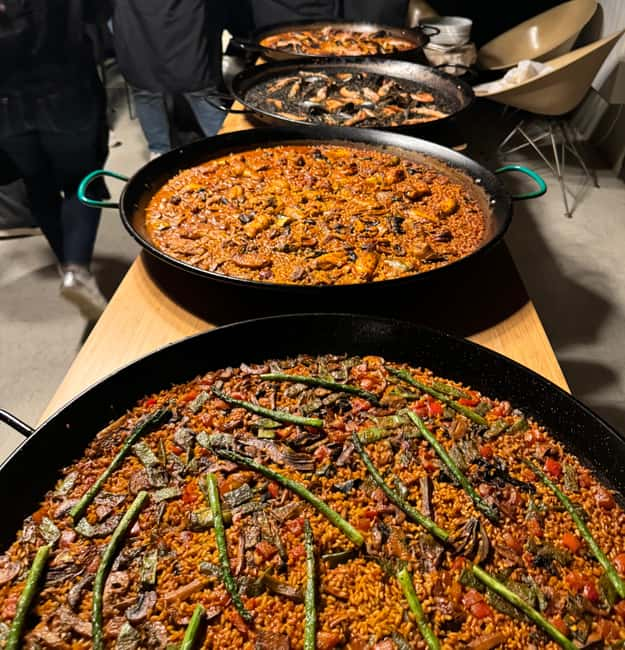
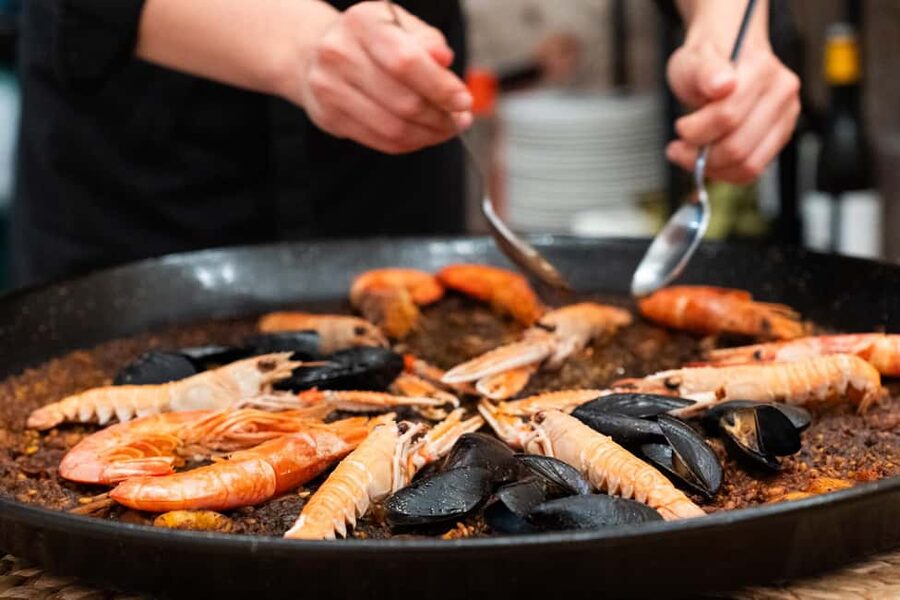
Three paellas make one lively Barcelona supper. This three-hour evening class pairs a mother-daughter chef team with hands-on cooking, so you learn seafood, meat, and vegan paella instead of watching one pan from the sidelines. I like the real cooking time and the chance to compare three styles at one table. My main caution is the $176 price, which is high unless you value the drinks, full meal, small group, and recipe instruction.
The relaxed format should suit you if you enjoy food more than formal sightseeing. You will work in rotating teams, taste Ibérico ham, Catalan cheeses, mussels, cava, and sangria, then sit down to share the results. The class has a 3.8 out of 5 rating from five ratings, so I would book it for the cooking focus rather than expect a polished restaurant show.
Key points about this Barcelona paella class
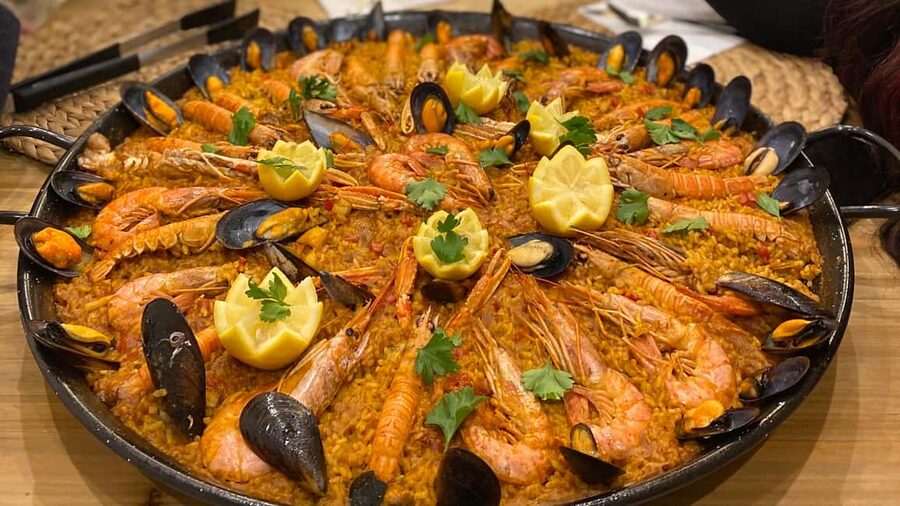
- Three paella styles in one evening: Cook seafood, meat, and vegan versions, then compare the finished dishes.
- Actual hands-on cooking: The format gives you more to do than simply stir a pan or watch a chef.
- A full Spanish food progression: Start with cava and tapas, make sangria, cook paella, and finish with dessert.
- Small group of no more than 10: The limited size should make it easier to ask questions and work with the chefs.
- Recipes sent after class: You receive digital recipes for all three paellas, useful if you want to repeat the meal at home.
- Dietary help available: Gluten-free bread and recipe adjustments can be arranged if you notify the school when booking.
What the $176 evening includes
At $176 per person, this is not a cheap cooking lesson. It is closer to a three-hour dinner party with instruction, drinks, several tasting courses, and a small-group setting.
Your price covers all ingredients, tools, aprons, and kitchen equipment. That matters because you are not paying an extra fee for the saffron, premium bomba rice, seafood, meat, or vegetables used during the class. You also receive free-flowing cava, sangria, wine, and water, plus a seasonal dessert.
The value depends on how you like to spend an evening in Barcelona. If you only want to eat paella, a restaurant will cost less. If you want to learn several techniques, cook alongside other people, taste three versions, and leave with recipes, the price becomes easier to defend.
I would especially consider it for a special evening, a food-focused holiday, or a small celebration. It is less appealing for a budget-conscious visitor who has already taken several cooking classes or who mainly wants a large serving of one classic seafood paella.
More Evening Classes in Barcelona:
- Chiang Mai: Evening Cooking Class and Local Market Visit
★ 4.9 · 648 reviews - Paris Evening Cooking Class French Dinner and Market Visit Option
★ 5.0 · 430 reviews - Evening Cooking Class in Organic Farm with Local Market Tour
★ 5.0 · 394 reviews
8:00 pm, cava, tapas, and a friendly start
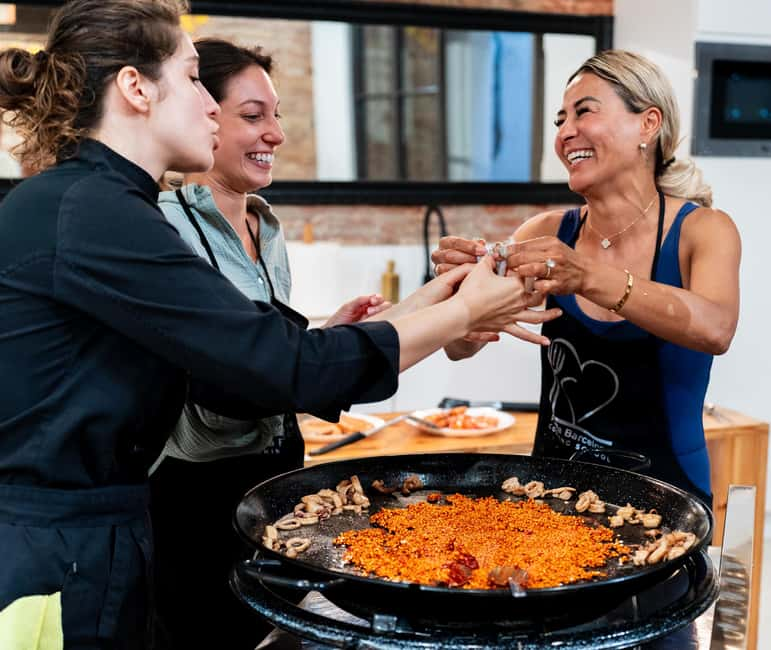
The evening begins at 8:00 pm with welcome cava and gourmet tapas. The opening spread includes Ibérico ham, Catalan cheeses, and mussels, giving you a quick taste of regional ingredients before the main cooking begins.
This first half-hour is useful for settling into the studio kitchen. You can get a drink, meet the other participants, and begin talking about the food without being rushed straight to a cutting board.
The cava also sets the tone. This is meant to feel like a social Spanish evening, not a silent technical workshop. If you prefer a tightly timed professional lesson, the casual mood may feel loose. If you like meeting people over food, it should work well.
The class is taught in English and Spanish. The chefs come from the mother-daughter team at Paella Barcelona Cooking School and trained at the Michelin-starred Hofmann culinary school. That background gives the lesson a solid culinary base, though the evening still aims at home cooks rather than restaurant professionals.
8:30 pm, making sangria before the rice
At about 8:30 pm, you move into a sangria-making workshop. You work with seasonal fruit and local wine, then drink the result during the rest of the class.
This is a smart part of the evening because sangria is simple to enjoy but easy to make poorly. The workshop gives you a practical recipe to take home, and the drink becomes part of the meal instead of an unrelated bar stop.
The free-flowing drinks can add a festive feel, but keep your own pace. You still have knives, hot pans, and several cooking tasks ahead. Water is included, so use it. The class is designed for a good evening, not a race to finish every glass.
After the sangria, the chefs introduce the paella techniques. You will work with premium bomba rice and saffron, two ingredients that matter greatly to the final dish. The lesson is not limited to one recipe, since you will prepare seafood, meat, and vegan paellas.
Three paellas, three different cooking problems
The best feature here is the comparison. Seafood paella brings briny flavors, the meat version offers a fuller savory taste, and the vegan paella shows how vegetables can carry the dish without seafood or meat.
Cooking all three lets you see how the ingredients change the character of the rice. It also gives you a better sense of which version you would actually make at home. Many paella lessons focus on one pan, so the three-style format offers more range.
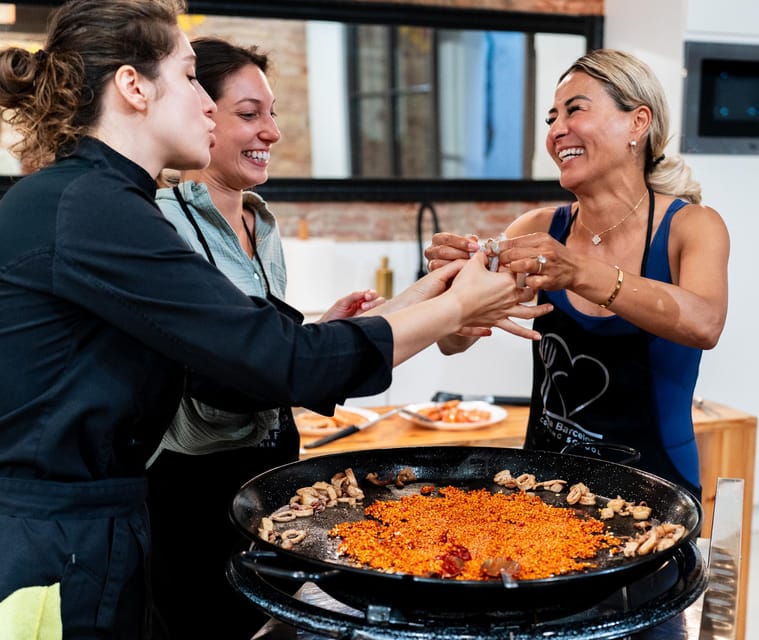
At about 9:00 pm, participants cook all three paellas in rotating teams. Rotation matters because you should get a chance to take part in more than one pan rather than being assigned to a single task for the whole night.
The class promises a good amount of actual cooking, not just stirring. That is important for you if you already enjoy working in the kitchen. You should expect to handle ingredients, follow instructions, and take part in the preparation, though the exact jobs will depend on the group and the chefs.
A group of no more than 10 people is another advantage. Paella needs room around the pans, and a crowded class can turn hands-on cooking into shoulder-to-shoulder watching. This smaller format should make it easier to hear the instructions and ask about technique.
Still, do not expect three completely separate restaurant-sized meals cooked by you alone. The rotating team format means the work is shared. You will take part in the process, then taste all three paellas family-style.
A few more cooking classes around Barcelona worth a look
- Barcelona: Paella Cooking Experience & Boqueria Market Tour
★ 4.8 · 3,661 reviews - Barcelona Paella Cooking Class with Market Visit, Tapas & Sangria
★ 5.0 · 2,531 reviews - Barcelona Interactive Spanish Cooking Experience
★ 4.5 · 2,155 reviews - Barcelona: Paella Cooking Class with Market Visit and More
★ 4.9 · 711 reviews
Why the family-style tasting works
Around 10:00 pm, everyone sits down to eat the finished paella trio. This is where the class becomes more than a recipe lesson. You can compare the seafood, meat, and vegan versions side by side and decide which one suits your taste.
That comparison is valuable because paella preferences can be surprisingly personal. One person may favor the seafood pan, while another prefers the meat version or the lighter vegetable recipe. Sharing the meal gives you a natural topic of conversation and makes the group feel less like a set of strangers.
The food is served family-style, so you will not receive a carefully plated restaurant tasting menu. That is a strength if you want a warm, communal dinner. It is a weakness if you want formal service or exact portions.
A seasonal dessert follows the paella. The dessert is not described in detail, so you should treat it as a pleasant finish rather than book this class for a particular sweet. The full sequence still gives you a proper evening meal, not a small sample followed by a search for dinner.
The recipe booklet makes the lesson more useful
The digital recipe booklet is emailed after class and includes all three paellas. This is one of the most useful inclusions because paella has several moving parts, and remembering every timing detail after a social evening is unlikely.
You can use the recipes to recreate your favorite version at home or try the other two later. The three recipes also make the class more practical than a one-night demonstration. You leave with a clear reason to keep cooking rather than letting the experience become one pleasant memory.
Do not expect the digital booklet to replace the in-person instruction. The value of the class comes from seeing the techniques, working with the ingredients, and tasting the results. The recipes are a follow-up tool.
Dietary needs, access, and group size
Gluten-free bread is available, and recipe adjustments can be made for dietary needs if you notify the school at booking. You should do this early rather than wait until the evening begins. The information provided specifically mentions gluten-free support, but it does not list every possible allergy or dietary substitution.
The kitchen is wheelchair accessible. The class also includes all equipment and aprons, so you do not need to arrive with cooking gear.
English and Spanish are the available teaching languages. If you need another language, this experience may not be a good match because no other language support is listed.
The maximum group size is 10 people. That is small enough for a more personal lesson, but it does not mean you receive private instruction. You will still share the kitchen and the cooking tasks with the rest of the group.
Timing and the late-night question
The scheduled flow runs from 8:00 pm to 11:00 pm:
- 8:00 pm: Cava and tapas
- 8:30 pm: Sangria workshop and paella techniques
- 9:00 pm: Cooking the three paellas in rotating teams
- 10:00 pm: Family-style meal and dessert
- 11:00 pm: Digital recipes emailed after the class
This timing fits Barcelona’s late dining habits, but it is not an early dinner. You will likely want a light lunch and a modest snack earlier in the day, not a full meal just before class.
The three-hour length gives enough room for instruction and eating without turning the night into a marathon. Still, you should plan your evening around it. A late start and 11:00 pm finish may not suit young children or anyone who prefers an early bedtime.
The exact starting time can vary, so check availability when booking. The stated duration is three hours.
Who should book this class
I would choose this experience if you want to cook, not simply watch. It is a good fit for couples, friends, solo food lovers, and small groups who enjoy conversation along with dinner.
It also suits people who cannot decide which paella to try. The seafood, meat, and vegan options let you sample the full range in one sitting. Vegetarians and people who want a non-seafood choice will appreciate having a dedicated vegan version rather than a token side dish.
The class is less suitable if you want a quiet meal, a private lesson, or a low-cost introduction to paella. It is also not ideal if you dislike late dinners, shared cooking tasks, or free-flowing social drinks.
The relaxed mood is a real part of the experience. One of the strongest qualities is the balance between hands-on work and a fun atmosphere. You get enough cooking to feel involved, but the evening is not presented as an exam.
My booking verdict
Book it if the cooking matters as much as the meal. The three paellas, real kitchen participation, cava, sangria, tapas, dessert, small group, and follow-up recipes give you a full evening rather than a single dish.
At $176, I would not call it a bargain. I would call it a worthwhile splurge for a food-centered night, especially if you value personal instruction and want to recreate the recipes later. If your main goal is simply to eat excellent paella, spend less at a good restaurant. If you want to learn three versions and share the pans with a small group, this class earns its place on a Barcelona schedule.
FAQ
How long does the Barcelona cooking class last?
The class lasts three hours, with the planned evening running from 8:00 pm to 11:00 pm.
What paella types will I cook?
You will cook three types: seafood, meat, and vegan paella.
Is the class taught in English?
Yes. The class is offered in English and Spanish.
What food and drinks are included?
The experience includes welcome cava, tapas with Ibérico ham, Catalan cheeses, and mussels, a sangria-making workshop, the three paellas, a seasonal dessert, wine, and water.
Are ingredients and cooking equipment provided?
Yes. All ingredients, tools, cooking equipment, and aprons are included.
Can the class accommodate gluten-free needs?
Gluten-free bread and recipe adjustments are available if you notify the school when booking.
How many people are in the class?
The group is limited to a maximum of 10 participants.
Just added around Barcelona
- Rooftop Paella Seafood Cooking Class Experience in Barcelona★ 5.0 · 59 reviews
- Private Authentic Paella Cooking Class in Barcelona with Josh★ 5.0 · 3 reviews
- Private Barcelona Market Tour & Paella Cooking Class with Josh★ 5.0 · 4 reviews
- Premium Paella & Tapas Feast: Unlimited Wine & Rambla Views★ 5.0 · 13 reviews
- Premium Cooking Class in Designer Loft: Paella & Spanish Tapas★ 5.0 · 18 reviews
- Barcelona Tapas Cooking & Cocktail Class with Veronique & Mattias★ 5.0 · 3 reviews
- Paella Cooking Experience & Winery Tour from Barcelona★ 4.5 · 19 reviews
- Barcelona Rooftop Paella Cooking Class with Sangria & Local Host★ 5.0 · 48 reviews
Cooking Classes, compared.

Half-Day Thai Cooking Class at Organic Farm in Chiang Mai
Read our review →

3 in 1 Cooking Class near Navona: Fettuccine, Ravioli & Tiramisu
Read our review →
Pasta & Tiramisu Cooking Class with Unlimited Wine
Read our review →
Hanoi Cooking Class: Culture, Local Market & Meaning CSR Impact
Read our review →
5 Traditional Dishes Hanoi Cooking Class with Market Trip
Read our review →
Cooking Class and Lunch at a Tuscan Farmhouse with Local Market Tour from Florence
Read our review →
Cooking Class, Market & Thai Herbs Garden Tour
Read our review →Lists this class appears in