
REVIEW · BARCELONA, SPAIN
Barcelona Rooftop Paella Cooking Class with Sangria & Local Host
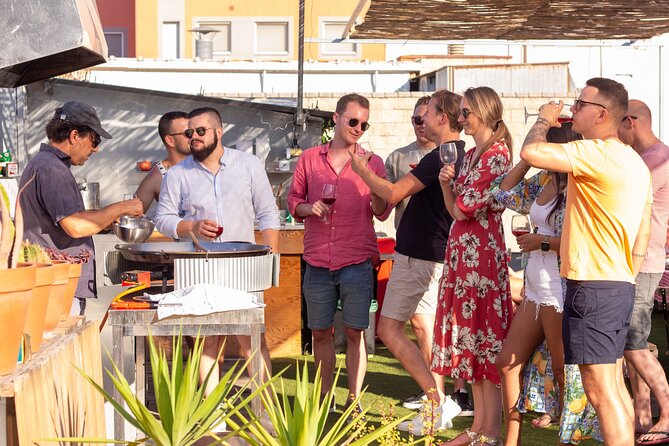
Paella tastes better when you help make it. This two-hour Barcelona class brings you into the cooking process, from mixing sangria or vermouth to preparing sofrito, broth, rice, and seafood. I especially like the fully hands-on format and the chance to hear regional stories from host Benjamin Mordoh, who comes from the Costa Brava. The final meal also includes tomato salad, pan con tomate, bread, olives, and fresh fruit.
The setting adds real charm. You cook and eat on a rooftop in a residential part of Barcelona, away from the busiest tourist streets. I also like that the menu can be adapted for vegetarians and different allergies if you ask ahead. One point to keep in mind: the rooftop is weather-dependent, and one booking was moved to a ground-floor patio, so the outdoor setting is not guaranteed.
Key points to know before booking
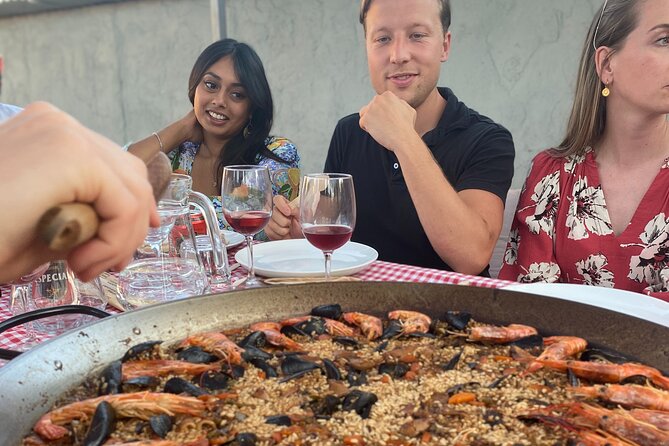
- Costa Brava seafood paella: The recipe uses prawns, cuttlefish or squid, and mussels, based on a fishermen’s recipe from Benjamin’s hometown.
- Everyone cooks: You help prepare the sofrito, broth, rice, sangria, and finishing touches instead of watching a chef work alone.
- A private activity: Only your own group participates, making this a good choice for families, couples, and team events.
- A relaxed two-hour meal: The class ends with a sit-down lunch featuring paella, tomato salad, pan con tomate, bread, olives, fruit, and a drink.
- Rooftop charm, with a weather caveat: The terrace can feel like a local home patio, but poor weather may lead to a different date, refund, or alternate location.
- Plan ahead: The class costs $90.11 per person and is booked about 36 days ahead on average.
Meeting Benjamin in Sant Martí
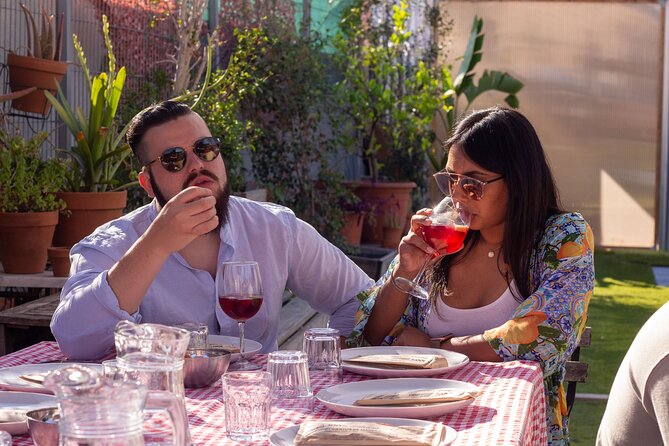
The class begins at Passatge de Coll, 19, in the Sant Martí district of Barcelona. This is not a central old-town cooking studio dressed up for tourists. The residential location is part of the appeal. You leave behind the city’s main sightseeing routes and spend a couple of hours in a more local setting.
The activity ends back at the same meeting point, which keeps the logistics simple. The address is near public transportation, and several people have found it easy to reach by taxi from central hotels. I would still allow extra time to find the entrance, especially if you are unfamiliar with Barcelona’s residential streets.
The host is generally Benjamin Mordoh, though several experiences have also been led by other members of the cooking team, including Brian, Patrick, and Dan. Benjamin receives the strongest praise for his warm manner, clear English, humor, and ability to involve both adults and children.
That matters because a cooking class can go one of two ways. You can end up standing behind a counter while a chef performs, or you can feel like part of the meal. This experience aims for the second option. Benjamin explains each step, then lets the group take part under his direction.
More Paella and Spanish Classes in Barcelona:
- Barcelona: Paella Cooking Experience & Boqueria Market Tour
★ 4.8 · 3,661 reviews - Barcelona Paella Cooking Class with Market Visit, Tapas & Sangria
★ 5.0 · 2,531 reviews - Barcelona Interactive Spanish Cooking Experience
★ 4.5 · 2,155 reviews
Sangria or vermouth starts the afternoon
The first shared task is preparing homemade sangria or vermouth. The drink is included, and the class uses it to set an easy pace before the cooking gets serious.
This is more than a free beverage. It gives the group something to do immediately and creates a natural chance to talk. You can ask questions, meet the people in your own group, and begin learning how food and drink fit into daily life in Catalonia.
Sangria is the more familiar choice for many visitors, but vermouth has a strong local connection and is worth considering if you want something different. The supplied details do not specify the exact vermouth style or sangria recipe, so the precise ingredients may vary.
The first food is also simple and local. You prepare pan con tomate, toasted bread rubbed with fresh tomato, olive oil, and salt. In Catalonia, this is called pa amb tomàquet or pan con tomate, and it shows how a few good ingredients can do most of the work.
A tomato salad follows, made with seasoned tomatoes and extra virgin olive oil. Neither starter is elaborate, and that is the point. These are everyday Catalan flavors that prepare your palate for the main dish without filling you up before the paella arrives.
Learning why paella works
Before the pan goes on, Benjamin explains where paella comes from, how regional versions differ, and why the ingredients are added in a particular order. His Costa Brava background gives the seafood version a personal connection rather than treating paella as one fixed national recipe.
You learn practical technique along the way. The class covers the sofrito, the broth, and the rice, with attention to the steps that affect flavor and texture. This is useful at home because paella is not simply rice mixed with seafood. The base, liquid, heat, and timing all matter.
The lesson also helps clear up a common problem. Many home cooks stir rice dishes too much or use the wrong amount of liquid. The class gives you a chance to see the process as it happens and ask questions while the pan is still cooking.
You should not expect a formal culinary-school lesson with precise printed instruction for every detail. The appeal is more personal and conversational. Benjamin shares tips on making paella with ingredients available in your own region, which is especially helpful if you want to recreate the dish after returning home.
Cooking the Costa Brava seafood paella
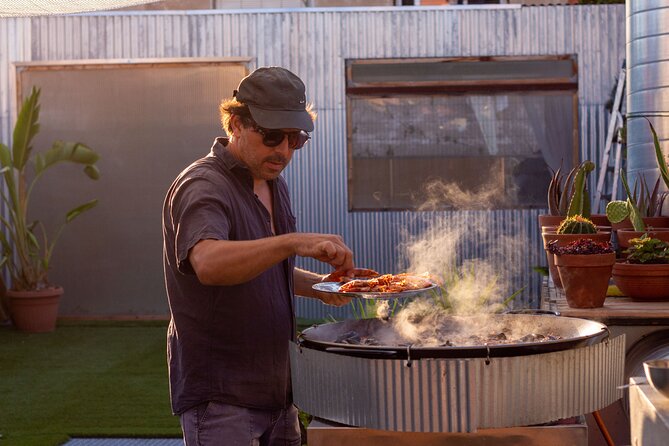
The main dish is a seafood paella based on a recipe from fishermen in the Costa Brava. The listed ingredients include prawns, cuttlefish or squid, and mussels. The group prepares the dish from scratch, including the sofrito, broth, and rice.
This is the heart of the experience. You are not merely handed a plate of paella and told its story afterward. You help build the flavor and see how the dish changes as it cooks.
Participation can be shared among the group. The information describes the class as fully hands-on, and the experience is designed so everyone can help with parts of the meal. That makes it especially suitable for families, couples who enjoy cooking together, and work groups looking for an activity that gives everyone a role.
The seafood focus is also worth noting. If you do not eat shellfish or seafood, ask about an alternative before booking. The menu can be adapted for vegetarians and different allergies, but the details do not promise every possible substitution. Early communication is the sensible move.
As the paella cooks, the class slows down. You can keep talking, finish your drink, and watch the rice reach the right stage. This pause is part of the pleasure. You are not rushing from one cooking station to another or trying to squeeze a full meal into a tight schedule.
A few more cooking classes around Barcelona worth a look
- Barcelona: Paella Cooking Class with Market Visit and More
★ 4.9 · 711 reviews - Paella Cooking Class with Professional Chef: Four Course Dinner
★ 5.0 · 561 reviews - Half-Day Spanish Cooking Class & Boqueria Market Tour
★ 4.9 · 383 reviews - Premium Paella Cooking Class & 10 Spanish Tapas
★ 5.0 · 312 reviews
The rooftop setting and its limits
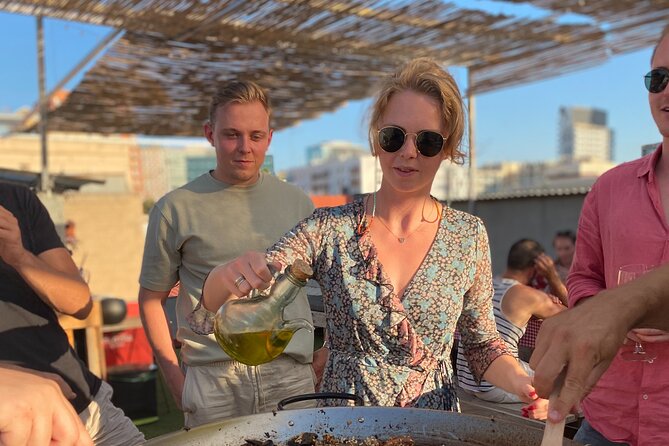
The rooftop is often described as comfortable, intimate, rustic, and home-like. It gives the class a backyard feel, with cooking, conversation, and lunch taking place in the same outdoor space.
That atmosphere may be the biggest reason to choose this class instead of a standard cooking school. You get a food lesson tied to a real residential part of Barcelona, not just a recipe in a commercial studio. The setting also seems to work well for families, since children can take part without the formality of a restaurant kitchen.
Still, you should treat the rooftop as a hoped-for feature, not an absolute promise. The activity requires good weather. If conditions are poor, it may be canceled with the choice of another date or a full refund. In at least one case, the class took place on a ground-floor patio instead of a rooftop.
That alternate patio can still provide an outdoor meal and a pleasant setting, but it will not satisfy you if the rooftop view is the main reason you booked. If the terrace matters greatly, check the weather and confirm the location close to the date.
Bring sunglasses if the forecast is bright. One particularly useful tip from the experience is to come hungry, since the class includes several courses and a generous shared meal.
Sitting down to eat what you made
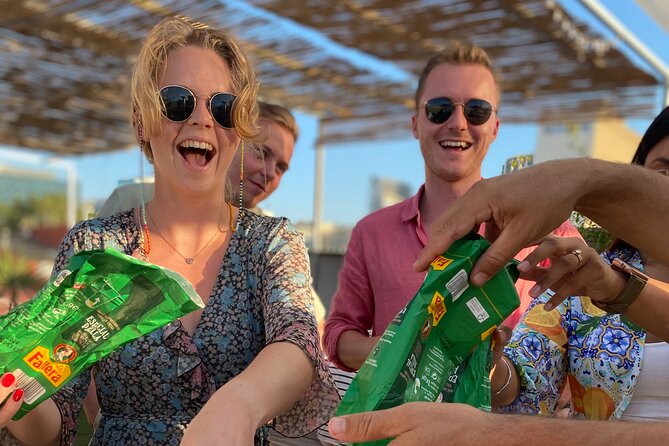
Once the paella is ready, you sit down together and eat the result. The planned menu includes tomato salad, pan con tomate, seafood paella, bread, olives, fresh fruit, and sangria or vermouth.
This shared table is what gives the class a satisfying finish. You can taste the sofrito and seafood with a clear sense of how the dish came together. The meal is not an extra stop after the class. It is the final lesson, and it gives the work a proper reward.
The seafood paella receives especially strong praise for its flavor, with prawns often singled out as sweet and fresh. Keep in mind that taste and seafood quality can vary with the day’s ingredients, but the recipe is built around the Costa Brava style rather than a generic rice dish.
A complimentary dessert has occasionally been included, but it is not part of the stated sample menu. Treat it as a pleasant extra, not something to count on when comparing the price.
The total duration is about two hours. That is enough time for a drink, the cooking lesson, and a complete meal, but it is not a long half-day food tour. I see this as a strength if your Barcelona schedule is full. You can fit it between major sightseeing plans without losing an entire afternoon.
How much value do you get for $90.11?
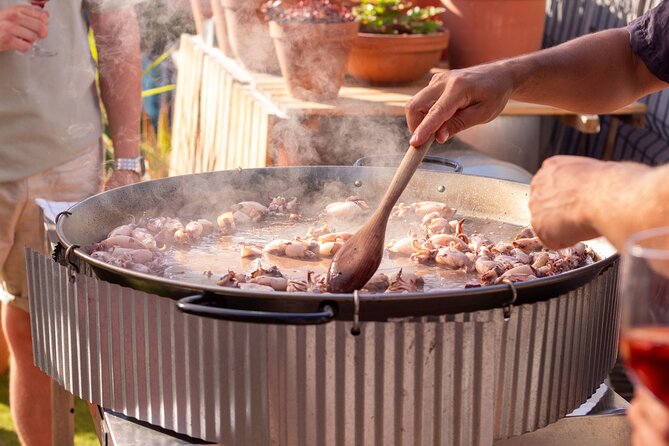
At $90.11 per person, this is not the cheapest way to eat paella in Barcelona. You are paying for more than the food. The price covers instruction, ingredients, drinks, a private setting, local context, and the chance to prepare the meal yourself.
The value improves if you would otherwise book both a cooking class and a sit-down lunch. Here, the class and meal are combined. You also receive personal attention that is harder to get in a large public workshop.
The private format is important. Only your own group participates, so you are not placed with a room full of unrelated participants. Group size can affect the feel of the activity, but the supplied information does not set a fixed maximum. Some experiences have involved very small groups, including a couple and a group of six.
For families, the price can make sense because children can participate and the host is used to involving younger cooks. For a couple focused only on eating excellent paella, a restaurant may offer better value. For a group seeking a shared activity, the class is easier to justify.
It also works well as a team-building event. The cooking requires cooperation, and everyone can contribute before sitting down to eat. That is more engaging than another restaurant meal, especially for a small work group.
Who will enjoy this class most?
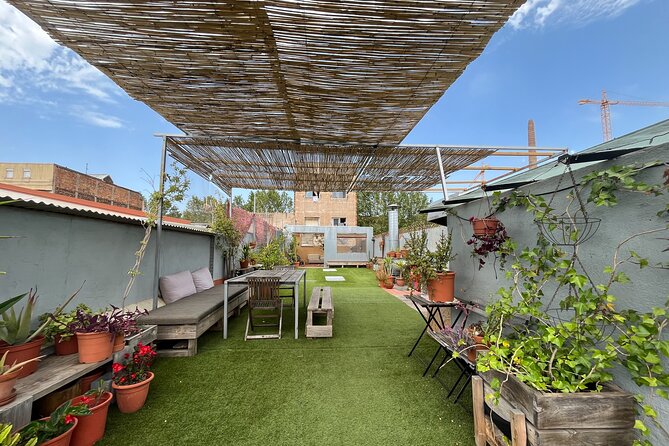
I would recommend it most strongly to people who want to understand a dish, not just photograph it. You do not need prior cooking experience. The lesson is designed to guide beginners through each stage, and the relaxed tone helps if you are nervous around a large paella pan.
It suits:
- Couples looking for a shared food activity
- Families with children who enjoy practical experiences
- Small groups celebrating or spending time together
- Work teams seeking a social cooking activity
- Visitors who want a local residential setting
- Home cooks who want tips they can use after returning home
The class may be less suitable if you need a guaranteed rooftop view, dislike seafood, or prefer a fast demonstration with no participation. It is also not the best pick if you want a long culinary workshop with several separate dishes. The focus is one paella meal, supported by simple Catalan starters and a drink.
English is the offered language. The host has been praised for speaking clearly and explaining the dish in an easy way, which should help you follow the cooking even if culinary terms are new to you.
Booking advice, weather, and menu changes
The experience has a 4.9 rating from 48 reviews, with 98 percent of customers recommending it. The most consistent praise centers on Benjamin’s friendly teaching style, the hands-on cooking, the relaxed rooftop atmosphere, and the quality of the paella.
Book well ahead if your Barcelona dates are fixed. The activity is booked about 36 days in advance on average, which suggests that last-minute availability may be limited.
You can cancel for a full refund if you do so at least 24 hours before the start time. Changes or cancellations inside that window are not accepted for a refund. If bad weather or an unmet minimum causes the activity to be canceled, you are offered another date, another experience, or a full refund.
Tell the provider about vegetarian needs or allergies before arriving. The menu can be adapted, but the seafood recipe is the standard offering, so do not wait until the pan is already cooking.
Should you book the Barcelona paella class?
Book it if you want a personal, hands-on food experience with a proper meal at the end. The best parts are the Costa Brava connection, the chance to prepare every key stage of the paella, and the easy social rhythm of sangria, cooking, conversation, and lunch.
I would skip it if the rooftop itself is non-negotiable, since weather can change the setting. I would also compare the cost with a restaurant meal if you care more about eating than learning.
For most visitors who enjoy food, local stories, and a relaxed group activity, this is a strong use of two hours in Barcelona. Come hungry, allow time to reach Sant Martí, ask about dietary needs in advance, and think of the rooftop as a bonus rather than a guarantee.
FAQ
How long does the Barcelona paella class last?
The experience lasts approximately two hours, including the drink preparation, cooking lesson, and sit-down meal.
Where does the cooking class begin and end?
It begins and ends at Passatge de Coll, 19, Sant Martí, 08019 Barcelona, Spain.
Is the paella class private?
Yes. Only your own group participates in the activity.
What food is included?
The sample menu includes tomato salad, pan con tomate, seafood paella with prawns, cuttlefish or squid and mussels, bread, olives, and fresh fruit.
Can the menu be changed for dietary needs?
Yes. The menu can be adapted for vegetarians and different allergies. You should ask about your needs before the class.
What happens if the weather is bad?
The experience requires good weather. If it is canceled because of poor weather, you can choose another date or receive a full refund.
Just added around Barcelona
- Rooftop Paella Seafood Cooking Class Experience in Barcelona★ 5.0 · 59 reviews
- Private Authentic Paella Cooking Class in Barcelona with Josh★ 5.0 · 3 reviews
- Private Barcelona Market Tour & Paella Cooking Class with Josh★ 5.0 · 4 reviews
- Premium Paella & Tapas Feast: Unlimited Wine & Rambla Views★ 5.0 · 13 reviews
- Premium Cooking Class in Designer Loft: Paella & Spanish Tapas★ 5.0 · 18 reviews
- Barcelona Tapas Cooking & Cocktail Class with Veronique & Mattias★ 5.0 · 3 reviews
- Paella Cooking Experience & Winery Tour from Barcelona★ 4.5 · 19 reviews
- Catalan Paella Cooking Class with Small Group in Barcelona★ 5.0 · 54 reviews
Spanish & Paella Cooking Classes, compared.
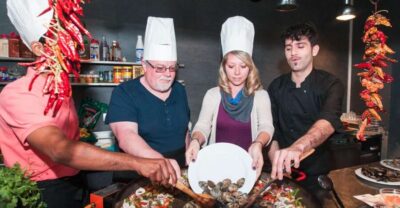
Paella Cooking Experience & Boqueria Market Tour
Read our review →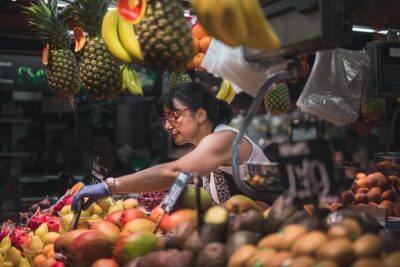
Barcelona Paella Cooking Class with Market Visit, Tapas & Sangria
Read our review →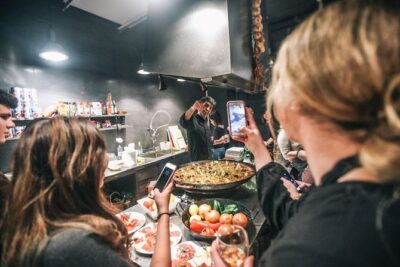
Barcelona Interactive Spanish Cooking Experience
Read our review →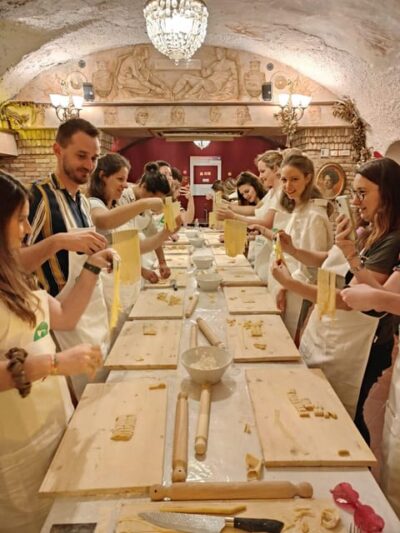
Pasta & Tiramisu Cooking Class near the Spanish Steps
Read our review →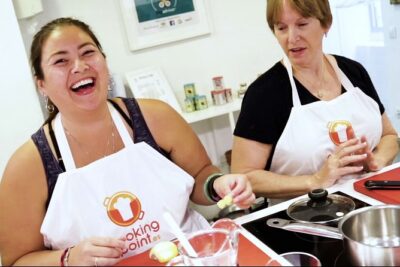
Spanish Cooking Class Paella Tapas and Sangria in Madrid
Read our review →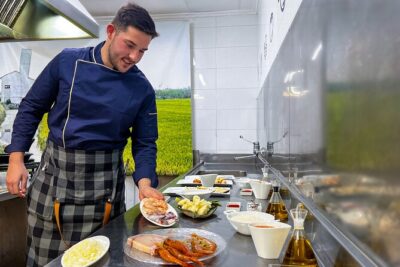
Paella Cooking Class, Wine Tasting & Central Market in Valencia
Read our review →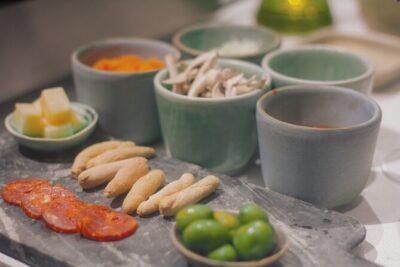
Paella Cooking Class in Madrid with Bottomless Wine Pairing
Read our review →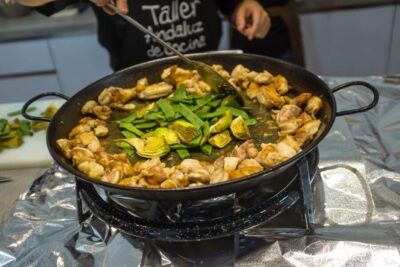
Lists this class appears in