
REVIEW · GJIROKASTER DISTRICT, ALBANIA
Gjirokastër: Traditional Albanian Vegetarian Cooking Class
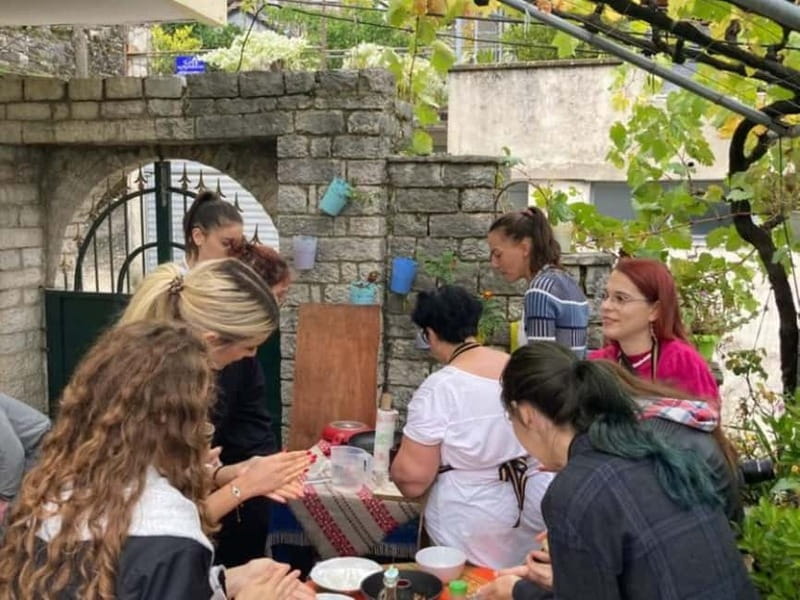
Cooking connects Gjirokastër quickly. This small-group class leads you from Çerçiz Topulli Square into Pazar i Vjetër, where Marjeta and her husband host a hands-on Albanian meal. I like the local setting and the chance to make qifqi, a rice dish closely tied to Gjirokastër. I also like that the class ends around a shared table with wine, raki, or a soft drink, plus recipes to take home.
The main thing to consider is the limited menu variety. The three dishes center on yogurt, rice, eggs, flour, and sugar, with much of the cooking involving frying. You may spend more time watching than cooking because there is one cooking station, and at $76 per person, that matters.
Key points at a glance
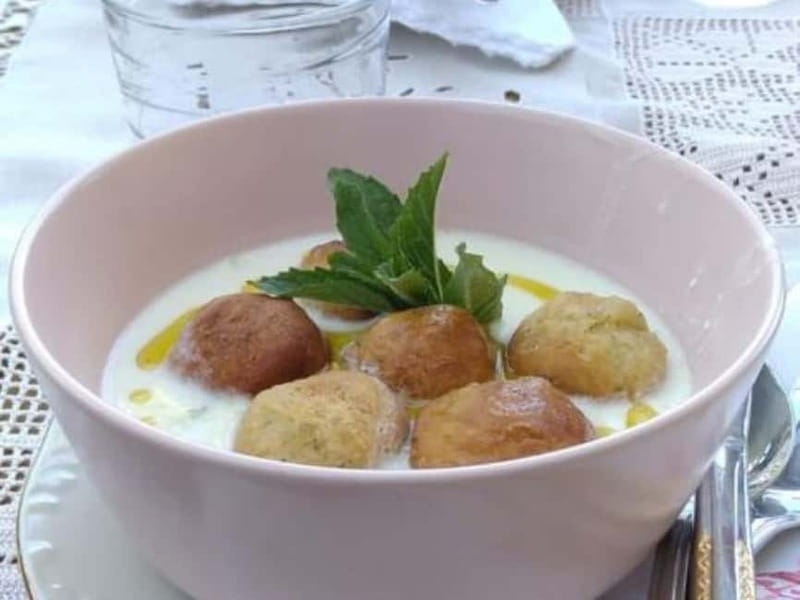
- Qifqi is the star dish: This rice-based specialty is closely associated with Gjirokastër and is not presented as a standard Albanian dish found everywhere.
- The class takes place in Pazar i Vjetër: You walk from Çerçiz Topulli Square to one of the town’s oldest neighborhoods.
- Marjeta leads the cooking: An English-speaking guide or interpreter helps explain the steps, ingredients, and local food customs.
- The meal is vegetarian: You prepare qofte bobollaqe, qifqi, and hasude, with a seasonal salad already prepared.
- Drinks and recipes are included: You receive a full meal, homemade wine, raki, other beverages, and written recipes.
- The group is capped at 10: That keeps the setting fairly personal, though the single workstation can still limit hands-on time.
Walking from Çerçiz Topulli Square to Pazar i Vjetër
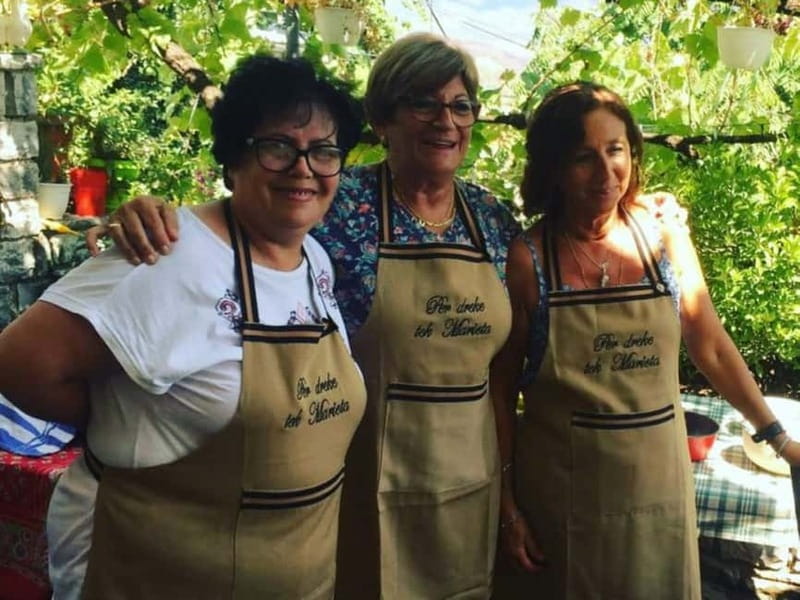
The experience begins at Çerçiz Topulli Square, a useful meeting point in central Gjirokastër. Your guide waits in the square, then walks with you to Pazar i Vjetër, the old bazaar neighborhood.
That short walk matters. You do not simply arrive at a rented cooking studio with polished counters and a commercial feel. You move into one of the oldest parts of town and enter the home of Marjeta and her husband. The setting is one of the strongest parts of the experience, especially if you want food connected to daily Albanian life rather than a restaurant demonstration.
The home has been described as welcoming and flower-filled, with a pleasant atmosphere for sitting and eating. It is worth keeping your expectations practical, though. This is a home cooking class, not a professional culinary school. The kitchen arrangement has one main cooking station, so not everyone will be chopping or stirring at the same time.
If you arrive early, use the time to get your bearings around the square and old bazaar. The meeting point is simple, but you still need to watch for your guide rather than heading directly to a private home on your own.
More Vegetarian Cooking Classes in Albania:
- Oaxacan Vegetarian Cooking Class
★ 5.0 · 235 reviews - Marrakech: Moroccan Cooking Class for vegetarians and vegan
★ 4.9 · 156 reviews - Hoi An: Vegetarian Cooking Class w Local Family and transfer
★ 4.9 · 145 reviews
A friendly start with raki or a soft drink
The class begins with a drink. You can have raki, Albania’s strong local spirit, or choose a soft drink. The opening gives the group time to settle in before the cooking starts.
Raki is often part of social meals in Albania, but you do not need to drink alcohol to take part. The soft drink option makes the class easier for families, non-drinkers, and anyone who wants to stay sharp while following the recipes.
English is available through the guide or interpreter, and the experience also operates in Albanian. The quality of interpretation can shape your enjoyment because the cooking itself is fairly straightforward, while the cultural explanation adds much of the value. Klarisa has been praised for her clear, patient explanations and friendly conversation, while Besjan was also singled out for making communication easy. Another English-speaking interpreter helped answer extra questions and took photographs during the class.
Do not expect a formal lecture. The tone is closer to being welcomed into a local kitchen, with the guide explaining what Marjeta is doing and translating questions as they come up.
Making qofte bobollaqe, qifqi, and hasude
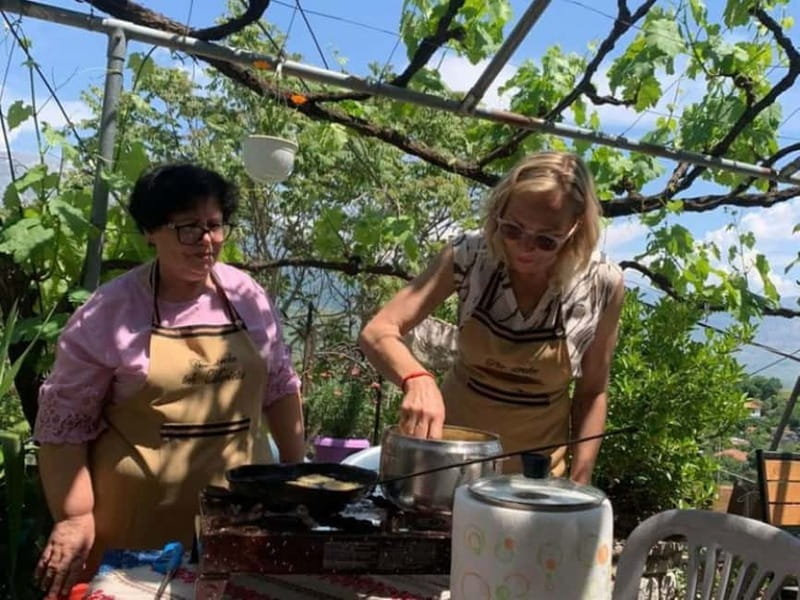
The class teaches three vegetarian dishes. A seasonal salad is prepared in advance and served alongside them.
Qofte bobollaqe
The first dish is called qofte bobollaqe and is described as consisting mainly of yogurt. Despite the word qofte, which can suggest a meatball-style dish in Albanian food, this menu keeps the preparation vegetarian.
This is a useful reminder that familiar food names do not always tell you exactly what will arrive on the plate. Marjeta guides the process, while the interpreter explains the ingredients and method. Since only one station is available, you might help for part of the preparation and watch for the rest.
A few more cooking classes around Albania worth a look
- Tirana: Traditional Cooking Class with Wine & Raki Tasting
★ 5.0 · 284 reviews - Cooking Classes and Traditional food tasting in Tirana
★ 5.0 · 282 reviews - Traditional Albanian Cooking Class in Tirana & Raki Tasting
★ 5.0 · 266 reviews - Berat Cooking Class
★ 4.9 · 131 reviews
Qifqi
Qifqi is the most distinctive dish on the menu. It is made mainly with rice and is strongly associated with Gjirokastër. The dish gives the class a clear local focus, rather than presenting a generic collection of Balkan recipes.
For me, this is the best reason to book the experience. You are not only eating something from the region. You are learning how it is made and receiving a recipe so you can prepare it at home.
Qifqi also shows the limits of the menu. Rice is a major part of the meal, and the cooking style includes frying. If you hoped for a broad tour of Albanian vegetables, cheeses, herbs, and baked dishes, this class may feel narrow.
Hasude
Dessert is hasude, a sweet dish based mainly on flour and sugar. It gives the meal a simple finish and completes the three-part menu.
Hasude will appeal to anyone who enjoys traditional home desserts rather than elaborate restaurant pastries. On the other hand, the ingredients are basic, and the dessert does not add much variety if you are looking for fresh fruit or a more varied sweet course.
What you actually do in the kitchen
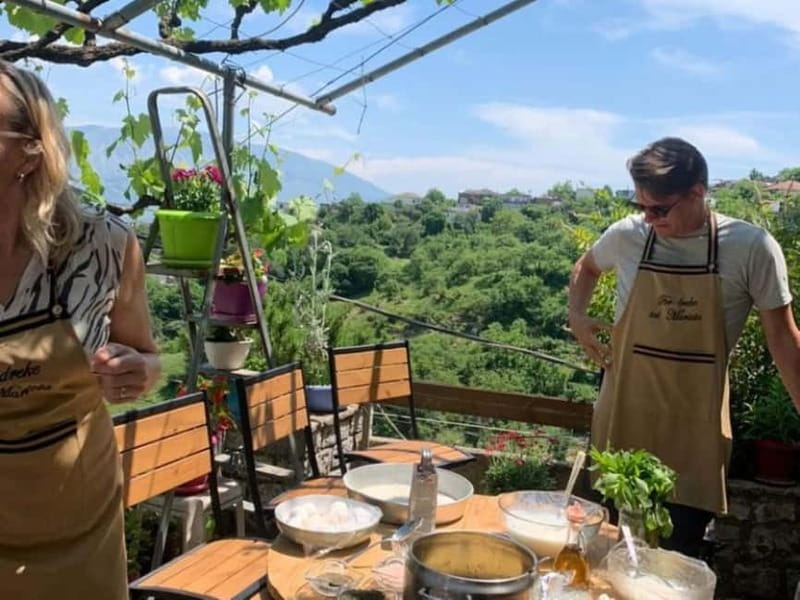
The class is described as hands-on, but you should read that in a realistic way. You will take part under Marjeta’s direction, yet the group works around one cooking station. Some people may prepare ingredients or assist directly, while others watch and ask questions.
That arrangement has two sides. A single station lets everyone see the cooking clearly, and the guide can keep the process organized. It also means that a group of six to ten people cannot all cook at once. Several class participants have specifically found themselves watching while another person worked.
If active participation is your top priority, ask at the start how the group will divide the tasks. You may have a better experience if you treat the class as a mix of demonstration, conversation, and selected hands-on work rather than expecting every person to prepare every dish from start to finish.
Marjeta is described as a confident and direct teacher. Some people appreciated her skill and found the class interesting and easy to follow. Others found her manner quite firm and less warm, especially when communicating through the interpreter. That difference is worth noting. This is a traditional home kitchen with an established way of doing things, not a relaxed class where everyone freely improvises.
Sitting down to eat the food you prepared
After the cooking, you sit with the group and eat the meal. The seasonal salad, prepared before your arrival, brings some fresh contrast to the cooked dishes.
The shared meal is one of the class’s best features. You are not rushed out after the final recipe. You can sit, talk, and enjoy the food with the group. The atmosphere has been described as similar to cooking with local friends, and that social time helps explain why many people rate the experience highly.
A complimentary drink accompanies the meal. You can choose wine, raki, or a soft drink, and homemade wine and raki are included among the available beverages. The meal is filling, but the food selection is focused rather than broad.
The biggest food criticism is that the dishes rely heavily on rice, flour, eggs, sugar, and frying. If you want to cook a wide range of vegetables, you may find the menu repetitive. If you want to learn a few traditional Gjirokastër preparations in a local home, the narrow menu may feel more purposeful.
What the $76 price means
At $76 per person, this is not a bargain cooking lesson. The price includes all ingredients, kitchen facilities, aprons, the full meal, several drinks, and detailed recipes for the dishes and additional recipes.
The real question is how much you value the setting and personal contact. You are paying for a small-group visit to a local home, an English-supported introduction to regional food, the meal, and the social time around the table. The group limit of 10 helps keep the experience manageable.
Still, the price can feel high if you measure value by the number of ingredients or the amount of time you personally spend cooking. The menu is made from inexpensive staples, and the single workstation reduces individual kitchen time. Some people have found the cost reasonable for the warm setting and local contact, while others felt it was not justified by the simple dishes.
I would book at this price if the home setting and Gjirokastër-specific qifqi matter to you. I would skip it if you mainly want technical cooking instruction, a large menu, or a generous selection of fresh vegetables.
Timing, group size, and practical details
The class lasts 150 minutes, or two and a half hours. That gives you enough time for the walk, welcome drink, cooking, meal, conversation, and recipe handover without turning the activity into a full-day commitment.
The maximum group size is 10. Smaller groups should feel more personal, while a full group may make the single cooking station more noticeable. If you prefer close instruction, book with the understanding that the group size can affect how much you handle directly.
The meeting point is Çerçiz Topulli Square, and the guide waits there. You should be comfortable walking from the square into Pazar i Vjetër, then spending time in a home kitchen. The activity is conducted in Albanian and English.
Personal expenses are not included. The cooking ingredients, apron, facilities, meal, drinks, and recipes are included, so you should not need to budget for ordinary parts of the class itself.
Free cancellation is available up to 24 hours before the activity for a full refund. You can also reserve now and pay later, which is useful if your route through Albania is still changing.
Who will enjoy this cooking class most
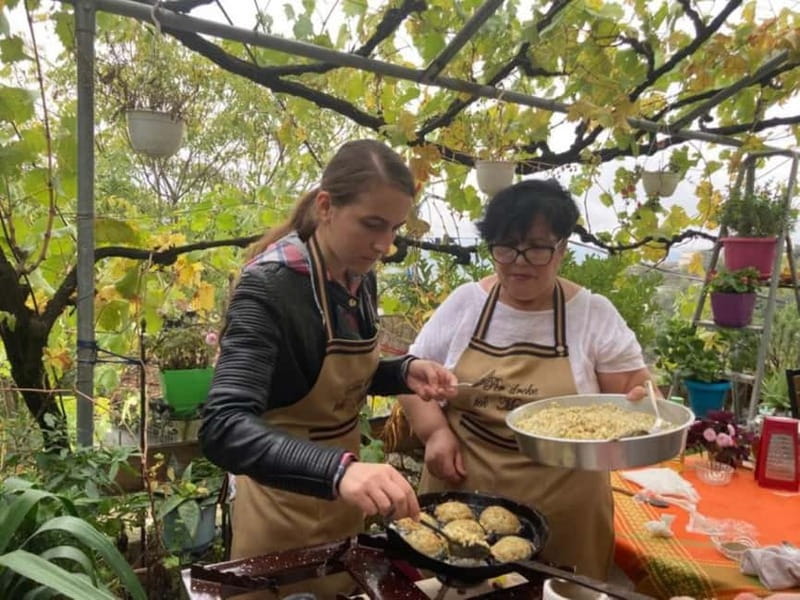
This class suits you if you like food with a clear local connection. Qifqi is the strongest draw, and the home setting gives you a closer look at how a traditional meal is prepared than you would get by ordering the dish in a restaurant.
It also works well for couples, friends, and small groups who enjoy conversation as much as cooking. The shared meal, drinks, and relaxed time after the food is ready are central to the experience.
You may enjoy it less if you need every participant to stay busy. The single cooking station can leave people watching, and Marjeta’s direct style may not suit anyone expecting a playful, informal workshop.
Vegetarians will appreciate the meat-free menu, but the class should not be confused with a vegetable-focused course. The dishes are traditional and vegetarian, yet they lean toward rice, dairy, eggs, flour, sugar, and fried preparations.
The experience is also a good fit for anyone who wants a short activity in Gjirokastër. At two and a half hours, it leaves most of the day open for exploring the old town, castle, and bazaar area.
My booking advice for Gjirokastër
I would book this class for the setting, the local host, the interpreter, and the chance to learn qifqi in Gjirokastër itself. The homemade drinks, full meal, and take-home recipes add real value, especially if you enjoy food as a way to meet people.
I would not book it expecting a broad culinary course. The ingredients are simple, the cooking is largely centered on one station, and the three dishes do not offer much variety. At $76, you need to care about the home visit and cultural exchange, not just the food cost.
Before paying, decide what matters most to you. If you want an intimate local meal with some cooking and a distinctly Gjirokastër dish, this is a good choice. If you want constant hands-on work and a menu packed with vegetables, spend your money elsewhere.
FAQ
Where does the cooking class meet?
The meeting point is Çerçiz Topulli Square in Gjirokastër. Your guide waits in the square and walks with you to Pazar i Vjetër.
How long does the experience last?
The cooking class lasts 150 minutes, or two and a half hours.
What dishes do you prepare?
The vegetarian menu includes qofte bobollaqe, qifqi, and hasude. A seasonal salad is prepared in advance and served with the meal.
Is qifqi a local Gjirokastër dish?
Yes. Qifqi is a rice-based dish identified with Gjirokastër and is presented as a specialty found only there.
Are drinks included?
Yes. The experience includes homemade wine, raki, and other beverages. You can also choose a soft drink.
What languages are available?
The cooking class is available in Albanian and English, with an English-speaking guide or interpreter supporting the activity.
Can I cancel the booking?
You can cancel up to 24 hours in advance for a full refund. Reserve now and pay later is also available.
Just added around Albania
- Gourmet Lunch Farm Tour with Cooking Class★ 4.5 · 8 reviews
- Family Mandarin Farming Tour with Traditional Cooking Lunch★ 4.5 · 9 reviews
- Tirana Cooking Class – Traditional Albanian Recipes★ 5.0 · 33 reviews
- The secrets of Albanian cuisine: cooking lesson in Tirana★ 5.0 · 21 reviews
- Cook Like a Local – Authentic Cooking Class in Gjirokastra★ 3.2 · 4 reviews
- Berat: Traditional Cooking Class with Wine Tasting★ 5.0 · 5 reviews
- Berat: Farm-to-Table Cooking Class with Local Family★ 5.0 · 6 reviews
- Berat: Discover Albania with Cooking Class w/ Drink Tastings★ 5.0 · 19 reviews
Vegan & Vegetarian Cooking Classes, compared.
Moroccan Cooking Class for vegetarians and vegan
Read our review →
Vegetarian Cooking Class w Local Family and transfer
Read our review →
Jaipur Market Tour & Vegetarian Rajasthani Home Cooking Class
Read our review →
Ramen & Dumpling Cooking in Tokyo with Chef/Vegan possible
Read our review →Private Cooking Class – Personalized menu with glutenfree & vegan
Read our review →
Hoi An/Da Nang: Vegetarian Cooking Class & Basket Boat Ride
Read our review →Lists this class appears in