REVIEW · SEVILLE, SPAIN
Spanish Cooking Class & Triana Market Tour in Sevilla
Come hungry, leave with recipes. This Seville experience pairs a Triana Market tour with a hands-on Spanish cooking class, giving you a useful look at local ingredients before you cook and eat them. I like the market visit because it connects the dishes to real stalls, produce, cheeses, meats, and farming practices. I also like the relaxed, social cooking format, where you prepare lunch with a chef rather than simply watch a demonstration.
The main drawback is finding the right starting point. The company uses four kitchens in the Triana area, but every group meets inside the market at stalls 75 and 77. Give yourself extra time to find that spot, especially since one person needed a little help getting oriented. The class can also run slightly beyond the advertised three and a half hours, which is pleasant if you have time but worth noting if your afternoon is tightly planned.
Quick takeaways
- Start with the market: Your guide introduces ingredients, stalls, local food customs, and farming practices before the cooking begins.
- Cook a full Spanish lunch: You help prepare salmorejo, spinach with chickpeas, chicken and vegetable paella, and a light lemon dessert with cava.
- A genuinely hands-on class: You chop, prepare, and cook rather than simply watch the chef work.
- Drinks are part of the experience: Homemade sangria is served during preparation, with two drinks included for lunch.
- Good for mixed groups: Solo visitors, couples, families, and groups of friends can all take part, with a maximum of 16 people.
- Useful take-home value: Written recipes and cooking tips make it possible to repeat the meal at home.
Starting at Triana Market at 10:30
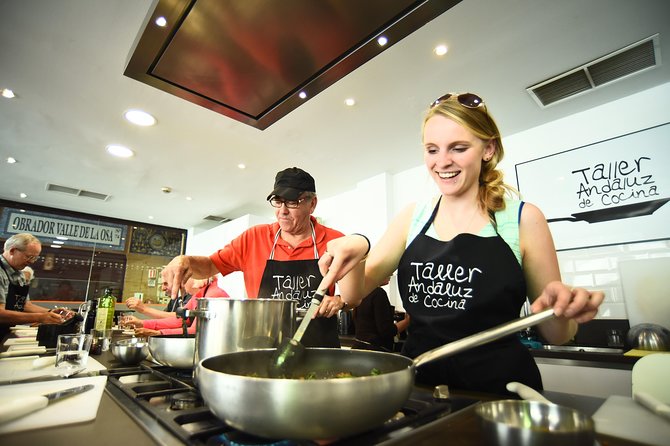
The morning begins at Taller Andaluz de Cocina inside Mercado de Abastos de Triana, at Plaza del Altozano, local stalls 75 and 77. The meeting point is always the same, even when your cooking class takes place in one of the company’s other kitchens on Calle Castilla or at Plaza de Chapina.
That detail matters. The market has several entrances and the cooking company operates in several nearby spaces, so I would not arrive at 10:29 and hope for the best. Look for stalls 75 and 77 inside the food market, and allow a few extra minutes to get your bearings.
The activity is offered in English and uses a mobile ticket. It is near public transportation, and no hotel pickup or private transport is provided. You make your own way to the market and return there at the end.
The group size is capped at 16 people. That is large enough to create a friendly, international table but small enough for the chef to give people jobs. The class also works well for solo visitors because the cooking naturally gives you something to do and talk about with the people around you.
More Cooking Classes with a Market Tour in Spain
- Barcelona: Paella Cooking Experience & Boqueria Market Tour
★ 4.8 · 3,661 reviews - Barcelona Paella Cooking Class with Market Visit, Tapas & Sangria
★ 5.0 · 2,531 reviews - Paella Cooking Class, Wine Tasting & Central Market in Valencia
★ 5.0 · 1,150 reviews
A market walk before the knives come out
The market tour is more than a quick stroll past food counters. Your guide stops at selected stalls and explains the ingredients that will appear in the meal, along with details about where food is grown and how certain products are used in Andalusian cooking.
You might hear about the local role of tomatoes, chickpeas, spinach, spices, meats, cheeses, and other produce. The exact guide varies, with past classes led by people including Anna, Sabrina, Kai, and Leo. The style also varies slightly, but the central purpose remains the same: to help you recognize the food before you start preparing it.
I like this order. If you went straight into the kitchen, paella and salmorejo could feel like disconnected recipes. After the market walk, the dishes have a clearer setting. You have seen the kind of produce sold in Seville and can ask why particular ingredients belong in an Andalusian meal.
The market itself also gives you a chance to see daily food shopping in a working Seville setting. This is not a grand sightseeing stop with a long list of monuments. It is a practical food visit, and that makes it a good fit if you want something connected to ordinary local life.
The one limitation is that the market portion is relatively short compared with a dedicated food tour. You are there to learn enough to cook lunch, not to visit every stall or build a full guide to Sevillian food shopping. Think of it as the introduction to the class rather than a separate tour.
Cooking salmorejo and spinach with chickpeas
After the market visit, you move into the cooking kitchen and work with the chef. All ingredients, aprons, cutting boards, knives, and other utensils are supplied, so you only need to arrive ready to participate.
The first dishes introduce two important parts of southern Spanish cooking. Salmorejo is a cold tomato cream associated with Córdoba, while spinach with chickpeas is a classic Sevillian tapa. The menu gives you a useful contrast: one dish is smooth, cool, and tomato-based, while the other is warm, earthy, and built around legumes and greens.
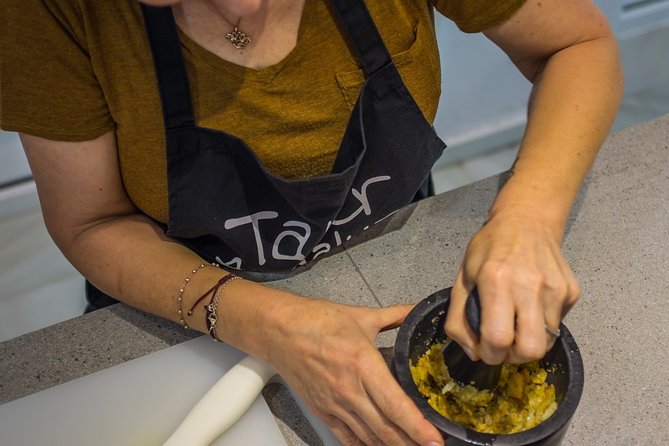
The chef demonstrates the process, then assigns practical work to the group. You may be chopping, mixing, seasoning, or helping with preparation while the chef keeps the meal moving. The class is not designed for professional cooks. Several sessions have worked well for people with little cooking experience, and the instruction is intended to keep the atmosphere informal.
This is also where the class earns much of its value. You are not just handed a plate at the end. You learn how the dish comes together, what techniques matter, and how Spanish home-style food can use simple ingredients well.
The class can adapt to dietary needs, including vegan, gluten-free, no seafood, and no pork requests. You need to tell the company in advance. That promise is useful, but it does not mean you should wait until the kitchen door to mention a restriction.
Paella is the main event
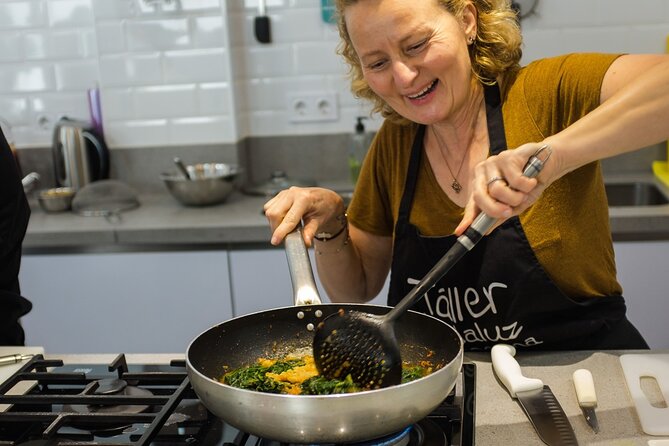
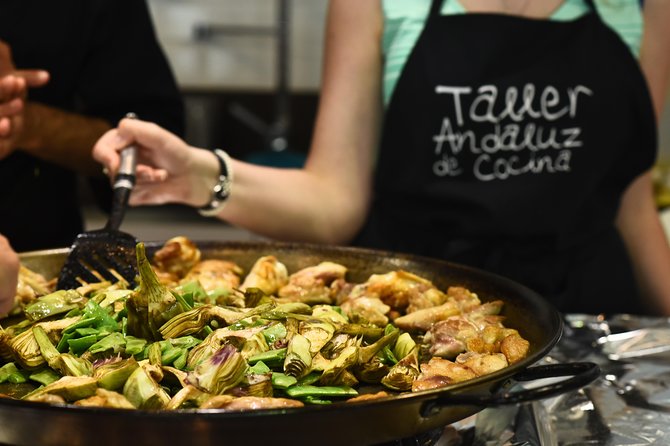
The paella is likely to receive the most attention, and for good reason. The planned version uses chicken and vegetables, and the class teaches the traditional preparation rather than treating the dish as a quick rice recipe.
The exact cooking work can include handling ingredients that require a little more confidence. One family learned how to break down a whole chicken and prepare an artichoke, while other groups made chicken or vegetarian versions. If you want to take an active role, say so. There is usually plenty to do, but the level of participation can depend on the size and makeup of your group.
Chef-led instruction is especially helpful here. Paella has several stages, and timing affects the finished rice. You get to see how the chef organizes the work and explains the cooking choices. The class is less about memorizing a rigid formula than understanding the method well enough to try it again at home.
The instructors vary, but names mentioned across the sessions include Pedro, Dom, Carlo, David, Diana, and Carlos. They are described as friendly, entertaining, and willing to explain both technique and food traditions. Pedro’s dry humor and Carlo’s easy teaching style were singled out by people who enjoyed the relaxed tone.
Do not expect a private lesson. You are working in a shared kitchen with other participants, so some tasks are done in pairs or small groups. That is part of the appeal for many people, but it means you may not personally handle every step of every dish.
More Paella and Spanish Classes in Spain:
- Barcelona Interactive Spanish Cooking Experience
★ 4.5 · 2,155 reviews - Spanish Cooking Class Paella Tapas and Sangria in Madrid
★ 5.0 · 1,340 reviews - Paella Cooking Class in Madrid with Bottomless Wine Pairing
★ 5.0 · 985 reviews - Seville: Spanish Cooking Class with Dinner
★ 4.9 · 900 reviews
Sangria, lunch, and a useful finish
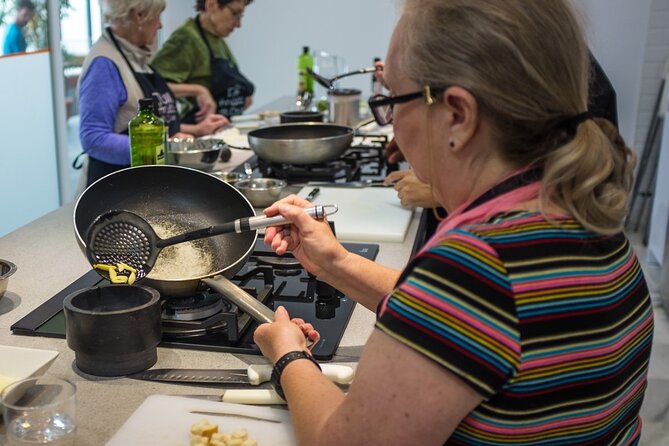
Homemade sangria is served while you prepare the food, which helps turn the lesson into a social morning rather than a formal school session. At the meal, two drinks per person are included. You can choose from Spanish wine, local beer, or soft drinks, and the meal includes what you have cooked.
The menu is described as a three-course Spanish lunch, though it includes a starter, the spinach and chickpea dish, paella, and dessert. The sweet finish is a light lemon sorbet with cava. It is a sensible ending after a substantial rice dish, and the cava adds a small celebratory touch without making the meal feel heavy.
The food quality is one of the strongest reasons to book. The dishes are made with the ingredients introduced at the market, and you eat them soon after preparing them. That short path from stall to cutting board to table gives lunch a freshness and purpose you do not get from a standard restaurant meal.
The drink service adds value, too. At $90.70 per person, this is not the cheapest way to eat lunch in Seville. But the price covers the market introduction, instruction, ingredients, equipment, a full meal, sangria, two lunch drinks, and written recipes. If you would otherwise book a market tour and a cooking class separately, the combined format is easier to justify.
It is also worth remembering that you are paying for an activity, not only for food. The social setting, chef instruction, and chance to prepare the meal are the main parts of the purchase. If you only want a good paella, a restaurant will cost less and require less time.
What the class feels like in practice
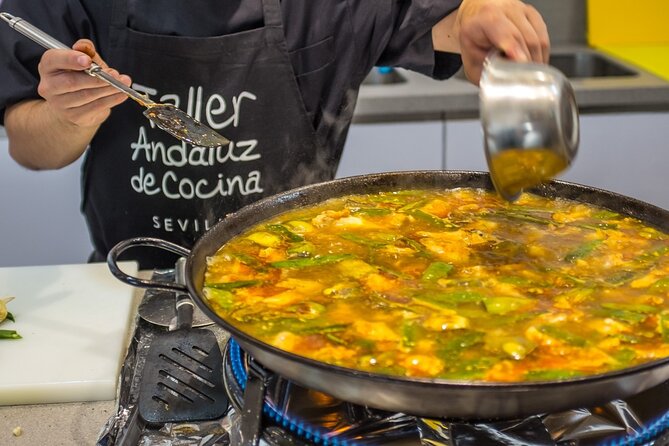
The mood is informal. You do not need to be an experienced cook, and the chef guides the group through each stage. That makes the class suitable for couples who want a shared activity, families looking for something beyond monuments, and solo visitors who want an easy way to meet people.
Families can do well here. One session kept children aged three and six engaged throughout, although young children will naturally need help and supervision around knives, hot pans, and cooking equipment. The company’s willingness to accommodate dietary restrictions also makes the class easier to plan for mixed groups.
The maximum of 16 people is a practical compromise. It allows a lively table and a mix of nationalities without becoming a huge demonstration. If you prefer quiet, private instruction, this is not the right format. If you enjoy cooking beside new people, it should suit you.
The class is scheduled for about three and a half hours, beginning at 10:30 a.m. Some groups have finished around 2:30 p.m., slightly later than expected. That extra time can be welcome, especially if you want a relaxed meal or a short return to the market for purchases. Still, leave your afternoon flexible.
You receive written recipes and tips afterward. In some cases, the recipes have been sent by email. That follow-up is one of the better features because it turns a pleasant morning into something you can use later. Take notes during the class if you want to remember small details about seasoning or timing, since the printed recipes may not capture every explanation.
Who should book this experience?
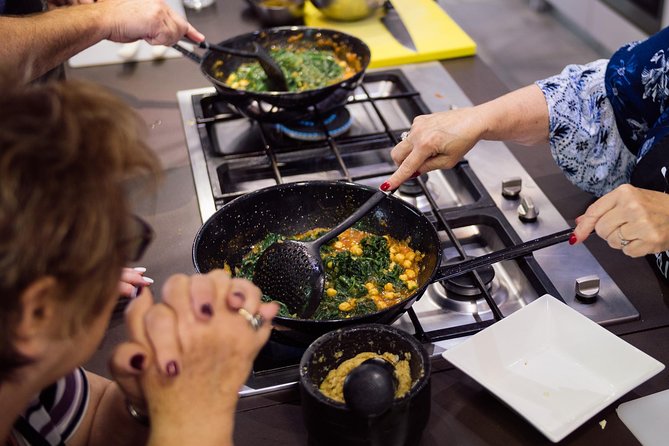
I would choose this class if you want your Seville food experience to include participation. It suits you especially well if:
- You want to learn paella rather than simply order it.
- You enjoy markets and cooking more than passive sightseeing.
- You are traveling alone and would like a social morning.
- You want a family activity with a meal built in.
- You need a class that can adjust for dietary restrictions.
- You like taking recipes home and cooking again.
I would think twice if your schedule is packed, if you dislike group activities, or if you want a focused market tour with extensive shopping time. The class takes most of the morning and can run into the early afternoon. It is also not a private experience, and the meeting point may take some effort to find.
Book ahead if your dates are fixed. The class is often reserved around 40 days before the start date, and the maximum group size is 16. Free cancellation is available until 24 hours before the start time, but changes or cancellations inside that period are not accepted. If the minimum number of participants is not reached, the company may offer another date or a full refund.
My verdict on this Triana cooking class
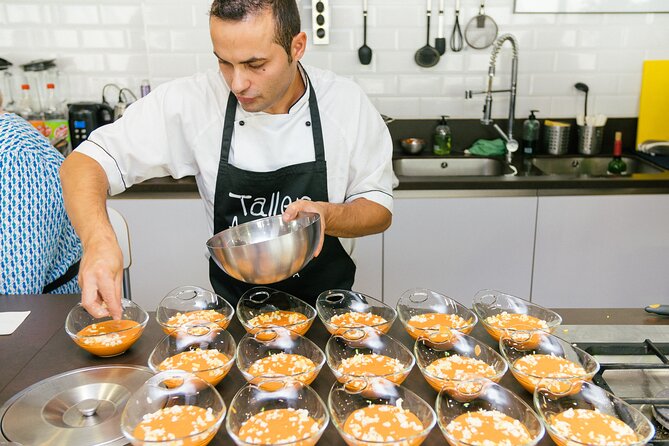
I would recommend it to most food-focused visitors spending several days in Seville. The market walk gives the class a local setting, the chef-led preparation keeps you active, and the meal is substantial enough to replace lunch. The paella lesson is the main draw, but the salmorejo and spinach with chickpeas make the meal feel more connected to Andalusian cooking.
The best reason to book is the combination of learning and eating. You see the ingredients, prepare the dishes, sit down with the group, and leave with recipes. At $90.70, the price is fair for that package, though not a bargain if you only measure it against the cost of lunch.
Choose it if you want a friendly, practical morning and do not mind sharing the kitchen. Skip it if you prefer a private class or need a tightly timed itinerary. For a first taste of Seville through its food, this is a strong and useful choice.
FAQ
Where does the Spanish cooking class begin?
The meeting point is inside Mercado de Abastos de Triana at Plaza del Altozano, local stalls 75 and 77, in Seville.
What time does the experience start?
The class begins at 10:30 a.m.
How long does the experience last?
It lasts approximately three hours and 30 minutes. Some sessions may finish a little later.
Is the experience offered in English?
Yes. The experience is offered in English.
What food will I prepare?
The sample menu includes salmorejo, spinach with chickpeas, chicken and vegetable paella, and a light lemon sorbet with cava.
Are drinks included?
Yes. Homemade sangria is served during preparation, and two drinks per person are included with lunch. Choices include Spanish wine, local beer, or soft drinks.
Are ingredients and cooking equipment provided?
Yes. Aprons, cutting boards, knives, kitchen utensils, ingredients, and materials are provided.
Can the menu accommodate dietary restrictions?
Yes. Vegan, gluten-free, no seafood, and no pork requests can be accommodated if you notify the company in advance.
How many people can join the class?
The experience has a maximum of 16 participants. It ends back at the meeting point, and private transportation is not included.
Just added around Spain
- Paella and Burnt Basque Cheesecake Cooking Class (in Bilbao)★ 5.0 · 46 reviews
- Basque Pintxos and Tapas Cooking Class in Bilbao★ 5.0 · 73 reviews
- Small-group Immersive Basque Cooking Class in Bilbao with Open Bar★ 5.0 · 65 reviews
- Pintxos and Tapas Cooking Class in Bilbao★ 5.0 · 38 reviews
- Rooftop Paella Seafood Cooking Class Experience in Barcelona★ 5.0 · 59 reviews
- Private Authentic Paella Cooking Class in Barcelona with Josh★ 5.0 · 3 reviews
- Private Barcelona Market Tour & Paella Cooking Class with Josh★ 5.0 · 4 reviews
- Premium Paella & Tapas Feast: Unlimited Wine & Rambla Views★ 5.0 · 13 reviews
Cooking Classes with a Market Tour, compared.
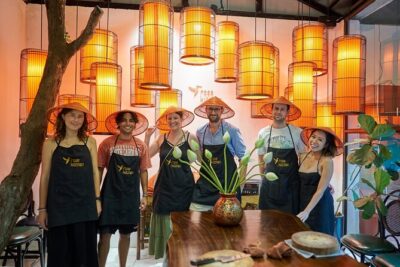
Hanoi Cooking Class: Culture, Local Market & Meaning CSR Impact
Read our review →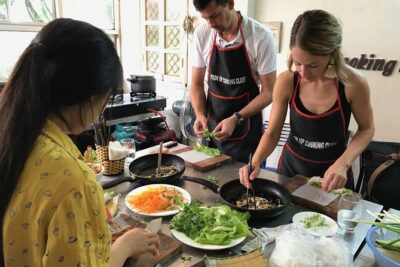
5 Traditional Dishes Hanoi Cooking Class with Market Trip
Read our review →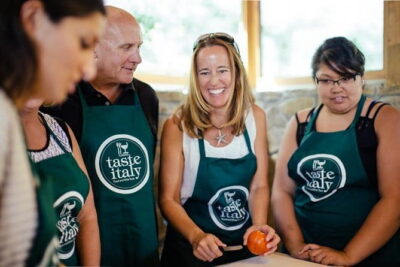
Cooking Class and Lunch at a Tuscan Farmhouse with Local Market Tour from Florence
Read our review →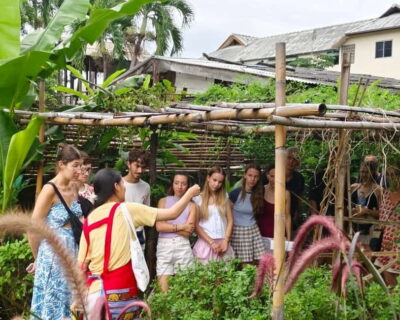
Cooking Class, Market & Thai Herbs Garden Tour
Read our review →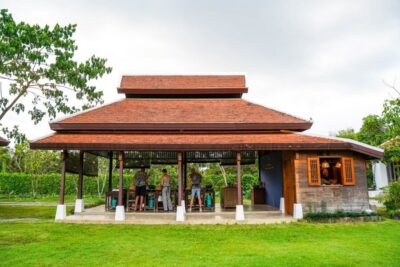
Authentic Cooking Class with Market & Farm Visit
Read our review →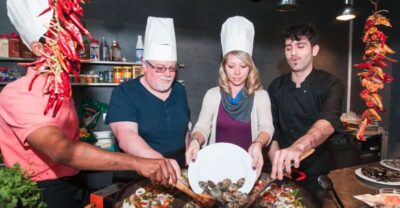
Paella Cooking Experience & Boqueria Market Tour
Read our review →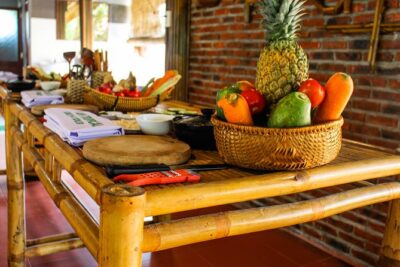
Cooking Class Hoi An:Local Market, Basket Boat, Fishing & Cooking
Read our review →