REVIEW · PARIS, FRANCE
Paris Desserts and Pastries Small Group Cooking Class with a Chef
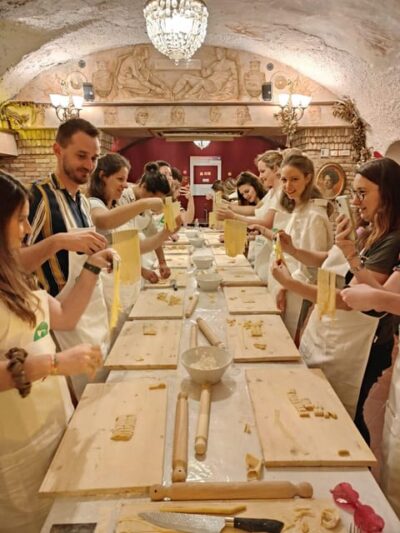
Paris tastes even better from an oven. This three-hour baking class brings you into a chef’s private apartment kitchen, where you help prepare two or three desserts instead of simply watching a pastry demonstration. I like the personal setting and the chance to sit down and eat what you make, along with the practical recipes and baking tips you can use at home.
I also like the range of possible desserts, from lemon madeleines and tarte tatin to molten chocolate cakes and mango soufflé. The main caution is group size: eight people can fit the stated limit, but a small apartment kitchen may feel crowded, and some participants may spend more time watching than mixing.
Key points at a glance
- A chef’s home kitchen: You meet in a centrally located Paris apartment and cook in a fully equipped private kitchen.
- Two or three desserts: The menu changes, with possible dishes including lemon tarts, madeleines, financiers, lava cakes, and soufflé.
- Three hours at 3 p.m.: The afternoon schedule leaves your morning free for sightseeing, though the end time can run slightly beyond three hours.
- Maximum of eight people: Smaller groups of two to four offer the most hands-on time, according to the practical experience described by past participants.
- Recipes to take home: You receive recipe copies, an apron, utensils, and ingredients during the class.
- Dietary needs can be discussed: Vegetarian, vegan, glucose-free, and lactose-intolerant requests can be catered to when noted during booking.
Arriving at a Parisian apartment kitchen
The class begins at 3 p.m. at a Paris meeting point, then takes place in a chef’s private apartment. The exact address is supplied with your booking, and the activity finishes back at the meeting point.
That apartment setting is a large part of the appeal. You are not sitting in a polished school kitchen with rows of identical workstations. You enter a real home, tie on an apron, and work with a local chef in a setting that feels closer to being invited into someone’s kitchen than attending a formal pastry course.
The chefs named in the feedback include Dominique Dury, Frédéric or Frederick, Marthe, and Martha. Their styles may differ, but the strongest praise goes to their friendliness, patience, and ability to explain techniques without making beginners feel foolish. Chef Dominique, in particular, is described as organized and welcoming, while Frederick is praised for being hands-on and easy to talk with.
You should allow extra time for the journey if the apartment is not close to the central sights. One participant found the location farther from central Paris than expected, requiring roughly 30 minutes by Metro. The experience is described as being near public transportation, but do not assume the meeting point is beside the Eiffel Tower, Louvre, or another major sight.
More Tiramisu and Dessert Classes in France
- Croissant Baking Class, Mastering the Art with a Pastry Chef
★ 5.0 · 116 reviews - Paris Cooking Class: Chocolate Éclairs and Cream Puffs
★ 5.0 · 87 reviews - Paris: 2.5-Hour French Pastry Cooking Class
★ 4.9 · 71 reviews
Measuring, mixing, and learning the basic techniques
Once everyone arrives, the chef introduces the recipes selected for that day. The menu is not fixed, so you cannot guarantee a particular dessert. The possible list includes lemon tarts, mini molten chocolate cakes, madeleines, mango soufflé, strawberry rhubarb tarts, financiers, and other French or international sweets.
That changing menu is useful if you enjoy surprise, but less convenient if you have your heart set on tarte tatin. If a particular pastry matters to you, ask before booking if the provider can confirm the planned recipes.
The work includes measuring, mixing, boiling, and baking. You learn how ingredients behave, how to combine textures, and how to avoid common mistakes. One particularly useful part of the teaching is the collection of small kitchen shortcuts and professional tricks that rarely appear in a basic cookbook.
The class is aimed at a broad range of ability. A complete beginner can follow the chef’s instructions, while a hobby baker may appreciate details about texture, timing, and presentation. One participant described learning how to balance crunch and flavor in a way that a recipe alone cannot fully explain.
Still, you should set your expectations correctly. This is not necessarily a private lesson where every person prepares every component from start to finish. In a group of eight, one person may weigh the flour while the rest watch, then someone else may cut the butter or stir the mixture. That arrangement is practical in a small kitchen, but it reduces hands-on time.
A group of four appears to be a more comfortable arrangement. With two to four people, you have a better chance to ask questions, handle several steps, and receive individual correction from the chef. The maximum of eight is useful to know, but it should not be confused with the ideal size for serious baking practice.
The desserts you may prepare
The menu gives the class its character. French classics such as tarte tatin, madeleines, and fondant au chocolat connect the lesson to Parisian pastry tradition, while international desserts keep the session from becoming too narrow.
Lemon tarts and fruit pastries
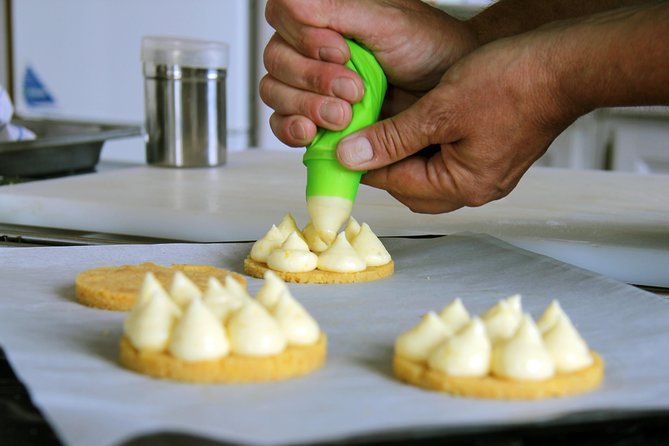
Lemon tarts offer several useful lessons in one dish. You may work with pastry, a fruit-based filling, and the balance between sweetness and acidity. A strawberry rhubarb tart, made with fruit brought from a market, has also been prepared during the class.
These desserts are a good fit for anyone who wants something practical to recreate at home. Tarts can look impressive without requiring elaborate equipment, provided you learn how to handle the pastry and judge when the filling is set.
More Tiramisu and Dessert Classes in Paris
- Paris Cooking Class: French Desserts Class
★ 4.9 · 13 reviews - Paris: Lemon Tart Baking Class with a Pastry Chef
★ 5.0 · 4 reviews - Eclair Baking Class with A Pastry Chef
★ 5.0 · 3 reviews
Madeleines and financiers
Madeleines are small, delicate French cakes with a distinctive shell shape. They are a good choice for a short baking session because they bake quickly and teach you how to manage a light batter.
Financiers are another classic small cake, often valued for their tender texture and nutty flavor. Their compact size makes them easy to serve at the end of class and realistic to prepare in a home kitchen later.
Molten chocolate cakes
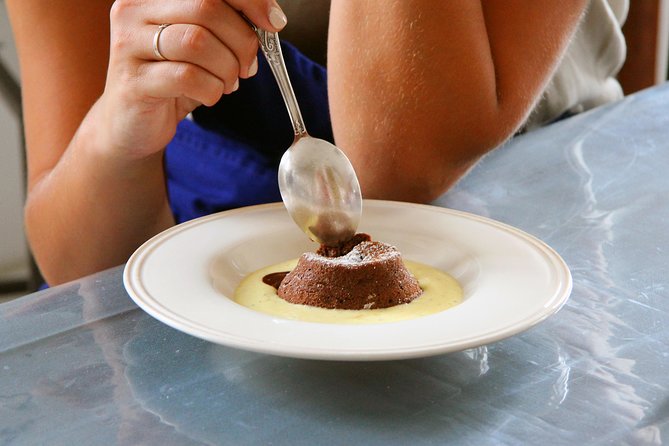
Mini chocolate lava cakes are likely to be a crowd-pleaser, especially for children and anyone who wants a dessert with immediate drama. The key lesson is timing. Bake them too long and the center loses its soft texture; bake them too little and they may not hold together.
This is the sort of dish where a chef’s experience is helpful. You can follow a recipe at home, but practical advice about oven timing and texture can save you from a disappointing result.
Mango soufflé
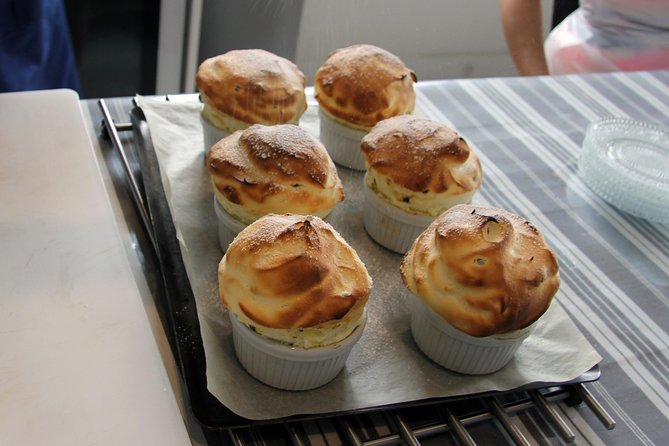
A soufflé adds a more technical element. It requires care with the mixture and baking time, and it gives the chef a chance to explain how to achieve a light result. Since the recipes vary by day, mango soufflé is a possibility rather than a promise.
The same applies to tarte tatin and other desserts listed in the description. You should think of the menu as a sample, not a fixed guarantee.
Eating the results with coffee, tea, or hot cocoa
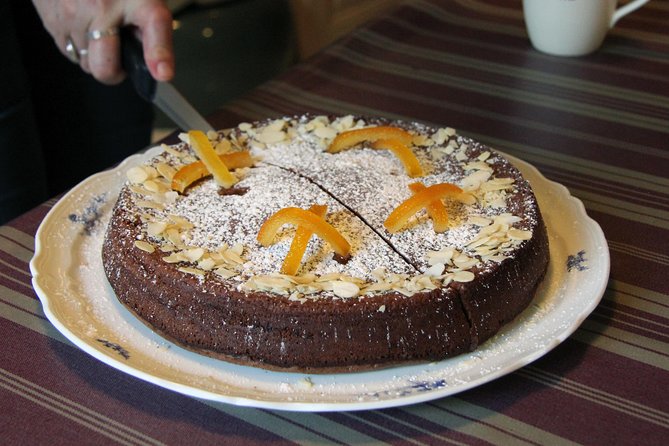
After the baking, the class shifts from instruction to tasting. You sit down and eat the desserts while they are fresh, cooled, or ready to serve. That shared table time is important because it turns the lesson into a social afternoon rather than a technical workshop.
Coffee, tea, or hot cocoa is described as accompanying the desserts. At the same time, some participants found the refreshments limited and had to ask for water. Wine and champagne are not included, so do not expect a glass of French wine simply because the class takes place in Paris.
This is a useful distinction when judging the price. You are paying for the chef’s time, ingredients, kitchen access, instruction, and a small-group setting. You are not paying for a full meal with drinks or a restaurant-style service.
The desserts themselves can be substantial. One group made three pastries and ate them as each was finished. Another family prepared four desserts. You probably will not leave hungry, but this remains a dessert class, not a substitute for lunch or dinner.
How much personal attention will you receive?
The advertised maximum is eight people. The class requires at least two participants, and a booking can be canceled after confirmation if the minimum is not met or if a booking creates an overbooking problem. If that happens, an alternative or full refund is offered.
The size matters more here than it would on a walking tour. Baking requires access to scales, bowls, work surfaces, ovens, and utensils. Eight people sharing a small kitchen can create a bottleneck, particularly when several steps need to happen at once.
For the most rewarding experience, I would choose this class with a booking of two to four people. A family of seven can still have a good afternoon, especially if children are eager to help, but not everyone will be equally busy. In one large family group, the children did most of the baking while adults mainly watched.
That may be exactly what you want if you are booking for children. The minimum age is six, and the class can work well for an adult and a child. A seven-year-old budding baker was given room to handle tasks and learn new skills, making the class a memorable shared activity.
If you are an experienced home baker, ask yourself what you want from the session. If your goal is advanced pastry technique and constant individual practice, eight people may disappoint you. If your goal is a friendly Paris afternoon, a few new recipes, and a chance to make something sweet with family or friends, the format makes more sense.
The value of $195.84 per person
At $195.84 per person, this is an expensive dessert lesson. You can buy excellent pastries in Paris for far less, and a standard cooking demonstration may cost less as well.
The value comes from the combination of elements. You receive roughly three hours with a professional chef, ingredients, equipment, an apron, utensils, two or three desserts, and recipe copies. You also get access to a private home setting and the chance to ask questions while the food is being prepared.
That price is easier to justify for a small booking of two or four people, especially if you care about personal attention. It is harder to justify for a full group of eight, when the experience can become partly observational.
You should also check that recipe delivery is clear before you leave. Several participants were eager to receive their recipes, and some had to wait for them by email. Copies of the recipes are included in the experience, but the exact method of delivery may vary.
For a family, the cost can still be worthwhile if the class is one of the main activities of the day. The children get a hands-on project, the adults share the afternoon, and everyone eats the results. For a couple focused mainly on value, the price may feel high unless you place real importance on the chef’s time and the home setting.
Dietary needs, allergies, and comfort
Vegetarian, vegan, glucose-free, and lactose-intolerant restrictions can be catered to. You need to note these requirements in the special requests field when booking, rather than waiting until the class begins.
You should also report all food and animal allergies in advance. The activity is not recommended for people with sensitive airborne allergies, which is a serious point in a kitchen where flour, baking ingredients, and cooking aromas are present.
The apartment kitchen may become warm, especially in summer when the oven is running. One participant wished for a stronger fan. Wear comfortable clothes and be prepared for a working kitchen rather than a cool, formal classroom.
The class is offered in English. That makes it practical for international visitors, and the conversation may range beyond the recipes to the chef’s work and life in a city famous for food.
Timing the class into your Paris day
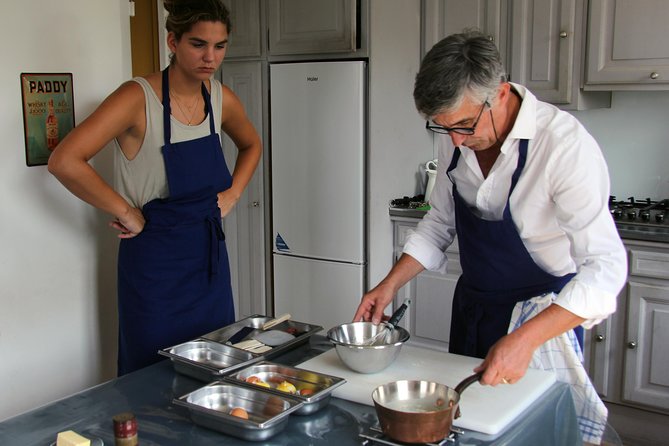
The 3 p.m. start works well after a morning museum visit or neighborhood walk. You can spend the morning sightseeing, have a light lunch, and then head to the kitchen for the afternoon.
The session lasts about three hours, though it may run a little longer. One participant described a class lasting three hours plus a bit more. Avoid booking a fixed dinner reservation immediately afterward, especially if the apartment requires a Metro ride back toward central Paris.
The class ends at the meeting point, not at your hotel. Hotel pickup and drop-off are not included. Public transportation is nearby, but check the precise meeting details before setting out.
Free cancellation is available up to 24 hours before the start time for a full refund. Changes or cancellations within 24 hours are not accepted for a refund. The local time in Paris controls the cut-off.
Who will enjoy this class most?
I would recommend it most strongly to:
- Families with children aged six and older who enjoy cooking together
- Couples or friends who can join a small group
- Beginner bakers who want clear instruction without a formal school atmosphere
- Home cooks who want French recipes and practical shortcuts
- Visitors who value a personal home setting more than a low price
You may want to choose another activity if you dislike shared workstations, need guaranteed hands-on time at every step, or expect wine and a full meal. You should also think twice if your group has eight people and everyone wants to bake actively.
The chefs appear to be the heart of the experience. Dominique, Frederick, Frédéric, and Marthe are repeatedly praised for warmth, patience, and good results. But the experience can vary with the chef, menu, group size, and apartment layout, so the class is best approached as a friendly culinary afternoon, not a precise professional certification course.
Should you book the Paris pastry class?
Book it if you want a personal Paris food experience and are happy to trade restaurant polish for a real apartment kitchen. The strongest reasons are the friendly chefs, fresh desserts, recipe copies, and the chance to learn techniques you can use after returning home.
I would aim for a group of four or fewer, confirm dietary needs in advance, and ask about the day’s recipes if you have a favorite pastry in mind. At the full price, it is not a bargain, but it can be good value when the class is small and the chef gives you room to participate.
If you mainly want to eat excellent French desserts, visit a pastry shop instead. If you want to make them, talk with a Paris chef, and share the results around a kitchen table, this class offers a more lasting souvenir than another box of macarons.
FAQ
Where does the dessert class take place?
The class takes place in a centrally located private apartment in Paris. The exact meeting details are provided with your booking, and the activity ends back at the meeting point.
What time does the class begin?
The scheduled start time is 3 p.m.
How long does the baking class last?
The class lasts approximately three hours. It may run slightly longer depending on the session.
How many desserts will I make?
You can expect to prepare two or three desserts. The exact recipes vary by day.
What desserts might be included?
Possible recipes include lemon tarts, mini molten chocolate lava cakes, madeleines, mango soufflé, tarte tatin, fondant au chocolat, strawberry rhubarb tarts, and financiers.
Is the class suitable for children?
Yes. The minimum age is six years old.
Can dietary restrictions be accommodated?
Vegetarian, vegan, glucose-free, and lactose-intolerant requirements can be catered to. You should list these needs when booking and advise the provider about allergies.
What is included in the price?
The experience includes two or three desserts, a professional chef, recipes, an apron, utensils, ingredients, and the three-hour class. Hotel pickup and drop-off are not included.
Just added around Paris
- Paris: Millefeuille baking class with a chef★ 5.0 · 5 reviews
- Paris: Macaron Baking Class★ 4.4 · 26 reviews
- Paris: Traditional Croissant Cooking Class With Local Baker★ 5.0 · 2 reviews
- Paris: The Soufflé Baking Class with Chef★ 4.5 · 2 reviews
- Paris: Hands-On Small Group Cooking Class★ 4.9 · 19 reviews
- Paris: Lemon Tart Baking Class with a Pastry Chef★ 5.0 · 4 reviews
- Paris: Evening Cooking Class with Optional Market Visit★ 4.8 · 19 reviews
- Paris Cooking Class: French Desserts Class★ 4.9 · 13 reviews
Tiramisu & Dessert Classes, compared.
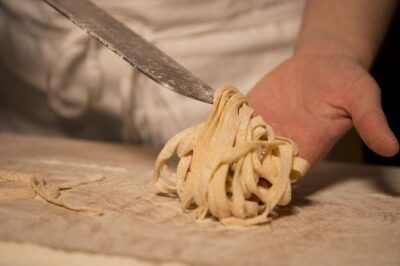
3 in 1 Cooking Class near Navona: Fettuccine, Ravioli & Tiramisu
Read our review →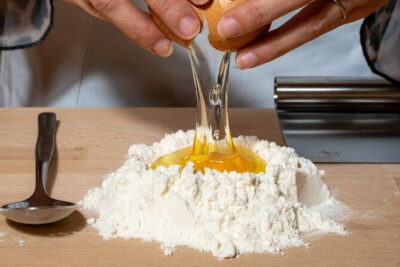
Pasta & Tiramisu Cooking Class with Unlimited Wine
Read our review →
Pasta Making Class with Wine, Limoncello, and Dessert
Read our review →
3-in-1 Fettuccine, Ravioli, and Tiramisu Cooking Class
Read our review →
Cooking Class Pasta & Tiramisu Making Unlimited Wine
Read our review →
Fettuccine & Tiramisù: Cooking Class with Wine & Limoncello
Read our review →
Florence Cooking Class The Art of Making Gelato & Authentic Pizza
Read our review →