
REVIEW · TUSCANY, ITALY
Cooking Class: Italian Authentic Recipes with Lunch
Fresh pasta tastes better when you make it. At a Chianti wine estate, you work with an Italian chef, prepare Tuscan recipes, then sit down to eat the meal you helped create. The class also includes a guided tasting of Poggio ai Laghi wines, olive oils, and vinegars.
I especially like the hands-on pasta lesson and the generous meal that follows, including Tuscan cured meats, pecorino, tagliata di manzo, roasted potatoes, and dessert. The wine expert adds useful context about local wine and culture. The main consideration is that transport and a winery tour are not included, so you must arrange your own way there.
Key points to know before booking
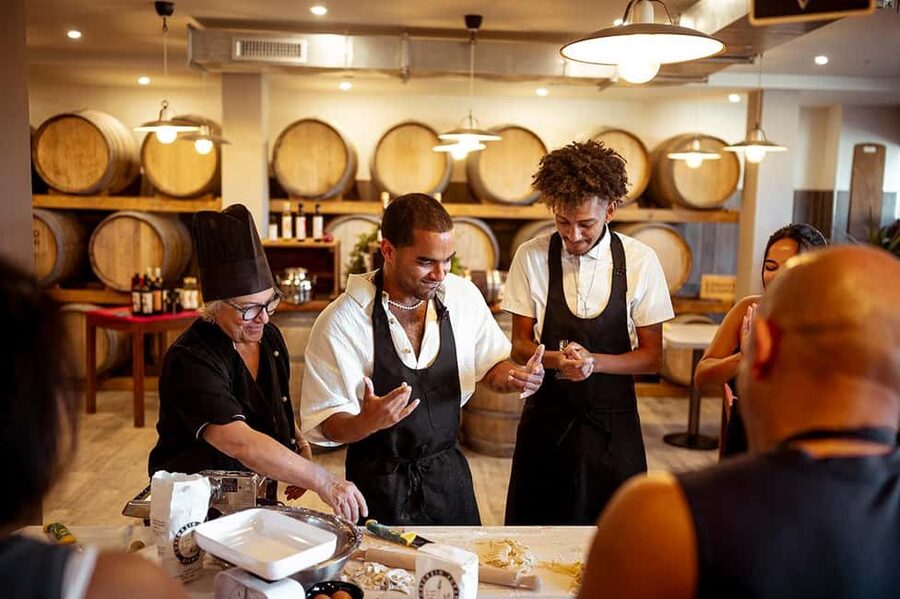
- You make the pasta yourself: The class centers on homemade pasta and a sauce prepared with local products.
- Lunch is part of the lesson: You eat the pasta you made, followed by tagliata di manzo with roasted potatoes and dessert.
- The tasting goes beyond wine: You sample five wines, extra virgin olive oils, truffle and chili oils, and two specialty vinegars.
- It is set at a Chianti estate: You get a food and wine experience in Tuscany, but a formal vineyard or winery tour is not included.
- The class lasts three hours: That gives you enough time to cook, taste, and eat without turning the day into a full-day commitment.
- The format works for beginners: The chef teaches the cooking, and a wine expert leads the tasting in English, French, or Spanish.
Cooking in the Chianti countryside
This is a practical way to meet Tuscany through food. You are not simply watching a chef prepare lunch. You handle dough, work on a sauce, taste local products, and then eat the results at the same table.
The setting at a Chianti winemaking estate gives the class a clear sense of place. Tuscany is often reduced to postcard views and wine labels, but food tells you just as much about the region. Salame, finocchiona, pecorino, olive oil, balsamic vinegar, pasta, beef, and cantuccini all point to the straightforward cooking of central Italy.
At $91 per person, the price is not a bargain lunch, but it covers a three-hour activity, cooking instruction, a full meal, five wines, olive oils, and vinegars. If you planned to pay separately for lunch and a tasting, the package makes reasonable sense. You are also paying for the setting and for the chance to cook with an Italian chef rather than simply sit at a restaurant table.
The value is strongest for people who want an activity with substance. If you only want a quick meal and one glass of wine, this is more time and money than you need. If you want to bring a Tuscan recipe home, the class gives you something useful to remember.
More Italian Cooking Classes in Italy:
- Cooking Class and Lunch at a Tuscan Farmhouse with Local Market Tour from Florence
★ 5.0 · 4,831 reviews - Tuscan Cooking Class and Dinner in Florence
★ 4.5 · 732 reviews - Rome Pasta Making Class with Italian Sauces and Wine Included
★ 5.0 · 645 reviews
The welcome drink and first taste of Tuscany
The class begins with Arella Spumante, a welcome drink that gets the tasting underway before the cooking starts. This is a pleasant opening because it introduces you to the estate’s wines without making the first minutes feel like a formal lecture.
The food arrives in a generous run of antipasti. You can expect Tuscan salame, finocchiona, prosciutto crudo Toscano, pecorino, bruschetta with fresh tomato and basil, and toasted bread with extra virgin olive oil.
This first course matters because it gives you a quick tour of local flavors. Finocchiona is a fennel-scented Tuscan salami, while pecorino brings the firm, sheep’s milk character associated with central Italy. The bruschetta keeps things simple: tomato, basil, and good bread need little decoration when the ingredients are sound.
The antipasti also help make the class feel like a full meal rather than a cooking demonstration with a few samples. You should arrive ready to eat, but not after a huge breakfast.
Making pasta with an Italian chef
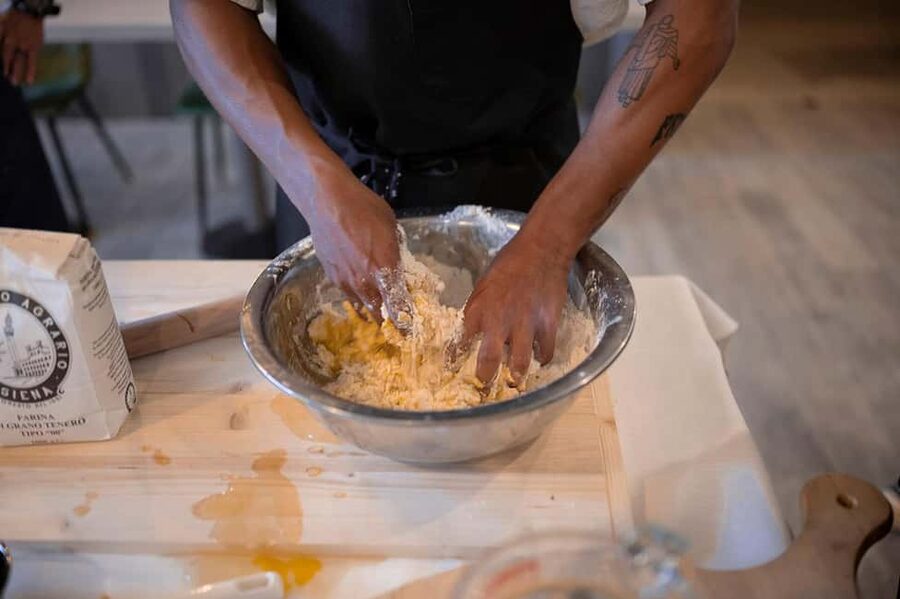
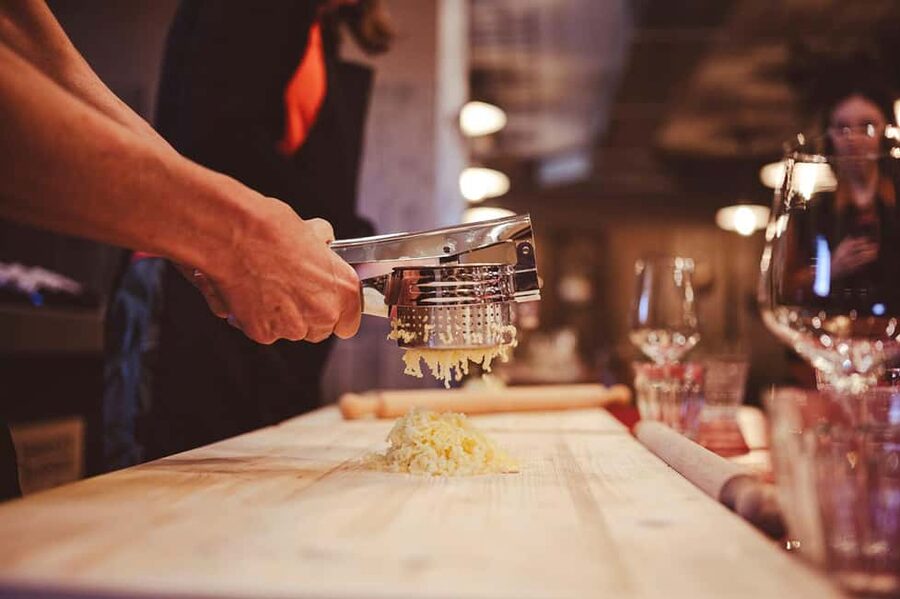
The main lesson is the pasta preparation. You work with an Italian chef to make homemade pasta and prepare a sauce using local products. The description allows for pasta or other Tuscan recipes, so the exact recipe may vary.
The important part is the physical work. You get your hands into the dough rather than simply taking notes while someone else cooks. That makes the lesson more memorable, and it gives you a skill you can repeat at home.
A recent account of the class describes making two types of pasta and a classic tiramisu during the session. The listed menu, however, specifies homemade pasta with the sauce you prepare, followed by cantuccini and Vinsanto. This suggests that the exact dishes may change from one class to another. If a particular recipe matters to you, ask the provider before booking.
That flexibility can be a benefit. Tuscan cooking is not about complicated restaurant tricks. It is about a few good ingredients, careful preparation, and knowing when to leave a dish alone. A class that adjusts its recipes can respond to the chef, the season, or the group.
The class is likely best for people who enjoy doing rather than watching. You will need to take part in the preparation, so it may not suit someone who wants a quiet tasting with no kitchen work.
Learning to taste five Poggio ai Laghi wines
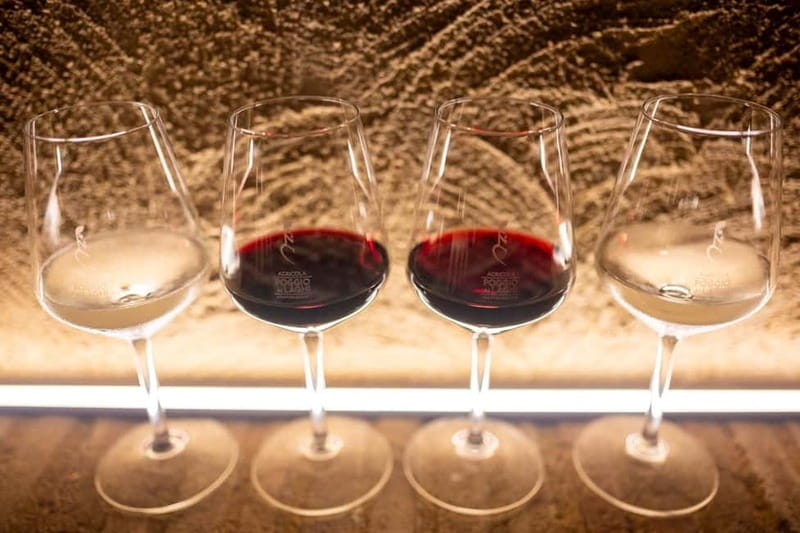
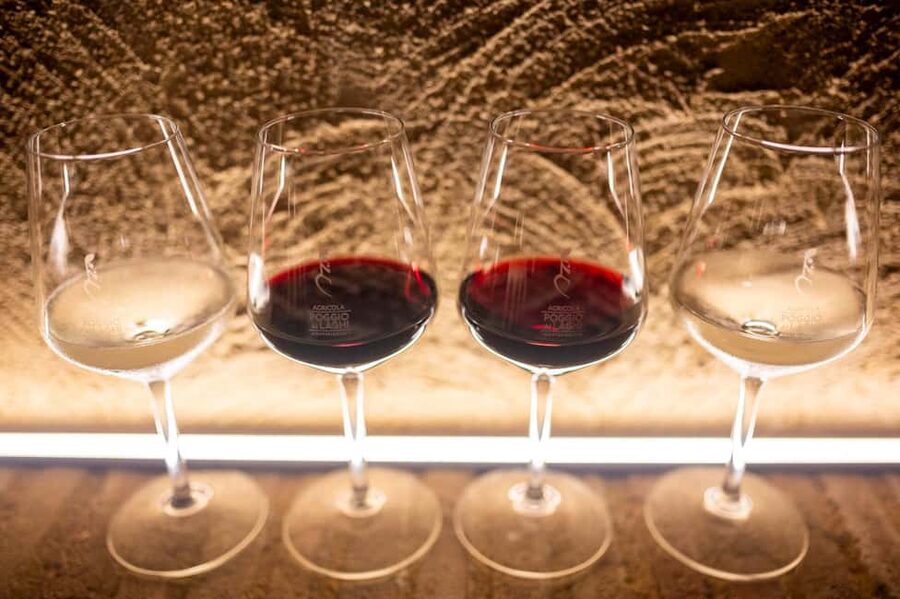
After or alongside the cooking, a wine expert leads the tasting. The session includes two sparkling wines and three reds:
- Arella, Spumante Cuvée Extra Dry Oletta
- Firmina, Spumante Rosé Extra Dry
- Lucilla, Chianti Classico DOCG
- Oletta, Chianti Riserva DOCG
- Aranda, Supertuscan IGT
This gives you a useful progression. The sparkling wines provide a lighter opening, while the Chianti Classico and Chianti Riserva let you compare two red wine styles from the area. The Supertuscan adds another point of contrast, since the category sits outside the traditional DOCG designation.
You do not need to be a wine expert. The class is designed for beginners as well as people who already know their way around a wine list. The guide explains the basic tasting process and connects wine with the art and history of the territory.
That cultural explanation is one of the better reasons to choose this activity over an ordinary restaurant lunch. Wine in Tuscany is not just a drink served with food. It is tied to farming, place, local identity, and the way people eat. The guide helps connect what is in your glass to the wider culture of the region.
Still, keep your expectations in check. This is a guided tasting within a cooking class, not a specialist wine seminar. You will taste several products, but the emphasis remains on the combined food and wine experience.
More Cooking Classes with a Meal in Italy:
- Pasta Making & Wine Tasting with Dinner in Frascati from Rome
★ 5.0 · 1,326 reviews - Palermo: Pizza and Gelato Cooking Class with Dinner and Wine
★ 4.9 · 951 reviews - Cooking class, dinner and wine tasting near Lecce
★ 5.0 · 350 reviews - Palermo: Market Tour and Sicilian Cooking Class with Lunch
★ 4.9 · 229 reviews
Olive oil and vinegar add useful flavor lessons
The tasting continues with products that are easy to overlook on a standard food tour. You sample extra virgin olive oil, white truffle extra virgin olive oil, and chili pepper extra virgin olive oil.
You also taste Aceto Balsamico di Modena IGP ORO and Aceto Balsamico di Cipolla Lacrime Viola, described as an excellence from Tuscany. These samples can help you notice how a finishing ingredient changes a simple dish.
The olive oils are especially practical. At home, you may use one oil for everything without thinking about it. Here, the plain extra virgin oil can be compared with the truffle and chili versions. That makes it easier to understand how oil can add aroma, heat, or a stronger finishing note.
The vinegars offer a similar lesson. Balsamic vinegar is not merely a dark dressing for salad. A sweeter style, an onion-based vinegar, and a sharper condiment can play different roles on bread, meat, cheese, or vegetables.
These tastings also add value to the $91 price. You are not getting wine alone. You are sampling the products that make Tuscan cooking taste Tuscan.
Eating the meal you helped prepare
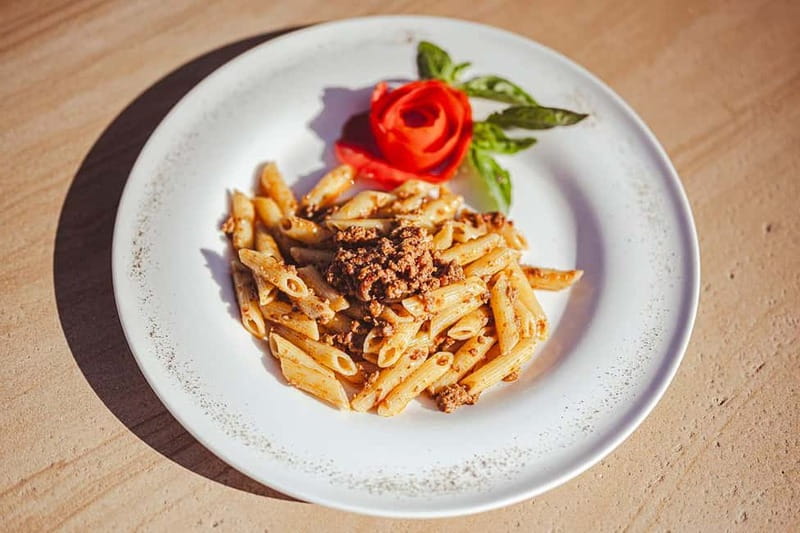
The meal moves from the antipasti to the homemade pasta. The first course uses the pasta and sauce prepared during the class, with ragu or another sauce depending on the recipe.
This is the satisfying part of the format. You see the raw ingredients, do the work, and then taste the result. Even a simple pasta dish feels different when you know exactly how it came together.
The second course is tagliata di manzo with roasted potatoes. Tagliata is sliced beef, usually served in pieces rather than as a whole steak. It gives the lunch a substantial main course after the pasta.
Dessert is listed as cantuccini with Vinsanto. The Tuscan custom of pairing crisp almond biscuits with sweet dessert wine makes a fitting end to the meal. As noted above, one class account describes preparing tiramisu instead, so the dessert can apparently vary.
The quantity of food makes this more than a light workshop. You receive antipasti, pasta, a meat course, potatoes, and dessert. Pace yourself early, especially if you want to appreciate the wine tasting rather than rush through it.
What the three-hour schedule means
Three hours is a sensible length for this format. It is long enough to include instruction, cooking, tasting, and lunch, but short enough to fit into a day of sightseeing or a wider Tuscan itinerary.
The schedule does not include pickup and drop-off. You need to arrange your own transportation to the estate, and the available information does not provide a travel time from any particular Tuscan town. Check the meeting point and route carefully before you commit.
A separate entrance allows you to skip the line, which is useful if the estate is busy. Do not confuse this with a full estate visit. The package specifically does not include an estate, vineyard, or winery tour.
That distinction matters. If you want to walk through the vines, inspect production areas, or tour the winery itself, you will need another activity or must ask if those options are available separately. This class focuses on cooking, tasting, and eating.
The activity is wheelchair accessible, and instruction is available in English, French, and Spanish. That makes it easier for mixed-language groups to take part together.
Who will get the most from this class
I would recommend this to you if food is one of your main reasons for visiting Tuscany. It is also a good choice for couples, families, and friends who want a shared activity rather than another restaurant meal.
Beginners should feel comfortable. The chef guides the cooking, and the wine expert explains the tasting basics. You do not need prior pasta-making or wine experience.
It is a good fit for wine drinkers who also want lunch, and for food lovers who want a gentle introduction to Tuscan wines. The multiple oils and vinegars make it useful for anyone interested in ingredients, not only in drinking wine.
You may want to skip it if you dislike group cooking, cannot eat the listed meal, or mainly want a vineyard tour. The menu includes cured pork, pecorino, beef, pasta, and wine, so check the ingredients if you have dietary restrictions. The available details do not promise vegetarian, vegan, gluten-free, or alcohol-free alternatives.
The three-hour duration can work well for families, but the class is still centered on cooking and tasting. If young children need constant entertainment, the pace may not suit them.
Booking value, flexibility, and practical limits
The $91 fee per person includes much more than the cooking lesson. You receive the chef’s instruction, a welcome sparkling wine, a multi-course lunch, five wines, three olive oils, two vinegars, and guidance from a wine expert.
That is fair value if you would normally pay for a substantial lunch and a separate tasting. It is less attractive if you do not drink wine or would not eat the full menu.
You can cancel up to 24 hours before the activity for a full refund, and the reserve-now, pay-later option gives you some planning flexibility. Starting times vary, so you should check availability for your date.
The class currently has a perfect rating from five verified bookings, which is a small sample. The strongest praise centers on the warm welcome, the cooking itself, the range of tastings, and the way the meal uses the food prepared during the lesson. Those are the parts I would consider most important when deciding.
Should you book the Poggio Ai Laghi cooking class?
Book it if you want to make pasta, eat a proper Tuscan lunch, and taste a broad selection of estate products in one three-hour visit. The combination of hands-on cooking and guided tasting gives you more to remember than a standard meal.
Skip it if your priority is a vineyard or winery tour, hotel pickup, or a short tasting without kitchen work. Also confirm the menu if you need a specific dessert or have dietary requirements.
For most food-focused visitors, the strongest reason to book is simple: you do not just taste Tuscany, you help prepare part of it. At $91, that is a reasonable way to spend half a day, provided you can reach the estate on your own.
FAQ
How long does the cooking class last?
The activity lasts three hours, including the cooking lesson, tastings, and lunch.
How much does the experience cost?
The listed price is $91 per person.
What food will be served?
The meal includes Tuscan salame, finocchiona, Tuscan prosciutto, pecorino, tomato and basil bruschetta, toasted bread with extra virgin olive oil, homemade pasta with sauce, tagliata di manzo with roasted potatoes, and cantuccini with Vinsanto.
Do I eat the pasta I make?
Yes. The first course uses the homemade pasta and sauce prepared during the cooking class.
Which wines are included?
The tasting includes two sparkling wines, Arella Spumante Cuvée Extra Dry Oletta and Firmina Spumante Rosé Extra Dry, plus Lucilla Chianti Classico DOCG, Oletta Chianti Riserva DOCG, and Aranda Supertuscan IGT.
Are olive oil and balsamic vinegar tastings included?
Yes. You taste extra virgin olive oil, white truffle olive oil, chili pepper olive oil, Aceto Balsamico di Modena IGP ORO, and Aceto Balsamico di Cipolla Lacrime Viola.
Is transportation included?
No. Pickup and drop-off are not included.
Is a vineyard or winery tour included?
No. The estate, vineyard, and winery tour are not included in this activity.
Can I cancel for a refund?
Yes. You can cancel up to 24 hours in advance for a full refund. You can also reserve now and pay later.
More Lunch Trips in Italy
- Genoese cooking lesson in the with lunch in the terrace
★ 5.0 · 189 reviews - Cooking Class on a Family Farm in Chianti with Lunch
★ 5.0 · 165 reviews - Sorrento: Pasta and Tiramisu Cooking Class with Lunch and Wine
★ 4.5 · 165 reviews - Cooking lesson in Catania with lunch or dinner
★ 5.0 · 154 reviews
Just added around Italy
- Cesarine: Home Cooking Class & Meal with a Local in Catania★ 4.5 · 10 reviews
- Cooking Class in a Sicilian countryhouse★ 5.0 · 5 reviews
- Cesarine: Market Tour & Home Cooking Class in Catania★ 4.0 · 6 reviews
- Cooking Class in Taormina with Lunch Included★ 5.0 · 2 reviews
- Cooking Class and Wine Pairing in Capri★ 5.0 · 57 reviews
- Cooking class in Capri for small groups★ 4.0 · 4 reviews
- Private Cooking Class Experience in Reggio Calabria★ 5.0 · 5 reviews
- Lezione di Cucina : Pasta Fresca★ 5.0 · 12 reviews
Cooking Classes with Lunch or Dinner, compared.
Pasta Making & Wine Tasting with Dinner in Frascati from Rome
Read our review →
Pizza and Gelato Cooking Class with Dinner and Wine
Read our review →
Paris Evening Cooking Class French Dinner and Market Visit Option
Read our review →
Paris French Cuisine Small Group Cooking Class with Lunch
Read our review →
Cooking class, dinner and wine tasting near Lecce
Read our review →
Traditional Greek cooking class and lunch or dinner with an Acropolis view
Read our review →Lists this class appears in