REVIEW · NEW DELHI, INDIA
Indian Cooking Class in an Authentic Local Home – Learn 6 Dishes
The best Indian meal may be the one you cook. This New Delhi class brings you into a family home, where J.D. and his father teach the spice balance, breads, curry, rice, and dessert that make a North Indian meal work. I like the hands-on cooking and the warm, family-style meal afterward. I also like that the class explains why each ingredient matters, rather than handing you a recipe and sending you on your way. The main drawback is that the dish count is described in slightly different ways, so you should expect a complete meal rather than six precisely separate recipes.
The class costs $50.22 per person and lasts about two and a half hours. That is a fair price if you value personal instruction, a cooked meal, tea, water, and time with a local family. The class is held in Greater Kailash, not in central Old Delhi, so you will need to allow time to reach the meeting point.
Key points at a glance
- Cook in a real family kitchen: This is held at J.D.’s home, not in a commercial cooking school.
- Learn the spice logic: You work with ingredients from the start and learn how spices shape aroma and flavor.
- Make a full Indian meal: Expect a main dish, rice, breads, and dessert, with the exact number of dishes varying by session.
- Meet J.D. and his father: Their warm, patient teaching is one of the strongest parts of the experience.
- Small-group setting: The experience is described as intimate, with a maximum listed between 8 and 10 people.
- Eat what you prepare: The class finishes around a shared meal with Indian cultural conversation.
Entering a Greater Kailash family home
The class begins at R-142, Greater Kailash 1, Block R, New Delhi, at Bindra’s House. The meeting point is in a residential part of the city, and the location is near public transportation. A mobile ticket and clear meeting details should make arrival fairly simple, but I would still allow extra time for Delhi traffic.
This setting matters. You are not walking into a polished studio built for tour groups. You are entering a private family home, where the cooking has a personal connection. J.D. and his father host the session, and the class carries the feel of being welcomed into their household rather than attending a formal demonstration.
That difference shapes the whole afternoon or evening. You get a look at how a family kitchen works, how dishes are prepared for a shared table, and how cooking connects with family tradition. The home is described as comfortable and fully air-conditioned, with restroom facilities available. Those practical details are welcome in New Delhi, especially during warmer months.
The class size is intended to stay small. The main description gives a maximum of eight people, while the additional information allows up to ten. Either way, this is far more personal than a large cooking demonstration. If the group is small on your date, you may have more time to ask questions and handle each stage yourself.
More Home Cooking Classes in India
- Jaipur Market Tour & Vegetarian Rajasthani Home Cooking Class
★ 5.0 · 113 reviews - Interactive Cooking Class with a Local Family in Jaipur
★ 5.0 · 90 reviews - Delhi: AI Cooking Class and Much More in a Local Family Home
★ 5.0 · 85 reviews
Tea, introductions, and the family welcome
The session may begin with tea and biscuits before you move to the cooking area. One especially useful detail is that the family prepares the ingredients and presentation in advance, so your time is spent learning cooking methods instead of losing half the class to basic chopping.
That does not mean the class is passive. You work with the food and take part in the key stages. J.D. explains the process patiently, and his father adds the perspective of someone who has carried these methods through the family. The atmosphere is relaxed, which helps if you are new to Indian cooking or unsure about handling unfamiliar spices.
I like this early part because it gives you time to settle in. Cooking classes can feel rushed when the instructor begins with a long list of ingredients and instructions. Here, the social welcome helps turn the class into a shared meal with a lesson attached.
You should also be ready for a family setting rather than a silent classroom. Conversation is part of the experience. The hosts discuss food, culture, and the background of the dishes, and the meal afterward continues that exchange.
Building flavor with Indian spices
The most useful lesson is likely to be the way the spices are handled. Indian cooking is not simply a matter of adding a spoonful of curry powder. The order, heat, quantity, and combination of spices all affect the final dish.
J.D. focuses on these small decisions. You learn how spices create both aroma and flavor, and how subtle changes can alter a familiar recipe. That kind of instruction is more useful at home than memorizing a long ingredient list, because you can apply the same principles to other dishes.
The class also explains the story behind the food. A dish is not treated as a random recipe. You hear about its place in Indian cooking and why certain methods are used. This cultural context gives the meal more meaning without turning the class into a lecture.
A practical strength is the emphasis on techniques passed through the family. You learn the small steps that make food taste more balanced, including the timing of spices and the methods used for breads and rice. These are the details that often separate a merely edible homemade curry from one with the flavor you remember from India.
The instruction is also patient. J.D. is described as taking time to explain why a particular method works, rather than expecting you to copy him without understanding. That makes the class a good fit for cooks at different levels.
Preparing the main dish and rice
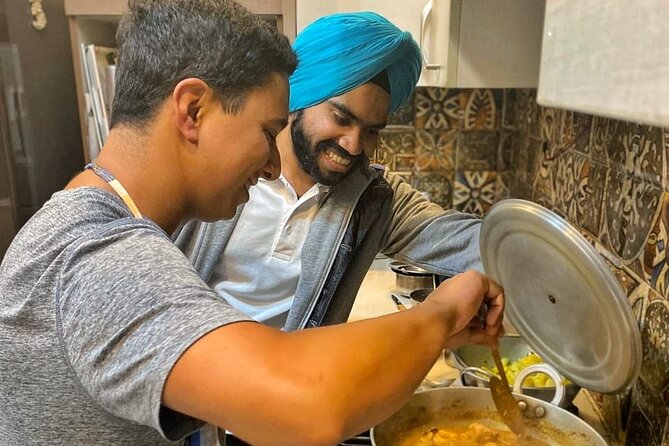
The main dish forms the center of the meal. The class offers vegetarian and non-vegetarian choices, so you have a better chance of finding something that suits your diet. Dietary requirements can be accommodated, but you should provide those details when booking rather than waiting until you arrive.
You learn how the base develops, how spices are added, and how the dish comes together. The exact recipe can vary, so I would not book this expecting one fixed menu every time. The value is in learning a cooking pattern you can repeat with other ingredients.
Rice is prepared as its own dish rather than treated as an afterthought. That is useful because rice absorbs the flavors of the main dish and helps set the rhythm of the meal. The class teaches a base that can be adapted into different versions, giving you more than one recipe to take home.
The preparation is hands-on, but the pre-arranged ingredients keep the class moving. You avoid spending much of the two and a half hours doing kitchen prep that teaches little about Indian flavor. Instead, the time goes toward cooking, tasting, and understanding the method.
More Indian Cooking Classes in India:
- New Delhi: Indian Cooking Class in a Local Home
★ 5.0 · 65 reviews - Mumbai: Indian Cooking Class & Cultural Delights
★ 5.0 · 38 reviews - New Delhi: Traditional Indian Cooking Class & Market Visit
★ 5.0 · 32 reviews - Private South Indian Tamil Cooking Class in Chennai with Srividya
★ 5.0 · 24 reviews
Making two or three kinds of Indian bread
Bread is one of the more practical parts of this experience. The class includes two types of bread in the main description, while the longer outline refers to three types. The precise number may change, but bread is clearly a major part of the lesson.
You learn how dough is prepared and how it is shaped and cooked. This is useful because Indian breads often seem simple when they arrive at the table, yet the texture depends on small choices. Handling the dough, judging its consistency, and cooking it properly are skills you can reuse.
The breads also give the class a nice change of pace. Curry and rice rely on seasoning and timing, while bread requires touch and practice. You get a better sense of how a full Indian meal is assembled when you work on several elements at once.
Do not expect restaurant-level perfection on your first attempt. That is part of the fun. The goal is to understand the process and leave with enough confidence to try again at home.
Finishing with dessert and a shared meal
Dessert gives the class a sweet finish. The available information refers to a rice pudding, which provides a gentle contrast to the spiced main dishes and breads. It is also a good reminder that Indian food is not only about savory curry.
Once the dishes are ready, everyone sits down to eat. Lunch and dinner are listed among the inclusions, which reflects the fact that the meal may be scheduled at different times. Tea, coffee, and bottled water are also included.
This shared meal is more than a convenient way to use the food you prepared. It is the point where the cooking lesson becomes a social experience. You can compare the results, ask final questions, and talk with J.D., his father, and the rest of the group about Indian food and daily life.
The family-style ending is one of the strongest reasons to choose this class over a standard cooking school. You are not simply shown how to make food and then sent away. You eat together, with the hosts offering cultural insight and conversation.
What the dish count really means
The title promises six dishes, but the detailed description uses slightly different counts. One section lists a main dish, a rice dish, two breads, and dessert. Another refers to three types of bread, and the experience description mentions a complete meal with several components.
The supplied comments also refer to sessions involving four, seven, or several wonderful dishes. This does not necessarily signal a problem. Cooking classes often adjust the menu based on the group, dietary needs, timing, and the recipes selected for the day.
I would book this for the method and family setting, not for a strict checklist of six separate plates. You should expect a substantial meal and several cooking lessons. If the exact number matters to you, ask Explore Real India to confirm the menu before booking.
Is $50.22 a good value?
At $50.22 per person, this is not the cheapest way to eat in New Delhi. You can find an inexpensive meal elsewhere for much less. That is not the right comparison, though.
You are paying for ingredients, a private-home setting, two and a half hours of instruction, a full meal, drinks, and personal attention from J.D. and his father. You also leave with recipes, spice guidance, and techniques that can be used again. For a visitor who wants more than a restaurant table, that makes the price reasonable.
The value improves if you are traveling with a partner or friends and can use a group discount. It also suits solo participants. One solo booking became a more private lesson, with enough ingredients prepared for a larger meal. That is not guaranteed, but it shows how the format can work well for one person.
The class is less appealing if you only want to eat, dislike group activities, or already cook Indian food with confidence. In that case, a good local restaurant may offer better value for your specific goal.
Who will enjoy this class most?
I would recommend it most strongly to people who want a personal introduction to Indian food. You do not need advanced cooking skills. The teaching is patient, the process is hands-on, and the hosts explain the reasons behind each step.
It is also a good choice for solo visitors. The family welcome and small group make it easier to meet people, while the shared meal gives the experience a natural social finish.
Food-focused couples and friends should find the format easy to enjoy. You can work together, compare results, and leave with recipes you can try at home.
Families may also like it, but the provided information does not specify a minimum age or child policy. If you are traveling with children, confirm that point before booking.
I would be more cautious if you have serious allergies or strict dietary restrictions. Vegetarian and non-vegetarian options are available, and dietary needs have been accommodated, but you should arrange this in advance.
Practical details before you book
The experience starts and ends at R-142 Gk-1 Bindra’s House, R-142, Greater Kailash 1, Block R, Greater Kailash, New Delhi, Delhi 110048, India. Since it is a residential address, check the meeting instructions carefully and keep the mobile ticket available.
The activity lasts about two hours and thirty minutes. Plan for the class to run at a steady pace, with introductions, cooking, and the final meal all included.
Confirmation is provided at booking. Group discounts are available, and the activity is near public transportation. The listed group limit varies between eight and ten people, so ask for the expected size if that is important to you.
The space is air-conditioned and has restroom facilities. Lunch or dinner, tea or coffee, and bottled water are included. Gratuity is not included, so budget separately if you feel the hosts gave you a good experience.
Free cancellation is available up to 24 hours before the start time for a full refund. Changes or cancellations within 24 hours are not refunded. The experience also requires good weather and a minimum number of participants. If the operator cancels for either reason, you are offered another date or experience, or a full refund.
Should you book the New Delhi cooking class?
Book this class if you want to learn how Indian food is actually built, not just taste it. The strongest reasons are the family home, the patient instruction from J.D. and his father, the focus on spice technique, and the meal you share at the end.
I would not choose it if your priority is a fixed six-dish menu, a central Delhi location, or a quick meal with no instruction. For everyone else, $50.22 buys a useful and personal afternoon or evening, with skills you can carry home. Confirm the exact menu and group size before paying, then arrive ready to cook, eat, and ask plenty of questions.
FAQ
Where does the cooking class take place?
It takes place at R-142 Gk-1 Bindra’s House, R-142, Greater Kailash 1, Block R, Greater Kailash, New Delhi, Delhi 110048, India.
How long does the experience last?
The class lasts approximately two hours and thirty minutes.
Where does the activity end?
It ends back at the meeting point in Greater Kailash.
How many people can join the class?
The experience is described as an intimate group activity with a maximum of eight people, while the additional information lists a maximum of ten travelers.
What food will I prepare?
You prepare a complete Indian meal with a main dish, a rice dish, breads, and dessert. The exact number of breads and total dishes can vary.
Are vegetarian and non-vegetarian options available?
Yes. The experience offers both vegetarian and non-vegetarian options.
Are drinks included?
Yes. Bottled water and coffee or tea are included.
Is a meal included?
Yes. Lunch and dinner are listed as included, depending on the timing of your booking.
Is the cooking space air-conditioned?
Yes. The home has air-conditioning, and restroom facilities are available.
Can I cancel for a full refund?
Yes. You can cancel at least 24 hours before the start time for a full refund. Cancellations within 24 hours are not refunded.
Just added around India
- Private tour to learn Traditional Indian Art, craft & Cooking★ 5.0 · 4 reviews
- Chennai Super Market Tour and Cooking Class with a Fun Local★ 5.0 · 9 reviews
- Neighborhood Market Tour & South Indian Cooking Class in Chennai★ 5.0 · 7 reviews
- Traditional Chettinad Cooking Class in a Local Home near Chennai★ 4.5 · 12 reviews
- Chennai Dosa Making Class & Home-Dining Experience with Jyashree★ 5.0 · 8 reviews
- Cooking experience in Bangalore, a half day tour★ 5.0 · 5 reviews
- Discover Bangalore’s Cuisine: Private Half-Day Cooking Experience★ 5.0 · 3 reviews
- Traditional Gowda Cooking Class and Meal in a Bangalore Home★ 5.0 · 31 reviews
Home Cooking Classes, compared.
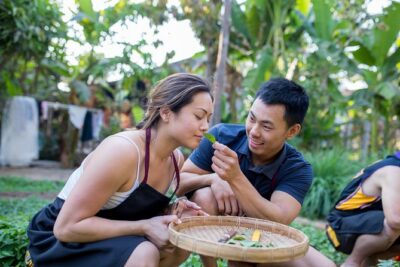
Khmer Cooking Class at a Local’s Home in Krong Siem Reap
Read our review →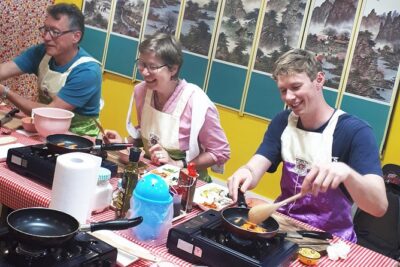
Local Home Korean Cooking Class & Market Adventure in Seoul
Read our review →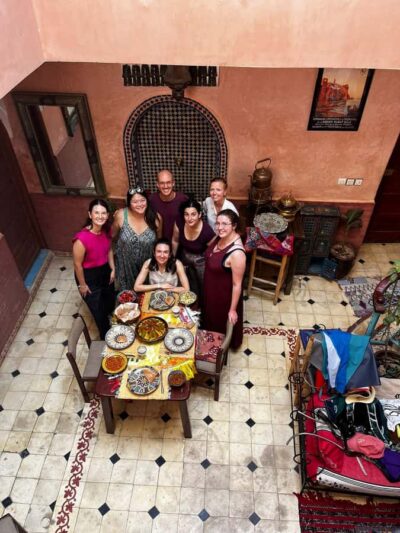
Mexican Cooking from Scratch in a Local Home in Tulum
Read our review →
Pastamama, Home Cooking Classes at Grace’s Home
Read our review →
Traditional Cooking Class & meal with Local Family
Read our review →