REVIEW · INDIA
New Delhi: Traditional Indian Cooking Class & Market Visit
A market visit makes the meal matter. In Delhi, Lubna welcomes you into her family home, takes you to a nearby market, and guides you through a private cooking session built around your interests. I especially like the personal menu planning and the chance to see an ordinary Delhi neighborhood before cooking. I also like that you eat the food you prepare at the family table, rather than simply watching a demonstration.
The main consideration is time. Three hours can pass quickly when you visit a market, prepare several dishes, and sit down for a meal. The kitchen is described as small, so you may be working close together. If you choose the breakfast version, the market visit is not included.
Key Points to Know Before Booking
- Lubna plans around your tastes: Message her before the class about vegetarian food, dietary needs, or a favorite dish.
- The local market is nearby: It is about a 10-minute ride from common tourist areas and roughly a three-minute walk from Ashram metro station.
- You cook a substantial meal: The package includes three main dishes, three types of bread, one rice dish, and the food you prepare.
- The setting is part of the experience: Lubna’s home has a red sloping roof, white walls, garden plants, and traditional haveli-style architecture dating from 1974.
- Classes run at 11 AM or 4 PM: Ask about the breakfast option, since breakfast-making replaces the market visit.
- It is a private experience: The format suits couples, families, and small groups who want conversation and hands-on instruction.
Arriving at Lubna’s Home in Friends Colony
The meeting point is Delhi Bed and Breakfast at A-6 Friends Colony East, New Delhi 110065. Enter that full name and address into your map app, since a general search for Delhi Bed and Breakfast may produce confusion.
The house is behind an HP petrol pump, on a quiet dead-end street. Look for white walls and a red slanting roof. From Ashram metro station, use Gate No. 3 and expect a walk of about three minutes. That is useful in Delhi, where a clear landmark can save you from an unnecessary argument with a tuk-tuk driver.
Lubna’s home also operates as a bed and breakfast. It gives the class a more personal feel than a cooking school set up only for demonstrations. You see a real home, meet the family, and get a glimpse of domestic life in Delhi.
The house has traditional haveli architecture from 1974 and plenty of plants. It sounds like an attractive place to spend a few hours, with a calmer feel than the traffic outside. If you have extra time, ask about taking a short walk in the neighborhood, which is away from the usual sightseeing circuit.
More Cooking Classes with a Market Tour in India
- Jaipur Market Tour & Vegetarian Rajasthani Home Cooking Class
★ 5.0 · 113 reviews - Spice Knight (Cooking Class -> Meal -> Local Market walk)
★ 5.0 · 59 reviews - Pondicherry: Indian Cooking Class with Market Visit
★ 4.7 · 18 reviews
A Short Ride to a Real Delhi Market
The market visit comes first for the standard class. Lubna makes a personalized trip to a local market about 10 minutes from typical tourist spots. This is not just a shopping stop for ingredients. It gives you a chance to ask about vegetables, spices, snacks, and the small choices that shape Indian home cooking.
The market is useful because it gives context to the meal. You can see the raw materials before they are chopped, toasted, ground, or folded into a dish. If a street-food shop is open, you might also try something there. One past class included samosas, spices, and street food, while another included local foods and groceries during the market visit.
The market may be busier during festivals. A visit around Diwali, for example, can bring extra shoppers and activity. That can make the experience more lively, though it may also mean tighter aisles and a slower pace.
Keep in mind that shopping costs are not included. The cooking ingredients supplied for the class are included, but any personal purchases, snacks, metro fares, or tuk-tuk rides are your responsibility. If you want to buy spices that are difficult to find at home, carry extra money and ask Lubna for help locating them.
Chai, Spices, and the First Kitchen Lesson
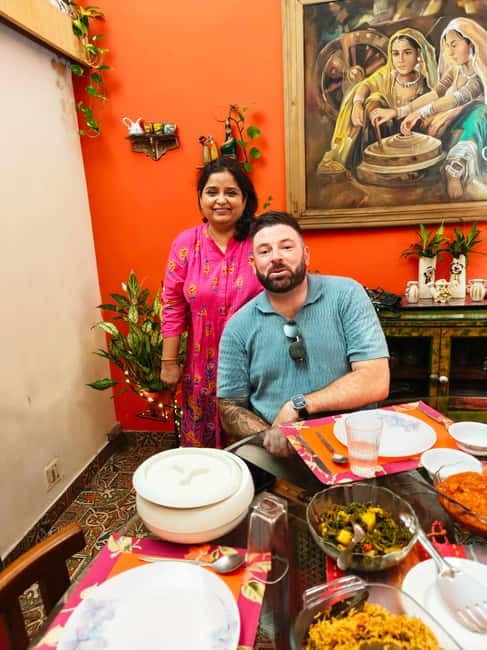
Back at the house, Lubna welcomes you with tea or water. Chai is a fitting beginning, since the session is as much about conversation and food culture as it is about following recipes.
Lubna’s cooking comes from her family background, including recipes passed down by her mother-in-law. She adapts dishes for different dietary needs instead of treating the menu as fixed. That flexibility is one of the strongest reasons to contact her before arrival.
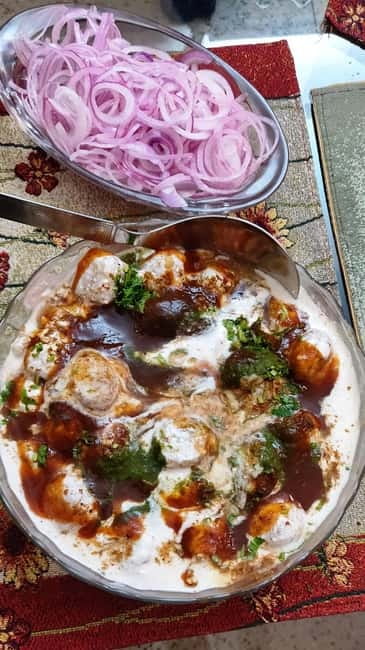
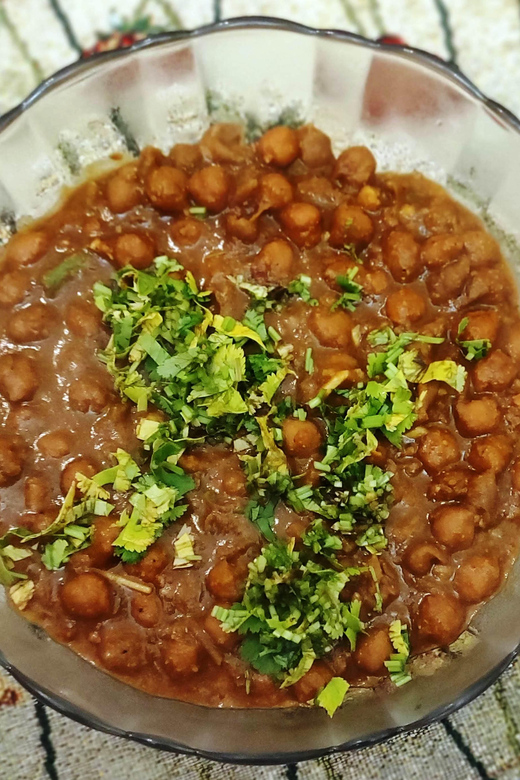
You can request vegetarian dishes or a particular recipe. Suggested choices include Rogan Josh, vegetable or chicken kebabs, bread pakora, samosas, breakfast dishes, and snacks. Past menus have included paneer masala, paneer nihari, kadhi pakoda, mutton stew, dal, aloo gobi, green chutney, raita, dosa, masala balls, parantha, roti, and chai masala tea.
The exact menu is arranged in advance, so you should not assume every dish will appear in every class. Message Lubna through WhatsApp after booking and tell her what you want to learn. This is especially important if you already cook Indian food and want to move beyond the familiar restaurant standards.
What You Actually Cook in Three Hours
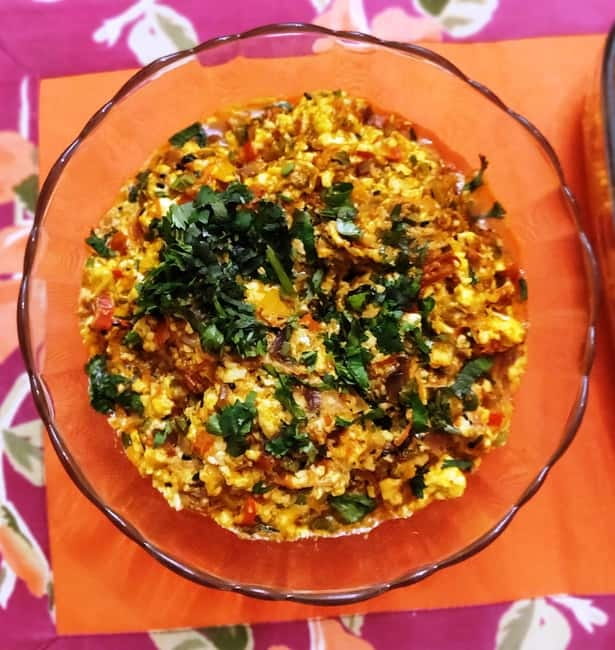
The listed meal is generous: three main dishes, three bread types, and one rice dish. You then eat the meal you prepare. That is a better value than a short class focused on one curry, particularly if you want recipes to use at home.
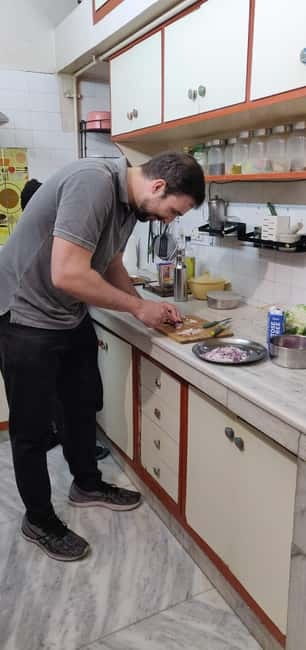
The class is practical rather than purely observational. You learn how spices affect aroma and taste, how spice mixes differ from one dish to another, and how small cooking choices change the final result. The focus is on techniques that can be repeated in your own kitchen.
Bread-making deserves special attention. Indian breads can look simple, but rolling, shaping, and cooking them well takes practice. Learning several types in one session gives you a useful comparison, although the pace may feel brisk if you are starting from scratch.
The same applies to the spice lesson. You are not simply handed a recipe with a long ingredient list. Lubna explains how spices work together and points out subtle methods that can make a dish taste more balanced. Ask questions as you go, and write down the details that matter most to you.
The kitchen is described as small, so you may not have a large personal work station. That is worth knowing if you prefer lots of room or want to photograph every step. The tradeoff is a close, home-style lesson with direct help from the host.
More Indian Cooking Classes in India:
- Indian Cooking Class in an Authentic Local Home – Learn 6 Dishes
★ 5.0 · 195 reviews - New Delhi: Indian Cooking Class in a Local Home
★ 5.0 · 65 reviews - Mumbai: Indian Cooking Class & Cultural Delights
★ 5.0 · 38 reviews - Private South Indian Tamil Cooking Class in Chennai with Srividya
★ 5.0 · 24 reviews
A Family Meal at the Dining Table
When the dishes are ready, you sit down to eat what you cooked. Lubna’s husband or another family member may join you, adding a social element that a standard cooking studio cannot easily provide.
The meal is not just a reward at the end. It lets you see how the dishes work together as a complete Indian meal. You can taste the bread with the curries, compare the rice with the main dishes, and ask questions while everything is still fresh.
Several menus have included a mix of starters, lentil dishes, vegetables, paneer, chicken, rice, and breads. One class combined cauliflower, potato aloo, lentil dal, potato patties, chicken biryani, paneer masala, and chapatis. Another focused on less familiar choices such as paneer nihari, kadhi pakoda, and mutton stew.
The family setting is a major part of the appeal. Lubna has been described as warm and welcoming, and the atmosphere is meant to feel more like visiting a home than attending a formal lesson. If you enjoy long conversations over food, you will likely appreciate this part most.
Dietary Requests and Breakfast Alternatives
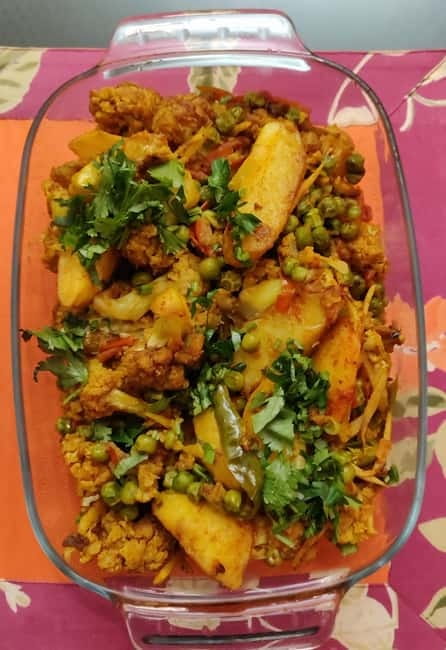
Tell Lubna about dietary needs before the class. Her past approach suggests real flexibility. She once prepared dishes using oats for someone who could not eat wheat, dairy, or citrus, creating a menu around those restrictions.
That does not mean every request can automatically be met. Give clear details when you contact her, including ingredients you cannot eat and whether cross-contact matters to you. Ask her to confirm the menu before the day of the class.
You can also ask about breakfast-making. The 11 AM booking may be converted to a breakfast option if arranged with Lubna, but the market visit would not be possible in that format. You might learn breakfast dishes, or choose a session devoted to snacks instead.
This choice comes down to your priorities. Pick the standard class if the market and local shopping are important. Choose the breakfast option if morning food is your main interest and you are happy to give up the market trip.
How the $43 Price Measures Up
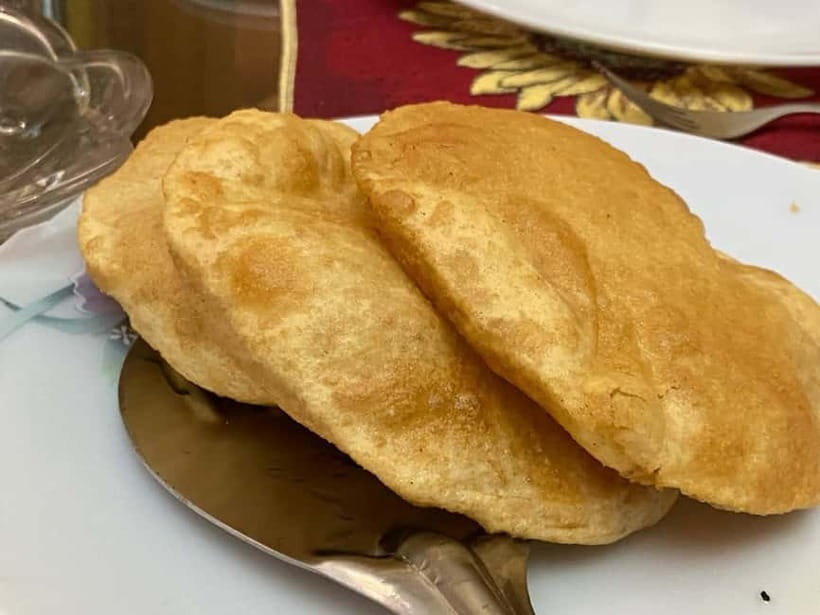
At $43 per person, the experience offers solid value for a private three-hour session in Delhi. The price includes Lubna as your host, all class ingredients, three main dishes, three breads, one rice dish, tea or water, and the meal you prepare.
It also includes something difficult to price: access to a private home and family table. You are not paying only for food. You are paying for menu planning, market guidance, cooking instruction, and conversation about Indian household cuisine.
The value is strongest if you take notes and use the recipes after returning home. Lubna provides recipes for different Indian dishes, so the class can continue to pay off long after your Delhi visit. It is less compelling if you want a fast demonstration with little participation, or if you are mainly looking for a restaurant meal.
Transport to and from the meeting point is not included. You also pay for personal shopping, metro fares, ride-hailing, snacks, and travel or health insurance. Budget for those separately.
The class has a perfect overall rating from 32 reviews, and 93 percent of the transport ratings are perfect. Those figures support the idea that the experience is well organized, but you should still allow time for Delhi traffic and confirm the meeting point carefully.
The Best Time and Group Type
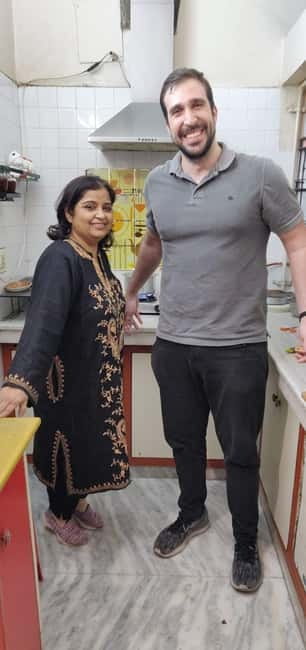
Classes begin at either 11 AM or 4 PM. The 11 AM option works well if you want a substantial lunch afterward. The 4 PM session can lead naturally into an evening meal, though you should confirm the exact meal timing when arranging your booking.
Only one class is offered per day. That may limit schedule flexibility, but it also suggests that Lubna is not trying to rush several groups through the same kitchen. The experience is designed for a private group, which makes it a good choice for couples, families, and friends.
The class is conducted in English and is listed as wheelchair accessible. If accessibility details are important for your needs, contact the provider in advance to confirm the specific route, entrance, and kitchen arrangements.
Who Will Enjoy This Delhi Cooking Class Most
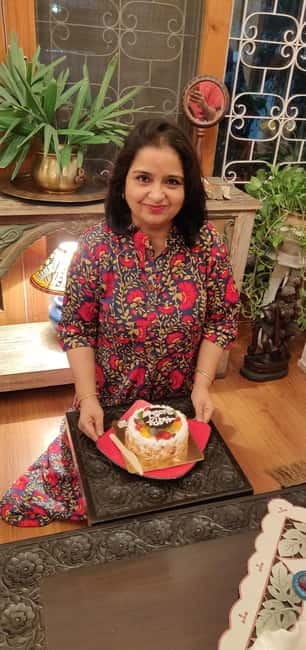
I would choose this experience if you want a personal introduction to Indian food rather than a polished tourist production. It suits curious cooks, people who enjoy markets, and anyone who likes learning through conversation.
It is also a strong choice if you have a favorite Indian dish. Lubna has made room for requests such as vegetarian food, paneer dishes, biryani, and particular snacks. Experienced home cooks can ask for recipes beyond the usual butter chicken and naan routine.
Families may appreciate the private format and the chance to eat together. People with dietary restrictions should contact Lubna early, since the class has already accommodated complex needs, but no menu should be taken for granted until it is confirmed.
You may want to skip it if you dislike hands-on cooking, have very little time in Delhi, or want a large professional kitchen with individual stations. The small home kitchen and broad menu require some flexibility.
Should You Book It?
Book this class if you want to see a local market, cook in a Delhi home, and leave with recipes you can use. The strongest features are Lubna’s personal approach, the ability to shape the menu in advance, and the relaxed family meal at the end.
For the best experience, contact Lubna soon after booking. Tell her your preferred time, dietary needs, favorite dishes, and whether you want standard dishes, snacks, or breakfast. Choose the standard class if you want the market visit, and remember that breakfast-making replaces that part of the experience.
At $43, this is a good-value choice for anyone who sees food as a way to understand a place. It offers more contact with daily Delhi life than a restaurant meal, with enough instruction to keep cooking after you return home.
FAQ
How much does the New Delhi cooking class cost?
The price is $43 per person.
How long does the experience last?
The cooking class and market visit last three hours.
What time does the class start?
Classes start either at 11 AM or 4 PM. You should advise Lubna of your preferred time.
Where is the meeting point?
The meeting point is Delhi Bed and Breakfast at A-6 Friends Colony East, New Delhi 110065.
How do I find the house?
The home is behind the HP petrol pump, near Ashram metro station Gate No. 3. It has white walls, a red slanting roof, and sits on a quiet dead-end street.
Is the market visit included?
Yes, the standard experience includes a personalized trip to a local market about a 10-minute ride from typical tourist areas.
Is the market included with the breakfast option?
No. If you convert the 11 AM class to a breakfast session, the market visit is not possible.
What food is included?
The package includes three main dishes, three types of bread, one rice dish, tea or water, and the meal you prepare.
Can I request vegetarian food or a particular dish?
Yes. You should specify dietary requirements or a preferred dish when arranging the class. Lubna uses WhatsApp to discuss interests and tailor the menu.
Is the class private and wheelchair accessible?
Yes. It is listed as a private group activity and wheelchair accessible. The class is conducted in English.
Just added around India
- Private tour to learn Traditional Indian Art, craft & Cooking★ 5.0 · 4 reviews
- Chennai Super Market Tour and Cooking Class with a Fun Local★ 5.0 · 9 reviews
- Neighborhood Market Tour & South Indian Cooking Class in Chennai★ 5.0 · 7 reviews
- Traditional Chettinad Cooking Class in a Local Home near Chennai★ 4.5 · 12 reviews
- Chennai Dosa Making Class & Home-Dining Experience with Jyashree★ 5.0 · 8 reviews
- Cooking experience in Bangalore, a half day tour★ 5.0 · 5 reviews
- Discover Bangalore’s Cuisine: Private Half-Day Cooking Experience★ 5.0 · 3 reviews
- Traditional Gowda Cooking Class and Meal in a Bangalore Home★ 5.0 · 31 reviews
Cooking Classes with a Market Tour, compared.
Hanoi Cooking Class: Culture, Local Market & Meaning CSR Impact
Read our review →
5 Traditional Dishes Hanoi Cooking Class with Market Trip
Read our review →
Cooking Class and Lunch at a Tuscan Farmhouse with Local Market Tour from Florence
Read our review →
Cooking Class, Market & Thai Herbs Garden Tour
Read our review →
Authentic Cooking Class with Market & Farm Visit
Read our review →
Paella Cooking Experience & Boqueria Market Tour
Read our review →
Cooking Class Hoi An:Local Market, Basket Boat, Fishing & Cooking
Read our review →