
REVIEW · SOUTHWESTERN CHINA, CHINA
Chengdu: Cooking Class with Fresh Market Half Day Experience
Follow the spices, then cook them. This half-day Chengdu experience pairs a guided walk through a local market with a hands-on Sichuan cooking class, tea, drinks, recipes, and a meal you help prepare. I like the market visit, where Lance, Jerry, and other English-speaking guides explain unfamiliar ingredients in plain language. I also like the warm, social cooking session, where a chef helps you work through several dishes without leaving you to fend for yourself.
The main consideration is price. At $82 per person, this is not a bargain meal or a quick demonstration. You are paying for about 4.5 hours of instruction, food, drinks, a market tour, and a small-group setting. If you only want to eat Sichuan food, Chengdu’s restaurants cost less. If you want to understand how the food comes together, the class offers better value.
Key points at a glance
- The market comes first: See and smell Sichuan spices, produce, tea, meat, and other ingredients before cooking with them.
- English support is strong: Guides such as Lance and Jerry explain the market clearly and translate between you and the chef.
- You cook several dishes: The class includes practical preparation, wok work, and a shared meal using the food you made.
- Tea sets the tone: Sichuan tea is served as a local gesture of welcome before the cooking begins.
- Vegetarians can be accommodated: Vegetarian and fully vegan menus have been prepared when dietary needs were given in advance.
- It suits many kinds of visitors: The experience works for solo participants, couples, families with children aged five and older, and small groups.
Why this class helps you understand Chengdu food
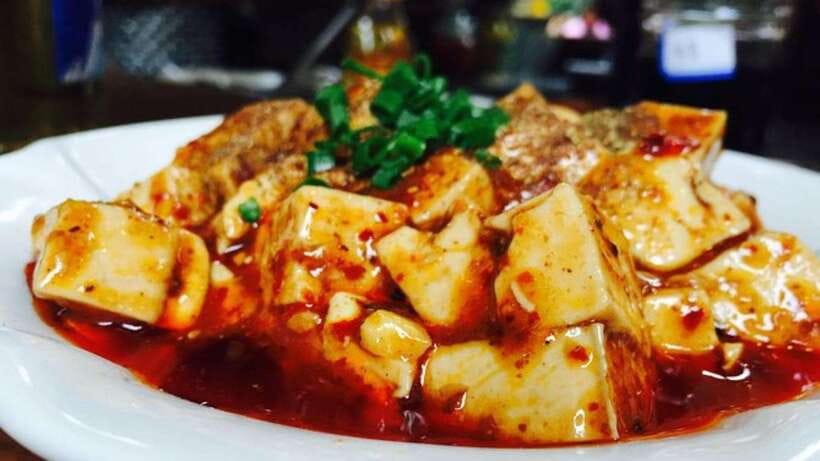
Sichuan cooking is easy to reduce to one word: spicy. That misses the point. The cuisine depends on balance, aroma, texture, heat, and the particular character of ingredients such as dried chilies, Sichuan pepper, sauces, oils, and fresh produce.
This experience gives you a useful order of discovery. You see the ingredients in a real market, learn what they are used for, then handle them in the kitchen. That connection matters. Instead of meeting a finished bowl of food at a restaurant, you get a sense of how cooks build flavor step by step.
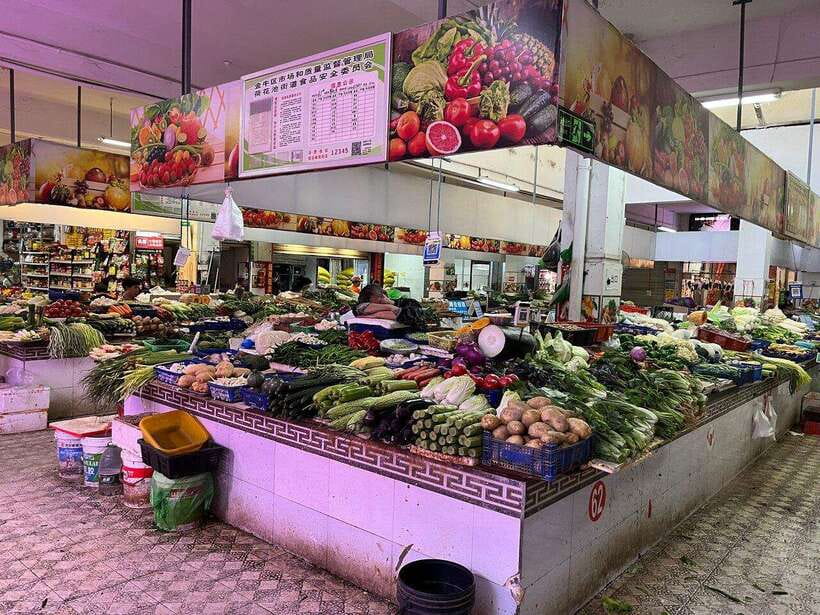
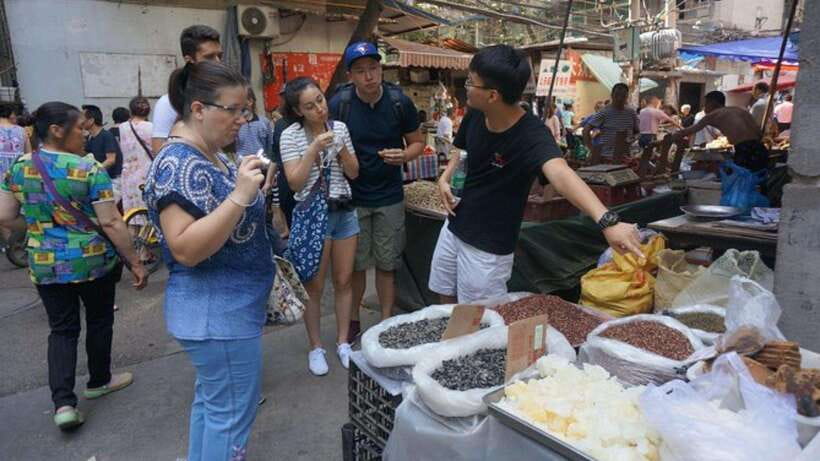
I especially like that the market is not treated as a quick photo stop. The guide leads you through a local spice market and adds small challenges to help you identify ingredients. Some guides have also bought fruits and other foods for participants to taste, which makes the walk more active and memorable.
You should expect a working market rather than a polished food hall. You may see ingredients you do not recognize, and the smells can be strong. That is part of the point. Wear comfortable walking shoes and dress for the weather, since the activity operates in all conditions.
More Cooking Classes with a Market Tour in China
- Half-Day Chengdu Cooking Class with a Local Market Visit
★ 5.0 · 465 reviews - Half-Day steamed Buns Cooking Class with a Local Market Visit
★ 5.0 · 26 reviews - Half-Day Professional Mapo Tofu Cooking with a Local Market Visit
★ 5.0 · 19 reviews
Meeting the guide at Liang Jia Xiang Station
The meeting point is Metro Line 6 at Liang Jia Xiang Station, Exit D. This gives you a clear starting place near public transportation, but you should allow enough time to find the correct exit and meet the guide without rushing.
The stated meeting times are 8:50 a.m. for the morning class and 1:50 p.m. or 4:50 p.m. for afternoon options. Check the selected time carefully when booking, since the afternoon schedule is presented with more than one possible start.
The tour has a maximum of 15 participants. That is large enough for a social meal but still small enough for the guide to answer questions. Some sessions may be much smaller. One participant had a one-on-one experience with Jerry, while other sessions involved several people working together at different wok stations.
The guides are one of the strongest parts of the class. Lance is often praised for his English, easy humor, and ability to explain food culture without making the information feel like a lecture. Jerry has also been described as attentive and generous with his time. The specific guide can vary, but English and Chinese are offered.
Inside the local spice market
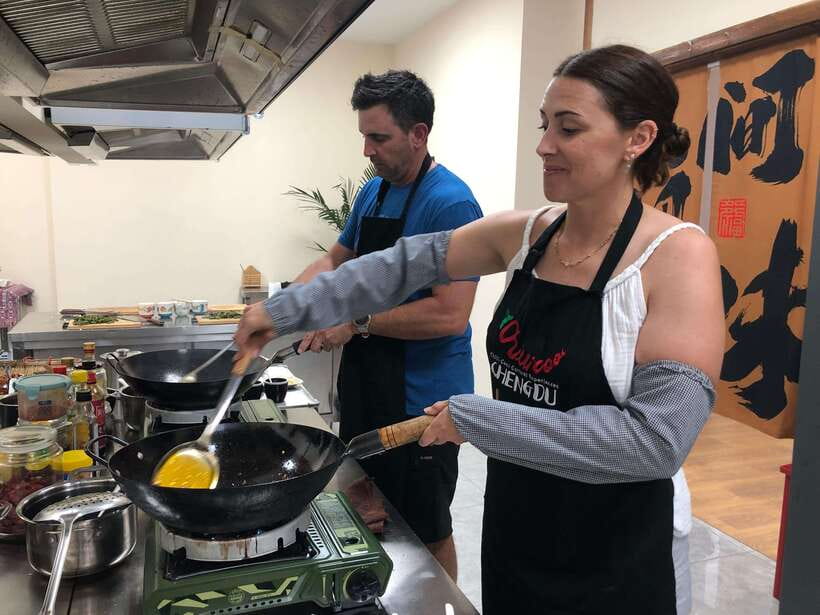
The market visit gives the class its sense of place. You are not simply handed a measured bowl of spices in a studio. You first see where local ingredients are sold and learn how they fit into Sichuan cooking.
Your guide explains the spices and ingredients that will later be used in the kitchen. You might compare unfamiliar dried peppers, examine fresh produce, or learn how an ingredient affects aroma rather than just heat. The exact market sequence can vary, but the purpose is consistent: make the food less mysterious before you begin cooking.
This is also a good part of the experience for people who ask many questions. Ana, for example, appreciated being able to ask about the ingredients and local food traditions throughout the walk. That kind of conversation is hard to get in a standard restaurant meal.
The market can be the highlight if you enjoy food shopping, local customs, and sensory details. It may be less exciting if you dislike walking or prefer a tightly scripted cooking lesson. It is worth treating the market as a real part of the class, not as an optional warm-up.
The timing should not worry you too much. One afternoon participant expected the market to be less worthwhile later in the day but found the visit engaging. The morning class may suit you if you want an early start, while an afternoon class can fit more easily around Chengdu sightseeing.
Sichuan tea before the cooking starts
After the market, you return to the workshop kitchen and receive Sichuan tea. Tea is not just a drink here. It is part of the local way of welcoming friends and visitors, so it gives the class a cultural pause before the practical work begins.
This break also lets the group settle in. You can look over the kitchen, meet the other participants, and ask final questions before the chef begins. The setting is described as cozy and well equipped rather than large or formal.
That atmosphere suits people who want personal guidance. It is less like watching a chef perform on a stage and more like learning in a small working kitchen. The chef may not speak English, but the guide translates instructions and questions.
Same place, a different thing to cook:
- Flavors of Beijing: Eat Like A Real Chinese
★ 5.0 · 78 reviews - Online Cooking Class Beijing Dumplings and Cuisine by Sunflowerli Renowned Chef
★ 5.0 · 65 reviews - Shanghai-Cooking Dumpling & Meal in Local Family-w/Vegan
★ 4.9 · 36 reviews - Private Cooking Class: Make Your Own Dim Sum In Shanghai
★ 5.0 · 27 reviews
Cooking with the chef in the workshop kitchen
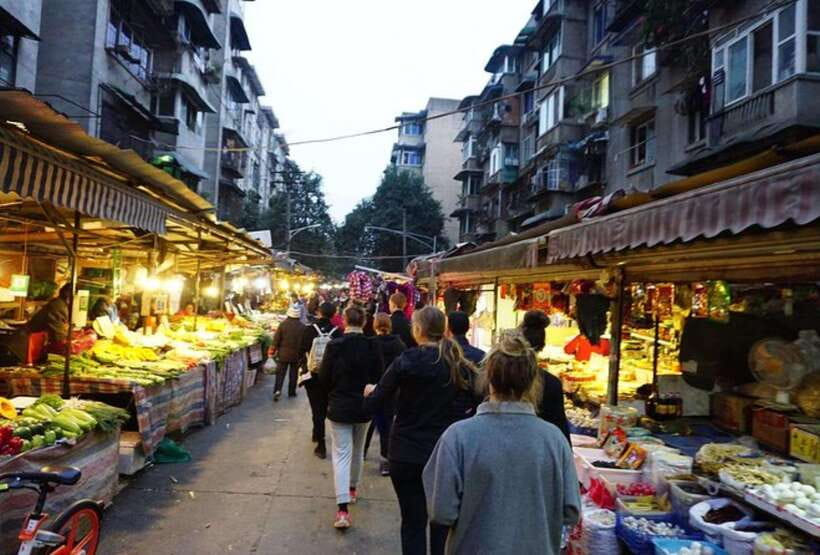
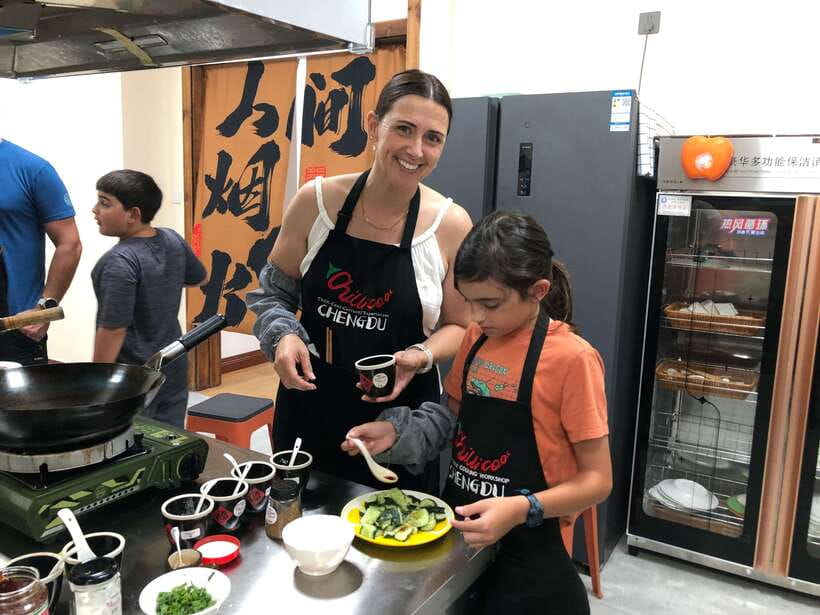
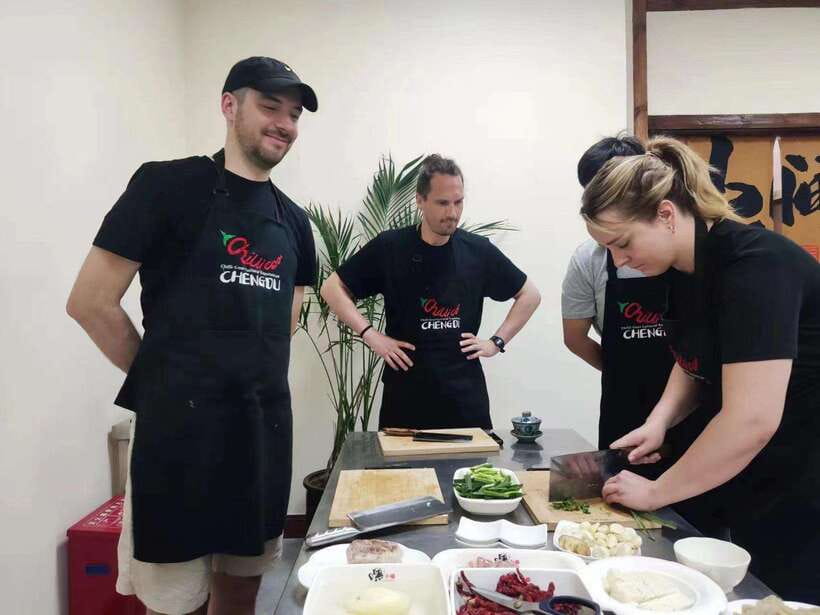
The hands-on section is the heart of the experience. A professional chef leads you through the preparation of several Sichuan dishes, with the guide helping explain techniques and ingredients along the way.
The recipes and menu can vary, but participants have prepared as many as five dishes in one session. Others have made three dishes with help from Lance and Li. This suggests a menu built around active participation rather than a single recipe taught slowly from start to finish.
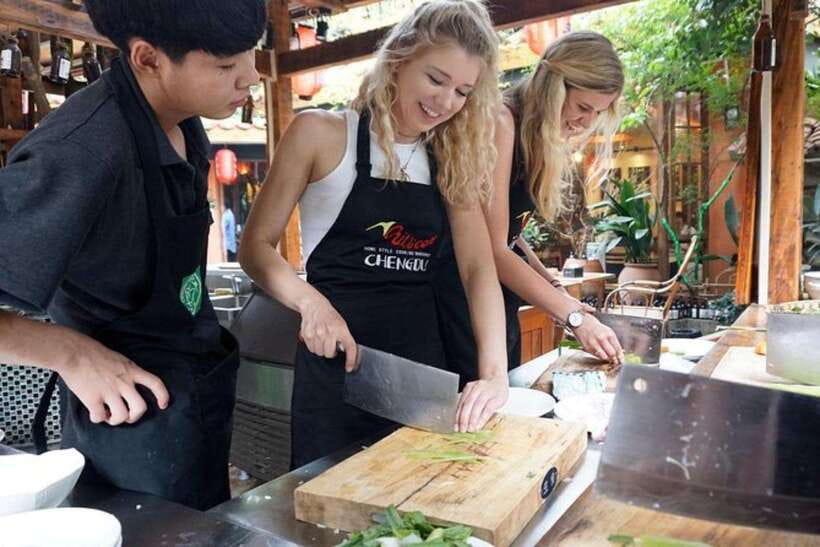
You will likely spend time preparing ingredients before moving to the woks. Once cooking begins, the pace can pick up quickly. One participant described the transition from careful preparation to fast wok work as a sudden change of speed. That is useful to know: Sichuan cooking may look simple once served, but stir-frying requires attention.
Several wok stations may be used, with staff moving around to keep the cooking on track. This support is important for beginners. You do not need to arrive with professional knife skills or wok experience, and the class is structured to help you produce good food rather than test your cooking credentials.
At the same time, do not expect a completely relaxed demonstration where you only watch. You will be involved, and the kitchen can feel busy once several people start cooking. The staff assistance makes the activity accessible, but you still need to listen, move with the group, and keep an eye on your station.
Eating the food you prepared
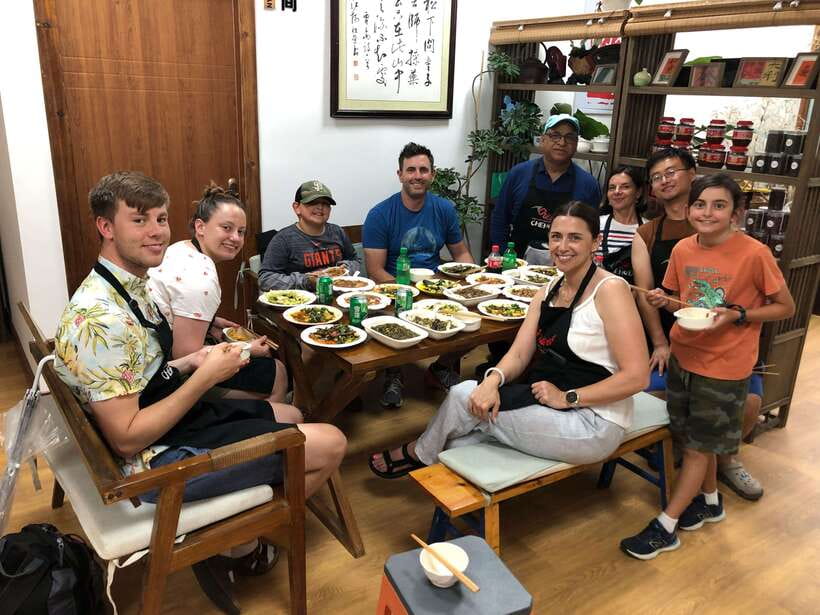
The final meal is included, along with beverages or beer and light refreshments. After the cooking, the group sits down to eat the dishes made during the class.
That shared meal gives the afternoon a natural finish. You have seen the ingredients, prepared them, cooked them, and then tasted the results. The food is not an abstract sample added at the end. It is the reward for the work you just completed.
Several participants found the dishes delicious, including people who were new to Sichuan flavors. One participant took the food back to friends in Chengdu, who enjoyed it as well. The recipes are provided, so the class continues to be useful after you leave.
Do not assume every dish will match your preferred level of heat. Sichuan food can include strong spice and unfamiliar flavors, and the precise menu is not specified in advance. If you have allergies, dietary restrictions, or strong preferences, give those details when booking.
Vegetarian and vegan arrangements
Vegetarians can be accommodated, but you need to request the option in advance. This is not a detail to leave until you reach the kitchen, especially in a cuisine where sauces and stocks may contain ingredients you avoid.
The class has also adapted an entire menu to be vegan for one participant. That indicates real flexibility, not just removing meat from one plate. Still, the booking instructions specifically ask you to provide dietary requirements ahead of time, so do that clearly.
Families can also consider the activity. The minimum age is five, and infant seats are available. The cooking format gives children something practical to do, though parents should decide if a market walk and an active kitchen suit their child’s attention span.
How much value do you get for $82?
The $82 price includes much more than the food on your plate. It covers an English-speaking guide, the market tour, ingredients, tea and other beverages, beer, light refreshments, food tasting, lunch or dinner depending on the class time, and recipes.
Compared with a restaurant meal, it is expensive. You could eat Sichuan food for less, and you would not need to spend 4.5 hours doing it. Mauricio’s assessment is fair: the price is a little high, but the experience makes sense if you value the teaching and cultural context.
The value improves if you use all parts of the class. Ask questions in the market. Pay attention to the chef’s techniques. Keep the recipes and try them later. If you treat the activity as a meal with entertainment, the cost may feel steep. If you treat it as a food lesson, market visit, and hosted meal, the price is easier to justify.
The small-group format also matters. You are not paying only for ingredients. You are paying for translation, guidance, support at the wok stations, and a setting where the staff can respond to individual needs.
Who should book this Chengdu experience?
I would choose this class if you want a practical introduction to Sichuan food and would rather learn by doing than sit through a formal lecture. It is especially good for food-focused visitors who want more context than a restaurant menu provides.
It also works well for solo participants. The shared kitchen and meal make it easy to meet people, and one-on-one or very small sessions can offer extra attention. Couples and families can enjoy it too, provided children meet the minimum age and are comfortable with the pace.
Vegetarians and vegans should consider it, but only after sending their requirements in advance. The staff has shown strong flexibility, yet clear communication remains important.
I would skip it if you have only a few hours in Chengdu, dislike markets, or want a quiet meal with no participation. I would also think twice if $82 feels high for a half-day activity. The class asks you to spend much of your day cooking, not simply sampling food.
Practical details before you reserve
Bring comfortable walking shoes. The market portion involves walking, and the activity runs in all weather, so dress appropriately for the forecast.
Confirmation is provided at booking. A passport name, passport number, expiry date, and country are required for every participant. The experience accepts bookings with free cancellation up to 24 hours in advance for a full refund, and you can reserve now and pay later.
The class is offered in Chinese and English. The guide handles the English explanations and can translate with the chef when needed. Lunch or dinner depends on your chosen class schedule.
Should you book it?
Book this experience if you want Chengdu’s food culture explained at street level, then want to cook it yourself. The market visit, tea service, patient guides, chef instruction, recipes, and shared meal form a well-balanced half-day.
The strongest reason to go is the combination of places and skills. You begin with real ingredients in a local market, then carry that knowledge into a working kitchen. For $82, it is not the cheapest way to eat in Chengdu, but it is a useful and friendly way to remember what you ate, how it was made, and why the flavors matter.
FAQ
How long does the Chengdu cooking class and market tour last?
The experience lasts about 4.5 hours.
Where does the experience begin?
Your guide meets you at Metro Line 6, Liang Jia Xiang Station, Exit D, written in Chinese as 梁家巷地铁站6号线D出口.
What time does the morning class start?
The morning class meets at 8:50 a.m. Afternoon meeting times are listed as 1:50 p.m. and 4:50 p.m., so check the available time when booking.
Is the experience available in English?
Yes. The experience is offered in English and Chinese, with an English-speaking guide available to explain the market and help translate with the chef.
Can vegetarians or vegans join?
Yes. A vegetarian option is available, and fully vegan menus have been prepared. You must provide your dietary requirements when booking.
What is included in the price?
The $82 price includes the English-speaking guide, market tour, food ingredients, beverages or beer, light refreshments, food tasting, lunch or dinner based on the class schedule, and recipes.
Just added around China
- Private Panda Tour with Cooking Class One-day Trip★ 5.0 · 11 reviews
- Half-day Dandan Noodles Cooking Class with a Local Market Visit★ 5.0 · 8 reviews
- Half-Day Private Hot-Pot Cooking Class with a Local Market Visit★ 5.0 · 3 reviews
- Half-day Chengdu Handmade Tofu Making and Mapo Tofu Cooking Class★ 5.0 · 3 reviews
- Chengdu Dujiangyan Leshan Buddha Tea Plantation and Sichuan Cooking 3 Days★ 5.0 · 2 reviews
- Half day Chengdu Dumpling Class: Make from Scratch★ 5.0 · 8 reviews
- Half-Day Sichuan Cooking Class Experience in Chengdu★ 4.0 · 17 reviews
- Beijing: Private Dumpling Cooking Class in Local Family★ 5.0 · 3 reviews
Cooking Classes with a Market Tour, compared.
Hanoi Cooking Class: Culture, Local Market & Meaning CSR Impact
Read our review →
5 Traditional Dishes Hanoi Cooking Class with Market Trip
Read our review →
Cooking Class and Lunch at a Tuscan Farmhouse with Local Market Tour from Florence
Read our review →
Cooking Class, Market & Thai Herbs Garden Tour
Read our review →
Authentic Cooking Class with Market & Farm Visit
Read our review →
Paella Cooking Experience & Boqueria Market Tour
Read our review →
Cooking Class Hoi An:Local Market, Basket Boat, Fishing & Cooking
Read our review →
Hoi An Cooking Class(Market,BasketBoat Crabfishing&Cooking Class)
Read our review →Lists this class appears in