REVIEW · CORDOBA, SPAIN
Feed the Fire Private Cooking Class & Market Tour
Good food begins at the market. In Córdoba, this 3.5-hour experience pairs a visit to Mercado de la Corredera with hands-on cooking, local ingredients, and generous pours of Spanish wine. I like the market-to-table format, which lets you help choose what goes into the meal, and I like the relaxed guidance from Gaby, the warm and enthusiastic host. The main thing to consider is that this is held in a wine shop rather than a local home, and the cooking can feel more informal than a structured culinary lesson.
You meet at Mercado de la Corredera in the historic center, then walk with Gaby while gathering ingredients for a shared meal. The menu changes with the market, so you may prepare salmorejo, paella, grilled fish, prawns, or another Spanish dish that catches your eye. Because it is a private activity for your group, Gaby can adjust the food and level of participation to suit you, although one disappointing experience shows that personal attention is not guaranteed unless you speak up and join in.
Key points before you book
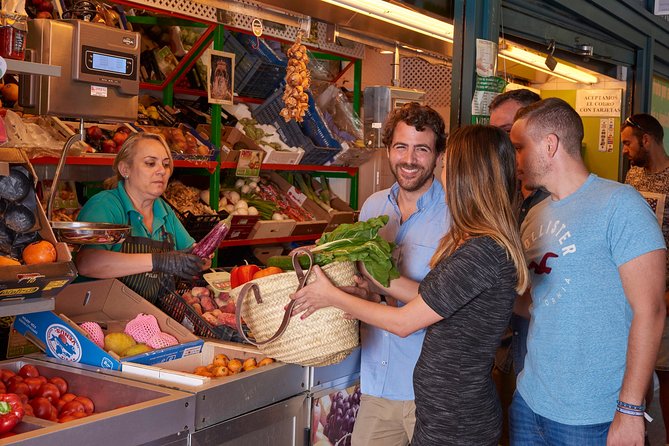
- Market shopping comes first: Begin at Mercado de la Corredera and help select fresh ingredients for the meal.
- The menu is flexible: Dishes depend on the freshest and most interesting food available that day.
- Gaby leads the class: She guides the shopping, preparation, cooking, and conversation in English.
- Wine is part of the experience: Natural Spanish wines are poured throughout, with craft beer and olives also provided.
- The setting is informal: Cooking takes place in Gaby’s wine shop, Jugo, rather than a traditional private home.
- Good access and easy planning: The class is wheelchair and stroller accessible, near public transportation, and offers free cancellation up to 24 hours before the start.
Starting with Córdoba’s Mercado de la Corredera
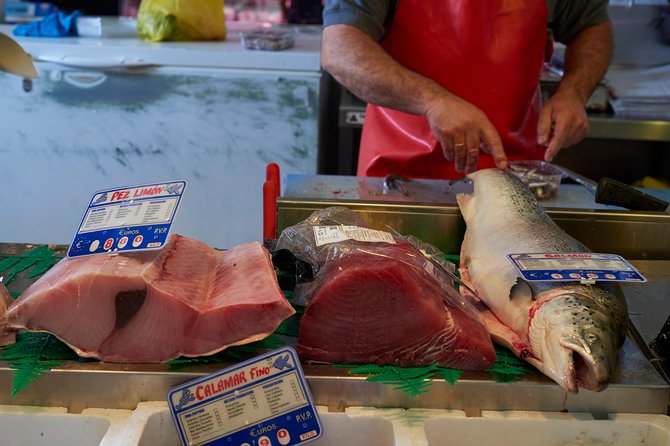
Your meeting point is Mercado de la Corredera, at Plaza de las Cañas in Córdoba’s historic center. This is a useful starting place because the food is not an afterthought here. The market provides the ingredients, the smells, and the small decisions that shape the meal.
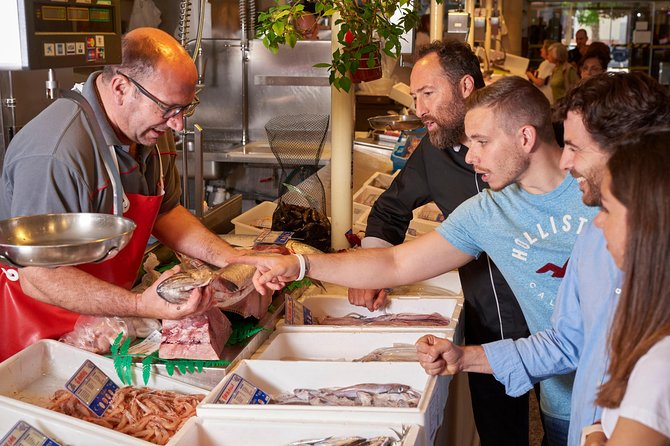
Rather than handing you a fixed menu and asking you to follow instructions, Gaby shops with you. You may stop to taste something unusual, inspect seafood, choose vegetables, or pick up an extra item simply because it looks good. The plan is intentionally loose. If something catches your attention, it can become part of lunch.
That freedom is one of the best parts of the class. Spanish cooking often depends on good produce and simple preparation, so choosing the right ingredients matters as much as following a recipe. You get a better sense of how a Cordoban meal comes together when the menu responds to what is fresh.
The market portion also gives you a practical look at daily food shopping in Córdoba. It is not a sightseeing stop with a long speech about architecture or local history. Instead, you are tasting, smelling, asking questions, and making choices. If you prefer a polished tour with every step fixed in advance, this loose approach may feel less predictable.
More Cooking Classes with a Market Tour in Spain
- Barcelona: Paella Cooking Experience & Boqueria Market Tour
★ 4.8 · 3,661 reviews - Barcelona Paella Cooking Class with Market Visit, Tapas & Sangria
★ 5.0 · 2,531 reviews - Paella Cooking Class, Wine Tasting & Central Market in Valencia
★ 5.0 · 1,150 reviews
Walking from the market to Jugo
After shopping, you walk back to Jugo, Gaby’s natural wine shop. The shop functions as both a wine business and a cooking space, with a table prepared for chopping, conversation, and the meal.
This setting shapes the tone. You are not sitting in a classroom facing a demonstration counter. You may chop vegetables, prepare ingredients, talk with Gaby, taste wine, and watch parts of the cooking happen around you. Several menus have included salmorejo, mazamorra, salad, arroz negro, spicy prawns, and meat paella, but no single selection is guaranteed.
I would think of this as cooking with a generous friend rather than taking a formal chef-training lesson. That distinction matters. You will learn useful techniques and Spanish dishes, but the focus is on sharing food and conversation, not on precise knife skills, written lesson plans, or a rigid sequence of exercises.
The shop’s location overlooking a square adds to the appeal, according to the experience details. It is a pleasant place for a long lunch, especially if you enjoy wine and prefer a small, social setting. It also means the class does not offer the private-home atmosphere some people expect from a local cooking experience.
How much cooking will you actually do?
The answer depends partly on you and partly on how Gaby organizes the session. The strongest experiences involve participants in shopping, chopping, preparation, and cooking. You can take part as much or as little as you want, which works well if your group includes both enthusiastic cooks and people who mainly want to eat.
Past menus have included classic Córdoba and Spanish flavors with small changes based on the ingredients available. A starter might be salmorejo, a cold tomato soup thickened with bread and olive oil, or mazamorra, another Andalusian preparation with a creamy texture. Revueltos, salads, and small vegetable dishes may also appear.
For the main course, possibilities include paella, grilled fish, chorizo a la Riojana, papas con choco, or gambas al ajillo. The range is broad, so you should not book expecting one exact recipe. You are helping design the meal, and that is the point.
One useful detail is that Gaby has adjusted menus for dietary needs. A family with a son who had celiac disease received a tailored menu. Still, you should communicate dietary restrictions clearly when booking or before the class. The information confirms that adjustments are possible, but it does not promise every allergy can be accommodated.
Dessert stays simple: chocolate and fruit, oranges with olive oil and sugar, or strawberries with fresh cream. That suits the class. After a meal built around seafood, rice, vegetables, bread, and wine, a large dessert would be unnecessary.
What you may eat and drink
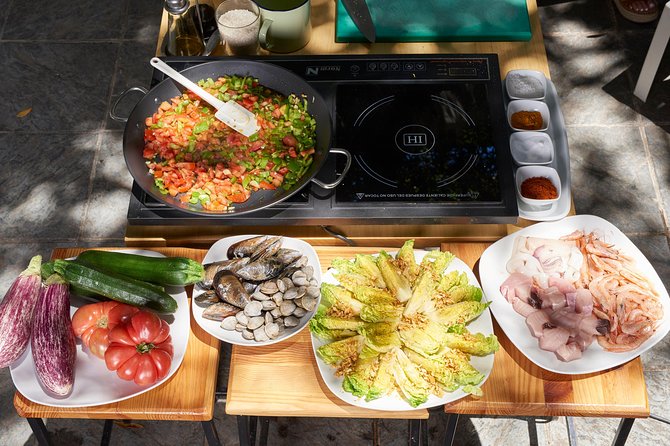
The food is included, along with ingredients and cooking materials. Lunch and snacks are provided, and the meal is paired with alcoholic drinks.
Natural Spanish wine is central to the experience. The description promises bottomless wine pouring during the meal, with craft beer and table olives served during the class and at the end. If you like learning about wine while eating, this is more than a standard cooking lesson with one token glass.
The wine focus is also one reason the price may make sense for the right person. You are paying for a private class, food, drinks, a market visit, and several hours of hosting. Compared with a simple market walk or a basic group cooking demonstration, this offers more personal contact and a full meal.
Still, $156.03 per person is not a bargain activity. The value depends on how much you care about the social setting, natural wine, and flexible menu. If you want a low-cost way to learn one or two recipes, this may feel expensive. If you want an afternoon built around eating, cooking, and conversation, the package is easier to justify.
Because alcohol is included and poured generously, this may not be the best fit if you do not drink. The food remains the main attraction, but wine is clearly part of the experience rather than a minor extra.
More Private Cooking Classes in Spain
- Private visit to a ham factory with show cooking in Salamanca
★ 5.0 · 122 reviews - Private Paella Cooking Class and Market Visit with Personal Chef
★ 5.0 · 94 reviews - Private Paella & Tapas Cooking Class in a Local Chef’s Home
★ 5.0 · 19 reviews - Authentic Tapas Cooking Class at a Private Eatery in Madrid
★ 4.3 · 6 reviews
Gaby’s hosting style and the private format
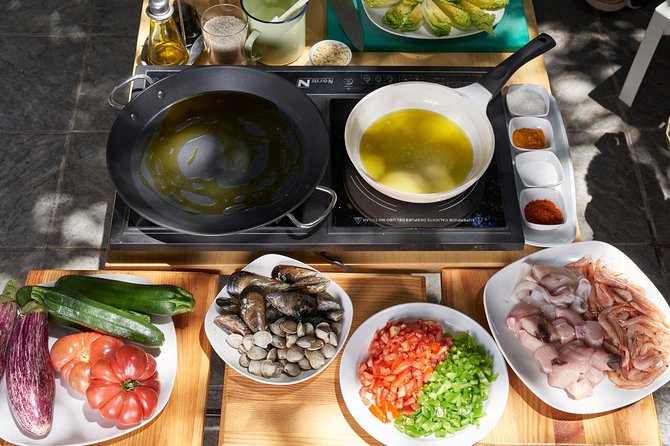
Gaby is the named host and teacher, and the most praised qualities are her warmth, enthusiasm, and ease in conversation. She leads the market shopping, explains the ingredients, and guides the meal preparation in English.
The private format means only your group participates. That gives you more freedom than a large class, especially if you want to ask questions or request a certain level of participation. It also lets Gaby work around food preferences more easily.
There is a small catch. A private class is not automatically a highly structured class. One past participant felt left out of the conversation and did little cooking, while others took part actively and had a much more engaging afternoon. The practical lesson is simple: tell Gaby what you want. If you want to chop, cook, or handle a particular dish, say so early.
The feedback also shows that expectations matter. Some people expect a host’s home, a cultural exchange with a local family, and recipes sent automatically afterward. Here, the setting is Gaby’s wine shop, and recipe follow-up may require an email request. Gaby offered to send recipes when contacted, so keep that in mind if written instructions matter to you.
A memorable detail from one class is that a power blackout did not stop the meal. The group continued with portable gas stoves. That story captures the informal spirit of the experience: it is flexible and practical, though not polished in the way a professional teaching kitchen might be.
What makes this feel like Córdoba?
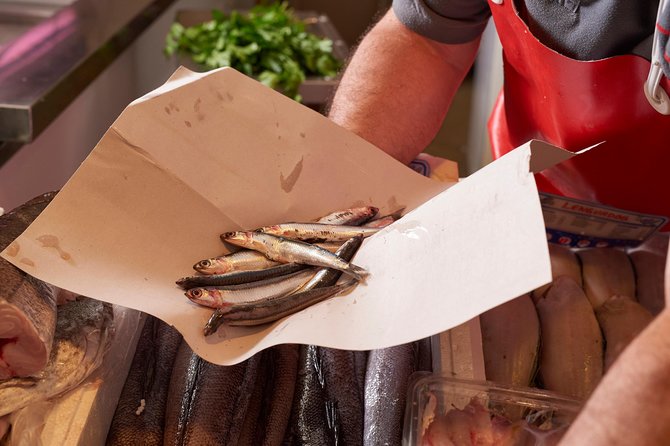
The value here is not only in learning to make paella or salmorejo. You are seeing how food decisions happen locally, from market stall to shared table.
Córdoba’s food traditions are especially suited to this kind of activity. Salmorejo and mazamorra show how a few basic ingredients can become substantial dishes. Seafood, prawns, rice, chorizo, oranges, olive oil, and fresh produce connect the meal to the wider food culture of Andalusia without turning lunch into a lecture.
The class also gives you room to follow your appetite. If you see a new ingredient and want to try it, you can add it to the plan. That sense of discovery is more valuable than memorizing a fixed menu because it teaches you how to think about Spanish cooking at home.
You may also meet other people within your own booking group or, depending on how the private reservation is arranged, share the table with companions you already know. The strongest accounts describe chopping, drinking, laughing, and talking in an easygoing setting.
Timing, access, and practical details
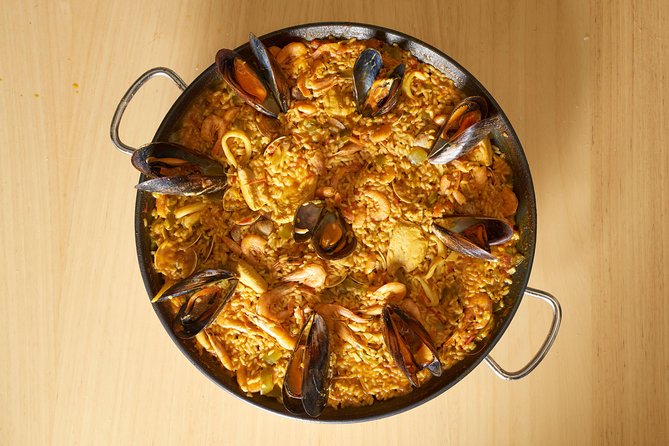
Plan on about three hours and 30 minutes. That includes the market visit, shopping, walking to the wine shop, preparation, cooking, and lunch. Do not schedule a tight museum visit or train immediately afterward. The menu is flexible, and a meal built around conversation can take its time.
The class is offered in English. It begins at Mercado de la Corredera and ends back at the meeting point area. The meeting address is Plaza de las Cañas, 1, in central Córdoba.
The experience is wheelchair and stroller accessible, and service animals are allowed. It is also near public transportation. Those are useful advantages in Córdoba’s historic center, where streets and distances can be tiring even when the activity itself is manageable.
This activity is often booked about 28 days ahead. That is a good reason to reserve early if your Córdoba dates are fixed, especially since the private format limits the number of participants. Free cancellation is available until 24 hours before the start time. Cancellations or changes made later are not refunded or accepted.
Who will enjoy Feed the Fire most?
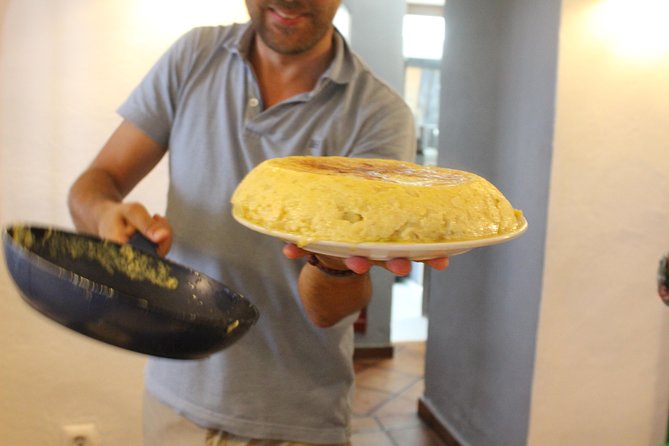
I would recommend this to you if food is one of your main reasons for visiting Spain. It suits couples, families, and small groups who enjoy trying unfamiliar ingredients and want a relaxed afternoon rather than a formal lesson.
It is particularly good for people who like:
- Market shopping and spontaneous menu choices
- Natural wine and Spanish food traditions
- Conversation with a host
- A full meal instead of a short demonstration
- Participating at their own pace
- Flexible menus for different appetites
It may not suit you if you want a cooking class held in a local home, exact recipes, formal instruction, or a fixed menu confirmed in advance. It may also disappoint if you expect to cook every dish yourself without asking for a role.
The class works best when you arrive ready to participate. Ask questions. Offer to chop. Tell Gaby if you want to cook more, or if you prefer to watch. The experience rewards involvement.
Should you book this Córdoba cooking class?
Book Feed the Fire if you want a social food afternoon that begins in the market and ends with a shared Spanish meal. The strongest reasons are the personal format, the flexible menu, Gaby’s friendly hosting, and the generous combination of food, wine, snacks, and ingredients.
At $156.03 per person, it is a splurge. You are not simply buying a recipe lesson. You are buying market time, lunch, drinks, hosting, and the chance to shape the meal. For a food-focused visit to Córdoba, that can be good value.
Just set the right expectations. This is an informal wine-shop cooking experience, not a formal culinary school or guaranteed home visit. If you tell Gaby how much you want to cook and what you need to eat, you are more likely to get the warm, hands-on afternoon this experience is designed to provide.
FAQ
Where does the Feed the Fire cooking class begin?
It begins at Mercado de la Corredera, at Plaza de las Cañas, 1, Centro, 14002 Córdoba, Spain.
How long does the experience last?
The activity lasts approximately three hours and 30 minutes.
Is the cooking class private?
Yes. Only your group participates in the private activity.
What language is the class offered in?
The class is offered in English.
What food might be included?
Possible dishes include salmorejo, mazamorra, revueltos, salads, paella, grilled fish, chorizo a la Riojana, papas con choco, gambas al ajillo, fruit, chocolate, oranges, and strawberries with fresh cream. The menu changes according to the freshest ingredients and your group’s preferences.
Are drinks included?
Yes. Natural Spanish wines are poured during the meal, and craft beer and table olives are provided during the class and at the end. Alcoholic beverages are included.
Is the experience wheelchair and stroller accessible?
Yes. The class is wheelchair and stroller accessible. Service animals are also allowed.
What is the cancellation policy?
You can cancel up to 24 hours before the start time for a full refund. Cancellations or changes made less than 24 hours before the start are not accepted or refunded.
Just added around Spain
- Basque Pintxos and Tapas Cooking Class in Bilbao★ 5.0 · 73 reviews
- Paella and Burnt Basque Cheesecake Cooking Class (in Bilbao)★ 5.0 · 46 reviews
- Small-group Immersive Basque Cooking Class in Bilbao with Open Bar★ 5.0 · 65 reviews
- Pintxos and Tapas Cooking Class in Bilbao★ 5.0 · 38 reviews
- Rooftop Paella Seafood Cooking Class Experience in Barcelona★ 5.0 · 59 reviews
- Private Authentic Paella Cooking Class in Barcelona with Josh★ 5.0 · 3 reviews
- Private Barcelona Market Tour & Paella Cooking Class with Josh★ 5.0 · 4 reviews
- Premium Cooking Class in Designer Loft: Paella & Spanish Tapas★ 5.0 · 18 reviews
Cooking Classes with a Market Tour, compared.
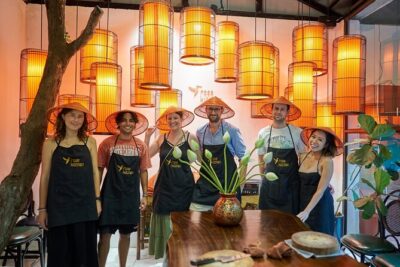
Hanoi Cooking Class: Culture, Local Market & Meaning CSR Impact
Read our review →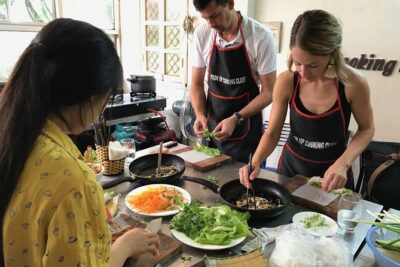
5 Traditional Dishes Hanoi Cooking Class with Market Trip
Read our review →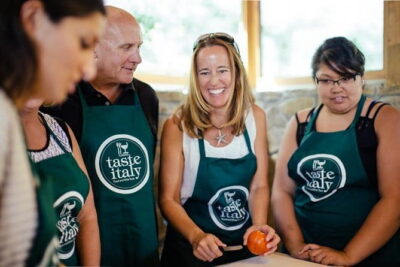
Cooking Class and Lunch at a Tuscan Farmhouse with Local Market Tour from Florence
Read our review →
Cooking Class, Market & Thai Herbs Garden Tour
Read our review →
Authentic Cooking Class with Market & Farm Visit
Read our review →
Paella Cooking Experience & Boqueria Market Tour
Read our review →
Cooking Class Hoi An:Local Market, Basket Boat, Fishing & Cooking
Read our review →